Geriatric Trauma Gram McGregor, 1Lt, WA ANG Critical Care Air Transport Nurse
Geriatric Defined Older then 65 years Decline starts in late 20’s Leading causes of death: Heart disease Cancer Stroke Diabetes Trauma
Trauma Mechanisms of injury* Falls Motor vehicle trauma Assault and Domestic abuse Pedestrian accidents Burns *In order by frequency
Trauma Geriatric trauma patients die for the same reason as trauma patients of any age. Often, because of preexisting physical conditions, the geriatric patient can often die from less severe injuries and sooner than younger patients.
Head Injury Caused by brain tissue shrinking with age More prone, even from minor trauma Increased ICP signs develop slowly Patient may have forgotten injury
Cervical Injury Osteoporosis Increased injury risk with trivial accidents Shrinkage of disk spaces Arthritic changes Narrow spinal canal Increased injury risk Sudden movement may cause cord injury without fracture
Acute Abdomen Abdominal Aortic Aneurysm-one of most rapidly fatal conditions Most common with hypertension and atherosclerosis Possible finding of decreased pulses in extremities GI Bleed Coffee-ground emesis Black, Tarry or frankly bloody stools
Respiratory System Larger less elastic lung functionally decreasing respiratory reserve Decreased cilia in airways increases potential for respiratory infections Stiffening of chest cage and airway cartilage. Impaired cough and gag reflexes.
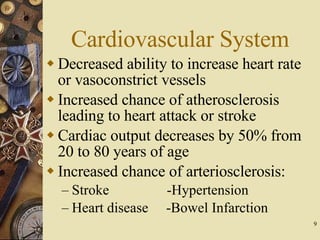
Cardiovascular System Decreased ability to increase heart rate or vasoconstrict vessels Increased chance of atherosclerosis leading to heart attack or stroke Cardiac output decreases by 50% from 20 to 80 years of age Increased chance of arteriosclerosis: Stroke   -Hypertension Heart disease  -Bowel Infarction
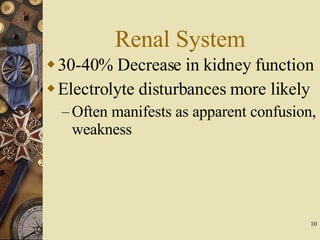
Renal System 30-40% Decrease in kidney function Electrolyte disturbances more likely Often manifests as apparent confusion, weakness
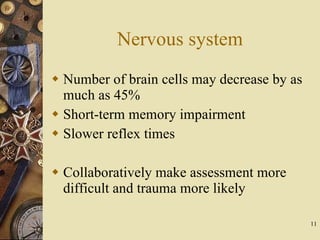
Nervous system Number of brain cells may decrease by as much as 45% Short-term memory impairment Slower reflex times Collaboratively make assessment more difficult and trauma more likely
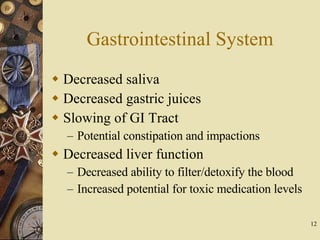
Gastrointestinal System Decreased saliva  Decreased gastric juices Slowing of GI Tract Potential constipation and impactions Decreased liver function Decreased ability to filter/detoxify the blood Increased potential for toxic medication levels
Musculoskeletal System Decreased bone density Posture changes and vertebral discs dehydrate causing shortening of up to 5cm. Decrease in muscle mass up to 30% between 30 and 70 years of age. Increased propensity for falls and both traumatic and nontraumatic fractures
Altered mental status Essential to compare to baseline!! Delirium Rapid onset, usually curable inability to focus, think logically and maintain a train of thought. Dementia Slow onset, permanent Progressive disorientation, shortened attention span and loss of cognitive function
Environmental Emergencies Tolerate temperature extremes poorly Develop hypo/hyperthermia rapidly Decreased ability to respond to changes, decreased heat production and decreased ability to rid the body of excess heat.
Blast injuries Higher associated risk of life-threatening injuries due to: Less flexible tissues Decreased cardiovascular reserve Decreased respiratory reserve
Management Airway  Breathing-possibility of Chronic Lung Disease Circulation-may have different  normal   blood pressure Protect the cervical spine Control their temperature Determine baseline/chronic medical conditions
Questions?
References Browner, B.D. (2002)  Emergency care and treatment of the sick and injured. McSwain, N.E.,  Frame, S. (2003) Basic and advanced prehospital life support.

Geriatric Trauma

  • 1.
    Geriatric Trauma GramMcGregor, 1Lt, WA ANG Critical Care Air Transport Nurse
  • 2.
    Geriatric Defined Olderthen 65 years Decline starts in late 20’s Leading causes of death: Heart disease Cancer Stroke Diabetes Trauma
  • 3.
    Trauma Mechanisms ofinjury* Falls Motor vehicle trauma Assault and Domestic abuse Pedestrian accidents Burns *In order by frequency
  • 4.
    Trauma Geriatric traumapatients die for the same reason as trauma patients of any age. Often, because of preexisting physical conditions, the geriatric patient can often die from less severe injuries and sooner than younger patients.
  • 5.
    Head Injury Causedby brain tissue shrinking with age More prone, even from minor trauma Increased ICP signs develop slowly Patient may have forgotten injury
  • 6.
    Cervical Injury OsteoporosisIncreased injury risk with trivial accidents Shrinkage of disk spaces Arthritic changes Narrow spinal canal Increased injury risk Sudden movement may cause cord injury without fracture
  • 7.
    Acute Abdomen AbdominalAortic Aneurysm-one of most rapidly fatal conditions Most common with hypertension and atherosclerosis Possible finding of decreased pulses in extremities GI Bleed Coffee-ground emesis Black, Tarry or frankly bloody stools
  • 8.
    Respiratory System Largerless elastic lung functionally decreasing respiratory reserve Decreased cilia in airways increases potential for respiratory infections Stiffening of chest cage and airway cartilage. Impaired cough and gag reflexes.
  • 9.
    Cardiovascular System Decreasedability to increase heart rate or vasoconstrict vessels Increased chance of atherosclerosis leading to heart attack or stroke Cardiac output decreases by 50% from 20 to 80 years of age Increased chance of arteriosclerosis: Stroke -Hypertension Heart disease -Bowel Infarction
  • 10.
    Renal System 30-40%Decrease in kidney function Electrolyte disturbances more likely Often manifests as apparent confusion, weakness
  • 11.
    Nervous system Numberof brain cells may decrease by as much as 45% Short-term memory impairment Slower reflex times Collaboratively make assessment more difficult and trauma more likely
  • 12.
    Gastrointestinal System Decreasedsaliva Decreased gastric juices Slowing of GI Tract Potential constipation and impactions Decreased liver function Decreased ability to filter/detoxify the blood Increased potential for toxic medication levels
  • 13.
    Musculoskeletal System Decreasedbone density Posture changes and vertebral discs dehydrate causing shortening of up to 5cm. Decrease in muscle mass up to 30% between 30 and 70 years of age. Increased propensity for falls and both traumatic and nontraumatic fractures
  • 14.
    Altered mental statusEssential to compare to baseline!! Delirium Rapid onset, usually curable inability to focus, think logically and maintain a train of thought. Dementia Slow onset, permanent Progressive disorientation, shortened attention span and loss of cognitive function
  • 15.
    Environmental Emergencies Toleratetemperature extremes poorly Develop hypo/hyperthermia rapidly Decreased ability to respond to changes, decreased heat production and decreased ability to rid the body of excess heat.
  • 16.
    Blast injuries Higherassociated risk of life-threatening injuries due to: Less flexible tissues Decreased cardiovascular reserve Decreased respiratory reserve
  • 17.
    Management Airway Breathing-possibility of Chronic Lung Disease Circulation-may have different normal blood pressure Protect the cervical spine Control their temperature Determine baseline/chronic medical conditions
  • 18.
  • 19.
    References Browner, B.D.(2002) Emergency care and treatment of the sick and injured. McSwain, N.E., Frame, S. (2003) Basic and advanced prehospital life support.