Complex Numbers
2
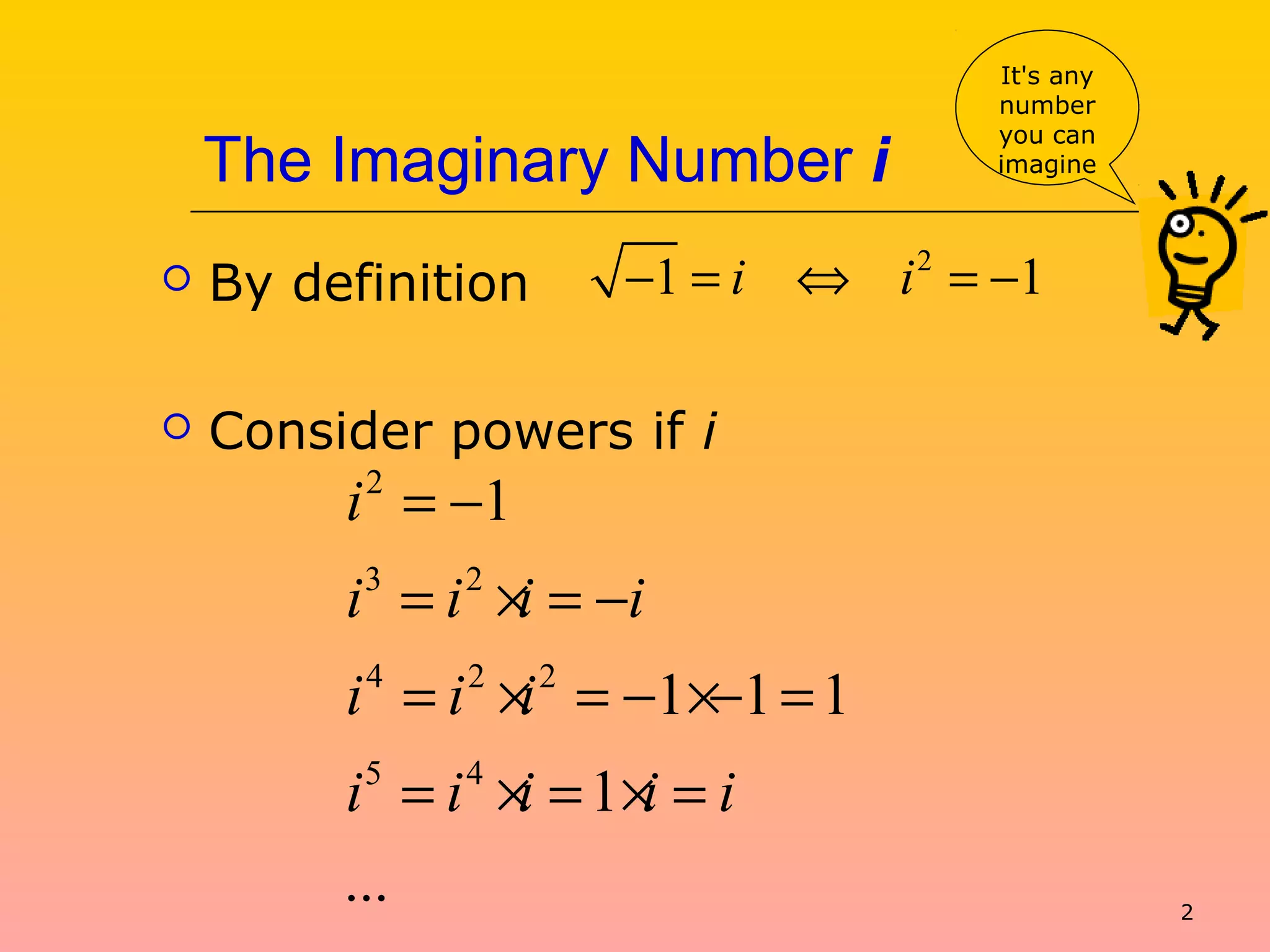
The Imaginary Number i
 By definition
 Consider powers if i
2
1 1i i− = ⇔ = −
2
3 2
4 2 2
5 4
1
1 1 1
1
...
i
i i i i
i i i
i i i i i
= −
= × = −
= × = − ×− =
= × = × =
It's any
number
you can
imagine
3
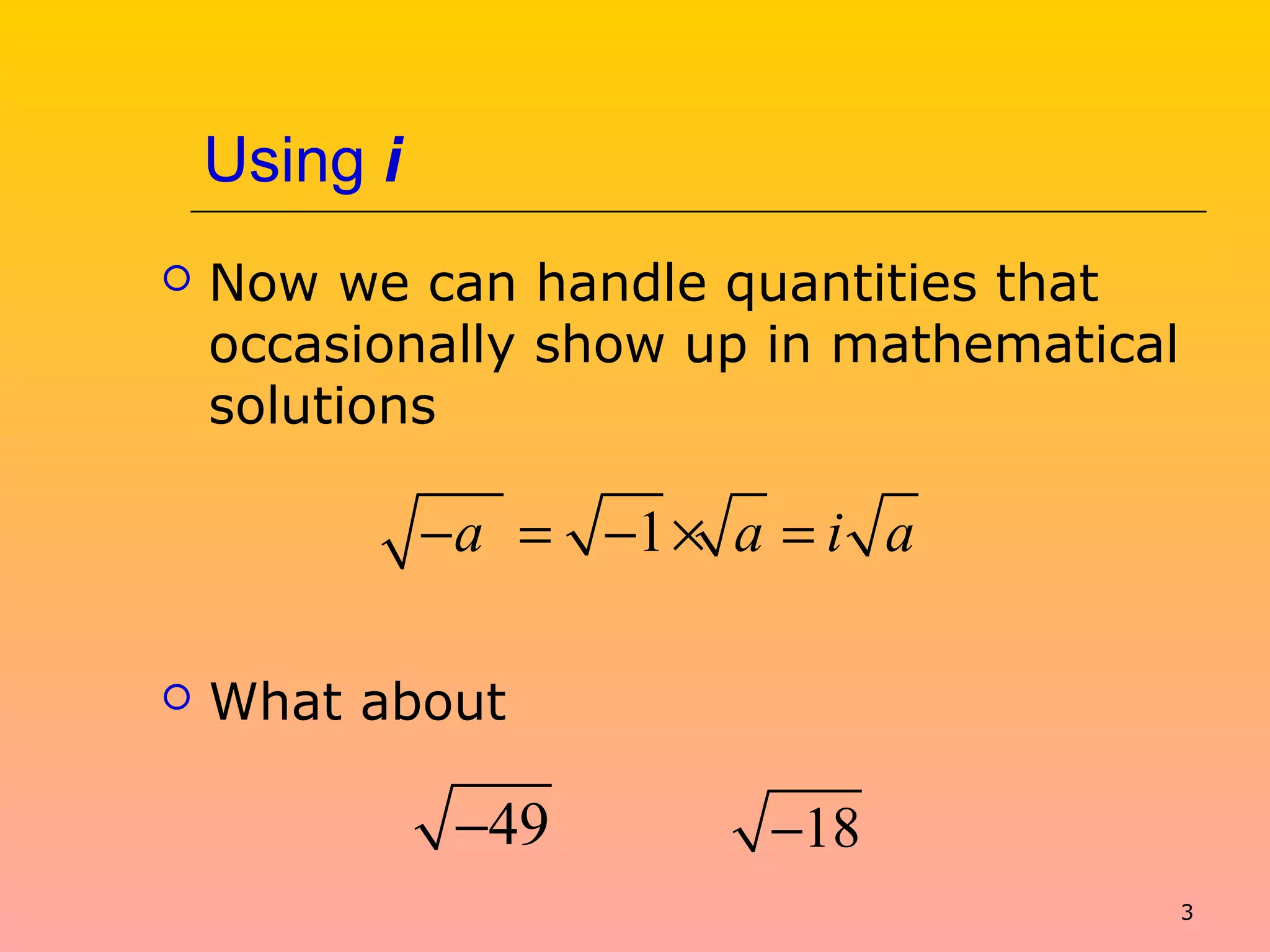
Using i
 Now we can handle quantities that
occasionally show up in mathematical
solutions
 What about
1a a i a− = − × =
49− 18−
4
5
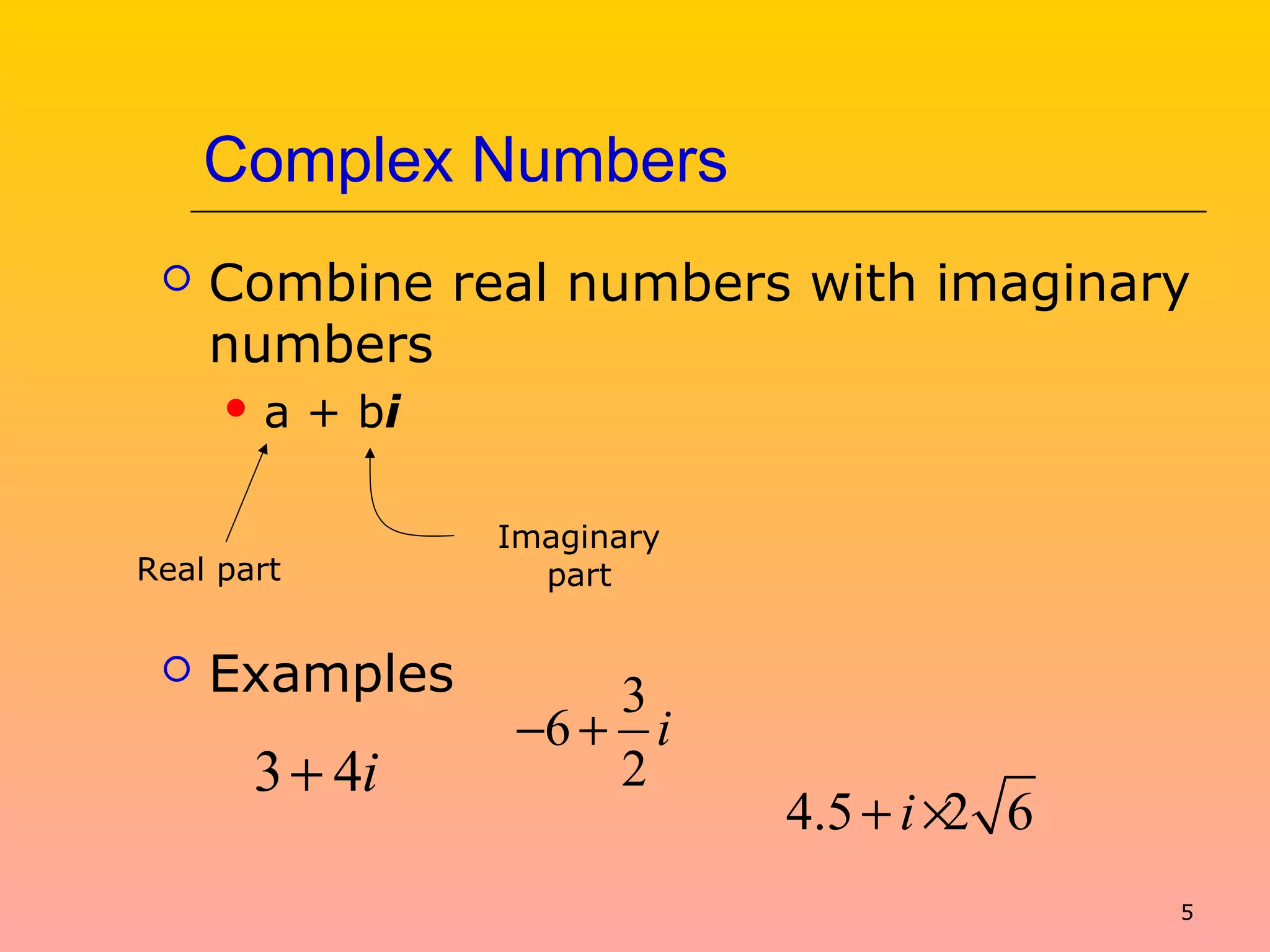
Complex Numbers
 Combine real numbers with imaginary
numbers
 a + bi
 Examples
Real part
Imaginary
part
3 4i+
3
6
2
i− +
4.5 2 6i+ ×
6
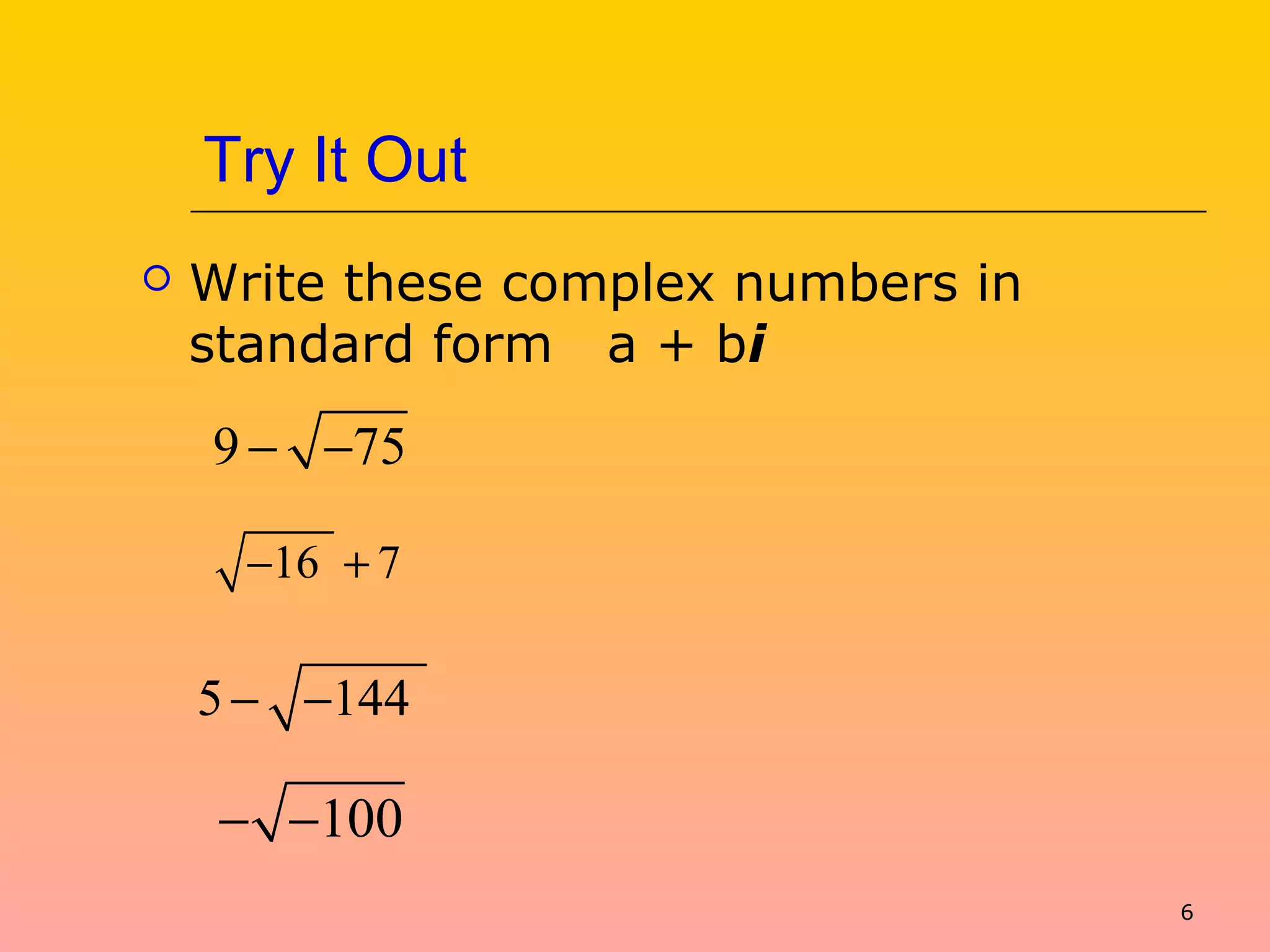
Try It Out
 Write these complex numbers in
standard form a + bi
9 75− −
16 7− +
5 144− −
100− −
7
8
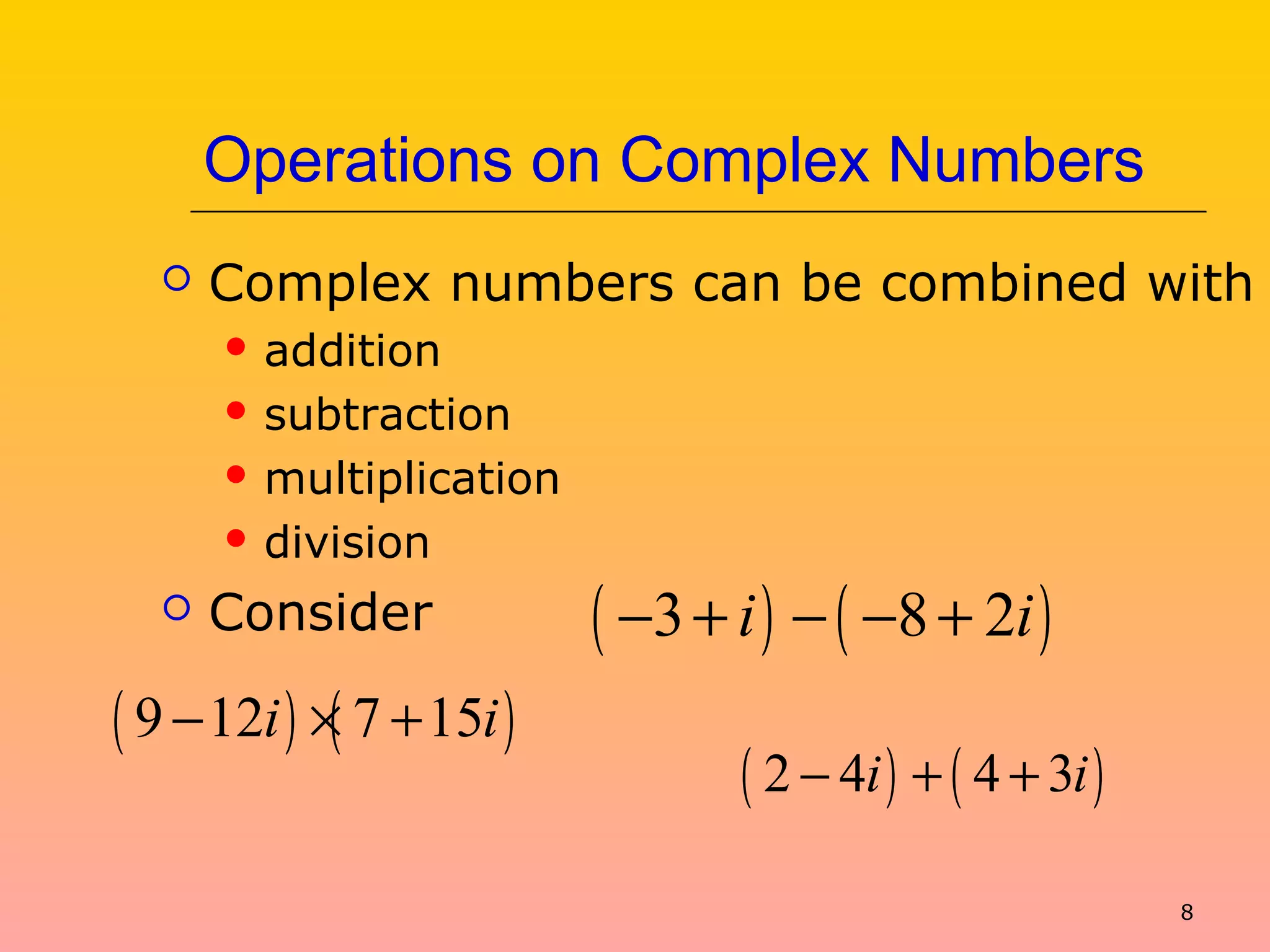
Operations on Complex Numbers
 Complex numbers can be combined with
 addition
 subtraction
 multiplication
 division
 Consider ( ) ( )3 8 2i i− + − − +
( ) ( )9 12 7 15i i− × +
( ) ( )2 4 4 3i i− + +
9
Operations on Complex Numbers
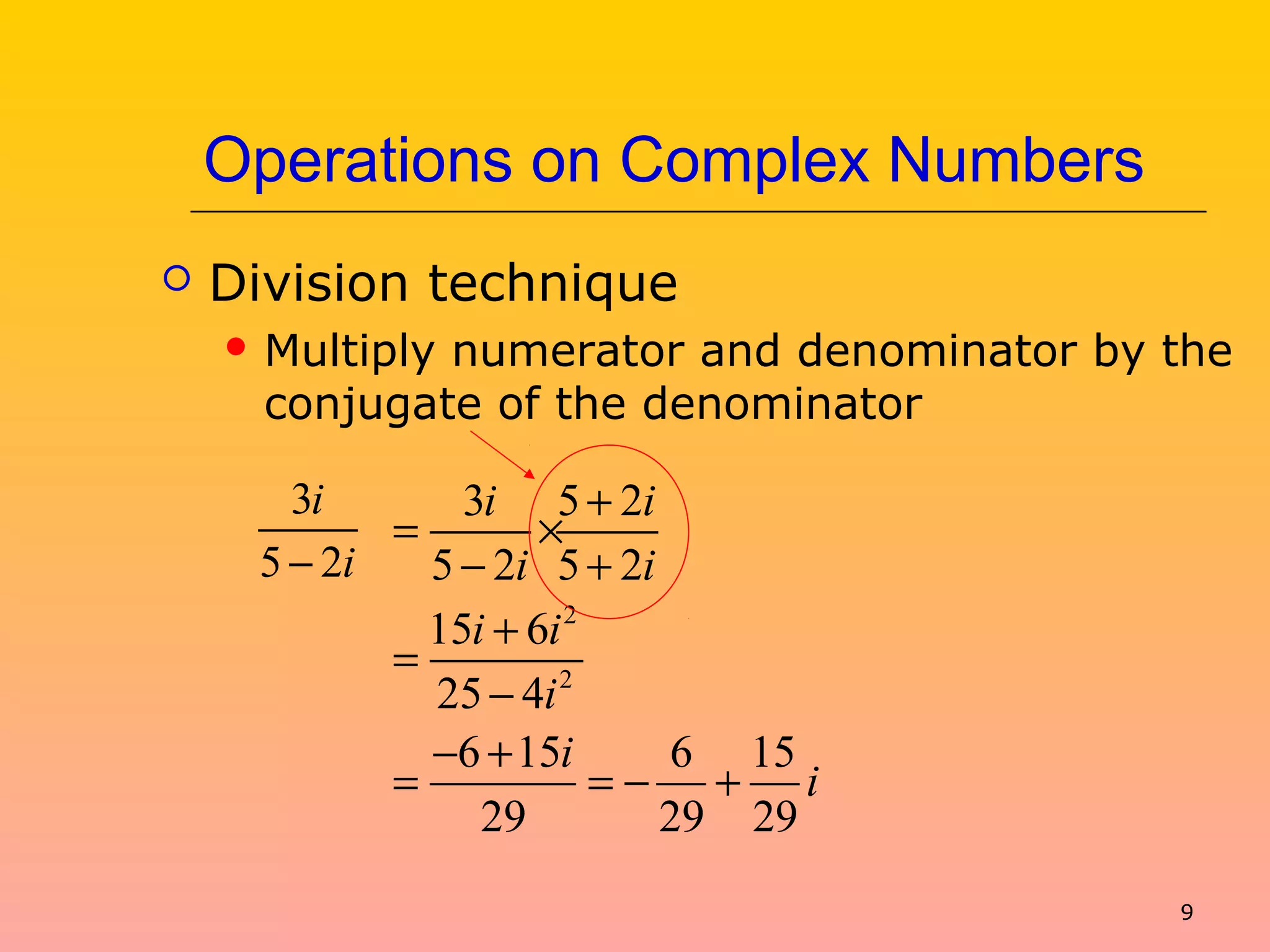
 Division technique
 Multiply numerator and denominator by the
conjugate of the denominator
3
5 2
i
i−
2
2
3 5 2
5 2 5 2
15 6
25 4
6 15 6 15
29 29 29
i i
i i
i i
i
i
i
+
= ×
− +
+
=
−
− +
= = − +
10
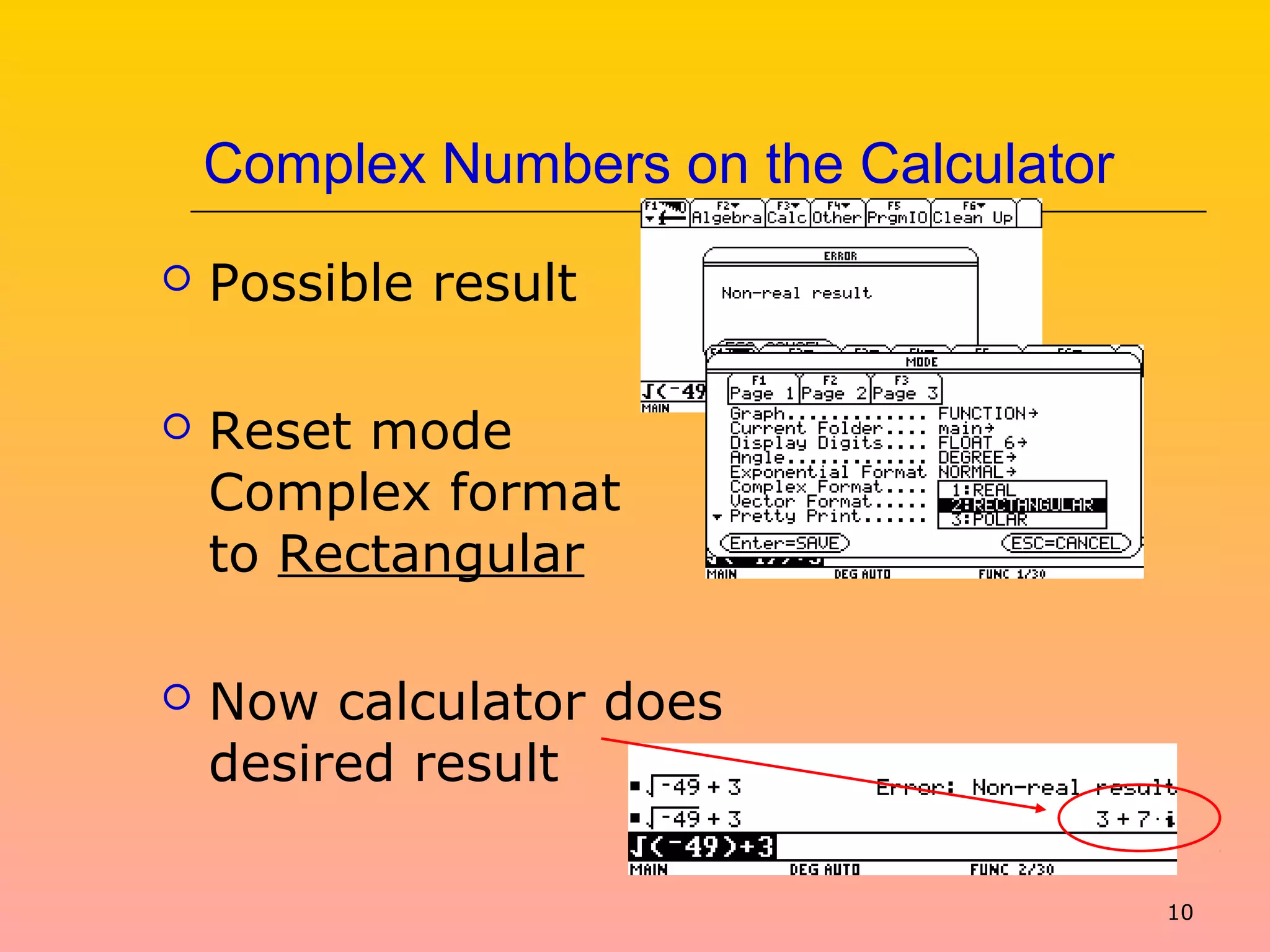
Complex Numbers on the Calculator
 Possible result
 Reset mode
Complex format
to Rectangular
 Now calculator does
desired result
11
Complex Numbers on the Calculator
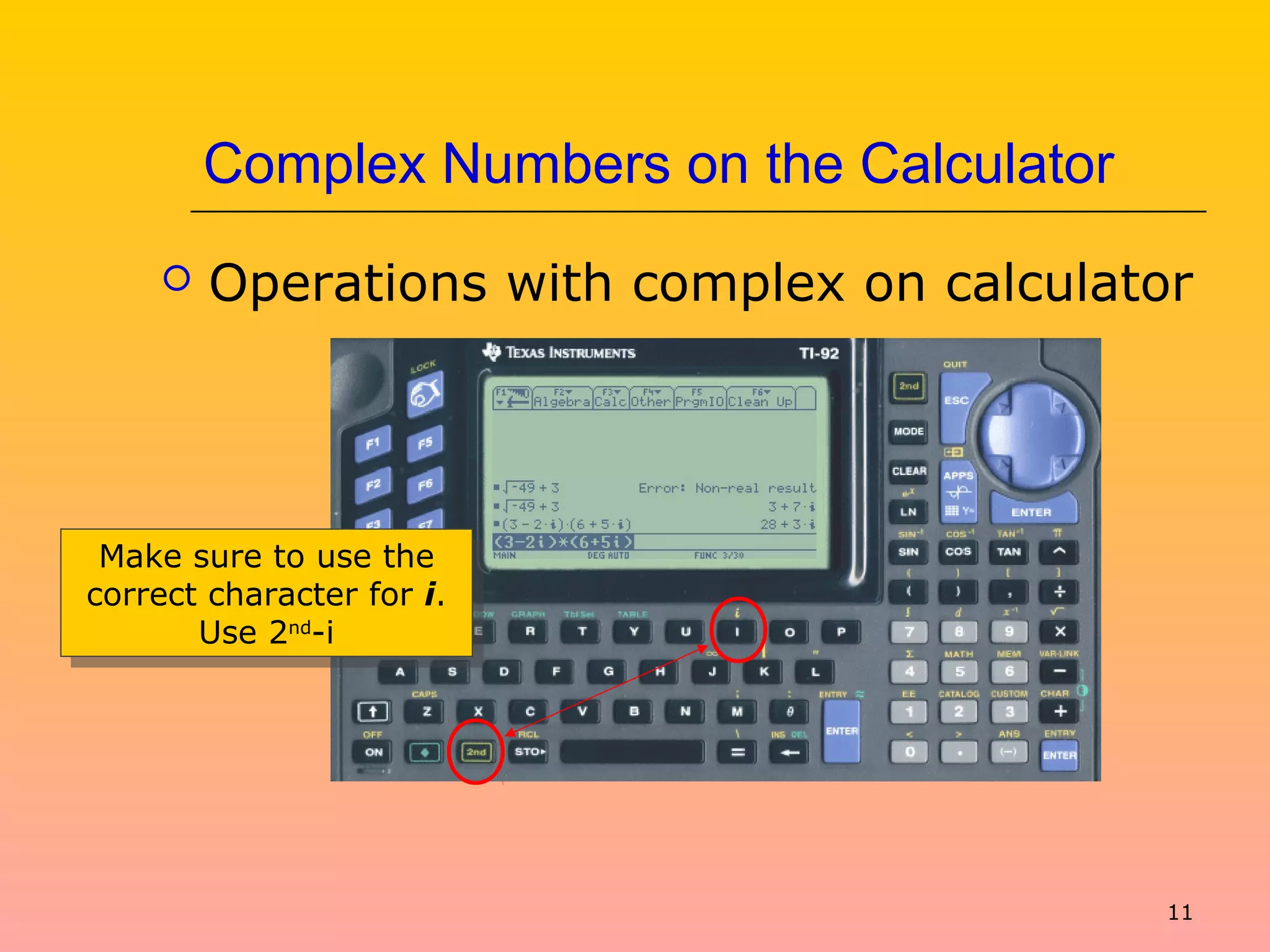
 Operations with complex on calculator
Make sure to use the
correct character for i.
Use 2nd
-i
Make sure to use the
correct character for i.
Use 2nd
-i
12
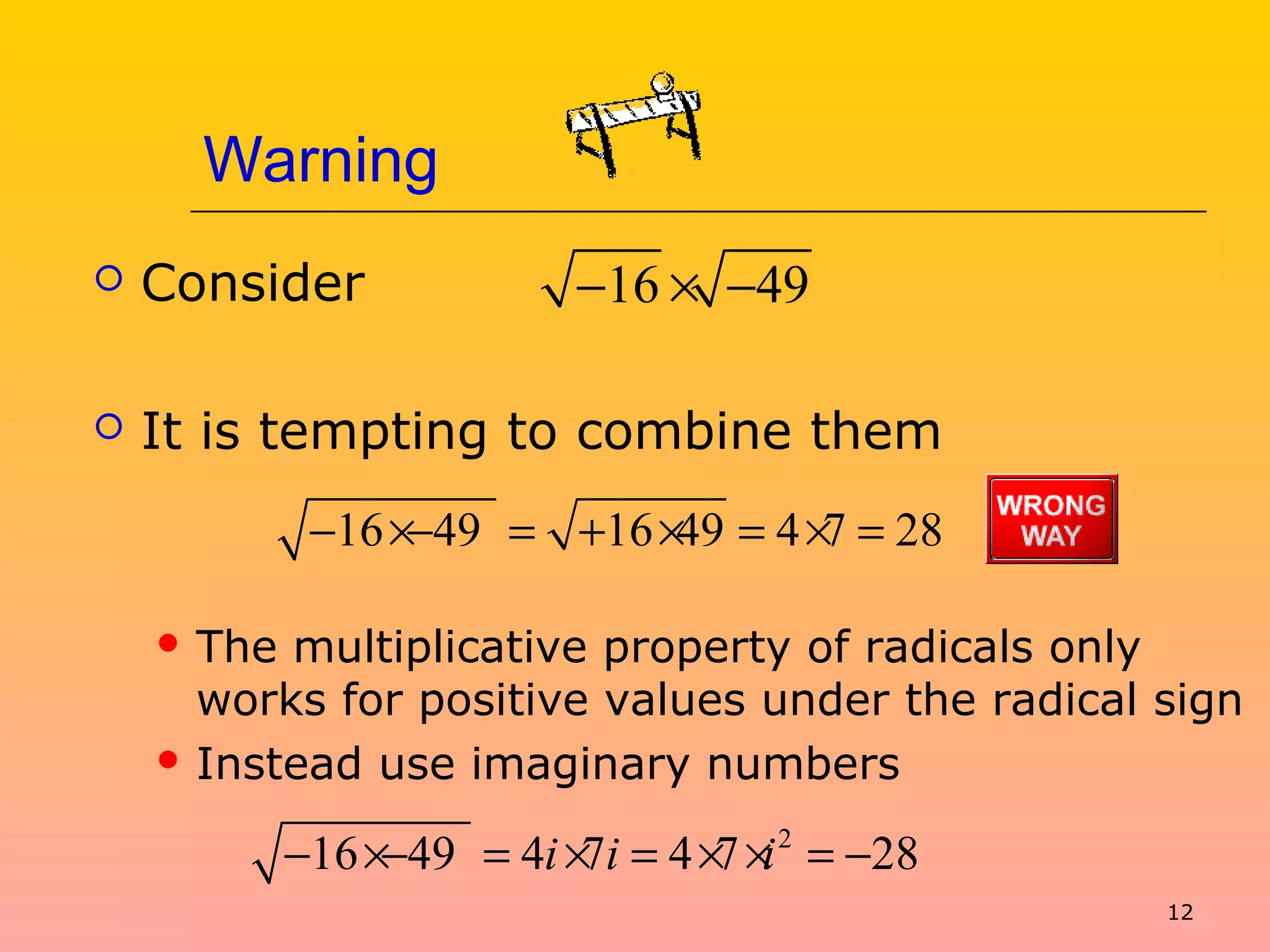
Warning
 Consider
 It is tempting to combine them
 The multiplicative property of radicals only
works for positive values under the radical sign
 Instead use imaginary numbers
16 49− × −
16 49 16 49 4 7 28− ×− = + × = × =
2
16 49 4 7 4 7 28i i i− ×− = × = × × = −
13
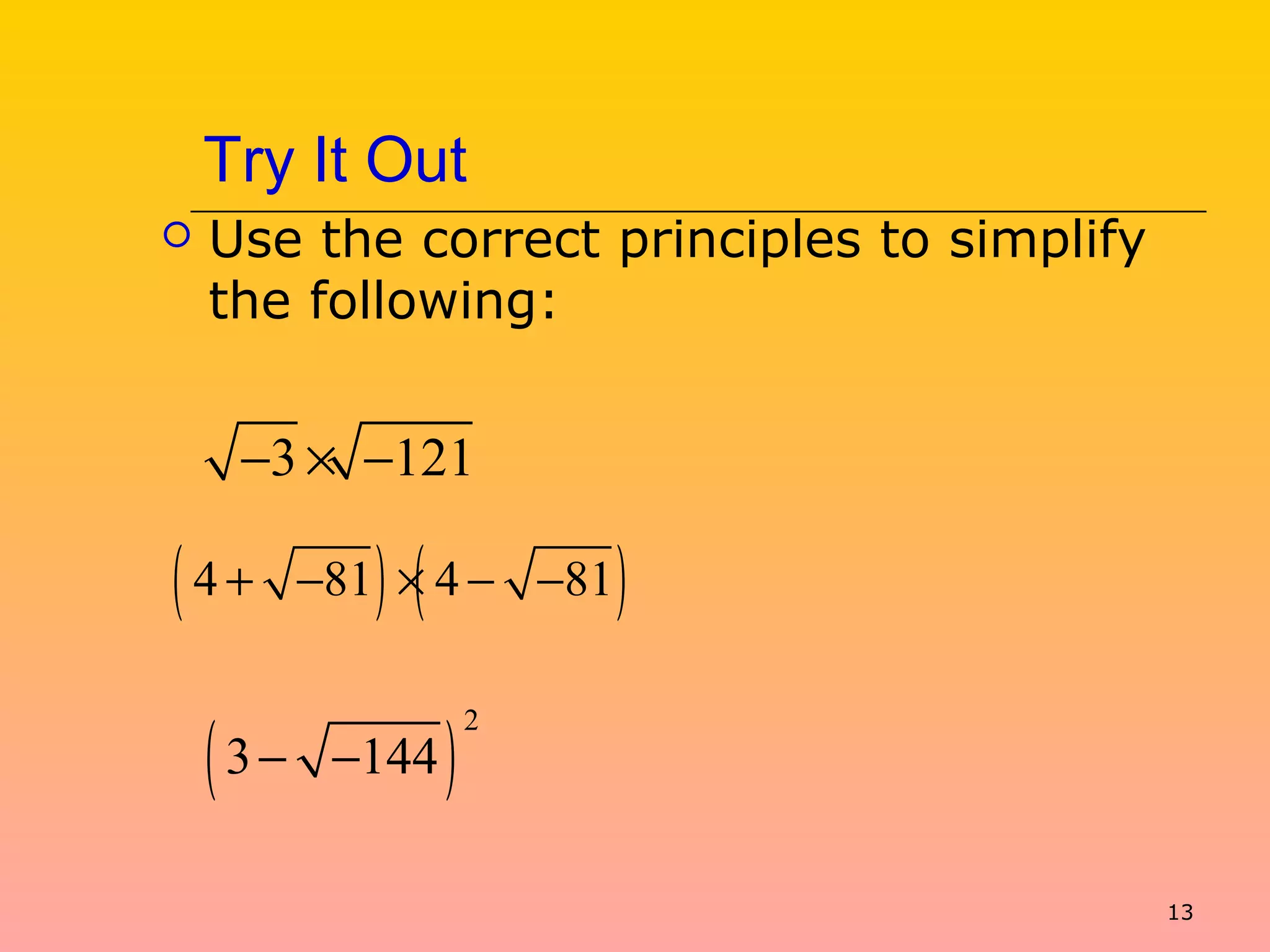
Try It Out
 Use the correct principles to simplify
the following:
3 121− × −
( ) ( )4 81 4 81+ − × − −
( )
2
3 144− −
14
Assignment

Lesson5.1 complexnumbers demo

  • 1.
  • 2.
    2 The Imaginary Numberi  By definition  Consider powers if i 2 1 1i i− = ⇔ = − 2 3 2 4 2 2 5 4 1 1 1 1 1 ... i i i i i i i i i i i i i = − = × = − = × = − ×− = = × = × = It's any number you can imagine
  • 3.
    3 Using i  Nowwe can handle quantities that occasionally show up in mathematical solutions  What about 1a a i a− = − × = 49− 18−
  • 4.
  • 5.
    5 Complex Numbers  Combinereal numbers with imaginary numbers  a + bi  Examples Real part Imaginary part 3 4i+ 3 6 2 i− + 4.5 2 6i+ ×
  • 6.
    6 Try It Out Write these complex numbers in standard form a + bi 9 75− − 16 7− + 5 144− − 100− −
  • 7.
  • 8.
    8 Operations on ComplexNumbers  Complex numbers can be combined with  addition  subtraction  multiplication  division  Consider ( ) ( )3 8 2i i− + − − + ( ) ( )9 12 7 15i i− × + ( ) ( )2 4 4 3i i− + +
  • 9.
    9 Operations on ComplexNumbers  Division technique  Multiply numerator and denominator by the conjugate of the denominator 3 5 2 i i− 2 2 3 5 2 5 2 5 2 15 6 25 4 6 15 6 15 29 29 29 i i i i i i i i i + = × − + + = − − + = = − +
  • 10.
    10 Complex Numbers onthe Calculator  Possible result  Reset mode Complex format to Rectangular  Now calculator does desired result
  • 11.
    11 Complex Numbers onthe Calculator  Operations with complex on calculator Make sure to use the correct character for i. Use 2nd -i Make sure to use the correct character for i. Use 2nd -i
  • 12.
    12 Warning  Consider  Itis tempting to combine them  The multiplicative property of radicals only works for positive values under the radical sign  Instead use imaginary numbers 16 49− × − 16 49 16 49 4 7 28− ×− = + × = × = 2 16 49 4 7 4 7 28i i i− ×− = × = × × = −
  • 13.
    13 Try It Out Use the correct principles to simplify the following: 3 121− × − ( ) ( )4 81 4 81+ − × − − ( ) 2 3 144− −
  • 14.