101 Ways to Improve Your
  Communication Skills
 Presented by Catherine Jaggard
         Reno, Nevada
        January 10, 2006
Objectives
•   Communication
•   Techniques
•   Listening
•   Speaking and Listening
•   Speaking and Writing
•   General Tips
Communication
• Speaking
  –   Know what you want to say
  –   Control Fear
  –   Stop Talking and Listen
  –   Think before you talk
  –   Believe in your message
  –   Repeat Major Points
  –   Find Out what your Listener wants
Communication
• Techniques
  –   Define Acronyms
  –   Reduce Jargon
  –   Level Objections
  –   Use Humor
  –   Anecdotes and Stories
  –   Ask for feedback
  –   Increase your vocabulary
Communication
• Techniques -continued
  –   Eliminate Audible Pauses
  –   Enunciate Clearly
  –   Practice Pronouncing Words Properly
  –   Exercise Tongue, Jaws and Lips
  –   Make Eye Contact
  –   Gesture
Communication
• Techniques -continued
  –   Pause
  –   Speak more slowly
  –   Speak faster
  –   Vary Your Volume
  –   Watch your tone
  –   Record your voice
Communication
• Listening
  –   Prepare to Listen
  –   Focus on the Speaker
  –   Screen Out Distractions
  –   Concentrate on the Message
  –   Listen to Tapes while you commute
Communication
• Speaking and Listening
  –   Ask Questions
  –   Avoid Daydreaming
  –   Accept Accents
  –   Use mind mapping
  –   Interview
  –   Complaints
  –   Telephone
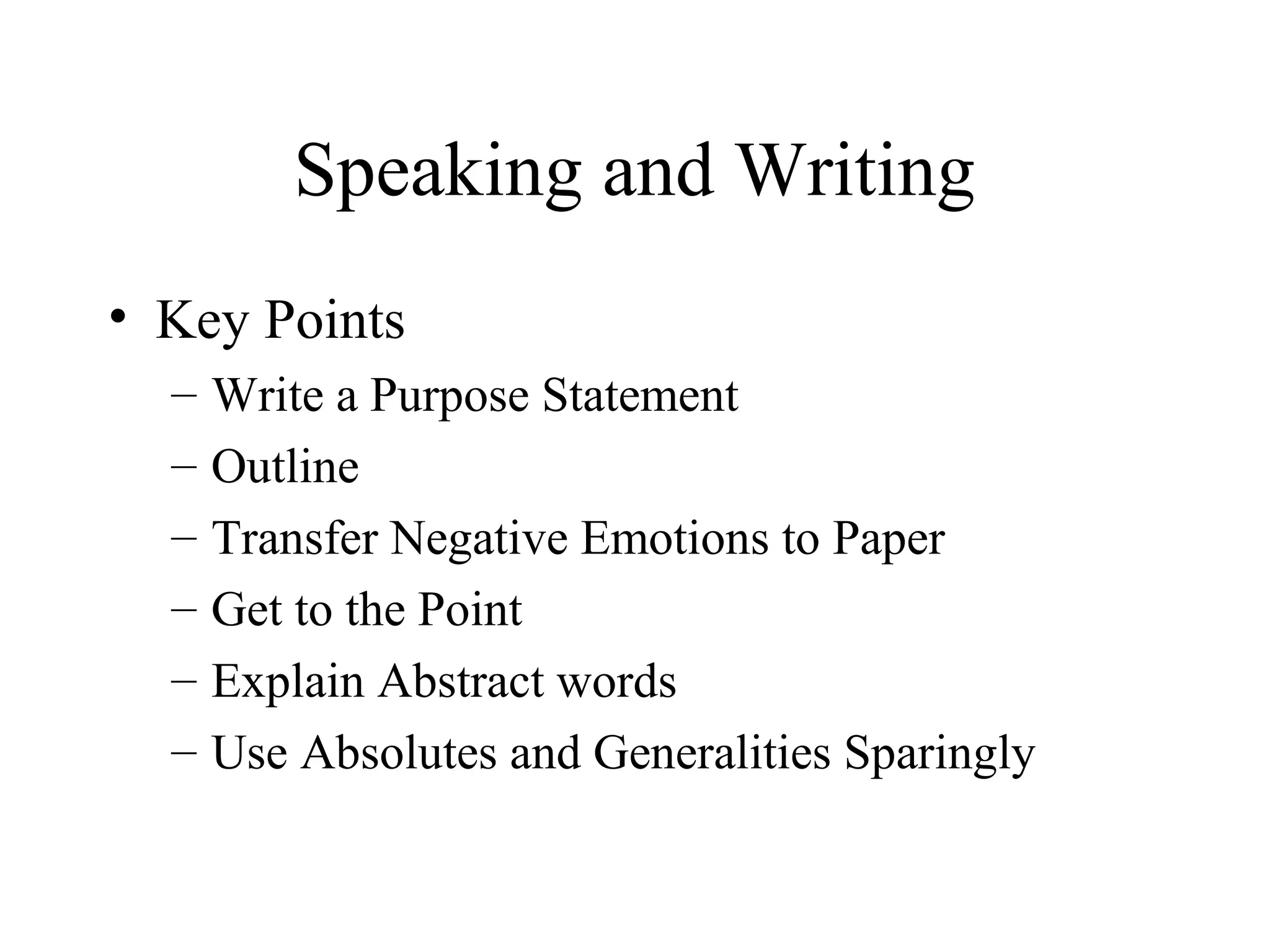
Speaking and Writing
• Key Points
  –   Write a Purpose Statement
  –   Outline
  –   Transfer Negative Emotions to Paper
  –   Get to the Point
  –   Explain Abstract words
  –   Use Absolutes and Generalities Sparingly
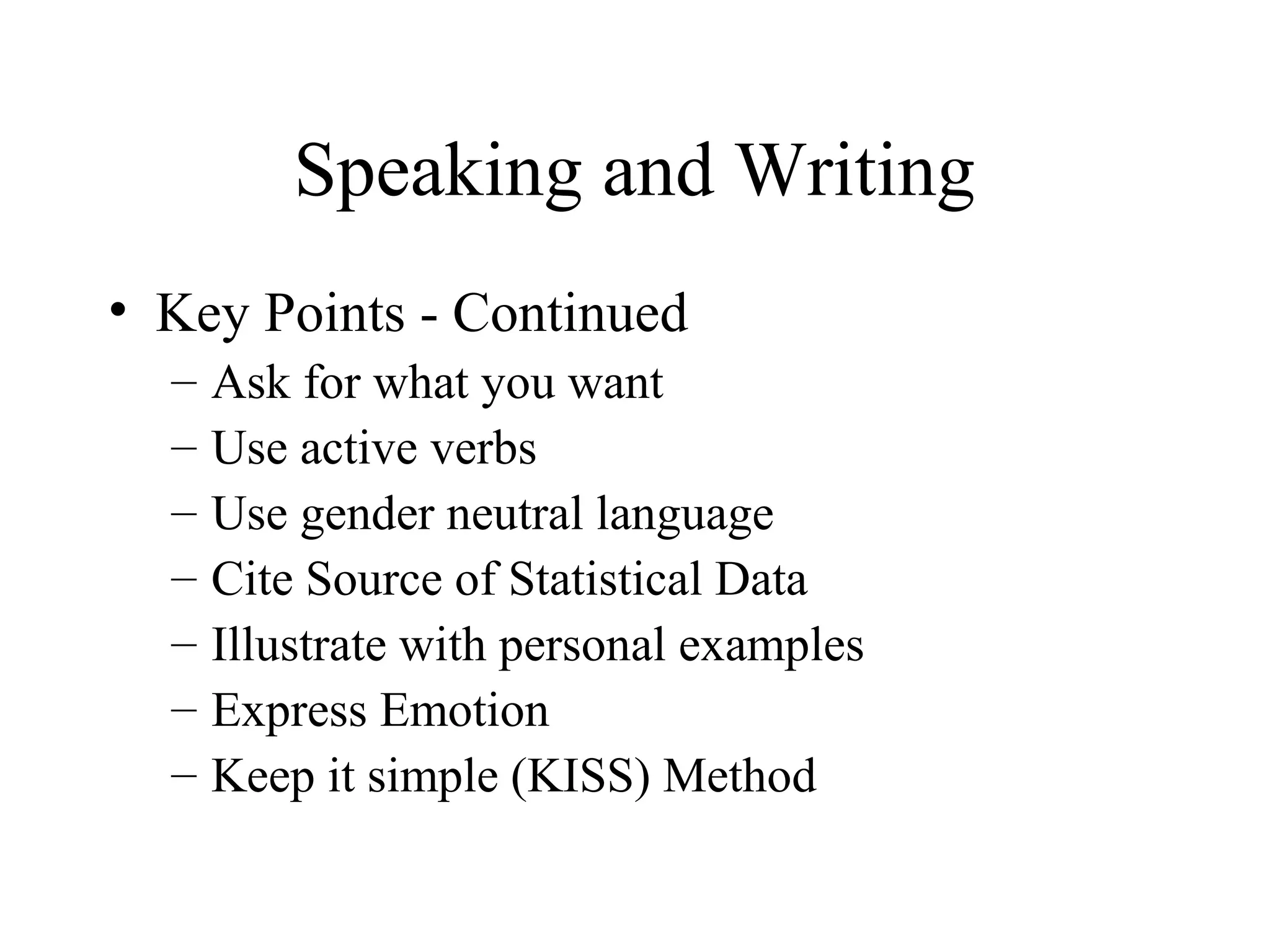
Speaking and Writing
• Key Points - Continued
  –   Ask for what you want
  –   Use active verbs
  –   Use gender neutral language
  –   Cite Source of Statistical Data
  –   Illustrate with personal examples
  –   Express Emotion
  –   Keep it simple (KISS) Method
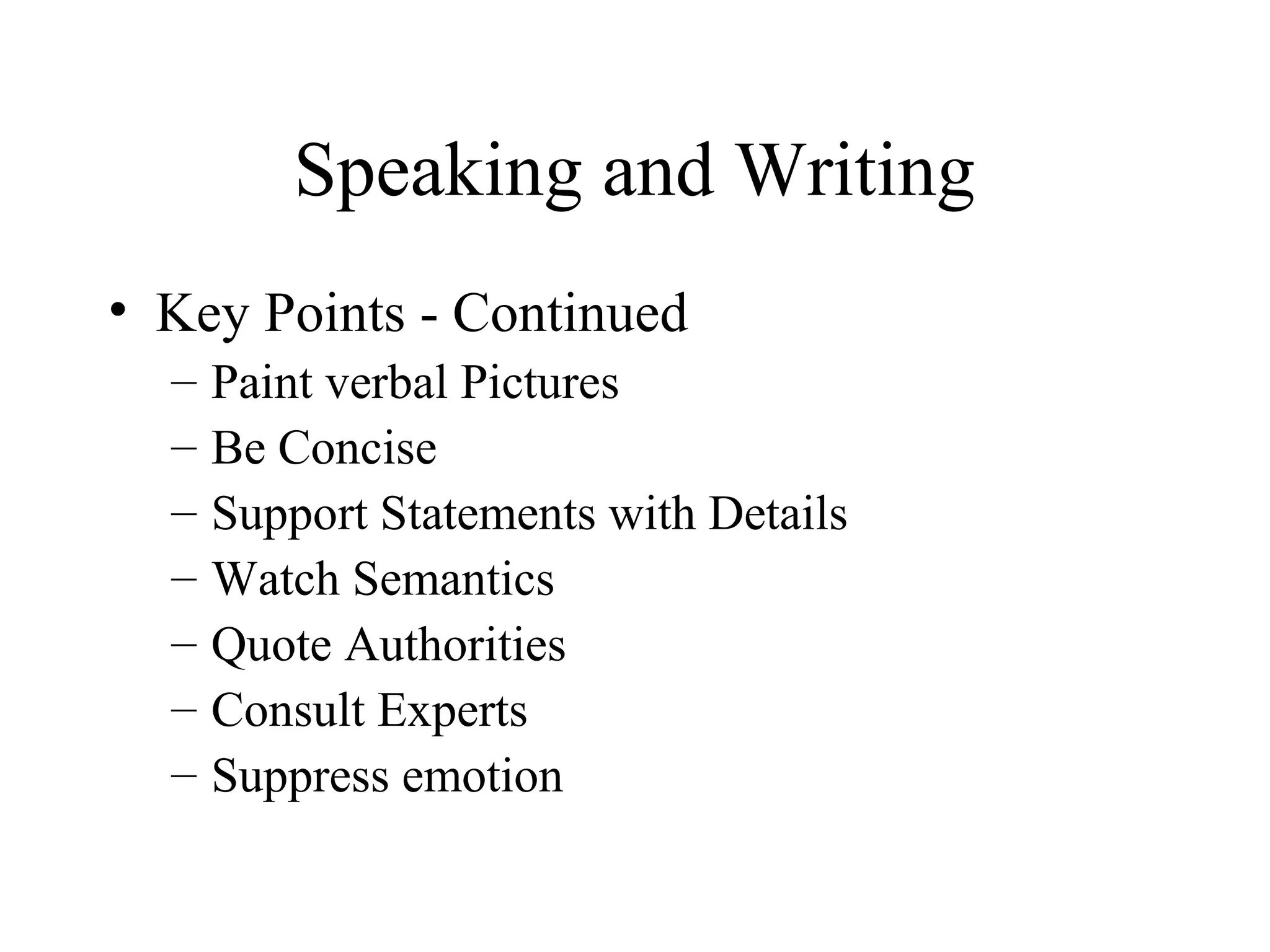
Speaking and Writing
• Key Points - Continued
  –   Paint verbal Pictures
  –   Be Concise
  –   Support Statements with Details
  –   Watch Semantics
  –   Quote Authorities
  –   Consult Experts
  –   Suppress emotion
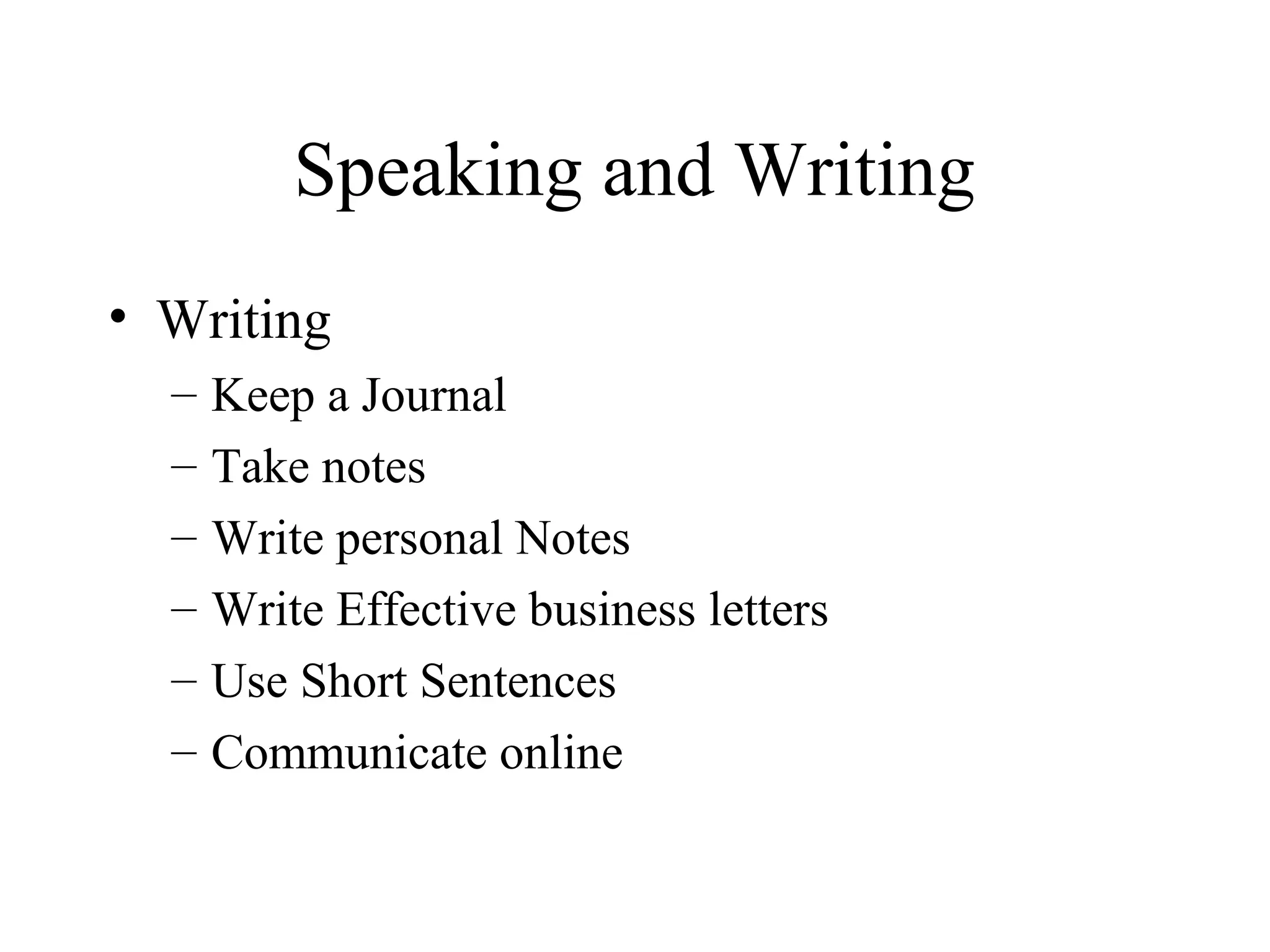
Speaking and Writing
• Writing
  –   Keep a Journal
  –   Take notes
  –   Write personal Notes
  –   Write Effective business letters
  –   Use Short Sentences
  –   Communicate online
General Tips
• Reading
  –   Read
  –   Keep up with Current Events
  –   Read Something Inspirational
  –   Use the Internet
General Tips
• Non Verbal
  –   Presence
  –   Give Nonverbal Cues
  –   Check Your Posture
  –   Dress Appropriately
  –   Smile
  –   Touch
  –   Shake Hands Properly
General Tips
• Attitude
  –   Intend to Improve
  –   Visualize
  –   Be flexible
  –   Be Likable
  –   Commit to Being Truthful
  –   Empathize
  –   Don’t take yourself too seriously
General Tips
• Attitude – continued
  – Eliminate Negative Feelings
  – Be receptive to New Ideas
  – Take Responsibility
  – Respect the Other Person’s Point of View
  – Recognize the Impact of Stress on
    Communication
  – Be Real
General Tips
• Attitude – continued
  – Check Your attitude
General Tips
• Behavioral
  –   Laugh
  –   Use Good Manners
  –   Recognize Manipulative Behavior
  –   Recognize Condescending Manners
  –   Avoid Words that Hurt
  –   Change Abrasive Behavior
  –   Handle Disagreements with Tact
General Tips
• Miscellaneous
  –   Organize Productive Meetings
  –   Consider Experience Level
  –   Understand the Importance of Timing
  –   Present a Good Personal Image
Questions
Communication skills ppt1

Communication skills ppt1

  • 1.
    101 Ways toImprove Your Communication Skills Presented by Catherine Jaggard Reno, Nevada January 10, 2006
  • 2.
    Objectives • Communication • Techniques • Listening • Speaking and Listening • Speaking and Writing • General Tips
  • 3.
    Communication • Speaking – Know what you want to say – Control Fear – Stop Talking and Listen – Think before you talk – Believe in your message – Repeat Major Points – Find Out what your Listener wants
  • 4.
    Communication • Techniques – Define Acronyms – Reduce Jargon – Level Objections – Use Humor – Anecdotes and Stories – Ask for feedback – Increase your vocabulary
  • 5.
    Communication • Techniques -continued – Eliminate Audible Pauses – Enunciate Clearly – Practice Pronouncing Words Properly – Exercise Tongue, Jaws and Lips – Make Eye Contact – Gesture
  • 6.
    Communication • Techniques -continued – Pause – Speak more slowly – Speak faster – Vary Your Volume – Watch your tone – Record your voice
  • 7.
    Communication • Listening – Prepare to Listen – Focus on the Speaker – Screen Out Distractions – Concentrate on the Message – Listen to Tapes while you commute
  • 8.
    Communication • Speaking andListening – Ask Questions – Avoid Daydreaming – Accept Accents – Use mind mapping – Interview – Complaints – Telephone
  • 9.
    Speaking and Writing •Key Points – Write a Purpose Statement – Outline – Transfer Negative Emotions to Paper – Get to the Point – Explain Abstract words – Use Absolutes and Generalities Sparingly
  • 10.
    Speaking and Writing •Key Points - Continued – Ask for what you want – Use active verbs – Use gender neutral language – Cite Source of Statistical Data – Illustrate with personal examples – Express Emotion – Keep it simple (KISS) Method
  • 11.
    Speaking and Writing •Key Points - Continued – Paint verbal Pictures – Be Concise – Support Statements with Details – Watch Semantics – Quote Authorities – Consult Experts – Suppress emotion
  • 12.
    Speaking and Writing •Writing – Keep a Journal – Take notes – Write personal Notes – Write Effective business letters – Use Short Sentences – Communicate online
  • 13.
    General Tips • Reading – Read – Keep up with Current Events – Read Something Inspirational – Use the Internet
  • 14.
    General Tips • NonVerbal – Presence – Give Nonverbal Cues – Check Your Posture – Dress Appropriately – Smile – Touch – Shake Hands Properly
  • 15.
    General Tips • Attitude – Intend to Improve – Visualize – Be flexible – Be Likable – Commit to Being Truthful – Empathize – Don’t take yourself too seriously
  • 16.
    General Tips • Attitude– continued – Eliminate Negative Feelings – Be receptive to New Ideas – Take Responsibility – Respect the Other Person’s Point of View – Recognize the Impact of Stress on Communication – Be Real
  • 17.
    General Tips • Attitude– continued – Check Your attitude
  • 18.
    General Tips • Behavioral – Laugh – Use Good Manners – Recognize Manipulative Behavior – Recognize Condescending Manners – Avoid Words that Hurt – Change Abrasive Behavior – Handle Disagreements with Tact
  • 19.
    General Tips • Miscellaneous – Organize Productive Meetings – Consider Experience Level – Understand the Importance of Timing – Present a Good Personal Image
  • 20.