Communincation skills
Tamer elmoghazy
District manager
Servier egypt scientific office
Tamer elmoghazy
District manger
Servier office scientific office
Commuincation skills II
 Mobile silent
Kindly …
 What is communication.
 Components of communication.
 Why ? One simple question.
 Types of communication.
 Non verbal communication.
 Why we care for it.
 Static and dynamic non verbal communication.
 Workshop.
 Components of nonverbal communication.
 Analysis of some famous nonverbal communication movements.
 Not to do(s)
 Discussion.
agenda
 “It is process of sending,giving or exchanging
information and ideas, which is often expressed
nonverbally or verbally.” (webster)
 Transmitting ideas or concepts from one person to
aother and results in an efffect or response.
 Dynamic process where one person affects the other
either directly or indirectly.
 A social process to communicate others to achieve a
common goal.
What is communication
 Sender
 Recipient
 Message
 channel
 Feedback
 distortion
To remember … components
 Why we communicate ?
to transmit ideas , concepts , create a social media and
to achieve a common goal.
To remember ..The simple question
 Non verbal : which contributes with 70% almost.
1. Body language.
2. Gestures.
3. Facial expressions
 Verbal : which contributes with 30% .
1. Clear understood language.
2. Voice modulation.
To remember … types
 Should match with the wording in verbal
commuinication.
 Asssures and clarifies the verbal communication.
 Nonverbal expressions stick to the memory
 It transmits emotions and feelings easily and clearly
Why do we care about nonverbal
communication
 It is the act of speaking without using words.
 It contributes to 70% of the communication process.
 It should match or should be co-ordinate with the
verbal speach.
 Loss of co-ordination leads to distortion(!)
 Eg. : a manager calls a good employee to inform him
about his rellocation , but if the manager’s mind is
busy with something else the employee may receive it
as a punishment
Non verbal communication
 Related to the body (body language,gestures,voice etc)
 Flags,signals,gun shots etc
 Signs that denotes relegious or political or social
situation.
 Music,artisitic pieces.
Nonverbal communication
 Materialistic contact : shows feelings temper.like
hands shaking , eye contact ,shoulders patting.
 Posture : upright,relaxation or official,friendly.
 Distance : near or far … differs from one culture to
another.
 Direction : cooperatives vs opponents.
Static nonverbal communication
Features of nonverbal
communication
• Static nonverbal communication.
• Dynamic nonverbal communication
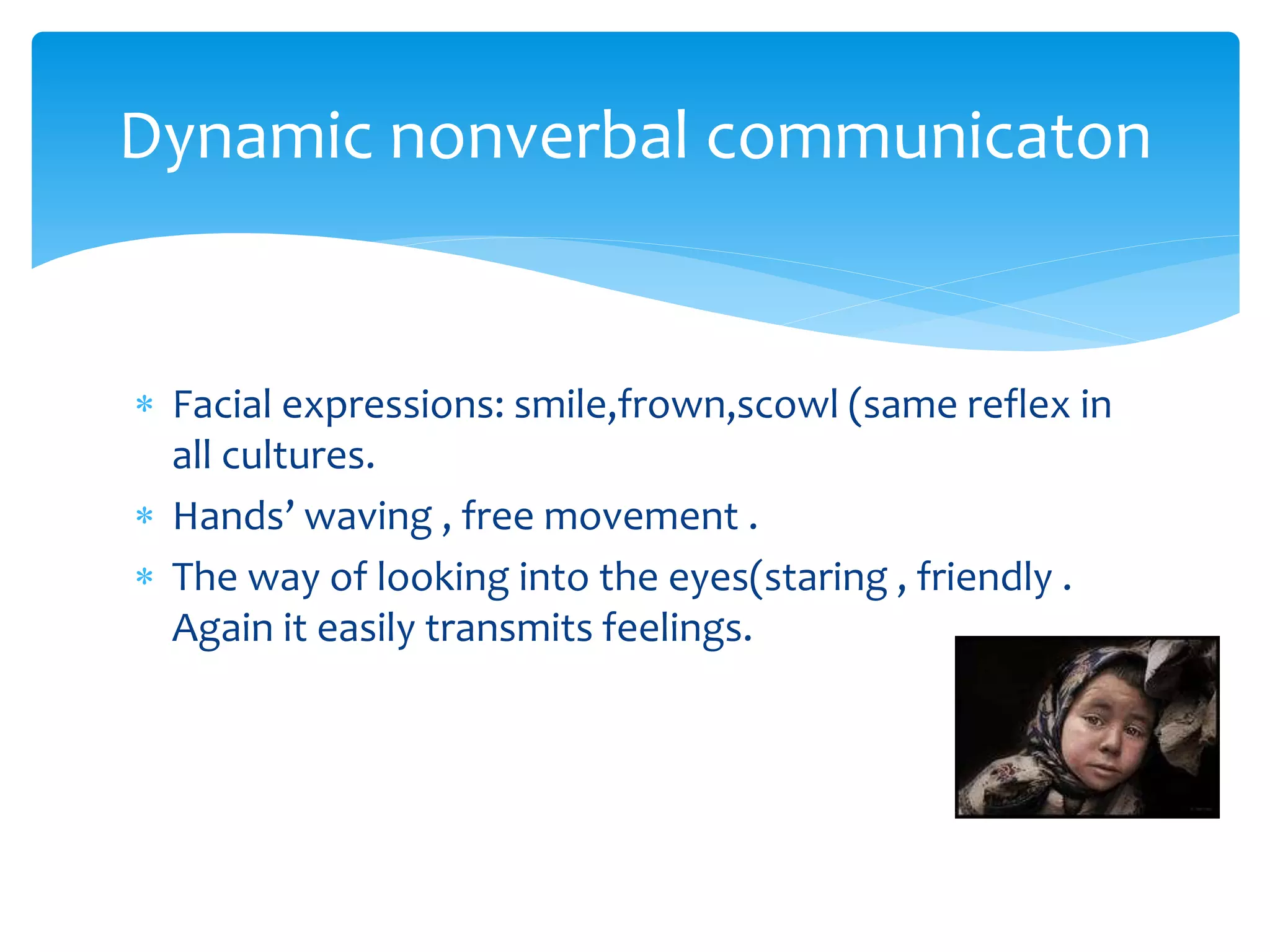
 Facial expressions: smile,frown,scowl (same reflex in
all cultures.
 Hands’ waving , free movement .
 The way of looking into the eyes(staring , friendly .
Again it easily transmits feelings.
Dynamic nonverbal communicaton
 it Includes many components.
 related to our body language.
 Helps to convey the message.
 Has to be assertive .
 Relavence is important.
Non verbal communication
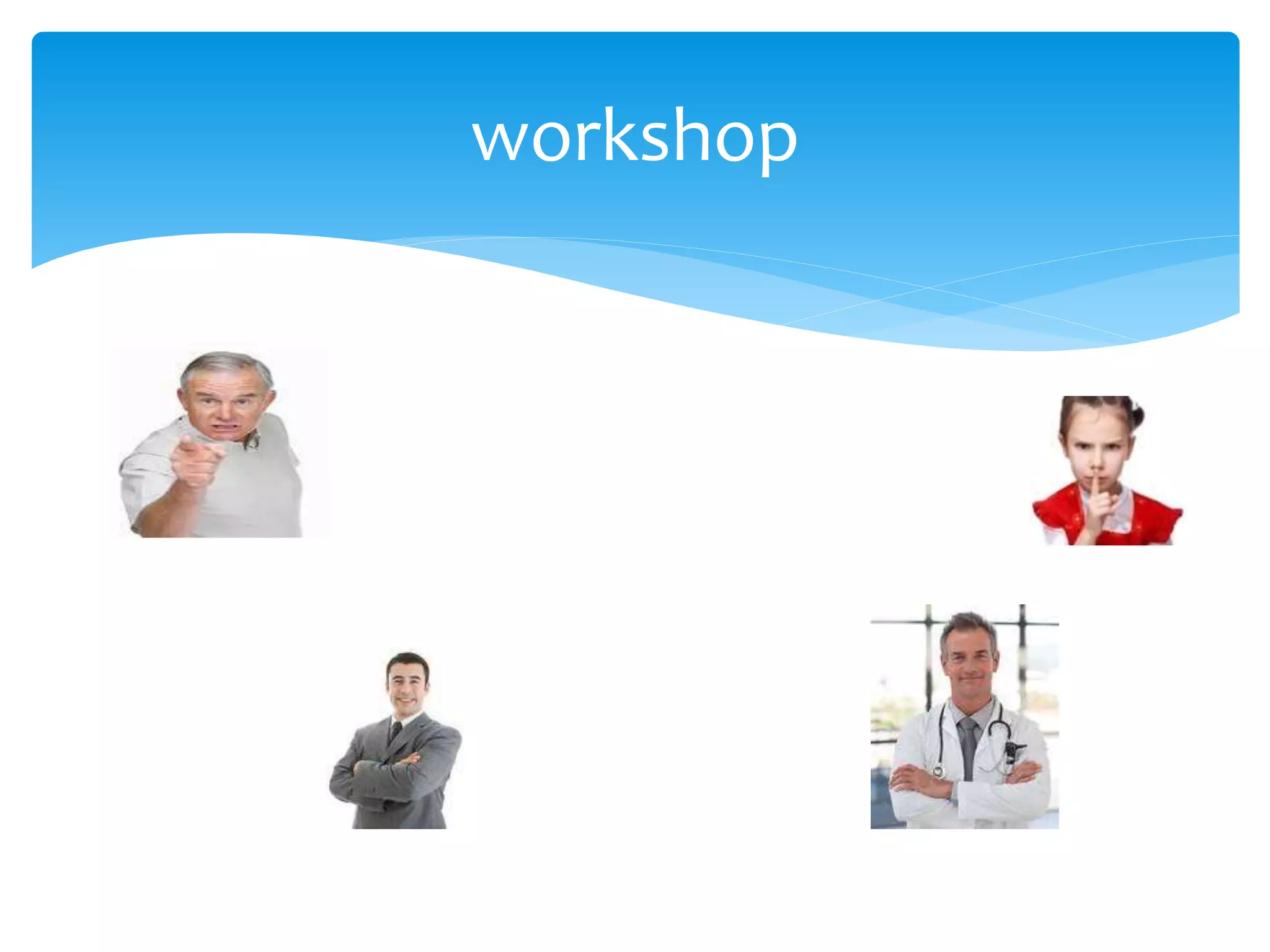
workshop
 Smiling.
 Frowning (111).
 Astonishment.
 Seriousness.
 Assertive.
1.Facial gestures :
 Crossed arms.
 Giving someone the finger.
 Legs shaking.
 Sitting upright.
 Fingers shaking.
 Body waving.
 Nodding.
2. Body language:
 Grooming.
 Dressing.
 Hygiene.
 Coordination.
 Matching.
3. Appearance :
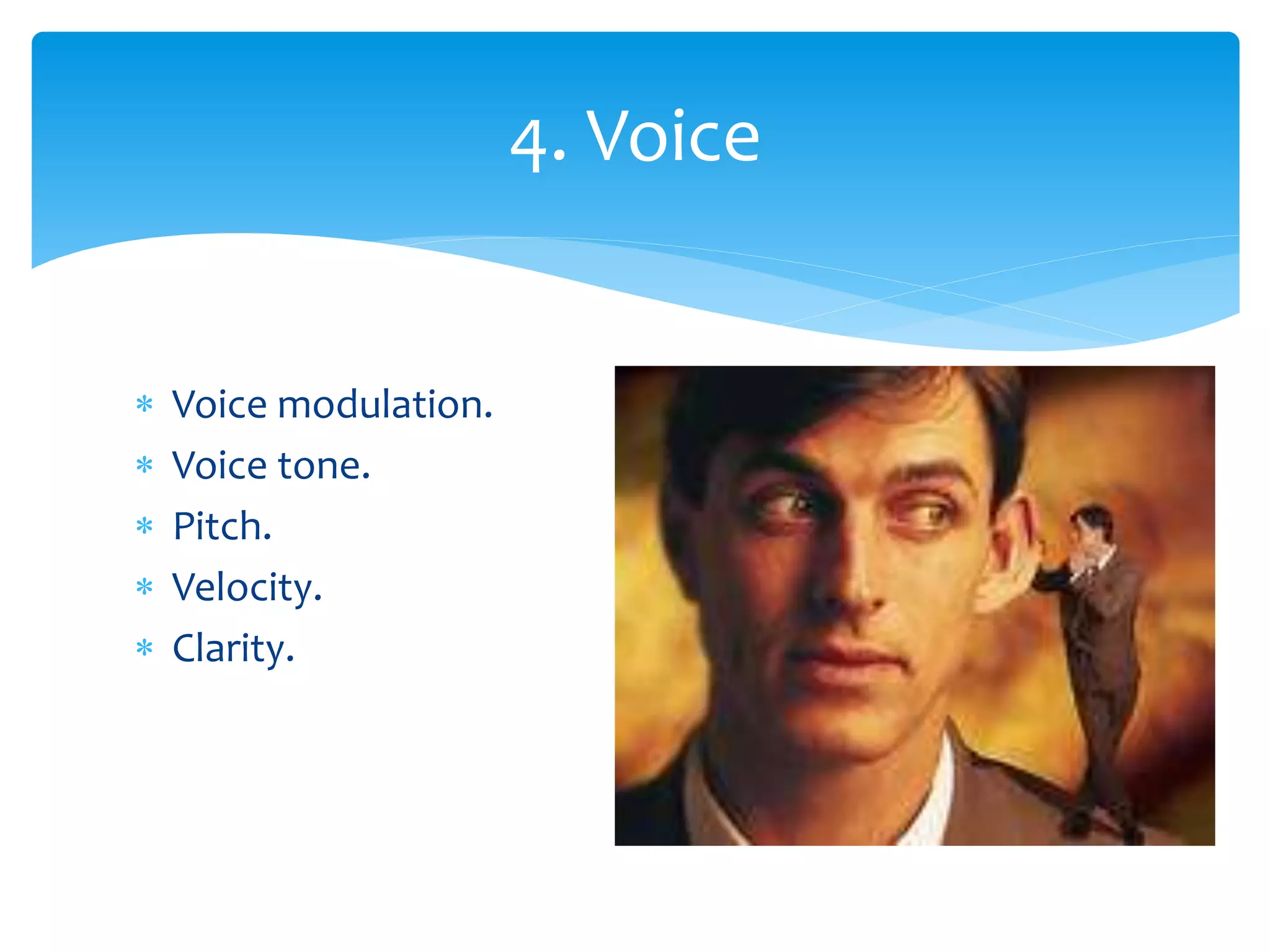
 Voice modulation.
 Voice tone.
 Pitch.
 Velocity.
 Clarity.
4. Voice
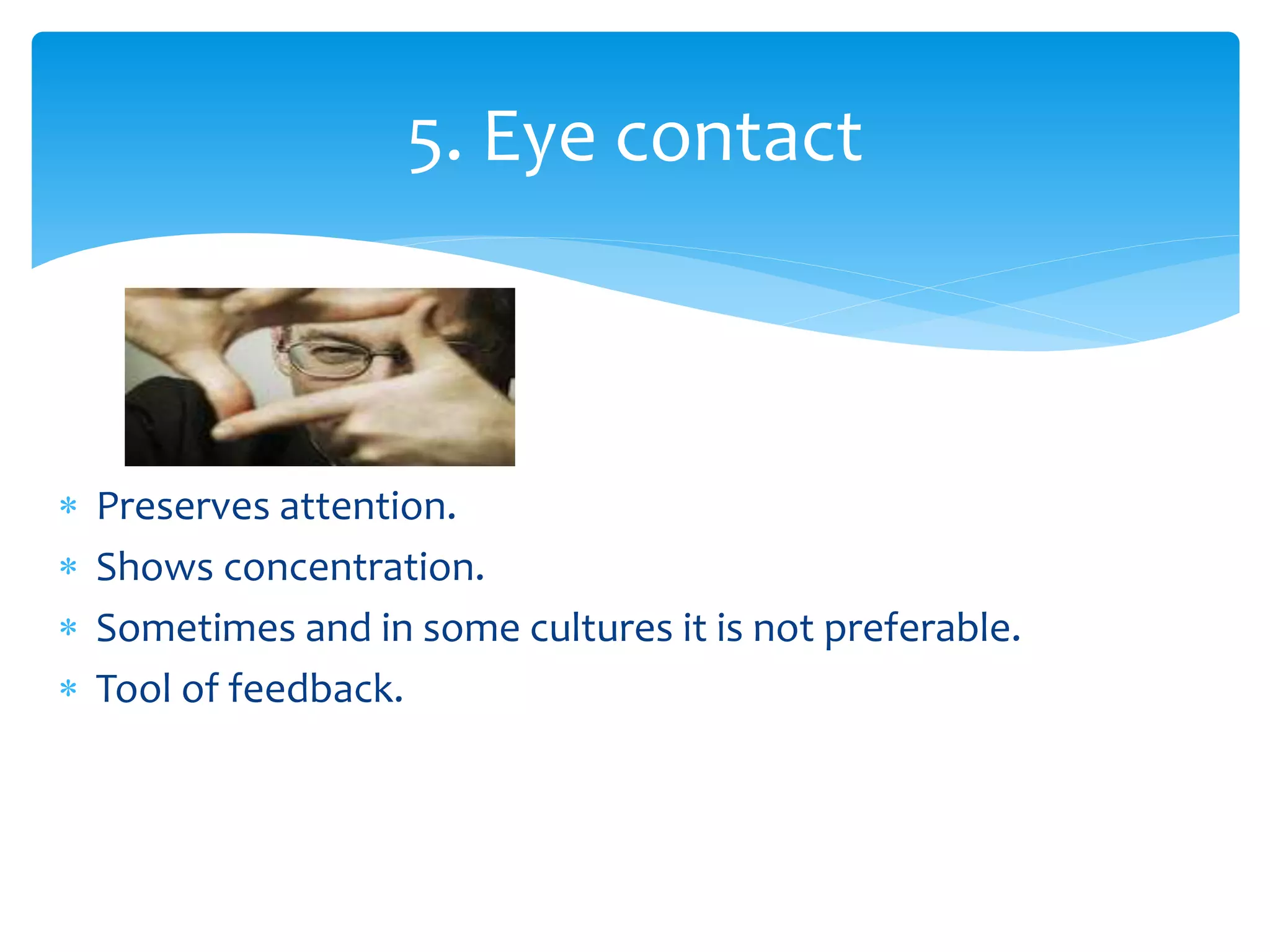
 Preserves attention.
 Shows concentration.
 Sometimes and in some cultures it is not preferable.
 Tool of feedback.
5. Eye contact
 Forwards and backwards movement of hand :
initiativity.
 Vertical (up and down ): while handshaking shows
that the person is expressive.
 Side movement : good listener and good conveyer of
info.
Analysis of some famous movements
 strong eye contact shows being frank and denotes
self confidence.
 While looking down shows modesty .
 Hazy eyes shows tiredeness or seeking an answer.
 Blinking : shyness or hesitation.
Eye movement
 Leaning or remoting means how close you are to
the otherr person
 Everyone has a private zone that surrounds him and it
widens as far as the person’s social position gets
higher.
 Leaning on your speaker means intimity or insult.
 The parameter is the accompanying body language .
Leaning or remoting
 It complements the speech content like
pitch,tone,rate.
 It shows clearly what you mean and helps the
recipient to understand your message.
 The speaker or the sender should care for his voice
tone , speech velocity etc.
Way of speaking
 It is an important means of communication.
 Used to make pauses of silence to create a space of
interst or tension.
 May be used as a space between message parts.
 May show admiring or not.
 Also it complements with other body langauage
items.
Silence !!!
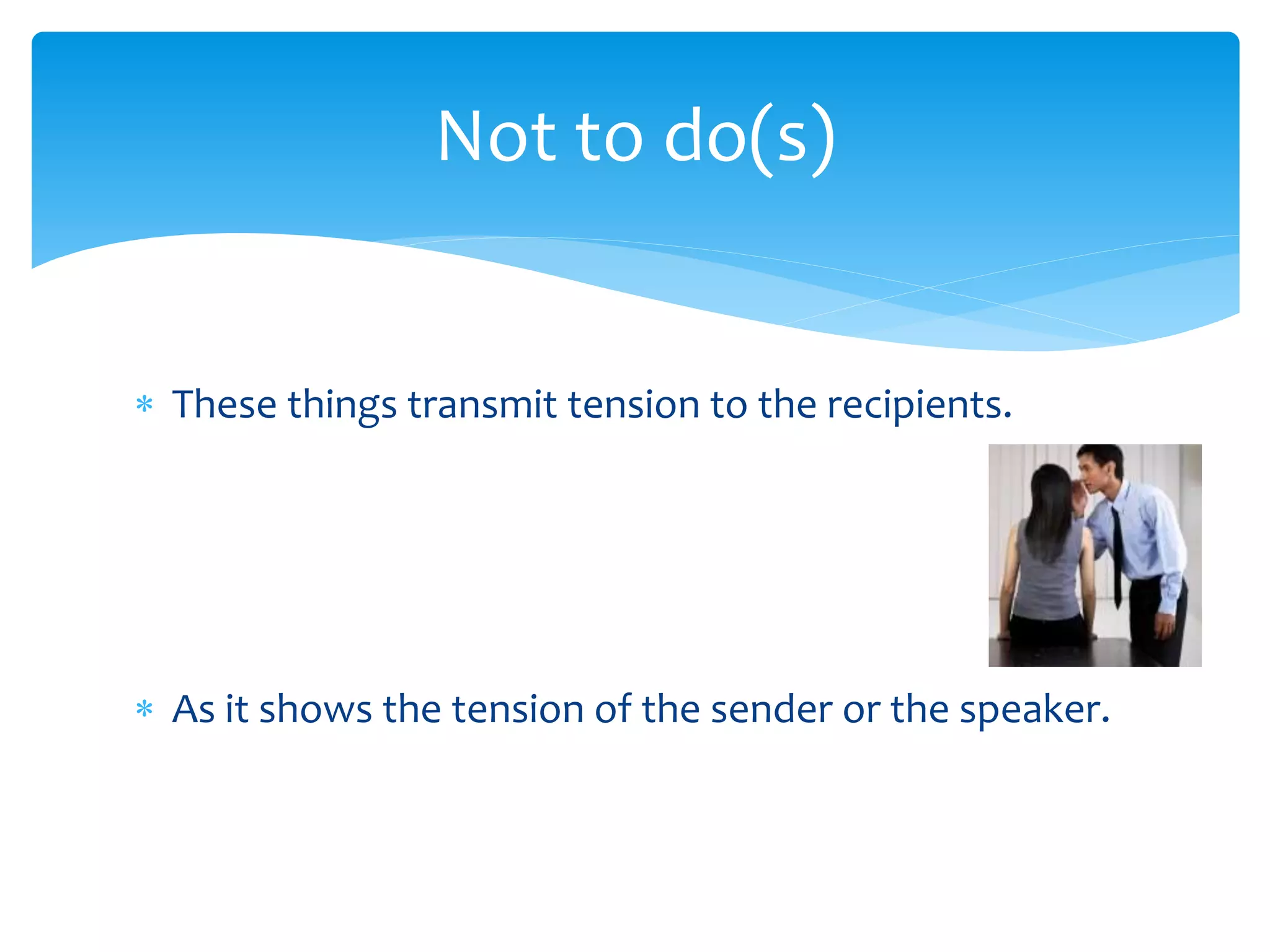
 These things transmit tension to the recipients.
 As it shows the tension of the sender or the speaker.
Not to do(s)
 Key medals.
 Coins.
 Frowning.
 Lip licking.
 Hair dressing.
 Hands in the pockets.
 Index finger pointing
Not to do(s)

Communication skills

  • 1.
    Communincation skills Tamer elmoghazy Districtmanager Servier egypt scientific office
  • 2.
    Tamer elmoghazy District manger Servieroffice scientific office Commuincation skills II
  • 3.
  • 4.
     What iscommunication.  Components of communication.  Why ? One simple question.  Types of communication.  Non verbal communication.  Why we care for it.  Static and dynamic non verbal communication.  Workshop.  Components of nonverbal communication.  Analysis of some famous nonverbal communication movements.  Not to do(s)  Discussion. agenda
  • 5.
     “It isprocess of sending,giving or exchanging information and ideas, which is often expressed nonverbally or verbally.” (webster)  Transmitting ideas or concepts from one person to aother and results in an efffect or response.  Dynamic process where one person affects the other either directly or indirectly.  A social process to communicate others to achieve a common goal. What is communication
  • 6.
     Sender  Recipient Message  channel  Feedback  distortion To remember … components
  • 7.
     Why wecommunicate ? to transmit ideas , concepts , create a social media and to achieve a common goal. To remember ..The simple question
  • 8.
     Non verbal: which contributes with 70% almost. 1. Body language. 2. Gestures. 3. Facial expressions  Verbal : which contributes with 30% . 1. Clear understood language. 2. Voice modulation. To remember … types
  • 9.
     Should matchwith the wording in verbal commuinication.  Asssures and clarifies the verbal communication.  Nonverbal expressions stick to the memory  It transmits emotions and feelings easily and clearly Why do we care about nonverbal communication
  • 10.
     It isthe act of speaking without using words.  It contributes to 70% of the communication process.  It should match or should be co-ordinate with the verbal speach.  Loss of co-ordination leads to distortion(!)  Eg. : a manager calls a good employee to inform him about his rellocation , but if the manager’s mind is busy with something else the employee may receive it as a punishment Non verbal communication
  • 11.
     Related tothe body (body language,gestures,voice etc)  Flags,signals,gun shots etc  Signs that denotes relegious or political or social situation.  Music,artisitic pieces. Nonverbal communication
  • 12.
     Materialistic contact: shows feelings temper.like hands shaking , eye contact ,shoulders patting.  Posture : upright,relaxation or official,friendly.  Distance : near or far … differs from one culture to another.  Direction : cooperatives vs opponents. Static nonverbal communication
  • 13.
    Features of nonverbal communication •Static nonverbal communication. • Dynamic nonverbal communication
  • 14.
     Facial expressions:smile,frown,scowl (same reflex in all cultures.  Hands’ waving , free movement .  The way of looking into the eyes(staring , friendly . Again it easily transmits feelings. Dynamic nonverbal communicaton
  • 15.
     it Includesmany components.  related to our body language.  Helps to convey the message.  Has to be assertive .  Relavence is important. Non verbal communication
  • 16.
  • 17.
     Smiling.  Frowning(111).  Astonishment.  Seriousness.  Assertive. 1.Facial gestures :
  • 18.
     Crossed arms. Giving someone the finger.  Legs shaking.  Sitting upright.  Fingers shaking.  Body waving.  Nodding. 2. Body language:
  • 19.
     Grooming.  Dressing. Hygiene.  Coordination.  Matching. 3. Appearance :
  • 20.
     Voice modulation. Voice tone.  Pitch.  Velocity.  Clarity. 4. Voice
  • 21.
     Preserves attention. Shows concentration.  Sometimes and in some cultures it is not preferable.  Tool of feedback. 5. Eye contact
  • 22.
     Forwards andbackwards movement of hand : initiativity.  Vertical (up and down ): while handshaking shows that the person is expressive.  Side movement : good listener and good conveyer of info. Analysis of some famous movements
  • 23.
     strong eyecontact shows being frank and denotes self confidence.  While looking down shows modesty .  Hazy eyes shows tiredeness or seeking an answer.  Blinking : shyness or hesitation. Eye movement
  • 24.
     Leaning orremoting means how close you are to the otherr person  Everyone has a private zone that surrounds him and it widens as far as the person’s social position gets higher.  Leaning on your speaker means intimity or insult.  The parameter is the accompanying body language . Leaning or remoting
  • 25.
     It complementsthe speech content like pitch,tone,rate.  It shows clearly what you mean and helps the recipient to understand your message.  The speaker or the sender should care for his voice tone , speech velocity etc. Way of speaking
  • 26.
     It isan important means of communication.  Used to make pauses of silence to create a space of interst or tension.  May be used as a space between message parts.  May show admiring or not.  Also it complements with other body langauage items. Silence !!!
  • 27.
     These thingstransmit tension to the recipients.  As it shows the tension of the sender or the speaker. Not to do(s)
  • 28.
     Key medals. Coins.  Frowning.  Lip licking.  Hair dressing.  Hands in the pockets.  Index finger pointing Not to do(s)

Editor's Notes

  • #14 Static nonverbal communicationDynamic nonverbal communication
  • #29 الحركات الآتية تؤدي إلى توتر المستمعين وتظهر توتر القائم بالعرض: اللعب بالسلسلة أو المفاتيح أو العملة النقدية. العبوس أو التقطيب. لعق الشفاه. تنسيق الشعر أو الملابس. وضع اليد في الجيب.