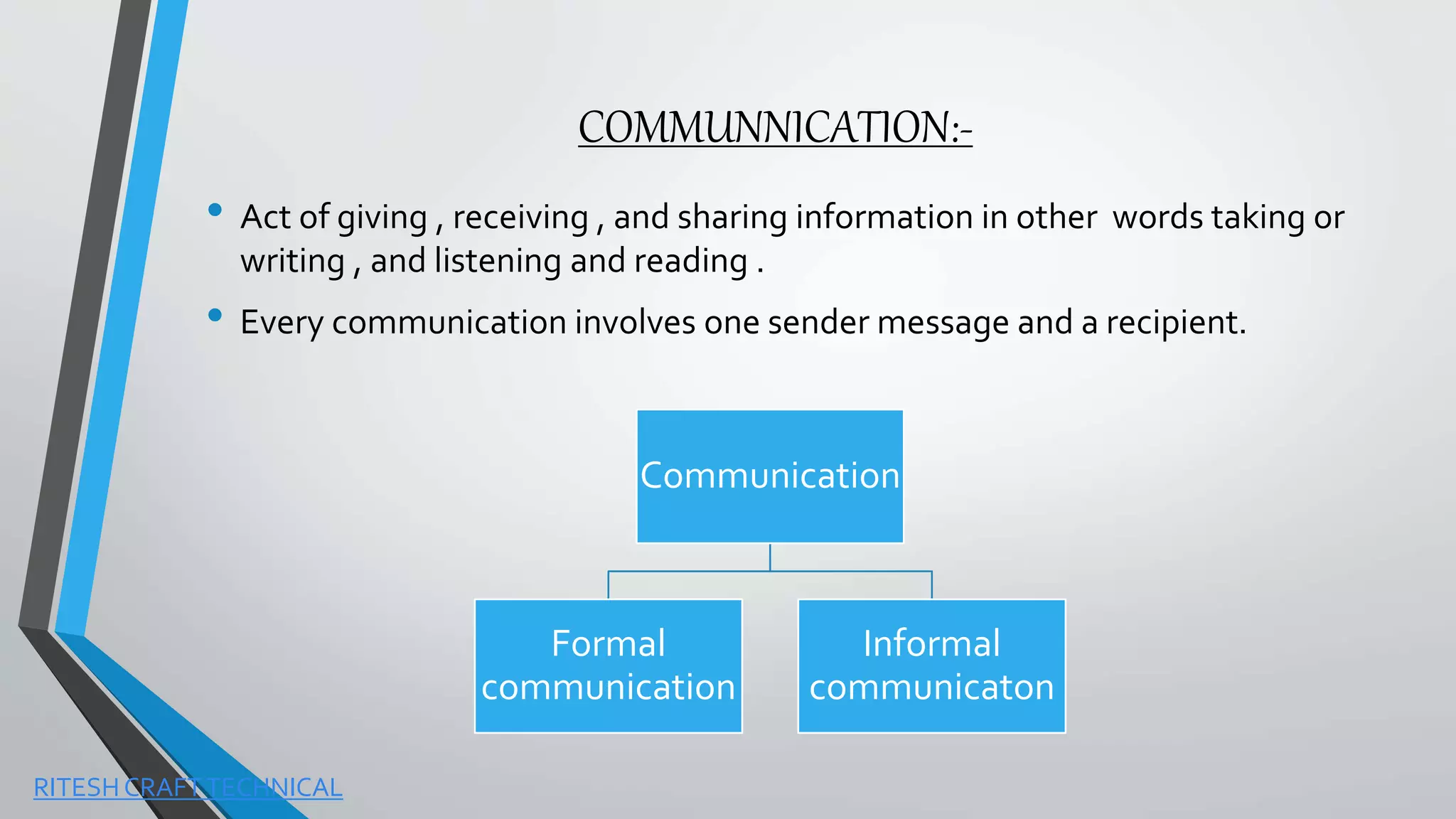
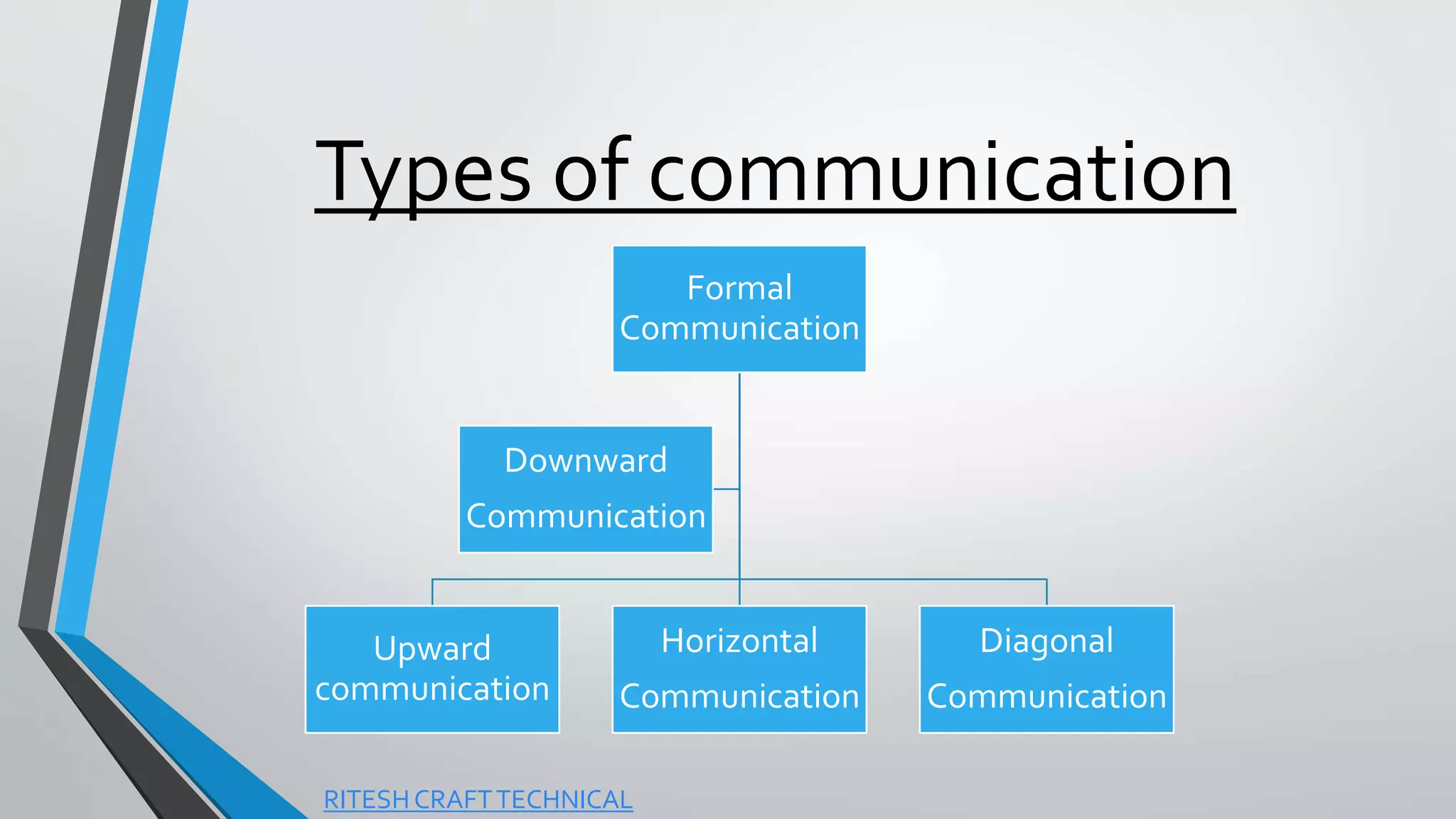
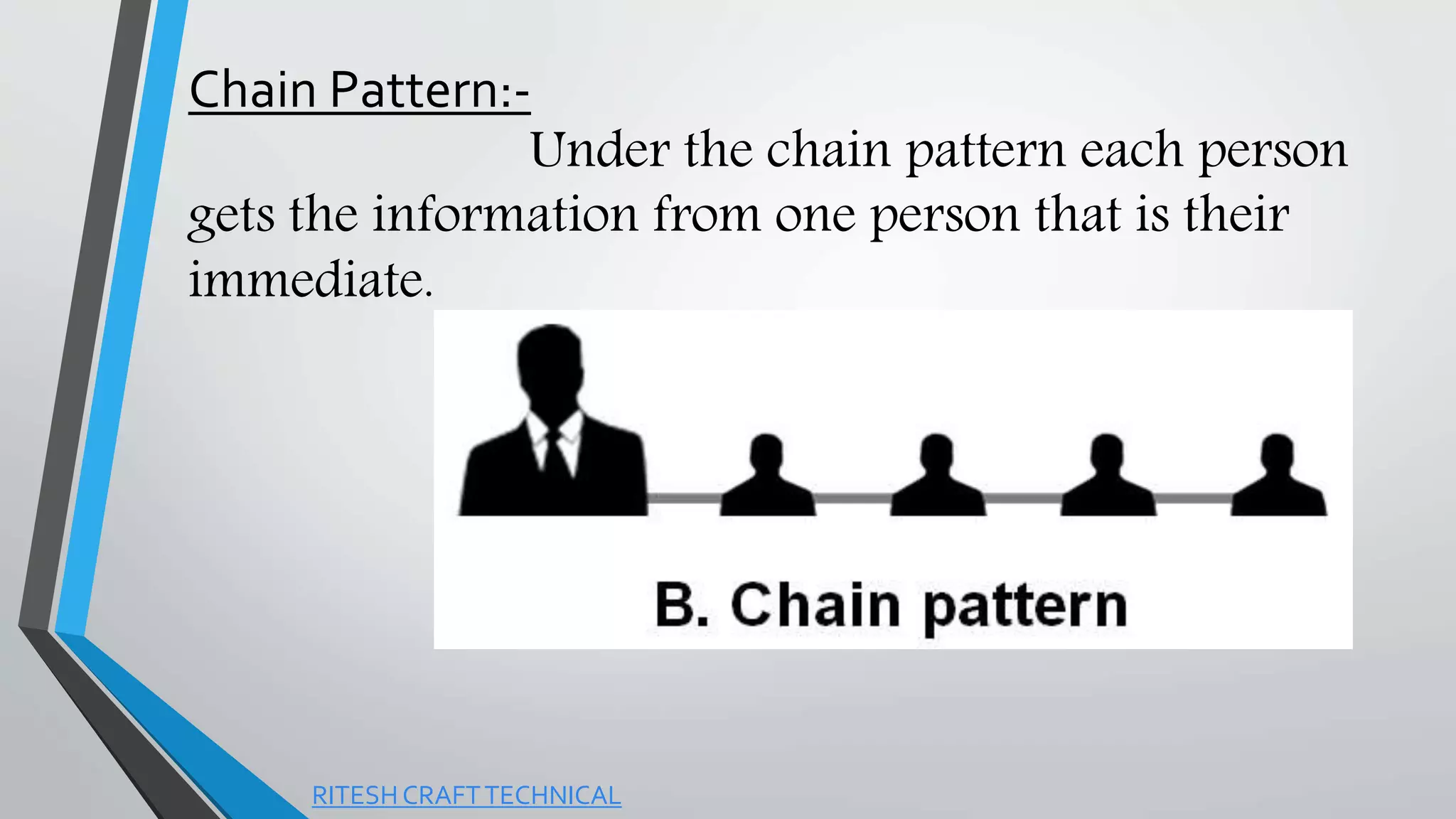
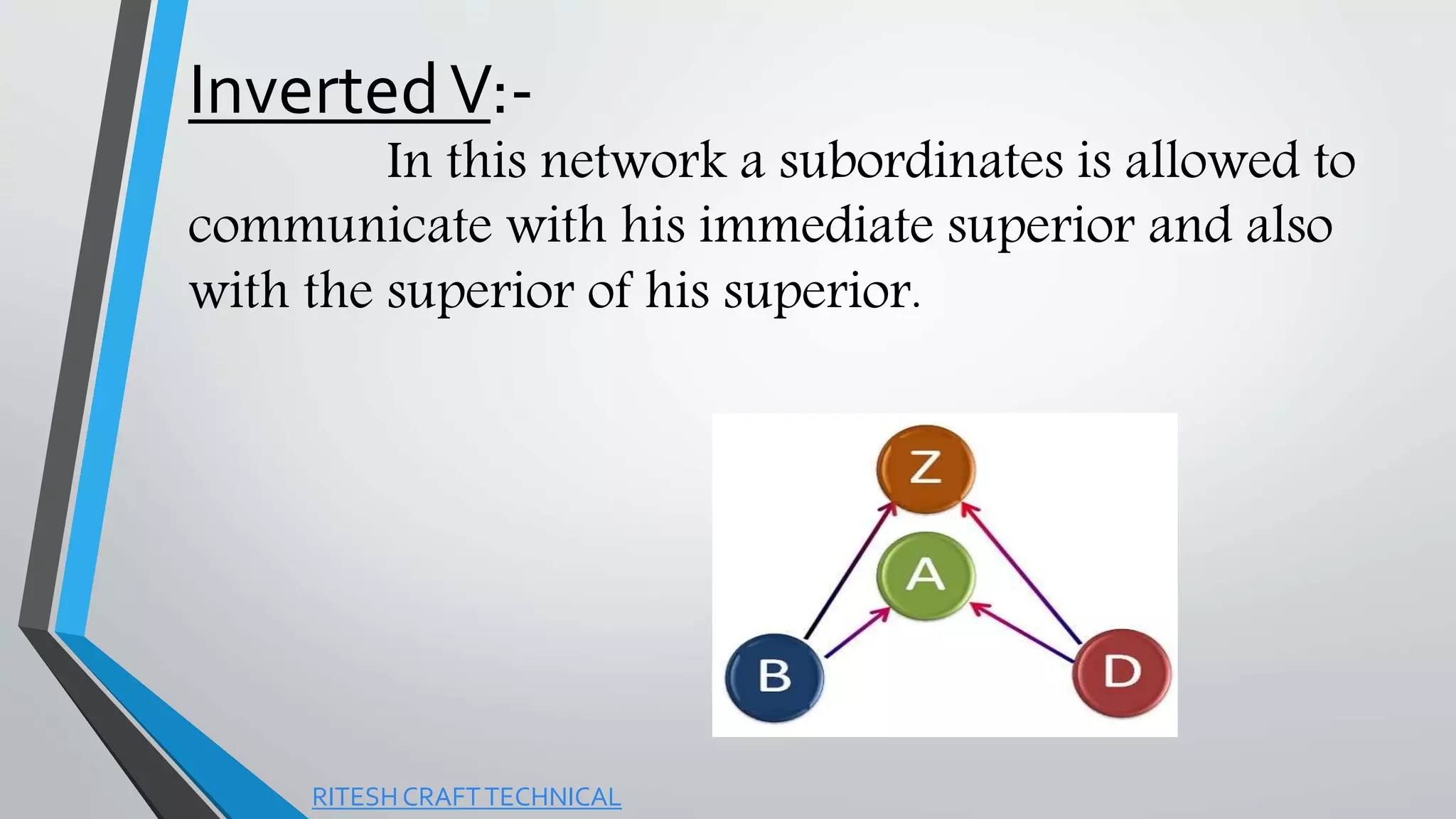
This document discusses formal communication in organizations. It defines formal communication as official, written communication such as notices, letters, and memos. It describes the different types of formal communication as upward, horizontal, diagonal, and downward. Advantages of formal communication include its systematic nature, ease of fixing responsibilities, and ability to exercise control. Disadvantages are delays due to chains of command and impersonal nature. Formal communication networks can take the form of wheel, chain, circle, channel, or inverted v patterns to dictate how information flows within an organization.