COMMUNICATION AND
INTERPERSONAL SKILLS
GROUP 10
AYUSHI GUPTA
SUBHASHANI JAISWAL
HRIDAL BORA
CHIRANJEEVI
PHANINDRA REDDY
JUNAID ALI
WHAT IS COMMUNICATION
• Communication is defined as the process of
transmitting and receiving ideas, informations and
messages
• In every day language, it is an act of giving and
receiving information
EFFECTIVE COMMUINCATION
• Every platform for communication involves a large number of experiences,
actions and emotions
• Communication is said to be effective when the receiver understand the same
meaning that the sender intends to convey
• In other words, excellent or effective communication is the ability to receive
a transmitted message by the sender and have the receiver be able to replicate
the form and intent of the message in the receiver’s mind
7C’s OF EFFECTIVE COMMUNICATION
• Completeness
• Conciseness
• Consideration
• Clarity
• Concreteness/Contribution
• Courtesy
• Correctness
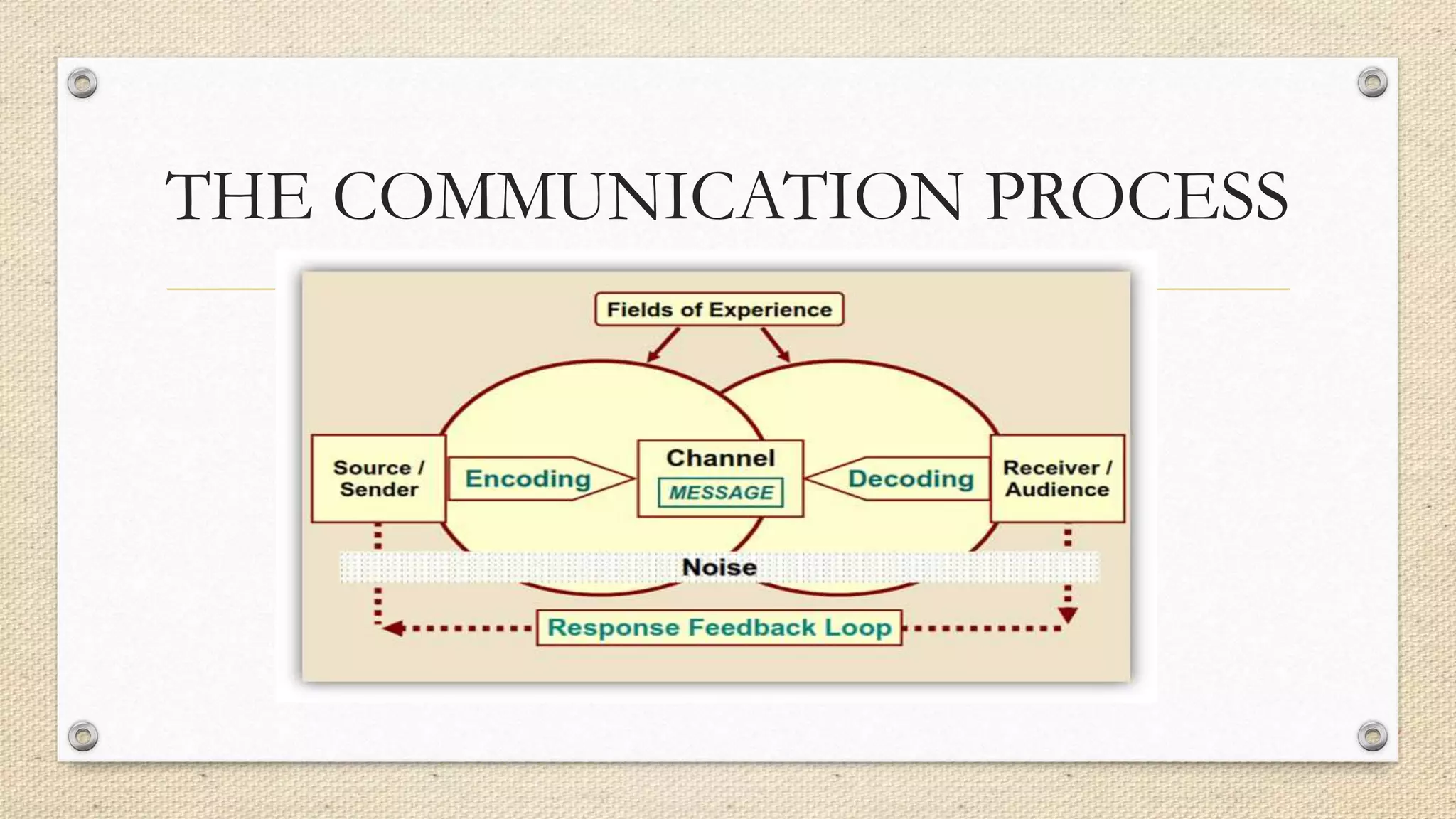
THE COMMUNICATION PROCESS
COMMUNICATION ISSUES
• Written Communication
• Verbal and Non Verbal Communication
• The Grapevine
• Electronic Media
BARRIERS OF COMMUNICATION
• The noise barrier
• The feedback problem
• The problem of media selection
• Mental barriers
• The problems of language and articulation
• Physical barriers
• Personal barriers
Continued to..
• Cultural barriers
• Interpersonal barriers
• Information overload
• Passive listening
WHAT IS INTERPERSONAL SKILLS
• Interpersonal skills is all about working with other people
• In a business setting, the term generally refers to an employee’s ability to get
along with others while performing his job
• Interpersonal skills are actually characteristics traits like manners, courtesy,
habits, behaviour and appearance which helps us to communicate and
maintain relationship with others
LIST OF INTERPERSONAL SKILLS
• Verbal communication
• Non-Verbal Communication
• Listening
• Questioning
• Manners
• Problem solving
• Assertiveness
HEALTHY INTERPERSONAL
RELATIONSHIP SERVE USEFUL
FUNCTIONS:
• Promoting effective coordination
• Facilitating teamwork and collaboration
• Motivating individuals to put in extra
work
• Creating a supportive working climate
characterized by loyalty and trust
UNHEALTHY INTERPERSONAL
RELATIONSHIP MAY INCLUDE:
• Low morale and lack of motivation
• Unwillingness to put in extra effort
• Decreased loyalty
• Increase absenteeism
• High turnover
• Poor productivity
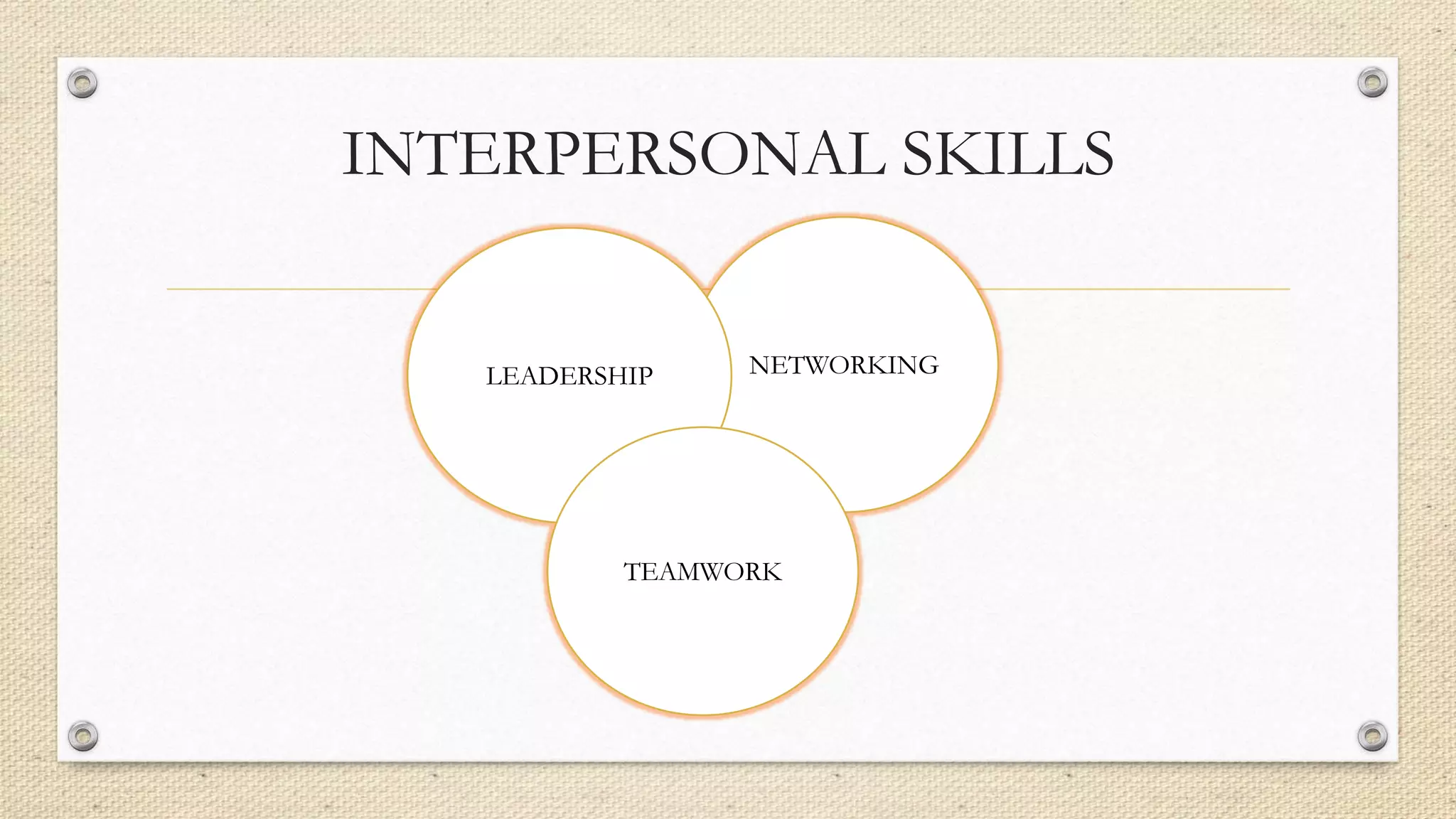
NETWORKINGLEADERSHIP
TEAMWORK
INTERPERSONAL SKILLS
NETWORKING
• Self confidence
• Network Building
• Effective communication
TEAM WORK
• Mentoring
• Group Work
• Decision Making
• Delegation
• Collaboration
LEADERSHIP
• Mentoring
• Decision making
• Delegation
• Motivating others
PRINCIPLES OF INTERPERSONAL
COMMUNICATION
• Inevitable
• Irrevocable
• Open to misinterpretation
• Highly contextual
BARRIERS TO INTERPERSONAL
COMMUNICATION
• Ego
• Personal attitude
• Stress
• Position
• Distance
• Culture
• Technology
GETTING ALONG WITH OTHERS
• It is always good to check one’s assumptions
• Do not assume that people have ignored you
• Sometime a request is refused, do not take it personally
• Typecasting people is perhaps the biggest barrier to communication
• Trust your own judgement rather than that of others
INTERPERSONAL COMMUNICATION
STYLES
• Command and control style
• Cooperative style
• Systematic style
• Inspirational style
• The passive style
• The avoidance style
BASIC MODES OF CONFLICT
• Accommodating – low assertiveness and high cooperativeness
• Avoiding – low assertiveness and low cooperativeness
• Collaborating – high assertiveness and high cooperativeness
• Competing – high assertiveness and low cooperativeness
• Compromising – moderate assertiveness and moderate cooperativeness
Description Differential Assertiveness Aggressive
characteristics • Avoid expressing feelings
• Speak softly
• Allow others to infringe their rights
• Poor eye contact
• Cant say no
• Always apologetic
• Cleary state their opinions
without violating those of
others
• Firm voice
• Stand up for their rights
• Good eye contact
• Respectful
• Good listeners
• Express feelings openly
• Harsh tone
• Criticize
• Attention seeking
• Poor listeners
impact • Feel left out
• Depressed
• Confused
• Resentful
• Create positive environment
around them
• Trustworthy
• High creditability
• Create positive environment
around them
• Trustworthy
• High creditability
Organizational effect • Not considered for important projects
• Not given any responsibilities
• Liked and respected
• Consulted on various matters
• Highly disliked
• Unpopular
• isolated
causes • Low self-esteem
• Unfavorable past experience
• Confident
• High self-esteem
• Non-judgmental attitude
• Low self-esteem
• Unfavorable past experience
SIX WAYS TO BE ASSERTIVE
• Basic assertion - saying it bluntly
• Empathetic assertion – saying it softly
• Broken record – saying it repeatedly
• Discrepancy assertion – expressing the contradiction
• Outcome assertion - or else communication
Communication and interpersonal skills

Communication and interpersonal skills

  • 1.
    COMMUNICATION AND INTERPERSONAL SKILLS GROUP10 AYUSHI GUPTA SUBHASHANI JAISWAL HRIDAL BORA CHIRANJEEVI PHANINDRA REDDY JUNAID ALI
  • 2.
    WHAT IS COMMUNICATION •Communication is defined as the process of transmitting and receiving ideas, informations and messages • In every day language, it is an act of giving and receiving information
  • 3.
    EFFECTIVE COMMUINCATION • Everyplatform for communication involves a large number of experiences, actions and emotions • Communication is said to be effective when the receiver understand the same meaning that the sender intends to convey • In other words, excellent or effective communication is the ability to receive a transmitted message by the sender and have the receiver be able to replicate the form and intent of the message in the receiver’s mind
  • 4.
    7C’s OF EFFECTIVECOMMUNICATION • Completeness • Conciseness • Consideration • Clarity • Concreteness/Contribution • Courtesy • Correctness
  • 5.
  • 6.
    COMMUNICATION ISSUES • WrittenCommunication • Verbal and Non Verbal Communication • The Grapevine • Electronic Media
  • 7.
    BARRIERS OF COMMUNICATION •The noise barrier • The feedback problem • The problem of media selection • Mental barriers • The problems of language and articulation • Physical barriers • Personal barriers
  • 8.
    Continued to.. • Culturalbarriers • Interpersonal barriers • Information overload • Passive listening
  • 9.
    WHAT IS INTERPERSONALSKILLS • Interpersonal skills is all about working with other people • In a business setting, the term generally refers to an employee’s ability to get along with others while performing his job • Interpersonal skills are actually characteristics traits like manners, courtesy, habits, behaviour and appearance which helps us to communicate and maintain relationship with others
  • 10.
    LIST OF INTERPERSONALSKILLS • Verbal communication • Non-Verbal Communication • Listening • Questioning • Manners • Problem solving • Assertiveness
  • 11.
    HEALTHY INTERPERSONAL RELATIONSHIP SERVEUSEFUL FUNCTIONS: • Promoting effective coordination • Facilitating teamwork and collaboration • Motivating individuals to put in extra work • Creating a supportive working climate characterized by loyalty and trust UNHEALTHY INTERPERSONAL RELATIONSHIP MAY INCLUDE: • Low morale and lack of motivation • Unwillingness to put in extra effort • Decreased loyalty • Increase absenteeism • High turnover • Poor productivity
  • 12.
  • 13.
    NETWORKING • Self confidence •Network Building • Effective communication
  • 14.
    TEAM WORK • Mentoring •Group Work • Decision Making • Delegation • Collaboration
  • 15.
    LEADERSHIP • Mentoring • Decisionmaking • Delegation • Motivating others
  • 16.
    PRINCIPLES OF INTERPERSONAL COMMUNICATION •Inevitable • Irrevocable • Open to misinterpretation • Highly contextual
  • 17.
    BARRIERS TO INTERPERSONAL COMMUNICATION •Ego • Personal attitude • Stress • Position • Distance • Culture • Technology
  • 18.
    GETTING ALONG WITHOTHERS • It is always good to check one’s assumptions • Do not assume that people have ignored you • Sometime a request is refused, do not take it personally • Typecasting people is perhaps the biggest barrier to communication • Trust your own judgement rather than that of others
  • 19.
    INTERPERSONAL COMMUNICATION STYLES • Commandand control style • Cooperative style • Systematic style • Inspirational style • The passive style • The avoidance style
  • 20.
    BASIC MODES OFCONFLICT • Accommodating – low assertiveness and high cooperativeness • Avoiding – low assertiveness and low cooperativeness • Collaborating – high assertiveness and high cooperativeness • Competing – high assertiveness and low cooperativeness • Compromising – moderate assertiveness and moderate cooperativeness
  • 21.
    Description Differential AssertivenessAggressive characteristics • Avoid expressing feelings • Speak softly • Allow others to infringe their rights • Poor eye contact • Cant say no • Always apologetic • Cleary state their opinions without violating those of others • Firm voice • Stand up for their rights • Good eye contact • Respectful • Good listeners • Express feelings openly • Harsh tone • Criticize • Attention seeking • Poor listeners impact • Feel left out • Depressed • Confused • Resentful • Create positive environment around them • Trustworthy • High creditability • Create positive environment around them • Trustworthy • High creditability Organizational effect • Not considered for important projects • Not given any responsibilities • Liked and respected • Consulted on various matters • Highly disliked • Unpopular • isolated causes • Low self-esteem • Unfavorable past experience • Confident • High self-esteem • Non-judgmental attitude • Low self-esteem • Unfavorable past experience
  • 22.
    SIX WAYS TOBE ASSERTIVE • Basic assertion - saying it bluntly • Empathetic assertion – saying it softly • Broken record – saying it repeatedly • Discrepancy assertion – expressing the contradiction • Outcome assertion - or else communication