Communication & Interpersonal Skills Jamshed Khan QAU Islamabad Pakistan
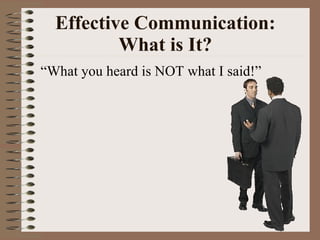
Effective Communication: What is It? “ What you heard is NOT what I said!”
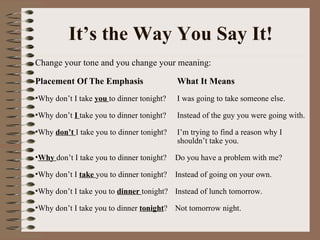
It’s the Way You Say It! Change your tone and you change your meaning: Placement Of The Emphasis    What It Means Why don’t I take  you  to dinner tonight?   I was going to take someone else. Why don’t  I   take you to dinner tonight?    Instead of the guy you were going with. Why  don’t  I take you to dinner tonight?    I’m trying to find a reason why I    shouldn’t take you. Why  don’t I take you to dinner tonight?    Do you have a problem with me? Why don’t I  take  you to dinner tonight?    Instead of going on your own. Why don’t I take you to  dinner  tonight?    Instead of lunch tomorrow. Why don’t I take you to dinner  tonight ?    Not tomorrow night.
Effective Communication: What is It? Effective communication  may be defined as:  Using  language that is appropriate  to others' levels of understanding.  Making sure  others receive  the information or knowledge  intended .  Developing relationships  with others.  Talking with others in a way that facilitates  openness, honesty and cooperation.   Providing  feedback .
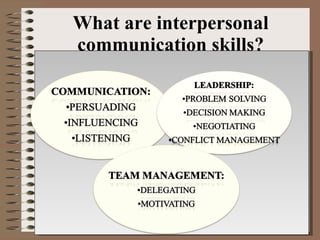
What are interpersonal communication skills?
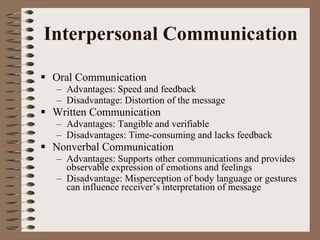
Interpersonal Communication Oral Communication Advantages: Speed and feedback Disadvantage: Distortion of the message Written Communication Advantages: Tangible and verifiable Disadvantages: Time-consuming and lacks feedback Nonverbal Communication Advantages: Supports other communications and provides observable expression of emotions and feelings Disadvantage: Misperception of body language or gestures can influence receiver’s interpretation of message
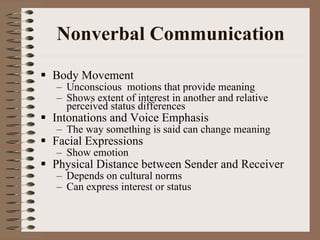
Nonverbal Communication Body Movement Unconscious  motions that provide meaning Shows extent of interest in another and relative perceived status differences Intonations and Voice Emphasis The way something is said can change meaning Facial Expressions Show emotion Physical Distance between Sender and Receiver Depends on cultural norms Can express interest or status
The Grapevine Three Main Grapevine Characteristics: Informal, not controlled by management Perceived by most employees as being more believable and reliable than formal communications Largely used to serve the self-interests of those who use it Results from: Desire for information about important situations Ambiguous conditions Conditions that cause anxiety Insightful to managers Serves employee’s social needs
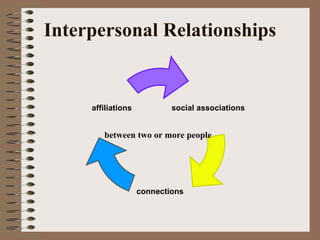
Interpersonal Relationships between two or more people social associations connections affiliations
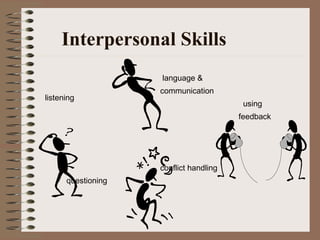
Interpersonal Skills listening questioning language &  communication using feedback conflict handling
Essential IP Competencies  Self awareness Control Motivation Acknowledging the interests of subordinates Communication skills
Developing IP Skills Developing Assertiveness Accepting Responsibility Managing Conflicts Avoiding Accommodating Competing/Forcing Collaborating Compromising
Interpersonal Skills Diversity empowers people Get the best from each employee Value differences Teams better than groups Team mission Diversity fills gaps in capabilities
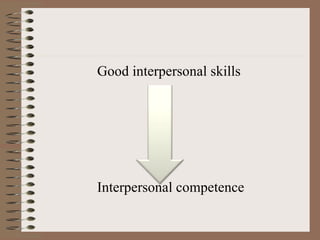
Good interpersonal skills  Interpersonal competence
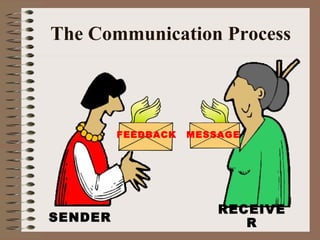
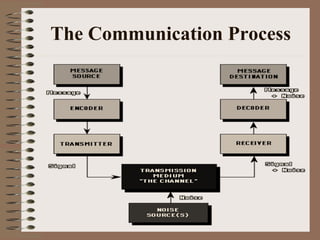
The Communication Process MESSAGE FEEDBACK SENDER RECEIVER
The Communication Process
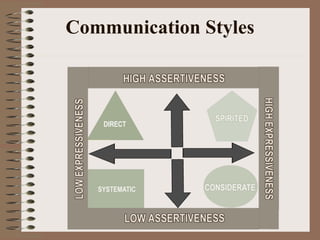
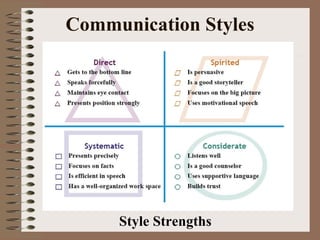
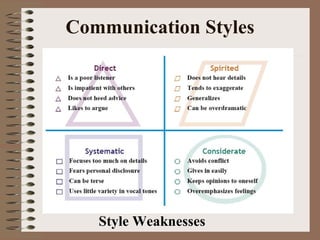
Communication Styles
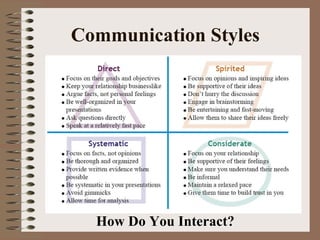
Communication Styles Style Strengths
Communication Styles Style Weaknesses
Communication Styles How Do You Interact?
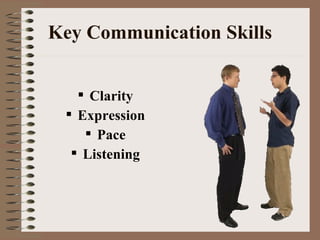
Key Communication Skills Clarity Expression Pace Listening
What Is Quality Communication? Communication is influenced by Age Gender Culture Education Change according to context and over time
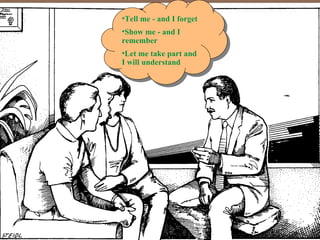
Tell me - and I forget Show me - and I remember Let me take part and I will understand
What is Conflict? Conflict occurs in situations in which there is opposition. Opposition occurs when a solution cannot be found in a disagreement.  Conflict is a disagreement through which the parties involved perceive a threat to their needs, well-being, interests or concerns. Perceive a threat can be physical, emotional, power, status, intellectual, etc.  Conflict is healthy and a normal part of any human relationship.
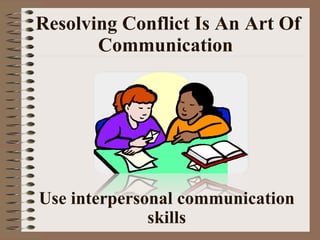
Resolving Conflict Is An Art Of Communication   Use interpersonal communication skills
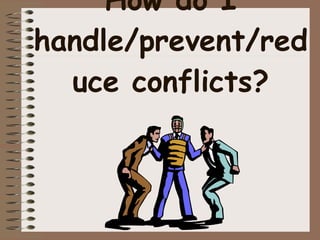
How do I handle/prevent/reduce conflicts?
Managing Conflict Like stress, conflict in the workplace can be productive or counterproductive. Managing conflict requires: Understanding Skill Knowledge Experience
Conflict and Negotiation Negotiation  is the process of working with the parties of a conflict to find a resolution. It requires a willingness to work together. The key is clear communication. There are four basic skills in the communication process: Listening Reading Speaking Writing
Conflict and Negotiation The first step in negotiation is defining as clearly as possible the problem as each person sees it. Placing blame should be avoided because it puts people on the defensive. Listening is an active process in which all of your attention is focused on the speaker. Try to empathize with the person who is speaking.  Empathy  is an understanding of a person’s situation or frame of mind.
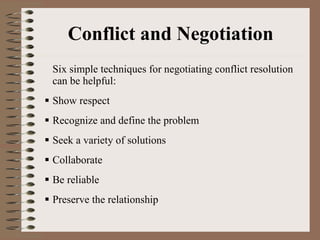
Conflict and Negotiation Six simple techniques for negotiating conflict resolution can be helpful: Show respect Recognize and define the problem Seek a variety of solutions Collaborate Be reliable Preserve the relationship
Conflict and Negotiation The problem is solved only when both sides reach a common understanding and agreement about what actions are to be taken.
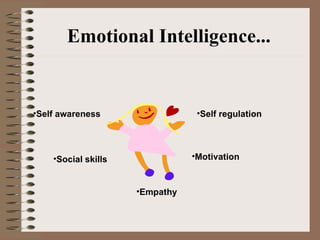
Emotional Intelligence... Self awareness Self regulation Motivation Empathy Social skills
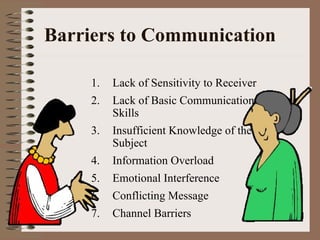
Barriers to Communication Lack of Sensitivity to Receiver Lack of Basic Communication Skills Insufficient Knowledge of the Subject Information Overload Emotional Interference Conflicting Message Channel Barriers
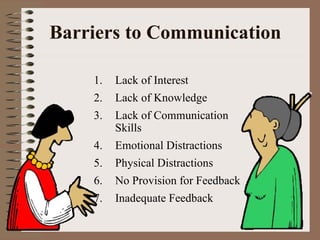
Barriers to Communication Lack of Interest Lack of Knowledge Lack of Communication Skills Emotional Distractions Physical Distractions No Provision for Feedback Inadequate Feedback
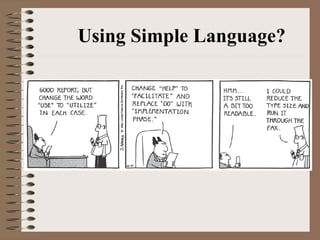
Using Simple Language?
In Summary… Effective communication occurs when there is shared meaning between sender and receiver. Communication Process involves a sender, receiver, message and feedback. Communication Styles include a measure of assertive and expressive modes. Communication Skills plays around the elements of clarity, expression, pace and listening. Barriers to Communication occurs when the communication process comprising the elements are interrupted.
  CONCLUSION If you have effective interpersonal communication skills, you have  Appropriate assertion skills Active listening skills The ability to accept criticism Respect for the face and dignity of the other person
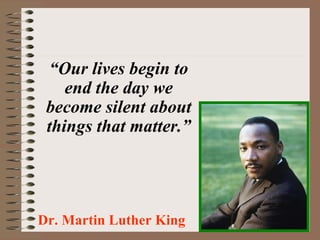
“ Our lives begin to end the day we become silent about things that matter.” Dr. Martin Luther King

Interpersonal skills

  • 1.
    Communication & InterpersonalSkills Jamshed Khan QAU Islamabad Pakistan
  • 2.
    Effective Communication: Whatis It? “ What you heard is NOT what I said!”
  • 3.
    It’s the WayYou Say It! Change your tone and you change your meaning: Placement Of The Emphasis What It Means Why don’t I take you to dinner tonight? I was going to take someone else. Why don’t I take you to dinner tonight? Instead of the guy you were going with. Why don’t I take you to dinner tonight? I’m trying to find a reason why I shouldn’t take you. Why don’t I take you to dinner tonight? Do you have a problem with me? Why don’t I take you to dinner tonight? Instead of going on your own. Why don’t I take you to dinner tonight? Instead of lunch tomorrow. Why don’t I take you to dinner tonight ? Not tomorrow night.
  • 4.
    Effective Communication: Whatis It? Effective communication may be defined as: Using language that is appropriate to others' levels of understanding. Making sure others receive the information or knowledge intended . Developing relationships with others. Talking with others in a way that facilitates openness, honesty and cooperation. Providing feedback .
  • 5.
    What are interpersonalcommunication skills?
  • 6.
    Interpersonal Communication OralCommunication Advantages: Speed and feedback Disadvantage: Distortion of the message Written Communication Advantages: Tangible and verifiable Disadvantages: Time-consuming and lacks feedback Nonverbal Communication Advantages: Supports other communications and provides observable expression of emotions and feelings Disadvantage: Misperception of body language or gestures can influence receiver’s interpretation of message
  • 7.
    Nonverbal Communication BodyMovement Unconscious motions that provide meaning Shows extent of interest in another and relative perceived status differences Intonations and Voice Emphasis The way something is said can change meaning Facial Expressions Show emotion Physical Distance between Sender and Receiver Depends on cultural norms Can express interest or status
  • 8.
    The Grapevine ThreeMain Grapevine Characteristics: Informal, not controlled by management Perceived by most employees as being more believable and reliable than formal communications Largely used to serve the self-interests of those who use it Results from: Desire for information about important situations Ambiguous conditions Conditions that cause anxiety Insightful to managers Serves employee’s social needs
  • 9.
    Interpersonal Relationships betweentwo or more people social associations connections affiliations
  • 10.
    Interpersonal Skills listeningquestioning language & communication using feedback conflict handling
  • 11.
    Essential IP Competencies Self awareness Control Motivation Acknowledging the interests of subordinates Communication skills
  • 12.
    Developing IP SkillsDeveloping Assertiveness Accepting Responsibility Managing Conflicts Avoiding Accommodating Competing/Forcing Collaborating Compromising
  • 13.
    Interpersonal Skills Diversityempowers people Get the best from each employee Value differences Teams better than groups Team mission Diversity fills gaps in capabilities
  • 14.
    Good interpersonal skills Interpersonal competence
  • 15.
    The Communication ProcessMESSAGE FEEDBACK SENDER RECEIVER
  • 16.
  • 17.
  • 18.
  • 19.
  • 20.
    Communication Styles HowDo You Interact?
  • 21.
    Key Communication SkillsClarity Expression Pace Listening
  • 22.
    What Is QualityCommunication? Communication is influenced by Age Gender Culture Education Change according to context and over time
  • 23.
    Tell me -and I forget Show me - and I remember Let me take part and I will understand
  • 24.
    What is Conflict?Conflict occurs in situations in which there is opposition. Opposition occurs when a solution cannot be found in a disagreement. Conflict is a disagreement through which the parties involved perceive a threat to their needs, well-being, interests or concerns. Perceive a threat can be physical, emotional, power, status, intellectual, etc. Conflict is healthy and a normal part of any human relationship.
  • 25.
    Resolving Conflict IsAn Art Of Communication Use interpersonal communication skills
  • 26.
    How do Ihandle/prevent/reduce conflicts?
  • 27.
    Managing Conflict Likestress, conflict in the workplace can be productive or counterproductive. Managing conflict requires: Understanding Skill Knowledge Experience
  • 28.
    Conflict and NegotiationNegotiation is the process of working with the parties of a conflict to find a resolution. It requires a willingness to work together. The key is clear communication. There are four basic skills in the communication process: Listening Reading Speaking Writing
  • 29.
    Conflict and NegotiationThe first step in negotiation is defining as clearly as possible the problem as each person sees it. Placing blame should be avoided because it puts people on the defensive. Listening is an active process in which all of your attention is focused on the speaker. Try to empathize with the person who is speaking. Empathy is an understanding of a person’s situation or frame of mind.
  • 30.
    Conflict and NegotiationSix simple techniques for negotiating conflict resolution can be helpful: Show respect Recognize and define the problem Seek a variety of solutions Collaborate Be reliable Preserve the relationship
  • 31.
    Conflict and NegotiationThe problem is solved only when both sides reach a common understanding and agreement about what actions are to be taken.
  • 32.
    Emotional Intelligence... Selfawareness Self regulation Motivation Empathy Social skills
  • 33.
    Barriers to CommunicationLack of Sensitivity to Receiver Lack of Basic Communication Skills Insufficient Knowledge of the Subject Information Overload Emotional Interference Conflicting Message Channel Barriers
  • 34.
    Barriers to CommunicationLack of Interest Lack of Knowledge Lack of Communication Skills Emotional Distractions Physical Distractions No Provision for Feedback Inadequate Feedback
  • 35.
  • 36.
    In Summary… Effectivecommunication occurs when there is shared meaning between sender and receiver. Communication Process involves a sender, receiver, message and feedback. Communication Styles include a measure of assertive and expressive modes. Communication Skills plays around the elements of clarity, expression, pace and listening. Barriers to Communication occurs when the communication process comprising the elements are interrupted.
  • 37.
    CONCLUSIONIf you have effective interpersonal communication skills, you have Appropriate assertion skills Active listening skills The ability to accept criticism Respect for the face and dignity of the other person
  • 38.
    “ Our livesbegin to end the day we become silent about things that matter.” Dr. Martin Luther King