Color 
Primary, Secondary & Tertiary
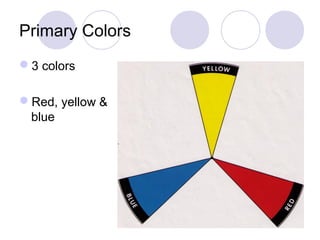
Primary Colors 
3 colors 
Red, yellow & 
blue
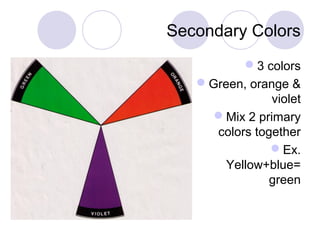
Secondary Colors 
3 colors 
Green, orange & 
violet 
Mix 2 primary 
colors together 
Ex. 
Yellow+blue= 
green
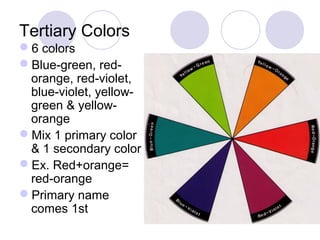
Tertiary Colors 
6 colors 
Blue-green, red-orange, 
red-violet, 
blue-violet, yellow-green 
& yellow-orange 
Mix 1 primary color 
& 1 secondary color 
Ex. Red+orange= 
red-orange 
Primary name 
comes 1st
Hue 
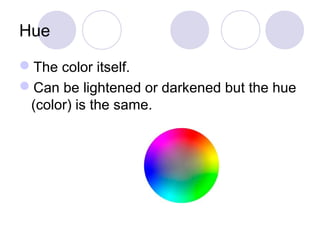
The color itself. 
Can be lightened or darkened but the hue 
(color) is the same.
Value 
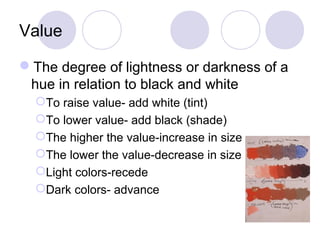
The degree of lightness or darkness of a 
hue in relation to black and white 
To raise value- add white (tint) 
To lower value- add black (shade) 
The higher the value-increase in size 
The lower the value-decrease in size 
Light colors-recede 
Dark colors- advance
Tint 
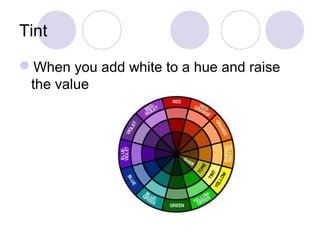
When you add white to a hue and raise 
the value
Tones 
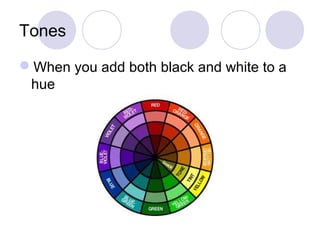
When you add both black and white to a 
hue
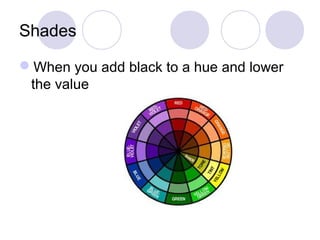
Shades 
When you add black to a hue and lower 
the value
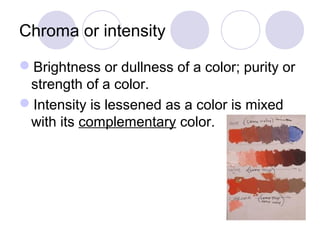
Chroma or intensity 
Brightness or dullness of a color; purity or 
strength of a color. 
Intensity is lessened as a color is mixed 
with its complementary color.
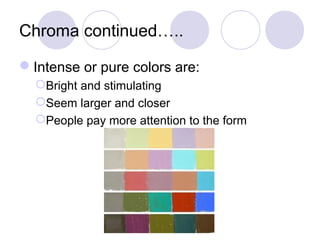
Chroma continued….. 
Intense or pure colors are: 
Bright and stimulating 
Seem larger and closer 
People pay more attention to the form
Warm colors Cool colors 
Yellow –green to red-violet 
Sunlight and fire 
Active & cheery 
Advancing 
informal 
Red-violet to yellow-green 
Restful 
Soothing 
Receding 
formal
Color Schemes 
Monochromatic 
Analogous 
Complimentary
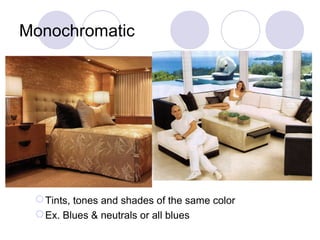
Monochromatic 
Tints, tones and shades of the same color 
Ex. Blues & neutrals or all blues
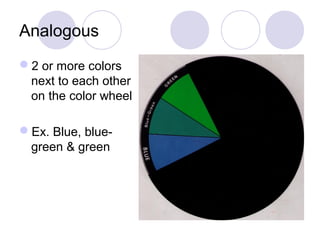
Analogous 
2 or more colors 
next to each other 
on the color wheel 
Ex. Blue, blue-green 
& green
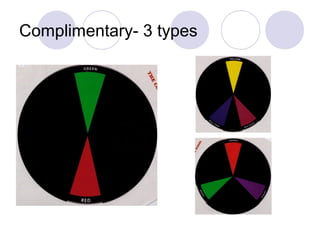
Complimentary- 3 types
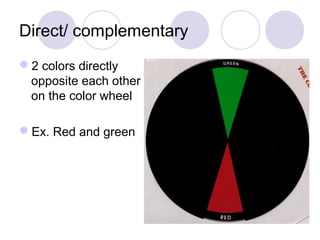
Direct/ complementary 
2 colors directly 
opposite each other 
on the color wheel 
Ex. Red and green
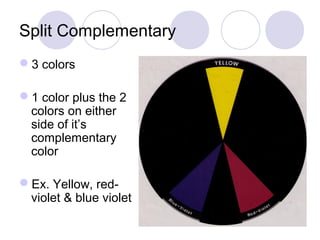
Split Complementary 
3 colors 
1 color plus the 2 
colors on either 
side of it’s 
complementary 
color 
Ex. Yellow, red-violet 
& blue violet
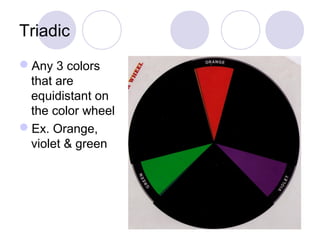
Triadic 
Any 3 colors 
that are 
equidistant on 
the color wheel 
Ex. Orange, 
violet & green
Neutral 
The room is basically neutral colors with 
small amounts of color for contrast 
Neutrals: white, black, gray, beige, brown 
Easy to create and live with 
Accent with bright color for contrast 
Example: white, black, red

Color

  • 1.
  • 2.
    Primary Colors 3colors Red, yellow & blue
  • 3.
    Secondary Colors 3colors Green, orange & violet Mix 2 primary colors together Ex. Yellow+blue= green
  • 4.
    Tertiary Colors 6colors Blue-green, red-orange, red-violet, blue-violet, yellow-green & yellow-orange Mix 1 primary color & 1 secondary color Ex. Red+orange= red-orange Primary name comes 1st
  • 5.
    Hue The coloritself. Can be lightened or darkened but the hue (color) is the same.
  • 6.
    Value The degreeof lightness or darkness of a hue in relation to black and white To raise value- add white (tint) To lower value- add black (shade) The higher the value-increase in size The lower the value-decrease in size Light colors-recede Dark colors- advance
  • 7.
    Tint When youadd white to a hue and raise the value
  • 8.
    Tones When youadd both black and white to a hue
  • 9.
    Shades When youadd black to a hue and lower the value
  • 10.
    Chroma or intensity Brightness or dullness of a color; purity or strength of a color. Intensity is lessened as a color is mixed with its complementary color.
  • 11.
    Chroma continued….. Intenseor pure colors are: Bright and stimulating Seem larger and closer People pay more attention to the form
  • 12.
    Warm colors Coolcolors Yellow –green to red-violet Sunlight and fire Active & cheery Advancing informal Red-violet to yellow-green Restful Soothing Receding formal
  • 13.
    Color Schemes Monochromatic Analogous Complimentary
  • 14.
    Monochromatic Tints, tonesand shades of the same color Ex. Blues & neutrals or all blues
  • 15.
    Analogous 2 ormore colors next to each other on the color wheel Ex. Blue, blue-green & green
  • 16.
  • 17.
    Direct/ complementary 2colors directly opposite each other on the color wheel Ex. Red and green
  • 18.
    Split Complementary 3colors 1 color plus the 2 colors on either side of it’s complementary color Ex. Yellow, red-violet & blue violet
  • 19.
    Triadic Any 3colors that are equidistant on the color wheel Ex. Orange, violet & green
  • 20.
    Neutral The roomis basically neutral colors with small amounts of color for contrast Neutrals: white, black, gray, beige, brown Easy to create and live with Accent with bright color for contrast Example: white, black, red