The Color Wheel




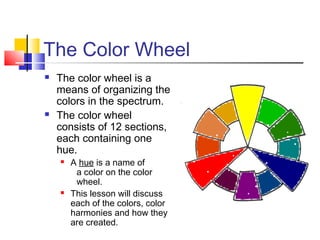
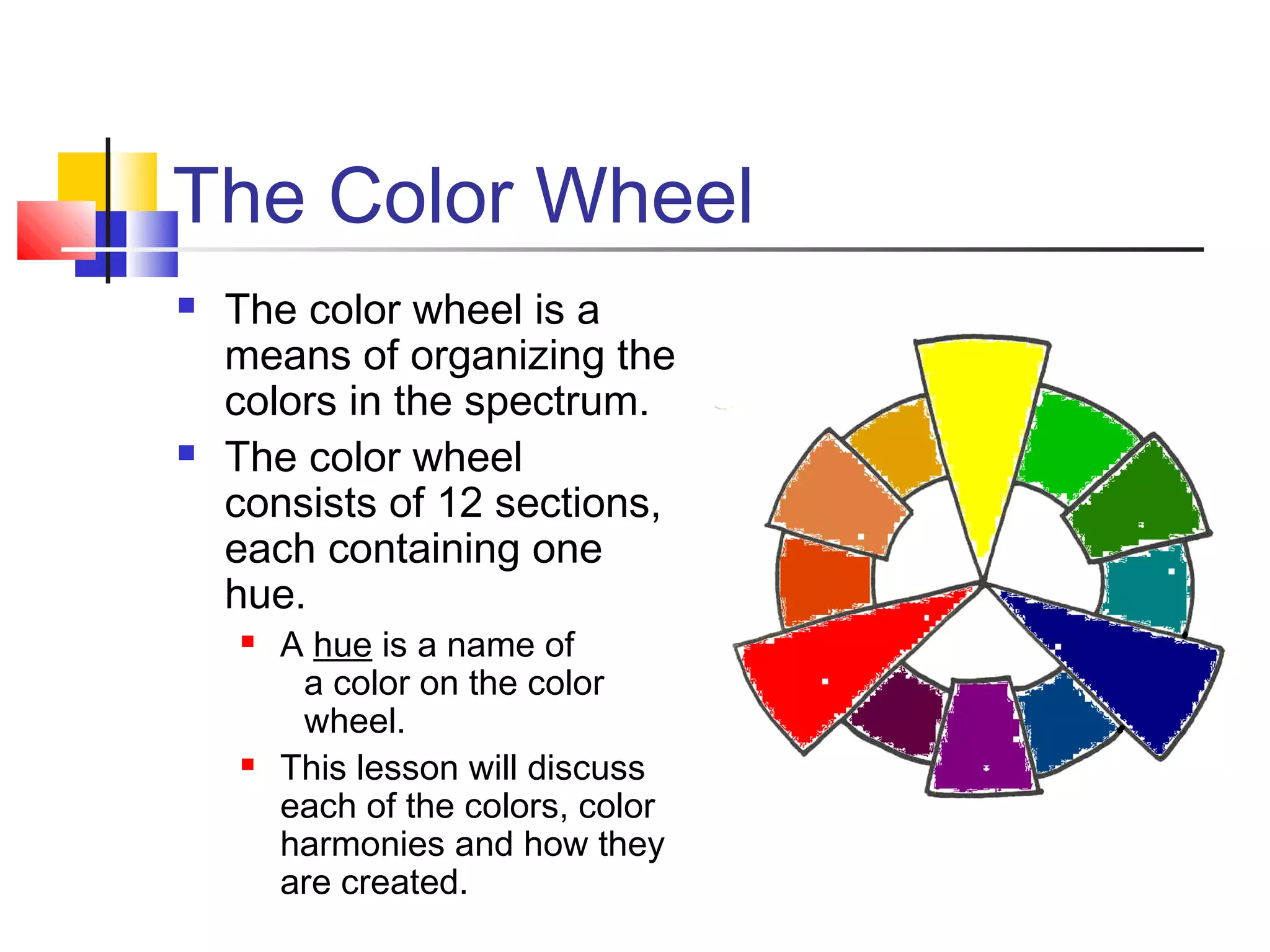
The color wheel is a
means of organizing the
colors in the spectrum.
The color wheel
consists of 12 sections,
each containing one
hue.




A hue is a name of
a color on the color
wheel.
This lesson will discuss
each of the colors, color
harmonies and how they
are created.
The Primary Color Triad


yellow

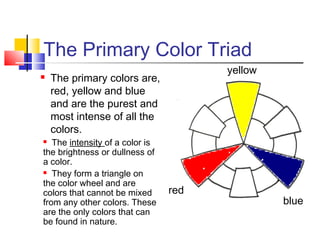
The primary colors are,
red, yellow and blue
and are the purest and
most intense of all the
colors.

The intensity of a color is
the brightness or dullness of
a color.
 They form a triangle on
the color wheel and are
colors that cannot be mixed
from any other colors. These
are the only colors that can
be found in nature.


red

blue
The Secondary Color Triad






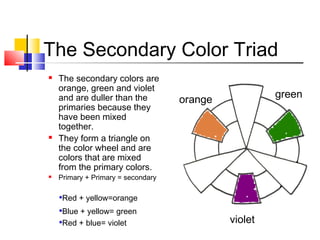
The secondary colors are
orange, green and violet
and are duller than the
primaries because they
have been mixed
together.
They form a triangle on
the color wheel and are
colors that are mixed
from the primary colors.

green

orange

Primary + Primary = secondary

Red + yellow=orange



Blue + yellow= green
Red + blue= violet


violet
The Intermediate (Tertiary) Colors






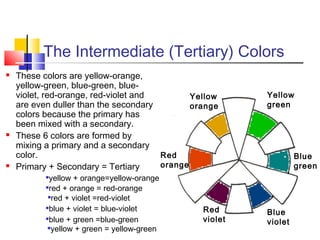
These colors are yellow-orange,
yellow-green, blue-green, blueviolet, red-orange, red-violet and
Yellow
are even duller than the secondary
orange
colors because the primary has
been mixed with a secondary.
These 6 colors are formed by
mixing a primary and a secondary
color.
Red
orange
Primary + Secondary = Tertiary
yellow + orange=yellow-orange
red + orange = red-orange
red + violet =red-violet
blue + violet = blue-violet
blue + green =blue-green
yellow + green = yellow-green

Yellow
green

Blue
green



Red
violet

Blue
violet
The Analogous Color Scheme


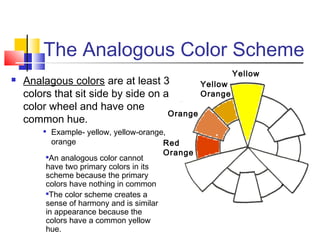
Analagous colors are at least 3
Yellow
Orange
colors that sit side by side on a
color wheel and have one
Orange
common hue.
Example- yellow, yellow-orange,
orange
Red
Orange
An analogous color cannot
have two primary colors in its
scheme because the primary
colors have nothing in common

The color scheme creates a
sense of harmony and is similar
in appearance because the
colors have a common yellow
hue.



Yellow
The Complementary
Color Scheme






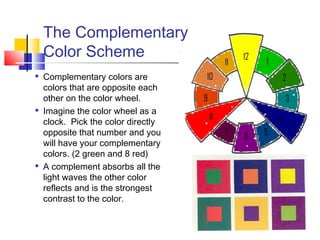
Complementary colors are
colors that are opposite each
other on the color wheel.
Imagine the color wheel as a
clock. Pick the color directly
opposite that number and you
will have your complementary
colors. (2 green and 8 red)
A complement absorbs all the
light waves the other color
reflects and is the strongest
contrast to the color.
The Split Complementary
Color Scheme


yellow

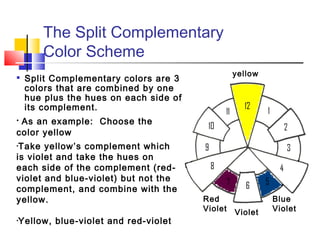
Split Complementary colors are 3
colors that are combined by one
hue plus the hues on each side of
its complement.

As an example: Choose the
color yellow
•

Take yellow’s complement which
is violet and take the hues on
each side of the complement (redviolet and blue-violet) but not the
complement, and combine with the
yellow.
•

Yellow, blue-violet and red-violet

•

Red
Violet

Violet

Blue
Violet
The Monochromatic Color Scheme


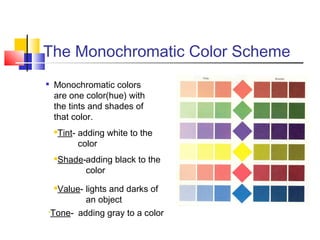
Monochromatic colors
are one color(hue) with
the tints and shades of
that color.


Tint- adding white to the
color

Shade-adding black to the
color



Value- lights and darks of
an object

Tone- adding gray to a color

The Warm and Cool Color Scheme
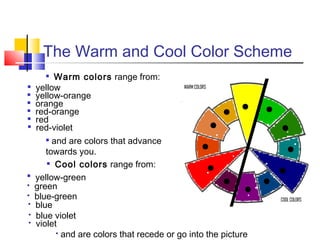
Warm colors range from:
yellow
yellow-orange
orange
red-orange
red
red-violet

and are colors that advance
towards you.
 Cool colors range from:
yellow-green
green
blue-green
blue
blue violet
violet
 and are colors that recede or go into the picture
















Neutral Colors


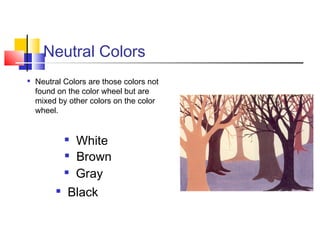
Neutral Colors are those colors not
found on the color wheel but are
mixed by other colors on the color
wheel.

White
 Brown
 Gray
 Black

Emotional Properties of Color


Colors are often associated with
emotions. Most people have a favorite
color, probably stemming from long
traditions and impressions of color. The
feelings one has about certain colors
may come from the association we
have with warm and cool colors in
nature.
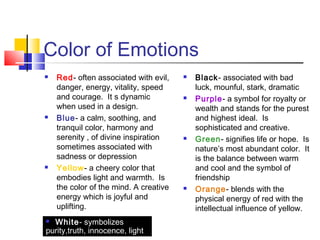
Color of Emotions






Red- often associated with evil,
danger, energy, vitality, speed
and courage. It s dynamic
when used in a design.
Blue- a calm, soothing, and
tranquil color, harmony and
serenity , of divine inspiration
sometimes associated with
sadness or depression
Yellow- a cheery color that
embodies light and warmth. Is
the color of the mind. A creative
energy which is joyful and
uplifting.

White- symbolizes
purity,truth, innocence, light










Black- associated with bad
luck, mounful, stark, dramatic
Purple- a symbol for royalty or
wealth and stands for the purest
and highest ideal. Is
sophisticated and creative.
Green- signifies life or hope. Is
nature’s most abundant color. It
is the balance between warm
and cool and the symbol of
friendship
Orange- blends with the
physical energy of red with the
intellectual influence of yellow.

Color wheel

  • 1.
    The Color Wheel   Thecolor wheel is a means of organizing the colors in the spectrum. The color wheel consists of 12 sections, each containing one hue.   A hue is a name of a color on the color wheel. This lesson will discuss each of the colors, color harmonies and how they are created.
  • 2.
    The Primary ColorTriad  yellow The primary colors are, red, yellow and blue and are the purest and most intense of all the colors. The intensity of a color is the brightness or dullness of a color.  They form a triangle on the color wheel and are colors that cannot be mixed from any other colors. These are the only colors that can be found in nature.  red blue
  • 3.
    The Secondary ColorTriad    The secondary colors are orange, green and violet and are duller than the primaries because they have been mixed together. They form a triangle on the color wheel and are colors that are mixed from the primary colors. green orange Primary + Primary = secondary Red + yellow=orange  Blue + yellow= green Red + blue= violet  violet
  • 4.
    The Intermediate (Tertiary)Colors    These colors are yellow-orange, yellow-green, blue-green, blueviolet, red-orange, red-violet and Yellow are even duller than the secondary orange colors because the primary has been mixed with a secondary. These 6 colors are formed by mixing a primary and a secondary color. Red orange Primary + Secondary = Tertiary yellow + orange=yellow-orange red + orange = red-orange red + violet =red-violet blue + violet = blue-violet blue + green =blue-green yellow + green = yellow-green Yellow green Blue green  Red violet Blue violet
  • 5.
    The Analogous ColorScheme  Analagous colors are at least 3 Yellow Orange colors that sit side by side on a color wheel and have one Orange common hue. Example- yellow, yellow-orange, orange Red Orange An analogous color cannot have two primary colors in its scheme because the primary colors have nothing in common  The color scheme creates a sense of harmony and is similar in appearance because the colors have a common yellow hue.  Yellow
  • 6.
    The Complementary Color Scheme    Complementarycolors are colors that are opposite each other on the color wheel. Imagine the color wheel as a clock. Pick the color directly opposite that number and you will have your complementary colors. (2 green and 8 red) A complement absorbs all the light waves the other color reflects and is the strongest contrast to the color.
  • 7.
    The Split Complementary ColorScheme  yellow Split Complementary colors are 3 colors that are combined by one hue plus the hues on each side of its complement. As an example: Choose the color yellow • Take yellow’s complement which is violet and take the hues on each side of the complement (redviolet and blue-violet) but not the complement, and combine with the yellow. • Yellow, blue-violet and red-violet • Red Violet Violet Blue Violet
  • 8.
    The Monochromatic ColorScheme  Monochromatic colors are one color(hue) with the tints and shades of that color.  Tint- adding white to the color Shade-adding black to the color  Value- lights and darks of an object  Tone- adding gray to a color 
  • 9.
    The Warm andCool Color Scheme Warm colors range from: yellow yellow-orange orange red-orange red red-violet  and are colors that advance towards you.  Cool colors range from: yellow-green green blue-green blue blue violet violet  and are colors that recede or go into the picture             
  • 10.
    Neutral Colors  Neutral Colorsare those colors not found on the color wheel but are mixed by other colors on the color wheel. White  Brown  Gray  Black 
  • 11.
    Emotional Properties ofColor  Colors are often associated with emotions. Most people have a favorite color, probably stemming from long traditions and impressions of color. The feelings one has about certain colors may come from the association we have with warm and cool colors in nature.
  • 12.
    Color of Emotions    Red-often associated with evil, danger, energy, vitality, speed and courage. It s dynamic when used in a design. Blue- a calm, soothing, and tranquil color, harmony and serenity , of divine inspiration sometimes associated with sadness or depression Yellow- a cheery color that embodies light and warmth. Is the color of the mind. A creative energy which is joyful and uplifting. White- symbolizes purity,truth, innocence, light      Black- associated with bad luck, mounful, stark, dramatic Purple- a symbol for royalty or wealth and stands for the purest and highest ideal. Is sophisticated and creative. Green- signifies life or hope. Is nature’s most abundant color. It is the balance between warm and cool and the symbol of friendship Orange- blends with the physical energy of red with the intellectual influence of yellow.