

Bea Joy Lorraine Arcenio
III-9 BSE History
Philippine Normal University
COGNITIVISM THEORY
• involve how we think and gain
knowledge.
• involves examining learning,
memory, problem solving skills,
and intelligence.
Key Concepts:
• Mind as a "Black Box“
• Learning is explained as a "recall"
of stored information
• Instruction usually grabs the attention of
learners and helps make sense of the
information so it can be readily stored
(learned) later for recall.
• How does learning occur?
Answer: structured, computational
• What factors influence learning?
Answer: existing schema, previous
experiences
• What is the role of memory?
Answer: encoding, storage, retrieval
• How does transfer occur?
Answer: duplicating knowledge
constructs of "knower“
• What types of learning are best explained
by this theory?
Answer: reasoning, clear objectives,
problem solving
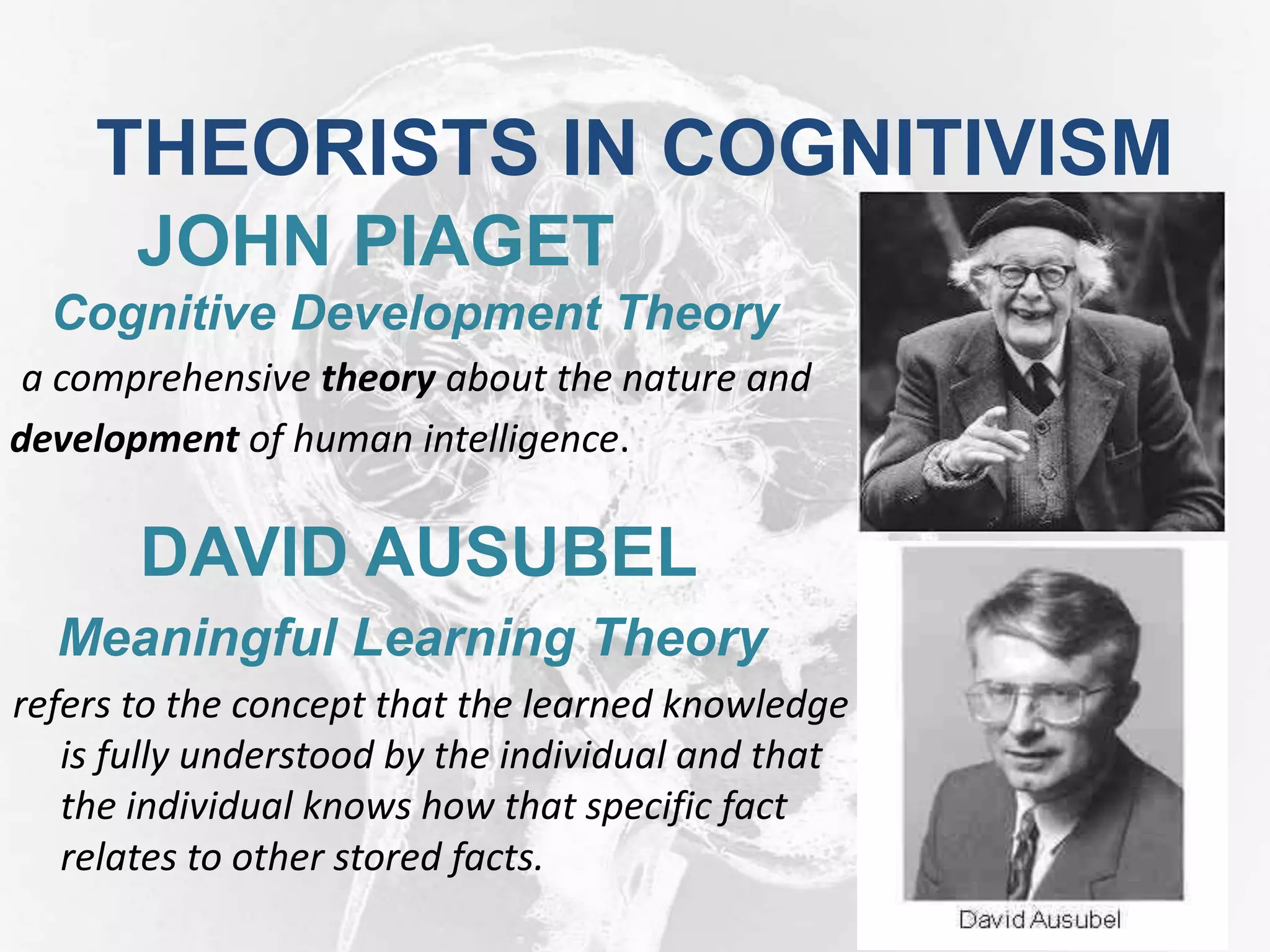
THEORISTS IN COGNITIVISM
JOHN PIAGET
Cognitive Development Theory
a comprehensive theory about the nature and
development of human intelligence.
DAVID AUSUBEL
Meaningful Learning Theory
refers to the concept that the learned knowledge
is fully understood by the individual and that
the individual knows how that specific fact
relates to other stored facts.
Classroom Practices
• Use of Microsoft word to type text in
summarizing and note taking
• online games and reinforcement
activities, such as sorting games,
puzzles, and flashcards.
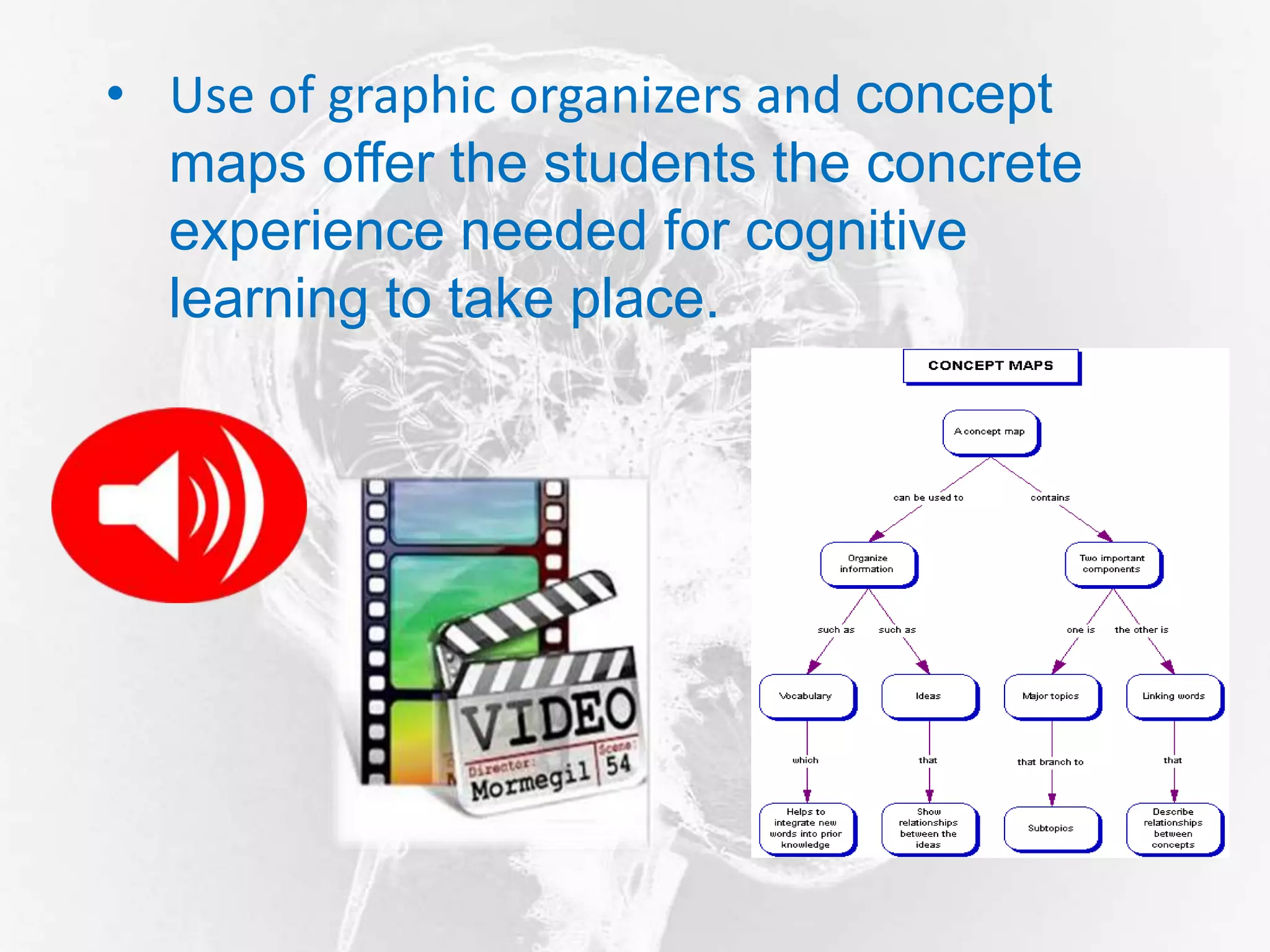
• Use of graphic organizers and concept
maps offer the students the concrete
experience needed for cognitive
learning to take place.
REFERENCES:
• Alessi, Stephen. M. & Trollop, Stanley. R., (2001) Multimedia for
Learning (3rd Edition), Pearson Allyn & Bacon, ISBN 0-205-27691-1.
•
Sonja Wilhelmsen, Stein Inge Åsmul & Øyvind Meistad (1998),
Cognitivism, webpage CSCL - a brief overview & interesting links for
further study)
• Simon,(2001)Learning Theory retrieved from
http://simonlin.info/learningtheory/cognitivism.htm retrieved on June
28,2015

COGNITIVISM THEORY

  • 1.
    Bea Joy LorraineArcenio III-9 BSE History Philippine Normal University
  • 2.
    COGNITIVISM THEORY • involvehow we think and gain knowledge. • involves examining learning, memory, problem solving skills, and intelligence.
  • 3.
    Key Concepts: • Mindas a "Black Box“ • Learning is explained as a "recall" of stored information • Instruction usually grabs the attention of learners and helps make sense of the information so it can be readily stored (learned) later for recall.
  • 4.
    • How doeslearning occur? Answer: structured, computational • What factors influence learning? Answer: existing schema, previous experiences • What is the role of memory? Answer: encoding, storage, retrieval
  • 5.
    • How doestransfer occur? Answer: duplicating knowledge constructs of "knower“ • What types of learning are best explained by this theory? Answer: reasoning, clear objectives, problem solving
  • 6.
    THEORISTS IN COGNITIVISM JOHNPIAGET Cognitive Development Theory a comprehensive theory about the nature and development of human intelligence. DAVID AUSUBEL Meaningful Learning Theory refers to the concept that the learned knowledge is fully understood by the individual and that the individual knows how that specific fact relates to other stored facts.
  • 7.
    Classroom Practices • Useof Microsoft word to type text in summarizing and note taking
  • 8.
    • online gamesand reinforcement activities, such as sorting games, puzzles, and flashcards.
  • 9.
    • Use ofgraphic organizers and concept maps offer the students the concrete experience needed for cognitive learning to take place.
  • 10.
    REFERENCES: • Alessi, Stephen.M. & Trollop, Stanley. R., (2001) Multimedia for Learning (3rd Edition), Pearson Allyn & Bacon, ISBN 0-205-27691-1. • Sonja Wilhelmsen, Stein Inge Åsmul & Øyvind Meistad (1998), Cognitivism, webpage CSCL - a brief overview & interesting links for further study) • Simon,(2001)Learning Theory retrieved from http://simonlin.info/learningtheory/cognitivism.htm retrieved on June 28,2015