David Ausubel:Meaningful Learning Theory
BiographyBorn: October 25, 1918 Died: July 9, 2008 Grew up in Brooklyn, New YorkHe graduated from medical school at Middlesex University. Later he earned a Ph.D in Developmental Psychology at Columbia University. He was influenced by the work of Piaget.
BiographyIn 1973, Ausubel retired from academic life and devoted himself to his psychiatric practice. 
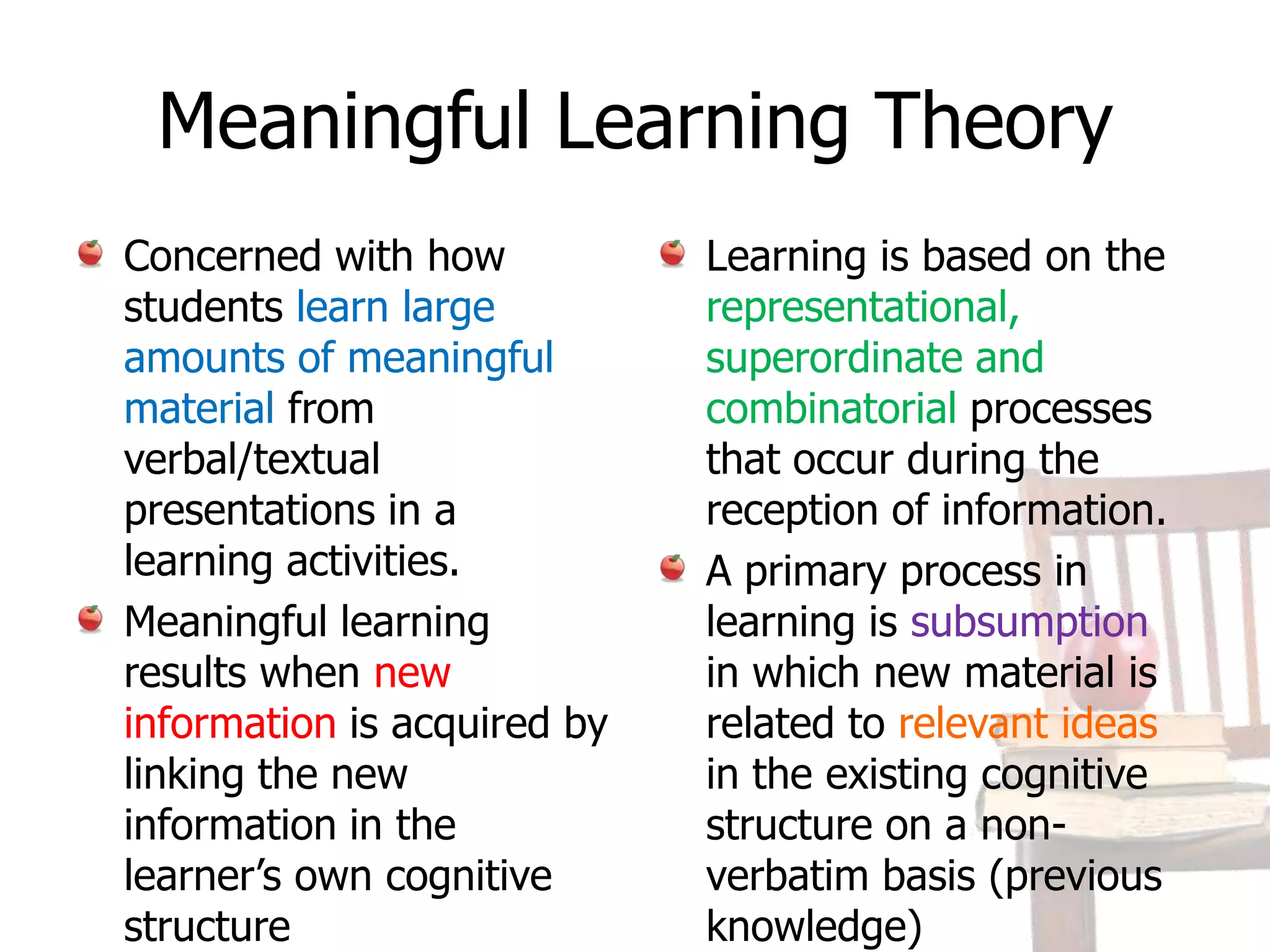
 In 1976, he received the Thorndike Award from the American Psychological Association for "Distinguished Psychological Contributions to Education".Meaningful Learning TheoryConcerned with how students learn large amounts of meaningful material from verbal/textual presentations in a learning activities.Meaningful learning results when new information is acquired by linking the new information in the learner’s own cognitive structureLearning is based on the representational, superordinate and combinatorial processes that occur during the reception of information.A primary process in learning is subsumptionin which new material is related to relevant ideas in the existing cognitive structure on a non-verbatim basis (previous knowledge)
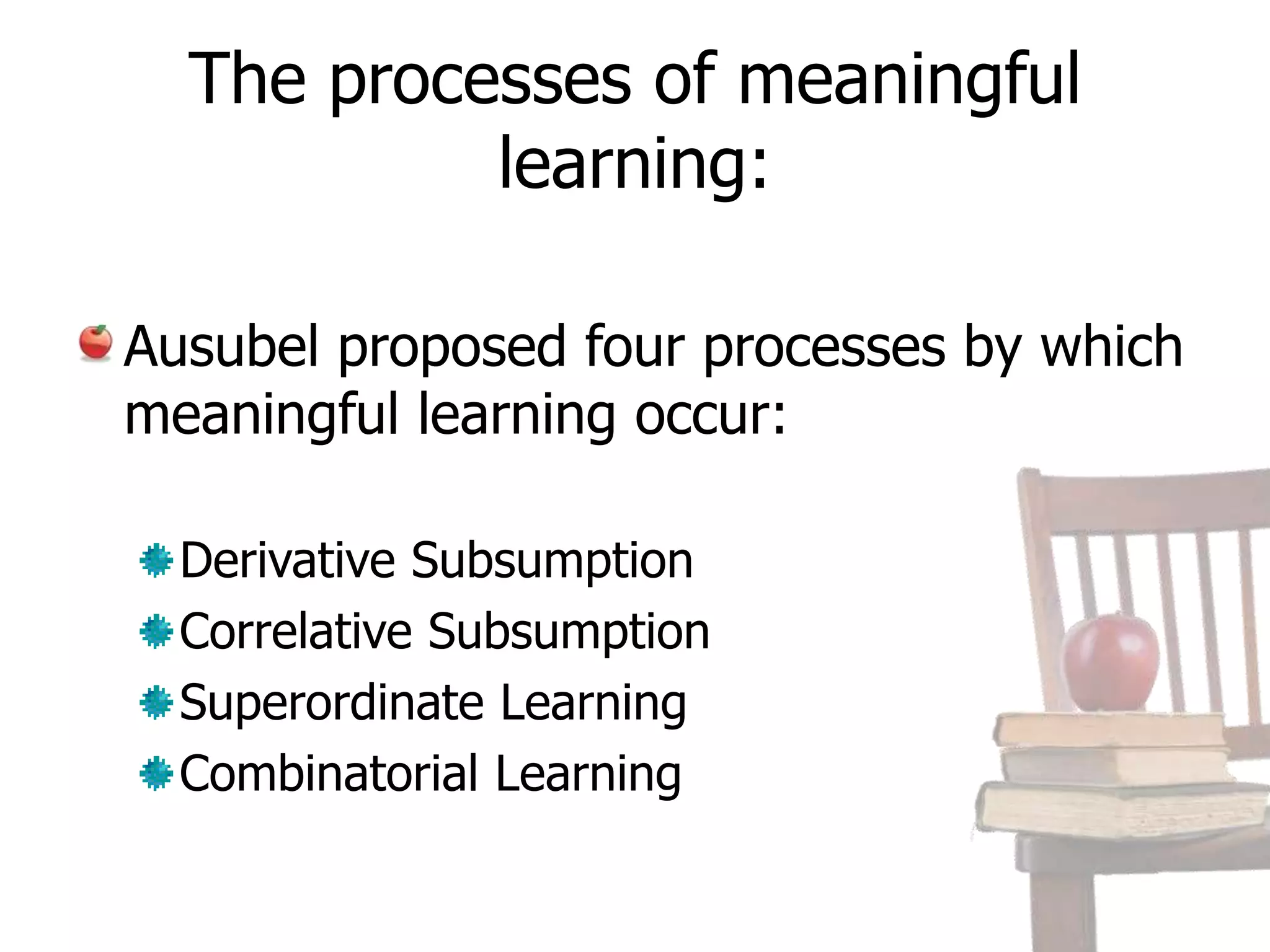
The processes of meaningful learning:Ausubel proposed four processes by which meaningful learning occur:Derivative SubsumptionCorrelative SubsumptionSuperordinate LearningCombinatorial Learning
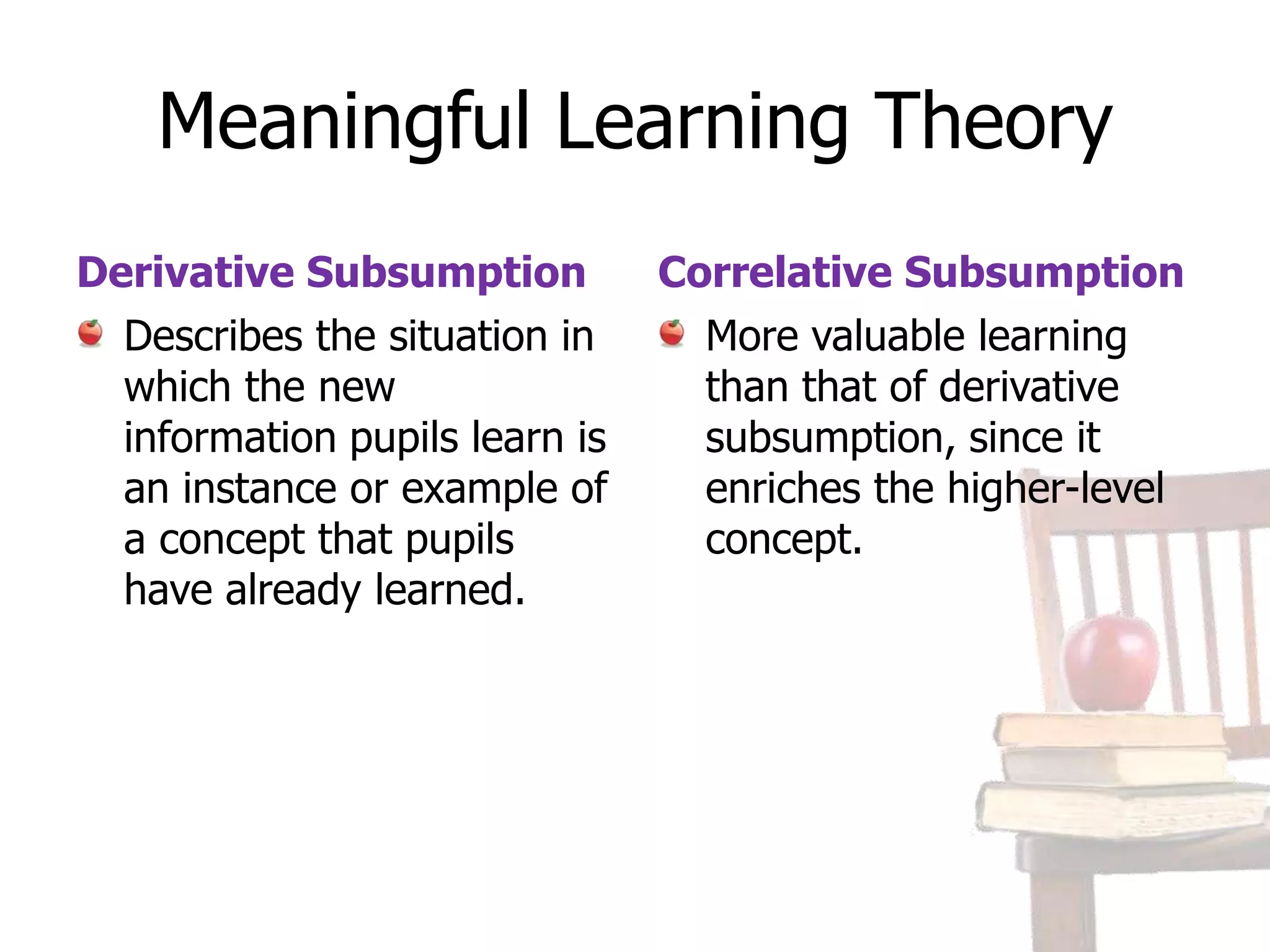
Meaningful Learning TheoryDerivative SubsumptionDescribes the situation in which the new information pupils learn is an instance or example of a concept that pupils have already learned. Correlative SubsumptionMore valuable learning than that of derivative subsumption, since it enriches the higher-level concept.
Meaningful Learning TheorySuperordinate LearningIn this case, you already knew a lot of examples of the concept, but you did not know the concept until it was taught to pupilsCombinatorial LearningIt describes a process by which the new idea is derived from another idea that is comes from his previous knowledge (in a different, but related, “branch”) Students could think of this as learning by analogy
Principles of Ausubel’s Meaningful Reception Learning TheoryWithin a classroom setting include:The most general ideas of a subject should be presented first and then progressively differentiated in terms of detail and specificity.Instructional materials should attempt to integrate new material with previouslypresented information through comparisons and cross-referencing of new and oldideas.
Principles of Ausubel’s Meaningful Reception Learning TheoryInstructors should incorporate advance organizers when teaching a new concept.Instructors should use a number of examples and focus on both similarities and differences.Classroom application of Ausubel's theory should discourage rote learning of materials that can be learned more meaningfully.The most important single factor influencing learning is what the learner already knows.
SummaryFor Ausubel, meaningful learning is a process that related new information relevant to the concepts contained in a person’s cognitive structure.  In order to be meaningful to students ‘learning, then learning should be linked and relevant to students’ cognitive structures.  Relevance to students’ cognitive structures can happen when we pay attention to early knowledge of the concepts that preceded the concept to be learned.
SummaryIt is important for students to construct knowledge through learning.The essential theory of meaningful learning is a teaching which Ausubel  enables students can associate the beginning of knowledge with new knowledge that will learn and how teachers can facilitate learning by preparing the facility as a presentation of the subject matter which allows students to build knowledge in discovery learning activities.

David ausubel

  • 1.
  • 2.
    BiographyBorn: October 25,1918 Died: July 9, 2008 Grew up in Brooklyn, New YorkHe graduated from medical school at Middlesex University. Later he earned a Ph.D in Developmental Psychology at Columbia University. He was influenced by the work of Piaget.
  • 3.
    BiographyIn 1973, Ausubelretired from academic life and devoted himself to his psychiatric practice. 
  • 4.
     In 1976, hereceived the Thorndike Award from the American Psychological Association for "Distinguished Psychological Contributions to Education".Meaningful Learning TheoryConcerned with how students learn large amounts of meaningful material from verbal/textual presentations in a learning activities.Meaningful learning results when new information is acquired by linking the new information in the learner’s own cognitive structureLearning is based on the representational, superordinate and combinatorial processes that occur during the reception of information.A primary process in learning is subsumptionin which new material is related to relevant ideas in the existing cognitive structure on a non-verbatim basis (previous knowledge)
  • 5.
    The processes ofmeaningful learning:Ausubel proposed four processes by which meaningful learning occur:Derivative SubsumptionCorrelative SubsumptionSuperordinate LearningCombinatorial Learning
  • 6.
    Meaningful Learning TheoryDerivativeSubsumptionDescribes the situation in which the new information pupils learn is an instance or example of a concept that pupils have already learned. Correlative SubsumptionMore valuable learning than that of derivative subsumption, since it enriches the higher-level concept.
  • 7.
    Meaningful Learning TheorySuperordinateLearningIn this case, you already knew a lot of examples of the concept, but you did not know the concept until it was taught to pupilsCombinatorial LearningIt describes a process by which the new idea is derived from another idea that is comes from his previous knowledge (in a different, but related, “branch”) Students could think of this as learning by analogy
  • 8.
    Principles of Ausubel’sMeaningful Reception Learning TheoryWithin a classroom setting include:The most general ideas of a subject should be presented first and then progressively differentiated in terms of detail and specificity.Instructional materials should attempt to integrate new material with previouslypresented information through comparisons and cross-referencing of new and oldideas.
  • 9.
    Principles of Ausubel’sMeaningful Reception Learning TheoryInstructors should incorporate advance organizers when teaching a new concept.Instructors should use a number of examples and focus on both similarities and differences.Classroom application of Ausubel's theory should discourage rote learning of materials that can be learned more meaningfully.The most important single factor influencing learning is what the learner already knows.
  • 10.
    SummaryFor Ausubel, meaningfullearning is a process that related new information relevant to the concepts contained in a person’s cognitive structure.  In order to be meaningful to students ‘learning, then learning should be linked and relevant to students’ cognitive structures.  Relevance to students’ cognitive structures can happen when we pay attention to early knowledge of the concepts that preceded the concept to be learned.
  • 11.
    SummaryIt is importantfor students to construct knowledge through learning.The essential theory of meaningful learning is a teaching which Ausubel enables students can associate the beginning of knowledge with new knowledge that will learn and how teachers can facilitate learning by preparing the facility as a presentation of the subject matter which allows students to build knowledge in discovery learning activities.