Downloaded 4,738 times

Cognitive learning theory emphasizes the role of internal mental processes in learning, highlighting that learners are active participants who process information through various cognitive strategies. Key psychologists such as Piaget, Bloom, Bruner, and Ausubel contributed to understanding cognitive development stages, meaningful learning, and the importance of organizing knowledge to facilitate learning. Teaching implications include using age-appropriate tasks, promoting meaningful engagement, and employing advance organizers to relate new material to existing knowledge.
Introduction to Cognitive Learning Theory, focusing on the role of cognitive processes in learning.
Basis in cognitive psychology, focusing on internal mental processes and the learner's prior knowledge.
Learners are active participants who construct personal understanding through various strategies.
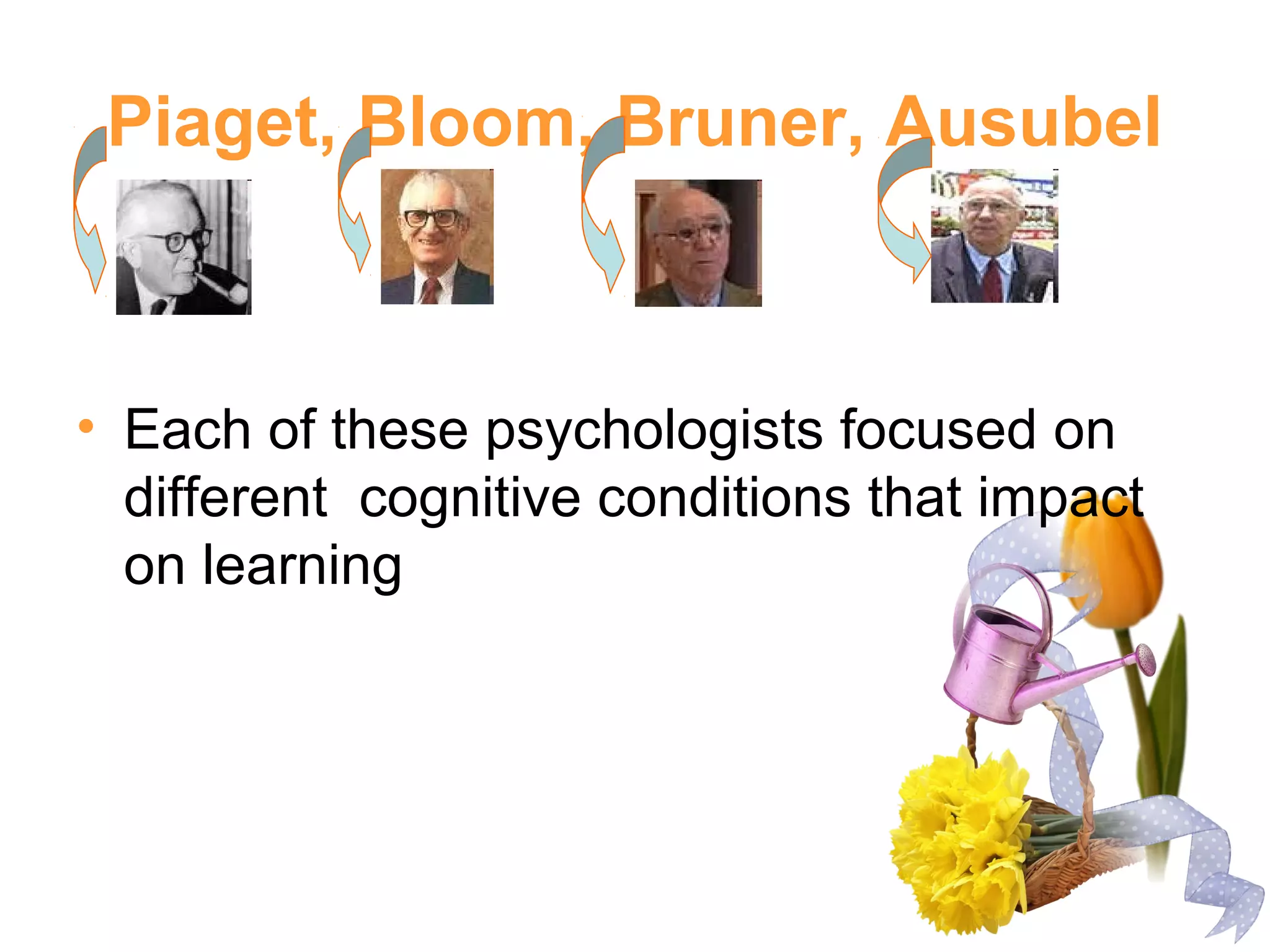
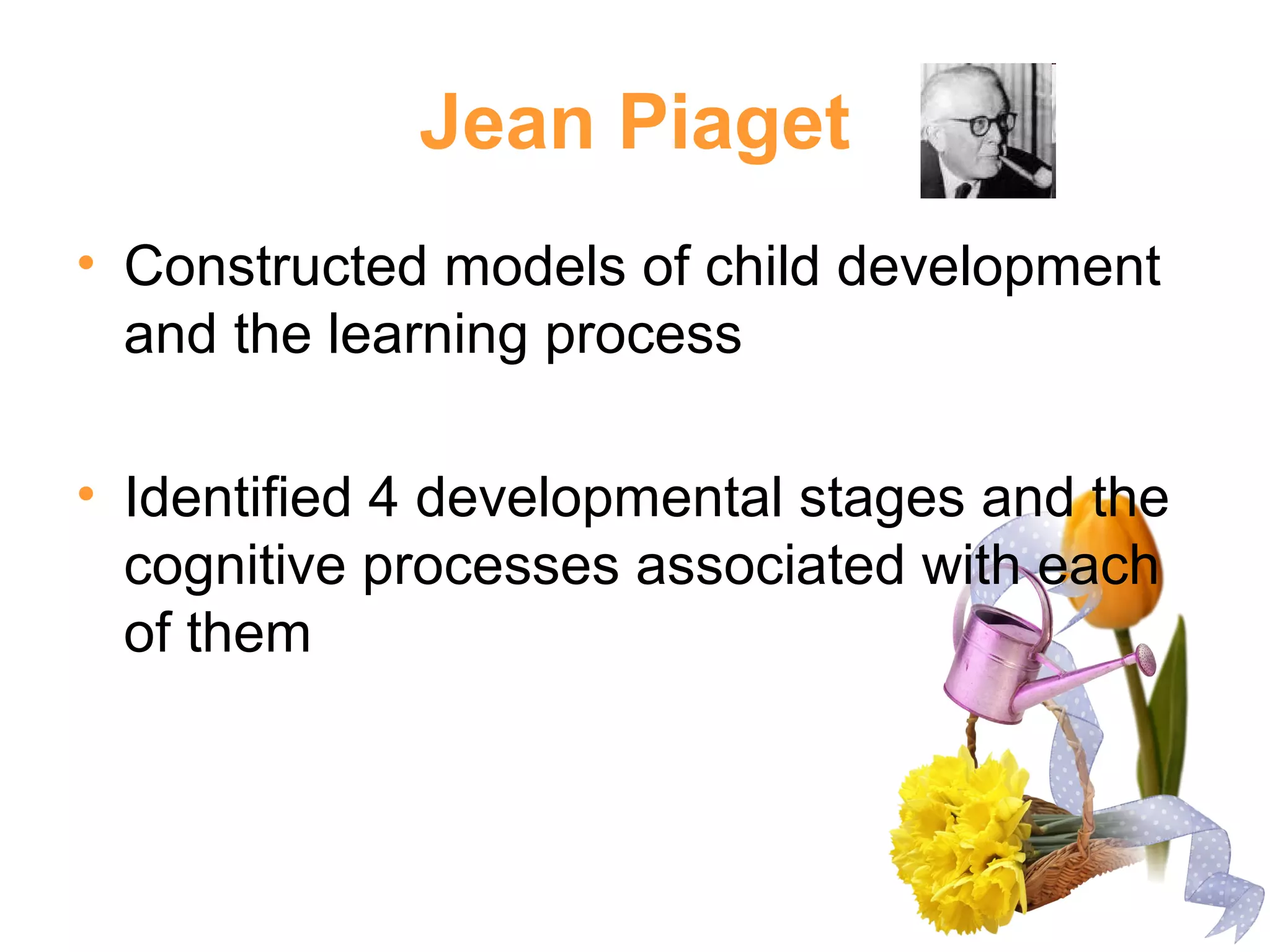
Introduction to major cognitive theorists: Piaget, Bloom, Bruner, and Ausubel, and their impact on learning.
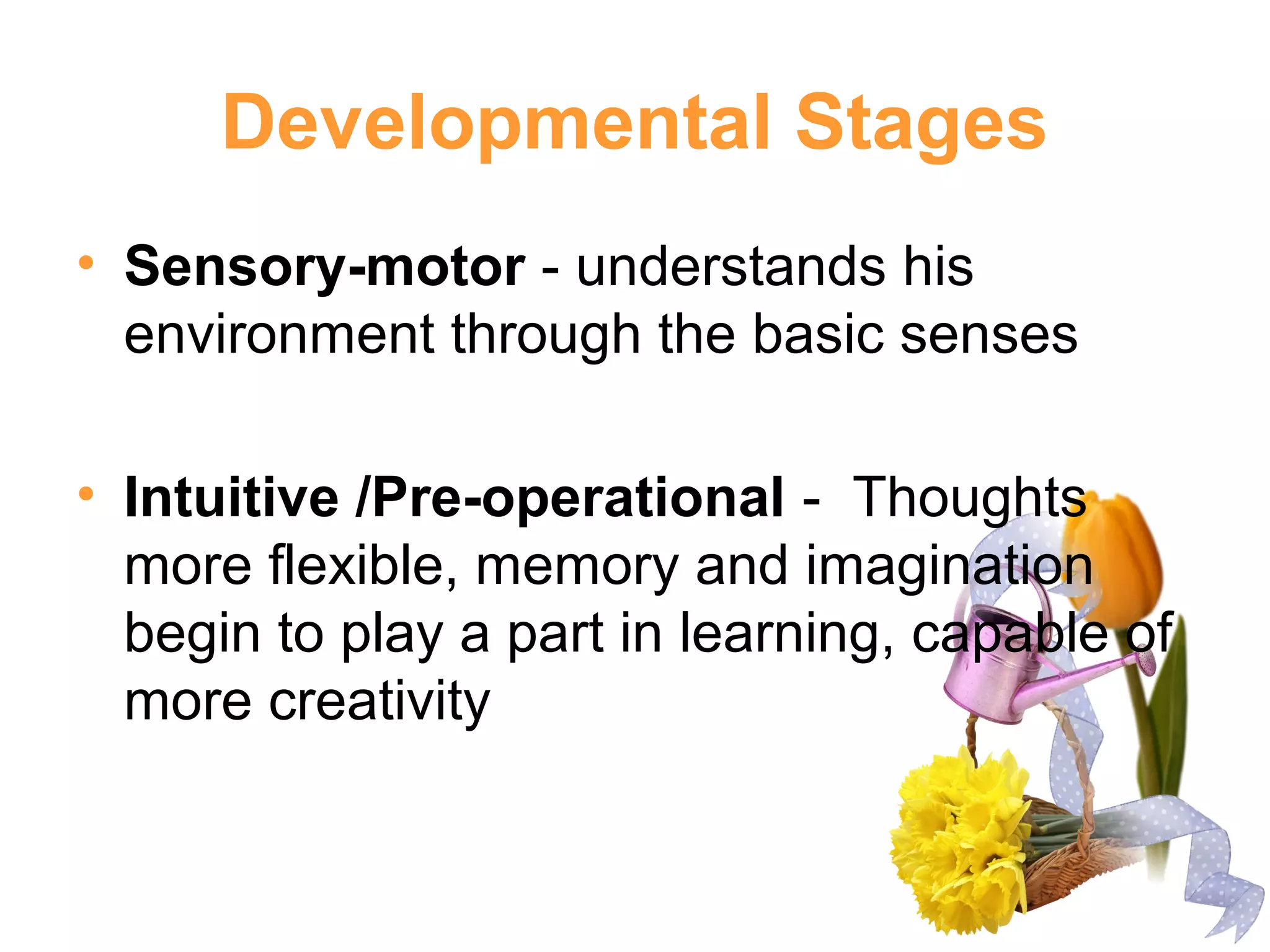
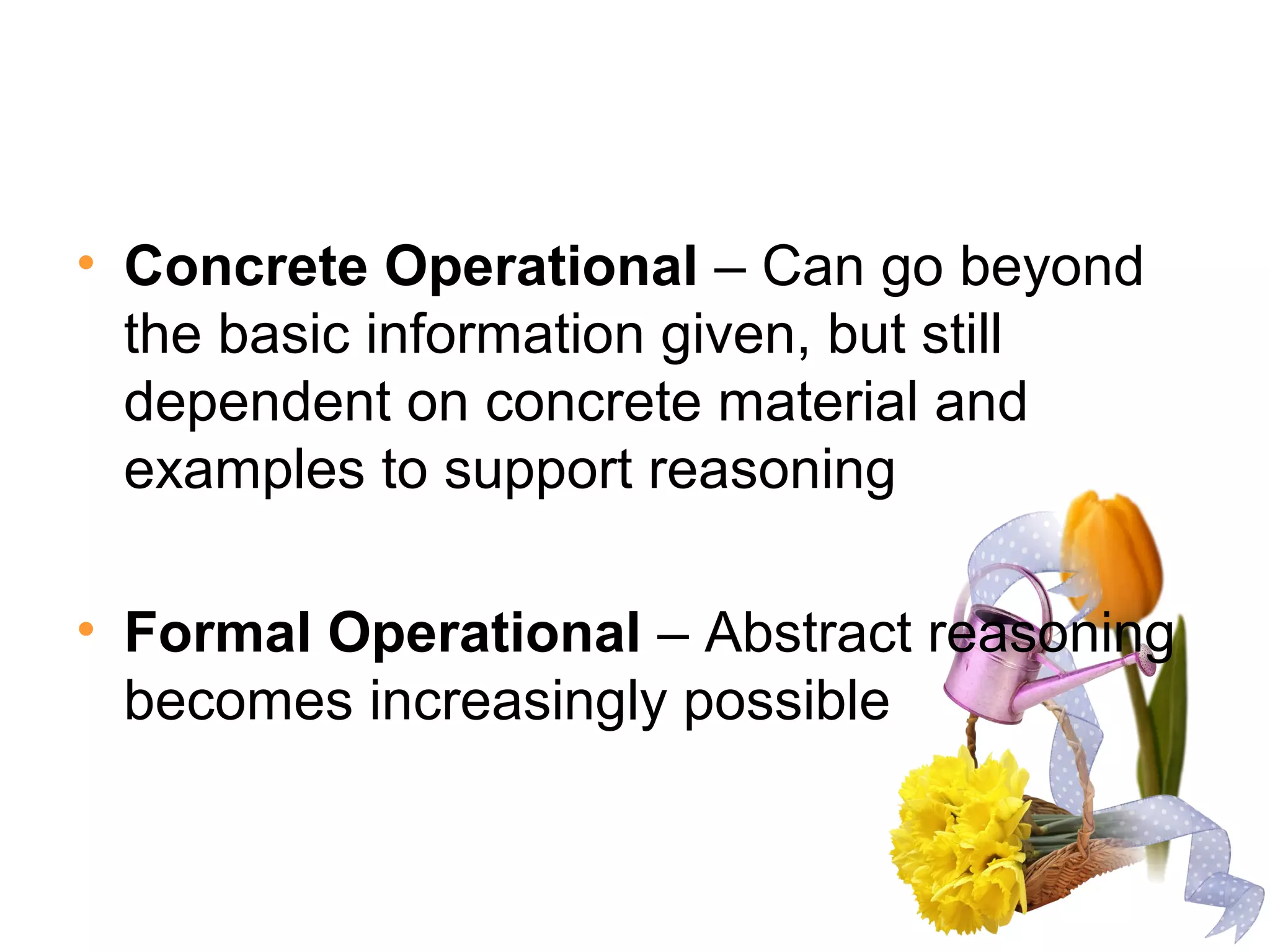
Piaget’s developmental stages: sensory-motor, intuitive, concrete operational, and formal operational.
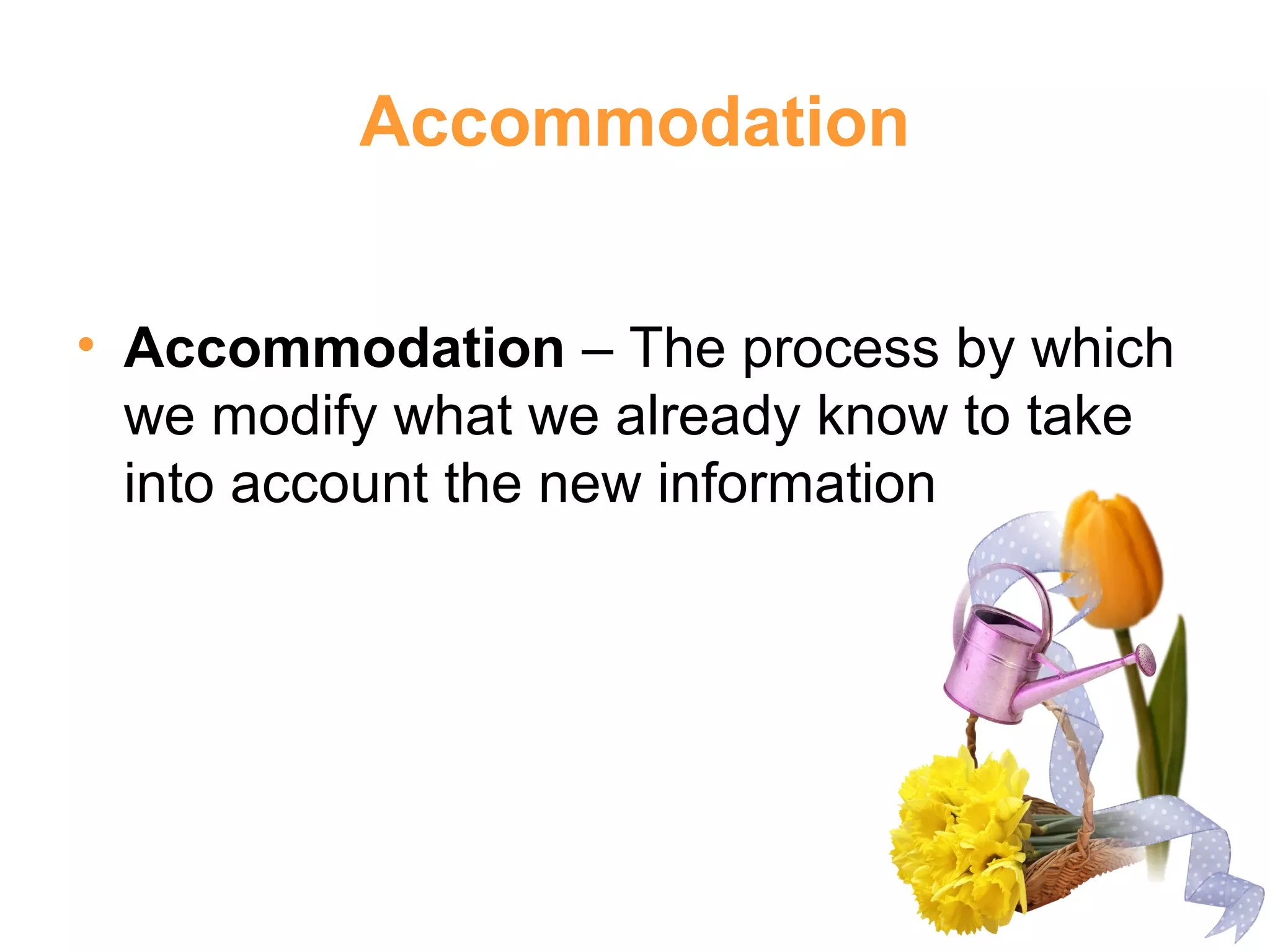
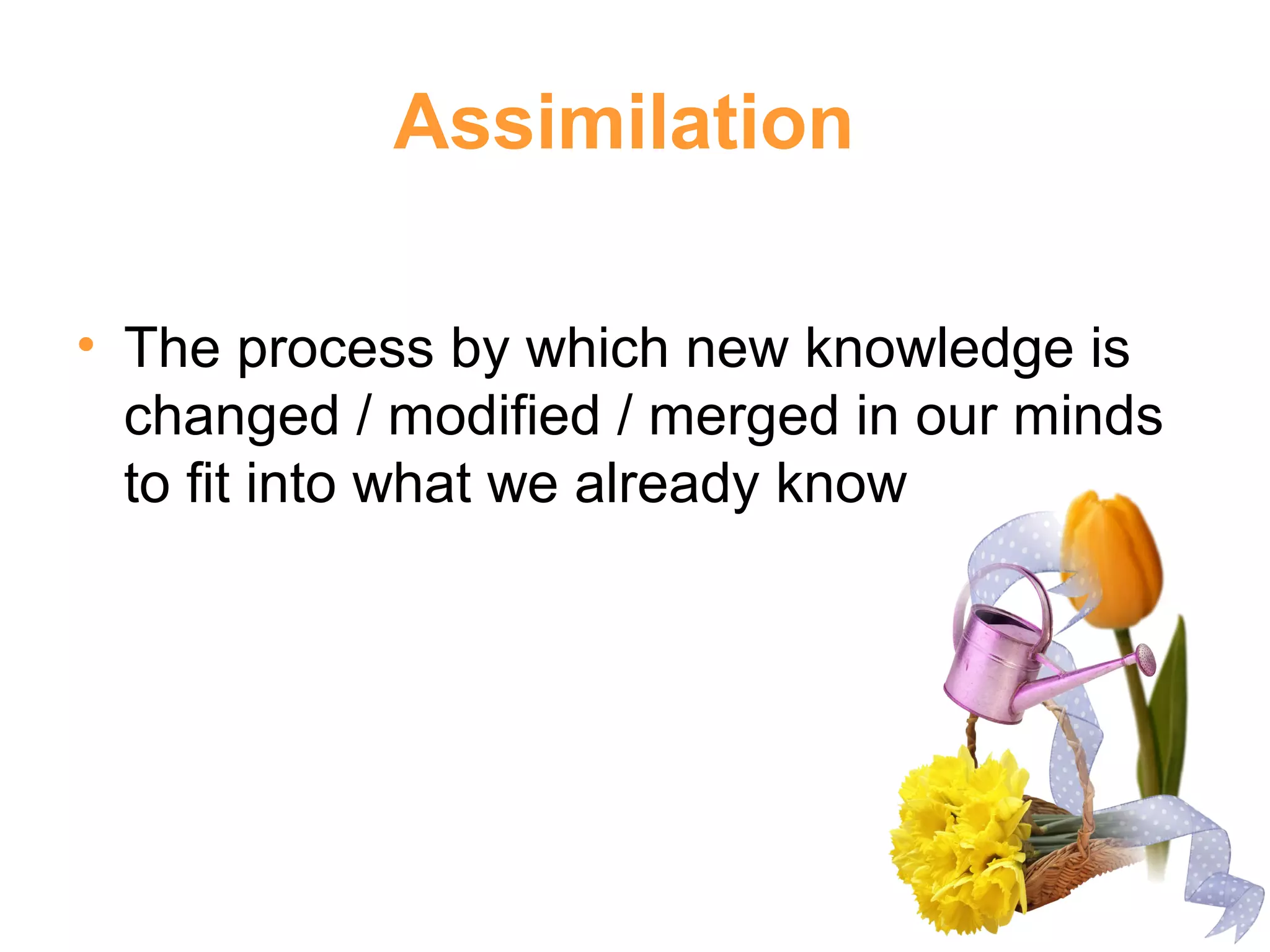
Definitions of accommodation and assimilation, key processes in modifying existing knowledge with new information.
The concept of equilibration, balancing existing knowledge with new information to achieve mastery.
Implications of cognitive theory for learning processes, stressing the cumulative nature of learning.
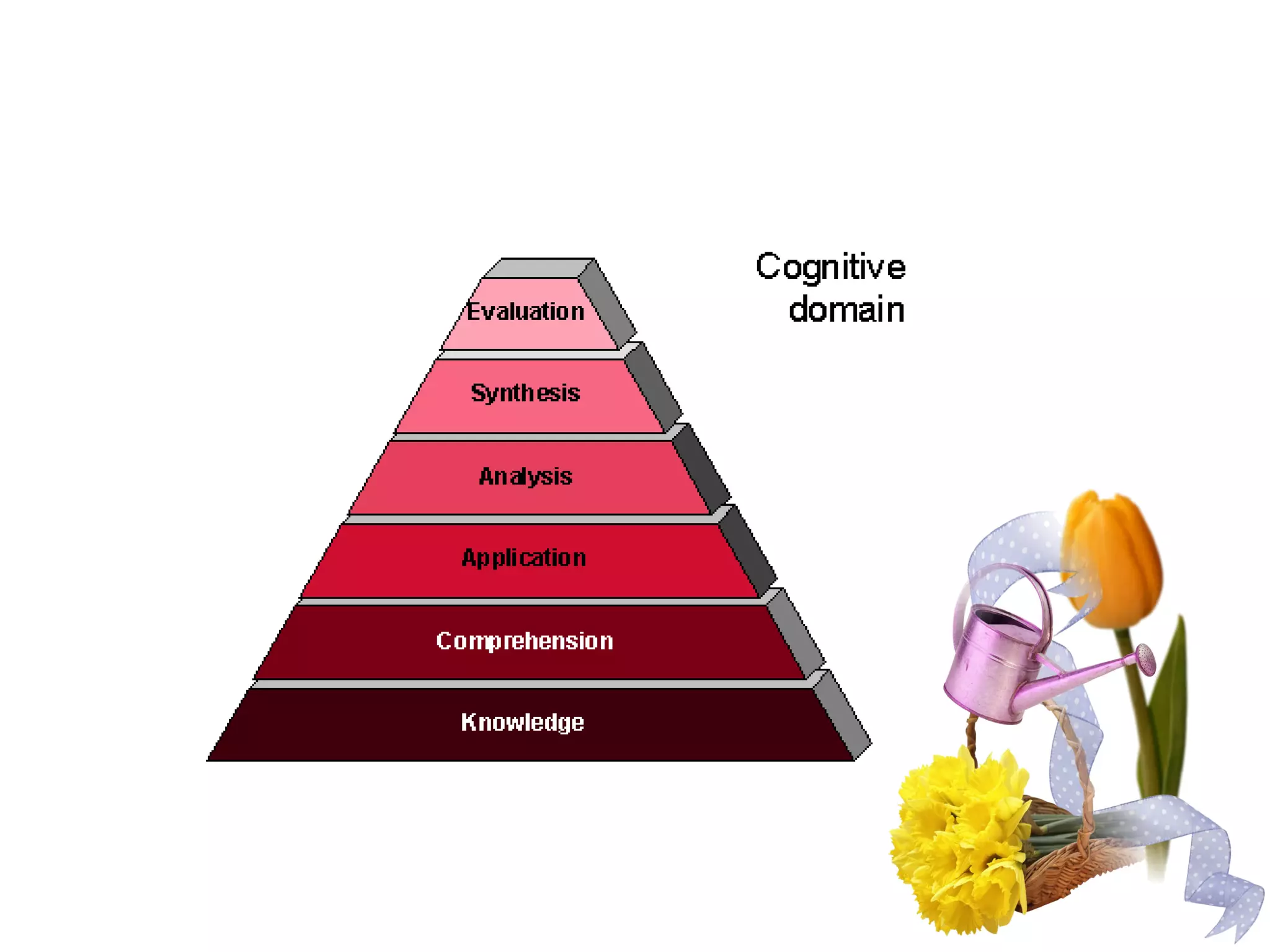
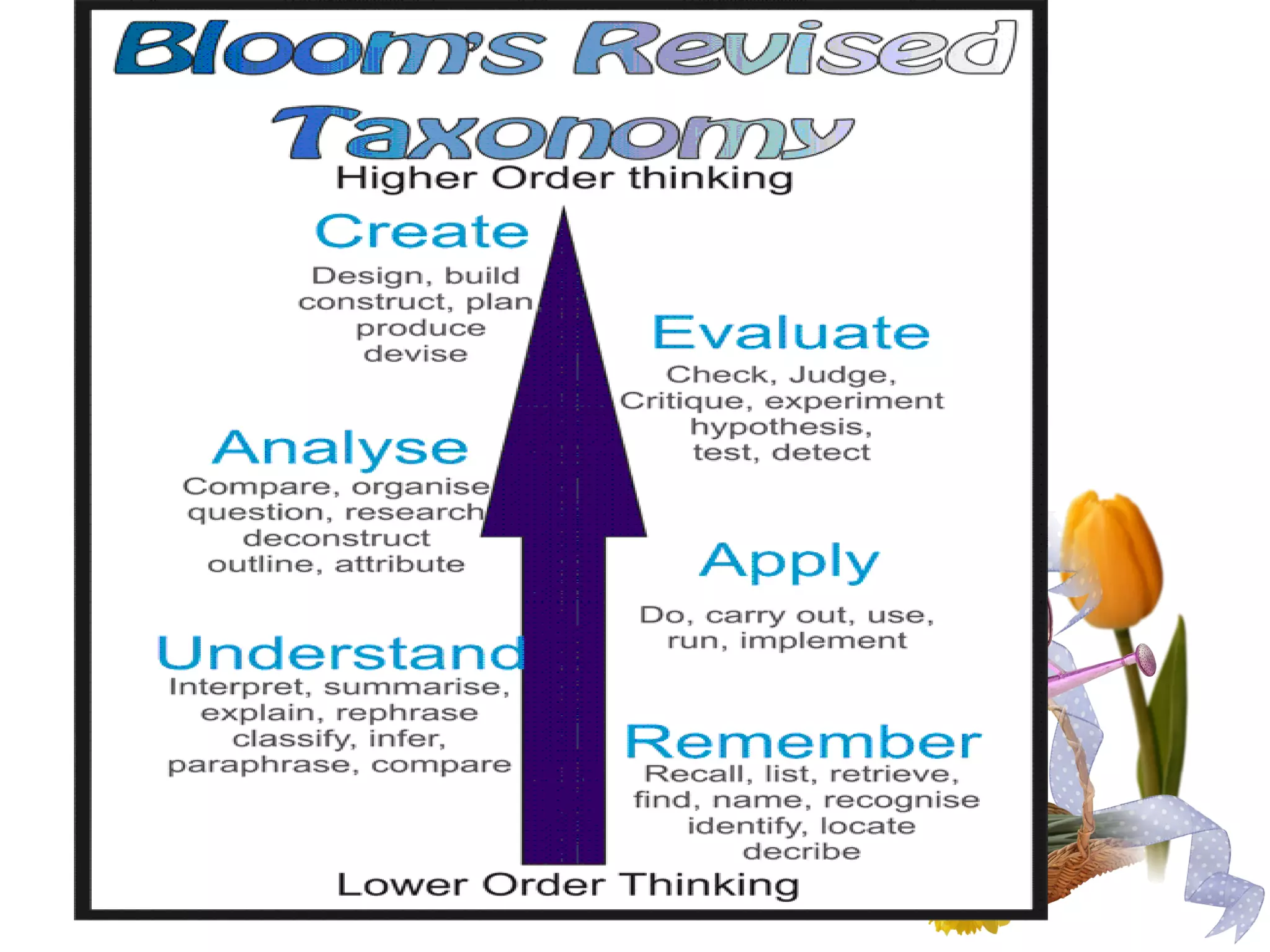
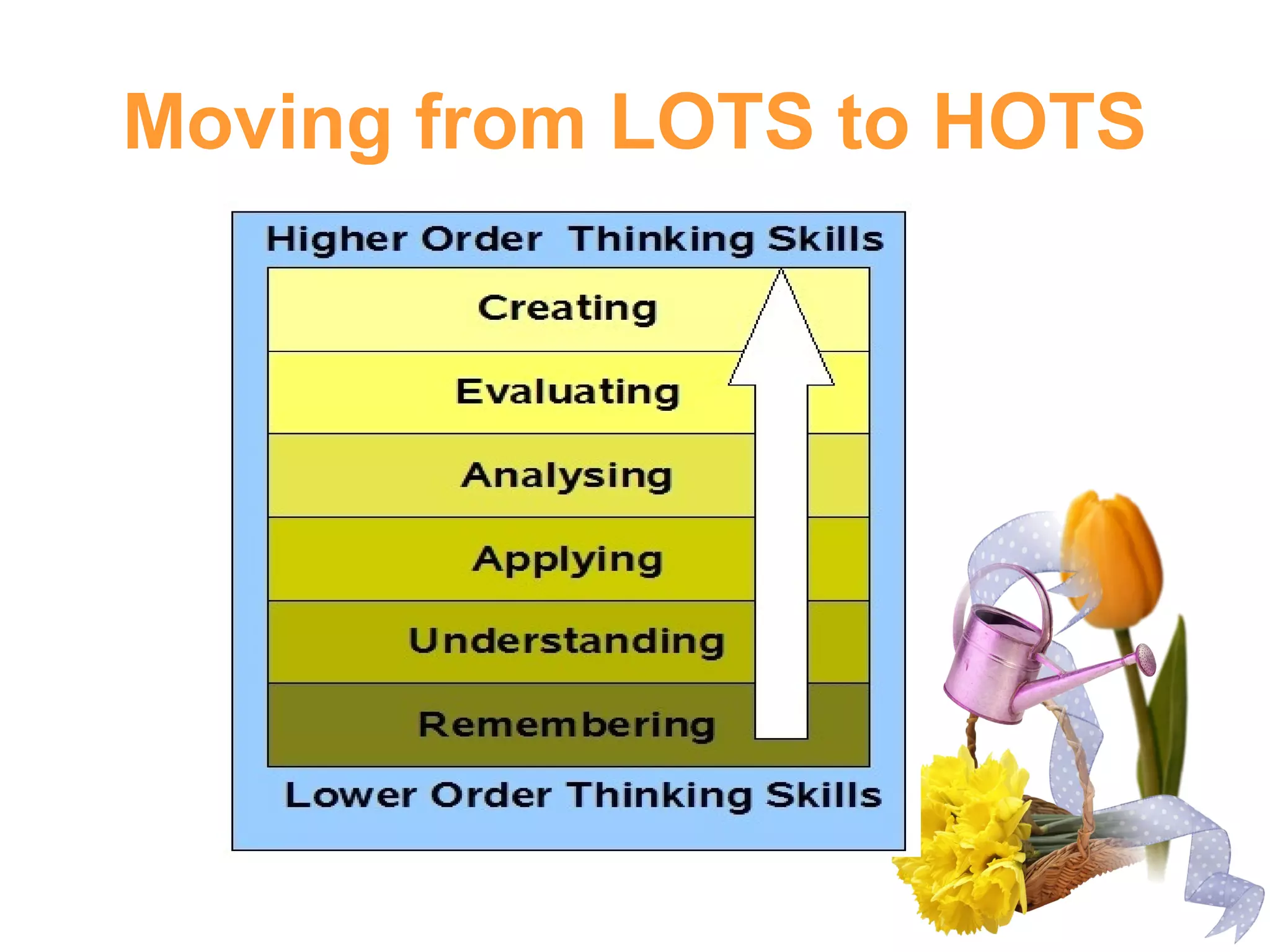
Introduction to Bloom’s Taxonomy, describing cognitive processes in a hierarchical order.
Importance of using Bloom's Taxonomy verbs in lesson planning to enhance cognitive skills development.
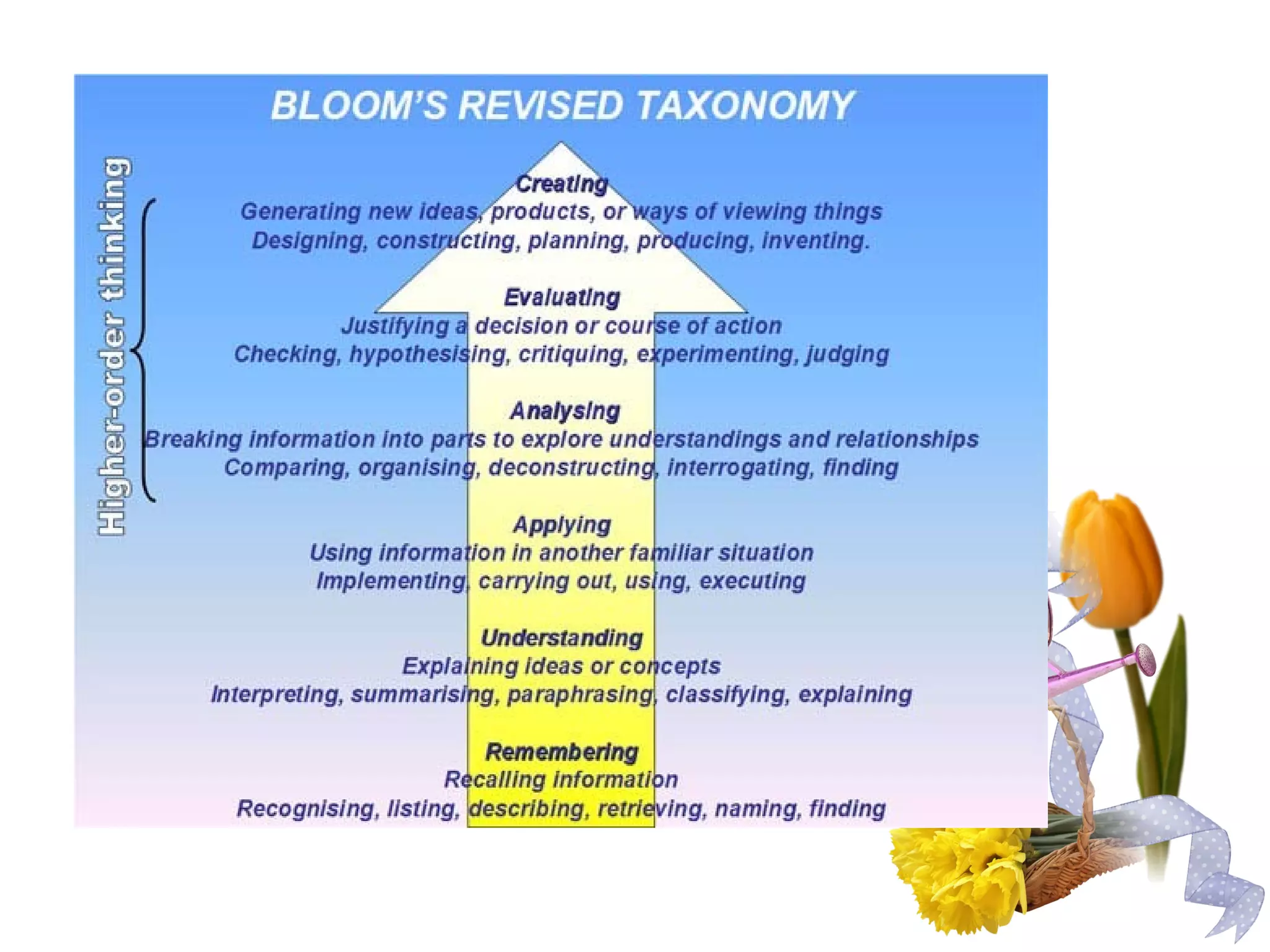
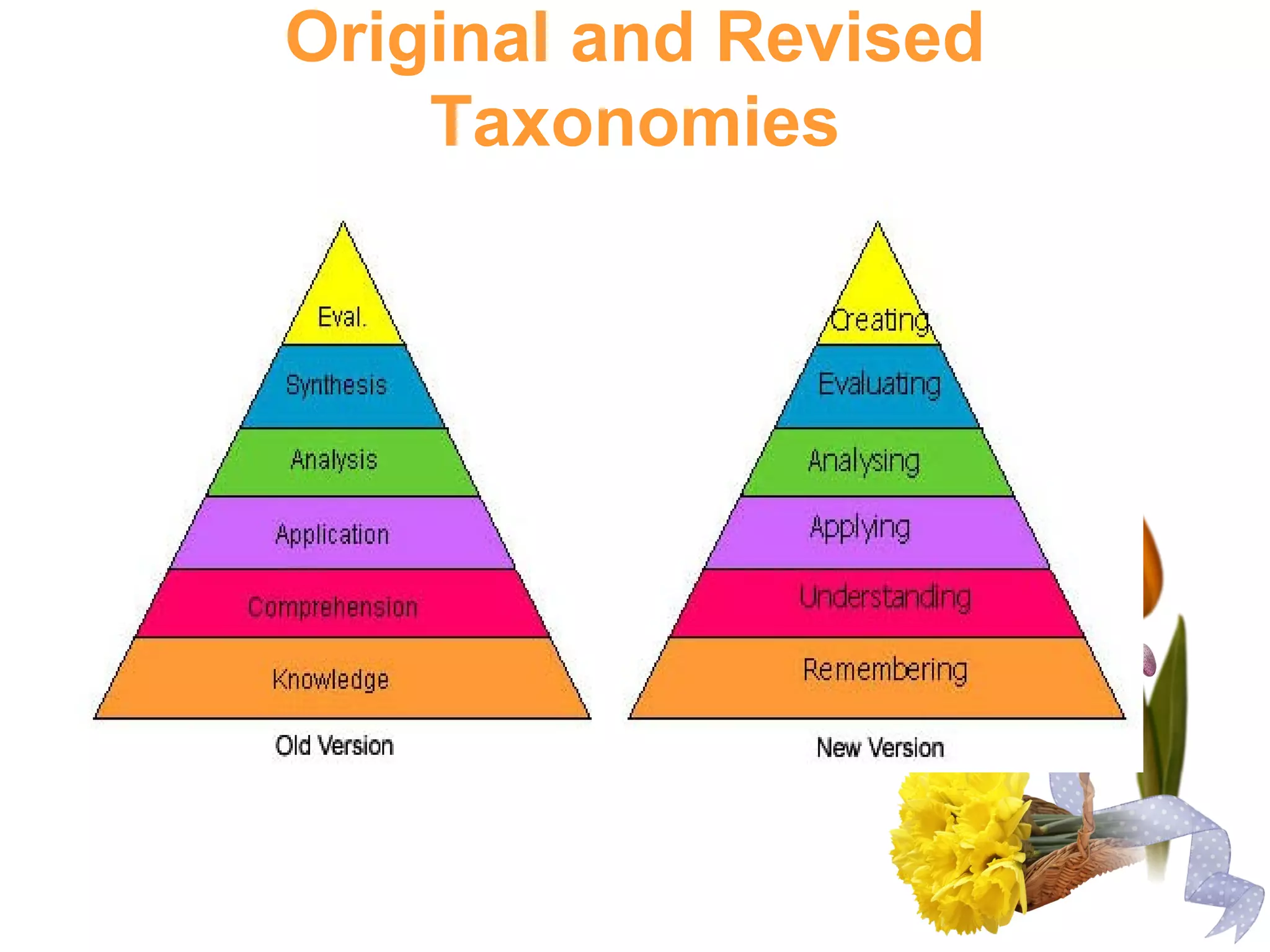
Updated taxonomy incorporating new knowledge and skills relevant to modern education contexts.
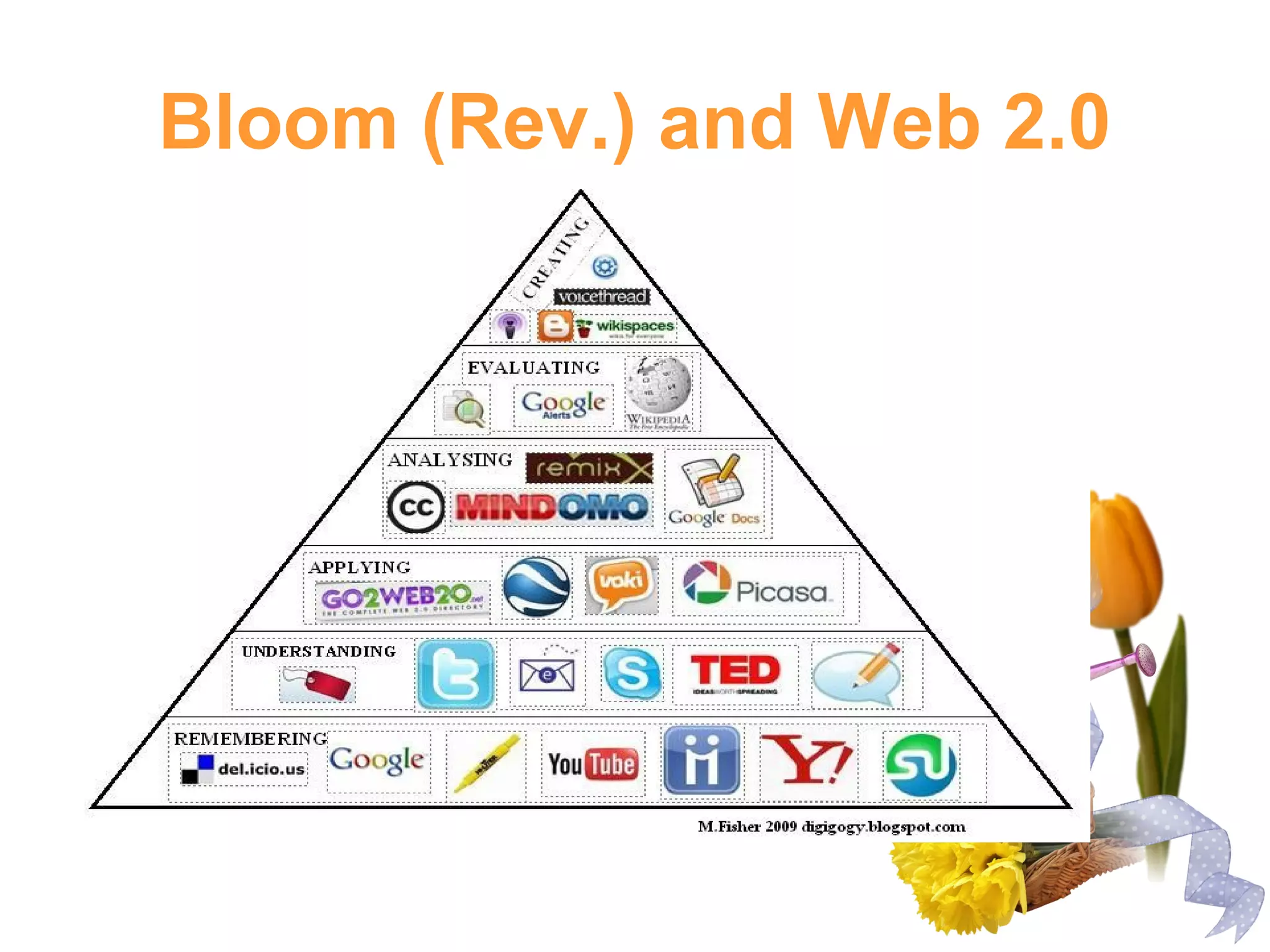
Discussion of the integration of Web 2.0 tools into revised Bloom’s Taxonomy.
Bruner’s focus on developing conceptual understanding and cognitive skills through active learning.
Bruner advocates for discovery learning and critical thinking through appropriate tasks and activities.
Three modes of thinking: enactive, iconic, and symbolic, which describe how learners process information.
Implications for teaching: encouraging active engagement, language analysis, and interaction with materials.
Emphasis on the spiral process of learning for effective retention and mastery of new information.
Ausubel's focus on meaningful learning, contrasting it with rote learning and emphasizing cognitive structures.
Strategies for teachers to enhance the meaningfulness of new material and facilitate integration of knowledge.
The role of advance organizers in preparing learners for new material by relating it to existing knowledge.
Importance of structuring meaningful learning activities appropriate to developmental stages and moving from LOTS to HOTS.


