Cognitivist Theory

      By: Emily
What is Cognitive Theory?


It’s a learning theory of psychology that tries to
explain human behaviors by looking at the thought
processes.
Offshoot of traditional psychological concepts of
thinking, deciding, and remembering.
What is Cognitive Theory? (cont)


  The book states, “According to cognitive theory,
  activities like thinking and remembering seem like a
  behavior, thus providing an avenue to use behavior
  analysis to measure their effect on learning.” (Shelly,
  Gunter, and Gunter)
  Came around as a reaction to behaviorist thinking.
Cognitivists vs. Behaviorist


Because Cognitivist Theory came around as a reaction
to Behaviorist Theory there has always been some
tension between the two.
Cognitivist believe Behaviorist:
  Think learning is simply a reactionary phenomenon
  Ignore the idea that thinking plays a role
Cognitivists


These Cognitivists have contributed a lot to the
understanding of this theory:
  Allan Paivio
  Robert Gagne
  Howard Gardner
  Benjamin Bloom
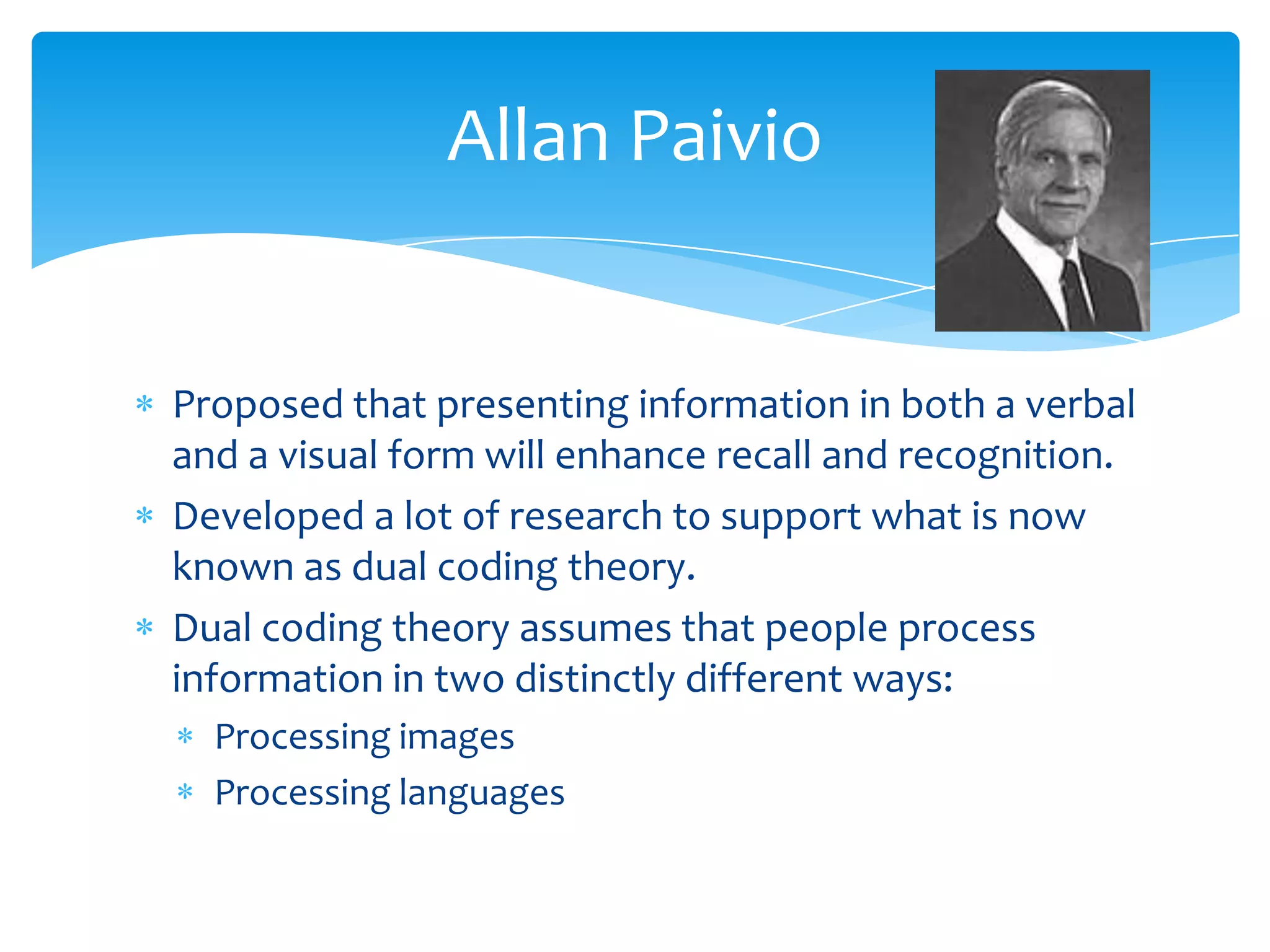
Allan Paivio


Proposed that presenting information in both a verbal
and a visual form will enhance recall and recognition.
Developed a lot of research to support what is now
known as dual coding theory.
Dual coding theory assumes that people process
information in two distinctly different ways:
  Processing images
  Processing languages
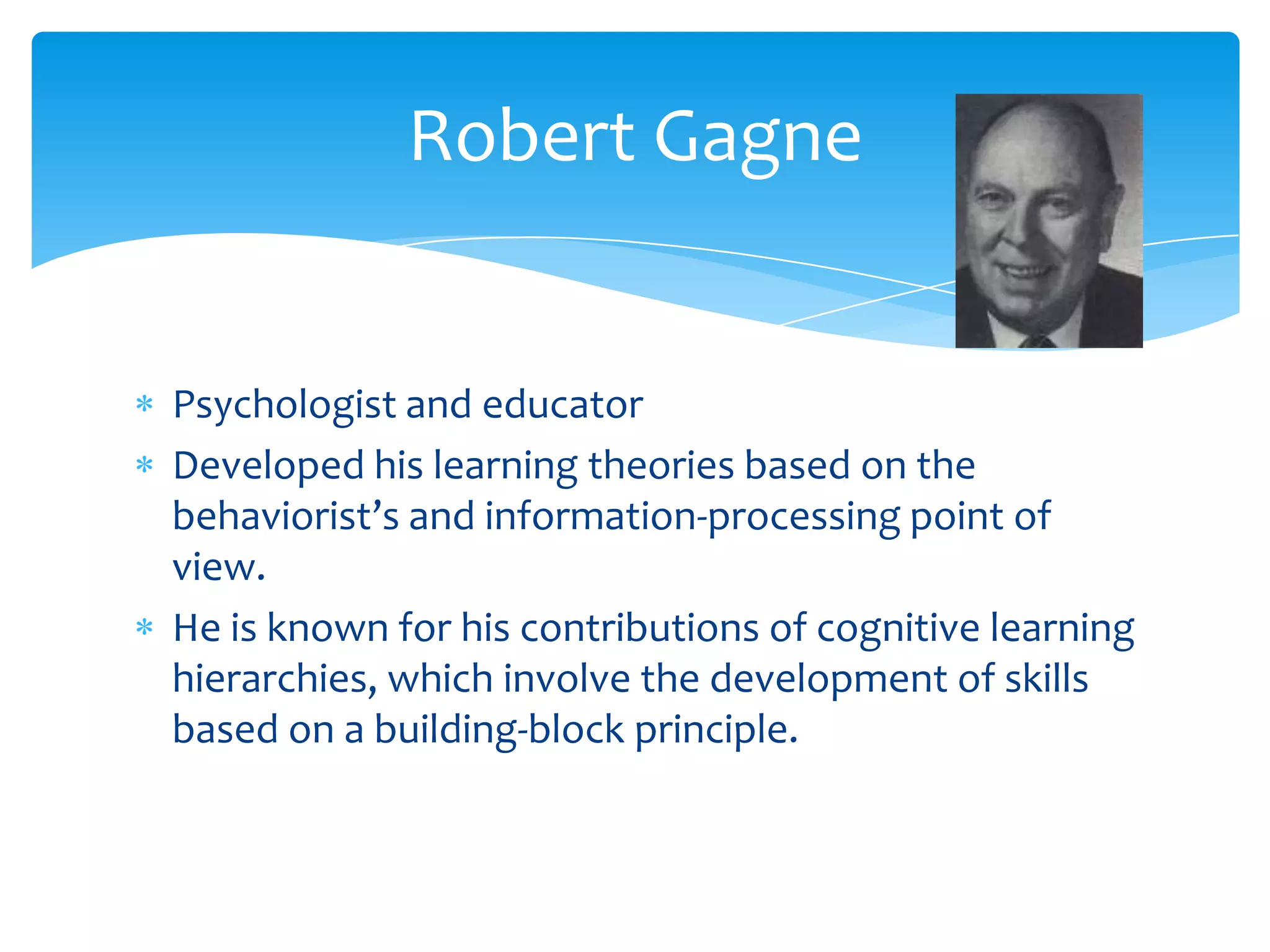
Robert Gagne


Psychologist and educator
Developed his learning theories based on the
behaviorist’s and information-processing point of
view.
He is known for his contributions of cognitive learning
hierarchies, which involve the development of skills
based on a building-block principle.
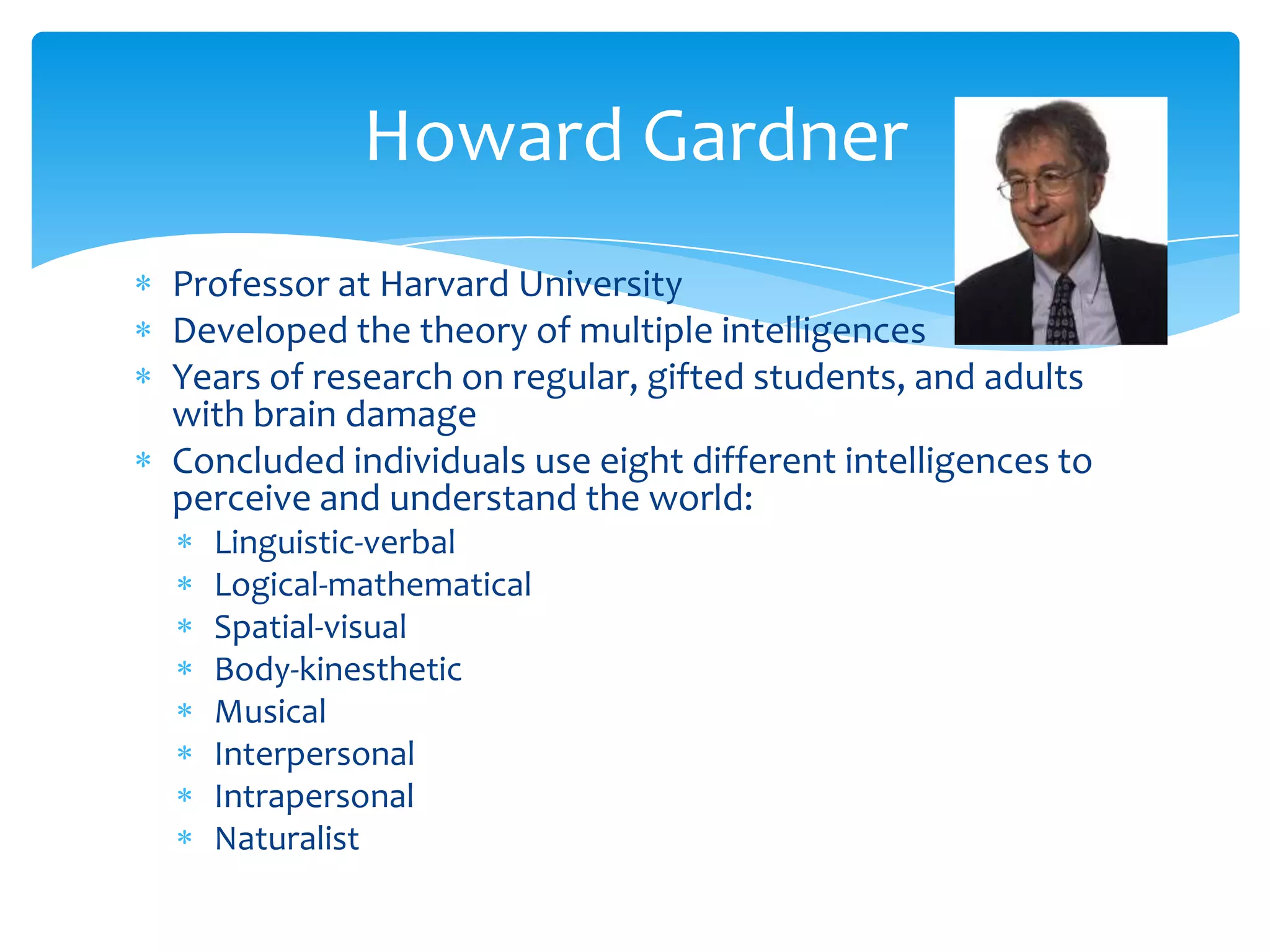
Howard Gardner
Professor at Harvard University
Developed the theory of multiple intelligences
Years of research on regular, gifted students, and adults
with brain damage
Concluded individuals use eight different intelligences to
perceive and understand the world:
  Linguistic-verbal
  Logical-mathematical
  Spatial-visual
  Body-kinesthetic
  Musical
  Interpersonal
  Intrapersonal
  Naturalist
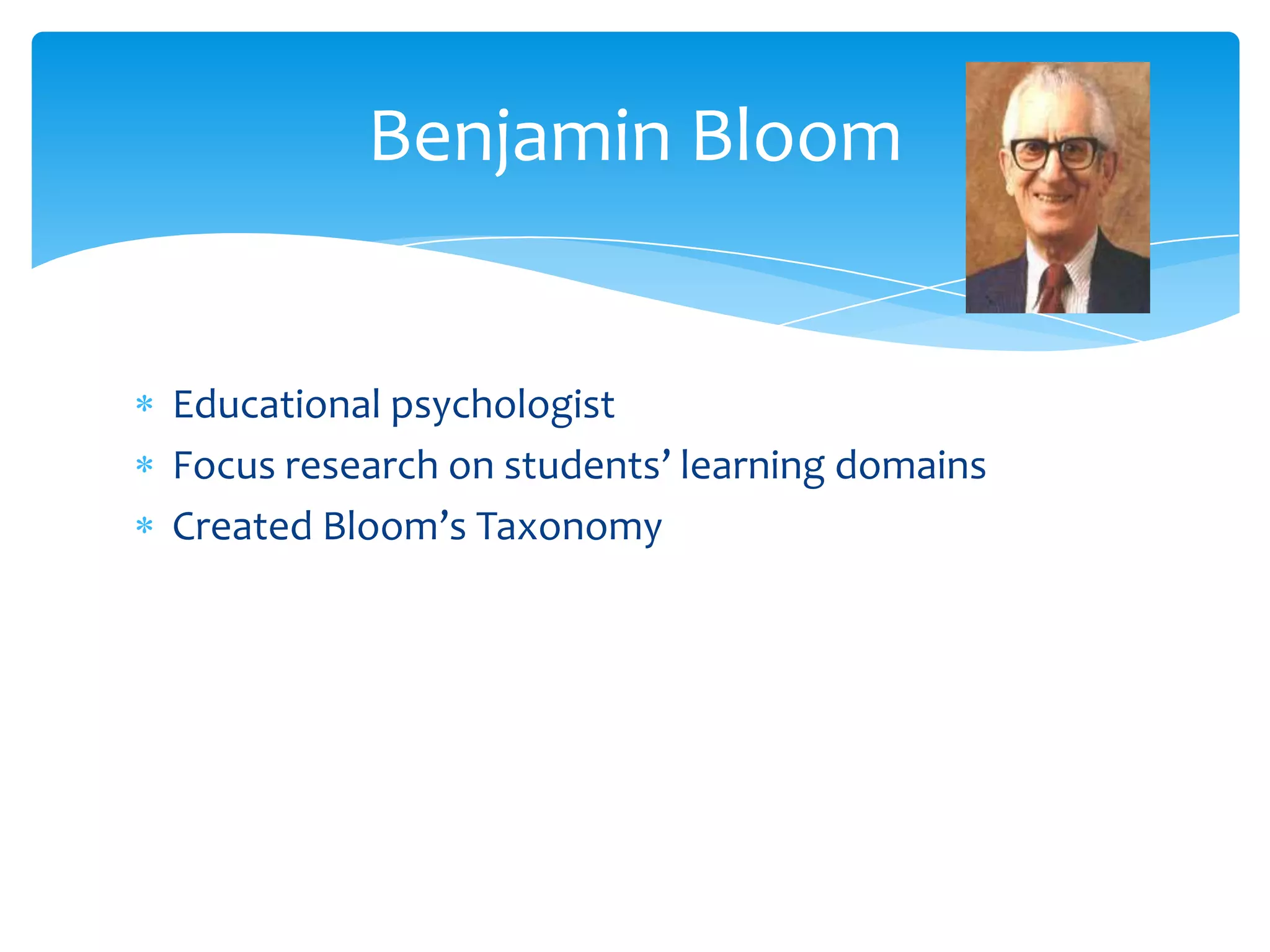
Benjamin Bloom


Educational psychologist
Focus research on students’ learning domains
Created Bloom’s Taxonomy
What teachers and students do


 “Cognitivist teaching methods aim to assist students in
 assimilating new information to existing knowledge, and
 enabling them to make the appropriate modifications to their
 existing intellectual framework to accommodate that
 information.”
 (http://gsi.berkeley.edu/teachingguide/theories/cognitive.html)
 Teachers can have students explain new material in their own
 words which will help them understand and remember.
 This theory is also largely self-motivated so teachers have
 students monitor their progress as well as them monitoring
 them.
Work Cited


 Shelly, Gary, Glenda Gunder, and Randolph Gunter.
Teachers discovering computers: Integrating
technology in a connected world. Seventh Ed. Boston,
MA: Course Technology, 2012. Print.
 http://gsi.berkeley.edu/teachingguide/theories/cognit
ive.html

Cognative theory

  • 1.
  • 2.
    What is CognitiveTheory? It’s a learning theory of psychology that tries to explain human behaviors by looking at the thought processes. Offshoot of traditional psychological concepts of thinking, deciding, and remembering.
  • 3.
    What is CognitiveTheory? (cont) The book states, “According to cognitive theory, activities like thinking and remembering seem like a behavior, thus providing an avenue to use behavior analysis to measure their effect on learning.” (Shelly, Gunter, and Gunter) Came around as a reaction to behaviorist thinking.
  • 4.
    Cognitivists vs. Behaviorist BecauseCognitivist Theory came around as a reaction to Behaviorist Theory there has always been some tension between the two. Cognitivist believe Behaviorist: Think learning is simply a reactionary phenomenon Ignore the idea that thinking plays a role
  • 5.
    Cognitivists These Cognitivists havecontributed a lot to the understanding of this theory: Allan Paivio Robert Gagne Howard Gardner Benjamin Bloom
  • 6.
    Allan Paivio Proposed thatpresenting information in both a verbal and a visual form will enhance recall and recognition. Developed a lot of research to support what is now known as dual coding theory. Dual coding theory assumes that people process information in two distinctly different ways: Processing images Processing languages
  • 7.
    Robert Gagne Psychologist andeducator Developed his learning theories based on the behaviorist’s and information-processing point of view. He is known for his contributions of cognitive learning hierarchies, which involve the development of skills based on a building-block principle.
  • 8.
    Howard Gardner Professor atHarvard University Developed the theory of multiple intelligences Years of research on regular, gifted students, and adults with brain damage Concluded individuals use eight different intelligences to perceive and understand the world: Linguistic-verbal Logical-mathematical Spatial-visual Body-kinesthetic Musical Interpersonal Intrapersonal Naturalist
  • 9.
    Benjamin Bloom Educational psychologist Focusresearch on students’ learning domains Created Bloom’s Taxonomy
  • 10.
    What teachers andstudents do “Cognitivist teaching methods aim to assist students in assimilating new information to existing knowledge, and enabling them to make the appropriate modifications to their existing intellectual framework to accommodate that information.” (http://gsi.berkeley.edu/teachingguide/theories/cognitive.html) Teachers can have students explain new material in their own words which will help them understand and remember. This theory is also largely self-motivated so teachers have students monitor their progress as well as them monitoring them.
  • 11.
    Work Cited Shelly,Gary, Glenda Gunder, and Randolph Gunter. Teachers discovering computers: Integrating technology in a connected world. Seventh Ed. Boston, MA: Course Technology, 2012. Print. http://gsi.berkeley.edu/teachingguide/theories/cognit ive.html