
Cognitive
constructivism of
Jean Piaget
Suresh Babu G
Assistant Professor
CTE CPAS Paippad, Kottayam
Cognitive Constructivism Theory
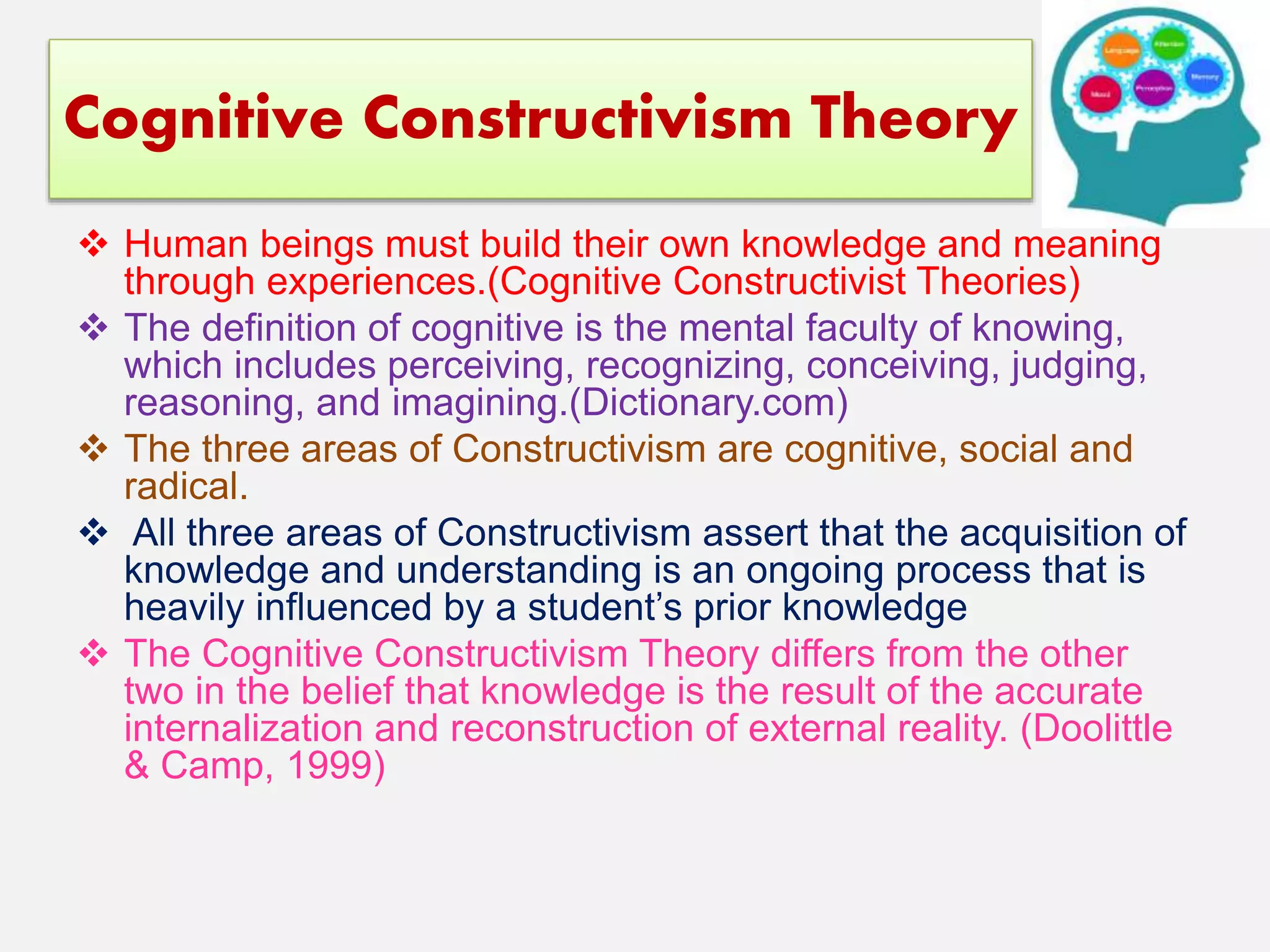
 Human beings must build their own knowledge and meaning
through experiences.(Cognitive Constructivist Theories)
 The definition of cognitive is the mental faculty of knowing,
which includes perceiving, recognizing, conceiving, judging,
reasoning, and imagining.(Dictionary.com)
 The three areas of Constructivism are cognitive, social and
radical.
 All three areas of Constructivism assert that the acquisition of
knowledge and understanding is an ongoing process that is
heavily influenced by a student’s prior knowledge
 The Cognitive Constructivism Theory differs from the other
two in the belief that knowledge is the result of the accurate
internalization and reconstruction of external reality. (Doolittle
& Camp, 1999)
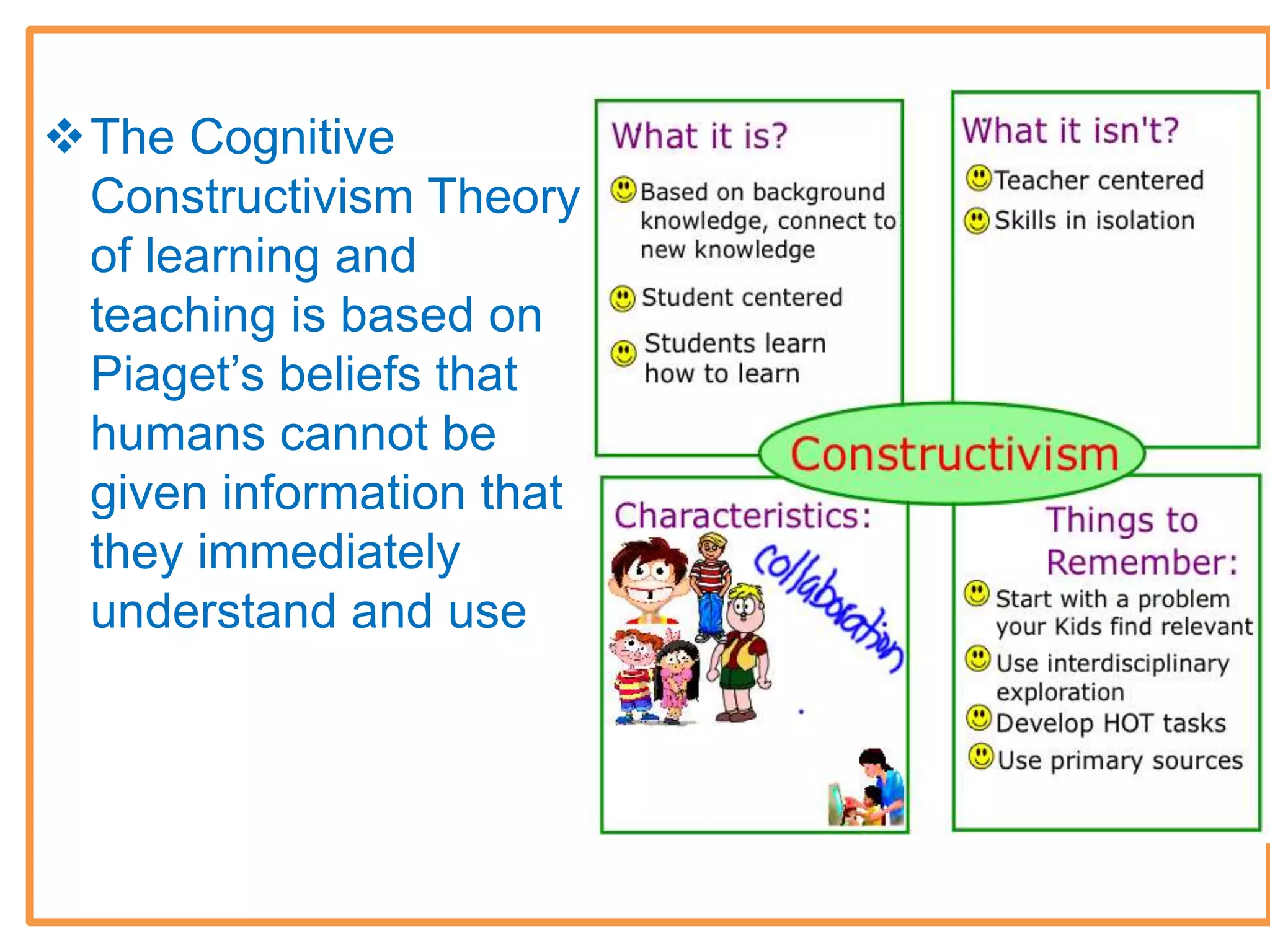
The Cognitive
Constructivism Theory
of learning and
teaching is based on
Piaget’s beliefs that
humans cannot be
given information that
they immediately
understand and use
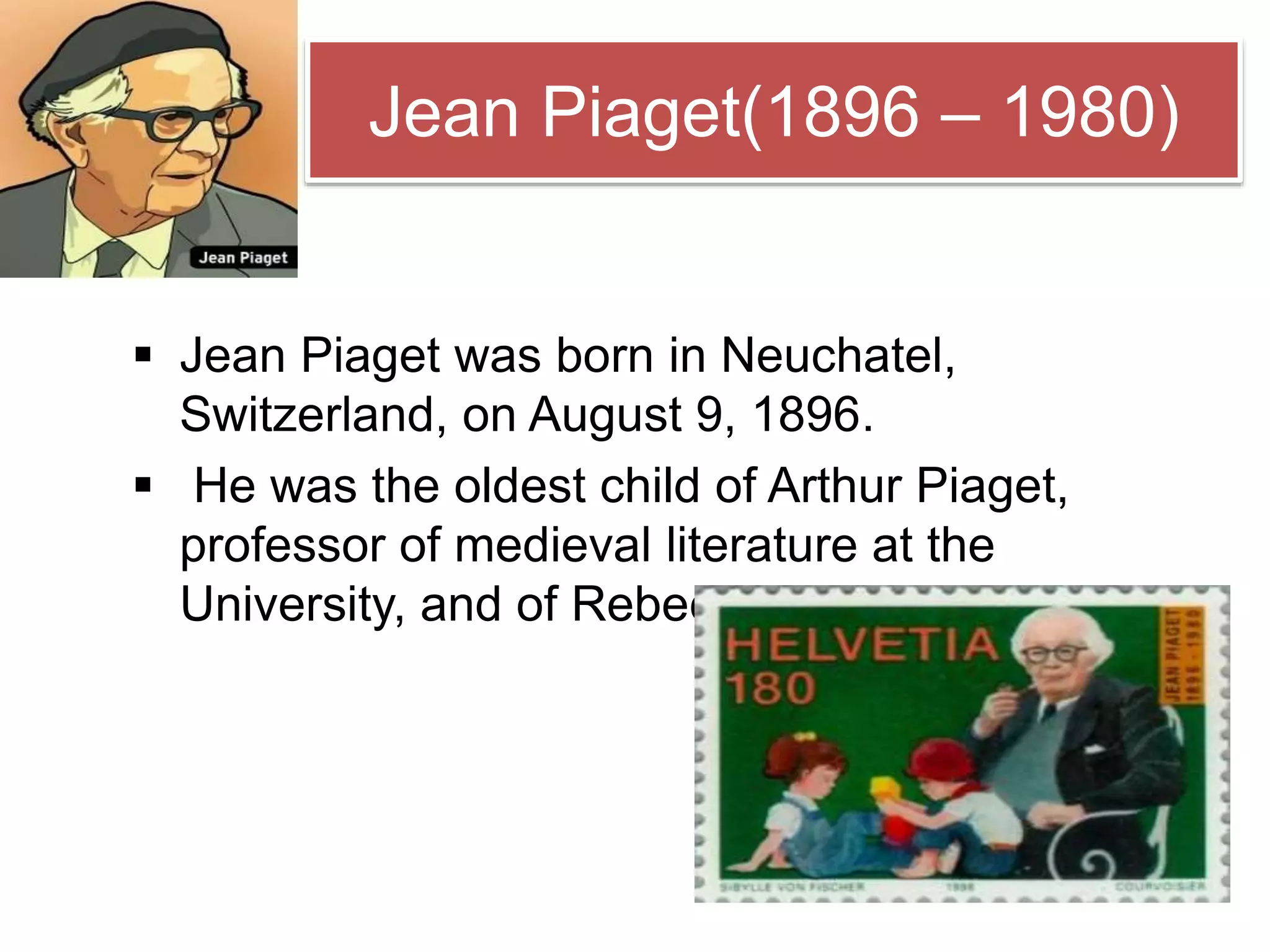
Jean Piaget(1896 – 1980)
 Jean Piaget was born in Neuchatel,
Switzerland, on August 9, 1896.
 He was the oldest child of Arthur Piaget,
professor of medieval literature at the
University, and of Rebecca Jackson.
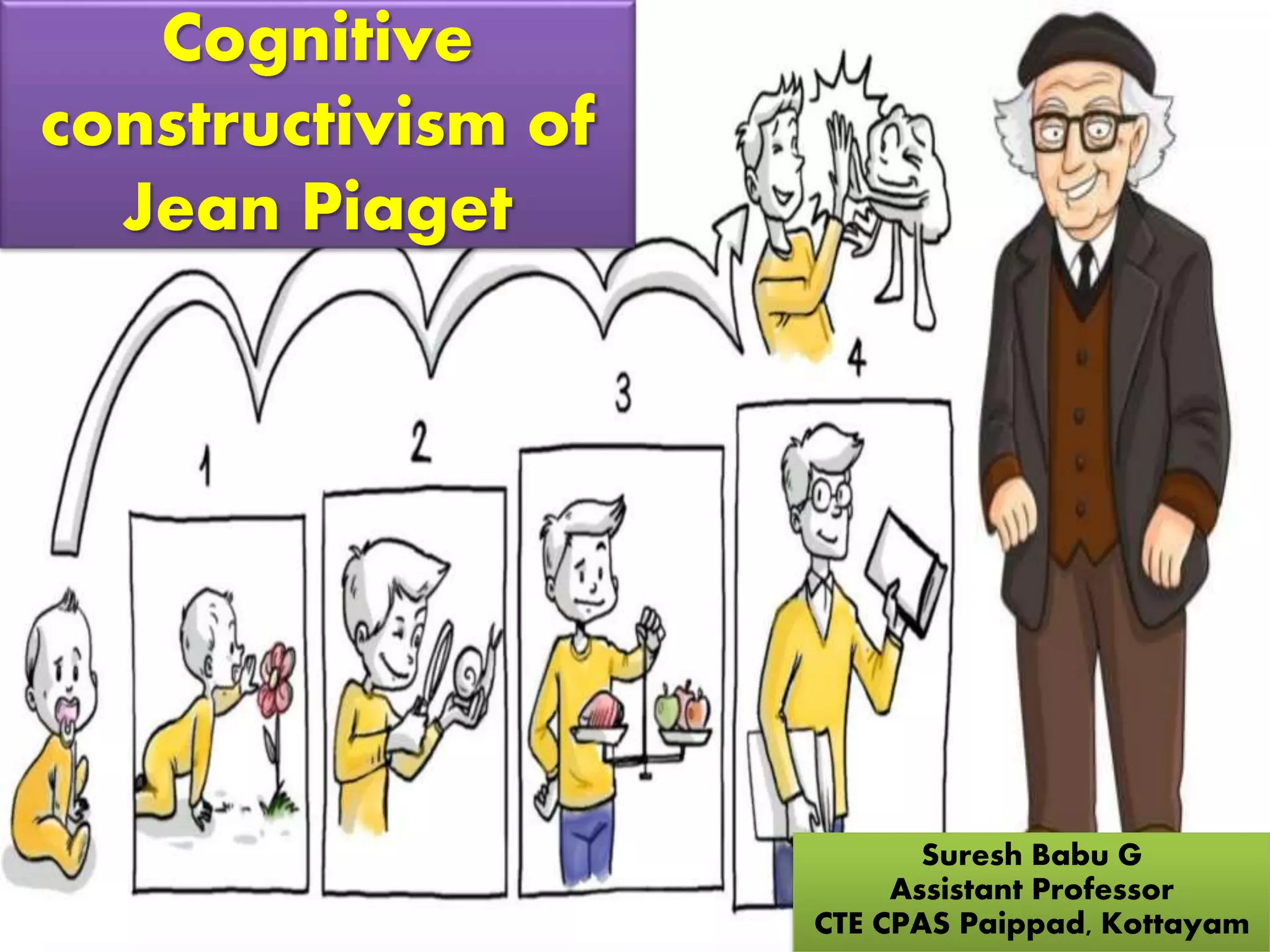
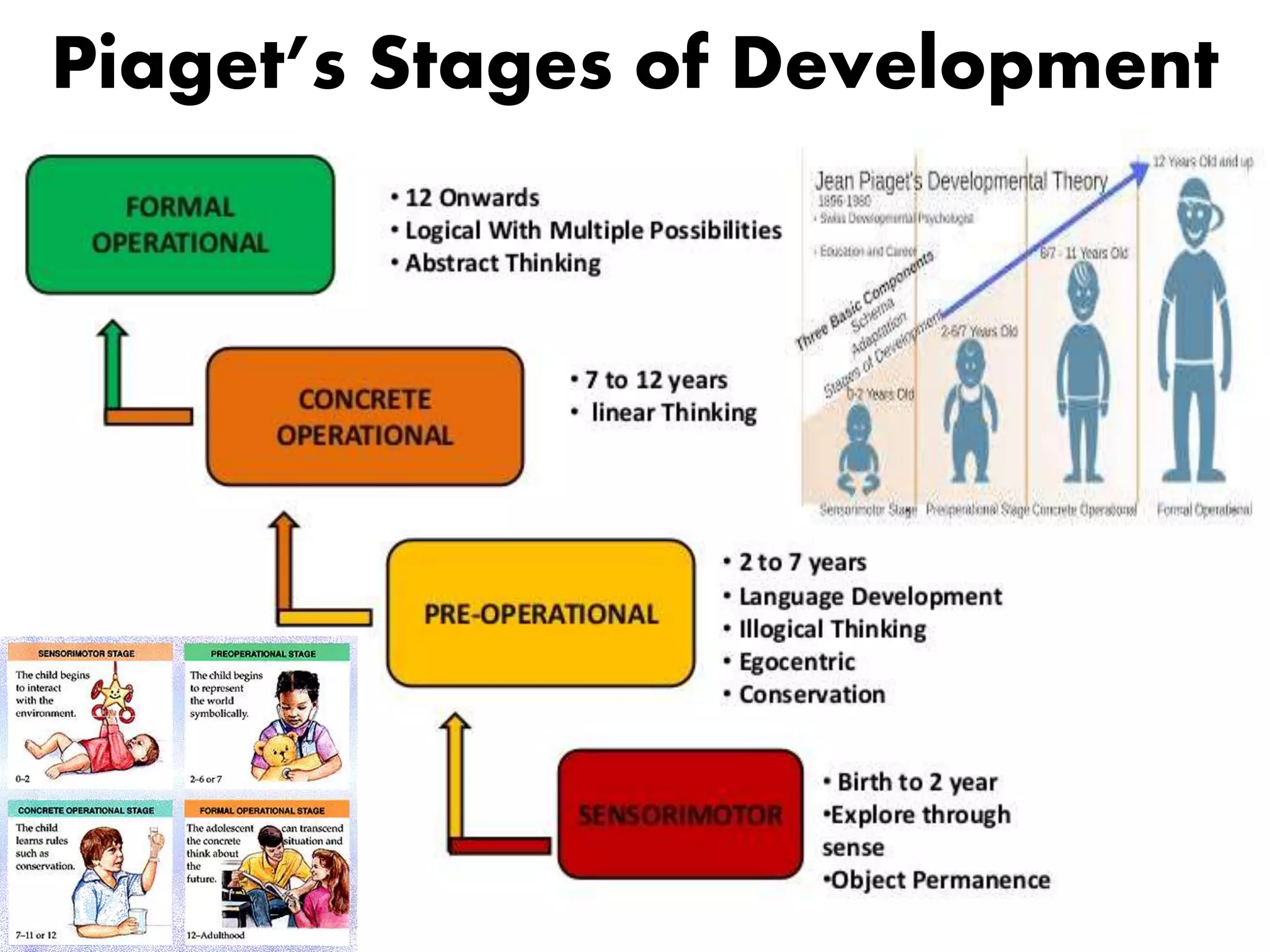
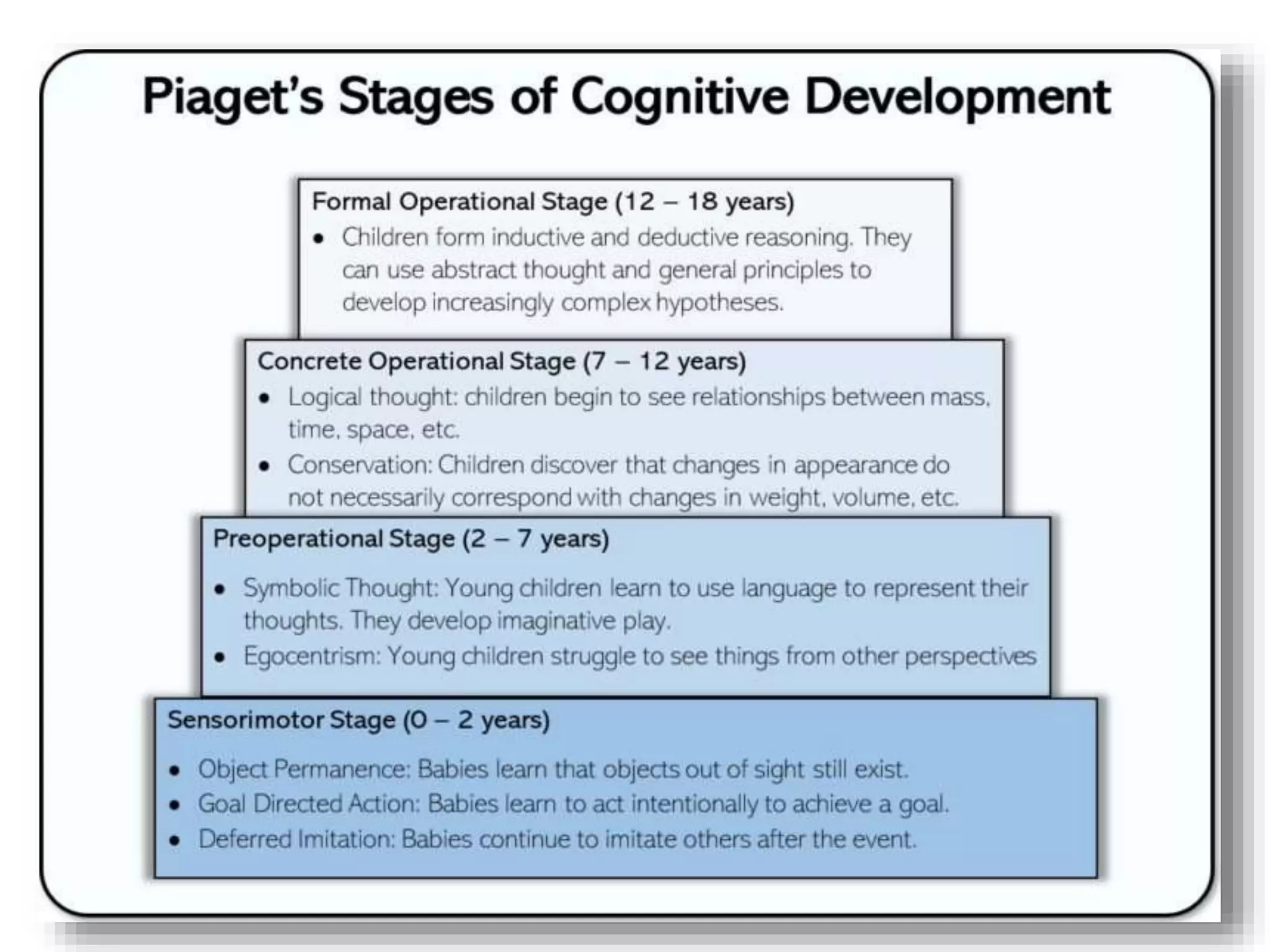
Piaget’s Stages of Development
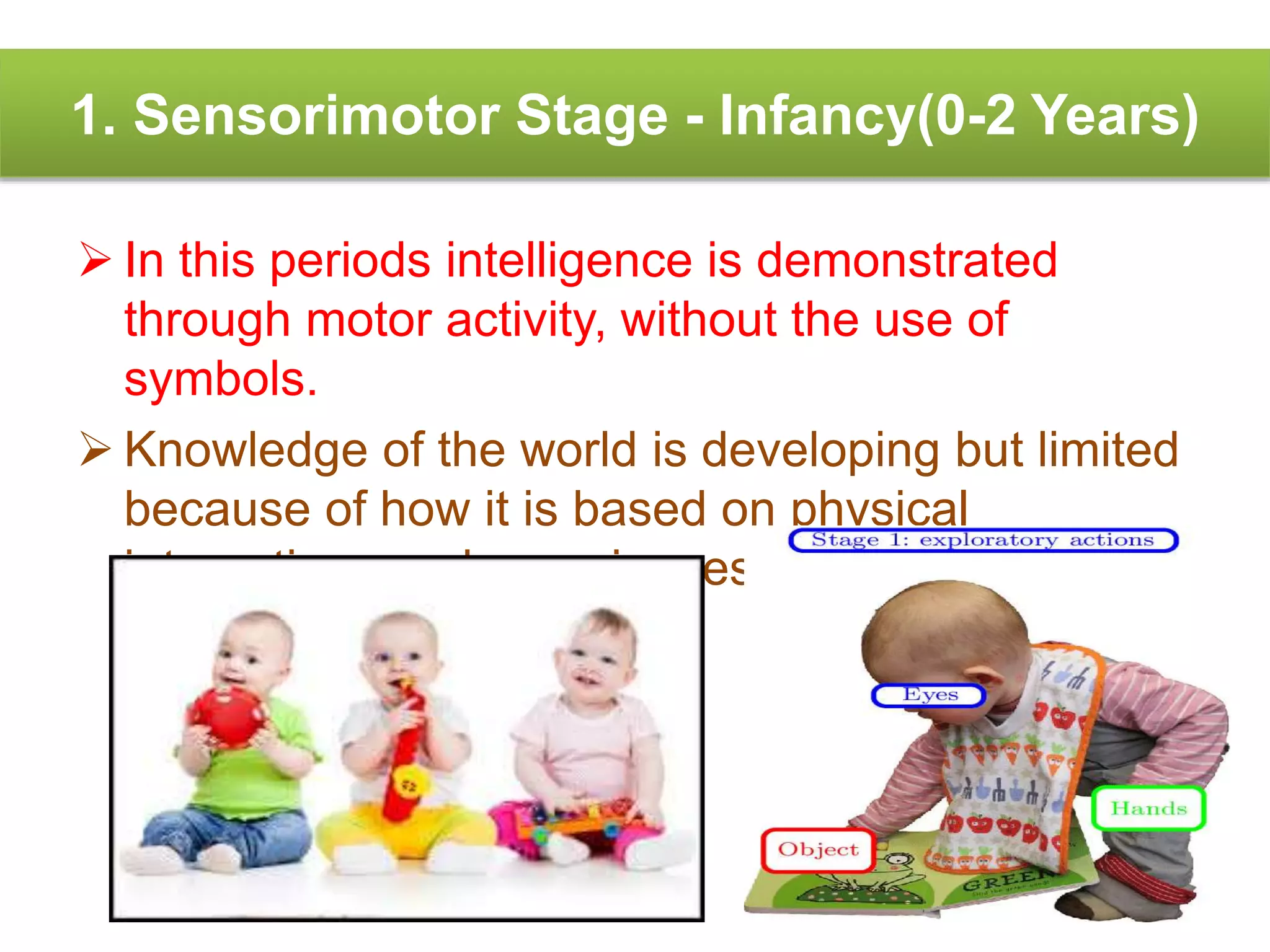
1. Sensorimotor Stage - Infancy(0-2 Years)
 In this periods intelligence is demonstrated
through motor activity, without the use of
symbols.
 Knowledge of the world is developing but limited
because of how it is based on physical
interactions and experiences.
Pre-operational stage - Toddler and
Early Childhood(2-7 Years)
• Intelligence is demonstrated through the use of
symbols, language use matures, and memory
and imagination are developed in this period.
• Egocentric thinking predominates.
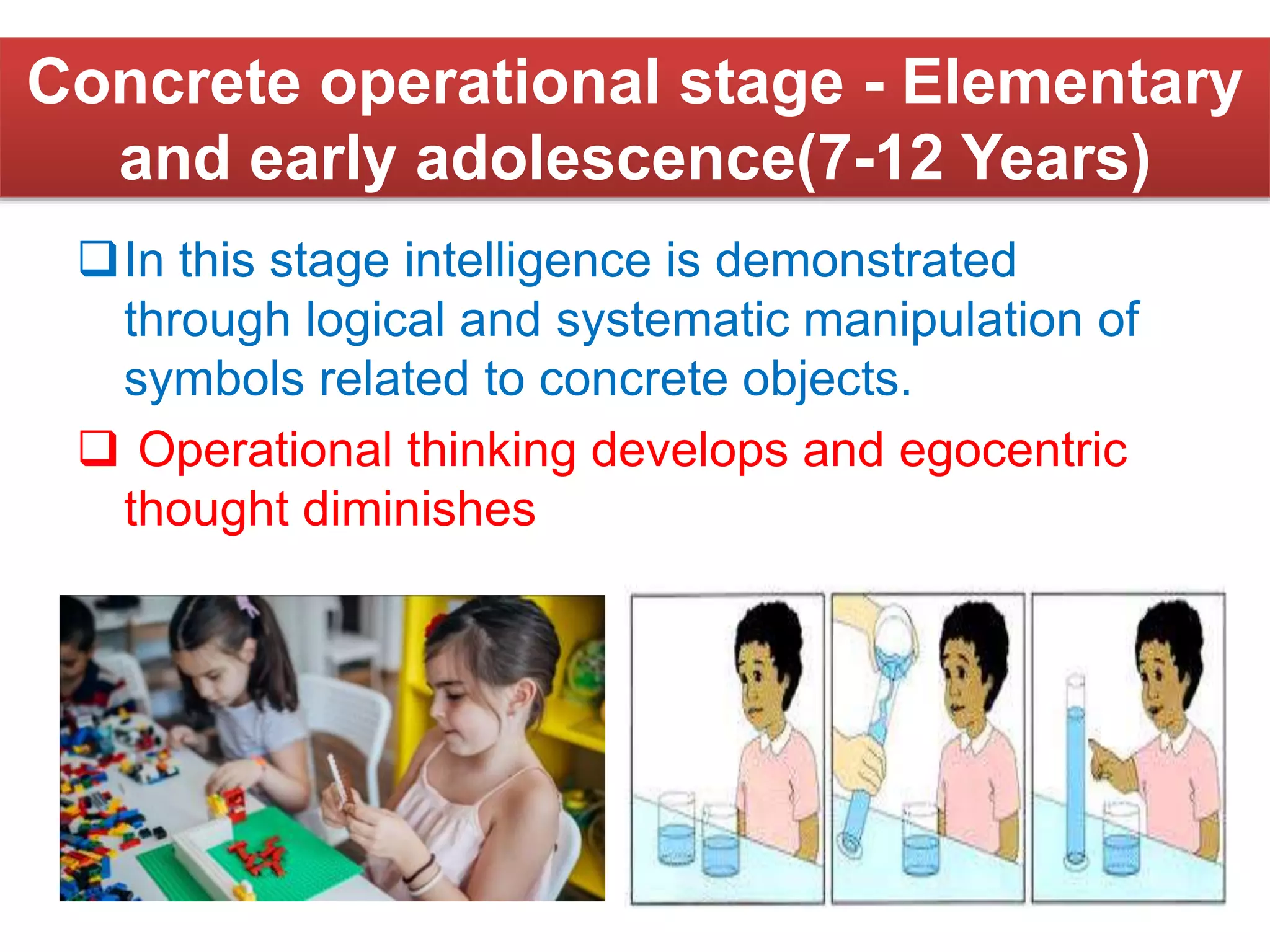
Concrete operational stage - Elementary
and early adolescence(7-12 Years)
In this stage intelligence is demonstrated
through logical and systematic manipulation of
symbols related to concrete objects.
 Operational thinking develops and egocentric
thought diminishes
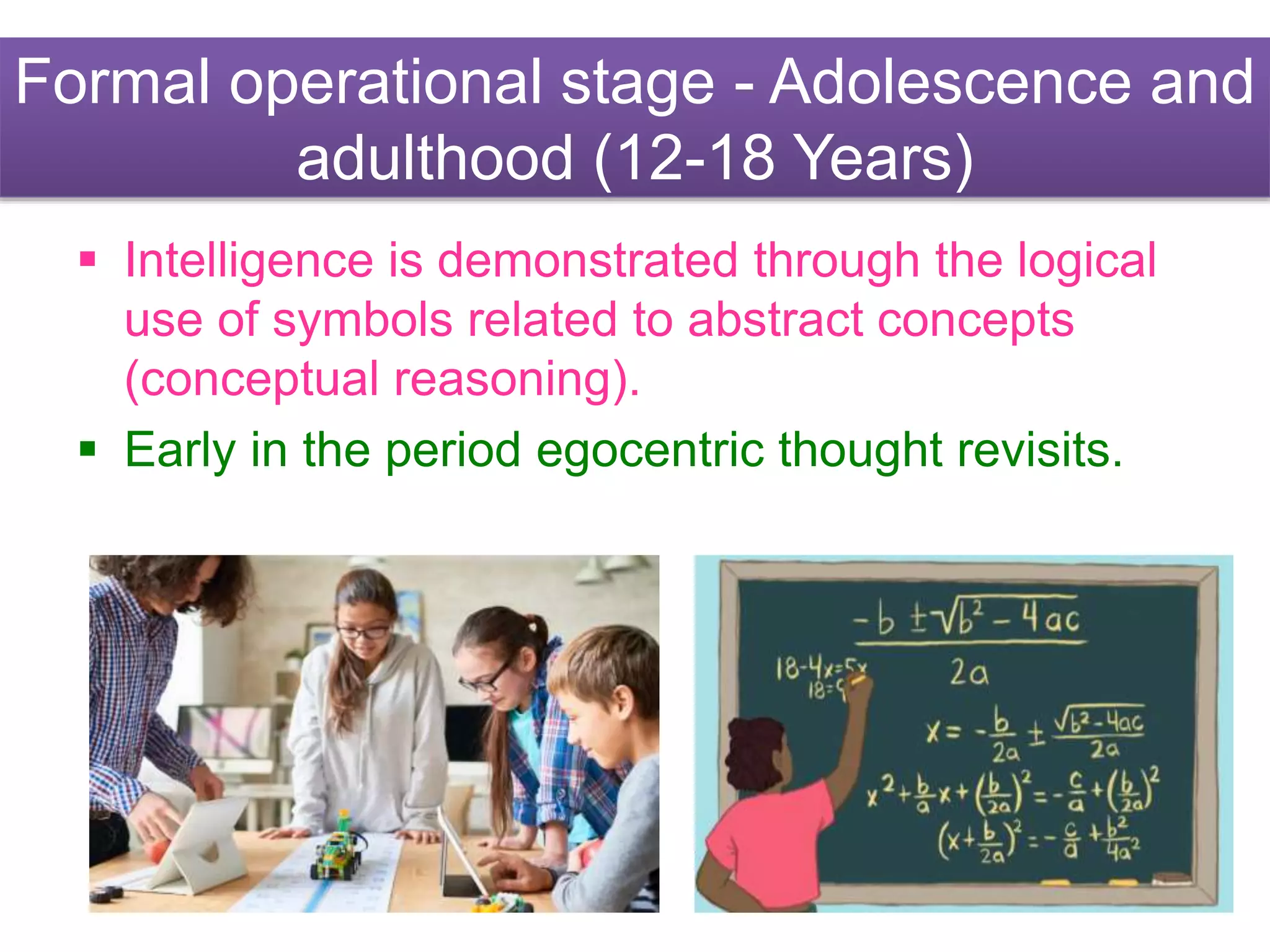
Formal operational stage - Adolescence and
adulthood (12-18 Years)
 Intelligence is demonstrated through the logical
use of symbols related to abstract concepts
(conceptual reasoning).
 Early in the period egocentric thought revisits.
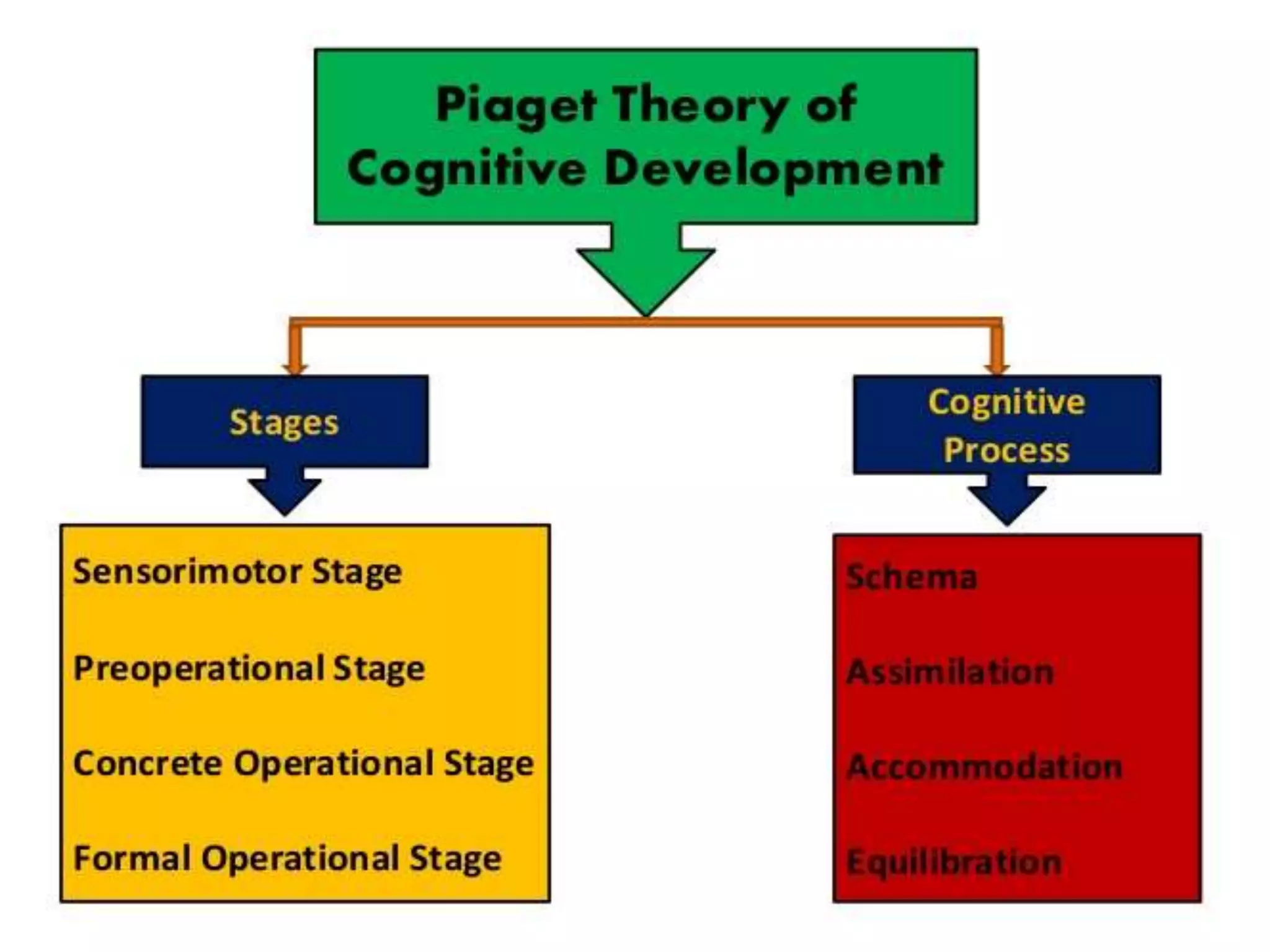
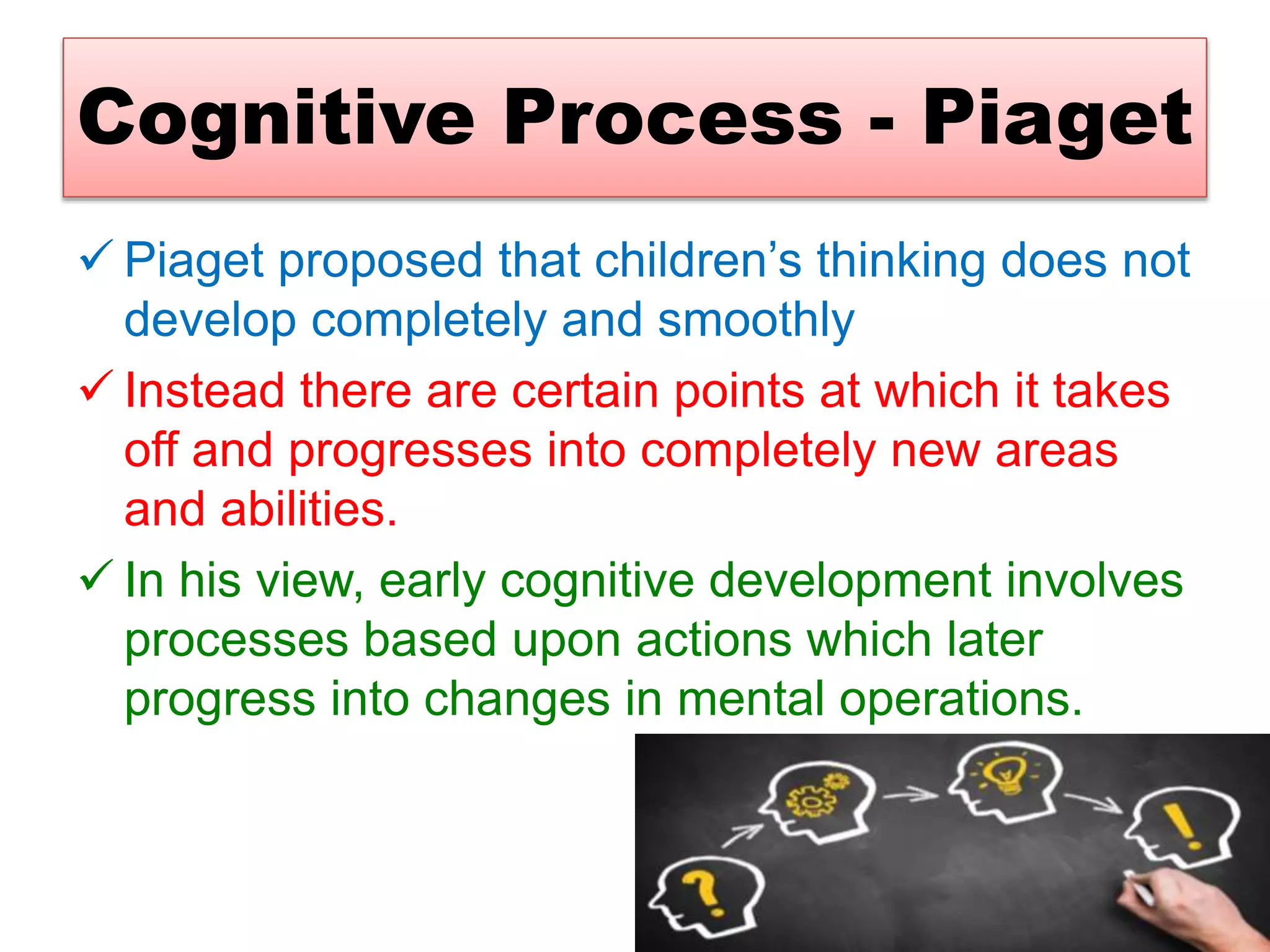
Cognitive Process - Piaget
 Piaget proposed that children’s thinking does not
develop completely and smoothly
 Instead there are certain points at which it takes
off and progresses into completely new areas
and abilities.
 In his view, early cognitive development involves
processes based upon actions which later
progress into changes in mental operations.
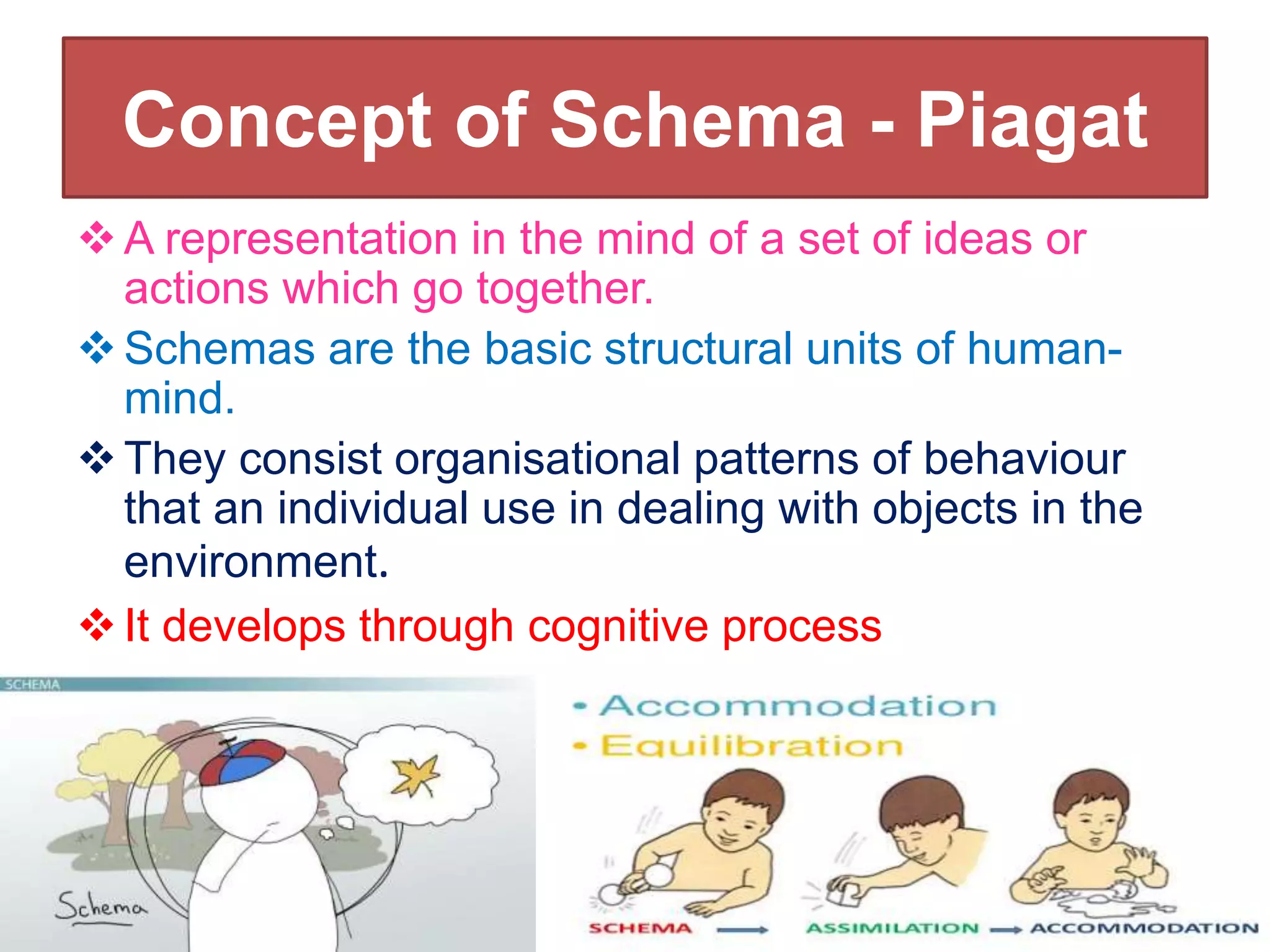
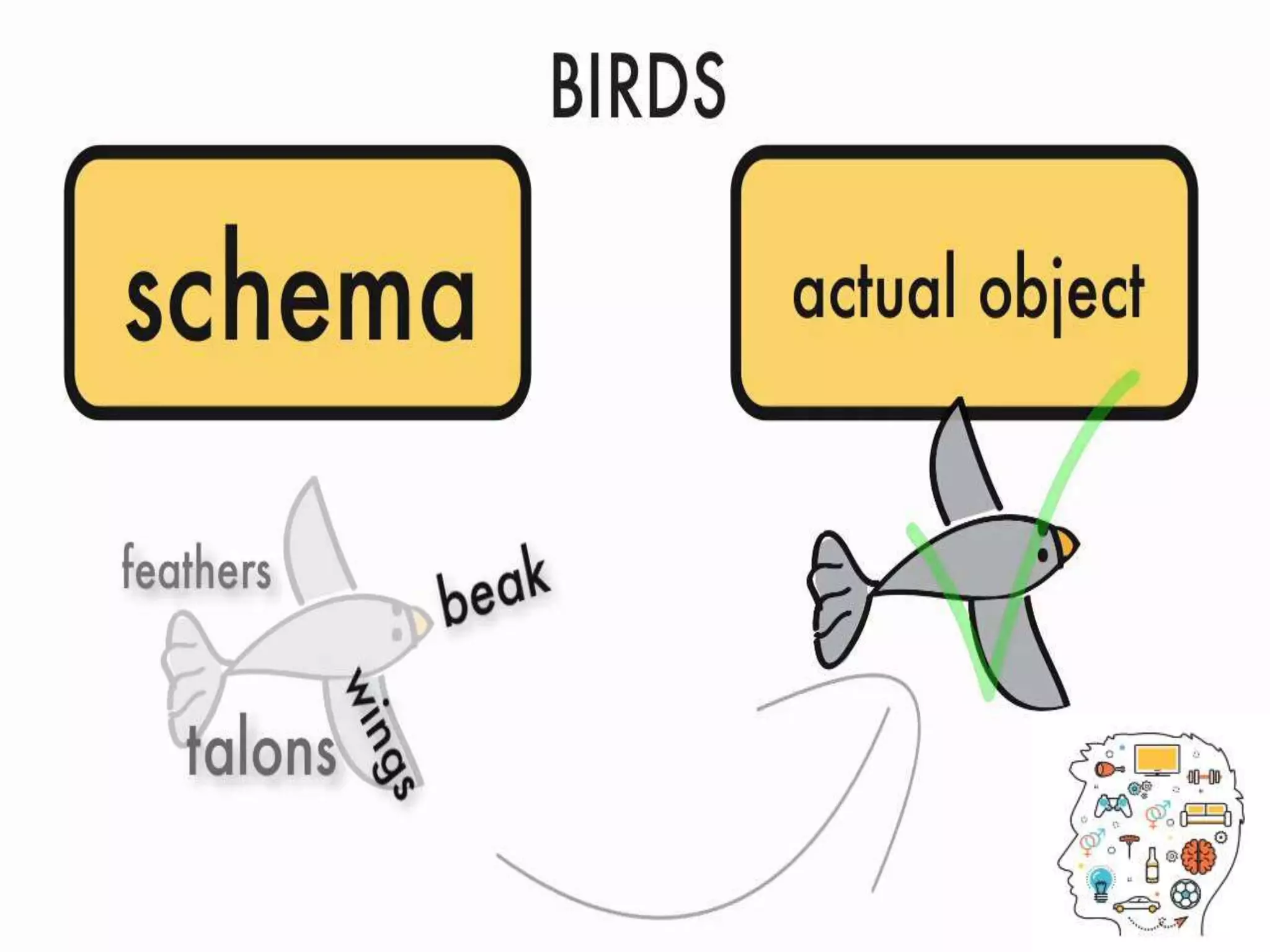
Concept of Schema - Piagat
A representation in the mind of a set of ideas or
actions which go together.
Schemas are the basic structural units of human-
mind.
They consist organisational patterns of behaviour
that an individual use in dealing with objects in the
environment.
It develops through cognitive process
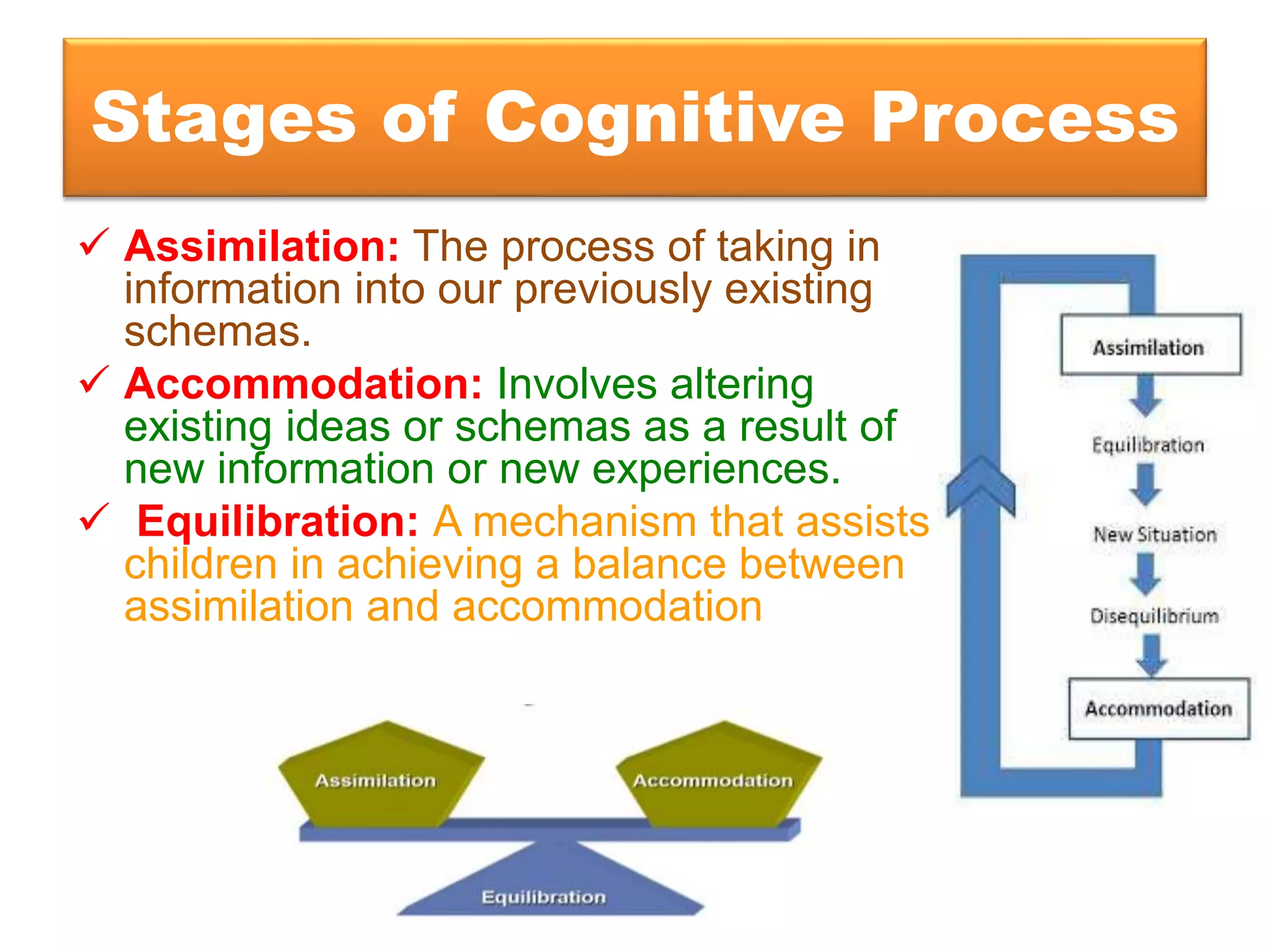
Stages of Cognitive Process
 Assimilation: The process of taking in
information into our previously existing
schemas.
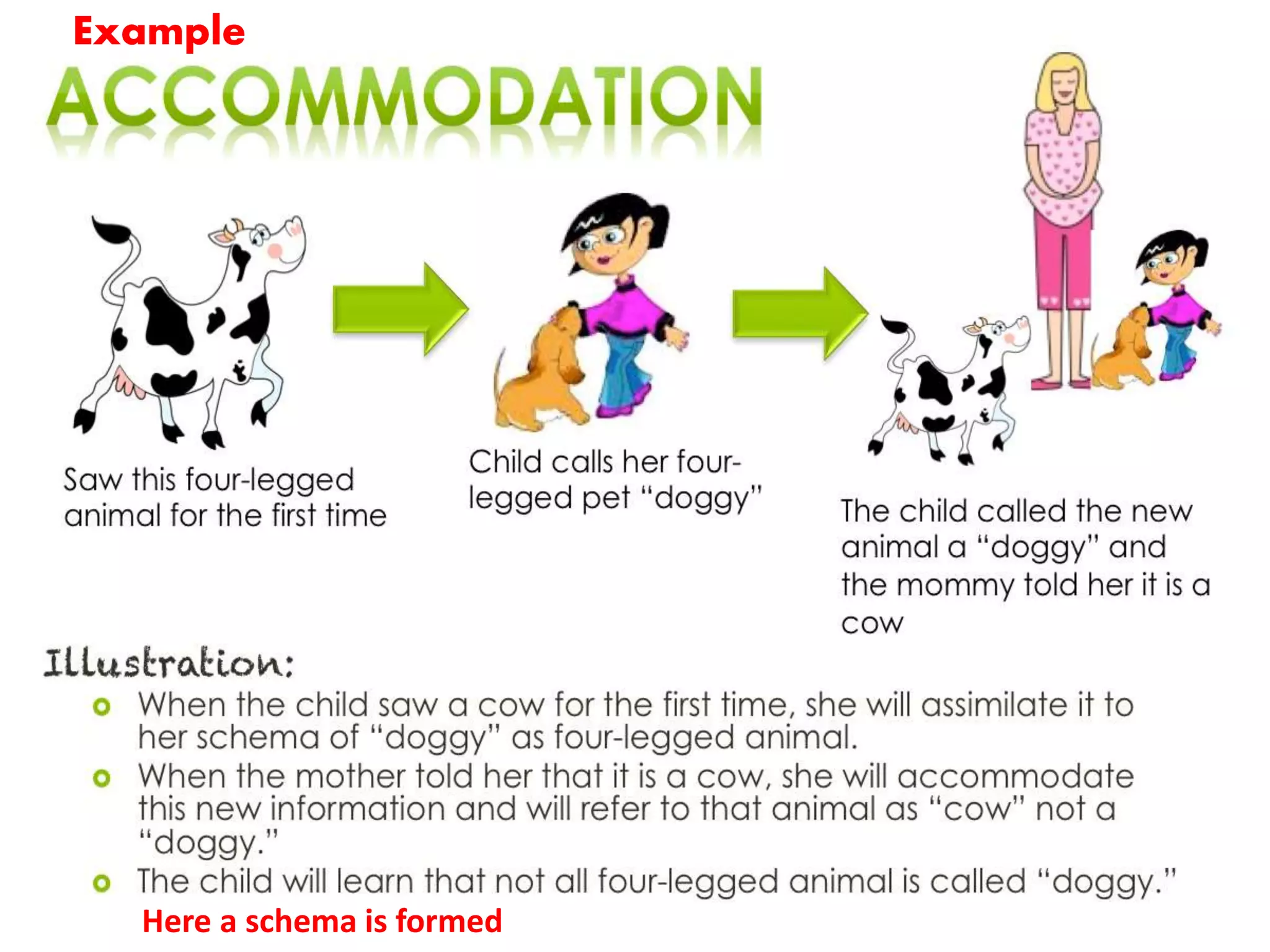
 Accommodation: Involves altering
existing ideas or schemas as a result of
new information or new experiences.
 Equilibration: A mechanism that assists
children in achieving a balance between
assimilation and accommodation
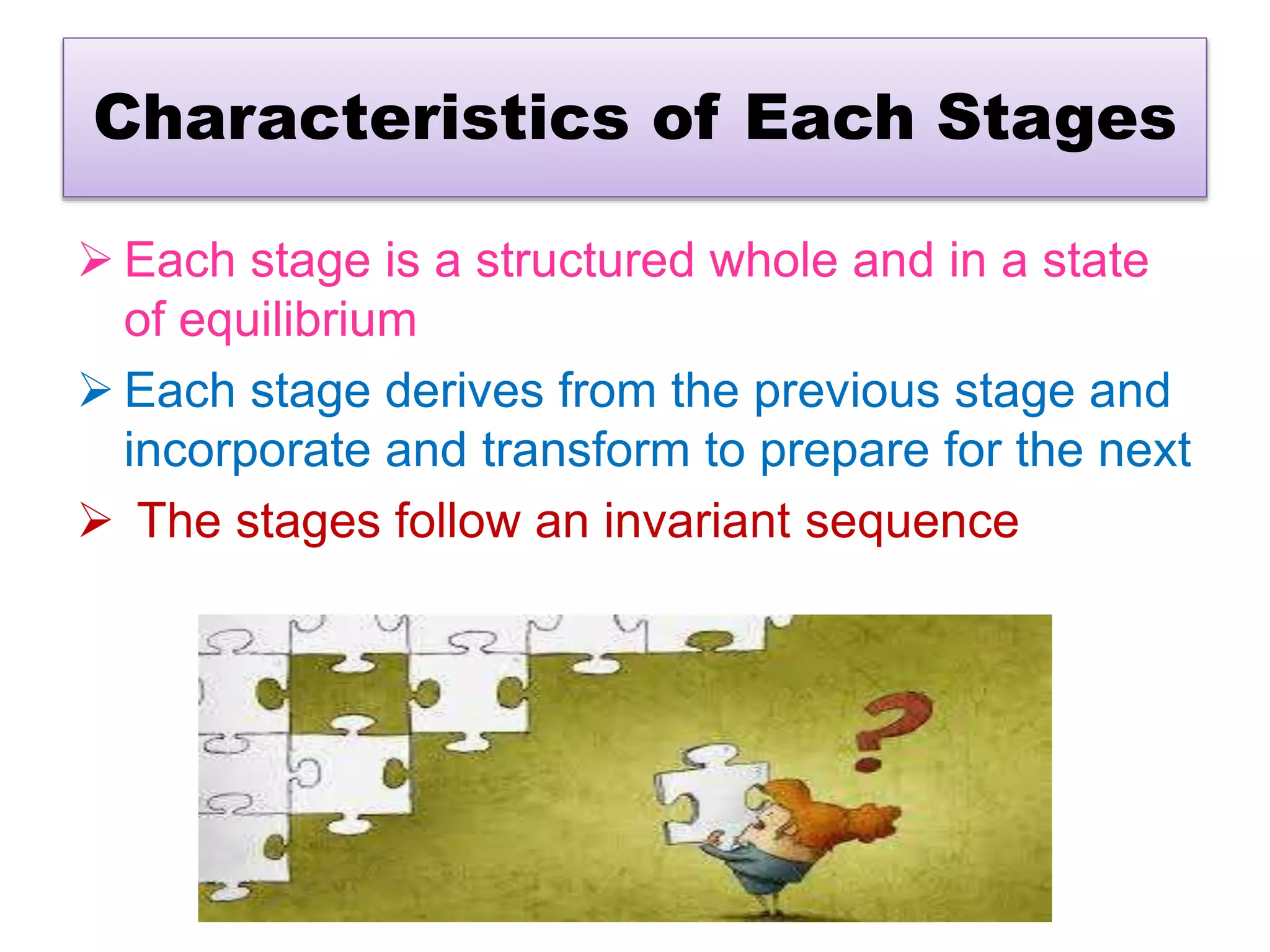
Characteristics of Each Stages
 Each stage is a structured whole and in a state
of equilibrium
 Each stage derives from the previous stage and
incorporate and transform to prepare for the next
 The stages follow an invariant sequence
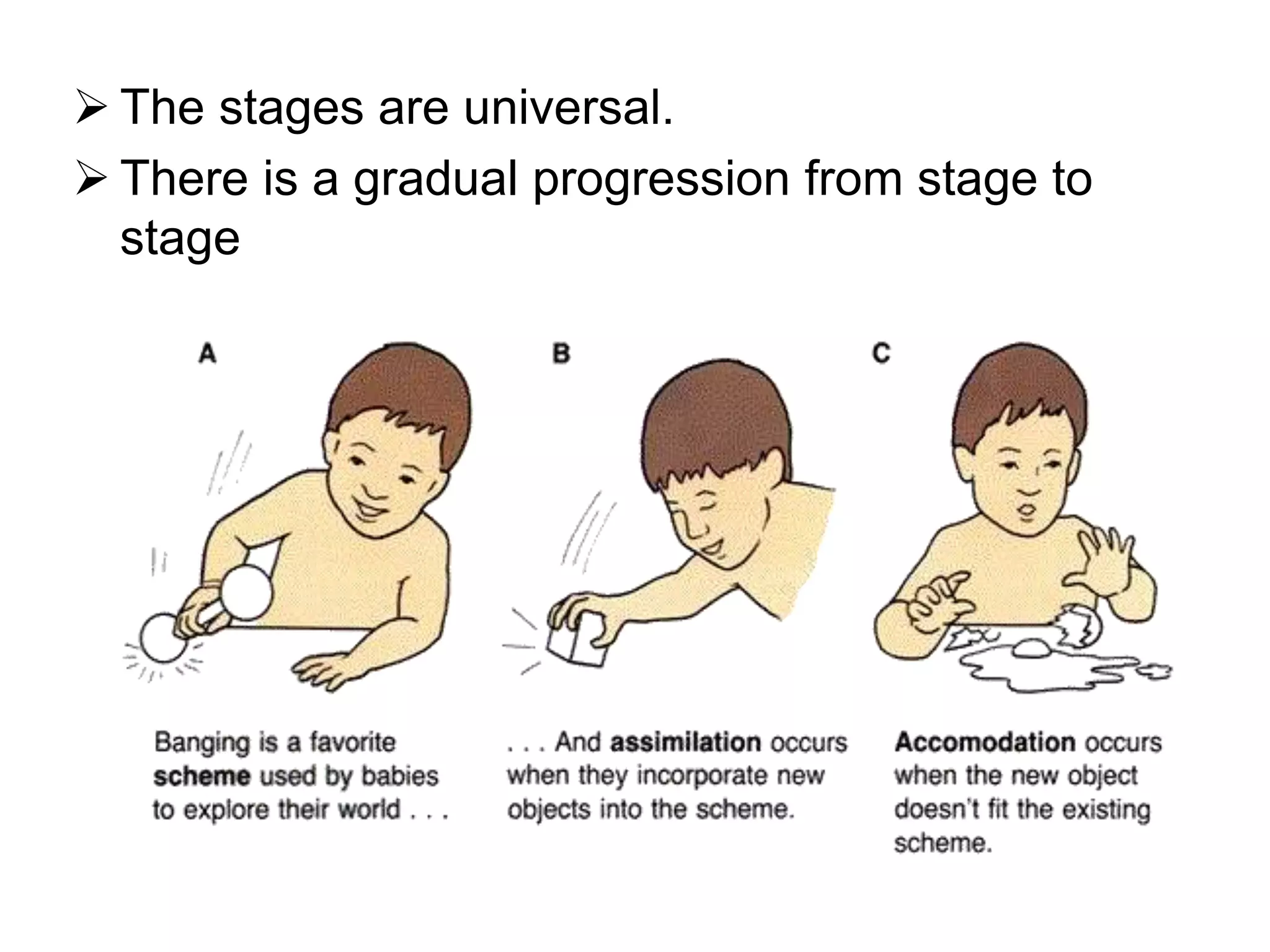
 The stages are universal.
 There is a gradual progression from stage to
stage
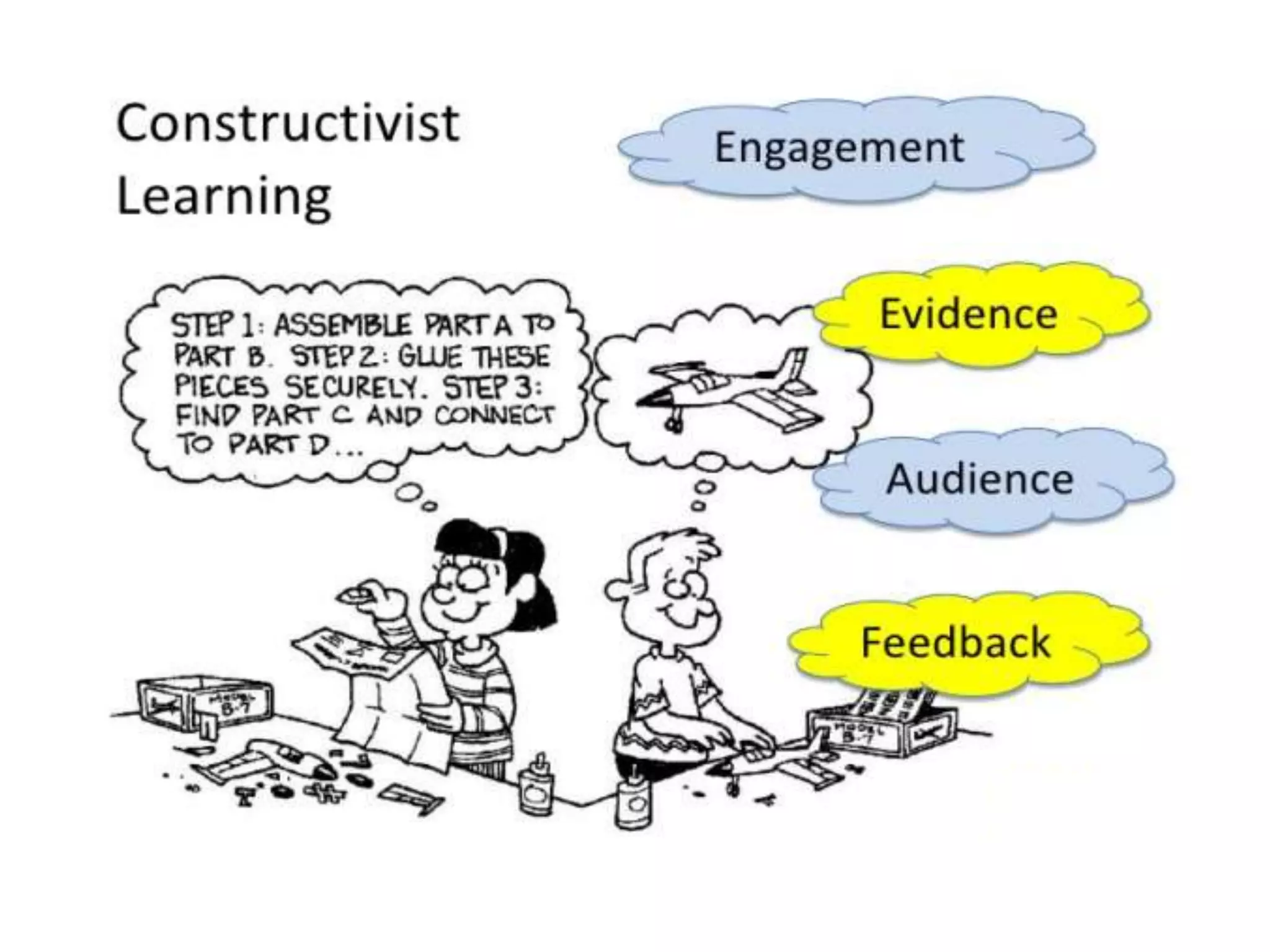
Example
Here a schema is formed
Cognitive Constructivism of Jean Piaget

Cognitive Constructivism of Jean Piaget

  • 1.
    Cognitive constructivism of Jean Piaget SureshBabu G Assistant Professor CTE CPAS Paippad, Kottayam
  • 2.
    Cognitive Constructivism Theory Human beings must build their own knowledge and meaning through experiences.(Cognitive Constructivist Theories)  The definition of cognitive is the mental faculty of knowing, which includes perceiving, recognizing, conceiving, judging, reasoning, and imagining.(Dictionary.com)  The three areas of Constructivism are cognitive, social and radical.  All three areas of Constructivism assert that the acquisition of knowledge and understanding is an ongoing process that is heavily influenced by a student’s prior knowledge  The Cognitive Constructivism Theory differs from the other two in the belief that knowledge is the result of the accurate internalization and reconstruction of external reality. (Doolittle & Camp, 1999)
  • 3.
    The Cognitive Constructivism Theory oflearning and teaching is based on Piaget’s beliefs that humans cannot be given information that they immediately understand and use
  • 5.
    Jean Piaget(1896 –1980)  Jean Piaget was born in Neuchatel, Switzerland, on August 9, 1896.  He was the oldest child of Arthur Piaget, professor of medieval literature at the University, and of Rebecca Jackson.
  • 7.
  • 8.
    1. Sensorimotor Stage- Infancy(0-2 Years)  In this periods intelligence is demonstrated through motor activity, without the use of symbols.  Knowledge of the world is developing but limited because of how it is based on physical interactions and experiences.
  • 9.
    Pre-operational stage -Toddler and Early Childhood(2-7 Years) • Intelligence is demonstrated through the use of symbols, language use matures, and memory and imagination are developed in this period. • Egocentric thinking predominates.
  • 10.
    Concrete operational stage- Elementary and early adolescence(7-12 Years) In this stage intelligence is demonstrated through logical and systematic manipulation of symbols related to concrete objects.  Operational thinking develops and egocentric thought diminishes
  • 11.
    Formal operational stage- Adolescence and adulthood (12-18 Years)  Intelligence is demonstrated through the logical use of symbols related to abstract concepts (conceptual reasoning).  Early in the period egocentric thought revisits.
  • 13.
    Cognitive Process -Piaget  Piaget proposed that children’s thinking does not develop completely and smoothly  Instead there are certain points at which it takes off and progresses into completely new areas and abilities.  In his view, early cognitive development involves processes based upon actions which later progress into changes in mental operations.
  • 14.
    Concept of Schema- Piagat A representation in the mind of a set of ideas or actions which go together. Schemas are the basic structural units of human- mind. They consist organisational patterns of behaviour that an individual use in dealing with objects in the environment. It develops through cognitive process
  • 15.
    Stages of CognitiveProcess  Assimilation: The process of taking in information into our previously existing schemas.  Accommodation: Involves altering existing ideas or schemas as a result of new information or new experiences.  Equilibration: A mechanism that assists children in achieving a balance between assimilation and accommodation
  • 16.
    Characteristics of EachStages  Each stage is a structured whole and in a state of equilibrium  Each stage derives from the previous stage and incorporate and transform to prepare for the next  The stages follow an invariant sequence
  • 17.
     The stagesare universal.  There is a gradual progression from stage to stage
  • 18.