 Personality:-one’s set of stable, predictable emotional and behavioral
traits.
 Personality disorders:-deeply ingrained, inflexible patterns of
relating to others that are maladaptive and cause significant
impairment in social or occupational functioning.
Patients with personality disorders lack insight about
their problems; their symptoms are ego-syntonic
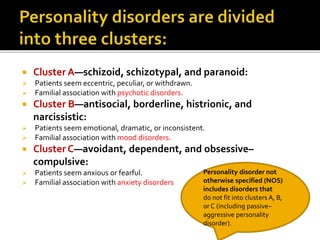
 Cluster A—schizoid, schizotypal, and paranoid:
 Patients seem eccentric, peculiar, or withdrawn.
 Familial association with psychotic disorders.
 Cluster B—antisocial, borderline, histrionic, and
narcissistic:
 Patients seem emotional, dramatic, or inconsistent.
 Familial association with mood disorders.
 Cluster C—avoidant, dependent, and obsessive–
compulsive:
 Patients seem anxious or fearful.
 Familial association with anxiety disorders
Personality disorder not
otherwise specified (NOS)
includes disorders that
do not fit into clusters A, B,
or C (including passive–
aggressive personality
disorder).
 Personality disorders are generally very difficult to
treat, especially since few patients are aware that
they need help.
 The disorders tend to be chronic and lifelong. In
general, pharmacologic treatment has limited
usefulness (see individual exceptions below) except
in treating coexisting symptoms of depression,
anxiety, and the like. Psychotherapy and group
therapy are usually the most helpful.
 Paranoid Personality Disorder (PPD):-
pervasive distrust and suspiciousness of others,They tend to blame
their own problems on others and seem angry and hostile.
 DIFFERENTIAL DIAGNOSIS:-
 Paranoid schizophrenia. But unlike schizophrenic patients do not have any fixed
delusions and are not frankly psychotic.
 TREATMENT
 Psychotherapy is the treatment of choice. Patients may also benefit from antianxiety
medications or short course of antipsychotics for transient psychosis.
 lifelong pattern of social withdrawal.They are often perceived as eccentric
and reclusive.They are quiet and unsociable and have a constricted affect.
They have no desire for close relationships and prefer to be alone.
 .
 DIFFERENTIAL DIAGNOSIS
 1-social anxiety
 2-.major depressive
 TREATMENT
Similar to paranoid personality disorder:
 Psychotherapy is the treatment of choice; group therapy is often
beneficial.
 Low-dose antipsychotics (short course) if transiently psychotic, or
antidepressants if comorbid major depression is diagnosed.
a pervasive pattern of eccentric behavior and peculiar thought
patterns.They are often perceived as strange and eccentric.
 Magical thinking may include:
 Belief in clairvoyance or telepathy
 Bizarre fantasies or preoccupations
 Belief in superstitions
 DIFFERENTIAL DIAGNOSIS:-
 Schizoid personality disorder: Patients with schizoid personality disorder
do not have the same eccentric behavior seen in patients with schizotypal
personality disorder.
 COURSE
Course is chronic or patients may eventually develop schizophrenia.
 TREATMENT
 Psychotherapy is the treatment of choice.
 Short course of low-dose antipsychotics if necessary (for transient
psychosis)
 Antisocial Personality Disorder:-
refuse to conform to social norms and lack remorse for their
actions.They are impulsive, deceitful, and often violate the
law. However, they often appear charming and normal to
others who meet them for the first time and do not know
their history.
- Must be above 18 for diagnoses
- -more common in men
- -have criminal history
- -become softer with age
 DIFFERENTIAL DIAGNOSIS:-
 Drug abuse: It is necessary to ascertain which came first. Patients who
began abusing drugs before their antisocial behavior started may have
behavior attributable to the effects of their addiction.
 unstable moods, behaviors, and interpersonal
relationships.They feel alone in the world and have problems
with self-image.They are impulsive and may have a history
of repeated suicide attempts/gestures or episodes of self-
mutilation.
 -more common in women
 -emotional vulnerability
 -empty
 -abandoned
 -Spliting
 High risk for suicide
 DIFFERENTIAL DIAGNOSIS
 Depression
 -attention-seeking behavior.
 -drama.
 -Theatrical behavior .
 -consider relationship to be closer than actual
.
 -women
 DIFFERENTIAL DIAGNOSIS
 Borderline personality disorder: Patients with BPD are more likely to suffer
from depression and to attempt suicide. HPD patients are generally more
functional.
 sense of superiority, a need for admiration, and a lack of
empathy.They consider themselves “special” and will exploit
others for their own gain. Despite their grandiosity, however,
these patients often have fragile self-esteems.
 EPIDEMIOLOGY
 More common in men
 DIFFERENTIAL DIAGNOSIS
 Antisocial personality disorder
 -obsd
 Avoidant Personality Disorder:-
 -low self steem
 -self criticisms
 -feeling of inferiority
 -avoid relationships
 DIFFERENTIAL DIAGNOSIS
 Social phobia (social anxiety disorder).
 Dependent personality disorder.
 poor self-confidence and fear separation.
They have an excessive need to be taken care
of and allow others to make decisions for
them.They feel helpless when left alone.
. DIFFERENTIAL DIAGNOSIS:-
 Avoidant personality disorder.
 pervasive pattern of perfectionism,
inflexibility, and orderliness.They get so
preoccupied with unimportant details that
they are often unable to complete simple
tasks in a timely fashion.They appear stiff,
serious, and formal with constricted affect.
They are often successful professionally but
have poor interpersonal skills
 DIFFERENTIAL DIAGNOSIS
Obsessive–compulsive disorder (OCD): Patients with OCPD do not have
the recurrent obsessions or compulsions that are present
inobsessive–compulsive disorder. In addition, the symptoms of
OCPD are ego-syntonic rather than ego-dystonic (as in OCD).
That is, OCD patients are aware that they have a problem and
wish that their thoughts and behaviors would go away.
Narcissistic personality disorder: Both personalities involve
assertiveness
 and achievement, but NPD patients are motivated by status,
whereas
 OCD patients are motivated by the work itself.
 This diagnosis is reserved for personality
disorders that do not fit into categories A, B,
or C. It includes passive–aggressive
personality disorder, depressive personality
disorder, sadomasochistic personality
disorder, and sadistic personality disorder.
Only passive–aggressive personality disorder.
 Passive–aggressive personality disorder was once a
separate personality disorder like those listed above
but was relegated to the NOS category when DSMIV
was published. Patients with this disorder are
stubborn, inefficient procrastinators.They alternate
between compliance and defiance and passively resist
fulfillment of tasks.They frequently make excuses for
themselves and lack assertiveness.They attempt to
manipulate others to do their chores, errands, and the
like, and frequently complain about their own
misfortunes. Psychotherapy is the treatment of
choice.

10.-Personality-disorders.pptx

  • 2.
     Personality:-one’s setof stable, predictable emotional and behavioral traits.  Personality disorders:-deeply ingrained, inflexible patterns of relating to others that are maladaptive and cause significant impairment in social or occupational functioning. Patients with personality disorders lack insight about their problems; their symptoms are ego-syntonic
  • 3.
     Cluster A—schizoid,schizotypal, and paranoid:  Patients seem eccentric, peculiar, or withdrawn.  Familial association with psychotic disorders.  Cluster B—antisocial, borderline, histrionic, and narcissistic:  Patients seem emotional, dramatic, or inconsistent.  Familial association with mood disorders.  Cluster C—avoidant, dependent, and obsessive– compulsive:  Patients seem anxious or fearful.  Familial association with anxiety disorders Personality disorder not otherwise specified (NOS) includes disorders that do not fit into clusters A, B, or C (including passive– aggressive personality disorder).
  • 4.
     Personality disordersare generally very difficult to treat, especially since few patients are aware that they need help.  The disorders tend to be chronic and lifelong. In general, pharmacologic treatment has limited usefulness (see individual exceptions below) except in treating coexisting symptoms of depression, anxiety, and the like. Psychotherapy and group therapy are usually the most helpful.
  • 5.
     Paranoid PersonalityDisorder (PPD):- pervasive distrust and suspiciousness of others,They tend to blame their own problems on others and seem angry and hostile.
  • 6.
     DIFFERENTIAL DIAGNOSIS:- Paranoid schizophrenia. But unlike schizophrenic patients do not have any fixed delusions and are not frankly psychotic.  TREATMENT  Psychotherapy is the treatment of choice. Patients may also benefit from antianxiety medications or short course of antipsychotics for transient psychosis.
  • 7.
     lifelong patternof social withdrawal.They are often perceived as eccentric and reclusive.They are quiet and unsociable and have a constricted affect. They have no desire for close relationships and prefer to be alone.
  • 8.
     .  DIFFERENTIALDIAGNOSIS  1-social anxiety  2-.major depressive
  • 9.
     TREATMENT Similar toparanoid personality disorder:  Psychotherapy is the treatment of choice; group therapy is often beneficial.  Low-dose antipsychotics (short course) if transiently psychotic, or antidepressants if comorbid major depression is diagnosed.
  • 10.
    a pervasive patternof eccentric behavior and peculiar thought patterns.They are often perceived as strange and eccentric.
  • 11.
     Magical thinkingmay include:  Belief in clairvoyance or telepathy  Bizarre fantasies or preoccupations  Belief in superstitions
  • 12.
     DIFFERENTIAL DIAGNOSIS:- Schizoid personality disorder: Patients with schizoid personality disorder do not have the same eccentric behavior seen in patients with schizotypal personality disorder.  COURSE Course is chronic or patients may eventually develop schizophrenia.  TREATMENT  Psychotherapy is the treatment of choice.  Short course of low-dose antipsychotics if necessary (for transient psychosis)
  • 13.
     Antisocial PersonalityDisorder:- refuse to conform to social norms and lack remorse for their actions.They are impulsive, deceitful, and often violate the law. However, they often appear charming and normal to others who meet them for the first time and do not know their history.
  • 14.
    - Must beabove 18 for diagnoses - -more common in men - -have criminal history - -become softer with age
  • 15.
     DIFFERENTIAL DIAGNOSIS:- Drug abuse: It is necessary to ascertain which came first. Patients who began abusing drugs before their antisocial behavior started may have behavior attributable to the effects of their addiction.
  • 16.
     unstable moods,behaviors, and interpersonal relationships.They feel alone in the world and have problems with self-image.They are impulsive and may have a history of repeated suicide attempts/gestures or episodes of self- mutilation.
  • 17.
     -more commonin women  -emotional vulnerability  -empty  -abandoned  -Spliting  High risk for suicide
  • 18.
  • 19.
     -attention-seeking behavior. -drama.  -Theatrical behavior .  -consider relationship to be closer than actual .  -women
  • 20.
     DIFFERENTIAL DIAGNOSIS Borderline personality disorder: Patients with BPD are more likely to suffer from depression and to attempt suicide. HPD patients are generally more functional.
  • 21.
     sense ofsuperiority, a need for admiration, and a lack of empathy.They consider themselves “special” and will exploit others for their own gain. Despite their grandiosity, however, these patients often have fragile self-esteems.
  • 22.
     EPIDEMIOLOGY  Morecommon in men  DIFFERENTIAL DIAGNOSIS  Antisocial personality disorder  -obsd
  • 23.
     Avoidant PersonalityDisorder:-  -low self steem  -self criticisms  -feeling of inferiority  -avoid relationships
  • 24.
     DIFFERENTIAL DIAGNOSIS Social phobia (social anxiety disorder).  Dependent personality disorder.
  • 25.
     poor self-confidenceand fear separation. They have an excessive need to be taken care of and allow others to make decisions for them.They feel helpless when left alone.
  • 26.
    . DIFFERENTIAL DIAGNOSIS:- Avoidant personality disorder.
  • 27.
     pervasive patternof perfectionism, inflexibility, and orderliness.They get so preoccupied with unimportant details that they are often unable to complete simple tasks in a timely fashion.They appear stiff, serious, and formal with constricted affect. They are often successful professionally but have poor interpersonal skills
  • 28.
     DIFFERENTIAL DIAGNOSIS Obsessive–compulsivedisorder (OCD): Patients with OCPD do not have the recurrent obsessions or compulsions that are present inobsessive–compulsive disorder. In addition, the symptoms of OCPD are ego-syntonic rather than ego-dystonic (as in OCD). That is, OCD patients are aware that they have a problem and wish that their thoughts and behaviors would go away. Narcissistic personality disorder: Both personalities involve assertiveness  and achievement, but NPD patients are motivated by status, whereas  OCD patients are motivated by the work itself.
  • 29.
     This diagnosisis reserved for personality disorders that do not fit into categories A, B, or C. It includes passive–aggressive personality disorder, depressive personality disorder, sadomasochistic personality disorder, and sadistic personality disorder. Only passive–aggressive personality disorder.
  • 30.
     Passive–aggressive personalitydisorder was once a separate personality disorder like those listed above but was relegated to the NOS category when DSMIV was published. Patients with this disorder are stubborn, inefficient procrastinators.They alternate between compliance and defiance and passively resist fulfillment of tasks.They frequently make excuses for themselves and lack assertiveness.They attempt to manipulate others to do their chores, errands, and the like, and frequently complain about their own misfortunes. Psychotherapy is the treatment of choice.