A look at the world today Genetic Engineering
Overview Introduction to Genetic Engineering Applications  Safety and Ethical Issues Branches of Science  Uses of this technology by professions Universities/ Courses/ Requirements
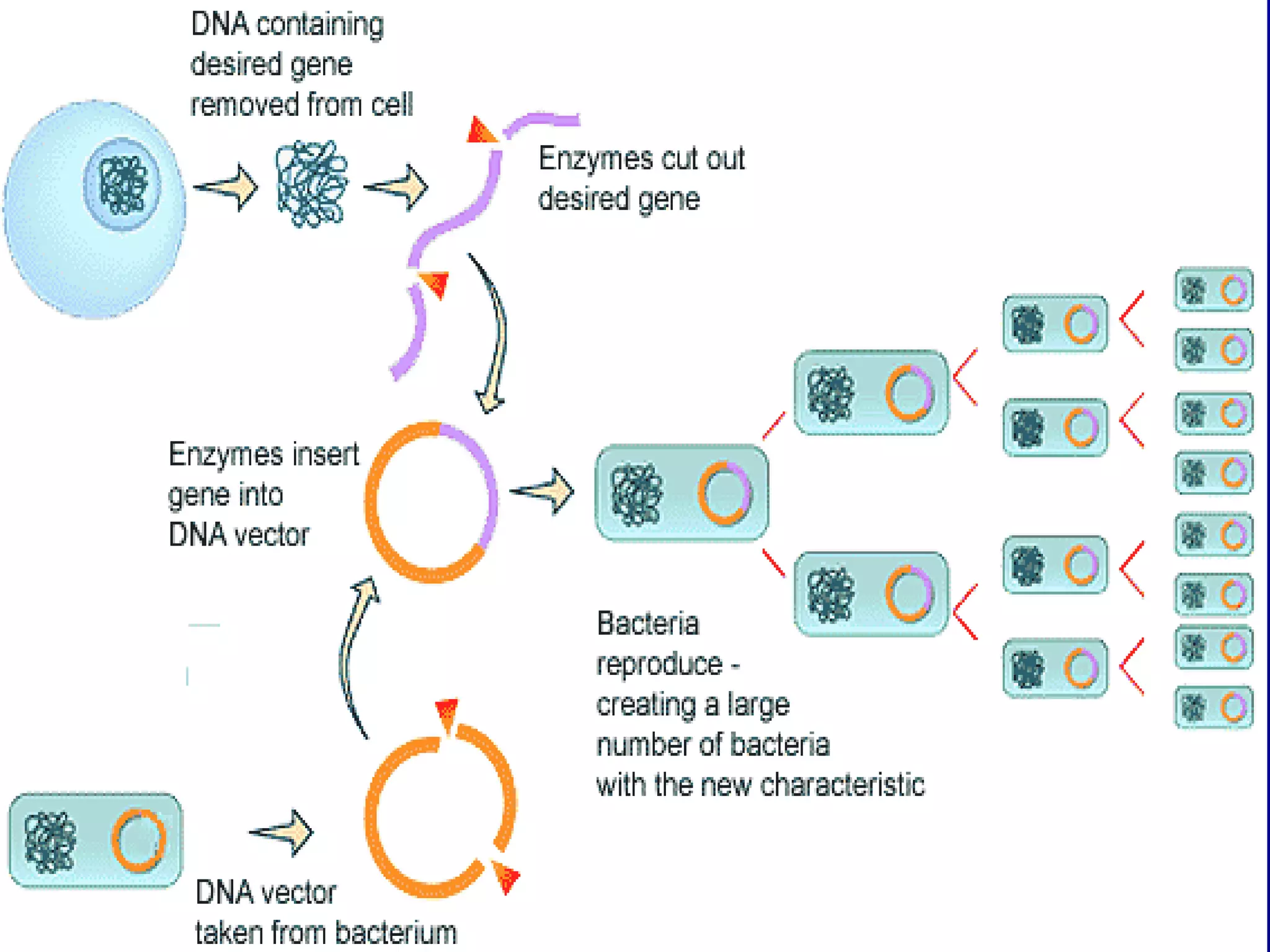
What is Genetic Engineering? Directly  manipulating/altering the structure and characteristics of genes using molecular cloning & transformation Different from “normal” breeding – genes manipulated  indirectly
Agricultural Applications Goes back 100 years  Today, scientist use  recombinant DNA technology First food made by recombinant DNA technology – Flavr Savr Tomatoes (1994) 60% of foods are genetically modified Solution to world hunger
Human & Medical Applications Production of Insulin Genetic Screening/Testing Gene Therapy Production of experimental mice, oncomouse (cancer mouse) Vaccine
 
Cloning and Stem Cells Clone created from one cell – not sex cell  Cloning – process of creating an identical copy of an original (Example: Identical Twins) Stem cells (master cells) can develop into any tissue  Cure their own disease or build new organs – NO REJECTION
Ethics Involving Genetic Engineering Ethical  issues concerning human beings and animals  - Are we playing God?  - Religions beliefs - Creates new viruses  - Designer Babies
Genetic  Engineering and Plants  - Effects on our Environment - Long run effects on environment  Ethics Involving Genetic Engineering
Branches of sciences needed to study the technology Genetics Medicine Biology/Chemistry Biochemistry Microbiology Chemical Engineering
What professions use this technology? Microbiologist  Laboratory technician Research assistant Lecturer or professor Chief Executive Officer of a biotech company Postdoctoral research associate Genetic Engineer Research Scientist Biotechnologist
Summary Genetic engineering is direct manipulation of an organism’s genes Most common uses of genetic engineering are in medicine  A very controversial topic considering the ethical issues Variety of sciences are incorporated into this engineering  Many professions use this technology
Reference List Career Details for Biotechnologist. (n.d.). December 14, 2008,  <http://careercruising.com/Careers/JobDetails.aspx?LoginID=53770d7f-cddd-449d-970d-8cb29415fa18-&OccNumber=603&Language=English>. Engdahl, Sylvia, ed.  Genetic Engineering . Bonnie Szumski, 2006. &quot;Genetic Engineering&quot;  Encyclopedia Britannica . 2008. Encyclopedia Britannica Online Library Edition. 13 Dec. 2008. “ Genetic Engineering.&quot; Wikipedia, The Free Encyclopedia. 12 Dec. 2008, <http://en.wikipedia.org/wiki/genetic_engineering#genetic_engineering>. Genetic Engineering Research Scientist Job Description, Career as a Genetic Engineering Research Scientist, Salary, Employment - Definition and Nature of the Work, Education and Training Requirements, Getting the Job. December 14, 2008,  <http://careers.stateuniversity.com/pages/402/Genetic-Engineering-Research-Scientist.html>. Heaf, D. (2004, January 25). Becoming a Genetic Engineer. December 14, 2008,  <http://www.ifgene.org/gecareer.htm.>&quot;Human's Playground: Genetic Engineering.&quot; Think quest. 11 Dec. 2008 <http://library.thinkquest.org/04apr/00774/en/txt/uses_medicine.html>. MacDonald Glenn, Linda. &quot;Bio Med Law.&quot; 13 Dec. 2008, <http://www.biomedlaw.com./bioethics.php>. MacDonald Glenn, Linda. &quot;Ethical Issues in Genetic Engineering and Transgenic.&quot;  Actionbioscience.org . American Institute of Biological Sciences. 13 Dec. 2008 <http://www.actionbioscience.org/biotech/glenn.html>.   McLeish, Ewan.  Genetic Revolution . New York: Stargazer Books, 2006. Wilson, R. (2006, July 19). Human Biology at the University of Toronto. December 14, 2008,  <http://www.hmb.utoronto.ca/ggb.asp>. York University - Biology Undergraduate - Biotechnology. (n.d.). Retrieved December 14, 2008,  <http://www.yorku.ca/ugbio/Programs>.
Your Thoughts on... GENETIC ENGINEERING and its uses in our everyday lives considering everything that was discussed in the presentation!

Genetic engineering

  • 1.
    A look atthe world today Genetic Engineering
  • 2.
    Overview Introduction toGenetic Engineering Applications Safety and Ethical Issues Branches of Science Uses of this technology by professions Universities/ Courses/ Requirements
  • 3.
    What is GeneticEngineering? Directly manipulating/altering the structure and characteristics of genes using molecular cloning & transformation Different from “normal” breeding – genes manipulated indirectly
  • 4.
    Agricultural Applications Goesback 100 years Today, scientist use recombinant DNA technology First food made by recombinant DNA technology – Flavr Savr Tomatoes (1994) 60% of foods are genetically modified Solution to world hunger
  • 5.
    Human & MedicalApplications Production of Insulin Genetic Screening/Testing Gene Therapy Production of experimental mice, oncomouse (cancer mouse) Vaccine
  • 6.
  • 7.
    Cloning and StemCells Clone created from one cell – not sex cell Cloning – process of creating an identical copy of an original (Example: Identical Twins) Stem cells (master cells) can develop into any tissue Cure their own disease or build new organs – NO REJECTION
  • 8.
    Ethics Involving GeneticEngineering Ethical issues concerning human beings and animals - Are we playing God? - Religions beliefs - Creates new viruses - Designer Babies
  • 9.
    Genetic Engineeringand Plants - Effects on our Environment - Long run effects on environment Ethics Involving Genetic Engineering
  • 10.
    Branches of sciencesneeded to study the technology Genetics Medicine Biology/Chemistry Biochemistry Microbiology Chemical Engineering
  • 11.
    What professions usethis technology? Microbiologist Laboratory technician Research assistant Lecturer or professor Chief Executive Officer of a biotech company Postdoctoral research associate Genetic Engineer Research Scientist Biotechnologist
  • 12.
    Summary Genetic engineeringis direct manipulation of an organism’s genes Most common uses of genetic engineering are in medicine A very controversial topic considering the ethical issues Variety of sciences are incorporated into this engineering Many professions use this technology
  • 13.
    Reference List CareerDetails for Biotechnologist. (n.d.). December 14, 2008, <http://careercruising.com/Careers/JobDetails.aspx?LoginID=53770d7f-cddd-449d-970d-8cb29415fa18-&OccNumber=603&Language=English>. Engdahl, Sylvia, ed. Genetic Engineering . Bonnie Szumski, 2006. &quot;Genetic Engineering&quot; Encyclopedia Britannica . 2008. Encyclopedia Britannica Online Library Edition. 13 Dec. 2008. “ Genetic Engineering.&quot; Wikipedia, The Free Encyclopedia. 12 Dec. 2008, <http://en.wikipedia.org/wiki/genetic_engineering#genetic_engineering>. Genetic Engineering Research Scientist Job Description, Career as a Genetic Engineering Research Scientist, Salary, Employment - Definition and Nature of the Work, Education and Training Requirements, Getting the Job. December 14, 2008, <http://careers.stateuniversity.com/pages/402/Genetic-Engineering-Research-Scientist.html>. Heaf, D. (2004, January 25). Becoming a Genetic Engineer. December 14, 2008, <http://www.ifgene.org/gecareer.htm.>&quot;Human's Playground: Genetic Engineering.&quot; Think quest. 11 Dec. 2008 <http://library.thinkquest.org/04apr/00774/en/txt/uses_medicine.html>. MacDonald Glenn, Linda. &quot;Bio Med Law.&quot; 13 Dec. 2008, <http://www.biomedlaw.com./bioethics.php>. MacDonald Glenn, Linda. &quot;Ethical Issues in Genetic Engineering and Transgenic.&quot; Actionbioscience.org . American Institute of Biological Sciences. 13 Dec. 2008 <http://www.actionbioscience.org/biotech/glenn.html>. McLeish, Ewan. Genetic Revolution . New York: Stargazer Books, 2006. Wilson, R. (2006, July 19). Human Biology at the University of Toronto. December 14, 2008, <http://www.hmb.utoronto.ca/ggb.asp>. York University - Biology Undergraduate - Biotechnology. (n.d.). Retrieved December 14, 2008, <http://www.yorku.ca/ugbio/Programs>.
  • 14.
    Your Thoughts on...GENETIC ENGINEERING and its uses in our everyday lives considering everything that was discussed in the presentation!