CLEANINGand SANITIZING
Procedures must be a part of
the standard operating
procedures that make up your
food safety program.
CLEANING
• process of removing food and
other types of soil from a
surface, such as a dish, glass,
or cutting board.
• It must be done with a
cleaning agent that removes
food, soil or other
substances.
• Right cleaning agent must be
selected because not all
1. Detergents
2. Solvent Cleaners
3. Acid Cleaners
4. Abrasive Cleaners
Cleaningagents are dividedinto fourcategories
1. DETERGENTS-used to wash
tableware , surfaces and equipment. It
can penetrate soil quickly and soften it.
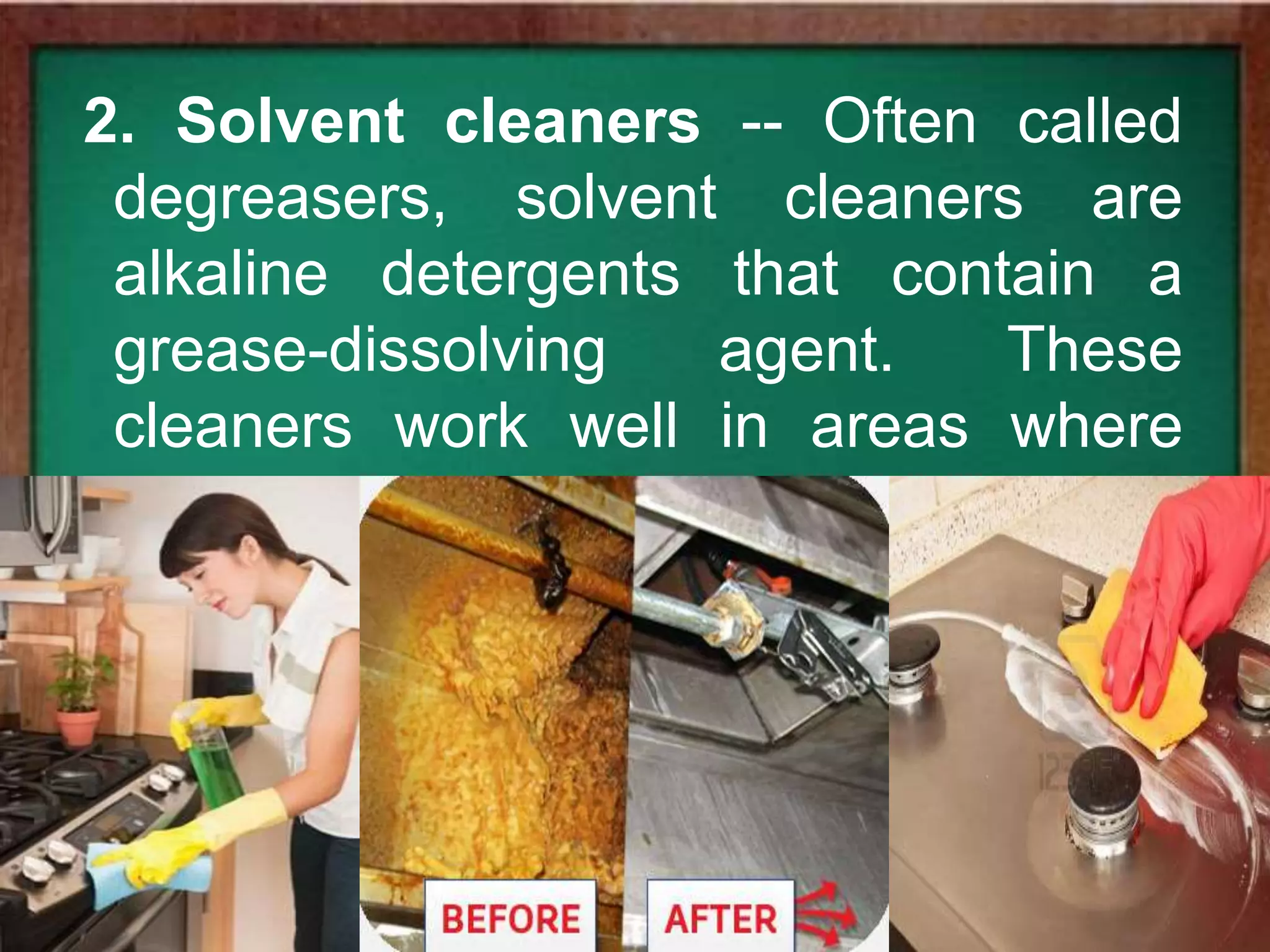
2. Solvent cleaners -- Often called
degreasers, solvent cleaners are
alkaline detergents that contain a
grease-dissolving agent. These
cleaners work well in areas where
grease has been burned on.
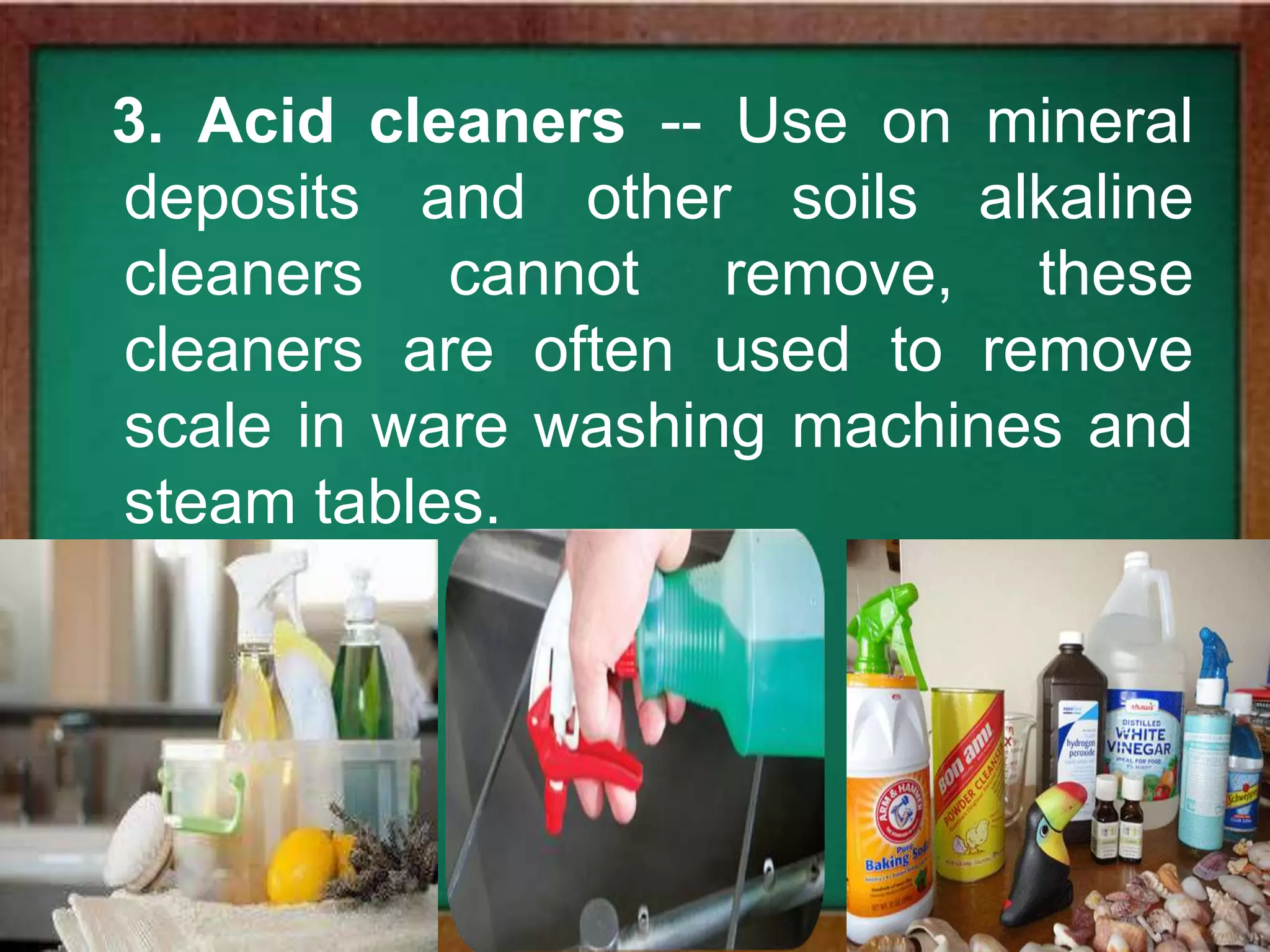
3. Acid cleaners -- Use on mineral
deposits and other soils alkaline
cleaners cannot remove, these
cleaners are often used to remove
scale in ware washing machines and
steam tables.
4. Abrasive cleaners -- Use these
cleaners to remove heavy
accumulations of soil often found in
small areas. The abrasive action is
provided by small mineral or metal
particles, fine steel wool, copper, or
nylon particles.
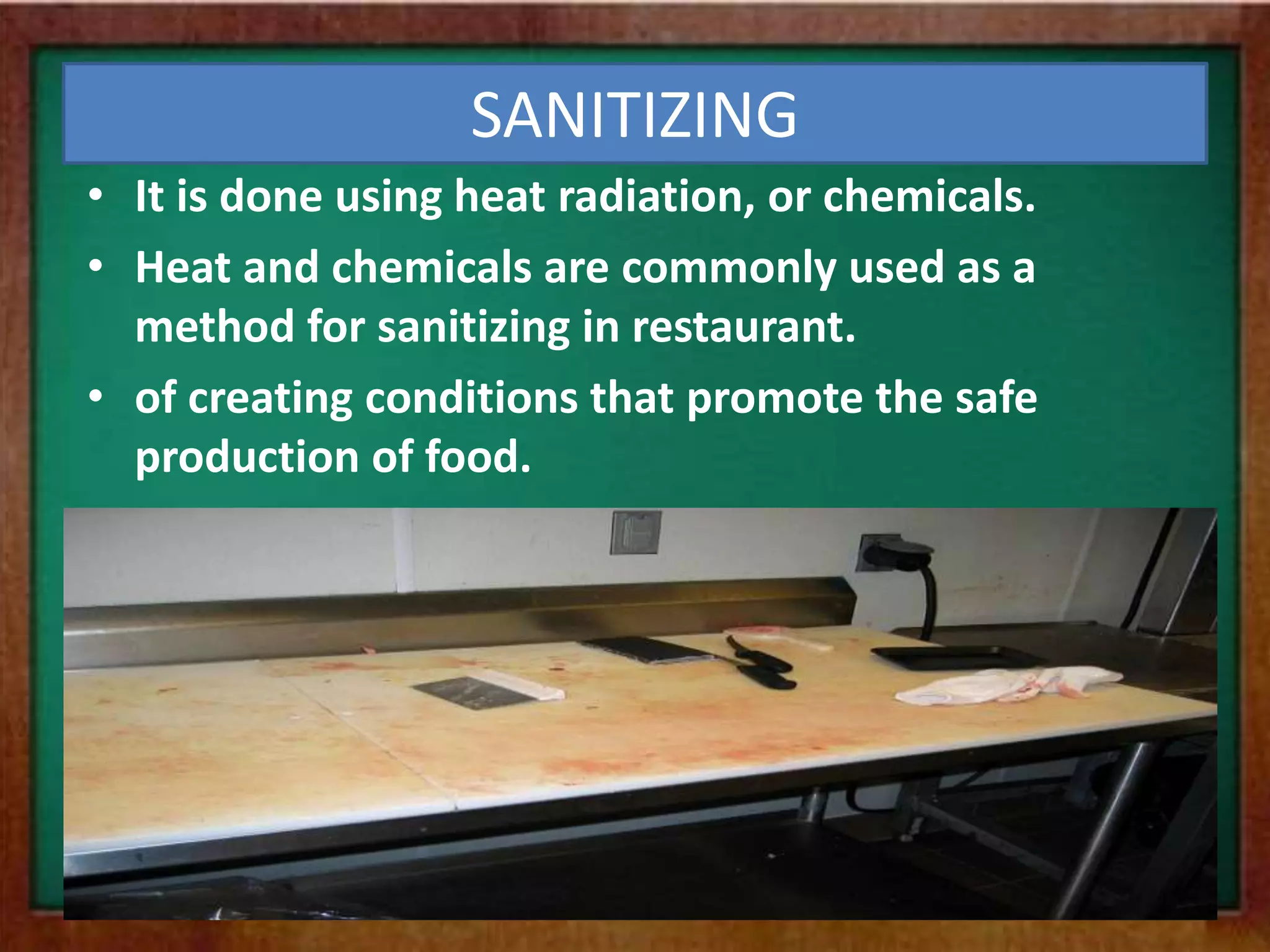
SANITIZING
• It is done using heat radiation, or chemicals.
• Heat and chemicals are commonly used as a
method for sanitizing in restaurant.
• of creating conditions that promote the safe
production of food.
HEAT
There are three methods of using heat to sanitize
surfaces– steam, hot water, and hot air. Cleaned items
must be exposed to these temperatures for at least 30
seconds.
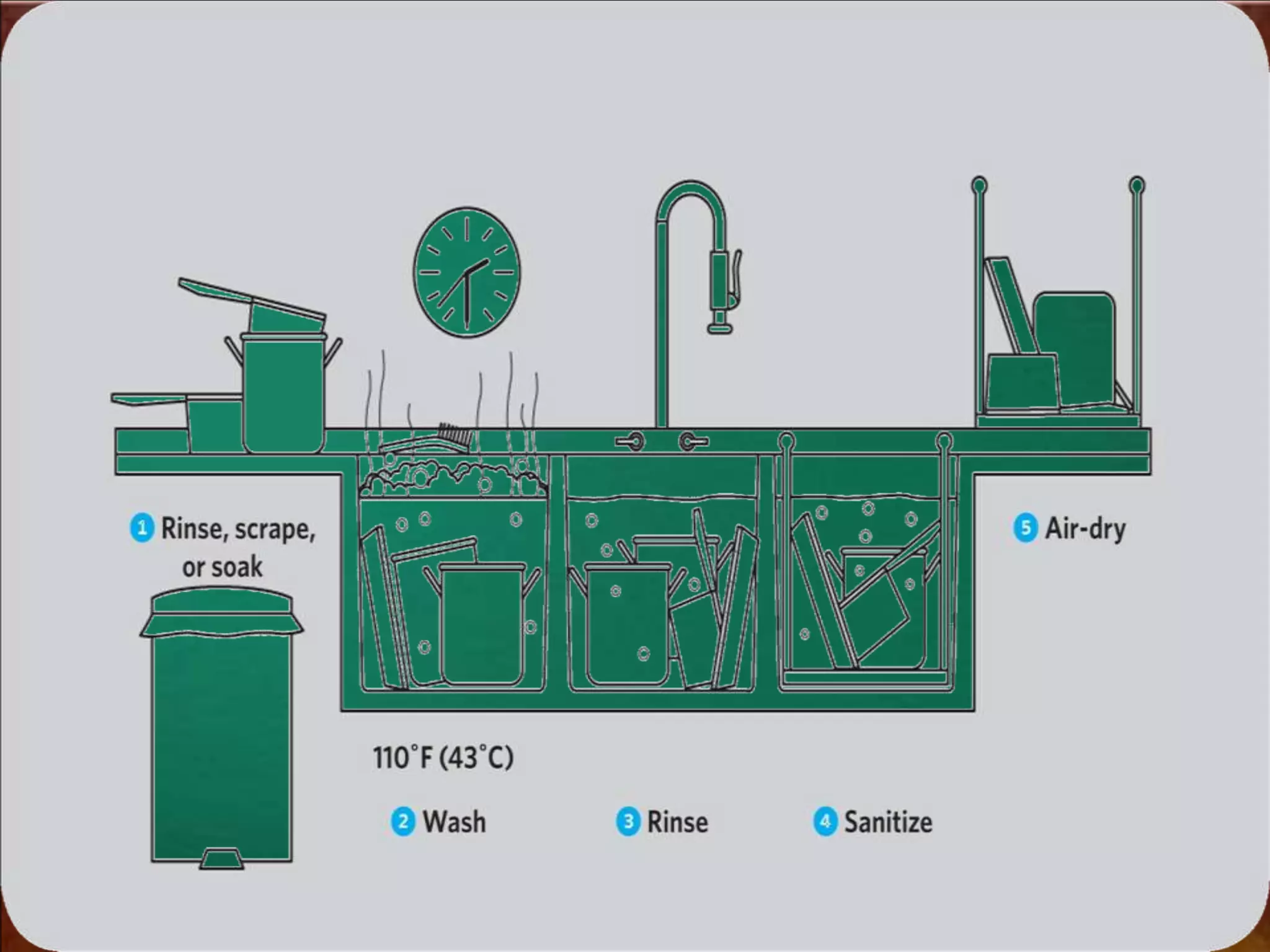
HOT WATER- it is being used in the third compartment , it
must be 77 Celsius.
STEAM- is an excellent agent for treating food equipment.
CHEMICALS
The approved sanitizers are chlorine, iodine
and quaternary ammonium. Different
factors influence the effectiveness of
chemical sanitizers.
Approvedsanitizers
1. Chlorine
2. iodine
3. quaternary ammonium
it is used as the production of
household item such as bleach
and disinfectant to bullet-
resistant vests, computer
hardware, silicon chips
Household item such as bleach
and disinfectant to bullet-
resistant vests, computer
hardware, silicon chips and
automotive parts.
It is used worldwide to purify
water supply as the ultimate
defense against waterborne
microbiological infection.
Chlorine
IODINE
It is widely used in the general food
industry and breweries.
Diluted iodophor is often used by
brewers and winemakers to sanitize
equipment and bottles. it can also
leave unattractive orange-brown
stains on plastic parts and equipment
that it is left in contact with.
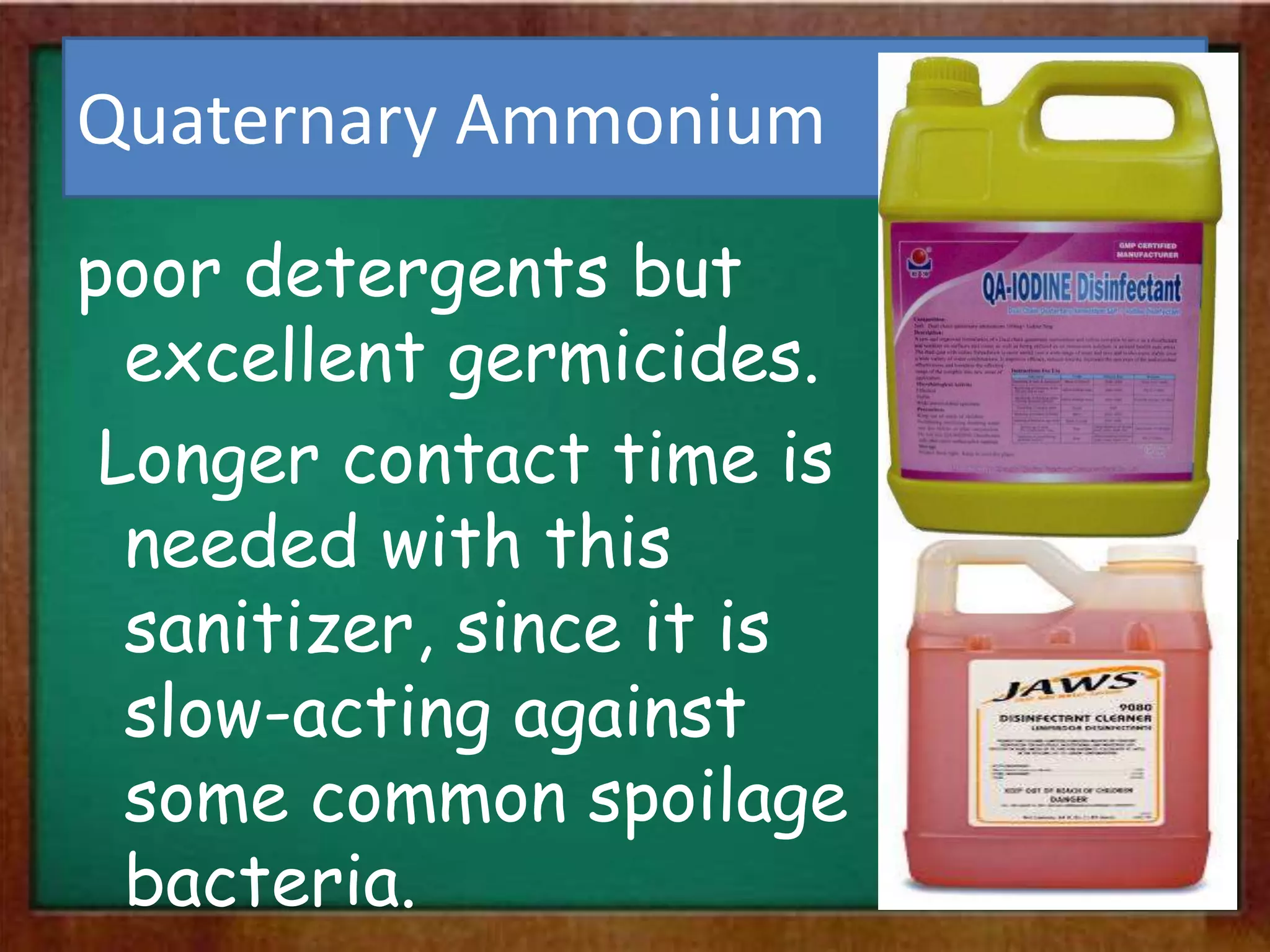
Quaternary Ammonium
poor detergents but
excellent germicides.
Longer contact time is
needed with this
sanitizer, since it is
slow-acting against
some common spoilage
bacteria.
b. countertops, tables or other stationary equipment
Three factorsthatmust be Considered:
1. CONCENTRATION- the presence of too little
will result in an inadequate reduction of
harmful microorganisms . Too much can be
toxic.
2. TEMPERATURE- Generally chemical sanitizers
work best in water that is between 13 Celsius
and 49 Celsius
3. CONTACT TIME-the cleaned item must be in
contact with the sanitizer( either heat or
approved chemical) for the recommended
length of time.
SANITIZERTESTING
Every restaurant must have the
appropriate testing kit to measure
chemical sanitizer concentrations.
In order to test the strength of a
sanitizing solution , one must first
determine which chemical is being
used. The appropriate test kit
must be used throughout the day
to measure chemical sanitizer
Open your module on page 21 :
Advantages and Disadvantages of
Different Chemical Sanitizers
Cleaning and Sanitizing
Utensils
• A dishwasher is effective at
sanitizing if it has a hot wash and
drying cycle.
• After washing the utensils should
look clean and there should be no
food or anything else visible on
them.
• Effective cleaning will remove most
Cleaning and Sanitizing
Utensils
• If you do not have dishwasher, you
will need to sanitize in a sink using a
chemical sanitizer or very hot
water.
• When using chemical sanitizer make
sure that it is safe for eating,
cooking and drinking utensils .
Cleaning and Sanitizing
Utensils
• Air drying is best but tea towels can be
used if they are clean .
• If you are washing up to the big event,
make sure you have access to plenty of
hot water.
• If hot water is not available, disposable
drinking and eating utensils should be
used.

Cleaning and sanitizing

  • 6.
    CLEANINGand SANITIZING Procedures mustbe a part of the standard operating procedures that make up your food safety program.
  • 7.
    CLEANING • process ofremoving food and other types of soil from a surface, such as a dish, glass, or cutting board. • It must be done with a cleaning agent that removes food, soil or other substances. • Right cleaning agent must be selected because not all
  • 8.
    1. Detergents 2. SolventCleaners 3. Acid Cleaners 4. Abrasive Cleaners Cleaningagents are dividedinto fourcategories
  • 9.
    1. DETERGENTS-used towash tableware , surfaces and equipment. It can penetrate soil quickly and soften it.
  • 10.
    2. Solvent cleaners-- Often called degreasers, solvent cleaners are alkaline detergents that contain a grease-dissolving agent. These cleaners work well in areas where grease has been burned on.
  • 11.
    3. Acid cleaners-- Use on mineral deposits and other soils alkaline cleaners cannot remove, these cleaners are often used to remove scale in ware washing machines and steam tables.
  • 12.
    4. Abrasive cleaners-- Use these cleaners to remove heavy accumulations of soil often found in small areas. The abrasive action is provided by small mineral or metal particles, fine steel wool, copper, or nylon particles.
  • 13.
    SANITIZING • It isdone using heat radiation, or chemicals. • Heat and chemicals are commonly used as a method for sanitizing in restaurant. • of creating conditions that promote the safe production of food.
  • 15.
    HEAT There are threemethods of using heat to sanitize surfaces– steam, hot water, and hot air. Cleaned items must be exposed to these temperatures for at least 30 seconds. HOT WATER- it is being used in the third compartment , it must be 77 Celsius. STEAM- is an excellent agent for treating food equipment.
  • 17.
    CHEMICALS The approved sanitizersare chlorine, iodine and quaternary ammonium. Different factors influence the effectiveness of chemical sanitizers.
  • 18.
  • 19.
    it is usedas the production of household item such as bleach and disinfectant to bullet- resistant vests, computer hardware, silicon chips Household item such as bleach and disinfectant to bullet- resistant vests, computer hardware, silicon chips and automotive parts. It is used worldwide to purify water supply as the ultimate defense against waterborne microbiological infection. Chlorine
  • 20.
    IODINE It is widelyused in the general food industry and breweries. Diluted iodophor is often used by brewers and winemakers to sanitize equipment and bottles. it can also leave unattractive orange-brown stains on plastic parts and equipment that it is left in contact with.
  • 21.
    Quaternary Ammonium poor detergentsbut excellent germicides. Longer contact time is needed with this sanitizer, since it is slow-acting against some common spoilage bacteria.
  • 22.
    b. countertops, tablesor other stationary equipment
  • 23.
    Three factorsthatmust beConsidered: 1. CONCENTRATION- the presence of too little will result in an inadequate reduction of harmful microorganisms . Too much can be toxic. 2. TEMPERATURE- Generally chemical sanitizers work best in water that is between 13 Celsius and 49 Celsius 3. CONTACT TIME-the cleaned item must be in contact with the sanitizer( either heat or approved chemical) for the recommended length of time.
  • 24.
    SANITIZERTESTING Every restaurant musthave the appropriate testing kit to measure chemical sanitizer concentrations. In order to test the strength of a sanitizing solution , one must first determine which chemical is being used. The appropriate test kit must be used throughout the day to measure chemical sanitizer
  • 25.
    Open your moduleon page 21 : Advantages and Disadvantages of Different Chemical Sanitizers
  • 26.
    Cleaning and Sanitizing Utensils •A dishwasher is effective at sanitizing if it has a hot wash and drying cycle. • After washing the utensils should look clean and there should be no food or anything else visible on them. • Effective cleaning will remove most
  • 27.
    Cleaning and Sanitizing Utensils •If you do not have dishwasher, you will need to sanitize in a sink using a chemical sanitizer or very hot water. • When using chemical sanitizer make sure that it is safe for eating, cooking and drinking utensils .
  • 28.
    Cleaning and Sanitizing Utensils •Air drying is best but tea towels can be used if they are clean . • If you are washing up to the big event, make sure you have access to plenty of hot water. • If hot water is not available, disposable drinking and eating utensils should be used.