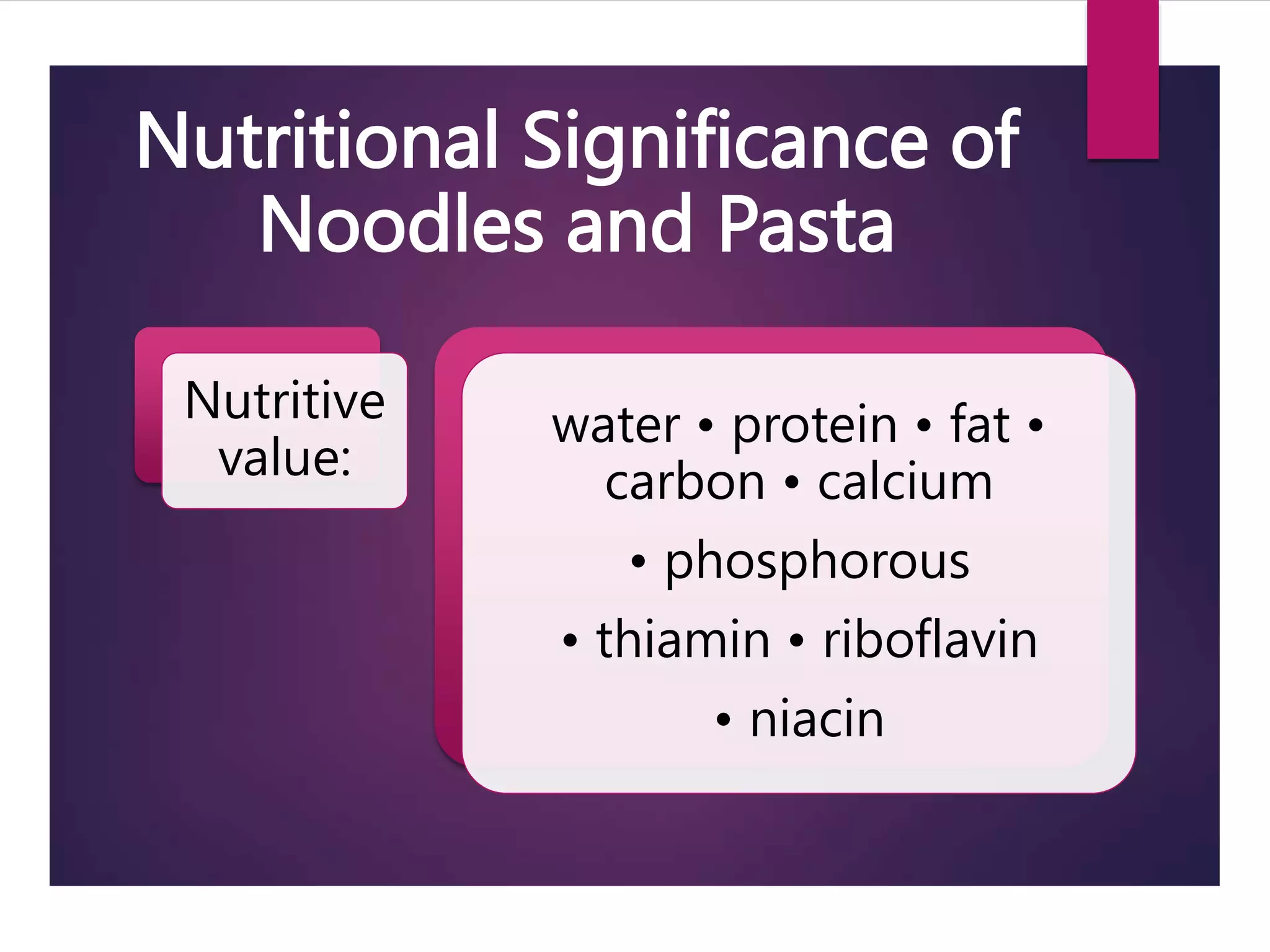

Nutritional Significance of
Noodles and Pasta
Nutritive
value:
water • protein • fat •
carbon • calcium
• phosphorous
• thiamin • riboflavin
• niacin
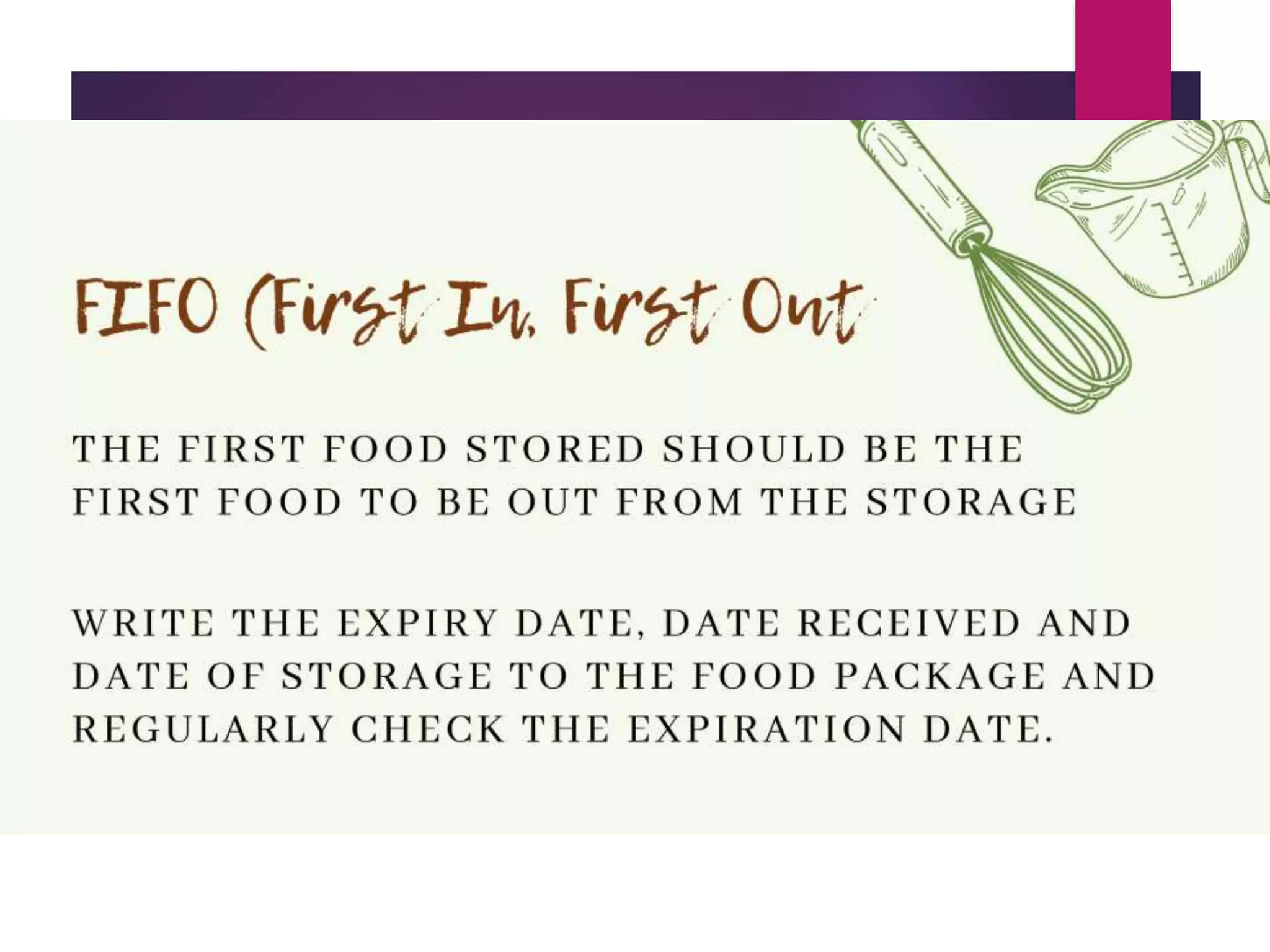
FIFO (First In, First Out)
 in storing food is very important. Though it
is a long-time method in store-keeping
where the first food stored should be the
first food to be out from the storage it is
high time to make it a habit or put into
practice.
 Write the expiry date, date received and
date of storage to the food package and
regularly check the expiration date.
How
to
Store
Pasta
 Noodles Pasta is stored in
airtight containers.
 Pasta noodles are usually sold
dry at the grocery store,
allowing you to store them
with other staples in your
pantry.
 Dry noodles have a long
storage life when properly
packaged. Improper storage
causes the pasta to become
moist, which leads to mildew..
1. Dry
Pasta
• Place the noodles in a
sealable plastic bag or other
container that closes tightly.
For long noodles, such as
spaghetti, use a tall plastic
storage container.
Dried pasta need not to be
refrigerated.
2. Cooked
Pasta
• Pour the noodles into a
colander. Allow as much moisture
as possible to drain
Sprinkle 1 tsp. salad oil over the
noodles.
Sprinkle 1 tsp. salad oil over the
noodles.
Cooked pasta can be stored
unsauced in an airtight container
and refrigerated for 4 or 5 days
Cooked Pasta
 The cooked pasta
should last three to five
days store in the
refrigerator
Filled Pasta
Frozen filled pastas
will keep for up to
three months if held
at -18°C or lower
Storing Pasta with Sauce
You can choose to store the
sauce separately from the
cooked pasta or mix them
together before placing it in
the refrigerator or freezer.
3. Fresh Pasta
 Fresh pasta can be stored in the refrigerator
for 2 or 3 days.
 If the pasta will not be used within that
time, it can be frozen and stored in the
freezer for 2 to 3 months.
 Homemade pasta can be stored in the
refrigerator for 1 or 2 days or frozen for 2 to
3 months.
4. Frozen pasta
does not have to be thawed
before it is cooked.
 Just place the frozen pasta into
boiling water and reheat it. It
will need to cook a little longer
than unfrozen pasta.
Freezing
The lasagna and baked pasta dishes
can be refrigerated for 3 or 4 days or
they can be placed in a freezer and
kept for approximately 3 months.
 If frozen, the pasta dish should be
thawed in the refrigerator and not on
the kitchen counter.
1. What is FIFO
stands for?
a. Fan In Fan On
b. First In First out
c. FIT In Fit Out
2. Filled pasta has storage
requirements and shelf life.
What of following temperature
is needed to make sure its
freshness?
a. at -18°C or lower
b. at -19°C or lower
c. at -20°C or lower
3. These dishes can be kept
inside the freezer and needs to
be thawed before serving.
a. lasagna and baked pasta dishes
b. Spaghetti Alfredo
c. Spaghetti with Tomato Sauce
4. What is proper storage procedure of
dried pasta?
a. It does not need to be refrigerated. It
can be stored on the shelf in an airtight
container in a dry area that is not
exposed to extreme temperature.
b. It must be kept stored in the
refrigerator for 2 or 3 days.
c. It must be kept frozen for 2 to 3
months.
5. Fresh pasta can be stored in
the refrigerator for 2 or 3 days,
if you decided to keep it in the
freezer, how long does it take
before it starts to deteriorate?
a. 2 to 5 months
b. 2 to 3 months
c. 2 to 4 months
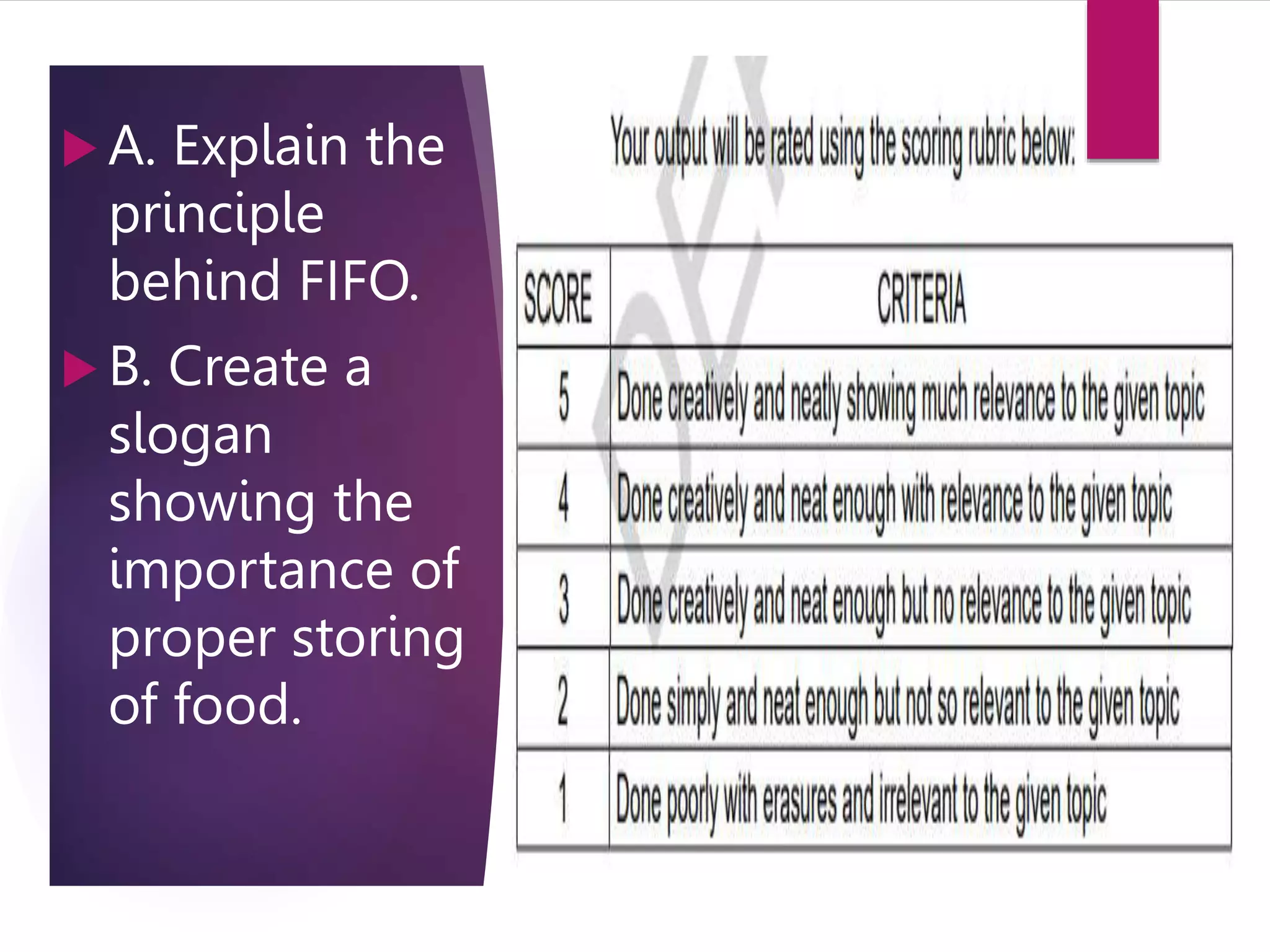
 A. Explain the
principle
behind FIFO.
 B. Create a
slogan
showing the
importance of
proper storing
of food.
Risks in the
preparation
and cooking
of starch and
cereal dishes
and other
food
• food handlers;
• kitchen facilities;
• food selection and
preparation; and
• safe temperatures.
Guidelines
on proper
and safe
handling of
food
 1. Food handlers
 • Undergo training on food safety
and obtain medical certificates
from the
local/provincial/city/municipal
health office.
 • Observe proper hand washing
technique
 • Wear complete cooking outfit
and use disposable gloves for
direct food contact.
 • Observe personal hygiene at all
times.
 • Avoid handling food if you are
sick.
2. Kitchen facilities
 • Use separate equipment and utensils
for handling raw foods
 • Sanitize all surfaces and equipment
used for food preparation
 • Clean thoroughly the cutting-boards
and work areas after each use
2. Kitchen facilities
 • Protect the kitchen areas and food from
insects, pests and other animals
• Maintain the highest standards of
sanitation in the kitchen at all times
Repair immediately broken but still
serviceable kitchen tools, utensils and
equipment to be ready for next use
2. Kitchen facilities
• Sanitize completely all kitchen
utensils especially cups, saucers,
flatware after each use
Provide for adequate space, proper
ventilation and window screens in
the area
• Provide garbage receptacle for
proper waste disposal
3. Food Preparation and Cooking
• Check expiry dates of food
commodities bought and those in
stock
• Use iodized salt as a must in salt-
seasoned preparations
• Cover the food properly.
3. Food Preparation and Cooking
•Practice segregation of materials
• Store food properly
4. Safe temperature
 • Do not leave cooked food at room
temperature for more than two hours
 • Refrigerate promptly all cooked and
perishable food preferably below 50 C
within four hours
 • Do not store food too long even in
the refrigerator.
4. Safe temperature
 •Thaw food inside the refrigerator, not
at room temperature.
 • Check internal temperature during
cooking to assure proper endpoint time
and temperature has been met to at
least 700 C/1650 F
 • Reheat cooked food thoroughly to 700
C/1650 F within two hours
proper-storing-of-starch-and-cereal-dishes-.pptx

proper-storing-of-starch-and-cereal-dishes-.pptx

  • 1.
    Nutritional Significance of Noodlesand Pasta Nutritive value: water • protein • fat • carbon • calcium • phosphorous • thiamin • riboflavin • niacin
  • 8.
    FIFO (First In,First Out)  in storing food is very important. Though it is a long-time method in store-keeping where the first food stored should be the first food to be out from the storage it is high time to make it a habit or put into practice.  Write the expiry date, date received and date of storage to the food package and regularly check the expiration date.
  • 9.
    How to Store Pasta  Noodles Pastais stored in airtight containers.  Pasta noodles are usually sold dry at the grocery store, allowing you to store them with other staples in your pantry.  Dry noodles have a long storage life when properly packaged. Improper storage causes the pasta to become moist, which leads to mildew..
  • 10.
    1. Dry Pasta • Placethe noodles in a sealable plastic bag or other container that closes tightly. For long noodles, such as spaghetti, use a tall plastic storage container. Dried pasta need not to be refrigerated.
  • 11.
    2. Cooked Pasta • Pourthe noodles into a colander. Allow as much moisture as possible to drain Sprinkle 1 tsp. salad oil over the noodles. Sprinkle 1 tsp. salad oil over the noodles. Cooked pasta can be stored unsauced in an airtight container and refrigerated for 4 or 5 days
  • 12.
    Cooked Pasta  Thecooked pasta should last three to five days store in the refrigerator
  • 13.
    Filled Pasta Frozen filledpastas will keep for up to three months if held at -18°C or lower
  • 14.
    Storing Pasta withSauce You can choose to store the sauce separately from the cooked pasta or mix them together before placing it in the refrigerator or freezer.
  • 15.
    3. Fresh Pasta Fresh pasta can be stored in the refrigerator for 2 or 3 days.  If the pasta will not be used within that time, it can be frozen and stored in the freezer for 2 to 3 months.  Homemade pasta can be stored in the refrigerator for 1 or 2 days or frozen for 2 to 3 months.
  • 16.
    4. Frozen pasta doesnot have to be thawed before it is cooked.  Just place the frozen pasta into boiling water and reheat it. It will need to cook a little longer than unfrozen pasta.
  • 17.
    Freezing The lasagna andbaked pasta dishes can be refrigerated for 3 or 4 days or they can be placed in a freezer and kept for approximately 3 months.  If frozen, the pasta dish should be thawed in the refrigerator and not on the kitchen counter.
  • 18.
    1. What isFIFO stands for? a. Fan In Fan On b. First In First out c. FIT In Fit Out
  • 19.
    2. Filled pastahas storage requirements and shelf life. What of following temperature is needed to make sure its freshness? a. at -18°C or lower b. at -19°C or lower c. at -20°C or lower
  • 20.
    3. These dishescan be kept inside the freezer and needs to be thawed before serving. a. lasagna and baked pasta dishes b. Spaghetti Alfredo c. Spaghetti with Tomato Sauce
  • 21.
    4. What isproper storage procedure of dried pasta? a. It does not need to be refrigerated. It can be stored on the shelf in an airtight container in a dry area that is not exposed to extreme temperature. b. It must be kept stored in the refrigerator for 2 or 3 days. c. It must be kept frozen for 2 to 3 months.
  • 22.
    5. Fresh pastacan be stored in the refrigerator for 2 or 3 days, if you decided to keep it in the freezer, how long does it take before it starts to deteriorate? a. 2 to 5 months b. 2 to 3 months c. 2 to 4 months
  • 23.
     A. Explainthe principle behind FIFO.  B. Create a slogan showing the importance of proper storing of food.
  • 24.
    Risks in the preparation andcooking of starch and cereal dishes and other food • food handlers; • kitchen facilities; • food selection and preparation; and • safe temperatures.
  • 25.
    Guidelines on proper and safe handlingof food  1. Food handlers  • Undergo training on food safety and obtain medical certificates from the local/provincial/city/municipal health office.  • Observe proper hand washing technique  • Wear complete cooking outfit and use disposable gloves for direct food contact.  • Observe personal hygiene at all times.  • Avoid handling food if you are sick.
  • 26.
    2. Kitchen facilities • Use separate equipment and utensils for handling raw foods  • Sanitize all surfaces and equipment used for food preparation  • Clean thoroughly the cutting-boards and work areas after each use
  • 27.
    2. Kitchen facilities • Protect the kitchen areas and food from insects, pests and other animals • Maintain the highest standards of sanitation in the kitchen at all times Repair immediately broken but still serviceable kitchen tools, utensils and equipment to be ready for next use
  • 28.
    2. Kitchen facilities •Sanitize completely all kitchen utensils especially cups, saucers, flatware after each use Provide for adequate space, proper ventilation and window screens in the area • Provide garbage receptacle for proper waste disposal
  • 29.
    3. Food Preparationand Cooking • Check expiry dates of food commodities bought and those in stock • Use iodized salt as a must in salt- seasoned preparations • Cover the food properly.
  • 30.
    3. Food Preparationand Cooking •Practice segregation of materials • Store food properly
  • 31.
    4. Safe temperature • Do not leave cooked food at room temperature for more than two hours  • Refrigerate promptly all cooked and perishable food preferably below 50 C within four hours  • Do not store food too long even in the refrigerator.
  • 32.
    4. Safe temperature •Thaw food inside the refrigerator, not at room temperature.  • Check internal temperature during cooking to assure proper endpoint time and temperature has been met to at least 700 C/1650 F  • Reheat cooked food thoroughly to 700 C/1650 F within two hours