STORE AND STACK
KITCHEN TOOLS AND
EQUIPMENT
HOW TO CLEAN AND STORE COOKING TOOLS AND
EQUIPMENT
1. After measuring and mixing ingredients, soak all
used mixing bowls, spatulas, measuring spoons
and cups and mixer accessories in a tub of warm
water (add a small amount of dishwasher
detergent to help start the cleaning).
2. Use a damp washcloth to wipe off all cake mix
splatter from the mixer. While you're at it, wipe
off any stray spatter from the countertops and
nearby areas. If necessary, finish off with a dry
dishcloth.
3. Return electric mixers and other
electronic equipment to their
designated storage spaces.
4. After cooking, soak used cake pans and
muffin tins in warm water with dishwashing
solution to soften the baked-on or burnt
food.
5. Wash all used baking items and
accessories by either handwashing
or loading in a dishwasher (if
dishwasher-safe).
6. Dry all baking tools and equipment by air-
drying on a drying rack or wiping with a dry
dishcloth. Make sure all wooden spoons
and accessories are dry before storing.
7. Store all tools and equipment in their
designated places. Put frequently used items in
conveniently accessible locations. Gather and
secure electrical cords to prevent entanglement
or snagging.
8. Proper Storage and Handling. Proper storage and handling of
cleaned and sanitized equipment and utensils is very important to
prevent recontamination prior to use.
Cleaned and sanitized equipment and utensils must be:
• stored on clean surfaces; and
• handled to minimize contamination of food contact surface.
10 STEPS FOR ORGANIZING KITCHEN CABINETS
One easy and satisfying place to start is kitchen cabinets.
1. Pretend it has a glass door on it and everyone is
going to see what's inside from now on.
2. Take a look at the photos below for inspiration.
3. Remove EVERYTHING and scrub the shelves with
some soapy water.
4. If your a contact-paper type of person, rip out the old
and replace it with new. There are some really cute ones
out there lately; I've seen them at Target (please share
in the comments section if you have another good
source).
5. Take anything you don't use anymore.
6. Think about what you reach for the most often and make
sure it gets a position that's easy to reach.
7. Arrange everything in a composition that makes you happy.
You're on your way.
8. Perhaps take a cabinet full of glasses and line them up by
color. Make sure all of the fronts are facing out and straight,
Jeff Lewis-style.
9. Take a step back after one shelf is done.
10. Make someone else come look at what
you've done.
PROPER STORAGE OF
CLEANING EQUIPMENT
STORAGE OF WASHED UTENSILS
1. They should be stored in a clean dry place adequately protected
against vermin and other sources of contamination
2. Cups, bowls, and glasses shall be inverted for storage.
3. When not stored in closed cupboards or lockers, utensils and
containers shall be covered or inverted whenever practicable. Utensils
shall be stored on the bottom shelves of open cabinets below the
working top level.
4. Racks, trays and shelves shall be made of materials
that are imperious, corrosive-resistant, non-toxic,
smooth, durable and resistant to chipping.
5. Drawers shall be made of the same materials and
kept clean. Full-lined drawers are not acceptable, but
the use of clean and removable towels for lining
drawers is acceptable.
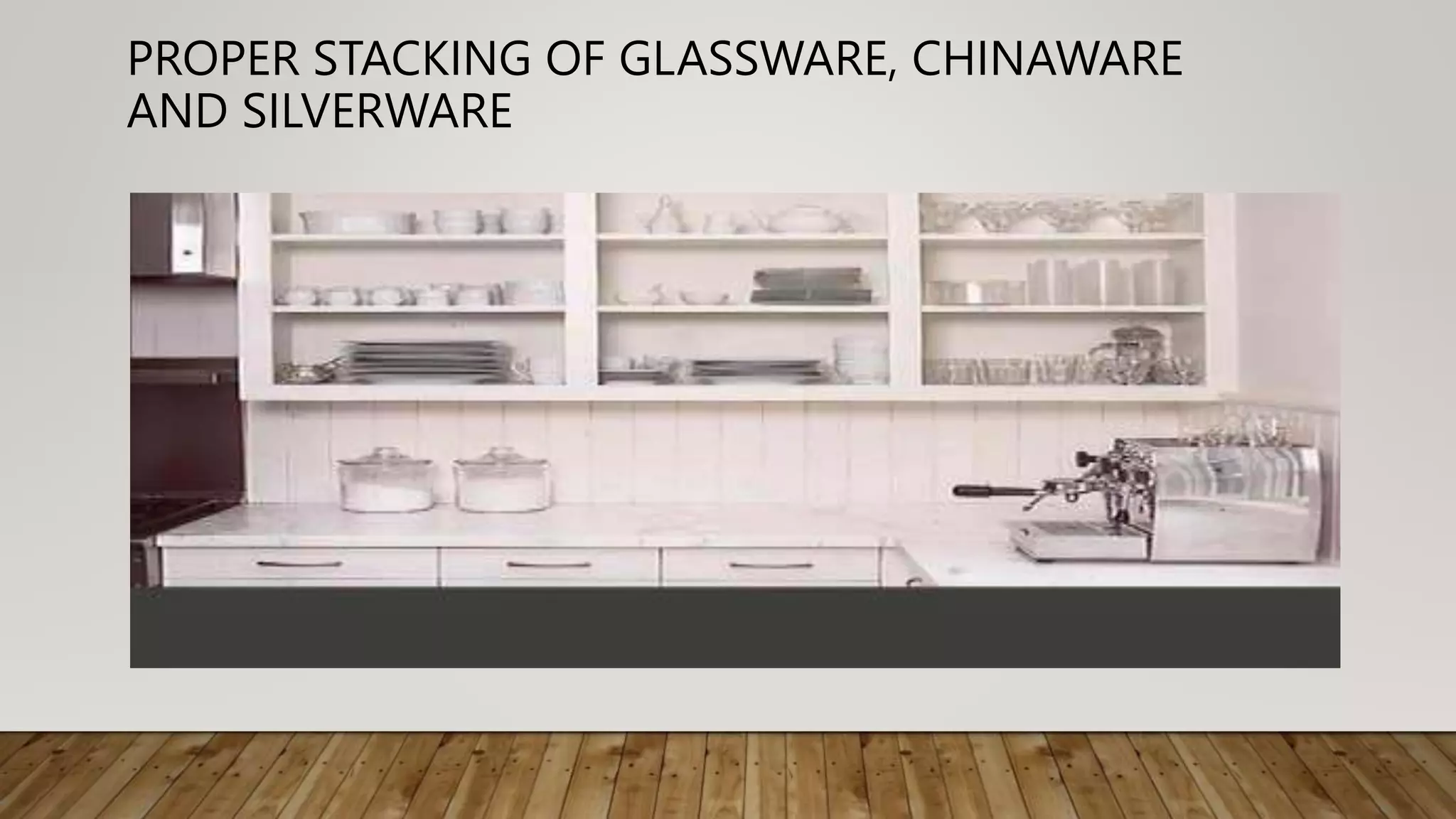
PROPER STACKING OF GLASSWARE, CHINAWARE
AND SILVERWARE
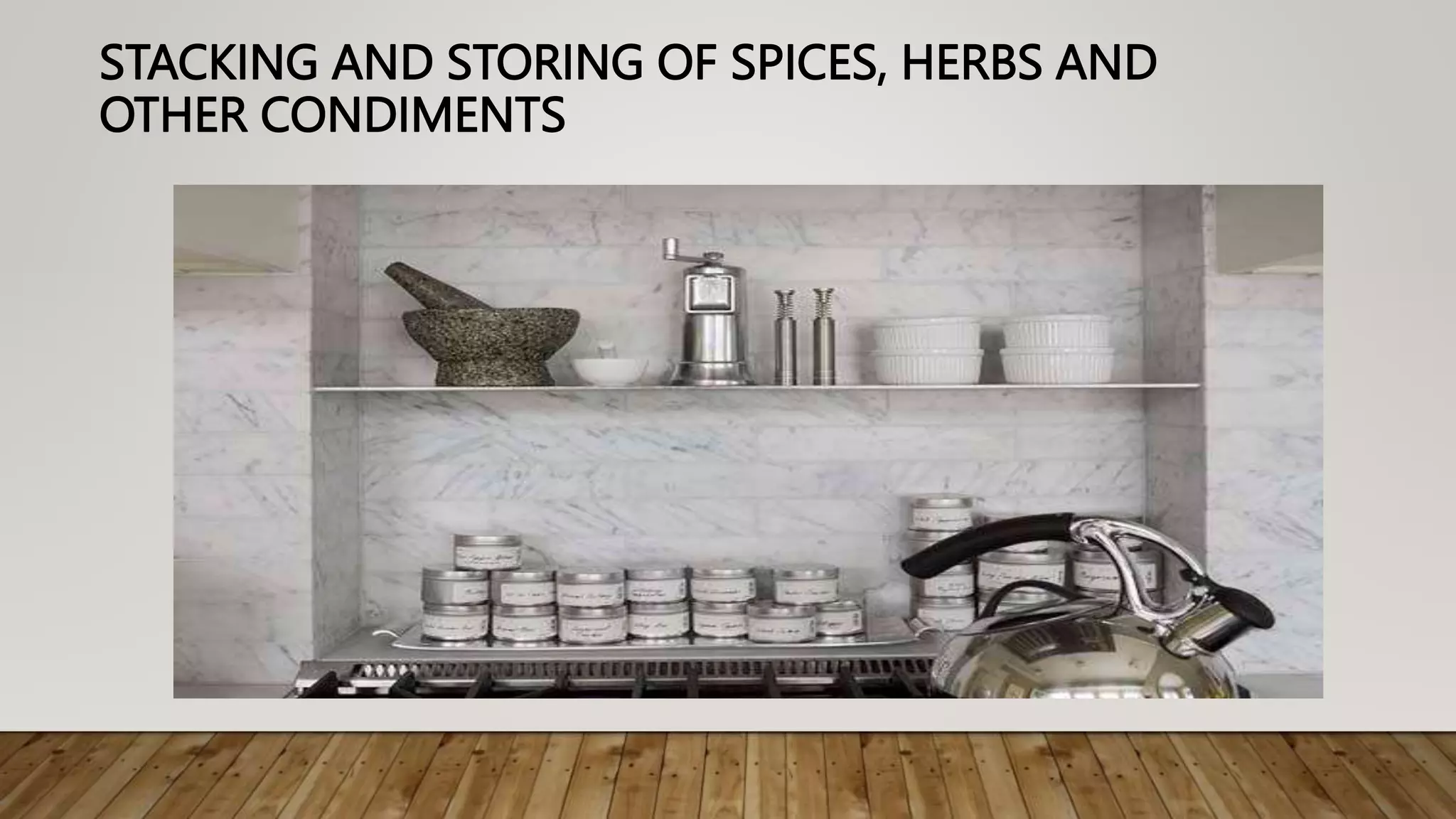
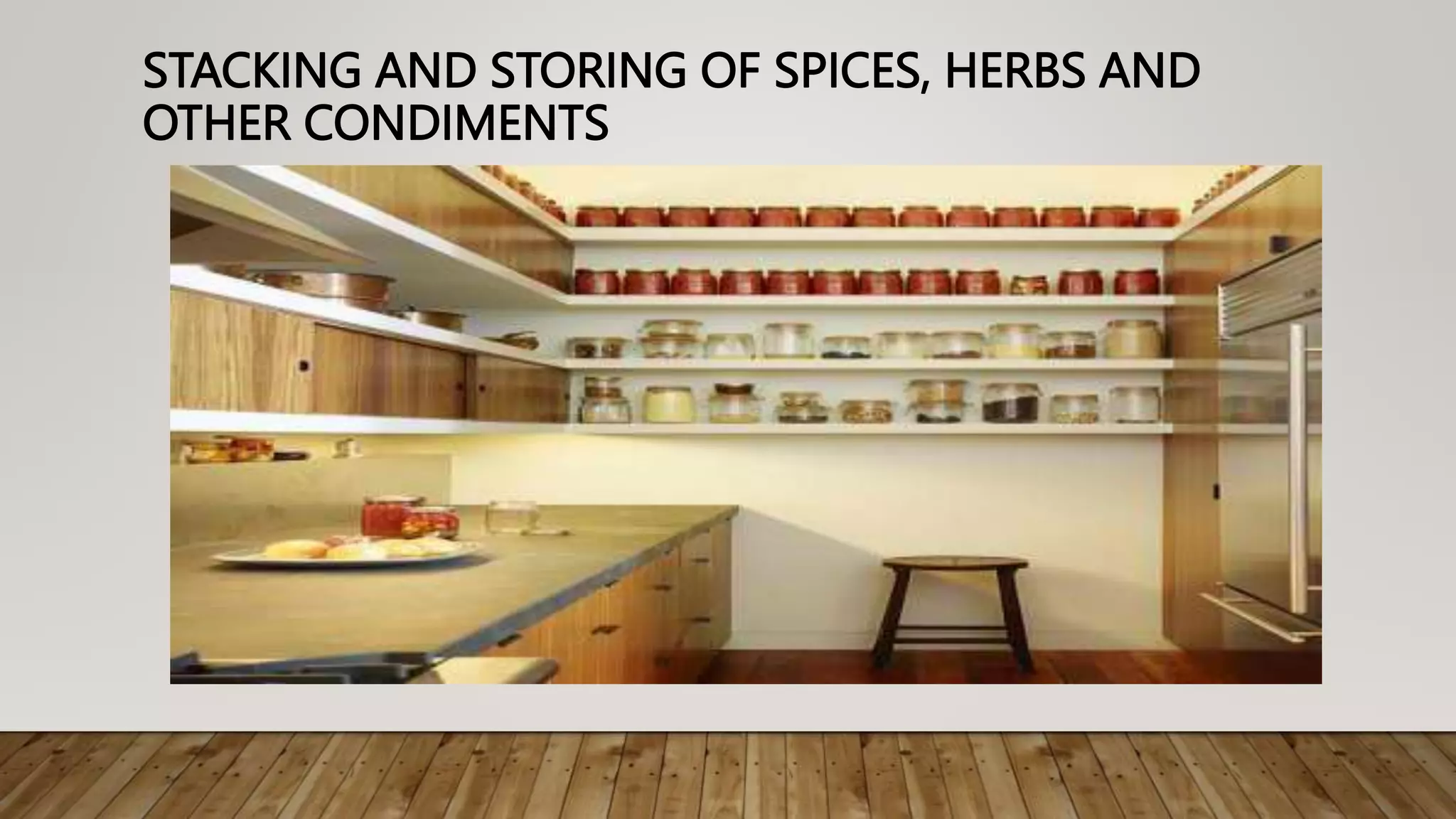
STACKING AND STORING OF SPICES, HERBS AND
OTHER CONDIMENTS
STACKING AND STORING OF SPICES, HERBS AND
OTHER CONDIMENTS
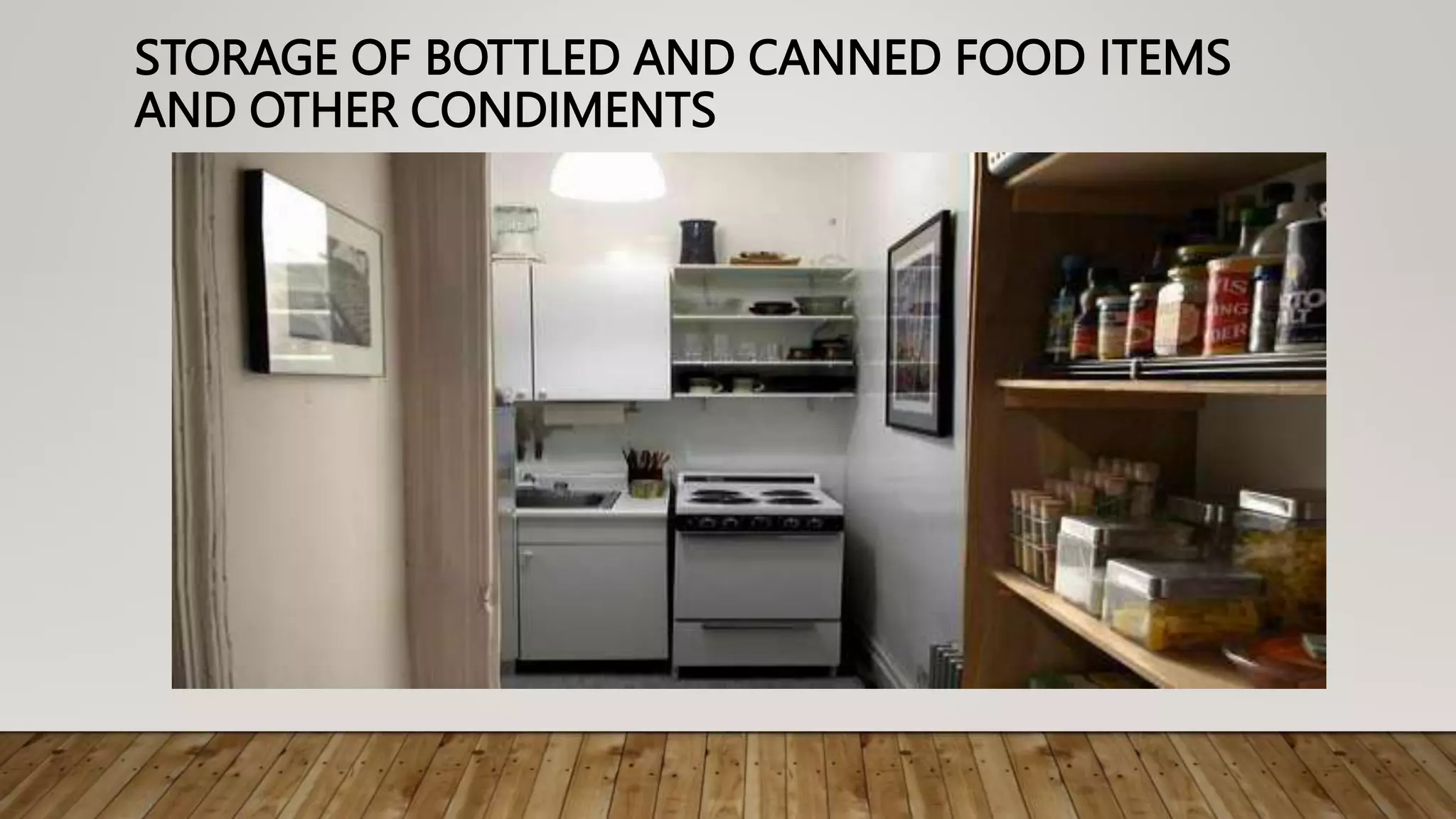
STORAGE OF BOTTLED AND CANNED FOOD ITEMS
AND OTHER CONDIMENTS
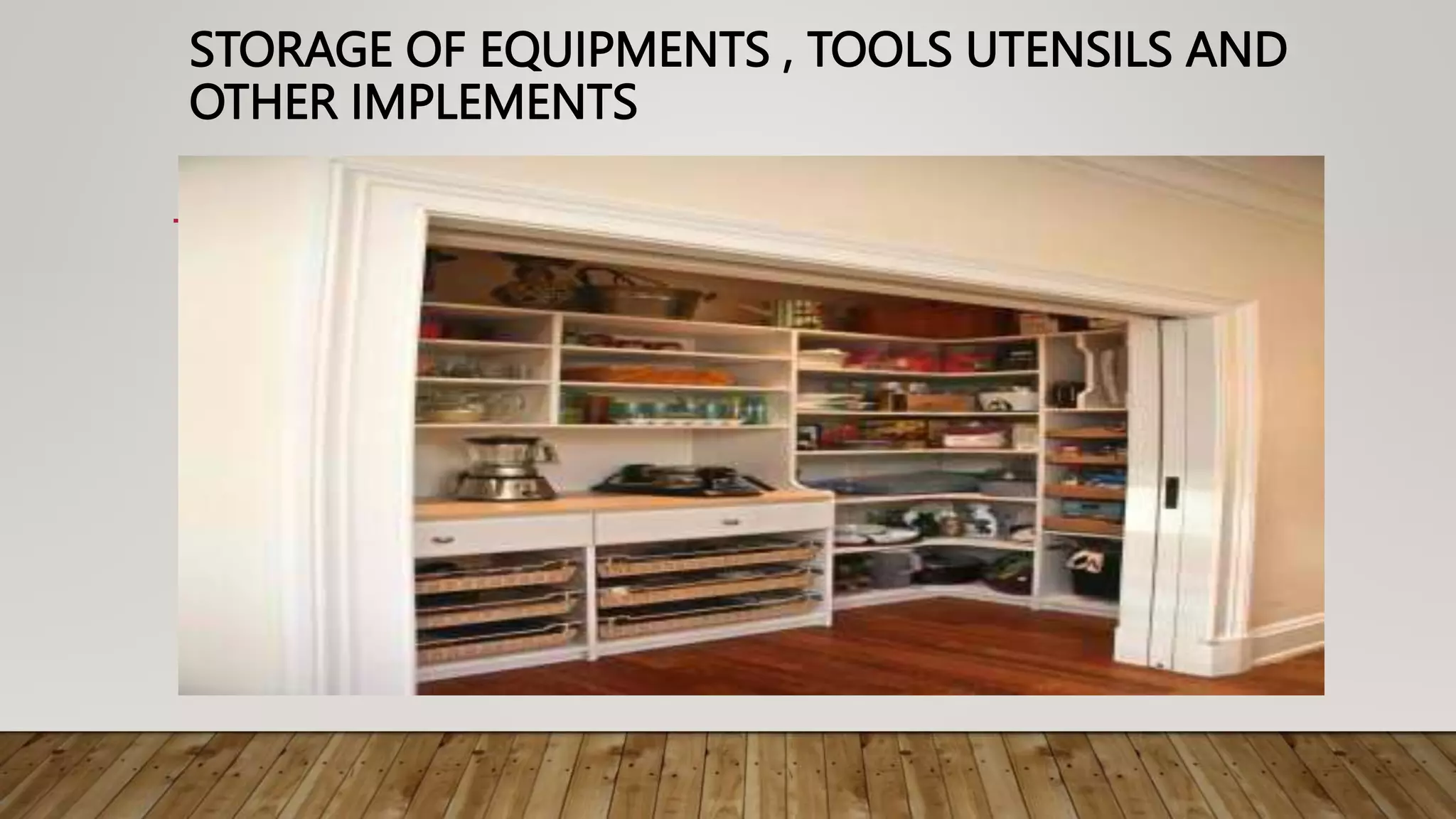
STORAGE OF EQUIPMENTS , TOOLS UTENSILS AND
OTHER IMPLEMENTS
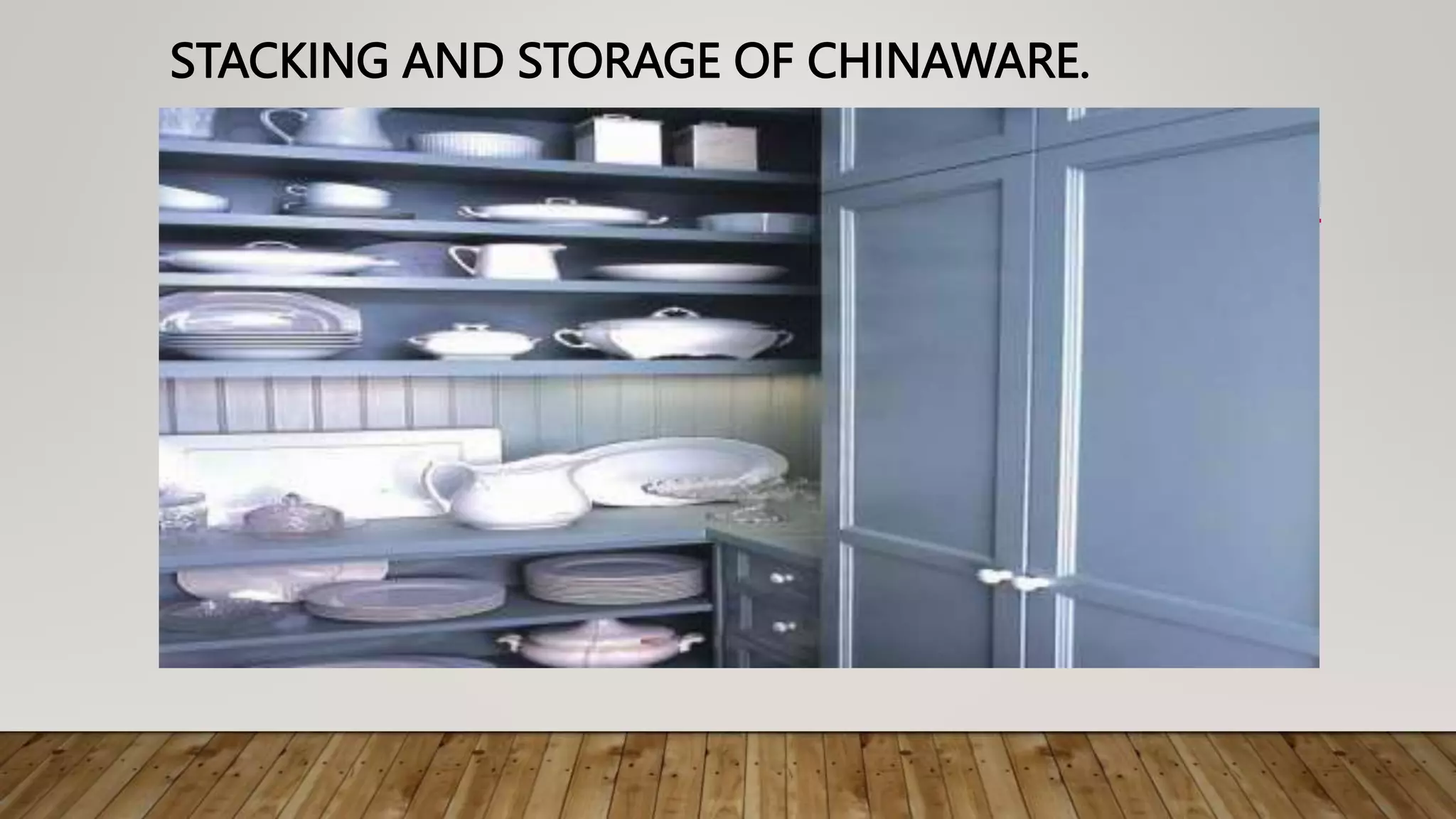
STACKING AND STORAGE OF CHINAWARE.
THANK YOU!
ACTIVITY:
Give at least 3 ways on the proper
storage of cleaning equipment.

Store and Stack kitchen tools and equipment.pptx

  • 1.
    STORE AND STACK KITCHENTOOLS AND EQUIPMENT
  • 2.
    HOW TO CLEANAND STORE COOKING TOOLS AND EQUIPMENT 1. After measuring and mixing ingredients, soak all used mixing bowls, spatulas, measuring spoons and cups and mixer accessories in a tub of warm water (add a small amount of dishwasher detergent to help start the cleaning).
  • 3.
    2. Use adamp washcloth to wipe off all cake mix splatter from the mixer. While you're at it, wipe off any stray spatter from the countertops and nearby areas. If necessary, finish off with a dry dishcloth.
  • 4.
    3. Return electricmixers and other electronic equipment to their designated storage spaces.
  • 5.
    4. After cooking,soak used cake pans and muffin tins in warm water with dishwashing solution to soften the baked-on or burnt food.
  • 6.
    5. Wash allused baking items and accessories by either handwashing or loading in a dishwasher (if dishwasher-safe).
  • 7.
    6. Dry allbaking tools and equipment by air- drying on a drying rack or wiping with a dry dishcloth. Make sure all wooden spoons and accessories are dry before storing.
  • 8.
    7. Store alltools and equipment in their designated places. Put frequently used items in conveniently accessible locations. Gather and secure electrical cords to prevent entanglement or snagging.
  • 9.
    8. Proper Storageand Handling. Proper storage and handling of cleaned and sanitized equipment and utensils is very important to prevent recontamination prior to use. Cleaned and sanitized equipment and utensils must be: • stored on clean surfaces; and • handled to minimize contamination of food contact surface.
  • 10.
    10 STEPS FORORGANIZING KITCHEN CABINETS One easy and satisfying place to start is kitchen cabinets. 1. Pretend it has a glass door on it and everyone is going to see what's inside from now on. 2. Take a look at the photos below for inspiration. 3. Remove EVERYTHING and scrub the shelves with some soapy water.
  • 11.
    4. If youra contact-paper type of person, rip out the old and replace it with new. There are some really cute ones out there lately; I've seen them at Target (please share in the comments section if you have another good source). 5. Take anything you don't use anymore.
  • 12.
    6. Think aboutwhat you reach for the most often and make sure it gets a position that's easy to reach. 7. Arrange everything in a composition that makes you happy. You're on your way. 8. Perhaps take a cabinet full of glasses and line them up by color. Make sure all of the fronts are facing out and straight, Jeff Lewis-style.
  • 13.
    9. Take astep back after one shelf is done. 10. Make someone else come look at what you've done.
  • 14.
  • 15.
    STORAGE OF WASHEDUTENSILS 1. They should be stored in a clean dry place adequately protected against vermin and other sources of contamination 2. Cups, bowls, and glasses shall be inverted for storage. 3. When not stored in closed cupboards or lockers, utensils and containers shall be covered or inverted whenever practicable. Utensils shall be stored on the bottom shelves of open cabinets below the working top level.
  • 16.
    4. Racks, traysand shelves shall be made of materials that are imperious, corrosive-resistant, non-toxic, smooth, durable and resistant to chipping. 5. Drawers shall be made of the same materials and kept clean. Full-lined drawers are not acceptable, but the use of clean and removable towels for lining drawers is acceptable.
  • 17.
    PROPER STACKING OFGLASSWARE, CHINAWARE AND SILVERWARE
  • 18.
    STACKING AND STORINGOF SPICES, HERBS AND OTHER CONDIMENTS
  • 19.
    STACKING AND STORINGOF SPICES, HERBS AND OTHER CONDIMENTS
  • 20.
    STORAGE OF BOTTLEDAND CANNED FOOD ITEMS AND OTHER CONDIMENTS
  • 21.
    STORAGE OF EQUIPMENTS, TOOLS UTENSILS AND OTHER IMPLEMENTS
  • 22.
    STACKING AND STORAGEOF CHINAWARE.
  • 23.
  • 24.
    ACTIVITY: Give at least3 ways on the proper storage of cleaning equipment.