Group No. 2 
Behavioral Program – II 
12 A
• Give positive satisfaction 
• Arising from intrinsic conditions of the job 
itself 
• Challenging work 
• Recognition 
• Responsibility
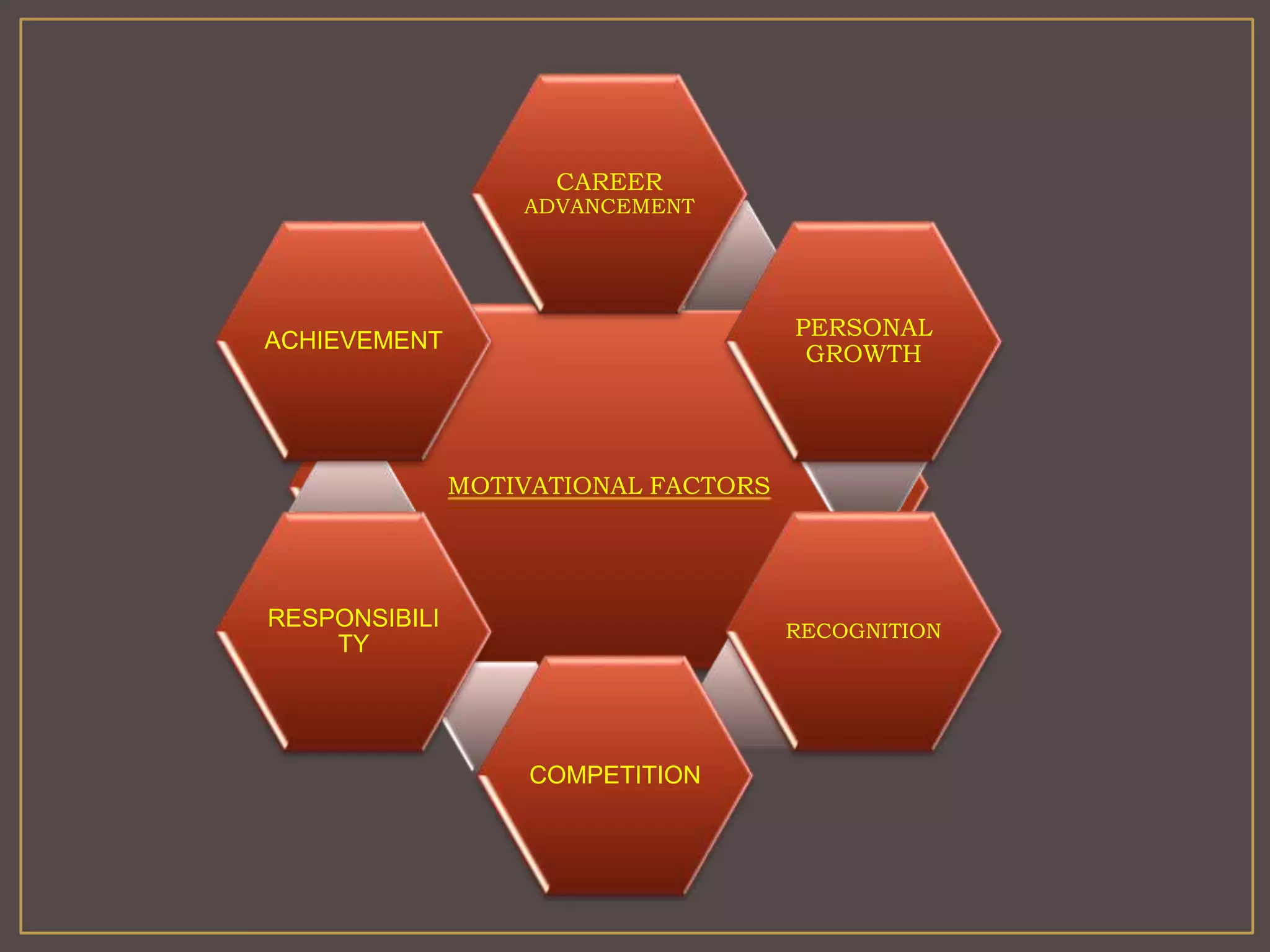
CAREER 
ADVANCEMENT 
MOTIVATIONAL FACTORS 
PERSONAL 
GROWTH 
RECOGNITION 
COMPETITION 
ACHIEVEMENT 
RESPONSIBILI 
TY
• Do not give positive satisfaction 
• Dissatisfaction results from their absence 
• Extrinsic to the work itself 
• Company policies 
• Supervisory practices, 
• Wages/salary
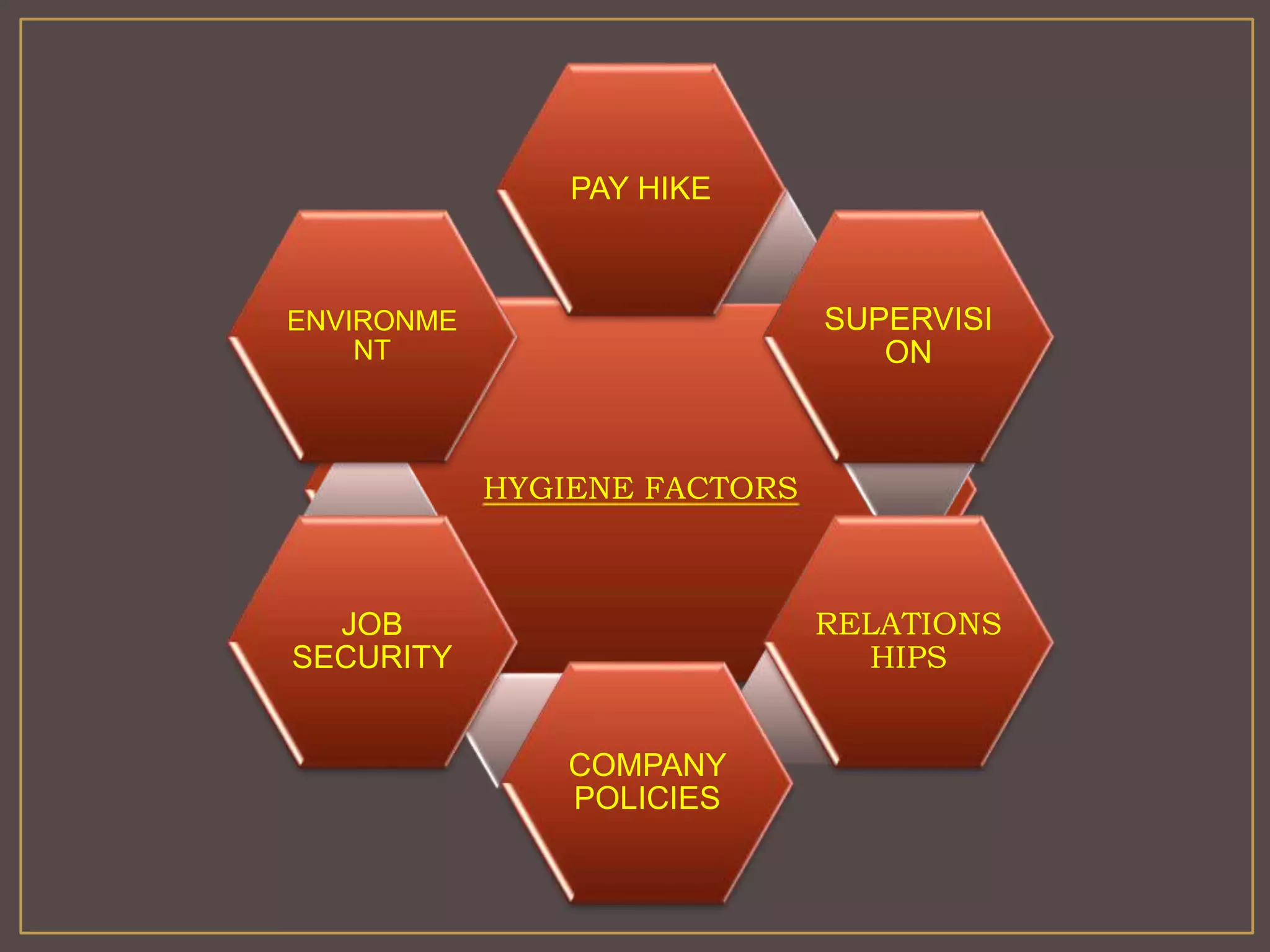
PAY HIKE 
HYGIENE FACTORS 
SUPERVISI 
ON 
RELATIONS 
HIPS 
COMPANY 
POLICIES 
ENVIRONME 
NT 
JOB 
SECURITY
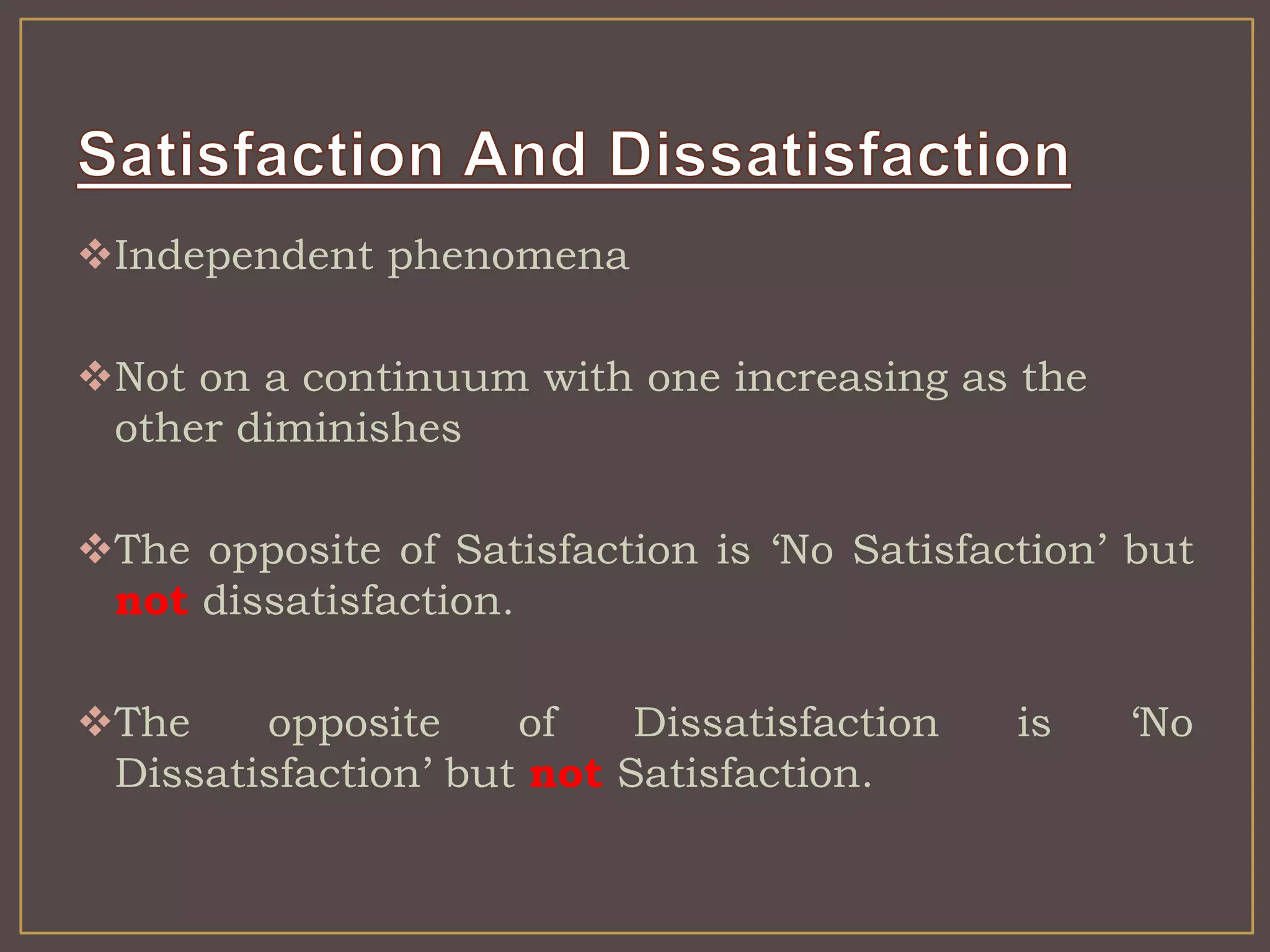
Independent phenomena 
Not on a continuum with one increasing as the 
other diminishes 
The opposite of Satisfaction is ‘No Satisfaction’ but 
not dissatisfaction. 
The opposite of Dissatisfaction is ‘No 
Dissatisfaction’ but not Satisfaction.
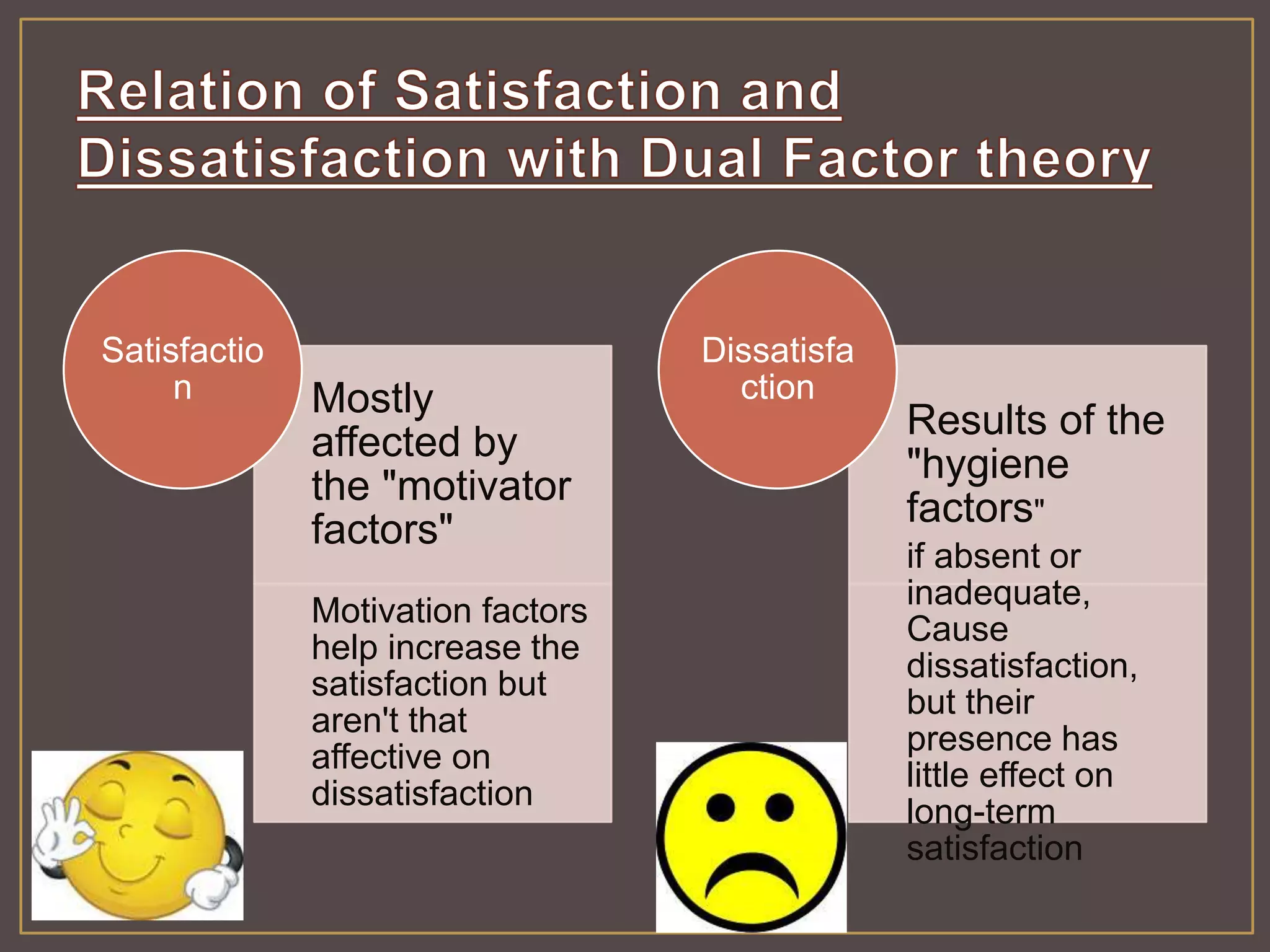
Mostly 
affected by 
the "motivator 
factors" 
Motivation factors 
help increase the 
satisfaction but 
aren't that 
affective on 
dissatisfaction 
Satisfactio 
n 
Results of the 
"hygiene 
factors" 
if absent or 
inadequate, 
Cause 
dissatisfaction, 
but their 
presence has 
little effect on 
long-term 
satisfaction 
Dissatisfa 
ction
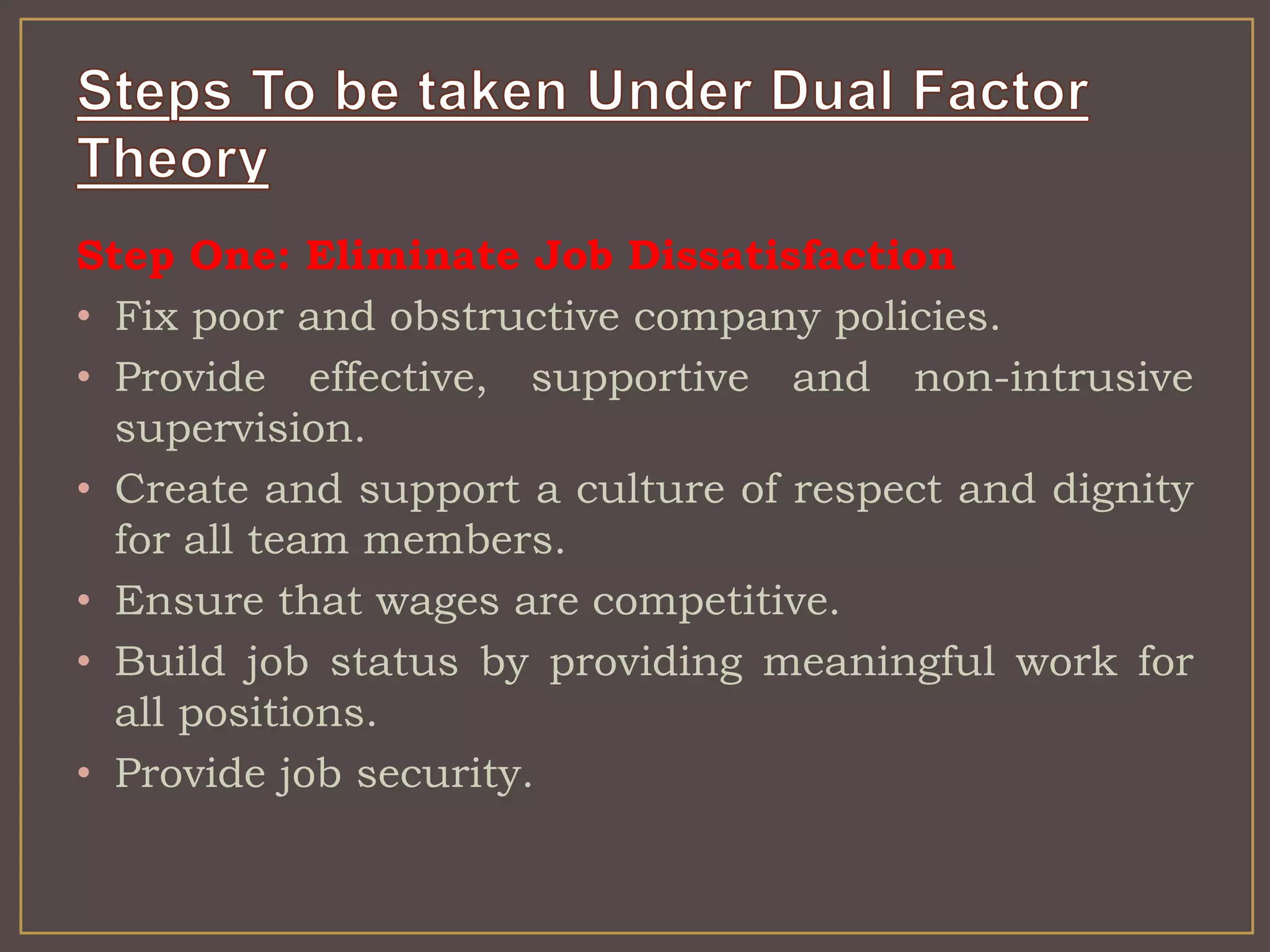
Step One: Eliminate Job Dissatisfaction 
• Fix poor and obstructive company policies. 
• Provide effective, supportive and non-intrusive 
supervision. 
• Create and support a culture of respect and dignity 
for all team members. 
• Ensure that wages are competitive. 
• Build job status by providing meaningful work for 
all positions. 
• Provide job security.
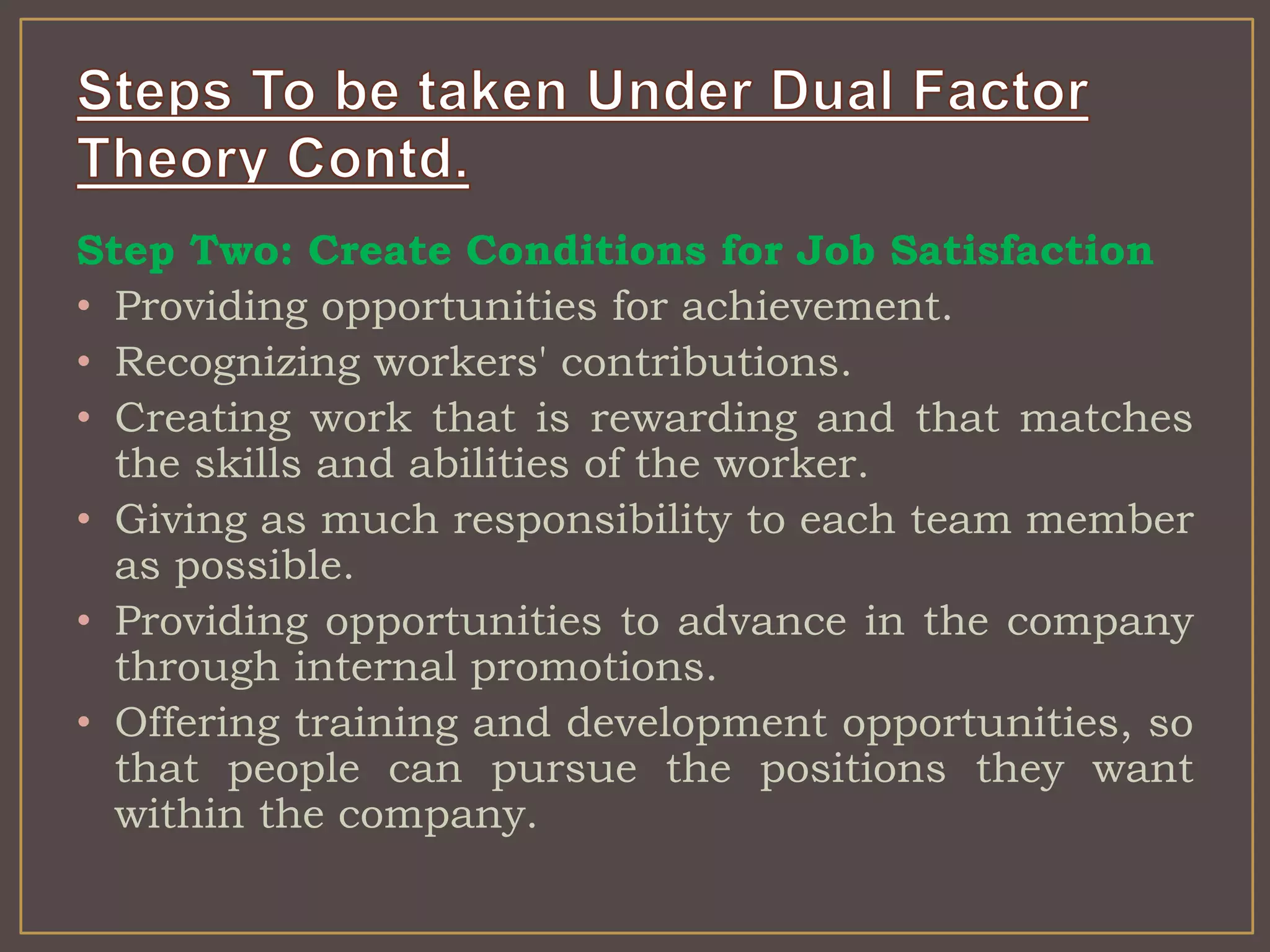
Step Two: Create Conditions for Job Satisfaction 
• Providing opportunities for achievement. 
• Recognizing workers' contributions. 
• Creating work that is rewarding and that matches 
the skills and abilities of the worker. 
• Giving as much responsibility to each team member 
as possible. 
• Providing opportunities to advance in the company 
through internal promotions. 
• Offering training and development opportunities, so 
that people can pursue the positions they want 
within the company.
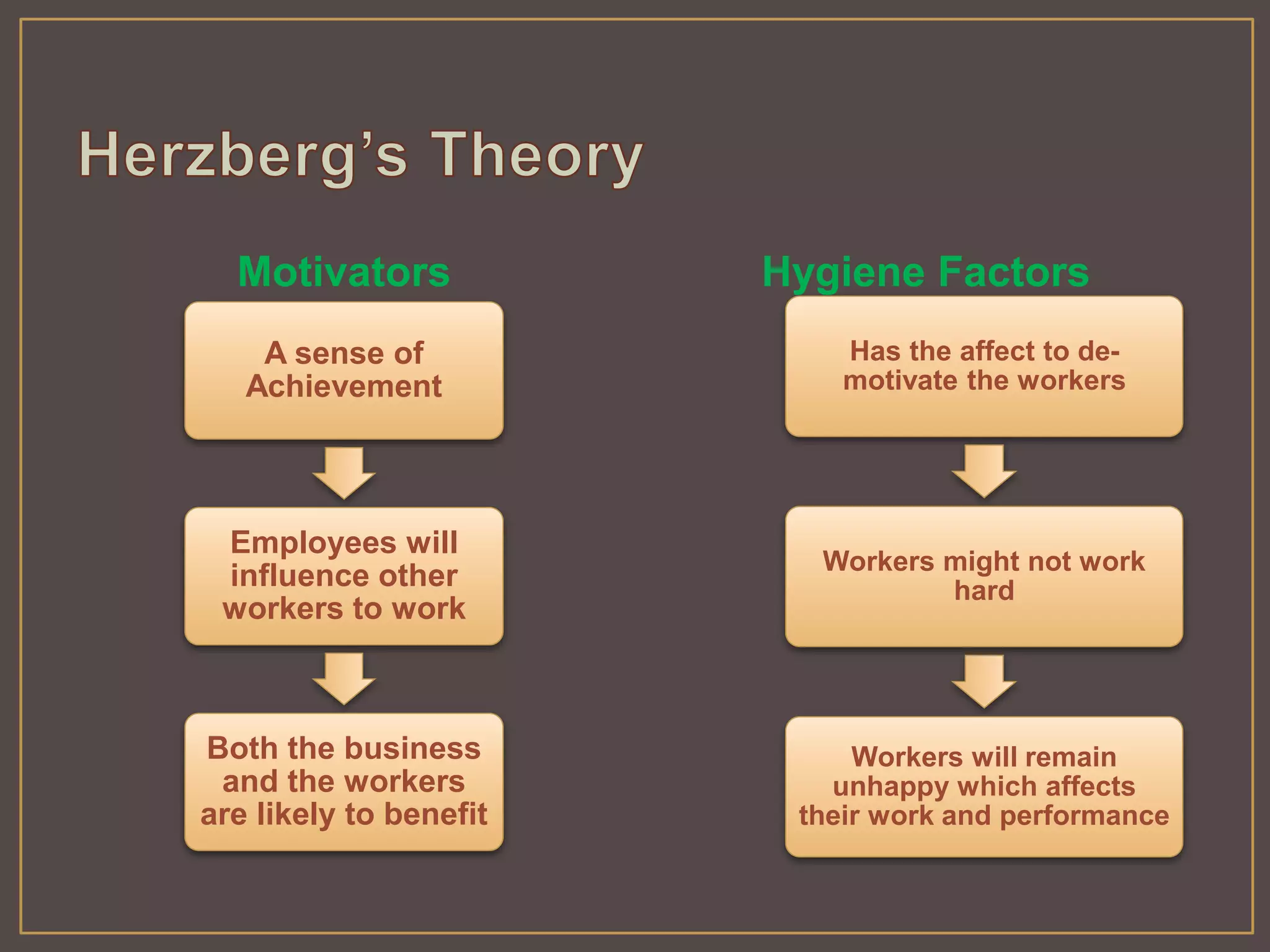
Motivators 
A sense of 
Achievement 
Employees will 
influence other 
workers to work 
Both the business 
and the workers 
are likely to benefit 
Hygiene Factors 
Has the affect to de-motivate 
the workers 
Workers might not work 
hard 
Workers will remain 
unhappy which affects 
their work and performance
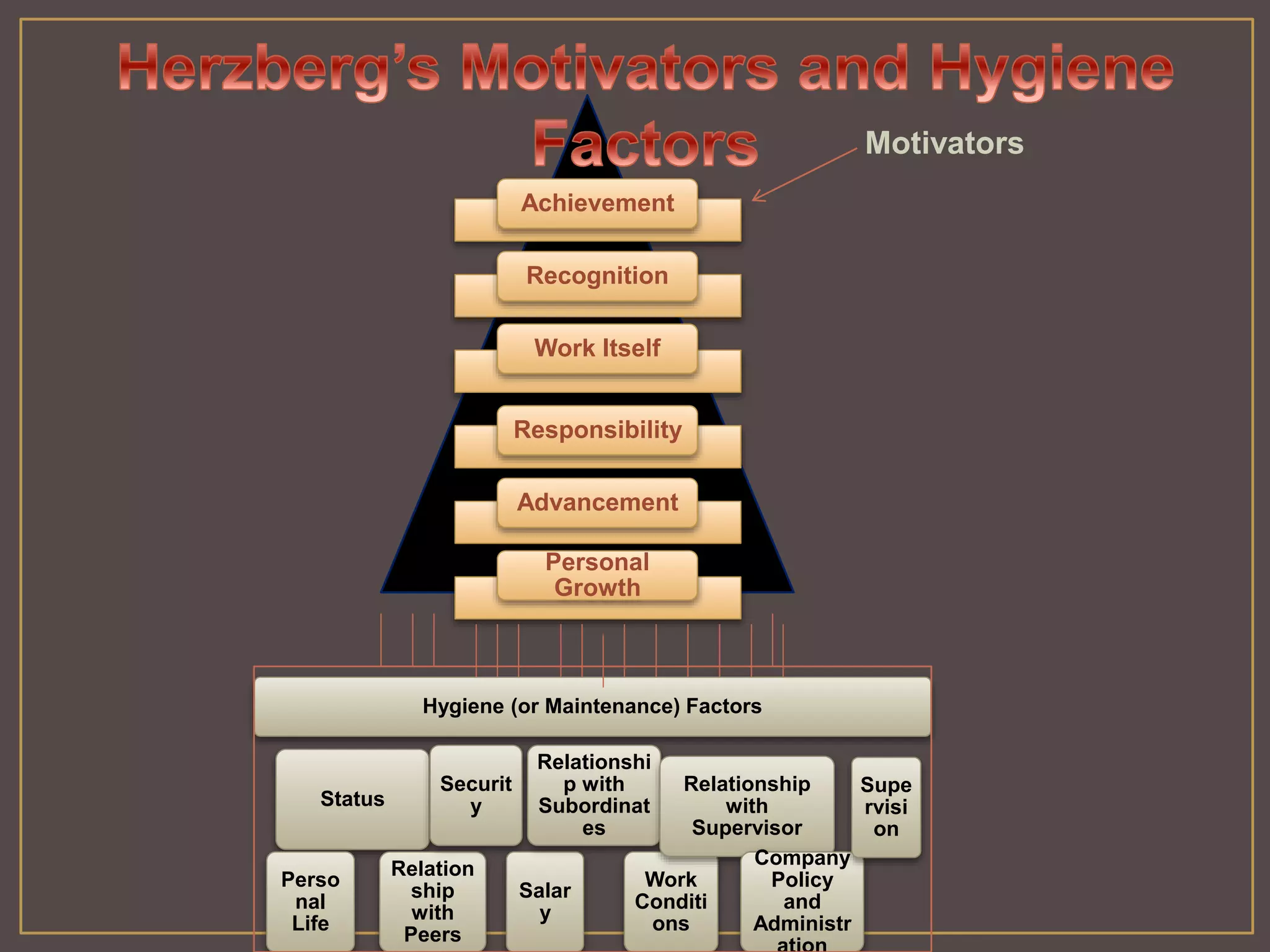
Achievement 
Recognition 
Work Itself 
Responsibility 
Advancement 
Personal 
Growth 
Hygiene (or Maintenance) Factors 
Status 
Perso 
nal 
Life 
Securit 
Relation 
ship 
with 
Peers 
y 
Relationshi 
Salar 
y 
p with 
Subordinat 
es 
Relationship 
Work 
Conditi 
ons 
with 
Supervisor 
Company 
Policy 
and 
Administr 
ation 
Motivators 
Supe 
rvisi 
on
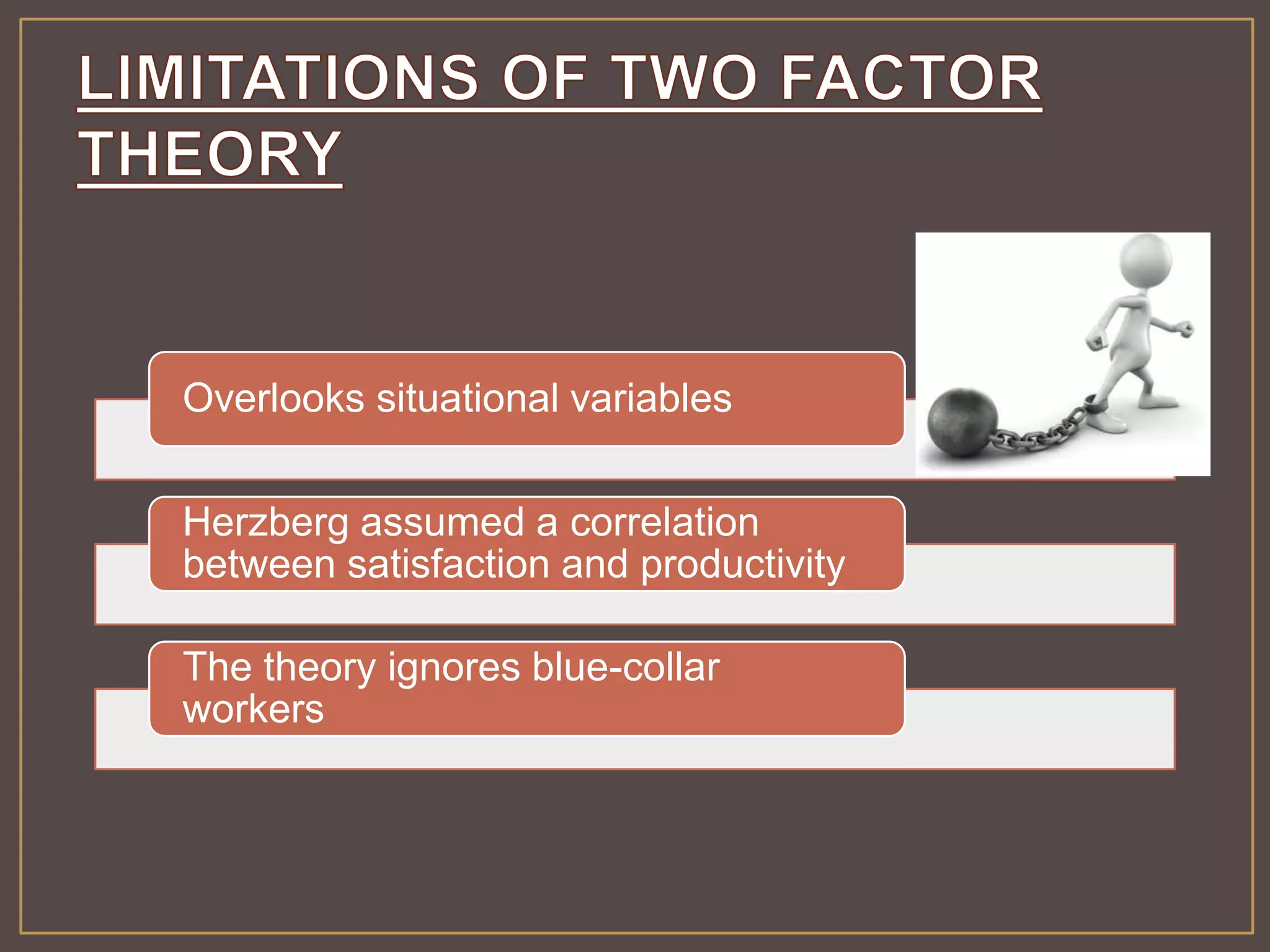
Overlooks situational variables 
Herzberg assumed a correlation 
between satisfaction and productivity 
The theory ignores blue-collar 
workers
Implications of Two-Factor Theory 
• The Two-Factor theory implies that the managers must 
stress upon guaranteeing the adequacy of the hygiene 
factors to avoid employee dissatisfaction. 
• Managers must make sure that the work is stimulating 
and rewarding so that the employees are motivated to 
work and perform harder and better.
Implications of Two-Factor Theory Contd. 
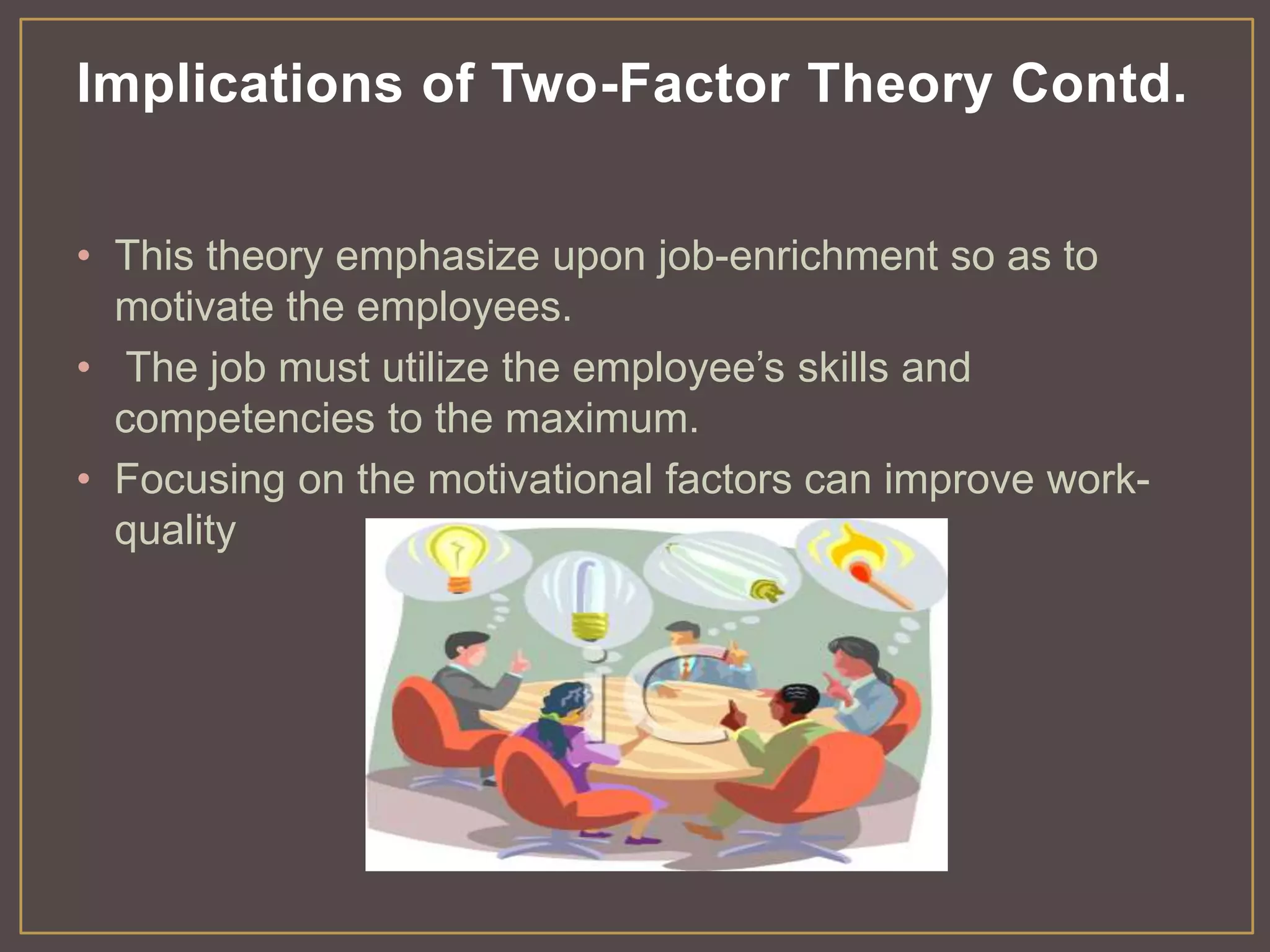
• This theory emphasize upon job-enrichment so as to 
motivate the employees. 
• The job must utilize the employee’s skills and 
competencies to the maximum. 
• Focusing on the motivational factors can improve work-quality
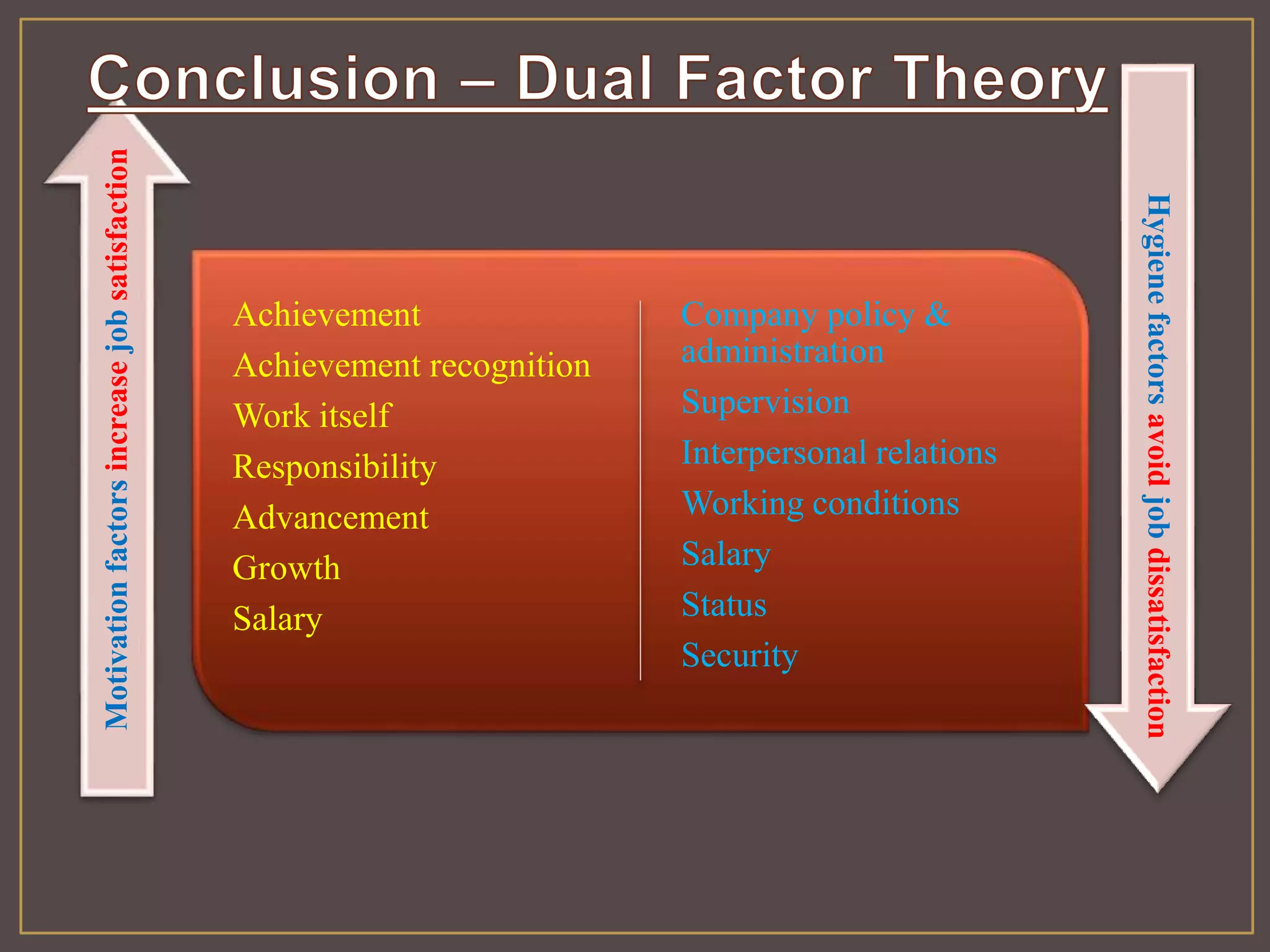
Achievement 
Achievement recognition 
Work itself 
Responsibility 
Advancement 
Growth 
Salary 
Company policy & 
administration 
Supervision 
Interpersonal relations 
Working conditions 
Salary 
Status 
Security 
Motivation factors increase job satisfaction 
Hygiene factors avoid job dissatisfaction
Hygiene Factors 
• For Customers 
• For Fellow Workers 
• For Subordinates 
Motivational Factors 
• For Customers 
• For Employees
Herzberg’s two  factor theory

Herzberg’s two factor theory

  • 1.
    Group No. 2 Behavioral Program – II 12 A
  • 2.
    • Give positivesatisfaction • Arising from intrinsic conditions of the job itself • Challenging work • Recognition • Responsibility
  • 3.
    CAREER ADVANCEMENT MOTIVATIONALFACTORS PERSONAL GROWTH RECOGNITION COMPETITION ACHIEVEMENT RESPONSIBILI TY
  • 4.
    • Do notgive positive satisfaction • Dissatisfaction results from their absence • Extrinsic to the work itself • Company policies • Supervisory practices, • Wages/salary
  • 5.
    PAY HIKE HYGIENEFACTORS SUPERVISI ON RELATIONS HIPS COMPANY POLICIES ENVIRONME NT JOB SECURITY
  • 6.
    Independent phenomena Noton a continuum with one increasing as the other diminishes The opposite of Satisfaction is ‘No Satisfaction’ but not dissatisfaction. The opposite of Dissatisfaction is ‘No Dissatisfaction’ but not Satisfaction.
  • 7.
    Mostly affected by the "motivator factors" Motivation factors help increase the satisfaction but aren't that affective on dissatisfaction Satisfactio n Results of the "hygiene factors" if absent or inadequate, Cause dissatisfaction, but their presence has little effect on long-term satisfaction Dissatisfa ction
  • 8.
    Step One: EliminateJob Dissatisfaction • Fix poor and obstructive company policies. • Provide effective, supportive and non-intrusive supervision. • Create and support a culture of respect and dignity for all team members. • Ensure that wages are competitive. • Build job status by providing meaningful work for all positions. • Provide job security.
  • 9.
    Step Two: CreateConditions for Job Satisfaction • Providing opportunities for achievement. • Recognizing workers' contributions. • Creating work that is rewarding and that matches the skills and abilities of the worker. • Giving as much responsibility to each team member as possible. • Providing opportunities to advance in the company through internal promotions. • Offering training and development opportunities, so that people can pursue the positions they want within the company.
  • 10.
    Motivators A senseof Achievement Employees will influence other workers to work Both the business and the workers are likely to benefit Hygiene Factors Has the affect to de-motivate the workers Workers might not work hard Workers will remain unhappy which affects their work and performance
  • 11.
    Achievement Recognition WorkItself Responsibility Advancement Personal Growth Hygiene (or Maintenance) Factors Status Perso nal Life Securit Relation ship with Peers y Relationshi Salar y p with Subordinat es Relationship Work Conditi ons with Supervisor Company Policy and Administr ation Motivators Supe rvisi on
  • 12.
    Overlooks situational variables Herzberg assumed a correlation between satisfaction and productivity The theory ignores blue-collar workers
  • 13.
    Implications of Two-FactorTheory • The Two-Factor theory implies that the managers must stress upon guaranteeing the adequacy of the hygiene factors to avoid employee dissatisfaction. • Managers must make sure that the work is stimulating and rewarding so that the employees are motivated to work and perform harder and better.
  • 14.
    Implications of Two-FactorTheory Contd. • This theory emphasize upon job-enrichment so as to motivate the employees. • The job must utilize the employee’s skills and competencies to the maximum. • Focusing on the motivational factors can improve work-quality
  • 15.
    Achievement Achievement recognition Work itself Responsibility Advancement Growth Salary Company policy & administration Supervision Interpersonal relations Working conditions Salary Status Security Motivation factors increase job satisfaction Hygiene factors avoid job dissatisfaction
  • 16.
    Hygiene Factors •For Customers • For Fellow Workers • For Subordinates Motivational Factors • For Customers • For Employees