Genetic Disorders
 A genetic disorder is caused by a mutation to a
gene, group of genes, or entire chromosome.
 Remember, genes carry instructions to build proteins.
 When these instructions are mutated, proteins can’t
get build correctly.
 Genetic disorders generally occur in two different
varieties.
a) Chromosomal defect (chromosomal mutations)
b) Gene defect (gene mutations)
Gene Defects
 Gene defects occur when an individual gene is
mutated on a chromosome.
 Since only one gene is affected, usually only one
protein is affected. Ex.) hemophilia
 Many gene defects can be inherited, however, many of
them can occur spontaneously (without being
inherited) through being exposed to mutagens like
chemicals or radiation.
Inheriting a Gene Defect
 There are generally three different patterns of
inheritance.
a) Autosomal recessive
b) Autosomal dominant
c) Sex linked recessive
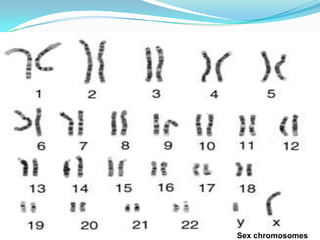
Sex chromosomes
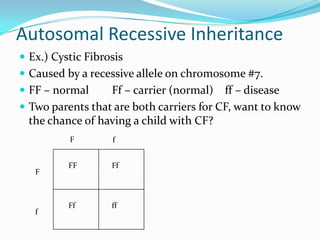
Autosomal Recessive Inheritance
 Ex.) Cystic Fibrosis
 Caused by a recessive allele on chromosome #7.
 FF – normal Ff – carrier (normal) ff – disease
 Two parents that are both carriers for CF, want to know
the chance of having a child with CF?
FF Ff
Ff ff
F
F f
f
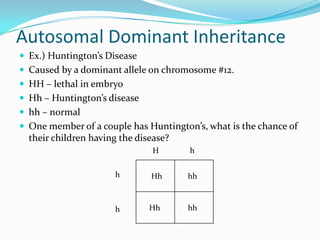
Autosomal Dominant Inheritance
 Ex.) Huntington’s Disease
 Caused by a dominant allele on chromosome #12.
 HH – lethal in embryo
 Hh – Huntington’s disease
 hh – normal
 One member of a couple has Huntington’s, what is the chance of
their children having the disease?
Hh hh
Hh hh
H h
h
h
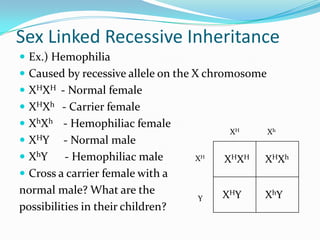
Sex Linked Recessive Inheritance
 Ex.) Hemophilia
 Caused by recessive allele on the X chromosome
 XHXH - Normal female
 XHXh - Carrier female
 XhXh - Hemophiliac female
 XHY - Normal male
 XhY - Hemophiliac male
 Cross a carrier female with a
normal male? What are the
possibilities in their children?
XHXH XHXh
XHY XhY
XH Xh
XH
Y
Chromosomal Defects
 Some genetic disorders are caused by defects to an
entire chromosome.
 Ex.) Monosomy – a chromosome is missing.
Trisomy – having an extra chromosome.
 Sometimes only pieces of chromosomes are affected.
 Ex.) Inversion, deletion, translocation.
 Chromosomal defects generally affect many proteins
because so many genes are affected on the
chromosome.
 Many of these defects lead to miscarriages.
How are chromosomal
mutations detected?
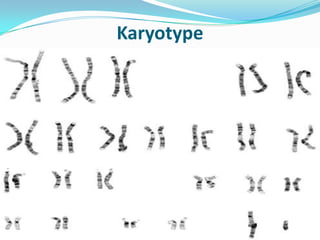
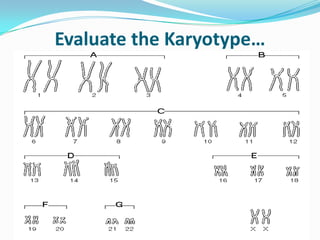
Karyotyping
A set of chromosomes
46 chromosomes in a human
karyotype (23 pairs).
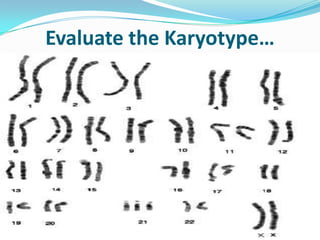
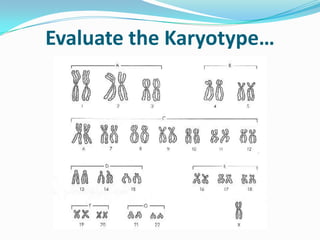
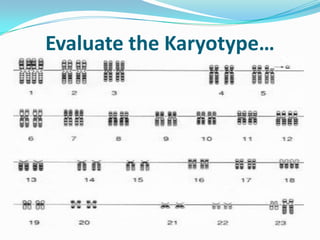
What can be determined
from looking at a karyotype?
1. Sex of the individual.
2. Chromosomal mutations (abberations)
a) Monosomy (missing a chromosome)
b) Trisomy (extra chromosome)
c) Deletions (section of chromosome missing)
***Depending which chromosome has the
mutation, this determines the disorder…
Karyotype
Evaluate the Karyotype…

Genetic disorders

  • 2.
    Genetic Disorders  Agenetic disorder is caused by a mutation to a gene, group of genes, or entire chromosome.  Remember, genes carry instructions to build proteins.  When these instructions are mutated, proteins can’t get build correctly.  Genetic disorders generally occur in two different varieties. a) Chromosomal defect (chromosomal mutations) b) Gene defect (gene mutations)
  • 3.
    Gene Defects  Genedefects occur when an individual gene is mutated on a chromosome.  Since only one gene is affected, usually only one protein is affected. Ex.) hemophilia  Many gene defects can be inherited, however, many of them can occur spontaneously (without being inherited) through being exposed to mutagens like chemicals or radiation.
  • 4.
    Inheriting a GeneDefect  There are generally three different patterns of inheritance. a) Autosomal recessive b) Autosomal dominant c) Sex linked recessive
  • 5.
  • 6.
    Autosomal Recessive Inheritance Ex.) Cystic Fibrosis  Caused by a recessive allele on chromosome #7.  FF – normal Ff – carrier (normal) ff – disease  Two parents that are both carriers for CF, want to know the chance of having a child with CF? FF Ff Ff ff F F f f
  • 7.
    Autosomal Dominant Inheritance Ex.) Huntington’s Disease  Caused by a dominant allele on chromosome #12.  HH – lethal in embryo  Hh – Huntington’s disease  hh – normal  One member of a couple has Huntington’s, what is the chance of their children having the disease? Hh hh Hh hh H h h h
  • 8.
    Sex Linked RecessiveInheritance  Ex.) Hemophilia  Caused by recessive allele on the X chromosome  XHXH - Normal female  XHXh - Carrier female  XhXh - Hemophiliac female  XHY - Normal male  XhY - Hemophiliac male  Cross a carrier female with a normal male? What are the possibilities in their children? XHXH XHXh XHY XhY XH Xh XH Y
  • 9.
    Chromosomal Defects  Somegenetic disorders are caused by defects to an entire chromosome.  Ex.) Monosomy – a chromosome is missing. Trisomy – having an extra chromosome.  Sometimes only pieces of chromosomes are affected.  Ex.) Inversion, deletion, translocation.  Chromosomal defects generally affect many proteins because so many genes are affected on the chromosome.  Many of these defects lead to miscarriages.
  • 11.
    How are chromosomal mutationsdetected? Karyotyping A set of chromosomes 46 chromosomes in a human karyotype (23 pairs).
  • 12.
    What can bedetermined from looking at a karyotype? 1. Sex of the individual. 2. Chromosomal mutations (abberations) a) Monosomy (missing a chromosome) b) Trisomy (extra chromosome) c) Deletions (section of chromosome missing) ***Depending which chromosome has the mutation, this determines the disorder…
  • 13.
  • 14.
  • 15.
  • 16.
  • 17.