Environmental
Problems & Solutions
Introduction
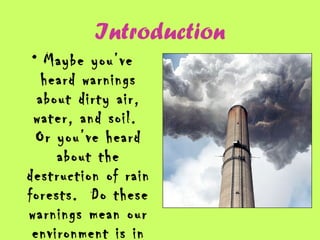
• Maybe you’ve
heard warnings
about dirty air,
water, and soil.
Or you’ve heard
about the
destruction of rain
forests. Do these
warnings mean our
environment is in
Environmental
Problems
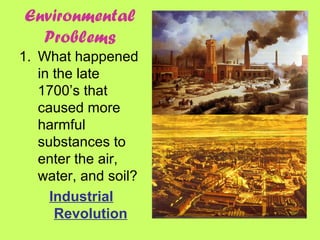
1. What happened
in the late
1700’s that
caused more
harmful
substances to
enter the air,
water, and soil?
Industrial
Revolution
Pollution
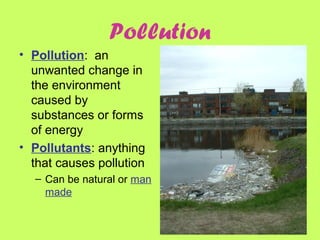
• Pollution: an
unwanted change in
the environment
caused by
substances or forms
of energy
• Pollutants: anything
that causes pollution
– Can be natural or man
made
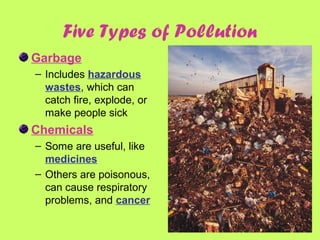
Garbage
– Includes hazardous
wastes, which can
catch fire, explode, or
make people sick
Chemicals
– Some are useful, like
medicines
– Others are poisonous,
can cause respiratory
problems, and cancer
Five Types of Pollution
High-Powered
Wastes
– Give off radiation
Gases
– Since Industrial
Revolution, carbon
dioxide gas has
increased
– Contributes to
Greenhouse Effect
Noise
– Affects ability to hear
and think clearly
– May damage hearing
Resource Depletion
• Renewable resource: one that can be
used over and over or has an unlimited
supply
• Examples: wind and solar energy
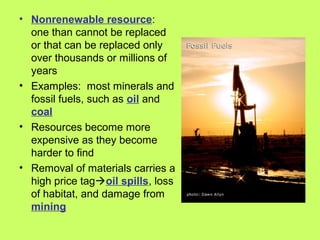
• Nonrenewable resource:
one than cannot be replaced
or that can be replaced only
over thousands or millions of
years
• Examples: most minerals and
fossil fuels, such as oil and
coal
• Resources become more
expensive as they become
harder to find
• Removal of materials carries a
high price tagoil spills, loss
of habitat, and damage from
mining
Exotic Species
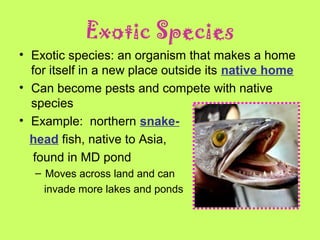
• Exotic species: an organism that makes a home
for itself in a new place outside its native home
• Can become pests and compete with native
species
• Example: northern snake-
head fish, native to Asia,
found in MD pond
– Moves across land and can
invade more lakes and ponds
Habitat Destruction
• Habitat: Place
where an animal
lives
• Biodiversity:
number and variety
of organisms in a
given area
• Deforestation:
clearing of forest
lands
– Animals can mistake
plastics for food, or become
tangled in plastic
Time taken for objects to
dissolve at sea
Paper bus ticket 2-4 weeks
Cotton cloth 1-5 months
Rope 3-14 months
Woolen cloth 1 year
Painted wood 13 years
Tin can 100 years
Aluminum can 200-500 years
Plastic bottle 450 years
For your info…
Environmental Solutions
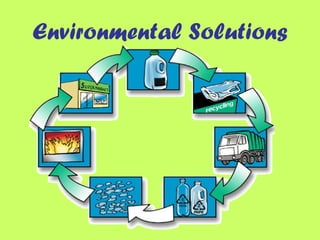
Conservation: preservation and
wise use of natural resources
(1)Reduce
(2)Reuse
(3)Recycle
Protecting Species
• Protecting Species
• Endangered Species Act:
law designed to protect
individual species in order
to maintain biodiversity
• Environmental Protection
Agency (EPA):
government organization
that helps protect the
environment
– Informs people about
environmental issues
– Helps enforce environmental
laws
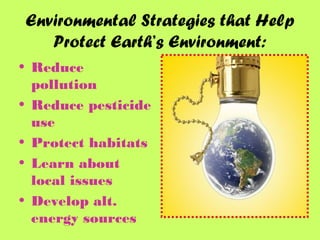
Environmental Strategies that Help
Protect Earth’s Environment:
• Reduce
pollution
• Reduce pesticide
use
• Protect habitats
• Learn about
local issues
• Develop alt.
energy sources
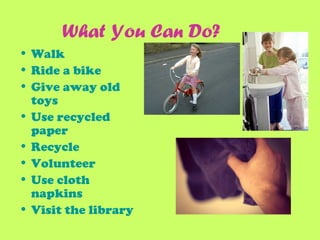
What You Can Do?
• Walk
• Ride a bike
• Give away old
toys
• Use recycled
paper
• Recycle
• Volunteer
• Use cloth
napkins
• Visit the library

Environmental problems

  • 1.
  • 2.
    Introduction • Maybe you’ve heardwarnings about dirty air, water, and soil. Or you’ve heard about the destruction of rain forests. Do these warnings mean our environment is in
  • 3.
    Environmental Problems 1. What happened inthe late 1700’s that caused more harmful substances to enter the air, water, and soil? Industrial Revolution
  • 4.
    Pollution • Pollution: an unwantedchange in the environment caused by substances or forms of energy • Pollutants: anything that causes pollution – Can be natural or man made
  • 5.
    Garbage – Includes hazardous wastes,which can catch fire, explode, or make people sick Chemicals – Some are useful, like medicines – Others are poisonous, can cause respiratory problems, and cancer Five Types of Pollution
  • 6.
    High-Powered Wastes – Give offradiation Gases – Since Industrial Revolution, carbon dioxide gas has increased – Contributes to Greenhouse Effect Noise – Affects ability to hear and think clearly – May damage hearing
  • 7.
    Resource Depletion • Renewableresource: one that can be used over and over or has an unlimited supply • Examples: wind and solar energy
  • 8.
    • Nonrenewable resource: onethan cannot be replaced or that can be replaced only over thousands or millions of years • Examples: most minerals and fossil fuels, such as oil and coal • Resources become more expensive as they become harder to find • Removal of materials carries a high price tagoil spills, loss of habitat, and damage from mining
  • 9.
    Exotic Species • Exoticspecies: an organism that makes a home for itself in a new place outside its native home • Can become pests and compete with native species • Example: northern snake- head fish, native to Asia, found in MD pond – Moves across land and can invade more lakes and ponds
  • 10.
    Habitat Destruction • Habitat:Place where an animal lives • Biodiversity: number and variety of organisms in a given area • Deforestation: clearing of forest lands
  • 11.
    – Animals canmistake plastics for food, or become tangled in plastic Time taken for objects to dissolve at sea Paper bus ticket 2-4 weeks Cotton cloth 1-5 months Rope 3-14 months Woolen cloth 1 year Painted wood 13 years Tin can 100 years Aluminum can 200-500 years Plastic bottle 450 years For your info…
  • 12.
  • 13.
    Conservation: preservation and wiseuse of natural resources (1)Reduce (2)Reuse (3)Recycle
  • 14.
    Protecting Species • ProtectingSpecies • Endangered Species Act: law designed to protect individual species in order to maintain biodiversity • Environmental Protection Agency (EPA): government organization that helps protect the environment – Informs people about environmental issues – Helps enforce environmental laws
  • 15.
    Environmental Strategies thatHelp Protect Earth’s Environment: • Reduce pollution • Reduce pesticide use • Protect habitats • Learn about local issues • Develop alt. energy sources
  • 16.
    What You CanDo? • Walk • Ride a bike • Give away old toys • Use recycled paper • Recycle • Volunteer • Use cloth napkins • Visit the library