

By: Coreena Luna
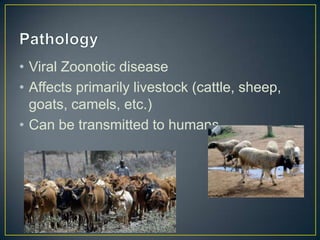
• Viral Zoonotic disease
• Affects primarily livestock (cattle, sheep,
goats, camels, etc.)
• Can be transmitted to humans
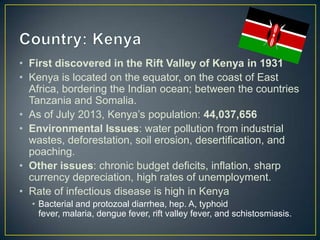
• First discovered in the Rift Valley of Kenya in 1931
• Kenya is located on the equator, on the coast of East
Africa, bordering the Indian ocean; between the countries
Tanzania and Somalia.
• As of July 2013, Kenya’s population: 44,037,656
• Environmental Issues: water pollution from industrial
wastes, deforestation, soil erosion, desertification, and
poaching.
• Other issues: chronic budget deficits, inflation, sharp
currency depreciation, high rates of unemployment.
• Rate of infectious disease is high in Kenya
• Bacterial and protozoal diarrhea, hep. A, typhoid fever, malaria,
dengue fever, rift valley fever, and schistosmiasis.
• Causative agent: The Rift Valley Fever Virus
• Genus: Phlebovirus
• Family: Bunyaviridae
• A family of enveloped negative strand RNA viruses

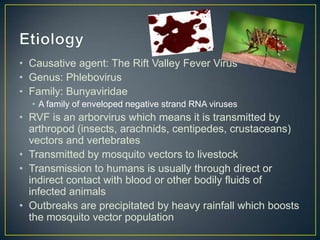
• RVF is an arborvirus which means it is transmitted by
arthropod (insects, arachnids, centipedes, crustaceans)
vectors and vertebrates
• Transmitted by mosquito vectors to livestock
• Transmission to humans is usually through direct or
indirect contact with blood or other bodily fluids of
infected animals
• Outbreaks are precipitated by heavy rainfall which boosts
the mosquito vector population
•
•
•
•
•
•
•

Fever
Listlessness
Weight loss
Loss of Appetite
Bloody Diarrhea
Increased respiratory rate
Blood tinged nasal discharge
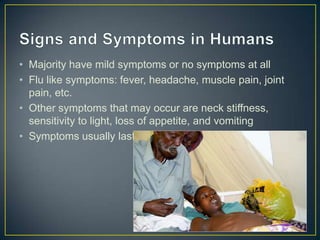
• Majority have mild symptoms or no symptoms at all
• Flu like symptoms: fever, headache, muscle pain, joint
pain, etc.
• Other symptoms that may occur are neck stiffness,
sensitivity to light, loss of appetite, and vomiting
• Symptoms usually last 4 to 7 days
• The virus infects humans through inoculation, for
example via a wound from an infected knife or through
contact with broken skin, or through inhalation of
aerosols produced during the slaughter of infected
animals.
• Caused by a cytopathic virus that targets the liver and the
brain
• It is suspected that the virus moves from the skin to
draining lymph nodes, where it replicates and spreads
throughout the body.
• It may also cross the blood-brain barrier and infect
neurons and glia, leading to meningoencephalitis and
retinitis two to three weeks after onset of infection
• A small percentage of patients develop a much more
severe form of the disease. This usually appears as one
or more of three distinct syndromes:
• Ocular (eye) disease (0.5-2% of patients)
• Meningoencephalitis (<1%)
• Hemorrhagic fever (<1%).
 Mild

form of the disease accompanied by retinal
lesions.
 Retinal lesions develop 1-3 weeks after initial
symptoms
 Prognosis is good
 Majority will make a full recovery
 Depending on where the lesions are, the patient
may suffer permanent loss of vision.
• Usually occurs 1 to 4 weeks after first onset of symptoms
• Classic symptoms:
•
•
•
•
•
•
•
•

Intense headache
Memory loss
Hallucinations
Confusion
Disorientation
Vertigo
Convulsions
Lethargy and coma

• Death rate is low, neurological complications can occur,
and neurological deficit (which may be severe) is
common.
• Symptoms of this form of the disease appear 2-4 days
after the onset of illness
• Symptoms include:
• Evidence of severe liver impairment (jaundice)
• Signs of hemorrhage (vomiting blood, passing blood in the feces,
purpuric rash or ecchymoses (from bleeding under the skin),
bleeding from the nose or gums, menhorragia and bleeding from
venepuncture sites
• Case-fatality ratio is 50%
• Prognosis in humans is good
• In livestock, it is more deadly, especially in young
• Causes abortion in livestock at any point in gestation
• The virus can be transmitted to humans through the
handling of animal tissue during slaughtering or
butchering, assisting with animal births, conducting
veterinary procedures, or from the disposal of carcasses
or fetuses. With that said, obviously, certain occupations
put you at higher risk of getting Rift Valley Fever:
• Veterinarian, farmer, rancher, butcher, working at a
slaughterhouse, etc.

• Eating raw food or food that not fully cooked
• Drinking unpasteurized or uncooked milk
• Location
• Outbreaks tend to occur in Eastern and Southern AfricaTo date
there have been no outbreaks in urban areas
• Immunizing animals against RVF
• Restricting or banning the movement of animals during
an outbreak
• There is a health surveillance system in place to detect
new cases in animals
• Early detection of the disease helps to prevent outbreaks
and the transmission of the disease to humans.
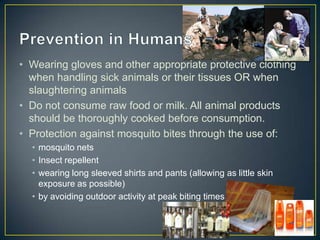
• Wearing gloves and other appropriate protective clothing
when handling sick animals or their tissues OR when
slaughtering animals
• Do not consume raw food or milk. All animal products
should be thoroughly cooked before consumption.
• Protection against mosquito bites through the use of:
• mosquito nets
• Insect repellent
• wearing long sleeved shirts and pants (allowing as little skin
exposure as possible)
• by avoiding outdoor activity at peak biting times

Rift valley fever

  • 1.
  • 2.
    • Viral Zoonoticdisease • Affects primarily livestock (cattle, sheep, goats, camels, etc.) • Can be transmitted to humans
  • 3.
    • First discoveredin the Rift Valley of Kenya in 1931 • Kenya is located on the equator, on the coast of East Africa, bordering the Indian ocean; between the countries Tanzania and Somalia. • As of July 2013, Kenya’s population: 44,037,656 • Environmental Issues: water pollution from industrial wastes, deforestation, soil erosion, desertification, and poaching. • Other issues: chronic budget deficits, inflation, sharp currency depreciation, high rates of unemployment. • Rate of infectious disease is high in Kenya • Bacterial and protozoal diarrhea, hep. A, typhoid fever, malaria, dengue fever, rift valley fever, and schistosmiasis.
  • 4.
    • Causative agent:The Rift Valley Fever Virus • Genus: Phlebovirus • Family: Bunyaviridae • A family of enveloped negative strand RNA viruses • RVF is an arborvirus which means it is transmitted by arthropod (insects, arachnids, centipedes, crustaceans) vectors and vertebrates • Transmitted by mosquito vectors to livestock • Transmission to humans is usually through direct or indirect contact with blood or other bodily fluids of infected animals • Outbreaks are precipitated by heavy rainfall which boosts the mosquito vector population
  • 5.
    • • • • • • • Fever Listlessness Weight loss Loss ofAppetite Bloody Diarrhea Increased respiratory rate Blood tinged nasal discharge
  • 6.
    • Majority havemild symptoms or no symptoms at all • Flu like symptoms: fever, headache, muscle pain, joint pain, etc. • Other symptoms that may occur are neck stiffness, sensitivity to light, loss of appetite, and vomiting • Symptoms usually last 4 to 7 days
  • 7.
    • The virusinfects humans through inoculation, for example via a wound from an infected knife or through contact with broken skin, or through inhalation of aerosols produced during the slaughter of infected animals. • Caused by a cytopathic virus that targets the liver and the brain • It is suspected that the virus moves from the skin to draining lymph nodes, where it replicates and spreads throughout the body. • It may also cross the blood-brain barrier and infect neurons and glia, leading to meningoencephalitis and retinitis two to three weeks after onset of infection
  • 8.
    • A smallpercentage of patients develop a much more severe form of the disease. This usually appears as one or more of three distinct syndromes: • Ocular (eye) disease (0.5-2% of patients) • Meningoencephalitis (<1%) • Hemorrhagic fever (<1%).
  • 9.
     Mild form ofthe disease accompanied by retinal lesions.  Retinal lesions develop 1-3 weeks after initial symptoms  Prognosis is good  Majority will make a full recovery  Depending on where the lesions are, the patient may suffer permanent loss of vision.
  • 10.
    • Usually occurs1 to 4 weeks after first onset of symptoms • Classic symptoms: • • • • • • • • Intense headache Memory loss Hallucinations Confusion Disorientation Vertigo Convulsions Lethargy and coma • Death rate is low, neurological complications can occur, and neurological deficit (which may be severe) is common.
  • 11.
    • Symptoms ofthis form of the disease appear 2-4 days after the onset of illness • Symptoms include: • Evidence of severe liver impairment (jaundice) • Signs of hemorrhage (vomiting blood, passing blood in the feces, purpuric rash or ecchymoses (from bleeding under the skin), bleeding from the nose or gums, menhorragia and bleeding from venepuncture sites • Case-fatality ratio is 50%
  • 12.
    • Prognosis inhumans is good • In livestock, it is more deadly, especially in young • Causes abortion in livestock at any point in gestation
  • 13.
    • The viruscan be transmitted to humans through the handling of animal tissue during slaughtering or butchering, assisting with animal births, conducting veterinary procedures, or from the disposal of carcasses or fetuses. With that said, obviously, certain occupations put you at higher risk of getting Rift Valley Fever: • Veterinarian, farmer, rancher, butcher, working at a slaughterhouse, etc. • Eating raw food or food that not fully cooked • Drinking unpasteurized or uncooked milk • Location • Outbreaks tend to occur in Eastern and Southern AfricaTo date there have been no outbreaks in urban areas
  • 14.
    • Immunizing animalsagainst RVF • Restricting or banning the movement of animals during an outbreak • There is a health surveillance system in place to detect new cases in animals • Early detection of the disease helps to prevent outbreaks and the transmission of the disease to humans.
  • 15.
    • Wearing glovesand other appropriate protective clothing when handling sick animals or their tissues OR when slaughtering animals • Do not consume raw food or milk. All animal products should be thoroughly cooked before consumption. • Protection against mosquito bites through the use of: • mosquito nets • Insect repellent • wearing long sleeved shirts and pants (allowing as little skin exposure as possible) • by avoiding outdoor activity at peak biting times