Classical Civilizations –
Political Developments
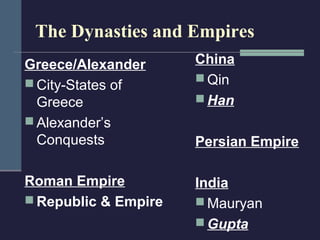
The Dynasties and Empires
Greece/Alexander      China
 City-States of       Qin
  Greece               Han
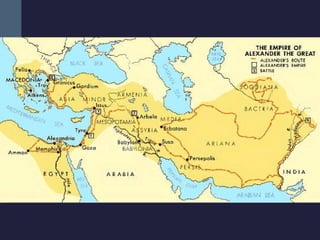
 Alexander’s
  Conquests           Persian Empire

Roman Empire          India
 Republic & Empire    Mauryan
                       Gupta
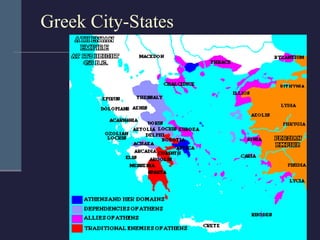
Greek City-States
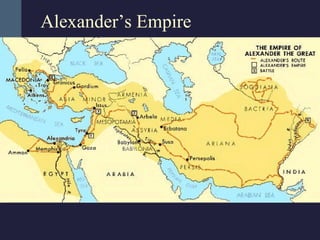
Alexander’s Empire
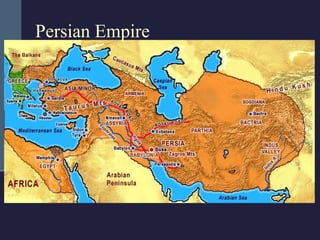
Persian Empire
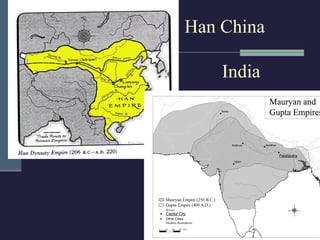
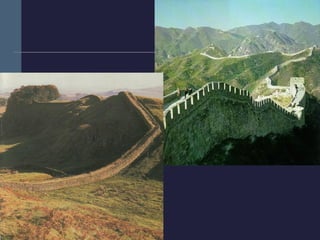
Han China

    India
Some Similarities…
 Centralized Monarchies
   Exceptions?

 Bureaucracy (administrators, tax
 collectors, judges, governors, etc.)
   Most   extensive?
 Taxation
 Religion reinforced political
 authority
   Examples?
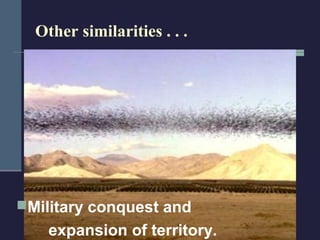
Other similarities . . .


Military conquest and
    expansion of territory.
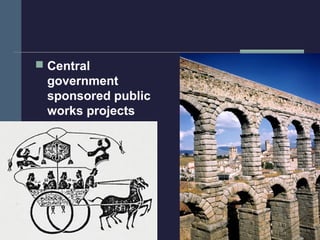
 Central
 government
 sponsored public
 works projects
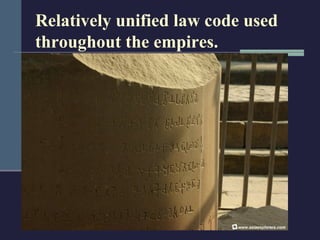
Relatively unified law code used
throughout the empires.
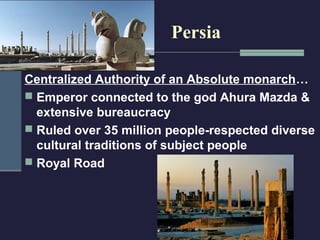
Persia

Centralized Authority of an Absolute monarch…
 Emperor connected to the god Ahura Mazda &
  extensive bureaucracy
 Ruled over 35 million people-respected diverse
  cultural traditions of subject people
 Royal Road
Political Developments-Qin & Han

Strongest central        Expansion of
  authority              bureaucracy
 *Standardization
 Economic control -     Education and
 iron, salt, and silk    examination
 trade                   system created a
                         scholar gentry
                         class of
                         government
                         workers.
 Mandate of Heaven    Dynastic Cycle
                       continued
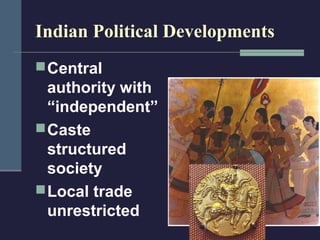
Indian Political Developments
 Central
  authority with
  “independent”
 Caste
  structured
  society
 Local trade
  unrestricted
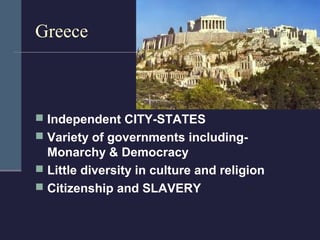
Greece


 Independent CITY-STATES
 Variety of governments including-
  Monarchy & Democracy
 Little diversity in culture and religion
 Citizenship and SLAVERY
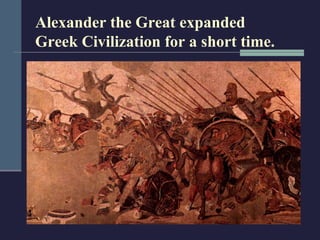
Alexander the Great expanded
Greek Civilization for a short time.
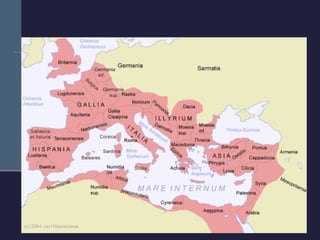
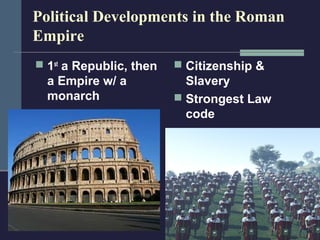
Political Developments in the Roman
Empire
 1st a Republic, then    Citizenship &
  a Empire w/ a            Slavery
  monarch                 Strongest Law
                           code
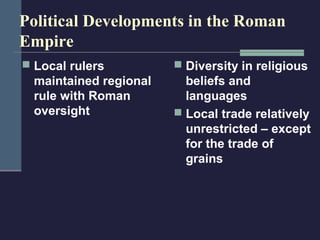
Political Developments in the Roman
Empire
 Local rulers           Diversity in religious
  maintained regional     beliefs and
  rule with Roman         languages
  oversight              Local trade relatively
                          unrestricted – except
                          for the trade of
                          grains
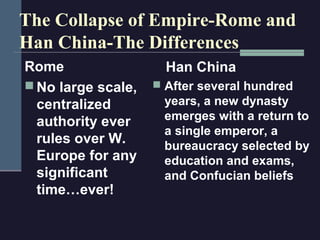
The Collapse of Empire-Rome and
Han China-The Differences
Rome                  Han China
 No large scale,    After several hundred
  centralized        years, a new dynasty
  authority ever     emerges with a return to
                     a single emperor, a
  rules over W.      bureaucracy selected by
  Europe for any     education and exams,
  significant        and Confucian beliefs
  time…ever!

Classical civs political nathan's

  • 1.
  • 2.
    The Dynasties andEmpires Greece/Alexander China  City-States of  Qin Greece  Han  Alexander’s Conquests Persian Empire Roman Empire India  Republic & Empire  Mauryan  Gupta
  • 3.
  • 4.
  • 5.
  • 6.
  • 8.
    Some Similarities…  CentralizedMonarchies  Exceptions?  Bureaucracy (administrators, tax collectors, judges, governors, etc.)  Most extensive?  Taxation  Religion reinforced political authority  Examples?
  • 9.
    Other similarities .. . Military conquest and expansion of territory.
  • 10.
     Central government sponsored public works projects
  • 11.
    Relatively unified lawcode used throughout the empires.
  • 12.
    Persia Centralized Authority ofan Absolute monarch…  Emperor connected to the god Ahura Mazda & extensive bureaucracy  Ruled over 35 million people-respected diverse cultural traditions of subject people  Royal Road
  • 14.
    Political Developments-Qin &Han Strongest central  Expansion of authority bureaucracy  *Standardization  Economic control -  Education and iron, salt, and silk examination trade system created a scholar gentry class of government workers.
  • 15.
     Mandate ofHeaven  Dynastic Cycle continued
  • 16.
    Indian Political Developments Central authority with “independent”  Caste structured society  Local trade unrestricted
  • 17.
    Greece  Independent CITY-STATES Variety of governments including- Monarchy & Democracy  Little diversity in culture and religion  Citizenship and SLAVERY
  • 18.
    Alexander the Greatexpanded Greek Civilization for a short time.
  • 20.
    Political Developments inthe Roman Empire  1st a Republic, then  Citizenship & a Empire w/ a Slavery monarch  Strongest Law code
  • 21.
    Political Developments inthe Roman Empire  Local rulers  Diversity in religious maintained regional beliefs and rule with Roman languages oversight  Local trade relatively unrestricted – except for the trade of grains
  • 22.
    The Collapse ofEmpire-Rome and Han China-The Differences Rome Han China  No large scale,  After several hundred centralized years, a new dynasty authority ever emerges with a return to a single emperor, a rules over W. bureaucracy selected by Europe for any education and exams, significant and Confucian beliefs time…ever!