Government in Ancient China
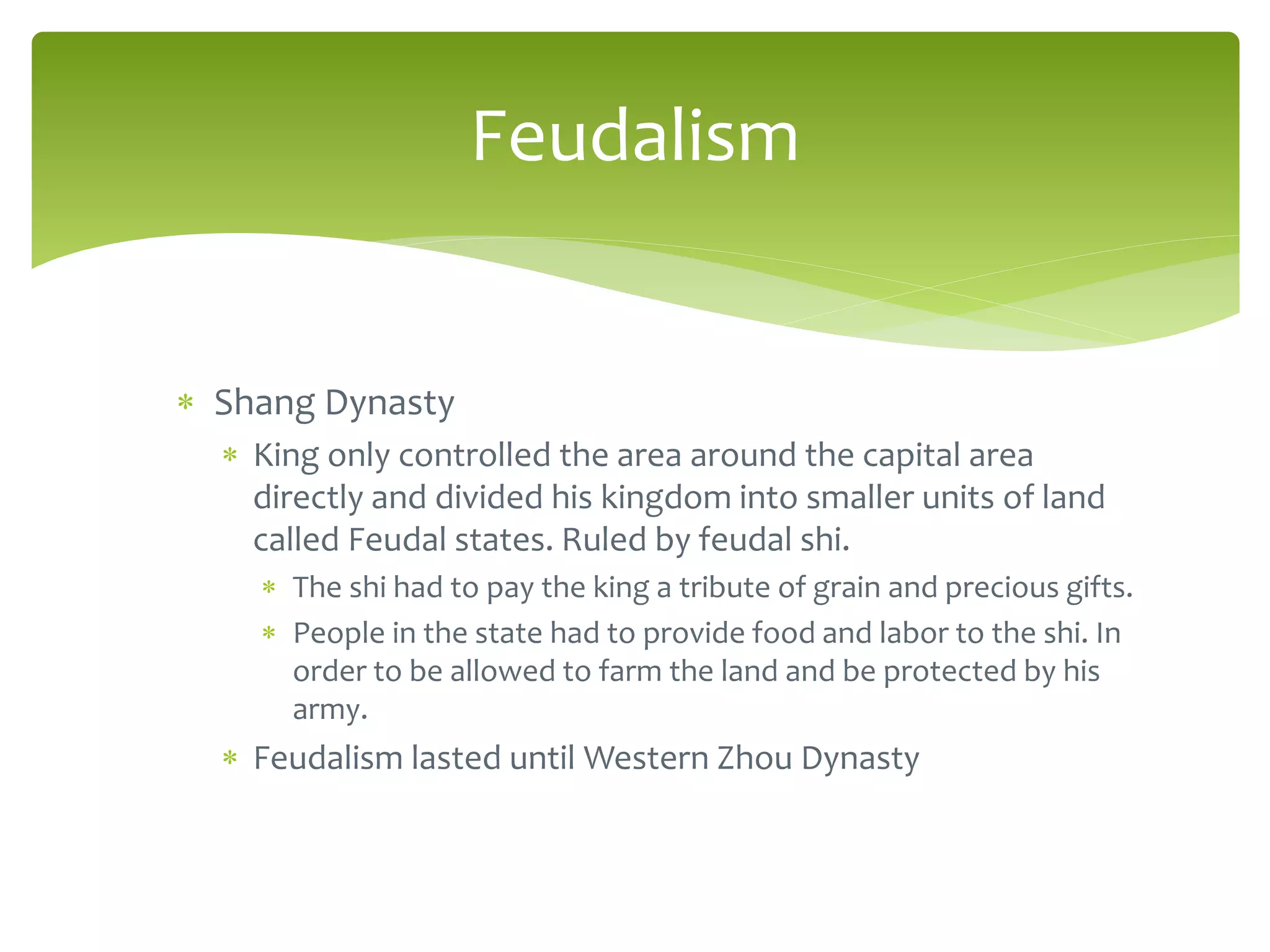
 Shang Dynasty
 King only controlled the area around the capital area
directly and divided his kingdom into smaller units of land
called Feudal states. Ruled by feudal shi.
 The shi had to pay the king a tribute of grain and precious gifts.
 People in the state had to provide food and labor to the shi. In
order to be allowed to farm the land and be protected by his
army.
 Feudalism lasted until Western Zhou Dynasty
Feudalism
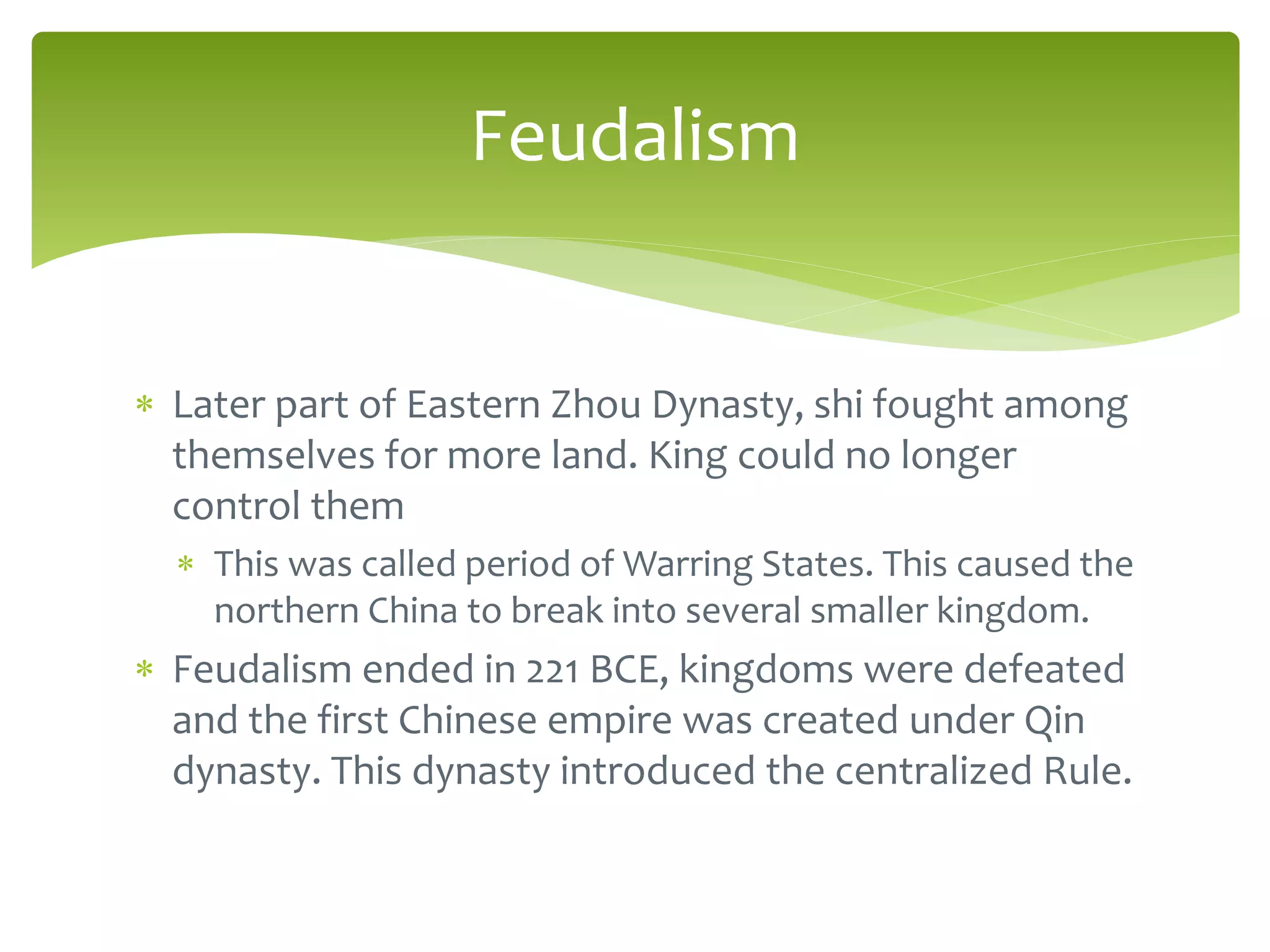
 Later part of Eastern Zhou Dynasty, shi fought among
themselves for more land. King could no longer
control them
 This was called period of Warring States. This caused the
northern China to break into several smaller kingdom.
 Feudalism ended in 221 BCE, kingdoms were defeated
and the first Chinese empire was created under Qin
dynasty. This dynasty introduced the centralized Rule.
Feudalism
Period Type of Government Key Features
Shang Dynasty
(1523 – 1027 BCE)
Feudalism Shi – Feudal states, pays
tribute to the king and
received goods. Gives
farmland and protection.
Eastern Zhou Dynasty
(771-221 BCE)
Breakdown of feudalism Period of the Warring
States. (Shi fought against
themselves)
Qin Dynasty
(221 – 206 BCE)
Unitary system of
government (centralized
rule)
Qin shihuang defeated
other shi to create China’s
first centralized empire.
From Feudalism to Centralized Rule
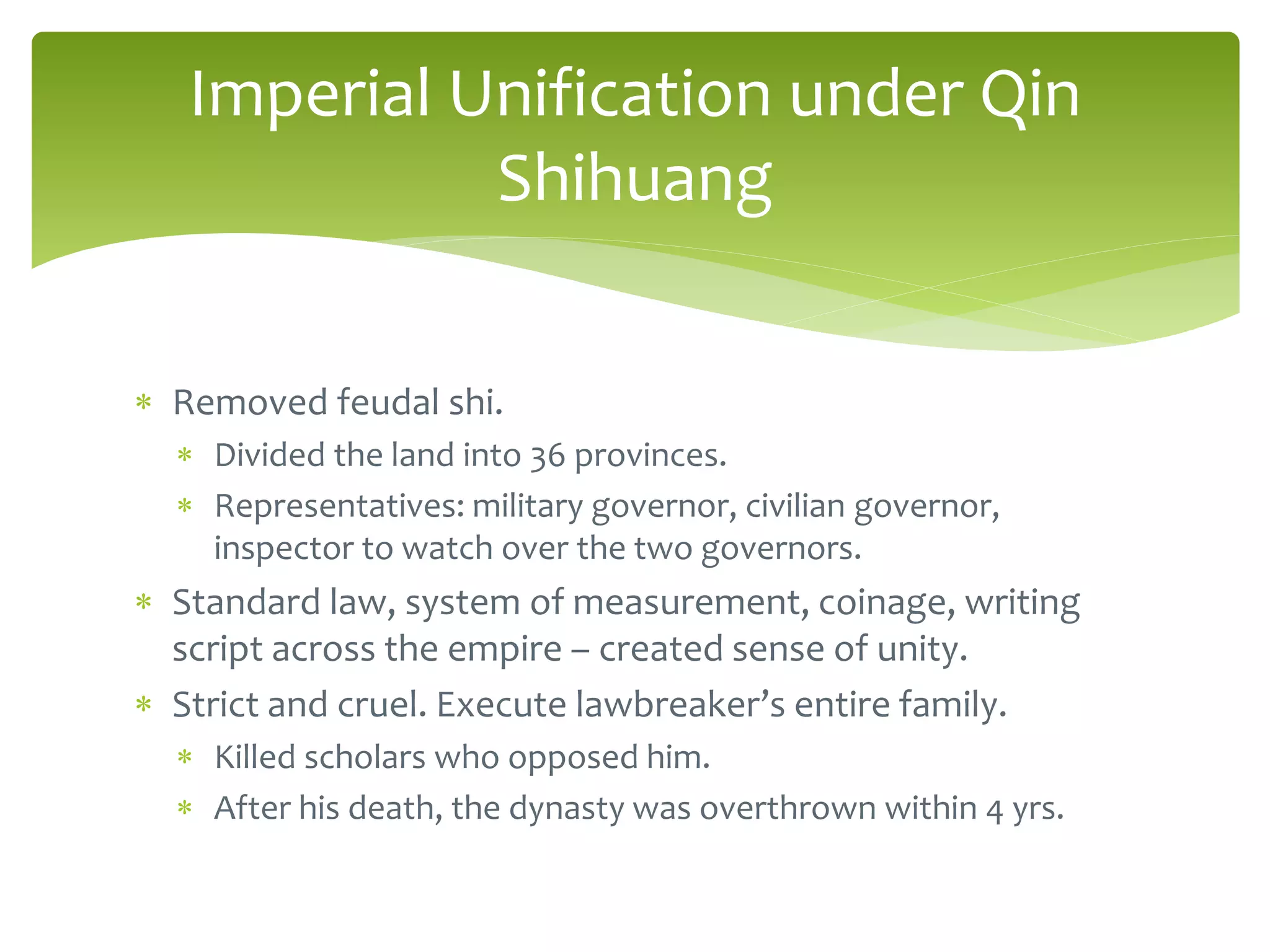
 Removed feudal shi.
 Divided the land into 36 provinces.
 Representatives: military governor, civilian governor,
inspector to watch over the two governors.
 Standard law, system of measurement, coinage, writing
script across the empire – created sense of unity.
 Strict and cruel. Execute lawbreaker’s entire family.
 Killed scholars who opposed him.
 After his death, the dynasty was overthrown within 4 yrs.
Imperial Unification under Qin
Shihuang
 Good rulers were called “Sons of Heaven”
 If he is not good. Natural disasters would be interpreted
as sign of the emperor’s losing the Mandate of Heaven
 People felt the power to overthrow the ruler and
change the government, bringing a new dynasty to
power.
Mandate of Heaven
 Before Han Dynasty, it is composed of the rich and
powerful
 Emperor Han Wudi, introduced the imperial Civil Service
examination.
 Setup the 1st imperial university in 124 BCE to teach law and
history to the candidates.
 Those who does well are given positions. They are called
scholar-officials.
 By the end of the Han Dynasty, they grew about 130,000
scholar officials.
Changes in the Civil Service
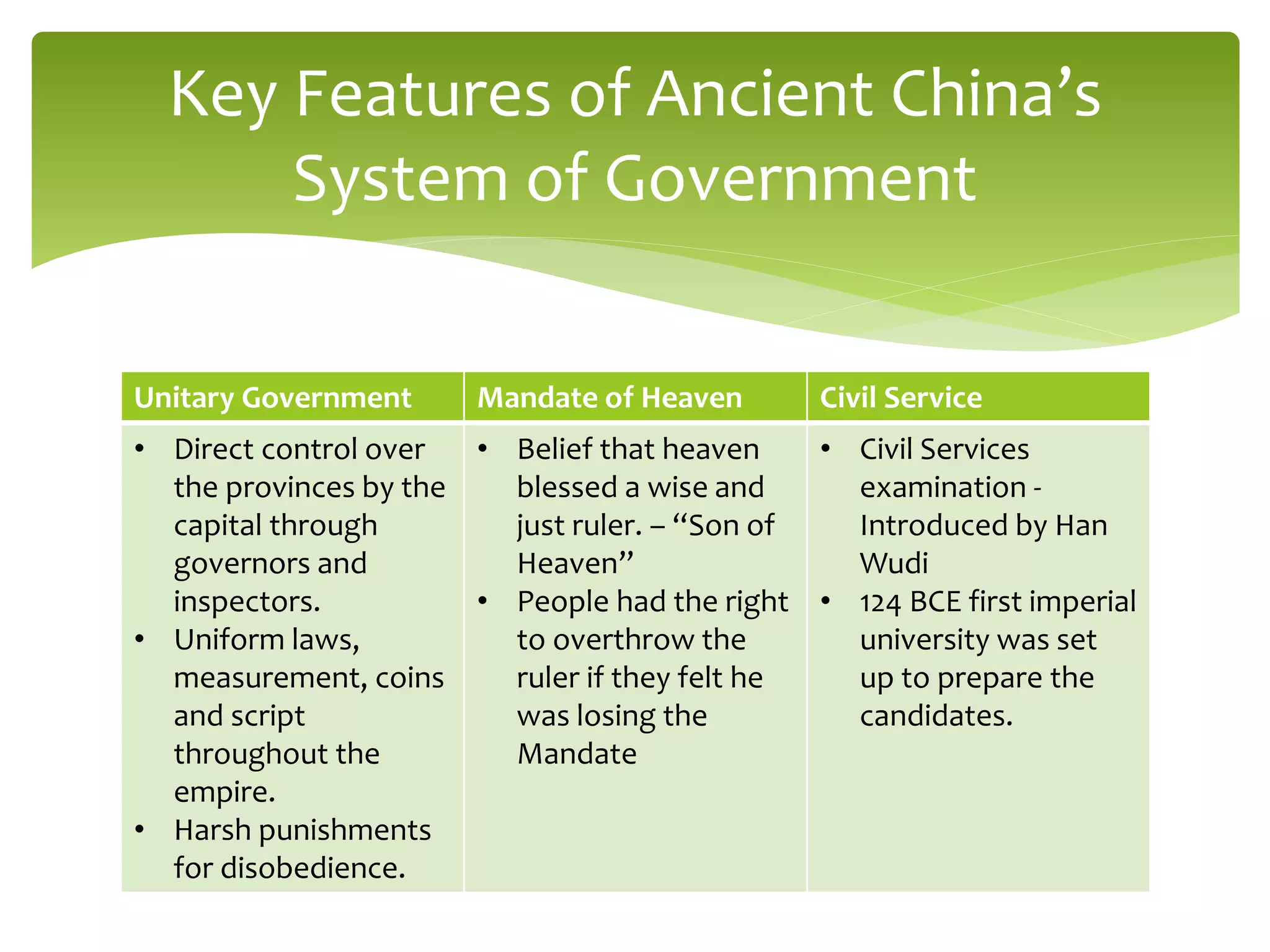
Unitary Government Mandate of Heaven Civil Service
• Direct control over
the provinces by the
capital through
governors and
inspectors.
• Uniform laws,
measurement, coins
and script
throughout the
empire.
• Harsh punishments
for disobedience.
• Belief that heaven
blessed a wise and
just ruler. – “Son of
Heaven”
• People had the right
to overthrow the
ruler if they felt he
was losing the
Mandate
• Civil Services
examination -
Introduced by Han
Wudi
• 124 BCE first imperial
university was set
up to prepare the
candidates.
Key Features of Ancient China’s
System of Government

Government in ancient china

  • 1.
  • 2.
     Shang Dynasty King only controlled the area around the capital area directly and divided his kingdom into smaller units of land called Feudal states. Ruled by feudal shi.  The shi had to pay the king a tribute of grain and precious gifts.  People in the state had to provide food and labor to the shi. In order to be allowed to farm the land and be protected by his army.  Feudalism lasted until Western Zhou Dynasty Feudalism
  • 3.
     Later partof Eastern Zhou Dynasty, shi fought among themselves for more land. King could no longer control them  This was called period of Warring States. This caused the northern China to break into several smaller kingdom.  Feudalism ended in 221 BCE, kingdoms were defeated and the first Chinese empire was created under Qin dynasty. This dynasty introduced the centralized Rule. Feudalism
  • 4.
    Period Type ofGovernment Key Features Shang Dynasty (1523 – 1027 BCE) Feudalism Shi – Feudal states, pays tribute to the king and received goods. Gives farmland and protection. Eastern Zhou Dynasty (771-221 BCE) Breakdown of feudalism Period of the Warring States. (Shi fought against themselves) Qin Dynasty (221 – 206 BCE) Unitary system of government (centralized rule) Qin shihuang defeated other shi to create China’s first centralized empire. From Feudalism to Centralized Rule
  • 5.
     Removed feudalshi.  Divided the land into 36 provinces.  Representatives: military governor, civilian governor, inspector to watch over the two governors.  Standard law, system of measurement, coinage, writing script across the empire – created sense of unity.  Strict and cruel. Execute lawbreaker’s entire family.  Killed scholars who opposed him.  After his death, the dynasty was overthrown within 4 yrs. Imperial Unification under Qin Shihuang
  • 6.
     Good rulerswere called “Sons of Heaven”  If he is not good. Natural disasters would be interpreted as sign of the emperor’s losing the Mandate of Heaven  People felt the power to overthrow the ruler and change the government, bringing a new dynasty to power. Mandate of Heaven
  • 7.
     Before HanDynasty, it is composed of the rich and powerful  Emperor Han Wudi, introduced the imperial Civil Service examination.  Setup the 1st imperial university in 124 BCE to teach law and history to the candidates.  Those who does well are given positions. They are called scholar-officials.  By the end of the Han Dynasty, they grew about 130,000 scholar officials. Changes in the Civil Service
  • 8.
    Unitary Government Mandateof Heaven Civil Service • Direct control over the provinces by the capital through governors and inspectors. • Uniform laws, measurement, coins and script throughout the empire. • Harsh punishments for disobedience. • Belief that heaven blessed a wise and just ruler. – “Son of Heaven” • People had the right to overthrow the ruler if they felt he was losing the Mandate • Civil Services examination - Introduced by Han Wudi • 124 BCE first imperial university was set up to prepare the candidates. Key Features of Ancient China’s System of Government