SECOND WAVE of European
conquests in ASIA and AFRICA
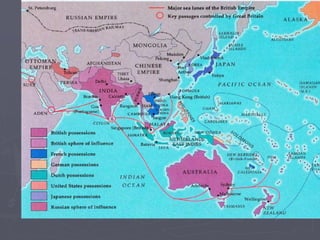
The period 1750–1900 saw a second,
distinct phase of European colonial
conquest.
It was focused on South and Southeast
Asia, Africa, and Pacific Islands
 It involved several new players like
Germany, Italy, Belgium, U.S., and Japan
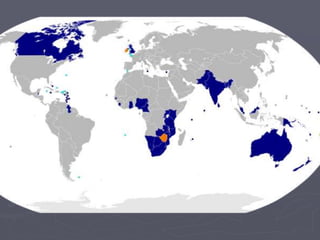
“White” Colonies
Canada, Australia, New Zealand, South
Africa
 Populated mainly by people that moved
there from Britain
 Given self-rule
“Non-white” Colonies in Asia &
Africa
 Under indirect rule
 Populated mainly by people who are native to
the area
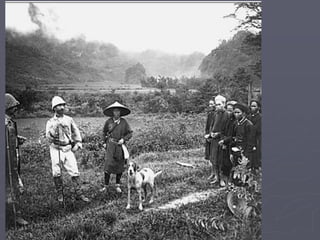
 Few people from Western nations actually live
there – but control the government
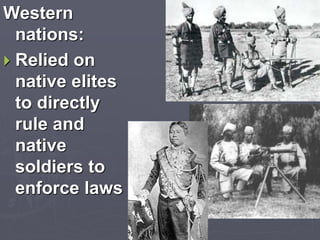
Western
nations:
 Relied on
native elites
to directly
rule and
native
soldiers to
enforce laws
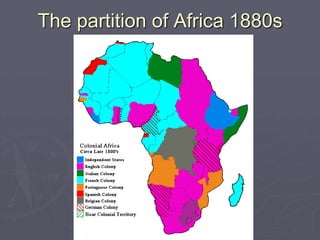
The partition of Africa 1880s
Scramble for Africa
 Berlin Conference in 1885 set rules for
European colonization of Africa
 Africans in decentralized societies w/ no
formal state structure held out the
longest against European conquest
 By 1914, 90% of Africa was under
European control
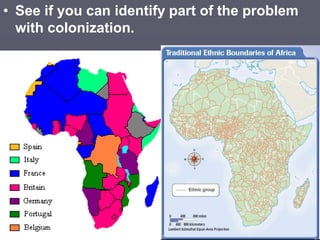
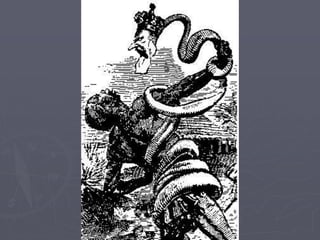
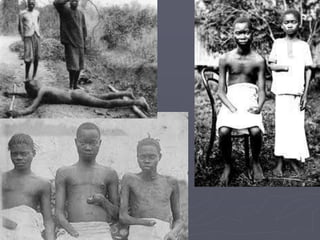
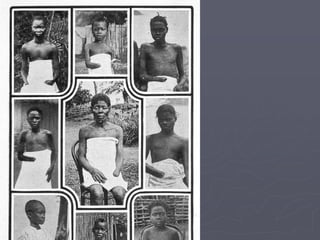
• See if you can identify part of the problem
with colonization.
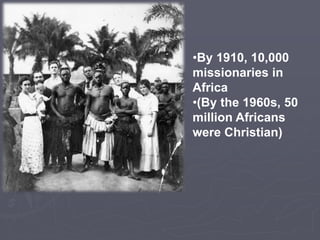
•By 1910, 10,000
missionaries in
Africa
•(By the 1960s, 50
million Africans
were Christian)
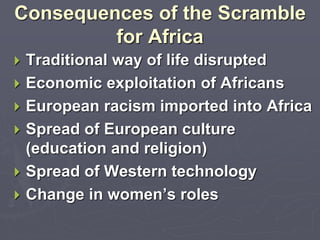
Consequences of the Scramble
for Africa
 Traditional way of life disrupted
 Economic exploitation of Africans
 European racism imported into Africa
 Spread of European culture
(education and religion)
 Spread of Western technology
 Change in women’s roles
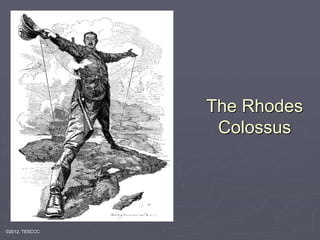
The Rhodes
Colossus
©2012, TESCCC
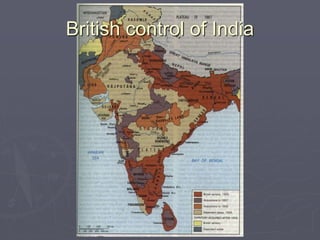
British control of India
British Imperialism in India
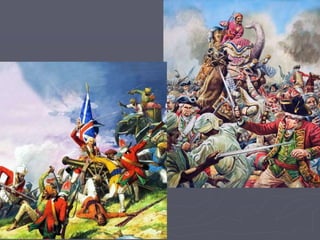
 Britain trading in India since 1600s
British East India Co. gradually took
over parts of India
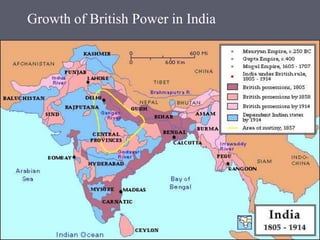
Growth of British Power in India
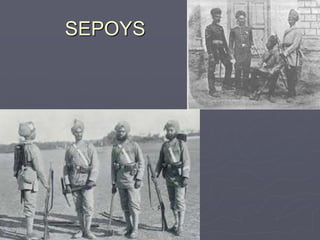
SEPOYS
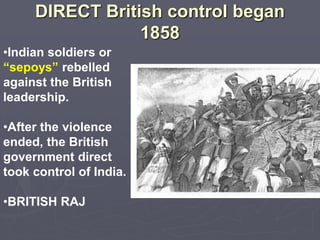
DIRECT British control began
1858
•Indian soldiers or
“sepoys” rebelled
against the British
leadership.
•After the violence
ended, the British
government direct
took control of India.
•BRITISH RAJ
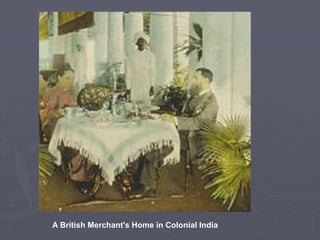
A British Merchant's Home in Colonial India
Consequences of British
Imperialism in India
 British educational system established
 Rise of educated Indian middle class -
eventually politically active
 Hinduism more “defined”
 Spread of English language
 Railroads tied India together
Question of the Day
 What was distinctive about European
colonial empires of the nineteenth century
(as opposed to earlier empires in history)?
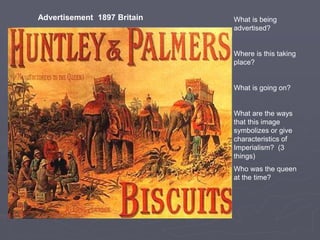
What is being
advertised?
Where is this taking
place?
What is going on?
What are the ways
that this image
symbolizes or give
characteristics of
Imperialism? (3
things)
Who was the queen
at the time?
Advertisement 1897 Britain

Imperialism second wave

  • 1.
    SECOND WAVE ofEuropean conquests in ASIA and AFRICA The period 1750–1900 saw a second, distinct phase of European colonial conquest. It was focused on South and Southeast Asia, Africa, and Pacific Islands  It involved several new players like Germany, Italy, Belgium, U.S., and Japan
  • 2.
    “White” Colonies Canada, Australia,New Zealand, South Africa  Populated mainly by people that moved there from Britain  Given self-rule
  • 4.
    “Non-white” Colonies inAsia & Africa  Under indirect rule  Populated mainly by people who are native to the area  Few people from Western nations actually live there – but control the government
  • 6.
    Western nations:  Relied on nativeelites to directly rule and native soldiers to enforce laws
  • 8.
    The partition ofAfrica 1880s
  • 9.
    Scramble for Africa Berlin Conference in 1885 set rules for European colonization of Africa  Africans in decentralized societies w/ no formal state structure held out the longest against European conquest  By 1914, 90% of Africa was under European control
  • 10.
    • See ifyou can identify part of the problem with colonization.
  • 11.
    •By 1910, 10,000 missionariesin Africa •(By the 1960s, 50 million Africans were Christian)
  • 16.
    Consequences of theScramble for Africa  Traditional way of life disrupted  Economic exploitation of Africans  European racism imported into Africa  Spread of European culture (education and religion)  Spread of Western technology  Change in women’s roles
  • 17.
  • 18.
  • 19.
    British Imperialism inIndia  Britain trading in India since 1600s British East India Co. gradually took over parts of India
  • 21.
    Growth of BritishPower in India
  • 22.
  • 24.
    DIRECT British controlbegan 1858 •Indian soldiers or “sepoys” rebelled against the British leadership. •After the violence ended, the British government direct took control of India. •BRITISH RAJ
  • 25.
    A British Merchant'sHome in Colonial India
  • 26.
    Consequences of British Imperialismin India  British educational system established  Rise of educated Indian middle class - eventually politically active  Hinduism more “defined”  Spread of English language  Railroads tied India together
  • 27.
    Question of theDay  What was distinctive about European colonial empires of the nineteenth century (as opposed to earlier empires in history)?
  • 28.
    What is being advertised? Whereis this taking place? What is going on? What are the ways that this image symbolizes or give characteristics of Imperialism? (3 things) Who was the queen at the time? Advertisement 1897 Britain