Classical China
Zhou, Qin, Han Dynasties
Chinese Dynastic Cycle
1. New family establishes dynasty (new
institutions, economy)
2. Dynasty grows weak
3. Social Divisions Increase
4. Internal rebellions and/or external
rebellions
5. New dynasty emerges
Mandate of Heaven
Belief that the gods transfer their power to a
specific family in China that is meant to
establish a dynasty and rule the region
Emperors were Sons of Heaven
The Zhou who brought Feudalism (Exchange land for
promise of taxes and military) are believed to have
introduced China to the Dynastic Cycle
Period of Warring States
402 BC - 201 BC
 After Zhou, competing interests of landowning
class and ruling class cause political turmoil
 Landowners raise own military - origins of
regional warlords
 No political unity - China is exceptionally weak
 Cultural innovations survive
 Results in new philosophies:
 Confucianism
 Daoism/Taoism
 Legalism
Confucianism
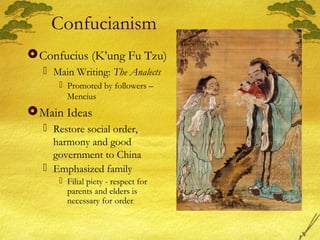
Confucius (K’ung Fu Tzu)
 Main Writing: The Analects
 Promoted by followers –
Mencius
Main Ideas
 Restore social order,
harmony and good
government to China
 Emphasized family
 Filial piety - respect for
parents and elders is
necessary for order
Confucianism
Early Zhou Dynasty was seen as perfect society
 Inferiors devoted to service
 Superiors looked after dependents
Five Basic Relationships in Society
 Ruler/Subject
 Father/Son
 Husband/Wife
 Older Brother/Younger Brother
 Friend/Friend
Chinese gentleman - education and moral standards;
birth status not important
Bureaucracy - those who help run government
 Courteous, precise, generous, just/fair
 Based on merit
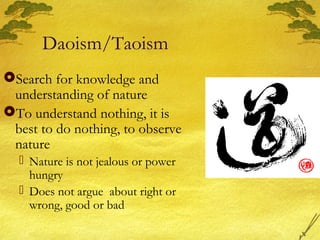
Daoism/Taoism
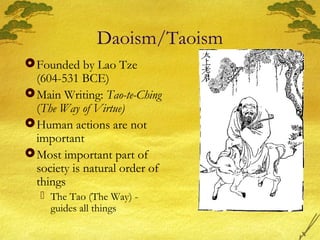
Founded by Lao Tze
(604-531 BCE)
Main Writing: Tao-te-Ching
(The Way of Virtue)
Human actions are not
important
Most important part of
society is natural order of
things
 The Tao (The Way) -
guides all things
Daoism/Taoism
Search for knowledge and
understanding of nature
To understand nothing, it is
best to do nothing, to observe
nature
 Nature is not jealous or power
hungry
 Does not argue about right or
wrong, good or bad
Legalism
Practical, political reaction to Confucianism
 Han Feizi - 3rd century BCE
Powerful and efficient government is key to
restoring order
 Laws will end civil war and restore harmony
 Rewards to good subjects and punish disobedient
 Rulers must control ideas and actions of people
 Favored by Shi Huangdi during Qin dyansty
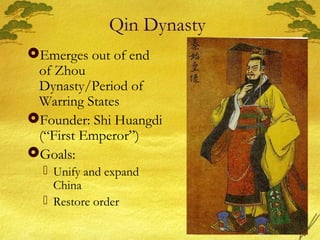
Qin Dynasty
Emerges out of end
of Zhou
Dynasty/Period of
Warring States
Founder: Shi Huangdi
(“First Emperor”)
Goals:
 Unify and expand
China
 Restore order
 Social
 Primogeniture eliminated (practice of having eldest son inherit
all property and land)
 Nobles must leave land and live in Emperor’s court
 Political
 Emperor had complete control over all aspects of society
 Use of brutality and force to accomplish goals
 Bureaucracy (not of the nobility) expanded to help control all
regions
 National census
 Single law code
 Interactions
 Army expanded to crush rivals and regional rebellions
 Expanded territory of China, including Hong Kong
 Influenced parts of Vietnam through conquest
 Expanded infrastructure to increase interactions
 Cultural
 Confucianism looked down upon and followers persecuted
 Legalism promoted
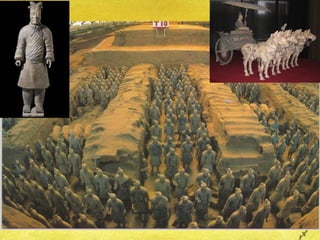
 Architectural: Initiates construction of Great Wall;
Terracotta Soldiers/Tomb of Shi Huangdi
 Uniform written language
 Banned books
 Economic
 Introduced standard weights and measures
 Eliminated the very rare practice of slavery
 Forced labor necessary for construction projects
 Extremely high taxes
 Sponsored agricultural projects (irrigation) and
manufacturing of silk
Why did the Qin Dynasty Fall?
Shi Huangdi
 Extremely paranoid; killed off suspected enemies
(nobles, intellectuals, warlords)
 Desire to control EVERYTHING
High taxes, forced labor
Shi Huangdi dies in 210 BC; followed by 8
years of peasant revolts to determine
successor - winner establishes Han Dynasty
Establishment of Han Dynasty
202 BC – 220 AD
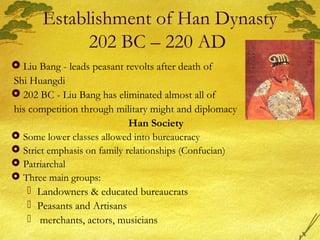
 Liu Bang - leads peasant revolts after death of
Shi Huangdi
 202 BC - Liu Bang has eliminated almost all of
his competition through military might and diplomacy
Han Society
 Some lower classes allowed into bureaucracy
 Strict emphasis on family relationships (Confucian)
 Patriarchal
 Three main groups:
 Landowners & educated bureaucrats
 Peasants and Artisans
 merchants, actors, musicians
Han Politics/Government
Centralized administration, with less brutality than Qin
dynasty
Improved bureaucracy
Focused less on military buildup
Expanded contact/trade with India and Persian
empires
 Later with Roman Empire
Emphasized Confucianism - education for bureaucrats
Wu Ti - most famous emperor (140-87 BC)
 Brought peace to much of Asia
 Expanded territory (into Korea, Vietnam and Central Asia)
 Civil Service Examination
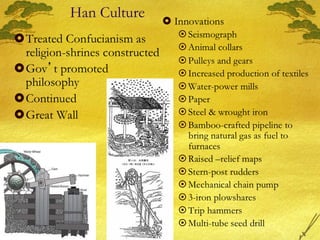
Han Culture
Han Economy
Taxes lower than Qin, but get higher as dynasty
progresses
Copper coins
Required people to work on gov’t projects
Gov’t influenced and controlled parts of economy
 Iron and Salt production
 Weights and Measures
 Trade - silk, jewelry, leather goods, agricultural goods
 Public works programs - canal systems
 Store surplus of rice and grain

6. classical china shang han

  • 1.
  • 3.
    Chinese Dynastic Cycle 1.New family establishes dynasty (new institutions, economy) 2. Dynasty grows weak 3. Social Divisions Increase 4. Internal rebellions and/or external rebellions 5. New dynasty emerges
  • 4.
    Mandate of Heaven Beliefthat the gods transfer their power to a specific family in China that is meant to establish a dynasty and rule the region Emperors were Sons of Heaven The Zhou who brought Feudalism (Exchange land for promise of taxes and military) are believed to have introduced China to the Dynastic Cycle
  • 5.
    Period of WarringStates 402 BC - 201 BC  After Zhou, competing interests of landowning class and ruling class cause political turmoil  Landowners raise own military - origins of regional warlords  No political unity - China is exceptionally weak  Cultural innovations survive  Results in new philosophies:  Confucianism  Daoism/Taoism  Legalism
  • 6.
    Confucianism Confucius (K’ung FuTzu)  Main Writing: The Analects  Promoted by followers – Mencius Main Ideas  Restore social order, harmony and good government to China  Emphasized family  Filial piety - respect for parents and elders is necessary for order
  • 7.
    Confucianism Early Zhou Dynastywas seen as perfect society  Inferiors devoted to service  Superiors looked after dependents Five Basic Relationships in Society  Ruler/Subject  Father/Son  Husband/Wife  Older Brother/Younger Brother  Friend/Friend Chinese gentleman - education and moral standards; birth status not important Bureaucracy - those who help run government  Courteous, precise, generous, just/fair  Based on merit
  • 8.
    Daoism/Taoism Founded by LaoTze (604-531 BCE) Main Writing: Tao-te-Ching (The Way of Virtue) Human actions are not important Most important part of society is natural order of things  The Tao (The Way) - guides all things
  • 9.
    Daoism/Taoism Search for knowledgeand understanding of nature To understand nothing, it is best to do nothing, to observe nature  Nature is not jealous or power hungry  Does not argue about right or wrong, good or bad
  • 10.
    Legalism Practical, political reactionto Confucianism  Han Feizi - 3rd century BCE Powerful and efficient government is key to restoring order  Laws will end civil war and restore harmony  Rewards to good subjects and punish disobedient  Rulers must control ideas and actions of people  Favored by Shi Huangdi during Qin dyansty
  • 11.
    Qin Dynasty Emerges outof end of Zhou Dynasty/Period of Warring States Founder: Shi Huangdi (“First Emperor”) Goals:  Unify and expand China  Restore order
  • 12.
     Social  Primogenitureeliminated (practice of having eldest son inherit all property and land)  Nobles must leave land and live in Emperor’s court  Political  Emperor had complete control over all aspects of society  Use of brutality and force to accomplish goals  Bureaucracy (not of the nobility) expanded to help control all regions  National census  Single law code  Interactions  Army expanded to crush rivals and regional rebellions  Expanded territory of China, including Hong Kong  Influenced parts of Vietnam through conquest  Expanded infrastructure to increase interactions
  • 13.
     Cultural  Confucianismlooked down upon and followers persecuted  Legalism promoted  Architectural: Initiates construction of Great Wall; Terracotta Soldiers/Tomb of Shi Huangdi  Uniform written language  Banned books  Economic  Introduced standard weights and measures  Eliminated the very rare practice of slavery  Forced labor necessary for construction projects  Extremely high taxes  Sponsored agricultural projects (irrigation) and manufacturing of silk
  • 15.
    Why did theQin Dynasty Fall? Shi Huangdi  Extremely paranoid; killed off suspected enemies (nobles, intellectuals, warlords)  Desire to control EVERYTHING High taxes, forced labor Shi Huangdi dies in 210 BC; followed by 8 years of peasant revolts to determine successor - winner establishes Han Dynasty
  • 16.
    Establishment of HanDynasty 202 BC – 220 AD  Liu Bang - leads peasant revolts after death of Shi Huangdi  202 BC - Liu Bang has eliminated almost all of his competition through military might and diplomacy Han Society  Some lower classes allowed into bureaucracy  Strict emphasis on family relationships (Confucian)  Patriarchal  Three main groups:  Landowners & educated bureaucrats  Peasants and Artisans  merchants, actors, musicians
  • 17.
    Han Politics/Government Centralized administration,with less brutality than Qin dynasty Improved bureaucracy Focused less on military buildup Expanded contact/trade with India and Persian empires  Later with Roman Empire Emphasized Confucianism - education for bureaucrats Wu Ti - most famous emperor (140-87 BC)  Brought peace to much of Asia  Expanded territory (into Korea, Vietnam and Central Asia)  Civil Service Examination
  • 18.
  • 19.
    Han Economy Taxes lowerthan Qin, but get higher as dynasty progresses Copper coins Required people to work on gov’t projects Gov’t influenced and controlled parts of economy  Iron and Salt production  Weights and Measures  Trade - silk, jewelry, leather goods, agricultural goods  Public works programs - canal systems  Store surplus of rice and grain