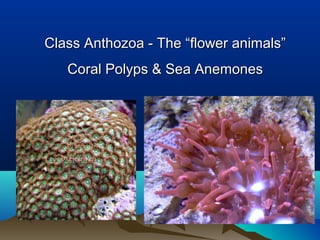
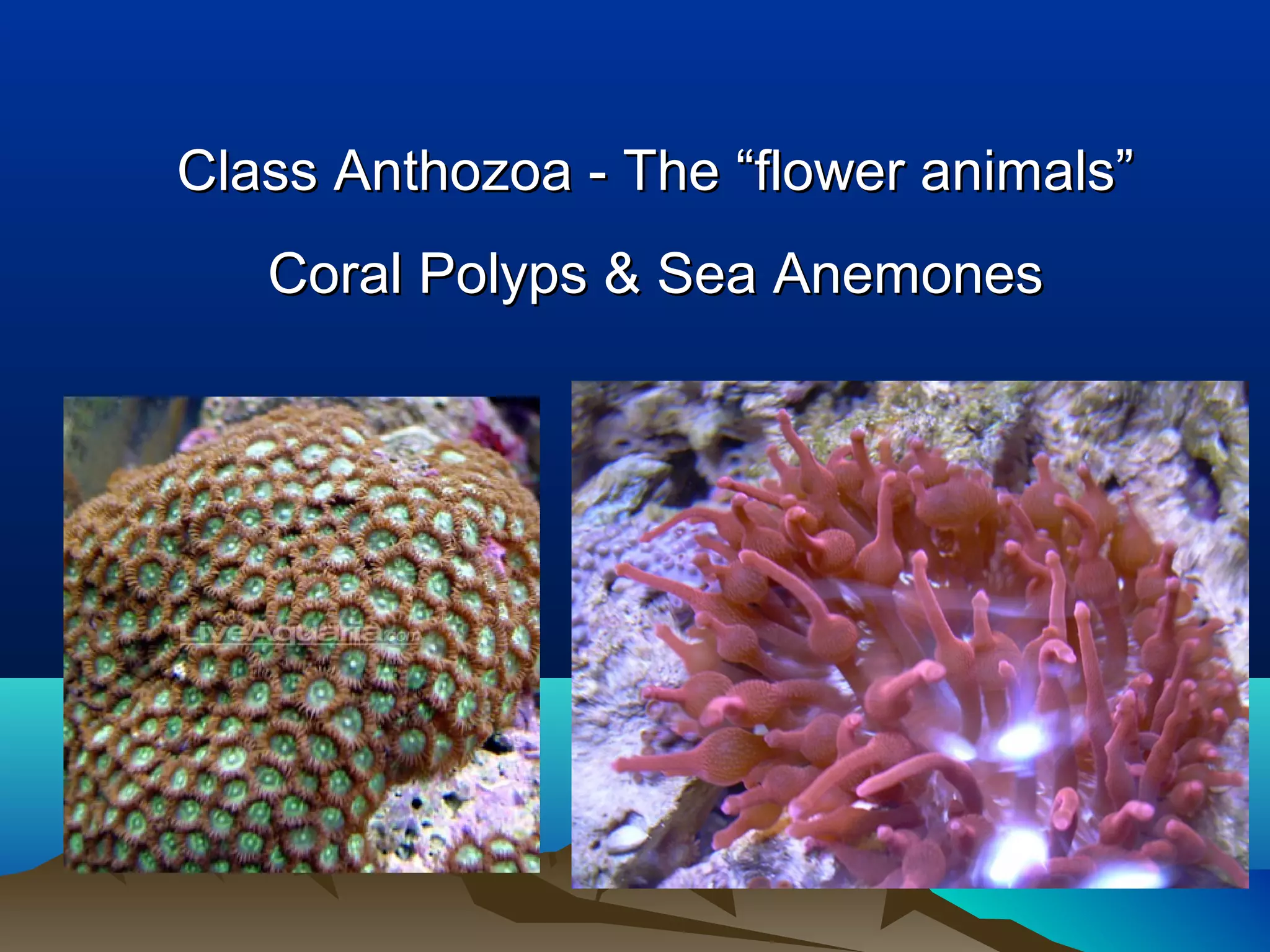
Class Anthozoa - The “flower animals”Class Anthozoa - The “flower animals”
Coral Polyps & Sea AnemonesCoral Polyps & Sea Anemones
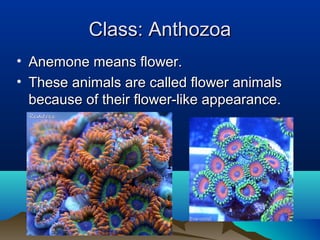
Class: AnthozoaClass: Anthozoa
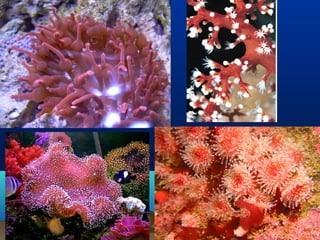
• Anemone means flower.Anemone means flower.
• These animals are called flower animalsThese animals are called flower animals
because of their flower-like appearance.because of their flower-like appearance.
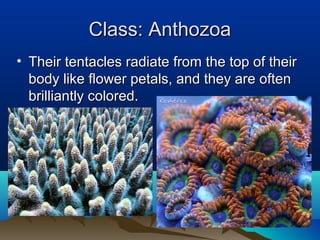
Class: AnthozoaClass: Anthozoa
• Their tentacles radiate from the top of theirTheir tentacles radiate from the top of their
body like flower petals, and they are oftenbody like flower petals, and they are often
brilliantly colored.brilliantly colored.
Coral StructureCoral Structure
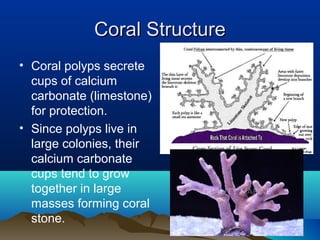
• Coral polyps secrete
cups of calcium
carbonate (limestone)
for protection.
• Since polyps live in
large colonies, their
calcium carbonate
cups tend to grow
together in large
masses forming coral
stone.
Coral StructureCoral Structure
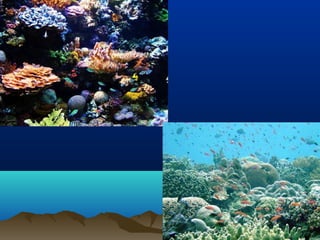
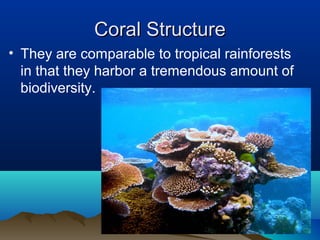
• They are comparable to tropical rainforests
in that they harbor a tremendous amount of
biodiversity.
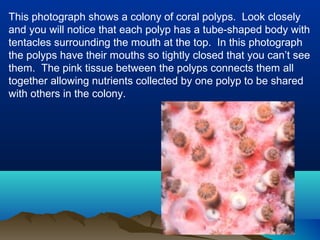
This photograph shows a colony of coral polyps. Look closely
and you will notice that each polyp has a tube-shaped body with
tentacles surrounding the mouth at the top. In this photograph
the polyps have their mouths so tightly closed that you can’t see
them. The pink tissue between the polyps connects them all
together allowing nutrients collected by one polyp to be shared
with others in the colony.
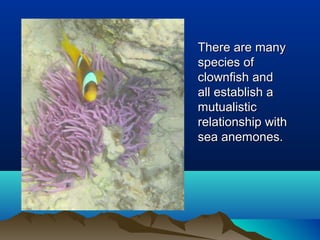
There are manyThere are many
species ofspecies of
clownfish andclownfish and
all establish aall establish a
mutualisticmutualistic
relationship withrelationship with
sea anemones.sea anemones.
FeedingFeeding
• How do most corals and anemones get
their food?
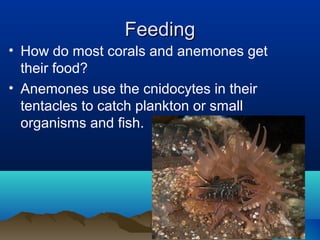
• Anemones use the cnidocytes in their
tentacles to catch plankton or small
organisms and fish.
FeedingFeeding
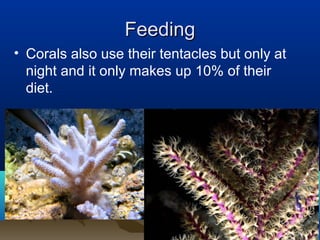
• Corals also use their tentacles but only at
night and it only makes up 10% of their
diet.
FeedingFeeding
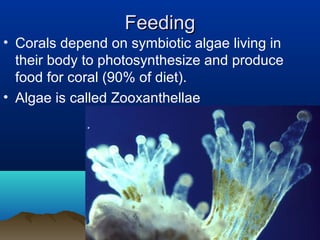
• Corals depend on symbiotic algae living in
their body to photosynthesize and produce
food for coral (90% of diet).
• Algae is called Zooxanthellae
FeedingFeeding
FeedingFeeding
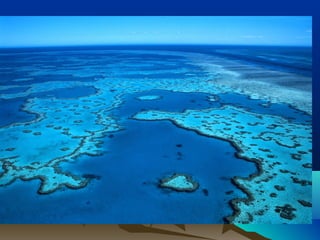
• Because zooxanthellae have to
photosynthesize …… corals can only be
found in:
• Requirements for Coral Reefs
• 1. Warm water
• 2. clear water
• 3. Shallow water

Classe anthozoa Notes

  • 1.
    Class Anthozoa -The “flower animals”Class Anthozoa - The “flower animals” Coral Polyps & Sea AnemonesCoral Polyps & Sea Anemones
  • 2.
    Class: AnthozoaClass: Anthozoa •Anemone means flower.Anemone means flower. • These animals are called flower animalsThese animals are called flower animals because of their flower-like appearance.because of their flower-like appearance.
  • 3.
    Class: AnthozoaClass: Anthozoa •Their tentacles radiate from the top of theirTheir tentacles radiate from the top of their body like flower petals, and they are oftenbody like flower petals, and they are often brilliantly colored.brilliantly colored.
  • 5.
    Coral StructureCoral Structure •Coral polyps secrete cups of calcium carbonate (limestone) for protection. • Since polyps live in large colonies, their calcium carbonate cups tend to grow together in large masses forming coral stone.
  • 8.
    Coral StructureCoral Structure •They are comparable to tropical rainforests in that they harbor a tremendous amount of biodiversity.
  • 9.
    This photograph showsa colony of coral polyps. Look closely and you will notice that each polyp has a tube-shaped body with tentacles surrounding the mouth at the top. In this photograph the polyps have their mouths so tightly closed that you can’t see them. The pink tissue between the polyps connects them all together allowing nutrients collected by one polyp to be shared with others in the colony.
  • 10.
    There are manyThereare many species ofspecies of clownfish andclownfish and all establish aall establish a mutualisticmutualistic relationship withrelationship with sea anemones.sea anemones.
  • 11.
    FeedingFeeding • How domost corals and anemones get their food? • Anemones use the cnidocytes in their tentacles to catch plankton or small organisms and fish.
  • 12.
    FeedingFeeding • Corals alsouse their tentacles but only at night and it only makes up 10% of their diet.
  • 13.
    FeedingFeeding • Corals dependon symbiotic algae living in their body to photosynthesize and produce food for coral (90% of diet). • Algae is called Zooxanthellae
  • 14.
  • 15.
    FeedingFeeding • Because zooxanthellaehave to photosynthesize …… corals can only be found in: • Requirements for Coral Reefs • 1. Warm water • 2. clear water • 3. Shallow water