• Principles of Good Teaching
Reporter:
Embiado, Jessica Alice A.
BTTE 5
• Principles of Humanistic Teaching
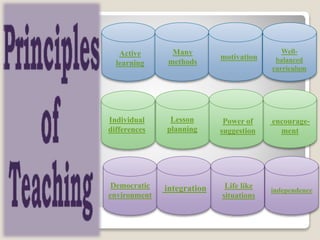
Principles
Of Good
Teaching
Active
learning
Many
methods
motivation
Well-
balanced
curriculum
Power of
suggestion
Lesson
planning
Individual
differences
encourage-
ment
Life like
situations
integrationDemocratic
environment
independence
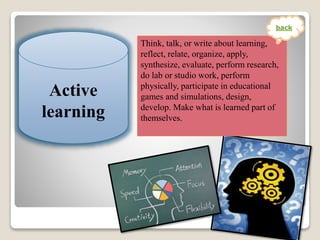
Active
learning
Think, talk, or write about learning,
reflect, relate, organize, apply,
synthesize, evaluate, perform research,
do lab or studio work, perform
physically, participate in educational
games and simulations, design,
develop. Make what is learned part of
themselves.
back
There is no single
correct way to
teach a class.Many
methods
back
Effective motivation
arises from
children’s interests,
problems, and
expressed purposes.motivation
back
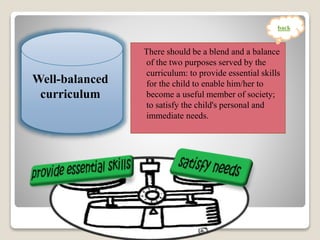
There should be a blend and a balance
of the two purposes served by the
curriculum: to provide essential skills
for the child to enable him/her to
become a useful member of society;
to satisfy the child's personal and
immediate needs.
Well-balanced
curriculum
back
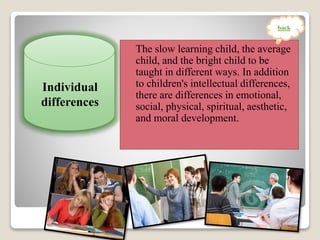
The slow learning child, the average
child, and the bright child to be
taught in different ways. In addition
to children's intellectual differences,
there are differences in emotional,
social, physical, spiritual, aesthetic,
and moral development.
Individual
differences
back
Units, lessons, and
activities should be well
planned and all
planning must be
flexible.
Lesson
planning
back
Through the power of positive
suggestion, children are willing
to undertake tasks and
procedures, which they may
have felt inadequate to tackle
before, or had not to considered.Power of
suggestion
back
Good teaching is
characterized by
daily help to the
pupils in judging
their own progress.
encourage-
ment
back
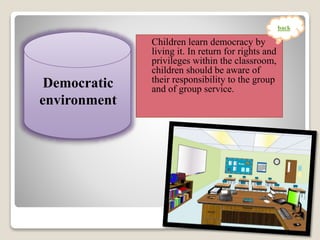
Children learn democracy by
living it. In return for rights and
privileges within the classroom,
children should be aware of
their responsibility to the group
and of group service.Democratic
environment
back
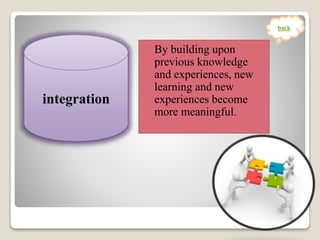
By building upon
previous knowledge
and experiences, new
learning and new
experiences become
more meaningful.
integration
back
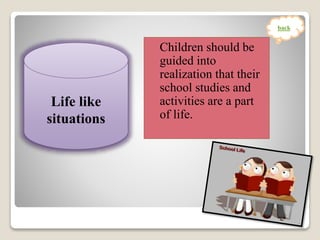
Children should be
guided into
realization that their
school studies and
activities are a part
of life.
Life like
situations
back
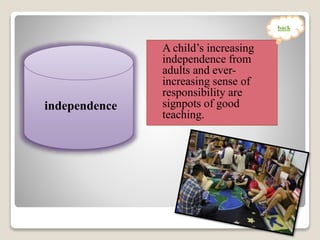
A child’s increasing
independence from
adults and ever-
increasing sense of
responsibility are
signpots of good
teaching.
independence
back
Principles of Humanistic
Teaching
 Humanistic, humanism and
humanist are terms in
psychology relating to an
approach which studies the
whole person, and the
uniqueness of each
individual.
Humanism
a method of beliefs concerned with the
needs of people and not with the religious
ideas
Approach
a method of doing something or dealing
with the problem
Humanistic Approach
A method of doing something that
concerned with the needs of people
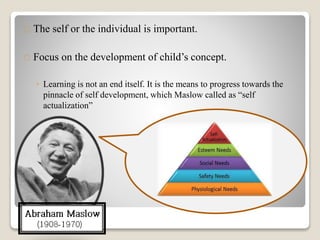
The self or the individual is important.
Focus on the development of child’s concept.
◦ Learning is not an end itself. It is the means to progress towards the
pinnacle of self development, which Maslow called as “self
actualization”
basic
principles of
humanistic
teaching
1) Students should be able to choose what they
want to learn.
 Humanistic teachers believe that students will be
motivated to learn a subject if it's something they need
and want to know.
2) The goal of education should be to foster
students' desire to learn and teach them how to
learn.
 Students should be self-motivated in their studies and
desire to learn on their own.
3) Humanistic educators believe that grades are
irrelevant and that only self-evaluation is
meaningful.
 Grading encourages students to work for a grade and not
for personal satisfaction. In addition, humanistic educators
are opposed to objective tests because they test a student's
ability to memorize and do not provide sufficient
educational feedback to the teacher and student.
4) Humanistic educators believe that both feelings and
knowledge are important to the learning process.
 Unlike traditional educators, humanistic teachers do not separate the
cognitive and affective domains.
5) Humanistic educators insist that schools need to provide
students with a non threatening environment so that they
will feel secure to learn.
 Once students feel secure, learning becomes easier and more
meaningful.
Thankyou.

principles of good and humanistic teaching

  • 1.
    • Principles ofGood Teaching Reporter: Embiado, Jessica Alice A. BTTE 5 • Principles of Humanistic Teaching
  • 2.
  • 3.
  • 4.
    Active learning Think, talk, orwrite about learning, reflect, relate, organize, apply, synthesize, evaluate, perform research, do lab or studio work, perform physically, participate in educational games and simulations, design, develop. Make what is learned part of themselves. back
  • 5.
    There is nosingle correct way to teach a class.Many methods back
  • 6.
    Effective motivation arises from children’sinterests, problems, and expressed purposes.motivation back
  • 7.
    There should bea blend and a balance of the two purposes served by the curriculum: to provide essential skills for the child to enable him/her to become a useful member of society; to satisfy the child's personal and immediate needs. Well-balanced curriculum back
  • 8.
    The slow learningchild, the average child, and the bright child to be taught in different ways. In addition to children's intellectual differences, there are differences in emotional, social, physical, spiritual, aesthetic, and moral development. Individual differences back
  • 9.
    Units, lessons, and activitiesshould be well planned and all planning must be flexible. Lesson planning back
  • 10.
    Through the powerof positive suggestion, children are willing to undertake tasks and procedures, which they may have felt inadequate to tackle before, or had not to considered.Power of suggestion back
  • 11.
    Good teaching is characterizedby daily help to the pupils in judging their own progress. encourage- ment back
  • 12.
    Children learn democracyby living it. In return for rights and privileges within the classroom, children should be aware of their responsibility to the group and of group service.Democratic environment back
  • 13.
    By building upon previousknowledge and experiences, new learning and new experiences become more meaningful. integration back
  • 14.
    Children should be guidedinto realization that their school studies and activities are a part of life. Life like situations back
  • 15.
    A child’s increasing independencefrom adults and ever- increasing sense of responsibility are signpots of good teaching. independence back
  • 16.
  • 17.
     Humanistic, humanismand humanist are terms in psychology relating to an approach which studies the whole person, and the uniqueness of each individual.
  • 18.
    Humanism a method ofbeliefs concerned with the needs of people and not with the religious ideas Approach a method of doing something or dealing with the problem Humanistic Approach A method of doing something that concerned with the needs of people
  • 19.
    The self orthe individual is important. Focus on the development of child’s concept. ◦ Learning is not an end itself. It is the means to progress towards the pinnacle of self development, which Maslow called as “self actualization”
  • 20.
  • 21.
    1) Students shouldbe able to choose what they want to learn.  Humanistic teachers believe that students will be motivated to learn a subject if it's something they need and want to know. 2) The goal of education should be to foster students' desire to learn and teach them how to learn.  Students should be self-motivated in their studies and desire to learn on their own.
  • 22.
    3) Humanistic educatorsbelieve that grades are irrelevant and that only self-evaluation is meaningful.  Grading encourages students to work for a grade and not for personal satisfaction. In addition, humanistic educators are opposed to objective tests because they test a student's ability to memorize and do not provide sufficient educational feedback to the teacher and student.
  • 23.
    4) Humanistic educatorsbelieve that both feelings and knowledge are important to the learning process.  Unlike traditional educators, humanistic teachers do not separate the cognitive and affective domains. 5) Humanistic educators insist that schools need to provide students with a non threatening environment so that they will feel secure to learn.  Once students feel secure, learning becomes easier and more meaningful.
  • 25.