Production of Citric Acid
by Fermentation
BY- SANCHIT DHANKHAR
Citric Acid
It is an intermediate in the metabolism of carbohydrates occuring in many fruits
such as limes & lemons.
These are obtained by fermentation of crude sugar or corn sugar.
Formulae: C6H8O7
Citric Acid in Pharmaceuticals:
 Citric acid found as natural constituent of a variety of fruits.
 It was first isolated in lemon juice by Sheele in 1784.
 Chemical synthesis of citric acid is also possible.
 It can also be produced by yeast and bacteria in shorter period of time.
 Today most of citric acid is produced from fungal fermentation because
this process is most competitive and economic.
Test Organism:
First time in 1917 Curie used Aspergillus Niger, a
fungus which is the organism of choice even today.
Advantages:
# it is an efficient strain.
# it can utilize cheaper raw material.
# it gives consistent and high yield.
# easy to handle.
Types of Fermentation:
1): The Surface Culture Method:
 In this sterile nutrient medium containing sugar
is allowed to flow into trays.
 The medium is then inoculated with spores of
A.niger.
Conditions: temp. = 28c to 30c
relative humidity: 40% to 60%
time period = 8 to 12 days.
After the completion of fermentation the fermented
liquid is drained off & further processed for
recovery of citric acid.
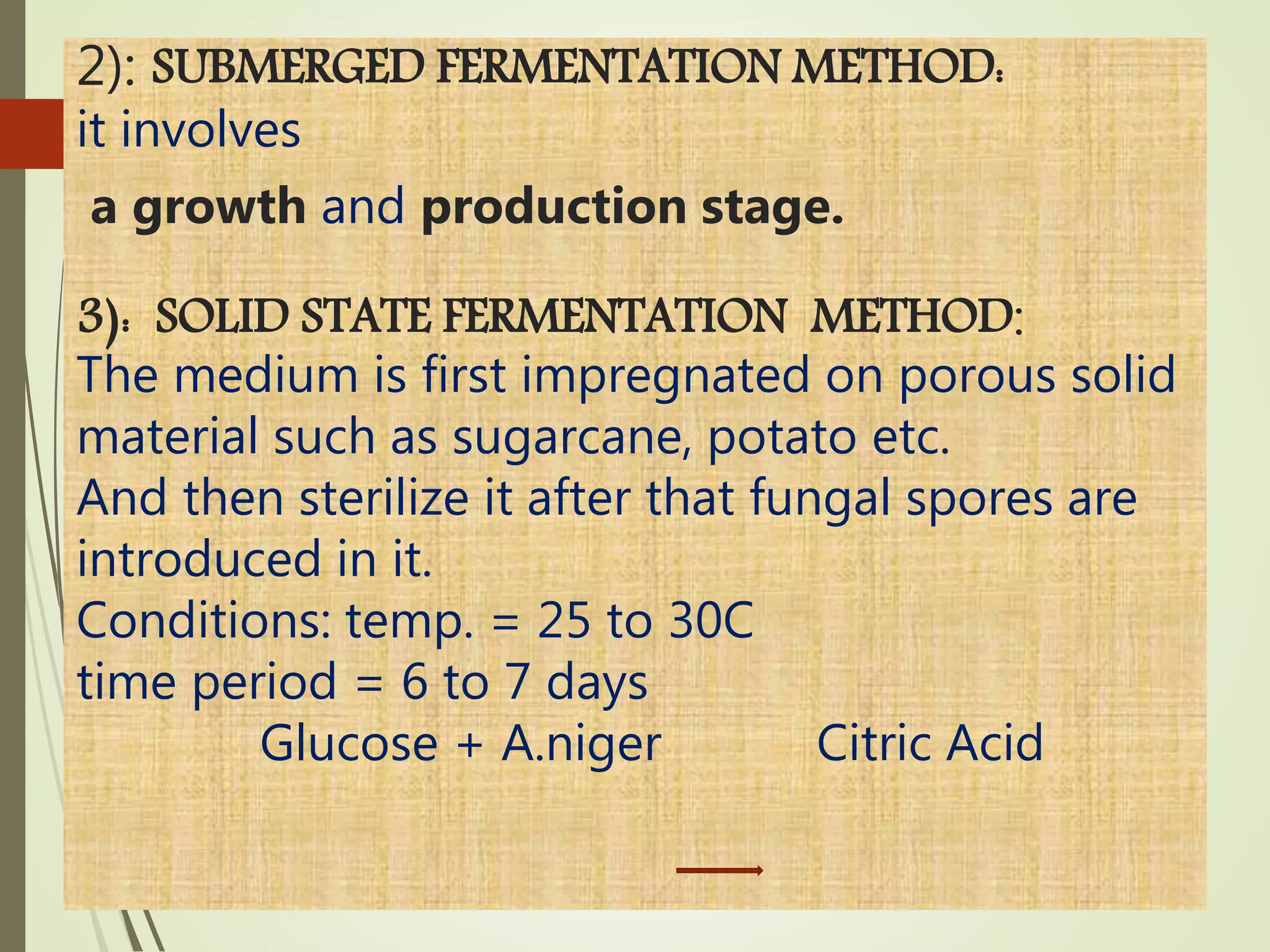
2): SUBMERGED FERMENTATION METHOD:
it involves
a growth and production stage.
3): SOLID STATE FERMENTATION METHOD:
The medium is first impregnated on porous solid
material such as sugarcane, potato etc.
And then sterilize it after that fungal spores are
introduced in it.
Conditions: temp. = 25 to 30C
time period = 6 to 7 days
Glucose + A.niger Citric Acid
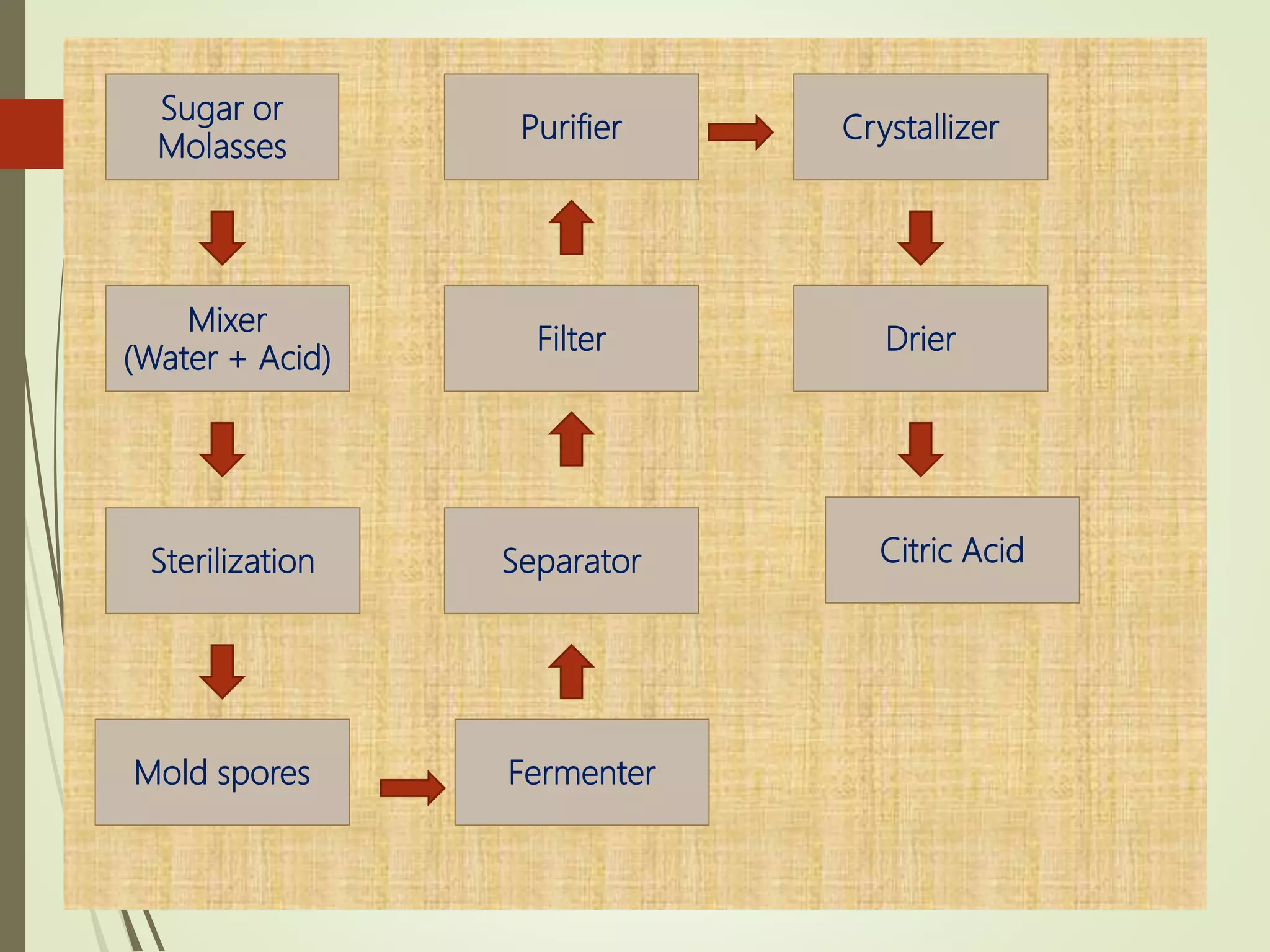
Sugar or
Molasses
Mixer
(Water + Acid)
Sterilization
Mold spores Fermenter
Citric Acid
Separator
Drier
Filter
Crystallizer
Purifier
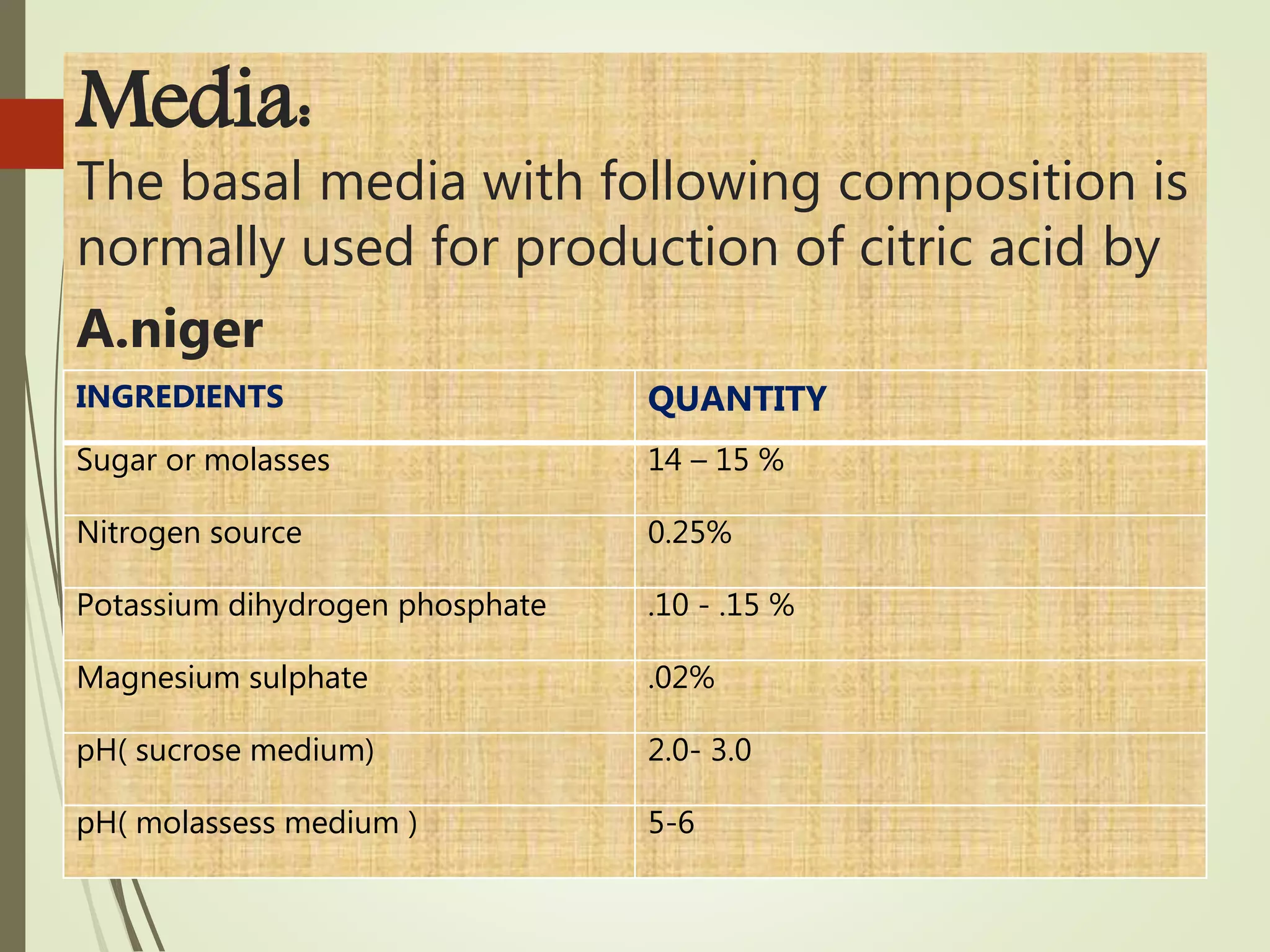
Media:
The basal media with following composition is
normally used for production of citric acid by
A.niger
INGREDIENTS QUANTITY
Sugar or molasses 14 – 15 %
Nitrogen source 0.25%
Potassium dihydrogen phosphate .10 - .15 %
Magnesium sulphate .02%
pH( sucrose medium) 2.0- 3.0
pH( molassess medium ) 5-6
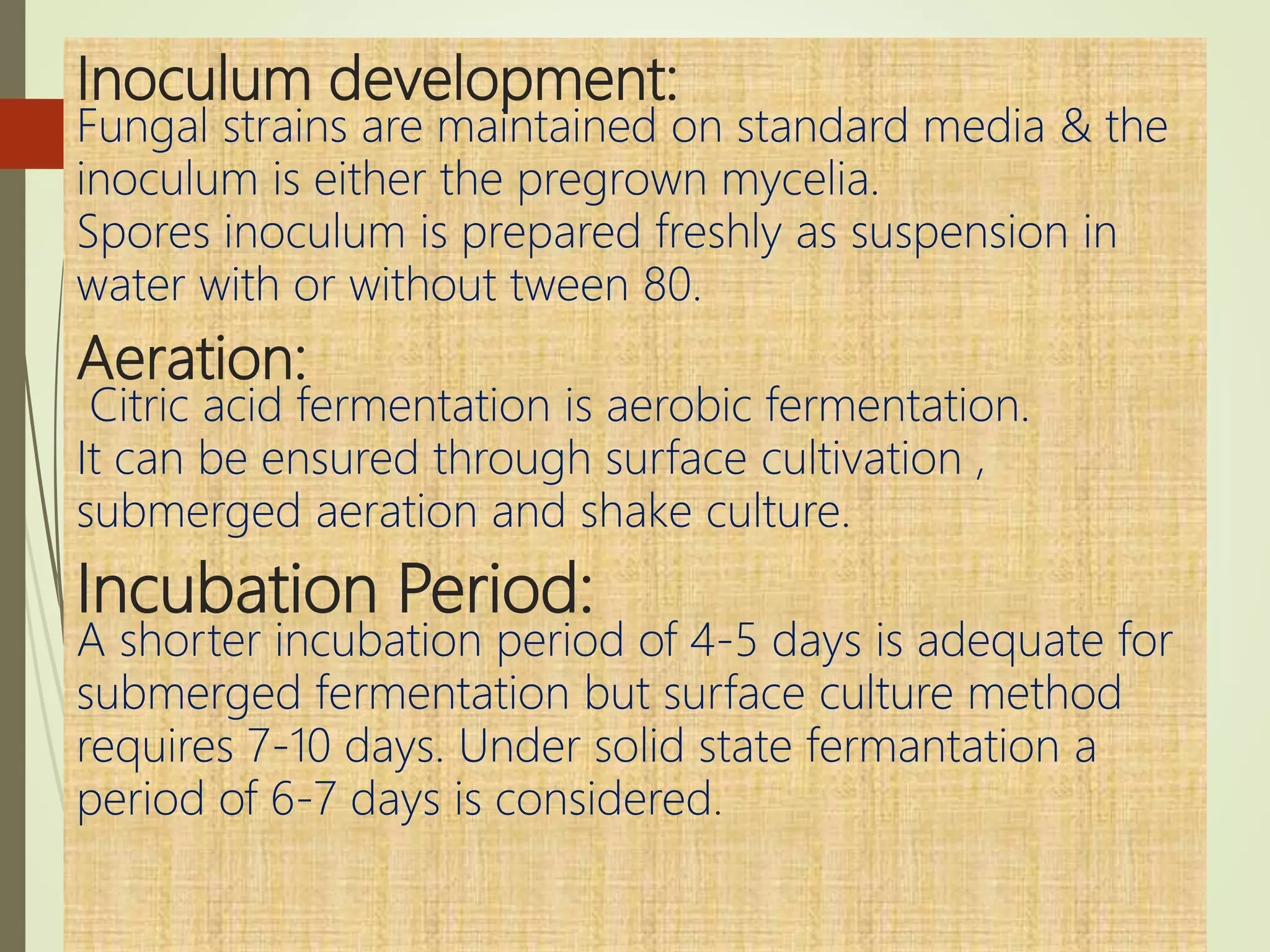
Inoculum development:
Fungal strains are maintained on standard media & the
inoculum is either the pregrown mycelia.
Spores inoculum is prepared freshly as suspension in
water with or without tween 80.
Aeration:
Citric acid fermentation is aerobic fermentation.
It can be ensured through surface cultivation ,
submerged aeration and shake culture.
Incubation Period:
A shorter incubation period of 4-5 days is adequate for
submerged fermentation but surface culture method
requires 7-10 days. Under solid state fermantation a
period of 6-7 days is considered.
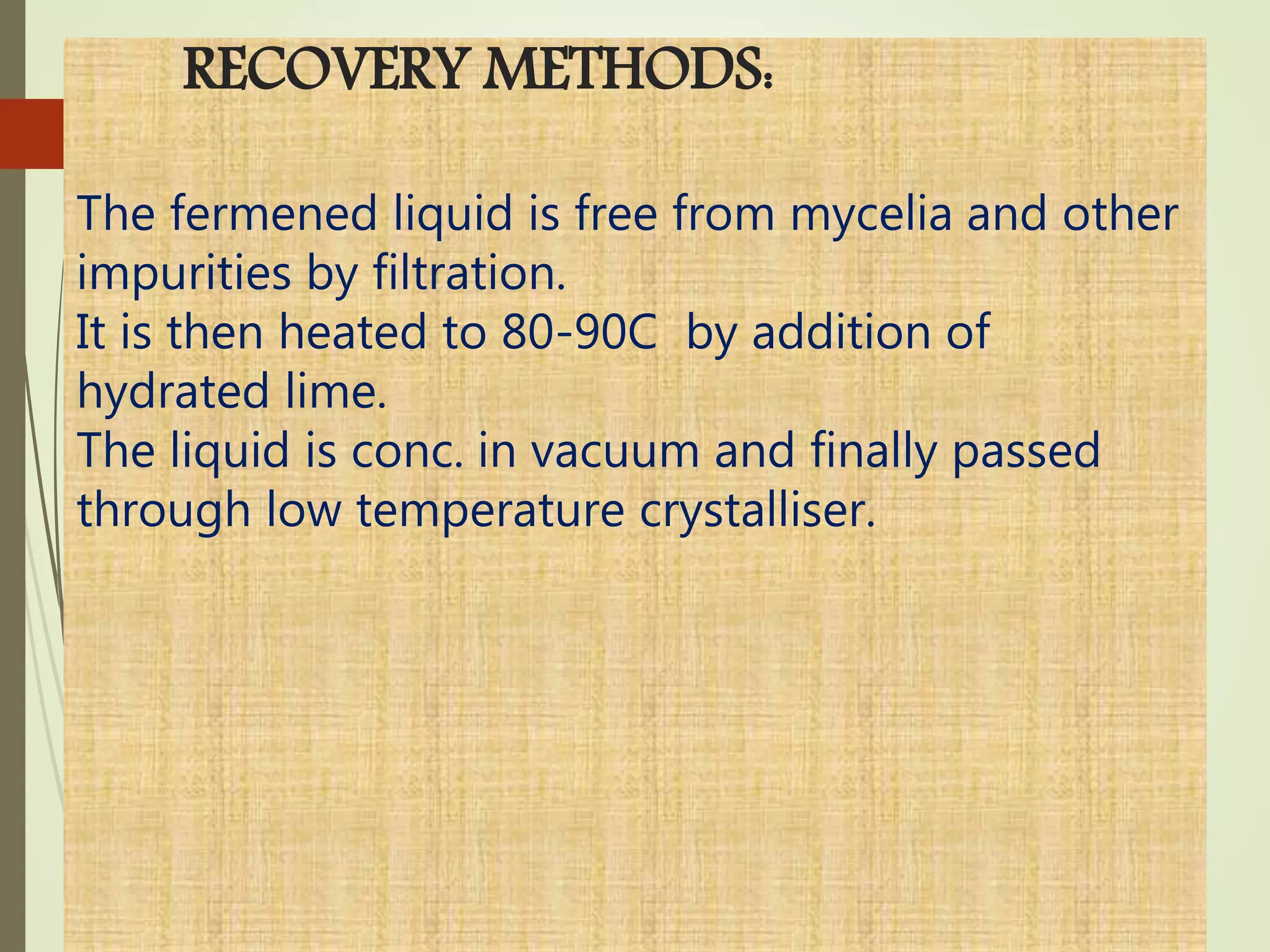
RECOVERY METHODS:
The fermened liquid is free from mycelia and other
impurities by filtration.
It is then heated to 80-90C by addition of
hydrated lime.
The liquid is conc. in vacuum and finally passed
through low temperature crystalliser.
THANKYOU

Citric Acid Fermentation- Pharmaceutical Microbiology

  • 1.
    Production of CitricAcid by Fermentation BY- SANCHIT DHANKHAR
  • 2.
    Citric Acid It isan intermediate in the metabolism of carbohydrates occuring in many fruits such as limes & lemons. These are obtained by fermentation of crude sugar or corn sugar. Formulae: C6H8O7
  • 3.
    Citric Acid inPharmaceuticals:  Citric acid found as natural constituent of a variety of fruits.  It was first isolated in lemon juice by Sheele in 1784.  Chemical synthesis of citric acid is also possible.  It can also be produced by yeast and bacteria in shorter period of time.  Today most of citric acid is produced from fungal fermentation because this process is most competitive and economic.
  • 4.
    Test Organism: First timein 1917 Curie used Aspergillus Niger, a fungus which is the organism of choice even today. Advantages: # it is an efficient strain. # it can utilize cheaper raw material. # it gives consistent and high yield. # easy to handle.
  • 5.
    Types of Fermentation: 1):The Surface Culture Method:  In this sterile nutrient medium containing sugar is allowed to flow into trays.  The medium is then inoculated with spores of A.niger. Conditions: temp. = 28c to 30c relative humidity: 40% to 60% time period = 8 to 12 days. After the completion of fermentation the fermented liquid is drained off & further processed for recovery of citric acid.
  • 6.
    2): SUBMERGED FERMENTATIONMETHOD: it involves a growth and production stage. 3): SOLID STATE FERMENTATION METHOD: The medium is first impregnated on porous solid material such as sugarcane, potato etc. And then sterilize it after that fungal spores are introduced in it. Conditions: temp. = 25 to 30C time period = 6 to 7 days Glucose + A.niger Citric Acid
  • 7.
    Sugar or Molasses Mixer (Water +Acid) Sterilization Mold spores Fermenter Citric Acid Separator Drier Filter Crystallizer Purifier
  • 8.
    Media: The basal mediawith following composition is normally used for production of citric acid by A.niger INGREDIENTS QUANTITY Sugar or molasses 14 – 15 % Nitrogen source 0.25% Potassium dihydrogen phosphate .10 - .15 % Magnesium sulphate .02% pH( sucrose medium) 2.0- 3.0 pH( molassess medium ) 5-6
  • 9.
    Inoculum development: Fungal strainsare maintained on standard media & the inoculum is either the pregrown mycelia. Spores inoculum is prepared freshly as suspension in water with or without tween 80. Aeration: Citric acid fermentation is aerobic fermentation. It can be ensured through surface cultivation , submerged aeration and shake culture. Incubation Period: A shorter incubation period of 4-5 days is adequate for submerged fermentation but surface culture method requires 7-10 days. Under solid state fermantation a period of 6-7 days is considered.
  • 10.
    RECOVERY METHODS: The fermenedliquid is free from mycelia and other impurities by filtration. It is then heated to 80-90C by addition of hydrated lime. The liquid is conc. in vacuum and finally passed through low temperature crystalliser.
  • 11.