Acute Pancreatitis
Methas Arunnart MD.
Songkhla hospital
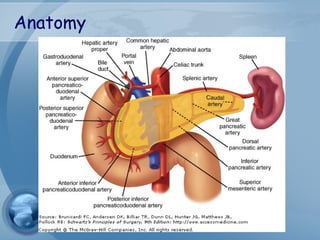
Anatomy
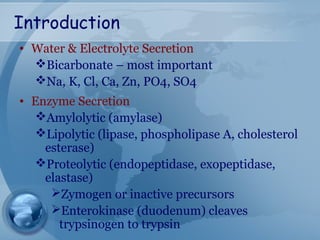
Introduction
• Water & Electrolyte Secretion
Bicarbonate – most important
Na, K, Cl, Ca, Zn, PO4, SO4
• Enzyme Secretion
Amylolytic (amylase)
Lipolytic (lipase, phospholipase A, cholesterol
esterase)
Proteolytic (endopeptidase, exopeptidase,
elastase)
Zymogen or inactive precursors
Enterokinase (duodenum) cleaves
trypsinogen to trypsin
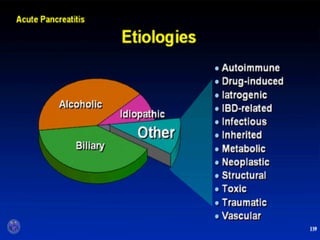
Etiology
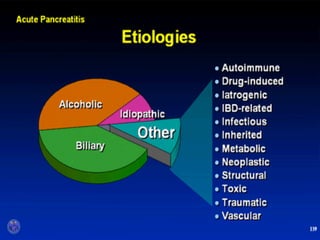
Gallstone pancreatitis
• Mechanism is not entirely clear
• Common-channel theory
“Blockage below junction of biliary and
pancreatic duct cause bile flow into
pancrease”
BUT…
– short channel that stone located would
block both biliary and pancreatic duct
–Hydrostatic pressure in biliary<pancreatic
duct
Another proposed mechanism
• Gallstone through sphincter of Oddi
renders it incompetent. – Questionable
BUT…
–transit time through sphincter??
–sphincterotomy not routine cause
pancreatitis
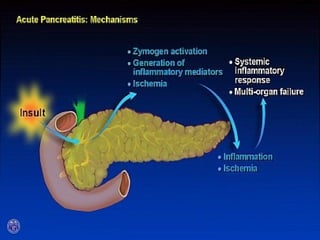
Mechanism???
• Ductal hypertension
– Cause rupture of small ducts and
leakage of pancreatic juice
– pH in pancreatic tissue ↓
– activation of protease
– “Colocalization”
Alcoholic pancreatitis
• Common in pt. alcohol drinking > 2yr.
• Often much longer upto 10 yr.
• Sphincter spasm
• Decrease pancreatic blood flow
AGA Institute
Diagnosis
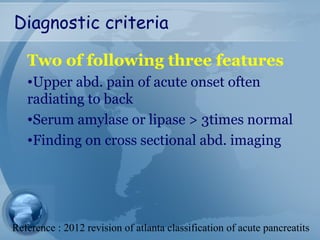
Diagnostic criteria
Two of following three features
•Upper abd. pain of acute onset often
radiating to back
•Serum amylase or lipase > 3times normal
•Finding on cross sectional abd. imaging
Reference : 2012 revision of atlanta classification of acute pancreatits
Physical exam
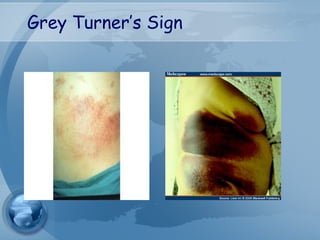
•Grey Turner’s Sign
- ecchymosis in 1 or both flanks
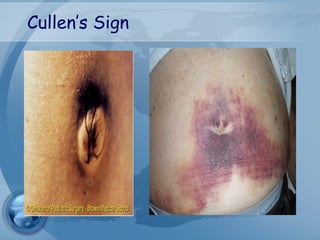
•Cullen’s sign
- ecchymosis in periumbilical area
•Associated with Necrotizing pancreatitis
• poor prognosis occurs in 1% of cases
Grey Turner’s Sign
Cullen’s Sign
Serum markers
Serum amylase
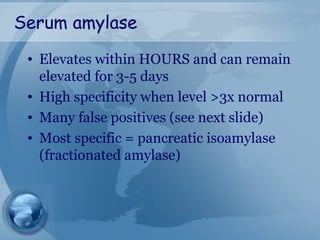
• Elevates within HOURS and can remain
elevated for 3-5 days
• High specificity when level >3x normal
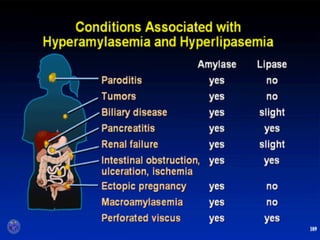
• Many false positives (see next slide)
• Most specific = pancreatic isoamylase
(fractionated amylase)
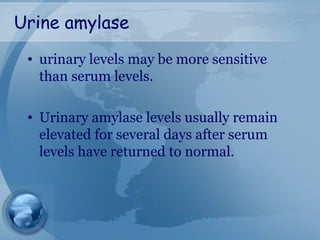
Urine amylase
• urinary levels may be more sensitive
than serum levels.
• Urinary amylase levels usually remain
elevated for several days after serum
levels have returned to normal.
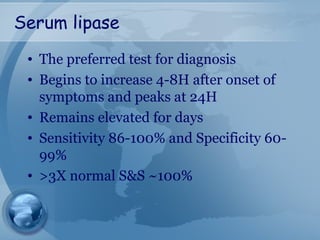
Serum lipase
• The preferred test for diagnosis
• Begins to increase 4-8H after onset of
symptoms and peaks at 24H
• Remains elevated for days
• Sensitivity 86-100% and Specificity 60-
99%
• >3X normal S&S ~100%
Slide 189
Plain Abdominal Radiograph
• Bowel ileus
• “Sentinel Loop”
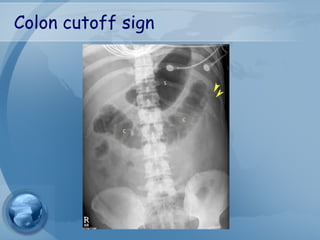
• “Colon cut off sign”
• Loss of psoas shadow
• Helps exclude other causes of
abdominal pain: bowel obstruction and
perforation
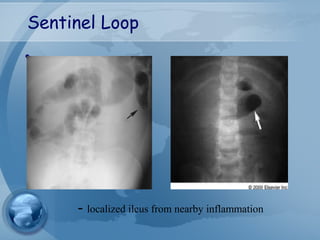
Sentinel Loop
•
- localized ileus from nearby inflammation
Colon cutoff sign
Radiologic Findings
• Plain radiographs contribute little
• Ultrasound may show the pancreas in
only 25-50%
• CT scan provides better information
–Severity and prognosis
–Exclusion of other diseases
• EUS & MRI with MRCP – cause of
pancreatitis
Assessment of severity
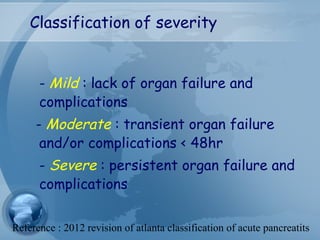
Classification of severity
- Mild : lack of organ failure and
complications
- Moderate : transient organ failure
and/or complications < 48hr
- Severe : persistent organ failure and
complications
Reference : 2012 revision of atlanta classification of acute pancreatits
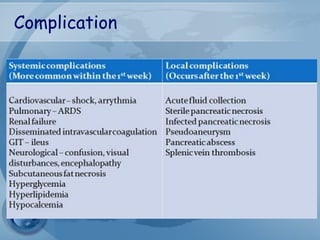
Complication
Early prognostic sign
• Ranson’s score
• APACHE II
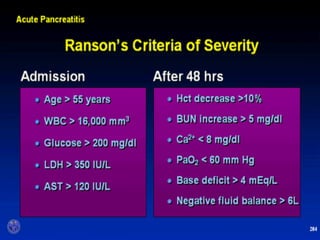
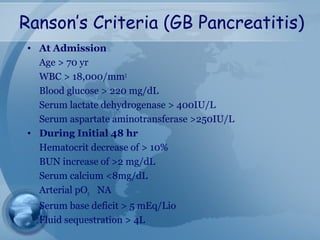
Ranson’s Criteria (GB Pancreatitis)
• At Admission
Age > 70 yr
WBC > 18,000/mm3
Blood glucose > 220 mg/dL
Serum lactate dehydrogenase > 400IU/L
Serum aspartate aminotransferase >250IU/L
• During Initial 48 hr
Hematocrit decrease of > 10%
BUN increase of >2 mg/dL
Serum calcium <8mg/dL
Arterial pO2 NA
Serum base deficit > 5 mEq/Lio
Fluid sequestration > 4L
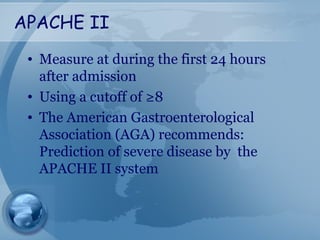
APACHE II
• Measure at during the first 24 hours
after admission
• Using a cutoff of ≥8
• The American Gastroenterological
Association (AGA) recommends:
Prediction of severe disease by the
APACHE II system
APACHE II
Biochemical marker
• CRP at 48hr
– cutoff 150mg/L
– Sens. 80%
– Spec. 76%
• TAP
• Interleukins
• ???
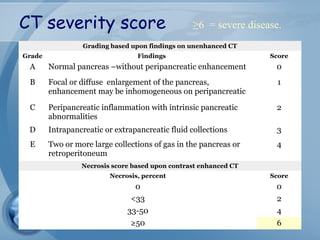
 CT severity score
Grading based upon findings on unenhanced CT
Grade Findings Score
A Normal pancreas –without peripancreatic enhancement 0
B Focal or diffuse enlargement of the pancreas,
enhancement may be inhomogeneous on peripancreatic
1
C Peripancreatic inflammation with intrinsic pancreatic
abnormalities
2
D Intrapancreatic or extrapancreatic fluid collections 3
E Two or more large collections of gas in the pancreas or
retroperitoneum
4
Necrosis score based upon contrast enhanced CT
Necrosis, percent Score
0 0
<33 2
33-50 4
≥50 6
≥6 = severe disease.
Treatment
Treatment
• General Considerations
- adequate IV hydration and analgesia
- NPO
- NG tube: not routinely used
* But may be used in patients with ileus or intractable N/V
• Nutrition
• Early enteral feeding
• Nasojejunal tube feeding
• PPN,TPN
Nutrition
• Used high protein, low fat, semi-
elemental feeding (eg, Peptamen AF)
because reduced pancreatic digestive
enzymes.
• Start at 25 cc/hr and advanced to at
least 30% of daily requirement
(25 kcal/kg IBW)
Nutrition
• Signs that the formula is not
tolerated include
- gastric residual volumes >400 cc
- vomiting (with nasogastric feeding)
- bloating
- diarrhea (>5 watery stools or >500 mL/d)
Treatment
• Metabolic Complications
- Correction of electrolyte imbalance - Ca,Mg
- Cautiously for hyperglycemia
• Cardiovascular Care
• Respiratory Care
• Deep vein thrombosis prophylaxis
Prophylactic antibiotics
–Although this is still an area of debate
–Not indicated for mild attack
–suggest imipenem or meropenem
for 14 days for patients with proven
necrosis
TREATMENT OF
ASSOCIATED CONDITIONS
• Gallstone pancreatitis
– ERCP should be performed within 72
hours in those with a high suspicion of
persistent bile duct stones
– EUS & MRCP should be considered in case
that clinical is not improving sufficiently
– Cholecystectomy +/- IOC
Cholecystectomy??
• should be performed after recovery in all
patient with gallstone pancreatitis
• Failure to perform a cholecystectomy
is associated with a 25-30% risk of recurrent
acute pancreatitis, cholecystitis, or cholangitis
within 6-18 weeks
Cholecystectomy
• In mild pancreatitis case, an usually be
performed safely within 7 days after recovery
• In severe pancreatitis case ,delaying for at
least 3 wks may be reasonable
• If high suspicion of CBD stones, preoperative
ERCP is the best test that therapeutic
intervention will be required
• If low suspicion,intraoperative cholangiogram
during cholecystectomy may be preferable to
avoid the morbidity associated with ERCP
Complication
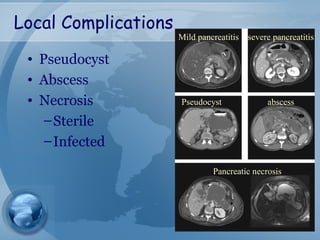
Local Complications
• Pseudocyst
• Abscess
• Necrosis
–Sterile
–Infected
Mild pancreatitis severe pancreatitis
Pseudocyst abscess
Pancreatic necrosis
New Classification Based on
Contrast-Enhanced CT (CECT)*
• Interstitial Edematous Pancreatitis
–Acute Peripancreatic Fluid Collection
–Pancreatic Pseudocyst
• Necrotizing Pancreatitis
–Acute Necrotic Collection
–Walled-Off Necrosis
Interstitial Edematous VS Necrotizing
• Interstitial Edematous Pancreatitis
– Pancreatic parenchyma enhances with the
contrast agent
– Lack of peripancreatic necrosis
• Necrotizing Pancreatitis
– Pancreatic parenchymal areas without IV
contrast enhancement +/- Peripancreatic
necrosis (see below—ANC and WON)
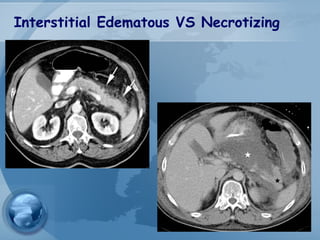
Interstitial Edematous VS Necrotizing
Acute Peripancreatic Fluid
Collection (APFC):
Occurring within the first 4 weeks in the
setting of interstitial edematous pancreatitis.
• CECT Criteria
–Homogeneous fluid adjacent to pancreas
confined by peripancreatic fascial planes
–No recognizable wall
Pancreatic Pseudocyst
• An encapsulated, well-defined collection of
fluid but no or minimal solid components
• Occurs >4 weeks after onset of in interstitial
edematous pancreatitis
• CECT Criteria
– Well-defined wall , homogeneous, round
or oval fluid collection
– No solid component
– Only in interstitial edematous pancreatitis
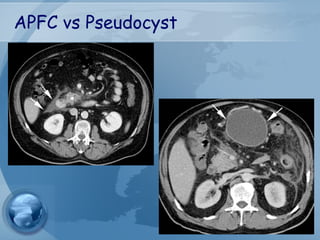
APFC vs Pseudocyst
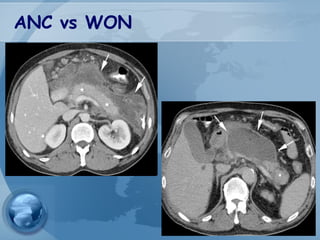
Acute Necrotic Collection(ANC)
• A collection of both fluid and solid
components (necrosis) occurring during
necrotizing pancreatitis.
• This collection can involve the pancreatic
and/or the peripancreatic tissues
• CECT Criteria
– Heterogeneous
– No encapsulating wall
– Intrapancreatic and/or extrapancreatic
Walled-Off Necrosis(WON)
• A mature, encapsulated ANC with a well-
defined inflammatory wall
• these tend to mature >4 weeks after onset of
necrotizing pancreatitis.
• CECT Criteria
– Heterogenous
– Well-defined wall
– Intrapancreatic and/or extrapancreatic
ANC vs WON
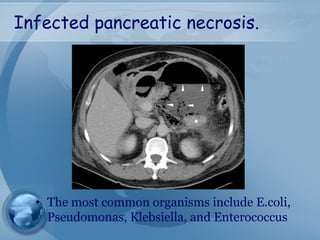
Infected pancreatic necrosis.
• The most common organisms include E.coli,
Pseudomonas, Klebsiella, and Enterococcus
Guideline management of
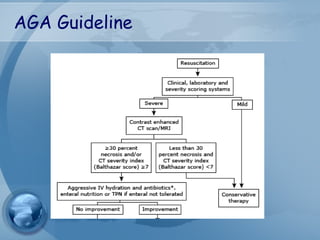
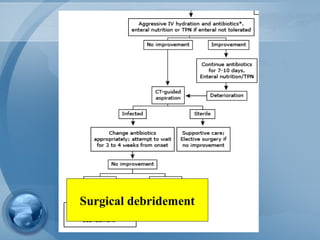
severe pancreatitis
AGA Guideline
Surgical debridement
Management of pseudocyst
• Watchful waiting:
- Operative intervention was recommended
following an observation period of 6 wks
- However, there are some reports support
more conservative approach
Management of pseudocyst
• Surgical drainage – gold standard
Open vs endoscopic
–cystgastrostomy
–Cystenterostomy
–Cystojejunostomy, Cystoduodenostomy
–Ressection
Management of pseudocyst
• Percutaneous catheter drainage
– As effective as surgery in draining and closing both
sterile and infected pseudocysts
– Catheter drainage is continued until the flow rate
falls to 5-10 mL/day
– If no reduction in flow, octreotide
(50 -200 µg SC q 8hr) may be helpful.
– Should follow-up CT scan when the flow rate is
reduced to ensure that the catheter is still in the
pseudocyst cavity
– more likely to be successful in patients
without duct-cyst communication
Management of local
complication of pancreatitis
Indication for
pancreatic debridement
• Infected pancreatic necrosis
• Symptomatic sterile pancreatic necrosis
• chronic low grade fever
• Nausea
• Lethargy
• Inability to eat
• * Fail medical treatment
Timing of debridement
• The optimal timing is at least 3-4wks
following the onset of acute pancreatitis.
• Delayed debridement allows
– clinical stabilization of the patient
– resolution of early organ failure
– decreased inflammatory reaction, and
necrotic areas are demarcated
Surgical approach
• Open debridement with external drainage
– gold standard
• Open debridement with internal drainage and
cystgastrostomy
- only appropriate for patients with WON
• Open packing
— Open packing with planned reoperation every
48-72 hrs until the necrosis is adequately removed
• Laparoscopic debridement
-Video-assisted retroperitoneal debridement
-Laparoscopically-assisted transperitoneal
debridement
Acute pancreatitis

Acute pancreatitis

  • 1.
  • 2.
  • 3.
    Introduction • Water &Electrolyte Secretion Bicarbonate – most important Na, K, Cl, Ca, Zn, PO4, SO4 • Enzyme Secretion Amylolytic (amylase) Lipolytic (lipase, phospholipase A, cholesterol esterase) Proteolytic (endopeptidase, exopeptidase, elastase) Zymogen or inactive precursors Enterokinase (duodenum) cleaves trypsinogen to trypsin
  • 4.
  • 6.
    Gallstone pancreatitis • Mechanismis not entirely clear • Common-channel theory “Blockage below junction of biliary and pancreatic duct cause bile flow into pancrease” BUT… – short channel that stone located would block both biliary and pancreatic duct –Hydrostatic pressure in biliary<pancreatic duct
  • 7.
    Another proposed mechanism •Gallstone through sphincter of Oddi renders it incompetent. – Questionable BUT… –transit time through sphincter?? –sphincterotomy not routine cause pancreatitis
  • 8.
    Mechanism??? • Ductal hypertension –Cause rupture of small ducts and leakage of pancreatic juice – pH in pancreatic tissue ↓ – activation of protease – “Colocalization”
  • 9.
    Alcoholic pancreatitis • Commonin pt. alcohol drinking > 2yr. • Often much longer upto 10 yr. • Sphincter spasm • Decrease pancreatic blood flow
  • 12.
  • 13.
  • 14.
    Diagnostic criteria Two offollowing three features •Upper abd. pain of acute onset often radiating to back •Serum amylase or lipase > 3times normal •Finding on cross sectional abd. imaging Reference : 2012 revision of atlanta classification of acute pancreatits
  • 15.
    Physical exam •Grey Turner’sSign - ecchymosis in 1 or both flanks •Cullen’s sign - ecchymosis in periumbilical area •Associated with Necrotizing pancreatitis • poor prognosis occurs in 1% of cases
  • 16.
  • 17.
  • 18.
  • 19.
    Serum amylase • Elevateswithin HOURS and can remain elevated for 3-5 days • High specificity when level >3x normal • Many false positives (see next slide) • Most specific = pancreatic isoamylase (fractionated amylase)
  • 20.
    Urine amylase • urinarylevels may be more sensitive than serum levels. • Urinary amylase levels usually remain elevated for several days after serum levels have returned to normal.
  • 21.
    Serum lipase • Thepreferred test for diagnosis • Begins to increase 4-8H after onset of symptoms and peaks at 24H • Remains elevated for days • Sensitivity 86-100% and Specificity 60- 99% • >3X normal S&S ~100%
  • 22.
  • 23.
  • 24.
    Plain Abdominal Radiograph •Bowel ileus • “Sentinel Loop” • “Colon cut off sign” • Loss of psoas shadow • Helps exclude other causes of abdominal pain: bowel obstruction and perforation
  • 25.
    Sentinel Loop • - localizedileus from nearby inflammation
  • 26.
  • 27.
    Radiologic Findings • Plainradiographs contribute little • Ultrasound may show the pancreas in only 25-50% • CT scan provides better information –Severity and prognosis –Exclusion of other diseases • EUS & MRI with MRCP – cause of pancreatitis
  • 28.
  • 29.
    Classification of severity -Mild : lack of organ failure and complications - Moderate : transient organ failure and/or complications < 48hr - Severe : persistent organ failure and complications Reference : 2012 revision of atlanta classification of acute pancreatits
  • 30.
  • 31.
    Early prognostic sign •Ranson’s score • APACHE II
  • 33.
    Ranson’s Criteria (GBPancreatitis) • At Admission Age > 70 yr WBC > 18,000/mm3 Blood glucose > 220 mg/dL Serum lactate dehydrogenase > 400IU/L Serum aspartate aminotransferase >250IU/L • During Initial 48 hr Hematocrit decrease of > 10% BUN increase of >2 mg/dL Serum calcium <8mg/dL Arterial pO2 NA Serum base deficit > 5 mEq/Lio Fluid sequestration > 4L
  • 34.
    APACHE II • Measureat during the first 24 hours after admission • Using a cutoff of ≥8 • The American Gastroenterological Association (AGA) recommends: Prediction of severe disease by the APACHE II system
  • 35.
  • 36.
    Biochemical marker • CRPat 48hr – cutoff 150mg/L – Sens. 80% – Spec. 76% • TAP • Interleukins • ???
  • 37.
     CT severity score Gradingbased upon findings on unenhanced CT Grade Findings Score A Normal pancreas –without peripancreatic enhancement 0 B Focal or diffuse enlargement of the pancreas, enhancement may be inhomogeneous on peripancreatic 1 C Peripancreatic inflammation with intrinsic pancreatic abnormalities 2 D Intrapancreatic or extrapancreatic fluid collections 3 E Two or more large collections of gas in the pancreas or retroperitoneum 4 Necrosis score based upon contrast enhanced CT Necrosis, percent Score 0 0 <33 2 33-50 4 ≥50 6 ≥6 = severe disease.
  • 38.
  • 39.
    Treatment • General Considerations -adequate IV hydration and analgesia - NPO - NG tube: not routinely used * But may be used in patients with ileus or intractable N/V • Nutrition • Early enteral feeding • Nasojejunal tube feeding • PPN,TPN
  • 40.
    Nutrition • Used highprotein, low fat, semi- elemental feeding (eg, Peptamen AF) because reduced pancreatic digestive enzymes. • Start at 25 cc/hr and advanced to at least 30% of daily requirement (25 kcal/kg IBW)
  • 41.
    Nutrition • Signs thatthe formula is not tolerated include - gastric residual volumes >400 cc - vomiting (with nasogastric feeding) - bloating - diarrhea (>5 watery stools or >500 mL/d)
  • 42.
    Treatment • Metabolic Complications -Correction of electrolyte imbalance - Ca,Mg - Cautiously for hyperglycemia • Cardiovascular Care • Respiratory Care • Deep vein thrombosis prophylaxis
  • 43.
    Prophylactic antibiotics –Although thisis still an area of debate –Not indicated for mild attack –suggest imipenem or meropenem for 14 days for patients with proven necrosis
  • 44.
    TREATMENT OF ASSOCIATED CONDITIONS •Gallstone pancreatitis – ERCP should be performed within 72 hours in those with a high suspicion of persistent bile duct stones – EUS & MRCP should be considered in case that clinical is not improving sufficiently – Cholecystectomy +/- IOC

  • 45.
    Cholecystectomy?? • should beperformed after recovery in all patient with gallstone pancreatitis • Failure to perform a cholecystectomy is associated with a 25-30% risk of recurrent acute pancreatitis, cholecystitis, or cholangitis within 6-18 weeks
  • 46.
    Cholecystectomy • In mildpancreatitis case, an usually be performed safely within 7 days after recovery • In severe pancreatitis case ,delaying for at least 3 wks may be reasonable • If high suspicion of CBD stones, preoperative ERCP is the best test that therapeutic intervention will be required • If low suspicion,intraoperative cholangiogram during cholecystectomy may be preferable to avoid the morbidity associated with ERCP
  • 47.
  • 48.
    Local Complications • Pseudocyst •Abscess • Necrosis –Sterile –Infected Mild pancreatitis severe pancreatitis Pseudocyst abscess Pancreatic necrosis
  • 49.
    New Classification Basedon Contrast-Enhanced CT (CECT)* • Interstitial Edematous Pancreatitis –Acute Peripancreatic Fluid Collection –Pancreatic Pseudocyst • Necrotizing Pancreatitis –Acute Necrotic Collection –Walled-Off Necrosis
  • 50.
    Interstitial Edematous VSNecrotizing • Interstitial Edematous Pancreatitis – Pancreatic parenchyma enhances with the contrast agent – Lack of peripancreatic necrosis • Necrotizing Pancreatitis – Pancreatic parenchymal areas without IV contrast enhancement +/- Peripancreatic necrosis (see below—ANC and WON)
  • 51.
  • 52.
    Acute Peripancreatic Fluid Collection(APFC): Occurring within the first 4 weeks in the setting of interstitial edematous pancreatitis. • CECT Criteria –Homogeneous fluid adjacent to pancreas confined by peripancreatic fascial planes –No recognizable wall
  • 53.
    Pancreatic Pseudocyst • Anencapsulated, well-defined collection of fluid but no or minimal solid components • Occurs >4 weeks after onset of in interstitial edematous pancreatitis • CECT Criteria – Well-defined wall , homogeneous, round or oval fluid collection – No solid component – Only in interstitial edematous pancreatitis
  • 54.
  • 55.
    Acute Necrotic Collection(ANC) •A collection of both fluid and solid components (necrosis) occurring during necrotizing pancreatitis. • This collection can involve the pancreatic and/or the peripancreatic tissues • CECT Criteria – Heterogeneous – No encapsulating wall – Intrapancreatic and/or extrapancreatic
  • 56.
    Walled-Off Necrosis(WON) • Amature, encapsulated ANC with a well- defined inflammatory wall • these tend to mature >4 weeks after onset of necrotizing pancreatitis. • CECT Criteria – Heterogenous – Well-defined wall – Intrapancreatic and/or extrapancreatic
  • 57.
  • 58.
    Infected pancreatic necrosis. •The most common organisms include E.coli, Pseudomonas, Klebsiella, and Enterococcus
  • 59.
  • 60.
  • 61.
  • 62.
  • 63.
    Management of pseudocyst •Watchful waiting: - Operative intervention was recommended following an observation period of 6 wks - However, there are some reports support more conservative approach
  • 64.
    Management of pseudocyst •Surgical drainage – gold standard Open vs endoscopic –cystgastrostomy –Cystenterostomy –Cystojejunostomy, Cystoduodenostomy –Ressection
  • 65.
    Management of pseudocyst •Percutaneous catheter drainage – As effective as surgery in draining and closing both sterile and infected pseudocysts – Catheter drainage is continued until the flow rate falls to 5-10 mL/day – If no reduction in flow, octreotide (50 -200 µg SC q 8hr) may be helpful. – Should follow-up CT scan when the flow rate is reduced to ensure that the catheter is still in the pseudocyst cavity – more likely to be successful in patients without duct-cyst communication
  • 66.
  • 67.
    Indication for pancreatic debridement •Infected pancreatic necrosis • Symptomatic sterile pancreatic necrosis • chronic low grade fever • Nausea • Lethargy • Inability to eat • * Fail medical treatment
  • 68.
    Timing of debridement •The optimal timing is at least 3-4wks following the onset of acute pancreatitis. • Delayed debridement allows – clinical stabilization of the patient – resolution of early organ failure – decreased inflammatory reaction, and necrotic areas are demarcated
  • 69.
    Surgical approach • Opendebridement with external drainage – gold standard • Open debridement with internal drainage and cystgastrostomy - only appropriate for patients with WON • Open packing — Open packing with planned reoperation every 48-72 hrs until the necrosis is adequately removed • Laparoscopic debridement -Video-assisted retroperitoneal debridement -Laparoscopically-assisted transperitoneal debridement

Editor's Notes

  • #7 In animal flow of bile to pancreatic duct not result in pancreatitis
  • #8 transit time through sphincter, sphincterotomy not routine cause pancreatitis
  • #9 Colocalization In normal pancreatitis , zymogen and inactive enz found in discrete organelle
  • #37 C-reactive protein (CRP) is one of the acute phase reactants made by the liver in response to interleukin-1 and interleukin-6. Its utility for predicting the severity of pancreatitis has been studied at admission and at 24, 48, and 72 hours. A review of the literature estimated that at 48 hours, it had a sensitivity, specificity, positive predictive value, and negative predictive value of 80, 76, 67, and 86 percent, respectively, using a cutoff of 150 mg/L [ 9 ]
  • #40 A benefit of enteral nutrition is its ability to maintain the intestinal barrier and prevent bacterial translocation from the gut, which may be a major cause of infection
  • #44 The ACG guidelines do not recommend. if used, should be restricted to patients with pancreatic necrosis (&gt;30 %) and continue no more than 14 d. Guidelines from the Italian Association  recommend antibiotics for patients with CT-proven necrosis
  • #49 A, Mild acute pancreatitis showing normal enhancement of the body of pancreas after intravenous contrast. B, Severe acute pancreatitis showing pancreatic necrosis with areas of the pancreas not enhancing after IV contrast compared with areas that are normal C, Pseudocyst of the pancreas with clear-appearing fluid within the collection near the pancreas. D, Pancreatic abscess with presence of gas inside the cavity. E, Pancreatic necrosis (necrotic collection), which appears on CT scan as a clear fluid collection The same collection on MRI shows areas of necrotic debris (black arrowhead) not observed on CT scan
  • #52 Pic 1 Arrows show peripancreatic stranding.
  • #64 Series of 75 patients. Surgery was undertaken only for significant abdominal pain, complications, or progressive enlargement of a cyst. 52% underwent surgery for these indications, while the remaining patients were followed conservatively. Among patients in the latter group, 60% had complete resolution at one year, and only one had a pseudocyst-related complication
  • #66 in one series of 52 patients, the mean duration of drainage was 42 days