BURST ABDOMEN
Wound Dehiscence
• Wound dehiscence is disruption of any or all of the layers
in a wound
• May occur in up to 3 per cent of abdominal wounds and is
very distressing to the patient
Burst Abdomen
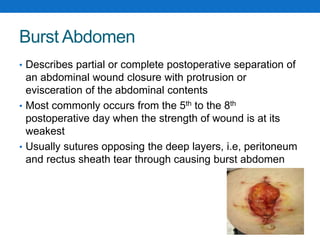
• Describes partial or complete postoperative separation of
an abdominal wound closure with protrusion or
evisceration of the abdominal contents
• Most commonly occurs from the 5th to the 8th
postoperative day when the strength of wound is at its
weakest
• Usually sutures opposing the deep layers, i.e, peritoneum
and rectus sheath tear through causing burst abdomen
PREDISPOSING
FACTORS
•Pre-operative
•Operative
•Post-operative
Pre-operative
• Any factor which predisposes to faulty or delayed healing
1. Debility & malnutrition
2. Hypoproteinaemia
3. Vit C deficiency
4. Uraemia (CRF)
5. Malignant disease
6. Prolonged steroid therapy
7. Obesity
8. Jaundice
9. Chronic cough, vomiting or bladder neck obstruction
Operative
• Any factor which means faulty technique
1. Failure to use non-absorbable sutures
2. Failure to control persistent leakage of pancreatic
enzymes in cases of pancreatic trauma, pancreatitis or
duodenal blowout
3. Failure to avoid factors which predispose to wound
infection
4. Failure to decompress grossly distended bowel in the
presence of obstruction
5. Damage to motor nerves after a subcostal or para-
rectal incision
6. Inadequate or poor closure of the wound
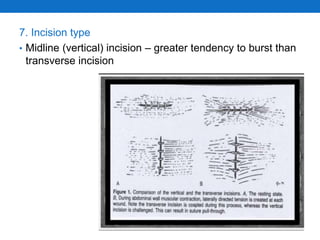
7. Incision type
• Midline (vertical) incision – greater tendency to burst than
transverse incision
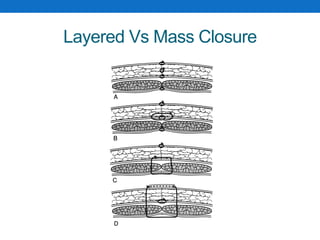
8. Closure
• Mass vs Layered Closure?
Incidence of burst – layered closure > mass closure
• Interrupted vs Continuous Sutures?
Interrupted suturing – low incidence of bursts
• Peritoneal Closure or not?
Suturing the peritoneal - not vital to prevent Burst
Abdomen
Layered Vs Mass Closure
Post-operative
1. Persistence of the pre-operative factors
2. Wound hematoma
3. Wound infection
Classification (Surgical Pathology)
1. Superficial and revealed
-occurs when the skin stitches are removed with
separation of skin and sub-cutaneous layers only
2. Deep and Concealed
-there is separation of all layers of the abdominal
wall with the exception of the skin. If not recognized while
the patient is in the hospital, the patient will develop
incisional hernia
3. Complete and revealed (Burst Abdomen)
-protrusion of a loop of bowel or a portion of an
omentum
Clinical Features
• Symptoms
1. No warning of an
impending
dehiscence
2. Nausea, fever, local
pain or discomfort
3. Popping sensation in
the wound after a
bout of straining or
coughing
• Signs
1. Serosanguinous
(pink) or blood
stained discharge
from the wound
2. Bowel or omentum
protruding through
the wound
spontaneously after
removal of sutures
3. Shock
Treatment options
•Non-operative
•Operative
Non-operative treatment
• If patient is unstable and there has been no
evisceration
• Involves either gauze packing of the wound or
covering it with a sterile occlusive dressing
• Abdominal binder may be used to support disrupted
abdominal wound
• Vacuum Assisted Closure (VAC)
• Used in 10% of total patients
• Significantly reduces post operative infection
• Reduces the uses of antibiotics prescriptions
• Can be safely used in patients using anti-coagulants
• Wound may subsequently contract to closure or if the
patient’s condition improves, delayed operative closure
may be performed
Operative Treatment
• Resuscitation if shock (+)
• Reassurance
• Appropriate analgesics
• Nothing by mouth
• Nasogastric tube insertion and suction
• Antibiotic
• Cover the wound with sterile towel and transfer to
OT
• Emergency operation for replacement of bowel
and re-suturing of wound
Operative Procedure
• Each coils of intestine are washed with normal saline
gently and thoroughly
• Return to abdominal cavity
• Clean the abdominal wall
• Re-approximated with through and through monofilament
nylon
• Buttressed by tension suture
• Abdominal wall is supported by many-tail bandage,
Adhesive plaster
• Post-operative - General build-up
- Treat/Avoid Predisposing
factors
Prevention
Preoperative
• Correct the precipitating factors
• Manage causes of increased intra-abdominal
pressure
• Omit medications like steroids if possible
• Prophylactic antibiotics
• GI decompression (Ryle’s tube suction) in case of
intestinal obstruction
Per-operative
• Reduce septic load –peritoneal toilet
• Choice of suture –non-absorbable suture for
wound closure
• Tension free closure
• Follow Jenkin’s rule in closing midline laparotomy
wound
• Mass closure technique (include peritoneum + rectus sheath in
closure)
• Continuous suture
• Suture should be FOUR times the length of the incision and bites
should be taken 1cm from the wound edge at 1cm intervals
• Good surgical technique and principles
Post-operative
• Prevention of wound sepsis
• Manage causes of increased intra-abdominal
pressure and GI distension
• Urgent recognition and treatment of wound
dehiscence
• Follow-up
THANK YOU

Burst abdomen

  • 1.
  • 2.
    Wound Dehiscence • Wounddehiscence is disruption of any or all of the layers in a wound • May occur in up to 3 per cent of abdominal wounds and is very distressing to the patient
  • 3.
    Burst Abdomen • Describespartial or complete postoperative separation of an abdominal wound closure with protrusion or evisceration of the abdominal contents • Most commonly occurs from the 5th to the 8th postoperative day when the strength of wound is at its weakest • Usually sutures opposing the deep layers, i.e, peritoneum and rectus sheath tear through causing burst abdomen
  • 4.
  • 5.
    Pre-operative • Any factorwhich predisposes to faulty or delayed healing 1. Debility & malnutrition 2. Hypoproteinaemia 3. Vit C deficiency 4. Uraemia (CRF) 5. Malignant disease 6. Prolonged steroid therapy 7. Obesity 8. Jaundice 9. Chronic cough, vomiting or bladder neck obstruction
  • 6.
    Operative • Any factorwhich means faulty technique 1. Failure to use non-absorbable sutures 2. Failure to control persistent leakage of pancreatic enzymes in cases of pancreatic trauma, pancreatitis or duodenal blowout 3. Failure to avoid factors which predispose to wound infection 4. Failure to decompress grossly distended bowel in the presence of obstruction 5. Damage to motor nerves after a subcostal or para- rectal incision 6. Inadequate or poor closure of the wound
  • 7.
    7. Incision type •Midline (vertical) incision – greater tendency to burst than transverse incision
  • 8.
    8. Closure • Massvs Layered Closure? Incidence of burst – layered closure > mass closure • Interrupted vs Continuous Sutures? Interrupted suturing – low incidence of bursts • Peritoneal Closure or not? Suturing the peritoneal - not vital to prevent Burst Abdomen
  • 9.
  • 11.
    Post-operative 1. Persistence ofthe pre-operative factors 2. Wound hematoma 3. Wound infection
  • 12.
    Classification (Surgical Pathology) 1.Superficial and revealed -occurs when the skin stitches are removed with separation of skin and sub-cutaneous layers only 2. Deep and Concealed -there is separation of all layers of the abdominal wall with the exception of the skin. If not recognized while the patient is in the hospital, the patient will develop incisional hernia 3. Complete and revealed (Burst Abdomen) -protrusion of a loop of bowel or a portion of an omentum
  • 13.
    Clinical Features • Symptoms 1.No warning of an impending dehiscence 2. Nausea, fever, local pain or discomfort 3. Popping sensation in the wound after a bout of straining or coughing • Signs 1. Serosanguinous (pink) or blood stained discharge from the wound 2. Bowel or omentum protruding through the wound spontaneously after removal of sutures 3. Shock
  • 14.
  • 15.
    Non-operative treatment • Ifpatient is unstable and there has been no evisceration • Involves either gauze packing of the wound or covering it with a sterile occlusive dressing
  • 16.
    • Abdominal bindermay be used to support disrupted abdominal wound
  • 17.
    • Vacuum AssistedClosure (VAC) • Used in 10% of total patients • Significantly reduces post operative infection • Reduces the uses of antibiotics prescriptions • Can be safely used in patients using anti-coagulants
  • 18.
    • Wound maysubsequently contract to closure or if the patient’s condition improves, delayed operative closure may be performed
  • 19.
    Operative Treatment • Resuscitationif shock (+) • Reassurance • Appropriate analgesics • Nothing by mouth • Nasogastric tube insertion and suction • Antibiotic • Cover the wound with sterile towel and transfer to OT • Emergency operation for replacement of bowel and re-suturing of wound
  • 20.
    Operative Procedure • Eachcoils of intestine are washed with normal saline gently and thoroughly • Return to abdominal cavity • Clean the abdominal wall • Re-approximated with through and through monofilament nylon • Buttressed by tension suture • Abdominal wall is supported by many-tail bandage, Adhesive plaster • Post-operative - General build-up - Treat/Avoid Predisposing factors
  • 21.
    Prevention Preoperative • Correct theprecipitating factors • Manage causes of increased intra-abdominal pressure • Omit medications like steroids if possible • Prophylactic antibiotics • GI decompression (Ryle’s tube suction) in case of intestinal obstruction
  • 22.
    Per-operative • Reduce septicload –peritoneal toilet • Choice of suture –non-absorbable suture for wound closure • Tension free closure • Follow Jenkin’s rule in closing midline laparotomy wound • Mass closure technique (include peritoneum + rectus sheath in closure) • Continuous suture • Suture should be FOUR times the length of the incision and bites should be taken 1cm from the wound edge at 1cm intervals • Good surgical technique and principles
  • 23.
    Post-operative • Prevention ofwound sepsis • Manage causes of increased intra-abdominal pressure and GI distension • Urgent recognition and treatment of wound dehiscence • Follow-up
  • 24.