Chemical control of pest management
Prepared by:
Ladines Myla
Maloles Carmina
Masicap Jerico
Matoy Khcarla May
Mendoza Cill Bryan
Introduction
• Pest control
• Perceived to be detrimental to a person's health, the ecology
or the economy.
• Various methods of pest control
• Non chemical methods
• Chemical methods
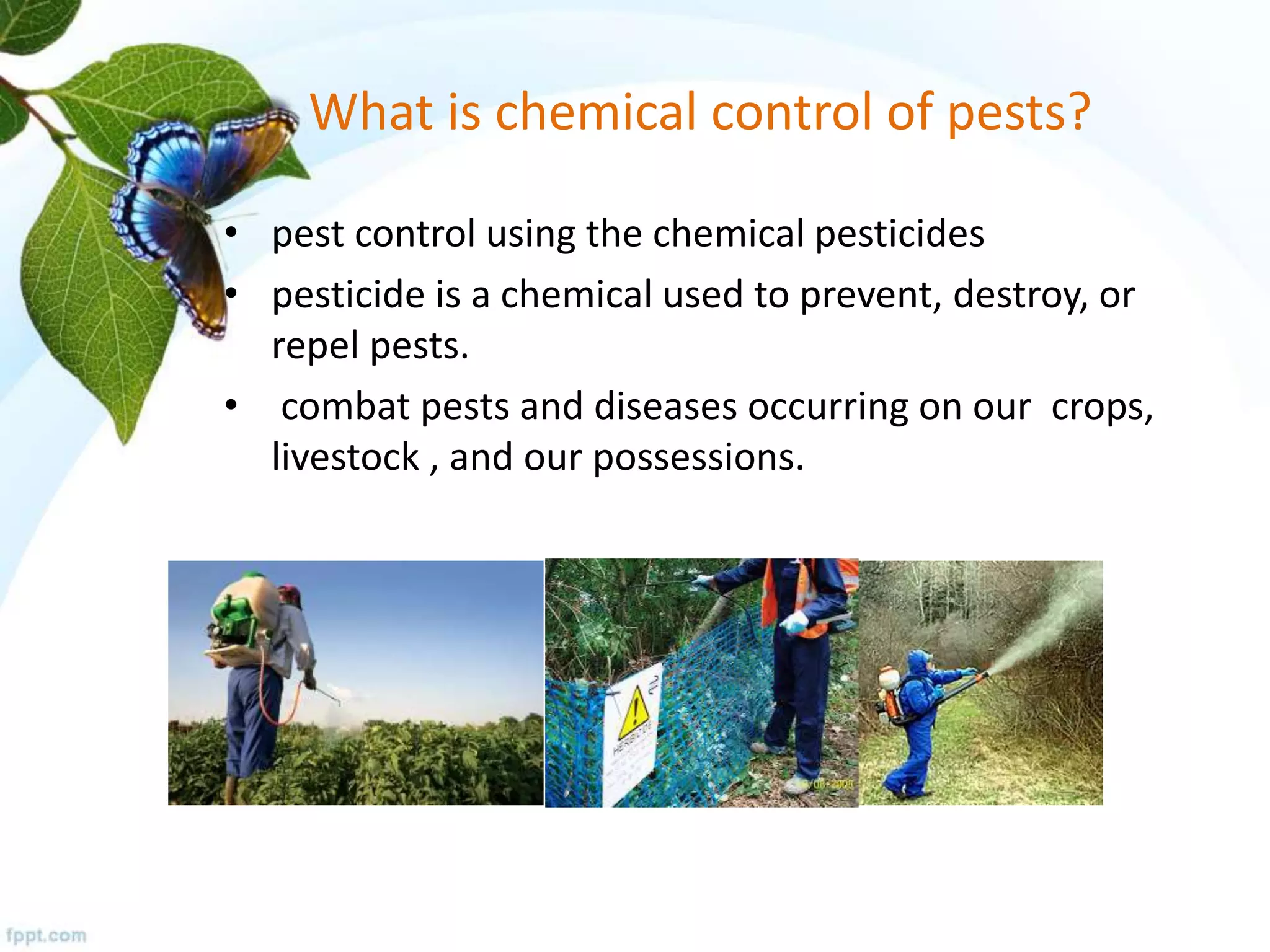
What is chemical control of pests?
• pest control using the chemical pesticides
• pesticide is a chemical used to prevent, destroy, or
repel pests.
• combat pests and diseases occurring on our crops,
livestock , and our possessions.
Classifications of pesticides
A. Sphere of activity
They are classifide according to target organisms
Acaricides - used to control ticks and mites
Eg: Carvacrol , Sanguinarine , Carbophenothion
Aramite, etc.
Insecticides -used to control insects
Eg:Carbofuran, nicotine, endrin
Fungicides -used to control fungal diseases in plants
Eg:Maneb, carboxin, calcium polysulfide
• Herbicides-used to control weeds
Eg: MCPA, 2, 4-D, clacyfos
• Nematicides-Chemicals used to control nematodes
Eg:Fenamiphos, Carbosullfan, Benomyl
• Rodenticides-Chemicals used to control rats
Eg: Coumarin, coumafuryl , warfarin
B. Mode of action
1. Contact poison
The action of these chemicals follows the action between the contact of
the body of the insect and the insecticides
2. Systemic poison
These chemicals move within the plant tissue and toxicity to sucking
insects feeding on plant sap.
3. Fumigants
Acts by its vapour action.
4. Stomach poison
Enters the pest through the mouth by ingestion and absorption in the
digestive tract.
C.Chemical constituents
1. Botanical compounds
Eg:Pyrethroids- produced by the ground flowers of daisy
Chysanthemum cinerariaefolum
2. Synthetic organic compounds
Organochlorines-insecticides containing C,H, and O.
Eg:DDT,Aldrin
Organophosphorus-They are made up of organic molecules containing
phosphorus.
Carbomates-Structurally esters of unstable carbonic acid.
4.Microbial compounds
Commercially produced insecticides from the natural pathogens of
insect .Eg. Bacillus thurengiensis.
5.Growth regulator compounds
Novel compounds which inhibit synthesis in insects.
Eg: Applaud-brown plant hopper control
6.Synthetic pyrethroids
They are synthesized from petroleum based chemicals
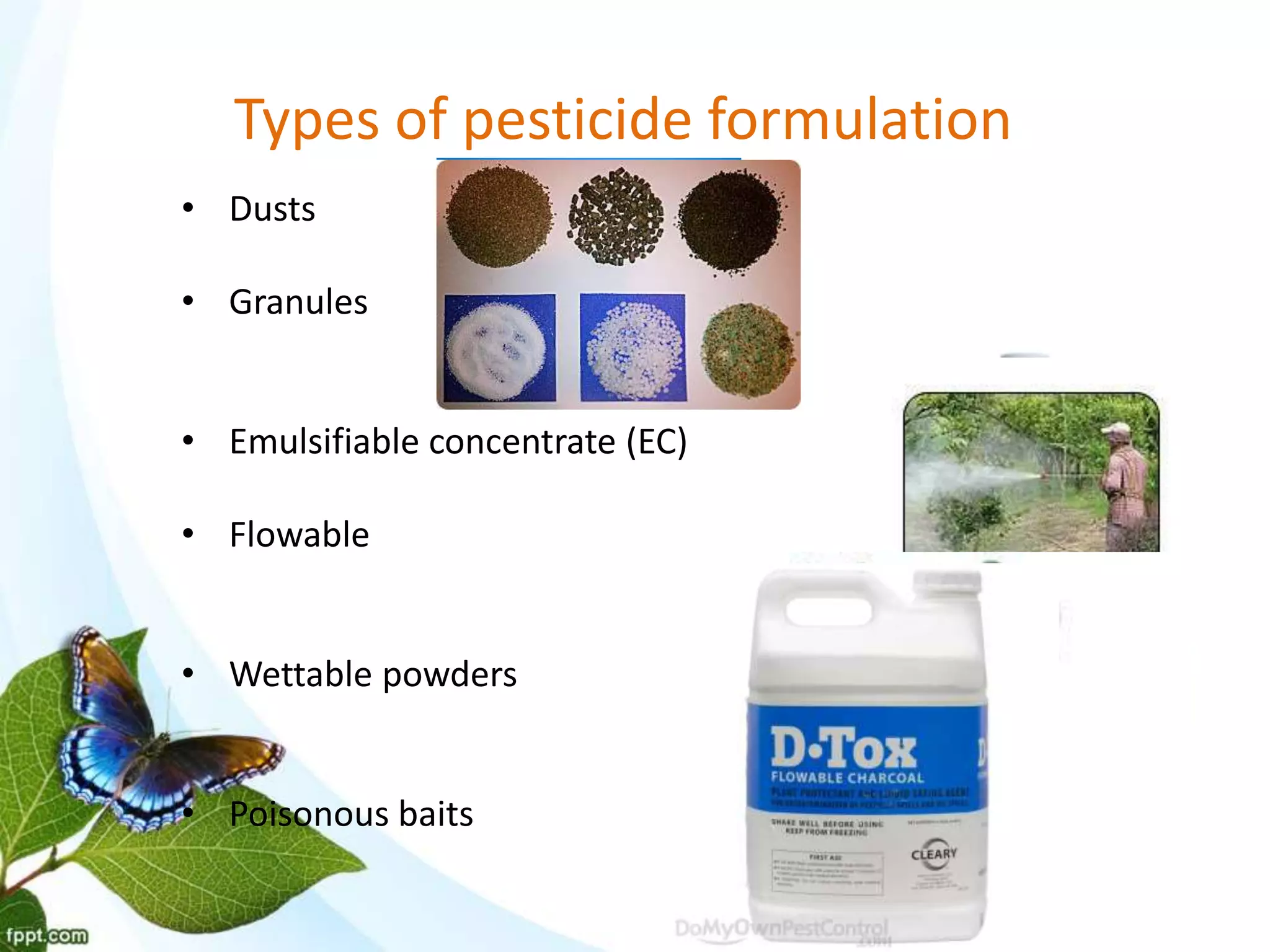
Types of pesticide formulation
• Dusts
• Granules
• Emulsifiable concentrate (EC)
• Flowable
• Wettable powders
• Poisonous baits
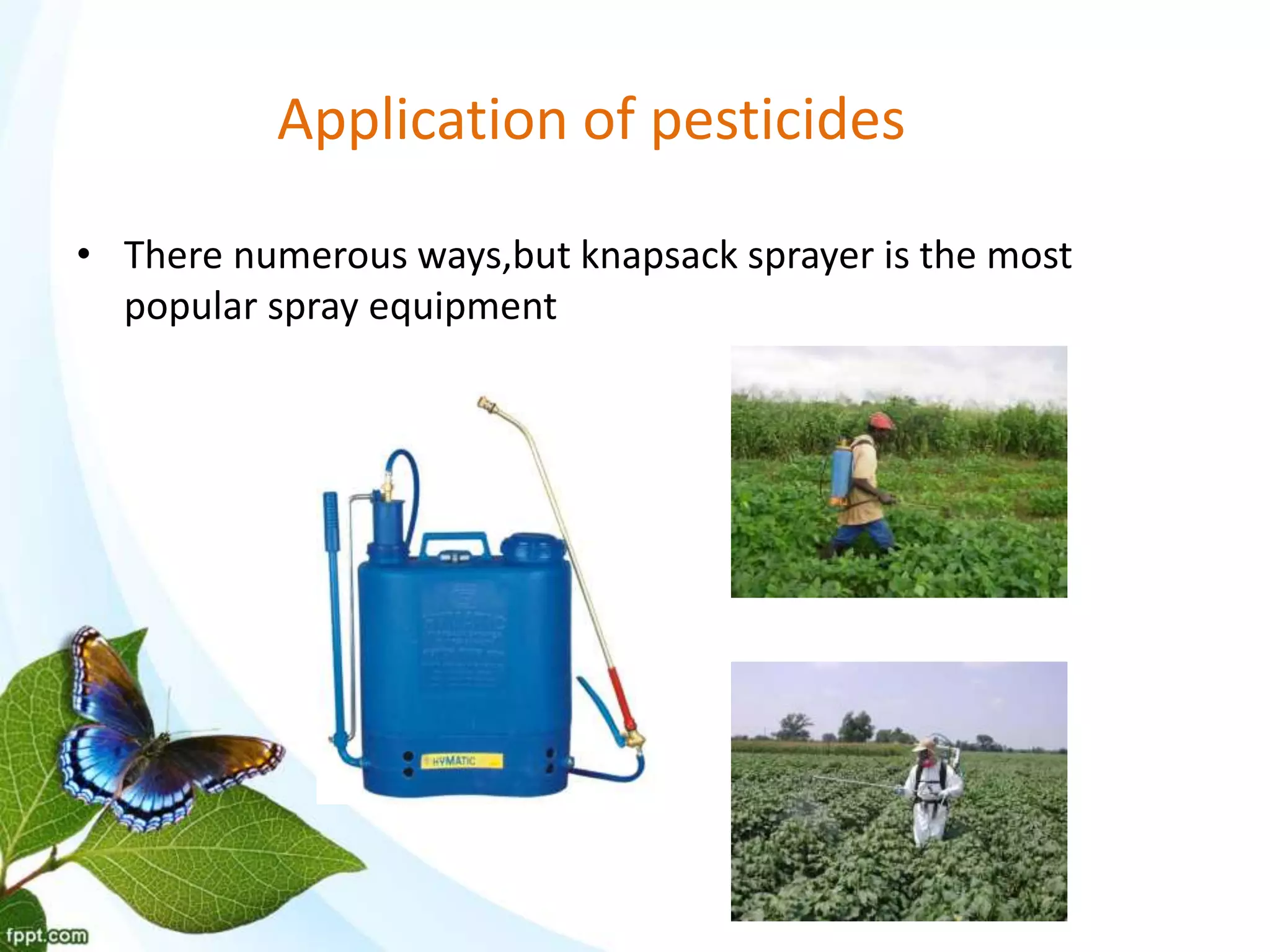
Application of pesticides
• There numerous ways,but knapsack sprayer is the most
popular spray equipment
Advantages and disadvantages of chemical pest control
Advantages
• Cost effectiveness
• Timeliness and flexibility
• Quality, quantity and price of produce
• Prevention of problems
Disadvantages
• Reduction of beneficial species. Non-target organisms,
including predators and parasites of pests
• Drift of sprays and vapour during application can cause severe
damage and residue problems in crops
• Residues in food for humans and feed for livestock
• Ground water contamination by leached chemicals
• Resistance to the pesticide used can develop in target pests
due to overuse and incorrect use of the chemical.
• Poisoning hazards and other health effects
Risk Associated With Chemical Pesticide
• Indiscriminate use leads to the Three sad R’s :
Resistance, Resurgence and Residues
• Elimination of Natural enemies of pests
• Upsetting the ecological balance
• Environmental degradation/Pollution
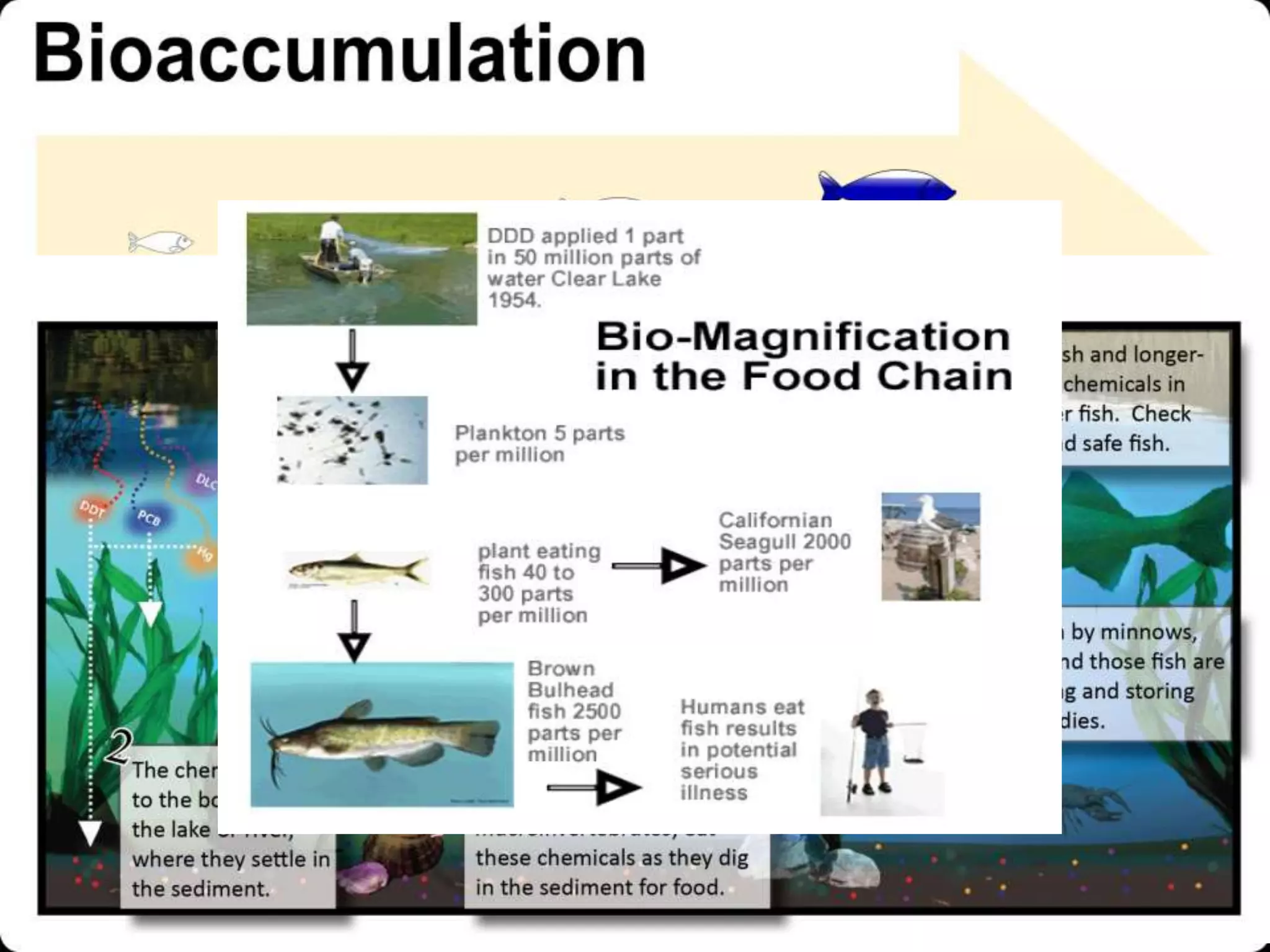
• Enters food chain and lead to Bio-Accumulation
and Bio-Magnification
As a result of The misuse and overuse of pesticides crop losses
have consistently shown an increasing trend (Dhaliwal and Koul,
2010)
Conclusion
• Pest control refers to the regulation or management of a
species defined as a pest, usually because it is perceived to be
detrimental to a person's health, the ecology or the economy.
• The chemical pest control has given more benefits to control
pest in an efficient and effective way
• Though they have bought constrains they are one the best
ways to control pest
• Thus a proper usage of chemical pest management will give
more benefits in agriculture
Thank you

Chemical Control

  • 1.
    Chemical control ofpest management Prepared by: Ladines Myla Maloles Carmina Masicap Jerico Matoy Khcarla May Mendoza Cill Bryan
  • 2.
    Introduction • Pest control •Perceived to be detrimental to a person's health, the ecology or the economy. • Various methods of pest control • Non chemical methods • Chemical methods
  • 3.
    What is chemicalcontrol of pests? • pest control using the chemical pesticides • pesticide is a chemical used to prevent, destroy, or repel pests. • combat pests and diseases occurring on our crops, livestock , and our possessions.
  • 4.
    Classifications of pesticides A.Sphere of activity They are classifide according to target organisms Acaricides - used to control ticks and mites Eg: Carvacrol , Sanguinarine , Carbophenothion Aramite, etc. Insecticides -used to control insects Eg:Carbofuran, nicotine, endrin Fungicides -used to control fungal diseases in plants Eg:Maneb, carboxin, calcium polysulfide
  • 5.
    • Herbicides-used tocontrol weeds Eg: MCPA, 2, 4-D, clacyfos • Nematicides-Chemicals used to control nematodes Eg:Fenamiphos, Carbosullfan, Benomyl • Rodenticides-Chemicals used to control rats Eg: Coumarin, coumafuryl , warfarin
  • 6.
    B. Mode ofaction 1. Contact poison The action of these chemicals follows the action between the contact of the body of the insect and the insecticides 2. Systemic poison These chemicals move within the plant tissue and toxicity to sucking insects feeding on plant sap. 3. Fumigants Acts by its vapour action. 4. Stomach poison Enters the pest through the mouth by ingestion and absorption in the digestive tract.
  • 7.
    C.Chemical constituents 1. Botanicalcompounds Eg:Pyrethroids- produced by the ground flowers of daisy Chysanthemum cinerariaefolum 2. Synthetic organic compounds Organochlorines-insecticides containing C,H, and O. Eg:DDT,Aldrin Organophosphorus-They are made up of organic molecules containing phosphorus. Carbomates-Structurally esters of unstable carbonic acid.
  • 8.
    4.Microbial compounds Commercially producedinsecticides from the natural pathogens of insect .Eg. Bacillus thurengiensis. 5.Growth regulator compounds Novel compounds which inhibit synthesis in insects. Eg: Applaud-brown plant hopper control 6.Synthetic pyrethroids They are synthesized from petroleum based chemicals
  • 9.
    Types of pesticideformulation • Dusts • Granules • Emulsifiable concentrate (EC) • Flowable • Wettable powders • Poisonous baits
  • 10.
    Application of pesticides •There numerous ways,but knapsack sprayer is the most popular spray equipment
  • 11.
    Advantages and disadvantagesof chemical pest control Advantages • Cost effectiveness • Timeliness and flexibility • Quality, quantity and price of produce • Prevention of problems
  • 12.
    Disadvantages • Reduction ofbeneficial species. Non-target organisms, including predators and parasites of pests • Drift of sprays and vapour during application can cause severe damage and residue problems in crops • Residues in food for humans and feed for livestock • Ground water contamination by leached chemicals • Resistance to the pesticide used can develop in target pests due to overuse and incorrect use of the chemical. • Poisoning hazards and other health effects
  • 13.
    Risk Associated WithChemical Pesticide • Indiscriminate use leads to the Three sad R’s : Resistance, Resurgence and Residues • Elimination of Natural enemies of pests • Upsetting the ecological balance • Environmental degradation/Pollution • Enters food chain and lead to Bio-Accumulation and Bio-Magnification As a result of The misuse and overuse of pesticides crop losses have consistently shown an increasing trend (Dhaliwal and Koul, 2010)
  • 14.
    Conclusion • Pest controlrefers to the regulation or management of a species defined as a pest, usually because it is perceived to be detrimental to a person's health, the ecology or the economy. • The chemical pest control has given more benefits to control pest in an efficient and effective way • Though they have bought constrains they are one the best ways to control pest • Thus a proper usage of chemical pest management will give more benefits in agriculture
  • 15.