Chemical control of pest management
T.W.G.F.A Nijamdeen
Reg.no:612260302
Introduction
• Pest control refers to the regulation or management
of a species defined as a pest, usually because it is
perceived to be detrimental to a person's health, the
ecology or the economy.
• The principal objective of a pest control is to protect
crops by maintaining the attack of the pests and
diseases at an acceptable level.
• There are various methods of pest control
• they are basically non chemical methods and
chemical methods
What is chemical control of pests
• It is the pest control using the chemical
pesticides
• A pesticide is a chemical used to prevent,
destroy, or repel pests.
• They combat pests and deseases occuring on
our crops,livestock,and our possessions.
Classifications of pesticides
• Pesticides are classified in different ways
• Sphere of activity
They are classifies according to the usefulness
Acaricides- used to control ticks and mites
Eg:carbophenothion
Insecticides-Used to control insects
Eg:Carbofuron
Fungicides- used to control fungal diseases in plants
Eg:Menab
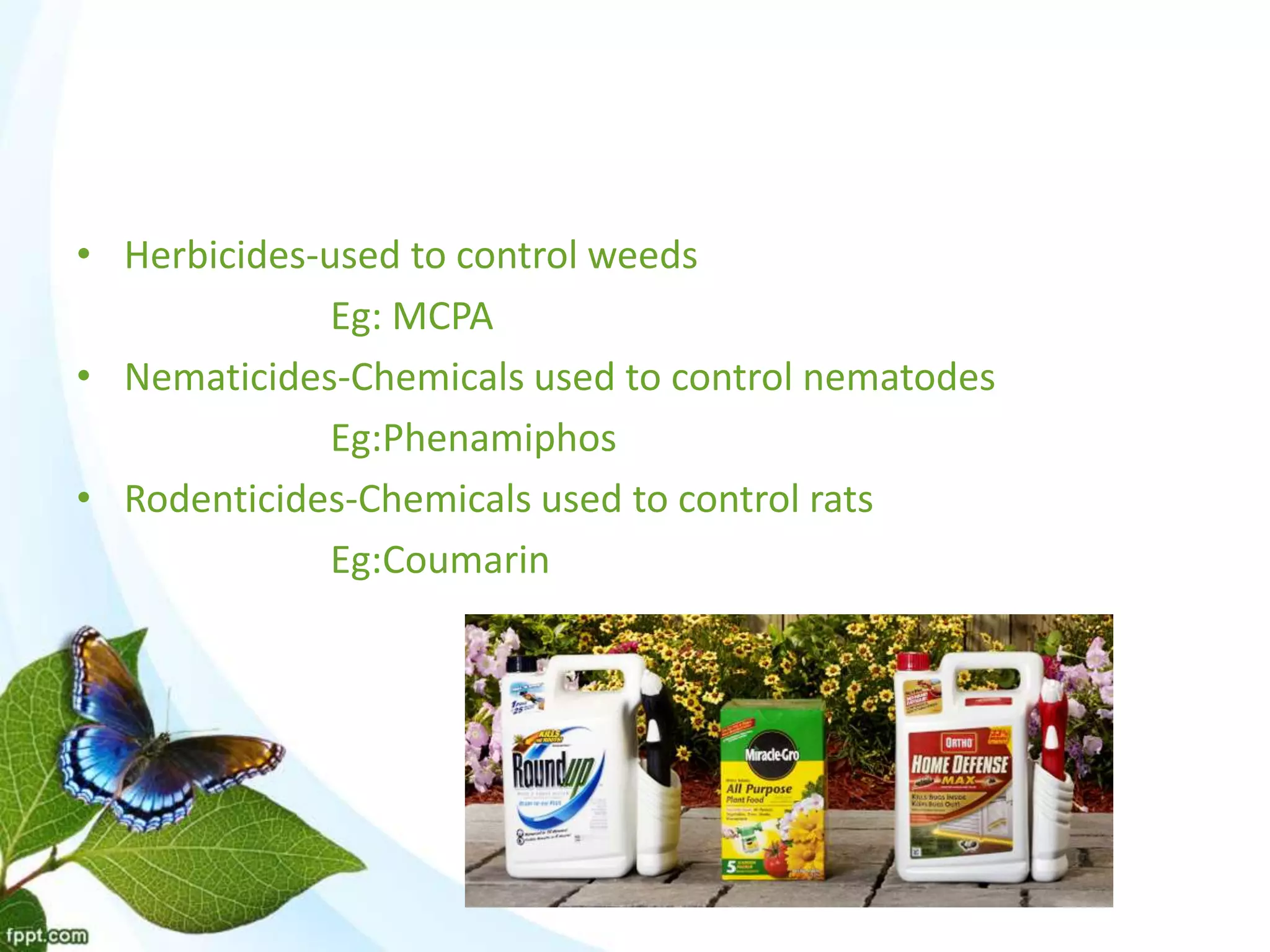
• Herbicides-used to control weeds
Eg: MCPA
• Nematicides-Chemicals used to control nematodes
Eg:Phenamiphos
• Rodenticides-Chemicals used to control rats
Eg:Coumarin
• Mode of action
Contact poison
The action of these chemicals follows the action between the
contact of the body of the insect and the insecticides
Eg: Carbaryl
Systemic poison
These chemicals move within the plant tissue and toxicity to
sucking insects feeding on plant sap.
Eg: Carbofuran
Fumigants
Acts by its vapour action
Eg: Methyl bromide
• Chemical constituents
Botanical compounds
Eg:Pyrethroids-produced by the ground flowers of daisy
Chysanthemum cinerariaefolum
Synthetic organic compounds
Organochlorines-insecticides containing C,H, and O.
Eg:DDT,Aldrin
Organophosphorus-They are made up of organic molecules
containing phosphorus.
Carbomates-Structurally esters of unstable carbonic acid.
• Microbial compounds
Commercially produced insecticides from the natural
pathogens of insect .Eg. Bacillus thurengiensis.
• Growth regulator compounds
Novel compounds which inhibit synthesis in
insects.Eg:Atabrai-cabbage catterpillar control,
Applaud-brown plant hopper control
• Synthetic pyrethroids
• They are synthesized from petroleum based chemicals
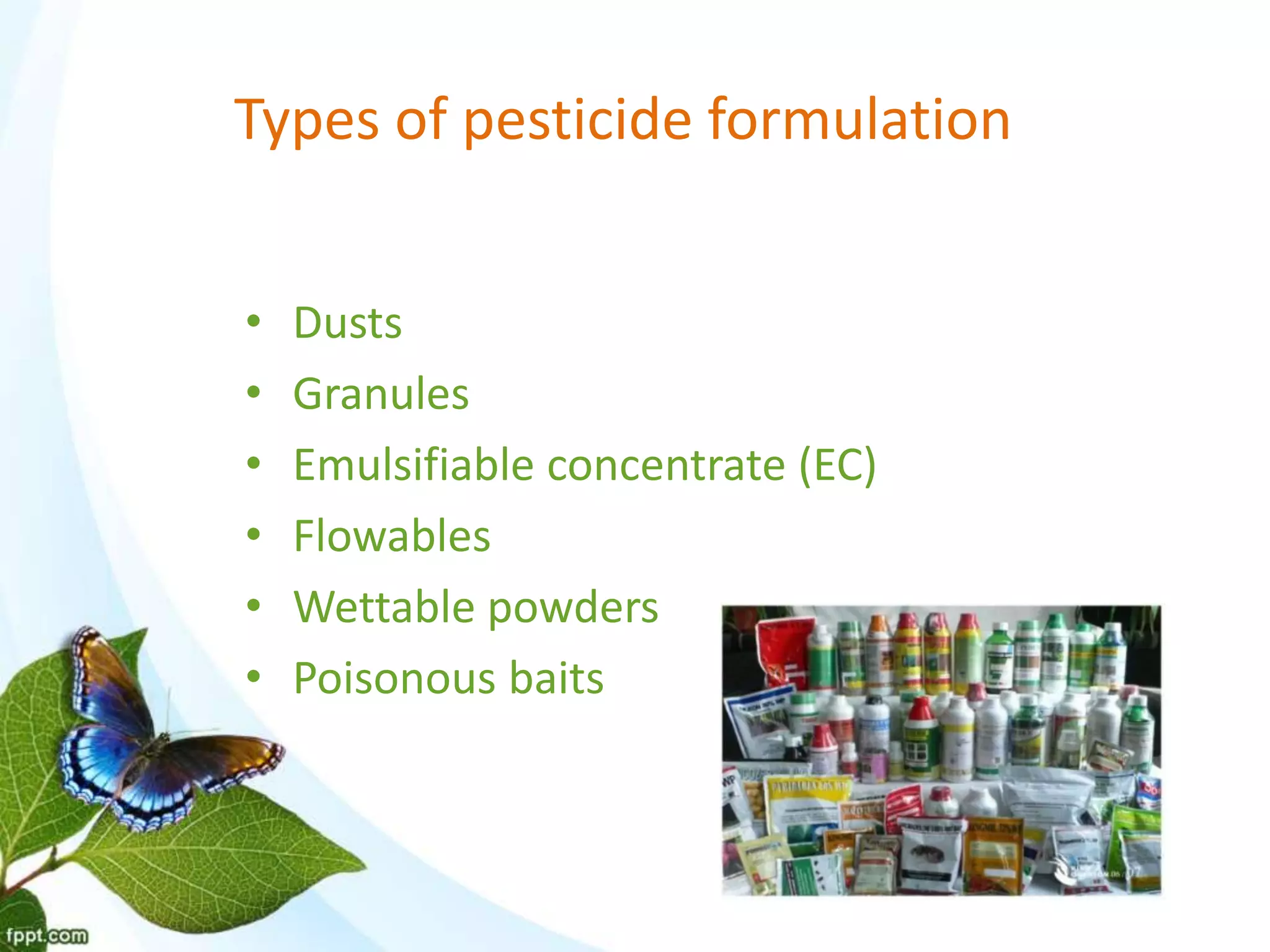
Types of pesticide formulation
• Dusts
• Granules
• Emulsifiable concentrate (EC)
• Flowables
• Wettable powders
• Poisonous baits
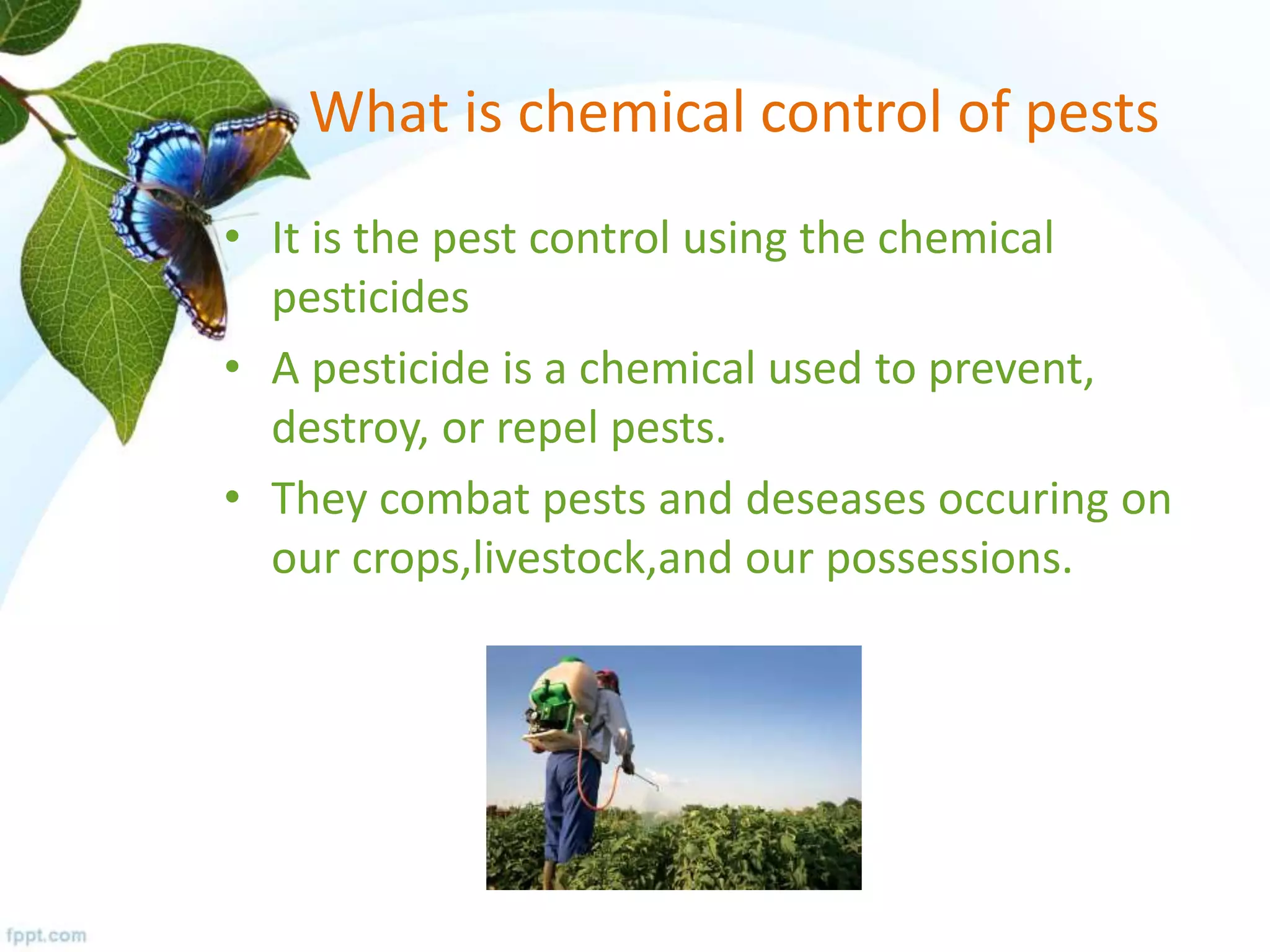
Application of pesticides
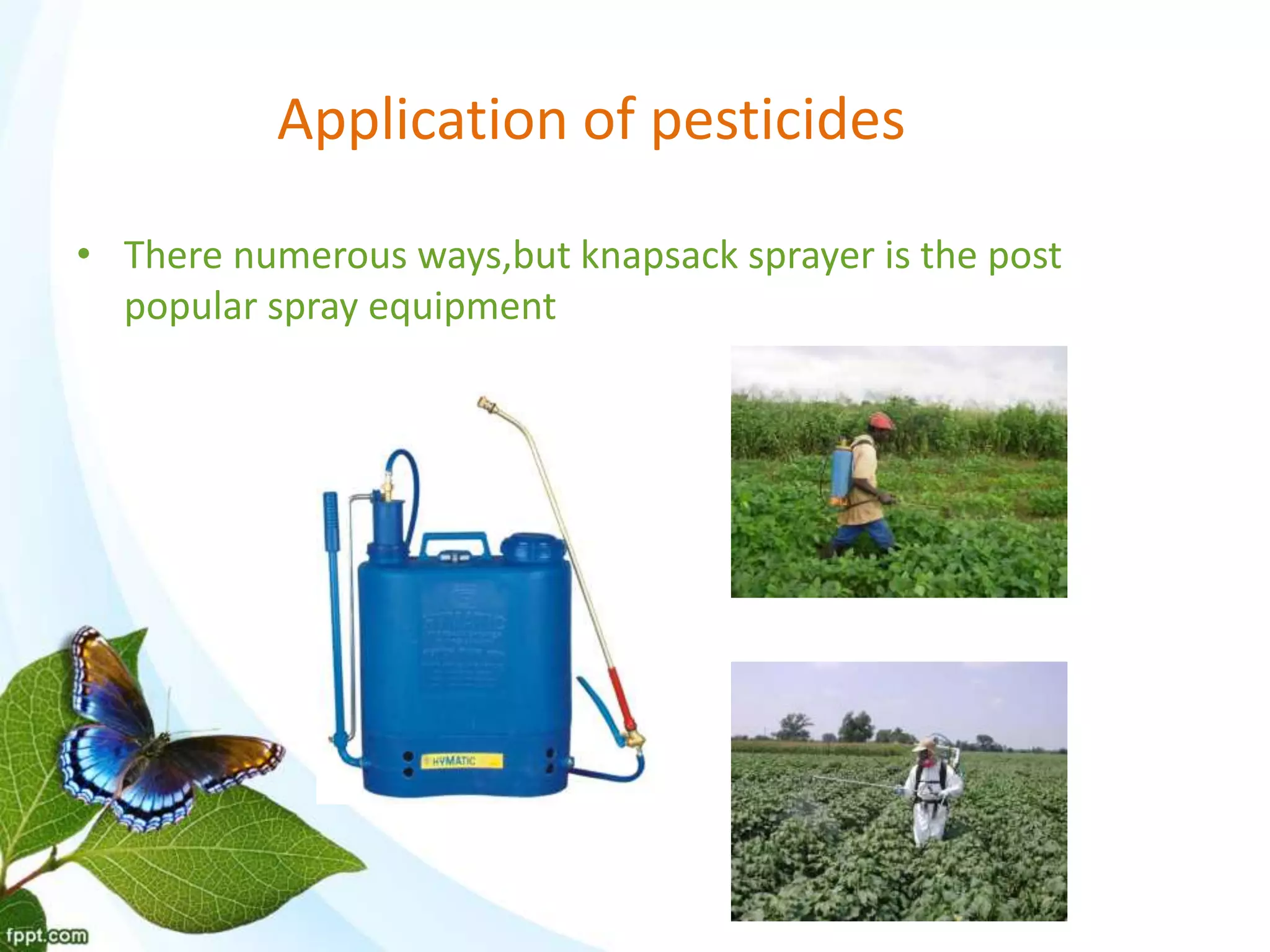
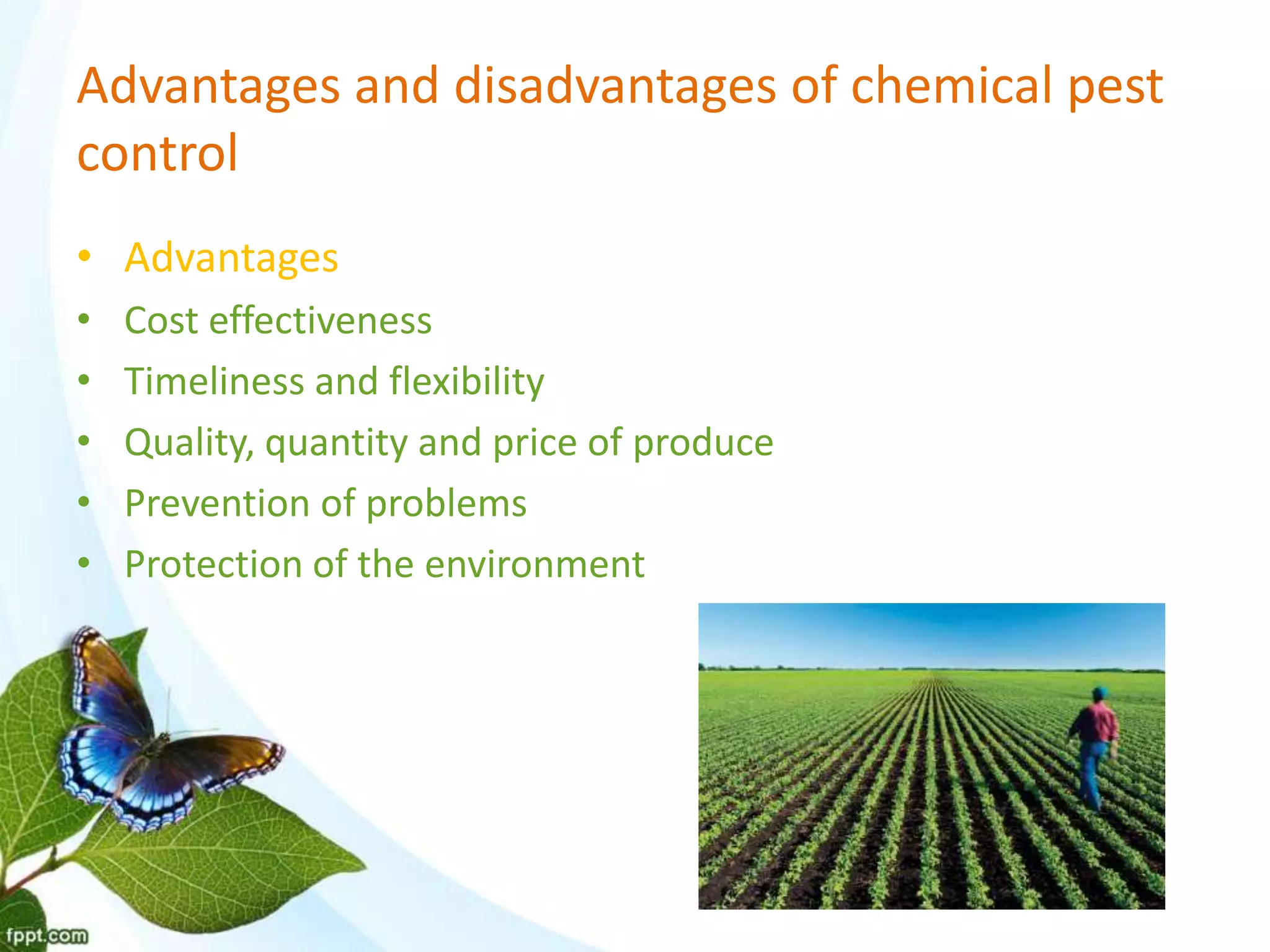
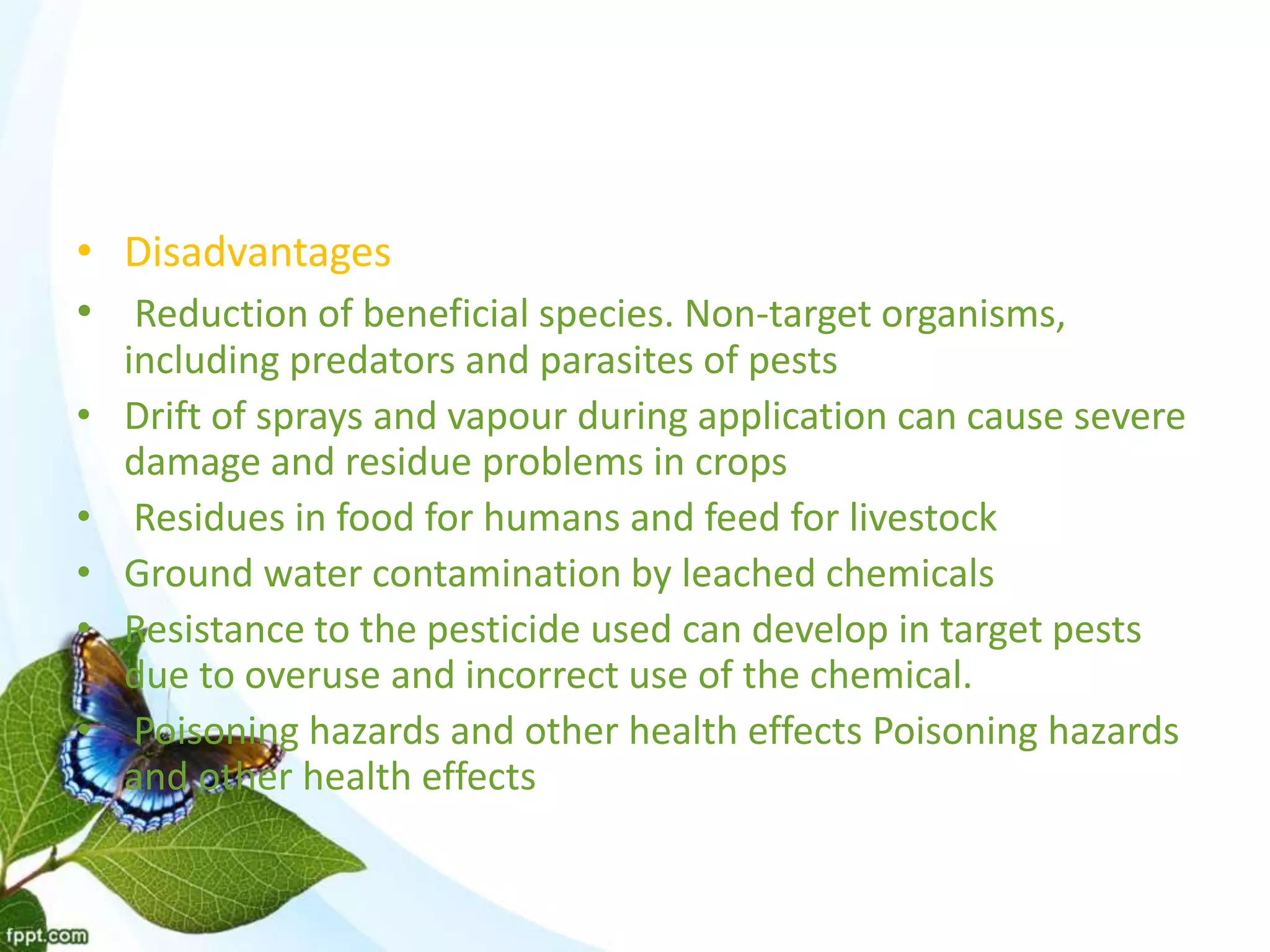
• There numerous ways,but knapsack sprayer is the post
popular spray equipment
Advantages and disadvantages of chemical pest
control
• Advantages
• Cost effectiveness
• Timeliness and flexibility
• Quality, quantity and price of produce
• Prevention of problems
• Protection of the environment
• Disadvantages
• Reduction of beneficial species. Non-target organisms,
including predators and parasites of pests
• Drift of sprays and vapour during application can cause severe
damage and residue problems in crops
• Residues in food for humans and feed for livestock
• Ground water contamination by leached chemicals
• Resistance to the pesticide used can develop in target pests
due to overuse and incorrect use of the chemical.
• Poisoning hazards and other health effects Poisoning hazards
and other health effects
Conclusion
• Pest control refers to the regulation or management of a
species defined as a pest, usually because it is perceived
to be detrimental to a person's health, the ecology or the
economy.
• The chemical pest control has given more benefits to
control pest in an efficient and effective way
• Though they have bought constrains they are one the
best ways to control pest
• Thus a proper usage of chemical pest management will
give more benefits in agriculture
Thank you

Chemical control of pest management

  • 1.
    Chemical control ofpest management T.W.G.F.A Nijamdeen Reg.no:612260302
  • 2.
    Introduction • Pest controlrefers to the regulation or management of a species defined as a pest, usually because it is perceived to be detrimental to a person's health, the ecology or the economy. • The principal objective of a pest control is to protect crops by maintaining the attack of the pests and diseases at an acceptable level. • There are various methods of pest control • they are basically non chemical methods and chemical methods
  • 3.
    What is chemicalcontrol of pests • It is the pest control using the chemical pesticides • A pesticide is a chemical used to prevent, destroy, or repel pests. • They combat pests and deseases occuring on our crops,livestock,and our possessions.
  • 4.
    Classifications of pesticides •Pesticides are classified in different ways • Sphere of activity They are classifies according to the usefulness Acaricides- used to control ticks and mites Eg:carbophenothion Insecticides-Used to control insects Eg:Carbofuron Fungicides- used to control fungal diseases in plants Eg:Menab
  • 5.
    • Herbicides-used tocontrol weeds Eg: MCPA • Nematicides-Chemicals used to control nematodes Eg:Phenamiphos • Rodenticides-Chemicals used to control rats Eg:Coumarin
  • 6.
    • Mode ofaction Contact poison The action of these chemicals follows the action between the contact of the body of the insect and the insecticides Eg: Carbaryl Systemic poison These chemicals move within the plant tissue and toxicity to sucking insects feeding on plant sap. Eg: Carbofuran Fumigants Acts by its vapour action Eg: Methyl bromide
  • 7.
    • Chemical constituents Botanicalcompounds Eg:Pyrethroids-produced by the ground flowers of daisy Chysanthemum cinerariaefolum Synthetic organic compounds Organochlorines-insecticides containing C,H, and O. Eg:DDT,Aldrin Organophosphorus-They are made up of organic molecules containing phosphorus. Carbomates-Structurally esters of unstable carbonic acid.
  • 8.
    • Microbial compounds Commerciallyproduced insecticides from the natural pathogens of insect .Eg. Bacillus thurengiensis. • Growth regulator compounds Novel compounds which inhibit synthesis in insects.Eg:Atabrai-cabbage catterpillar control, Applaud-brown plant hopper control • Synthetic pyrethroids • They are synthesized from petroleum based chemicals
  • 9.
    Types of pesticideformulation • Dusts • Granules • Emulsifiable concentrate (EC) • Flowables • Wettable powders • Poisonous baits
  • 10.
    Application of pesticides •There numerous ways,but knapsack sprayer is the post popular spray equipment
  • 11.
    Advantages and disadvantagesof chemical pest control • Advantages • Cost effectiveness • Timeliness and flexibility • Quality, quantity and price of produce • Prevention of problems • Protection of the environment
  • 12.
    • Disadvantages • Reductionof beneficial species. Non-target organisms, including predators and parasites of pests • Drift of sprays and vapour during application can cause severe damage and residue problems in crops • Residues in food for humans and feed for livestock • Ground water contamination by leached chemicals • Resistance to the pesticide used can develop in target pests due to overuse and incorrect use of the chemical. • Poisoning hazards and other health effects Poisoning hazards and other health effects
  • 13.
    Conclusion • Pest controlrefers to the regulation or management of a species defined as a pest, usually because it is perceived to be detrimental to a person's health, the ecology or the economy. • The chemical pest control has given more benefits to control pest in an efficient and effective way • Though they have bought constrains they are one the best ways to control pest • Thus a proper usage of chemical pest management will give more benefits in agriculture
  • 14.