
CHAPTER 4:
CONTROL OF ACTUACTOR
Learning Outcomes:
Upon completion this chapter, student should be
able:-
1. Explain of concept pneumatic, hydraulic and
motor devices
2. Compare the three actuating systems
Contents
1. Basic pneumatic and hydraulic system
2. Basic electrical motor system
Basic pneumatic system
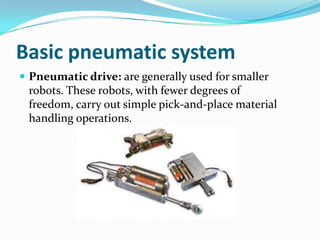
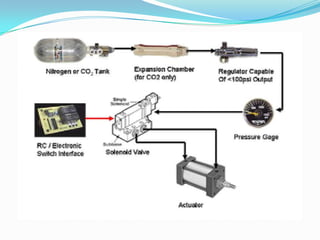
 Pneumatic drive: are generally used for smaller
robots. These robots, with fewer degrees of
freedom, carry out simple pick-and-place material
handling operations.
Advantages and disadvantages of
Pneumatic Actuators.
Advantages:
 low cost;
 high speed of moving;
 ease at reversion
movements;
 high reliability of work;
 explosion and fire safety;
 ecological purity
Disadvantages:
 compressibility of the air ;
 impossibility to receive
uniform and constant
speed of the working
bodies movement
 difficulties in performance
at slow speed
 limited conditions - use of
compressed air is
beneficial up to the definite
values of pressure
 compressed air requires
good preparation.
Basic hydraulic system
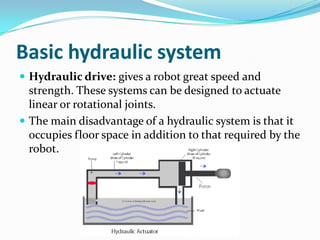
 Hydraulic drive: gives a robot great speed and
strength. These systems can be designed to actuate
linear or rotational joints.
 The main disadvantage of a hydraulic system is that it
occupies floor space in addition to that required by the
robot.
Types of hydraulic actuator
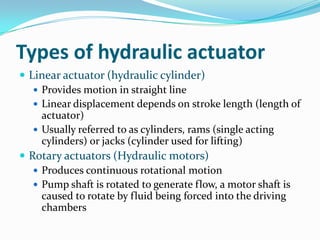
 Linear actuator (hydraulic cylinder)
 Provides motion in straight line
 Linear displacement depends on stroke length (length of
actuator)
 Usually referred to as cylinders, rams (single acting
cylinders) or jacks (cylinder used for lifting)
 Rotary actuators (Hydraulic motors)
 Produces continuous rotational motion
 Pump shaft is rotated to generate flow, a motor shaft is
caused to rotate by fluid being forced into the driving
chambers
 Semi rotary actuators
 Produces non-continuous rotational motion
 Limited to less than one revolution (<360°)
 Used to produce oscillatory motions in mechanisms.
Linear hydraulic actuator
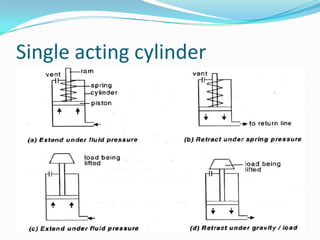
 Single acting cylinder
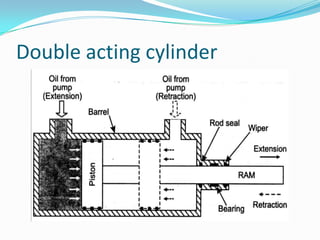
 Double acting cylinder
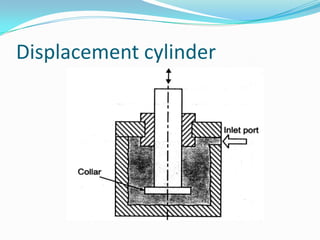
 Displacement cylinder
Single acting cylinder
Double acting cylinder
Displacement cylinder
Rotary hydraulic actuators
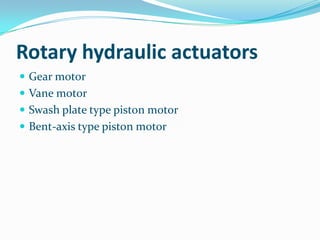
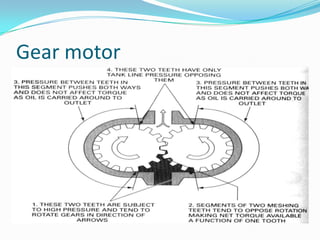
 Gear motor
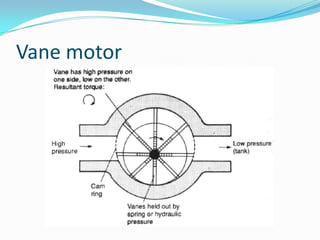
 Vane motor
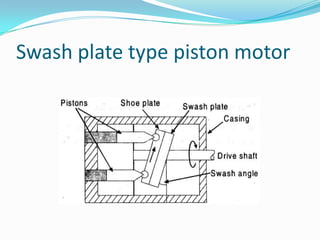
 Swash plate type piston motor
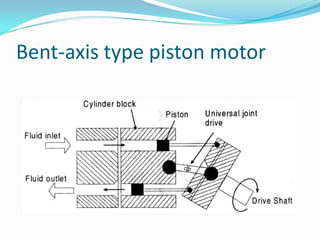
 Bent-axis type piston motor
Gear motor
Vane motor
Swash plate type piston motor
Bent-axis type piston motor
Semi rotary hydraulic actuators
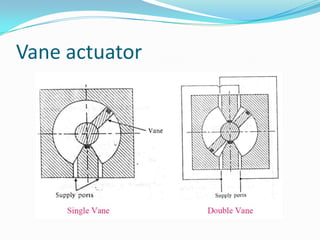
 Vane actuator
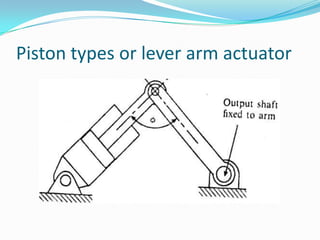
 Piston types or lever arm actuator
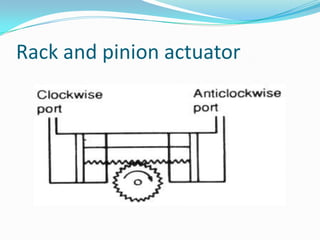
 Rack and pinion actuator
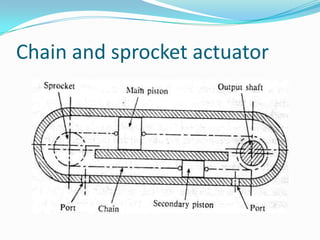
 Chain and sprocket actuator
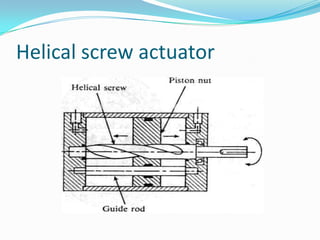
 Helical screw actuator
Vane actuator
Piston types or lever arm actuator
Rack and pinion actuator
Chain and sprocket actuator
Helical screw actuator
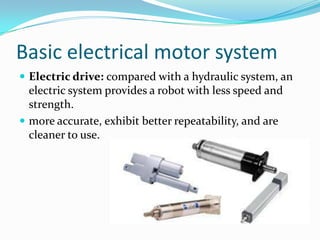
Basic electrical motor system
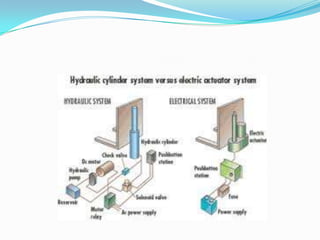
 Electric drive: compared with a hydraulic system, an
electric system provides a robot with less speed and
strength.
 more accurate, exhibit better repeatability, and are
cleaner to use.
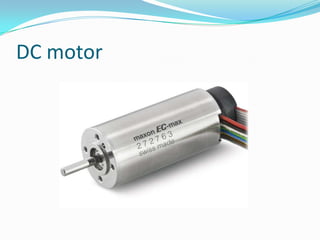
DC motor
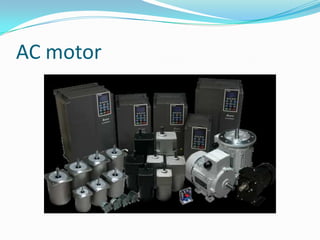
AC motor
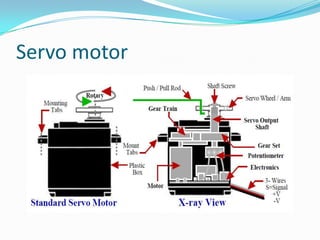
Servo motor
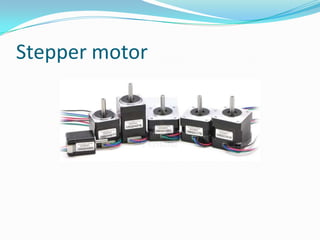
Stepper motor
THANK YOU

Chapter4 control of actuator

  • 1.
  • 2.
    Learning Outcomes: Upon completionthis chapter, student should be able:- 1. Explain of concept pneumatic, hydraulic and motor devices 2. Compare the three actuating systems
  • 3.
    Contents 1. Basic pneumaticand hydraulic system 2. Basic electrical motor system
  • 4.
    Basic pneumatic system Pneumatic drive: are generally used for smaller robots. These robots, with fewer degrees of freedom, carry out simple pick-and-place material handling operations.
  • 6.
    Advantages and disadvantagesof Pneumatic Actuators. Advantages:  low cost;  high speed of moving;  ease at reversion movements;  high reliability of work;  explosion and fire safety;  ecological purity Disadvantages:  compressibility of the air ;  impossibility to receive uniform and constant speed of the working bodies movement  difficulties in performance at slow speed  limited conditions - use of compressed air is beneficial up to the definite values of pressure  compressed air requires good preparation.
  • 7.
    Basic hydraulic system Hydraulic drive: gives a robot great speed and strength. These systems can be designed to actuate linear or rotational joints.  The main disadvantage of a hydraulic system is that it occupies floor space in addition to that required by the robot.
  • 8.
    Types of hydraulicactuator  Linear actuator (hydraulic cylinder)  Provides motion in straight line  Linear displacement depends on stroke length (length of actuator)  Usually referred to as cylinders, rams (single acting cylinders) or jacks (cylinder used for lifting)  Rotary actuators (Hydraulic motors)  Produces continuous rotational motion  Pump shaft is rotated to generate flow, a motor shaft is caused to rotate by fluid being forced into the driving chambers
  • 9.
     Semi rotaryactuators  Produces non-continuous rotational motion  Limited to less than one revolution (<360°)  Used to produce oscillatory motions in mechanisms.
  • 10.
    Linear hydraulic actuator Single acting cylinder  Double acting cylinder  Displacement cylinder
  • 11.
  • 12.
  • 13.
  • 14.
    Rotary hydraulic actuators Gear motor  Vane motor  Swash plate type piston motor  Bent-axis type piston motor
  • 15.
  • 16.
  • 17.
    Swash plate typepiston motor
  • 18.
  • 19.
    Semi rotary hydraulicactuators  Vane actuator  Piston types or lever arm actuator  Rack and pinion actuator  Chain and sprocket actuator  Helical screw actuator
  • 20.
  • 21.
    Piston types orlever arm actuator
  • 22.
  • 23.
  • 24.
  • 25.
    Basic electrical motorsystem  Electric drive: compared with a hydraulic system, an electric system provides a robot with less speed and strength.  more accurate, exhibit better repeatability, and are cleaner to use.
  • 26.
  • 27.
  • 28.
  • 29.
  • 31.