Downloaded 272 times

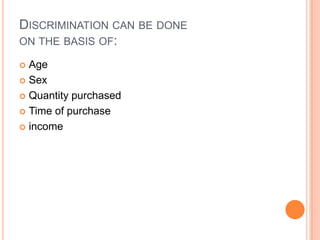


Price discrimination occurs when identical goods or services are sold at different prices by the same provider. It can be done based on factors like age, sex, quantity purchased, time of purchase, or income. There are three types of price discrimination: first degree involves bargaining with each customer, second degree charges different per-unit prices based on quantities purchased, and third degree charges different prices to groups differentiated by characteristics like location or age. Price discrimination decreases consumer surplus but increases firm profits and output, potentially benefiting social welfare and allowing more consumers to purchase products.


![Eco 6th Lecture[1]](https://cdn.slidesharecdn.com/ss_thumbnails/eco6thlecture1-1253256517118-phpapp03-thumbnail.jpg?width=640&height=640&fit=bounds)


