Physical Properties
• Property is the ability to do something
• Can be observed or measured without
changing the matter’s identity
• Used to identify substances by physical
characteristics
Examples of physical properties
and physical changes
• Physical Property
• Boiling Point
• Freezing Point
• Melting Point
• Condensation Point
• Evaporation Point
• Ductile
• Malleable
• Solubility
• electric conductivity
• Physical Change
• Boiling
• Freezing
• Melting
• Condensing
• Evaporating
• Stretching into wire
• Hammer into sheets
• Dissolving
• Moving electricity
Continued
• Physical Property
• Flexibility
• State at room temp
• Brittle
• Magnetism
• Thermal conductivity
• Color
• Odor
• Shiny
• Dull
• Hardness
• density
• Physical Change
• Bending
• Change of state
• Shattering
• Magnetic conduction
• Moves thermal energy
NOT physical properties
• Never use weight, or size
to describe matter
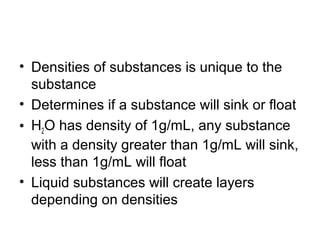
• Densities of substances is unique to the
substance
• Determines if a substance will sink or float
• H2O has density of 1g/mL, any substance
with a density greater than 1g/mL will sink,
less than 1g/mL will float
• Liquid substances will create layers
depending on densities
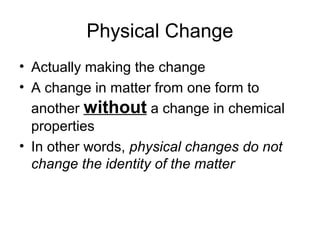
Physical Change
• Actually making the change
• A change in matter from one form to
another without a change in chemical
properties
• In other words, physical changes do not
change the identity of the matter
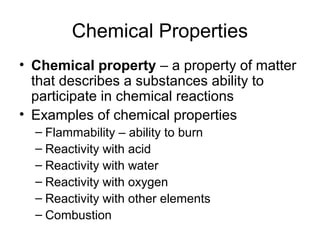
Chemical Properties
• Chemical property – a property of matter
that describes a substances ability to
participate in chemical reactions
• Examples of chemical properties
– Flammability – ability to burn
– Reactivity with acid
– Reactivity with water
– Reactivity with oxygen
– Reactivity with other elements
– Combustion
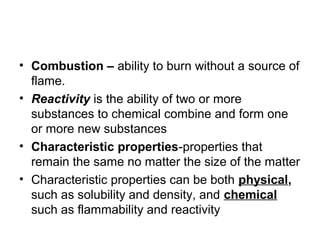
• Combustion – ability to burn without a source of
flame.
• Reactivity is the ability of two or more
substances to chemical combine and form one
or more new substances
• Characteristic properties-properties that
remain the same no matter the size of the matter
• Characteristic properties can be both physical,
such as solubility and density, and chemical
such as flammability and reactivity
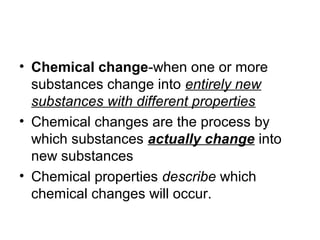
• Chemical change-when one or more
substances change into entirely new
substances with different properties
• Chemical changes are the process by
which substances actually change into
new substances
• Chemical properties describe which
chemical changes will occur.
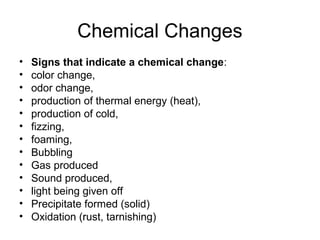
Chemical Changes
• Signs that indicate a chemical change:
• color change,
• odor change,
• production of thermal energy (heat),
• production of cold,
• fizzing,
• foaming,
• Bubbling
• Gas produced
• Sound produced,
• light being given off
• Precipitate formed (solid)
• Oxidation (rust, tarnishing)
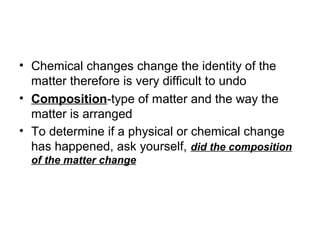
• Chemical changes change the identity of the
matter therefore is very difficult to undo
• Composition-type of matter and the way the
matter is arranged
• To determine if a physical or chemical change
has happened, ask yourself, did the composition
of the matter change
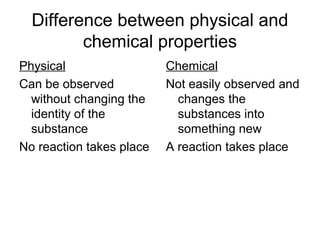
Difference between physical and
chemical properties
Physical
Can be observed
without changing the
identity of the
substance
No reaction takes place
Chemical
Not easily observed and
changes the
substances into
something new
A reaction takes place

Chap 2 chem & phy properties

  • 1.
    Physical Properties • Propertyis the ability to do something • Can be observed or measured without changing the matter’s identity • Used to identify substances by physical characteristics
  • 2.
    Examples of physicalproperties and physical changes • Physical Property • Boiling Point • Freezing Point • Melting Point • Condensation Point • Evaporation Point • Ductile • Malleable • Solubility • electric conductivity • Physical Change • Boiling • Freezing • Melting • Condensing • Evaporating • Stretching into wire • Hammer into sheets • Dissolving • Moving electricity
  • 3.
    Continued • Physical Property •Flexibility • State at room temp • Brittle • Magnetism • Thermal conductivity • Color • Odor • Shiny • Dull • Hardness • density • Physical Change • Bending • Change of state • Shattering • Magnetic conduction • Moves thermal energy
  • 4.
    NOT physical properties •Never use weight, or size to describe matter
  • 5.
    • Densities ofsubstances is unique to the substance • Determines if a substance will sink or float • H2O has density of 1g/mL, any substance with a density greater than 1g/mL will sink, less than 1g/mL will float • Liquid substances will create layers depending on densities
  • 6.
    Physical Change • Actuallymaking the change • A change in matter from one form to another without a change in chemical properties • In other words, physical changes do not change the identity of the matter
  • 7.
    Chemical Properties • Chemicalproperty – a property of matter that describes a substances ability to participate in chemical reactions • Examples of chemical properties – Flammability – ability to burn – Reactivity with acid – Reactivity with water – Reactivity with oxygen – Reactivity with other elements – Combustion
  • 8.
    • Combustion –ability to burn without a source of flame. • Reactivity is the ability of two or more substances to chemical combine and form one or more new substances • Characteristic properties-properties that remain the same no matter the size of the matter • Characteristic properties can be both physical, such as solubility and density, and chemical such as flammability and reactivity
  • 9.
    • Chemical change-whenone or more substances change into entirely new substances with different properties • Chemical changes are the process by which substances actually change into new substances • Chemical properties describe which chemical changes will occur.
  • 10.
    Chemical Changes • Signsthat indicate a chemical change: • color change, • odor change, • production of thermal energy (heat), • production of cold, • fizzing, • foaming, • Bubbling • Gas produced • Sound produced, • light being given off • Precipitate formed (solid) • Oxidation (rust, tarnishing)
  • 11.
    • Chemical changeschange the identity of the matter therefore is very difficult to undo • Composition-type of matter and the way the matter is arranged • To determine if a physical or chemical change has happened, ask yourself, did the composition of the matter change
  • 12.
    Difference between physicaland chemical properties Physical Can be observed without changing the identity of the substance No reaction takes place Chemical Not easily observed and changes the substances into something new A reaction takes place