Classification Of Matter
Integrated Science
Dr. May
Matter
• Anything that has mass and occupies space
is defined as matter
• Matter may be invisible to the eye
• All matter is composed of discrete, tiny
particles called atoms
Physical States Of Matter
• All matter exists in one of three physical
states:
• Solid
• Liquid
• Gas
Solid Matter
• Definite shape and definite volume
• Particles cohere rigidly to one another
• Shape can be independent of the container
• May be crystalline (salt, sugar, metal) or
• May be amorphous (plastic, glass, gels)
Liquid Matter
• Definite volume but not a definite shape
• Particles adhere firmly but not rigidly
• Takes the shape of the storage container
• Particles are in close contact with one
another but are able to move freely
Gaseous Matter
• Indefinite volume and no fixed shape
• Particles move independently of each other
• Particles have gained enough energy to
overcome the attractive forces that held
them together as solids and liquids
Substance
• Matter with a definite, fixed composition is
called a substance
• Pure substances are either
• Elements or
• Compounds
Homogeneous
• Uniform in appearance
• Same properties throughout
• Water in each phase is homogeneous in
composition
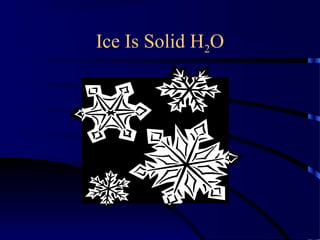
Ice Is Solid H2O
Heterogeneous
• Matter having two or more physically
distinct phases
• Ice, water, and steam are each
homogeneous
• But, ice in water is heterogeneous and
• Boiling water is heterogeneous
Mixtures
• A material containing two or more pure
substances
• Can be either
• Homogeneous or
• Heterogeneous
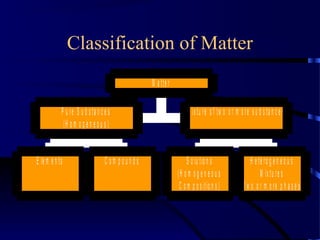
Classification of Matter
E le m e n ts C o m p o u n d s
P u re S u b s ta n c e s
(H o m o g e n e o u s )
S o lu tio n s
(H o m o g e n e o u s
C o m p o s itio n s )
H e te ro g e n e o u s
M ix tu re s
(T w o o r m o re p h a s e s )
M ix tu re o f tw o o r m o re s u b s ta n c e s
M a tte r
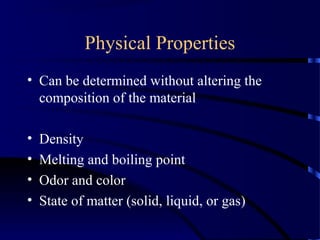
Physical Properties
• Can be determined without altering the
composition of the material
• Density
• Melting and boiling point
• Odor and color
• State of matter (solid, liquid, or gas)
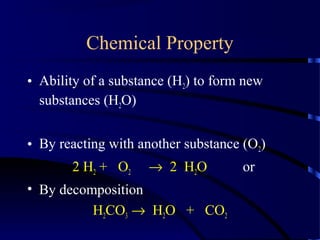
Chemical Property
• Ability of a substance (H2) to form new
substances (H2O)
• By reacting with another substance (O2)
2 H2 + O2 → 2 H2O or
• By decomposition
H2CO3 → H2O + CO2
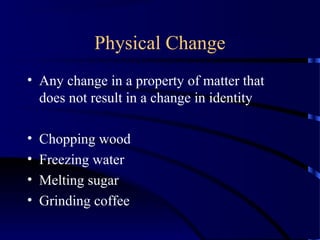
Physical Change
• Any change in a property of matter that
does not result in a change in identity
• Chopping wood
• Freezing water
• Melting sugar
• Grinding coffee
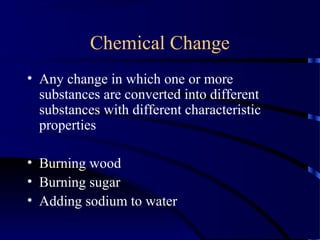
Chemical Change
• Any change in which one or more
substances are converted into different
substances with different characteristic
properties
• Burning wood
• Burning sugar
• Adding sodium to water
Indications Of Chemical Reactions
• Evolution of heat and light
Burning propane
• Production of a gas
Soda and vinegar
• Formation of a precipitate
Silver nitrate in salt water
The End
• This presentation was created for the benefit
of our students by the Science Department
at Howard High School of Technology
• Please send suggestions and comments to
rmay@nccvt.k12.de.us

Classification of matter (1)

  • 1.
  • 2.
    Matter • Anything thathas mass and occupies space is defined as matter • Matter may be invisible to the eye • All matter is composed of discrete, tiny particles called atoms
  • 3.
    Physical States OfMatter • All matter exists in one of three physical states: • Solid • Liquid • Gas
  • 4.
    Solid Matter • Definiteshape and definite volume • Particles cohere rigidly to one another • Shape can be independent of the container • May be crystalline (salt, sugar, metal) or • May be amorphous (plastic, glass, gels)
  • 5.
    Liquid Matter • Definitevolume but not a definite shape • Particles adhere firmly but not rigidly • Takes the shape of the storage container • Particles are in close contact with one another but are able to move freely
  • 6.
    Gaseous Matter • Indefinitevolume and no fixed shape • Particles move independently of each other • Particles have gained enough energy to overcome the attractive forces that held them together as solids and liquids
  • 7.
    Substance • Matter witha definite, fixed composition is called a substance • Pure substances are either • Elements or • Compounds
  • 8.
    Homogeneous • Uniform inappearance • Same properties throughout • Water in each phase is homogeneous in composition
  • 9.
  • 10.
    Heterogeneous • Matter havingtwo or more physically distinct phases • Ice, water, and steam are each homogeneous • But, ice in water is heterogeneous and • Boiling water is heterogeneous
  • 11.
    Mixtures • A materialcontaining two or more pure substances • Can be either • Homogeneous or • Heterogeneous
  • 12.
    Classification of Matter Ele m e n ts C o m p o u n d s P u re S u b s ta n c e s (H o m o g e n e o u s ) S o lu tio n s (H o m o g e n e o u s C o m p o s itio n s ) H e te ro g e n e o u s M ix tu re s (T w o o r m o re p h a s e s ) M ix tu re o f tw o o r m o re s u b s ta n c e s M a tte r
  • 13.
    Physical Properties • Canbe determined without altering the composition of the material • Density • Melting and boiling point • Odor and color • State of matter (solid, liquid, or gas)
  • 14.
    Chemical Property • Abilityof a substance (H2) to form new substances (H2O) • By reacting with another substance (O2) 2 H2 + O2 → 2 H2O or • By decomposition H2CO3 → H2O + CO2
  • 15.
    Physical Change • Anychange in a property of matter that does not result in a change in identity • Chopping wood • Freezing water • Melting sugar • Grinding coffee
  • 16.
    Chemical Change • Anychange in which one or more substances are converted into different substances with different characteristic properties • Burning wood • Burning sugar • Adding sodium to water
  • 17.
    Indications Of ChemicalReactions • Evolution of heat and light Burning propane • Production of a gas Soda and vinegar • Formation of a precipitate Silver nitrate in salt water
  • 18.
    The End • Thispresentation was created for the benefit of our students by the Science Department at Howard High School of Technology • Please send suggestions and comments to rmay@nccvt.k12.de.us