Describing
Matter
Properties of Matter
 Matter is anything that has mass and
takes up space.
 Matter can be hard, soft, rough or
smooth, round, square, hot or cold.
 It can be small enough to fit in your
pocket or as large as the Earth.
States of Matter
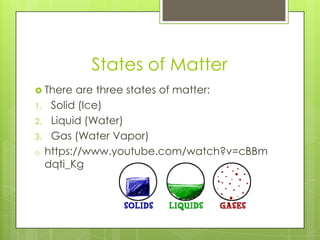
 There are three states of matter:
1. Solid (Ice)
2. Liquid (Water)
3. Gas (Water Vapor)
o https://www.youtube.com/watch?v=cBBm
dqti_Kg
Characteristic Properties
 Some properties of matter, such as size or
amount, are true only for a given sample
of matter.
 For example, a piece of ice can be as
small as an ice cube or as large as a
glacier. The substance is still ice.
 Some properties are true for a particular
kind of substance no matter what the
sample size. These properties are called
characteristic properties. (For
example, all diamonds have the same
hardness.
 Since characteristic properties for a given
substance never change, they can be
used to identify unknown matter.
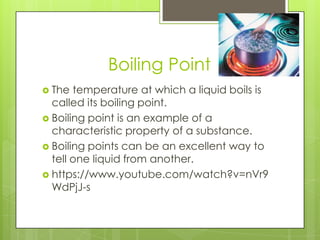
Boiling Point
 The temperature at which a liquid boils is
called its boiling point.
 Boiling point is an example of a
characteristic property of a substance.
 Boiling points can be an excellent way to
tell one liquid from another.
 https://www.youtube.com/watch?v=nVr9
WdPjJ-s
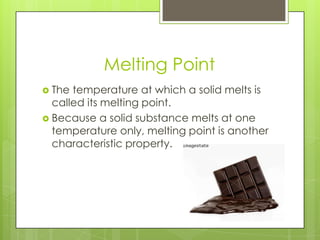
Melting Point
 The temperature at which a solid melts is
called its melting point.
 Because a solid substance melts at one
temperature only, melting point is another
characteristic property.
Checkpoint
 What are two examples of characteristic
properties?
1. Boiling Point
2. Melting Point
Changes in Matter
 Changes in the state of matter, such as
boiling or melting are examples of
physical changes.
 There are two types of changes in matter:
1. Physical changes
2. Chemical changes
Physical Changes
 Physical changes change the form of a
substance, but does not change what the
substance is. (The pop can is still a pop
can, just crushed and the ice is water
even when its solid.
Chemical Changes
 In chemical changes, one or more
substances combine or break apart to
form new substances. (Heating sugar and
turning into caramel)
 When the process is complete, the
original sugar particle no longer exists
 The ability of a substance to undergo a
specific chemical change is another
example of a characteristic property.
 This property is called the chemical
activity of the substance.
Types of Matter
 Matter can be classified into two general
categories:
1. Mixtures
2. Pure Substances (elements and
compounds)
Mixtures
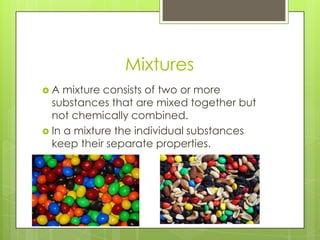
 A mixture consists of two or more
substances that are mixed together but
not chemically combined.
 In a mixture the individual substances
keep their separate properties.
 Scientists often classify mixtures by how
well they are mixed together.
 In mixtures like ocean water (salt water)
the parts have been blended so well
together that they appear to be a single
substance.
 This type of mixture is called a solution.
Pure Substances
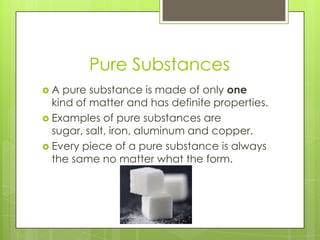
 A pure substance is made of only one
kind of matter and has definite properties.
 Examples of pure substances are
sugar, salt, iron, aluminum and copper.
 Every piece of a pure substance is always
the same no matter what the form.
Elements
 Some pure substances called elements
cannot be broken down into other
substances by any chemical means.
 Individually or in combination, the
elements form every object in the world!
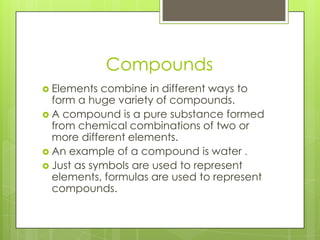
Compounds
 Elements combine in different ways to
form a huge variety of compounds.
 A compound is a pure substance formed
from chemical combinations of two or
more different elements.
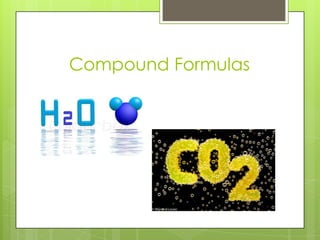
 An example of a compound is water .
 Just as symbols are used to represent
elements, formulas are used to represent
compounds.
Compound Formulas
 The properties of compounds are always
different from the properties of the
elements that formed them.
REVIEW
 Using the information you just
gathered, answer the following questions:
1. List the three principal states of matter
and give two examples of each
2. What is the difference between a
physical change and a chemical
change?
3. What is meant by a characteristic
property of a substance?

Describing matter powerpoint

  • 1.
  • 2.
    Properties of Matter Matter is anything that has mass and takes up space.  Matter can be hard, soft, rough or smooth, round, square, hot or cold.  It can be small enough to fit in your pocket or as large as the Earth.
  • 3.
    States of Matter There are three states of matter: 1. Solid (Ice) 2. Liquid (Water) 3. Gas (Water Vapor) o https://www.youtube.com/watch?v=cBBm dqti_Kg
  • 4.
    Characteristic Properties  Someproperties of matter, such as size or amount, are true only for a given sample of matter.  For example, a piece of ice can be as small as an ice cube or as large as a glacier. The substance is still ice.  Some properties are true for a particular kind of substance no matter what the sample size. These properties are called characteristic properties. (For example, all diamonds have the same hardness.  Since characteristic properties for a given substance never change, they can be used to identify unknown matter.
  • 5.
    Boiling Point  Thetemperature at which a liquid boils is called its boiling point.  Boiling point is an example of a characteristic property of a substance.  Boiling points can be an excellent way to tell one liquid from another.  https://www.youtube.com/watch?v=nVr9 WdPjJ-s
  • 6.
    Melting Point  Thetemperature at which a solid melts is called its melting point.  Because a solid substance melts at one temperature only, melting point is another characteristic property.
  • 7.
    Checkpoint  What aretwo examples of characteristic properties? 1. Boiling Point 2. Melting Point
  • 8.
    Changes in Matter Changes in the state of matter, such as boiling or melting are examples of physical changes.  There are two types of changes in matter: 1. Physical changes 2. Chemical changes
  • 9.
    Physical Changes  Physicalchanges change the form of a substance, but does not change what the substance is. (The pop can is still a pop can, just crushed and the ice is water even when its solid.
  • 10.
    Chemical Changes  Inchemical changes, one or more substances combine or break apart to form new substances. (Heating sugar and turning into caramel)  When the process is complete, the original sugar particle no longer exists
  • 11.
     The abilityof a substance to undergo a specific chemical change is another example of a characteristic property.  This property is called the chemical activity of the substance.
  • 12.
    Types of Matter Matter can be classified into two general categories: 1. Mixtures 2. Pure Substances (elements and compounds)
  • 13.
    Mixtures  A mixtureconsists of two or more substances that are mixed together but not chemically combined.  In a mixture the individual substances keep their separate properties.
  • 14.
     Scientists oftenclassify mixtures by how well they are mixed together.  In mixtures like ocean water (salt water) the parts have been blended so well together that they appear to be a single substance.  This type of mixture is called a solution.
  • 15.
    Pure Substances  Apure substance is made of only one kind of matter and has definite properties.  Examples of pure substances are sugar, salt, iron, aluminum and copper.  Every piece of a pure substance is always the same no matter what the form.
  • 16.
    Elements  Some puresubstances called elements cannot be broken down into other substances by any chemical means.  Individually or in combination, the elements form every object in the world!
  • 17.
    Compounds  Elements combinein different ways to form a huge variety of compounds.  A compound is a pure substance formed from chemical combinations of two or more different elements.  An example of a compound is water .  Just as symbols are used to represent elements, formulas are used to represent compounds.
  • 18.
  • 19.
     The propertiesof compounds are always different from the properties of the elements that formed them.
  • 20.
    REVIEW  Using theinformation you just gathered, answer the following questions: 1. List the three principal states of matter and give two examples of each 2. What is the difference between a physical change and a chemical change? 3. What is meant by a characteristic property of a substance?