

Changing learning methods and
approaches, their assessment and
quality assurance
Charalambos Vrasidas, Executive Director, CARDET
Professor & Associate Dean for e-learning, UNic
www.vrasidas.com
www.cardet.org
pambos@cardet.org
2
www.cardet.org
Overview
• Trends
• Designs for learning
• Case Studies
• Possibilities
• Challenges
INTRODUCTION
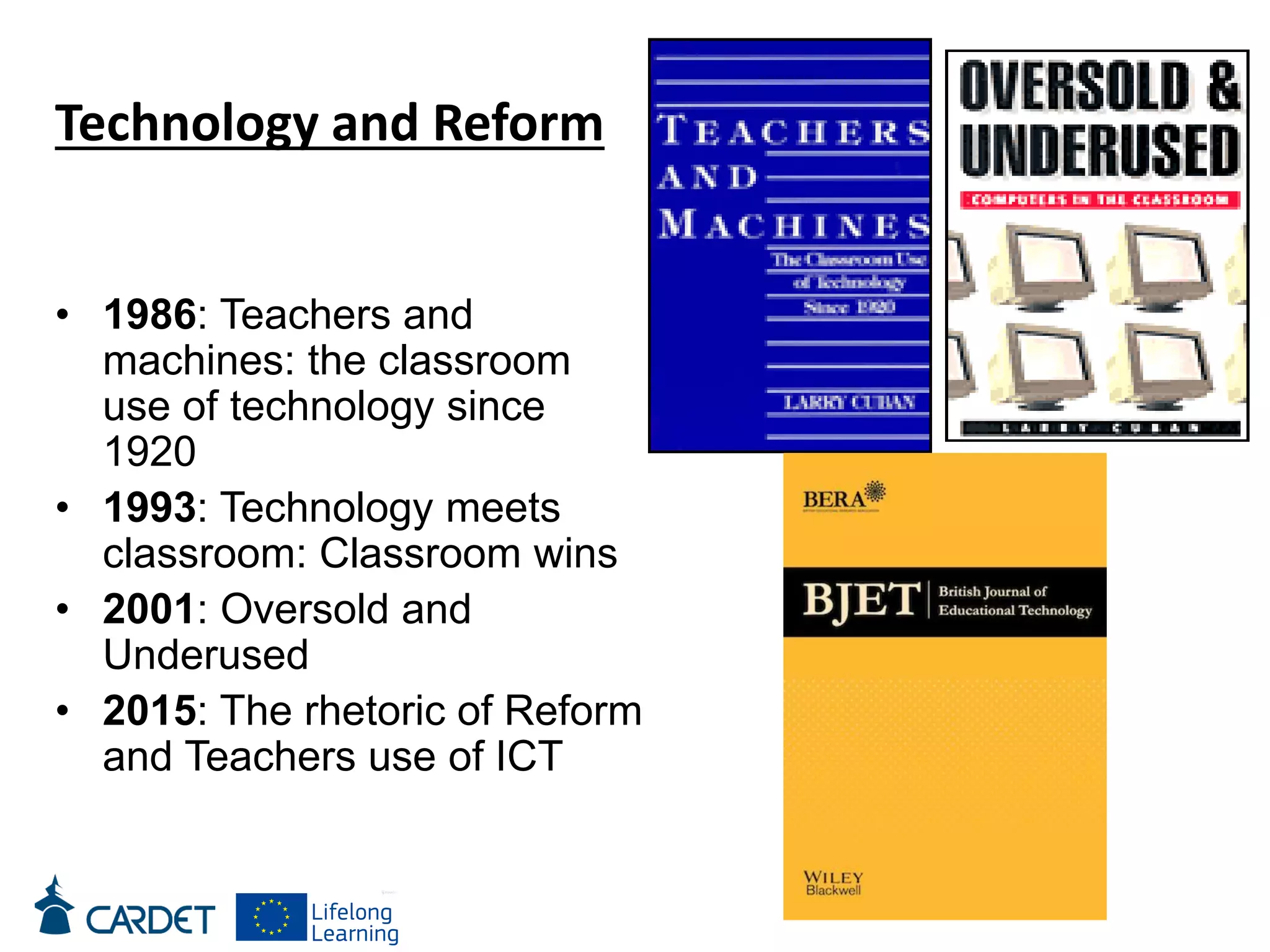
• 1986: Teachers and
machines: the classroom
use of technology since
1920
• 1993: Technology meets
classroom: Classroom wins
• 2001: Oversold and
Underused
• 2015: The rhetoric of Reform
and Teachers use of ICT
Technology and Reform
"The No Significant Difference
Phenomenon"
A lot of research reports document no significant
differences in student outcomes between
different modes of education delivery.
Method – context – tools – teacher -
capabilities of technology…. Are more
important
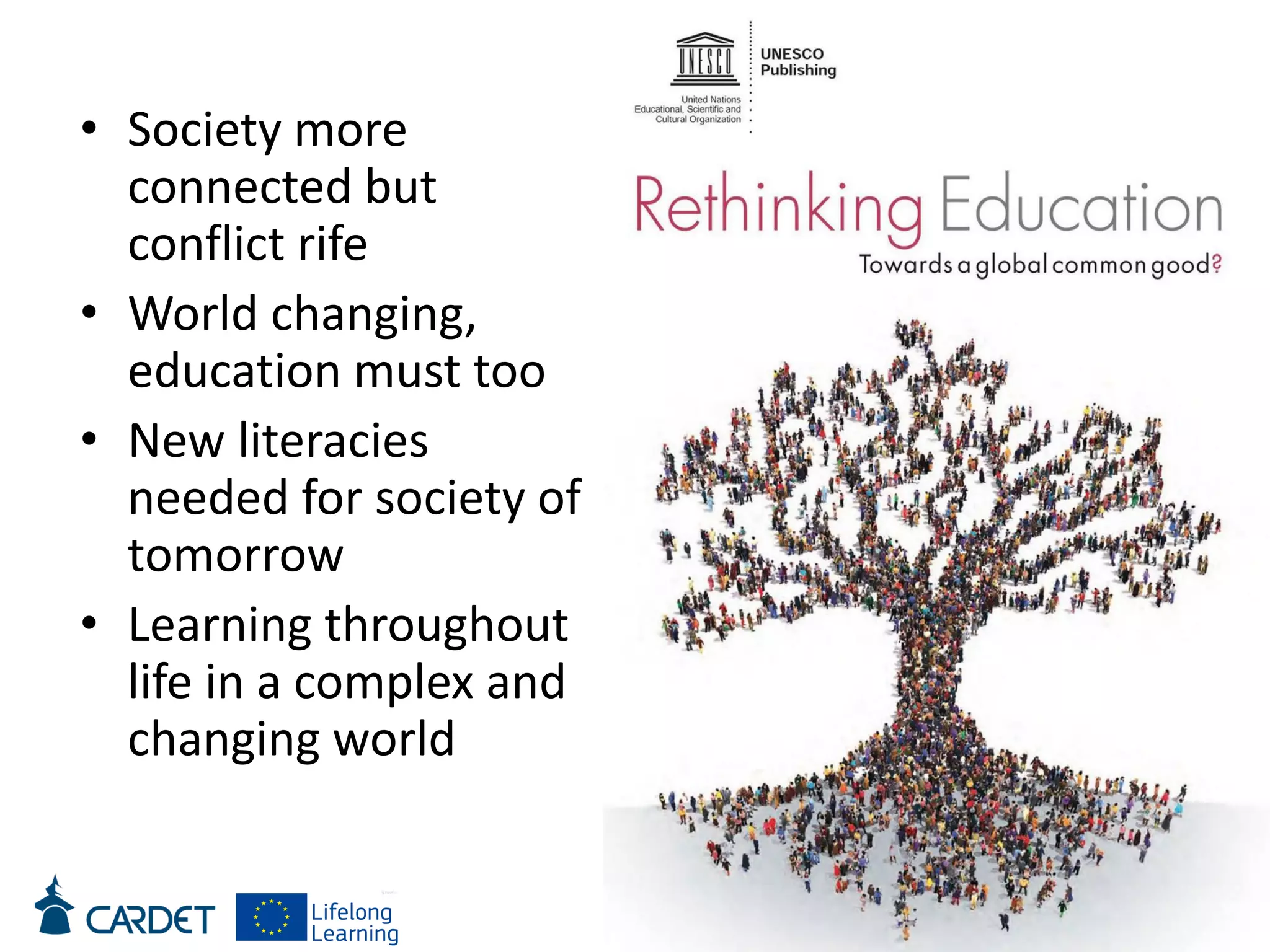
• Society more
connected but
conflict rife
• World changing,
education must too
• New literacies
needed for society of
tomorrow
• Learning throughout
life in a complex and
changing world
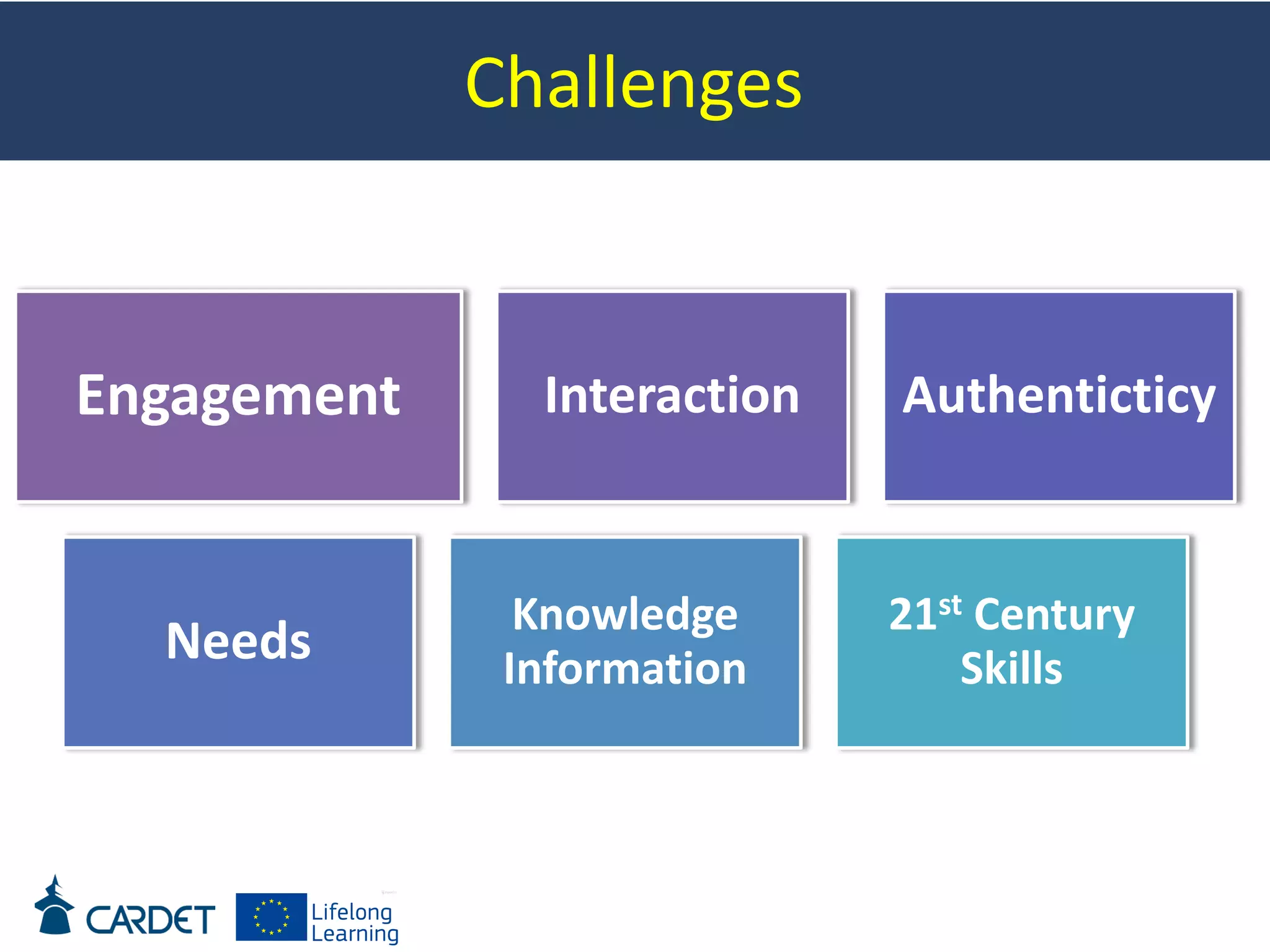
Challenges
Engagement Interaction Authenticticy
Needs
Knowledge
Information
21st Century
Skills
ELEARNING POSSIBILITIES
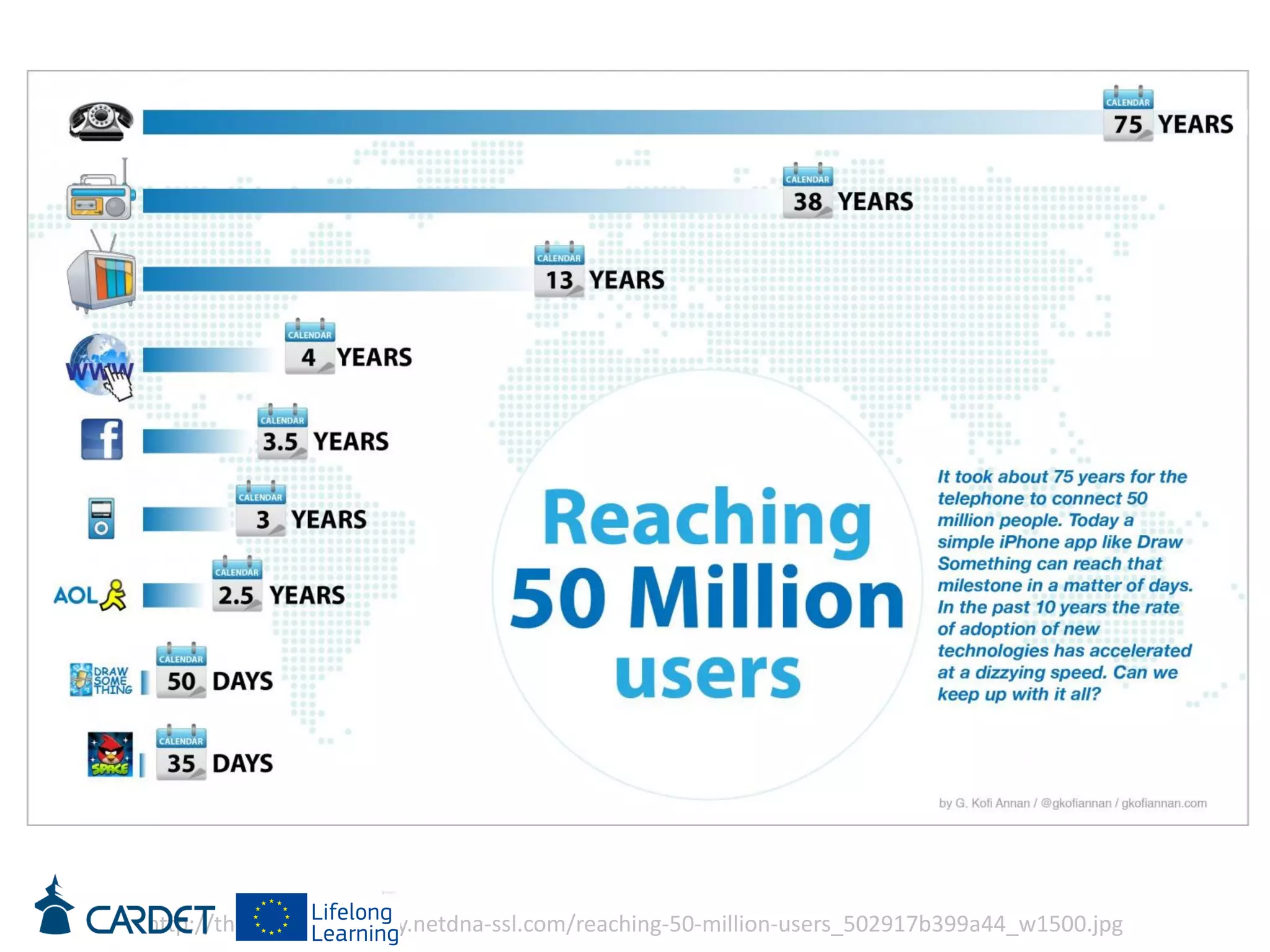
http://thumbnails-visually.netdna-ssl.com/reaching-50-million-users_502917b399a44_w1500.jpg
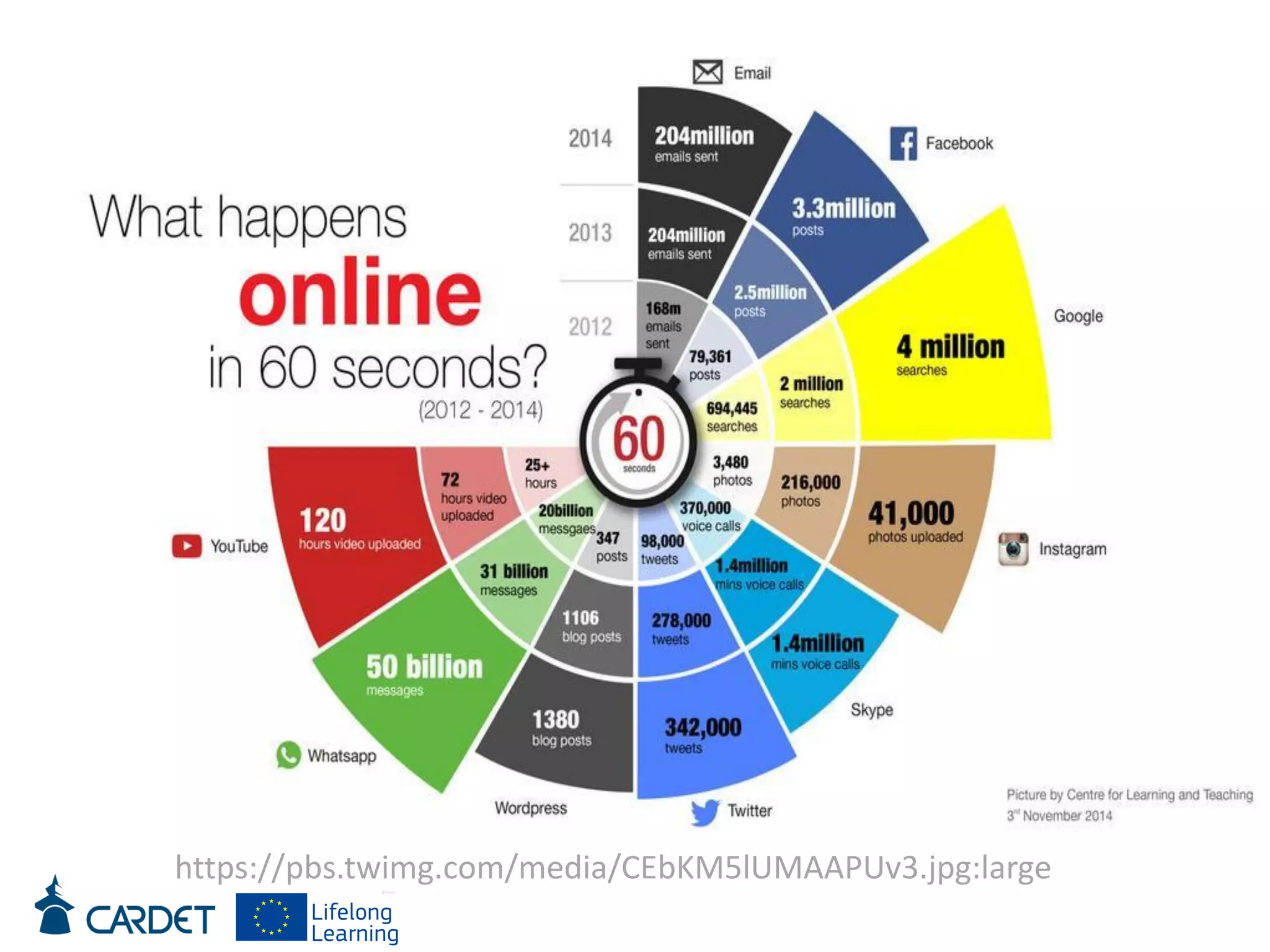
https://pbs.twimg.com/media/CEbKM5lUMAAPUv3.jpg:large
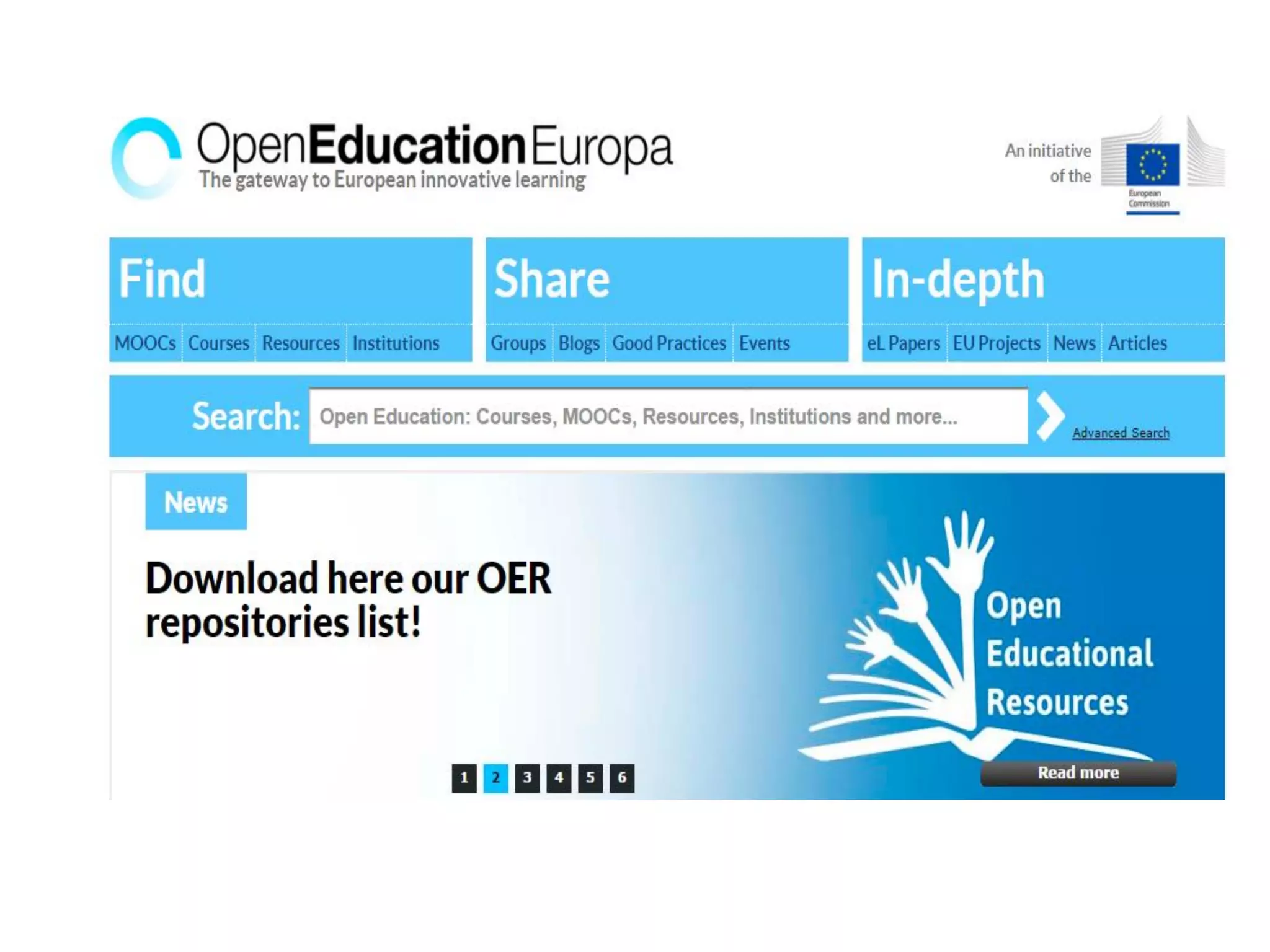
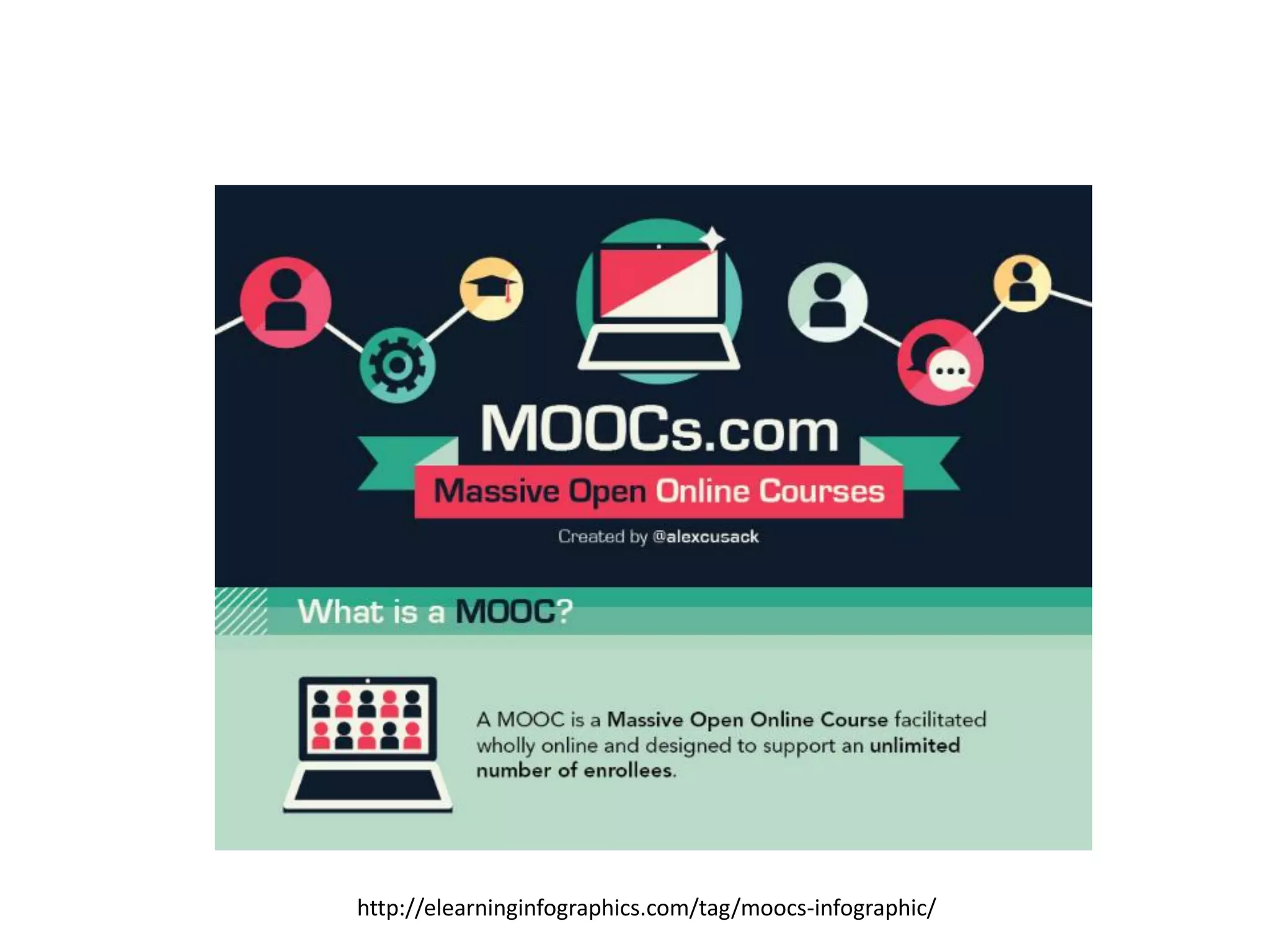
http://elearninginfographics.com/tag/moocs-infographic/
What does it mean for
curricula design and delivery?
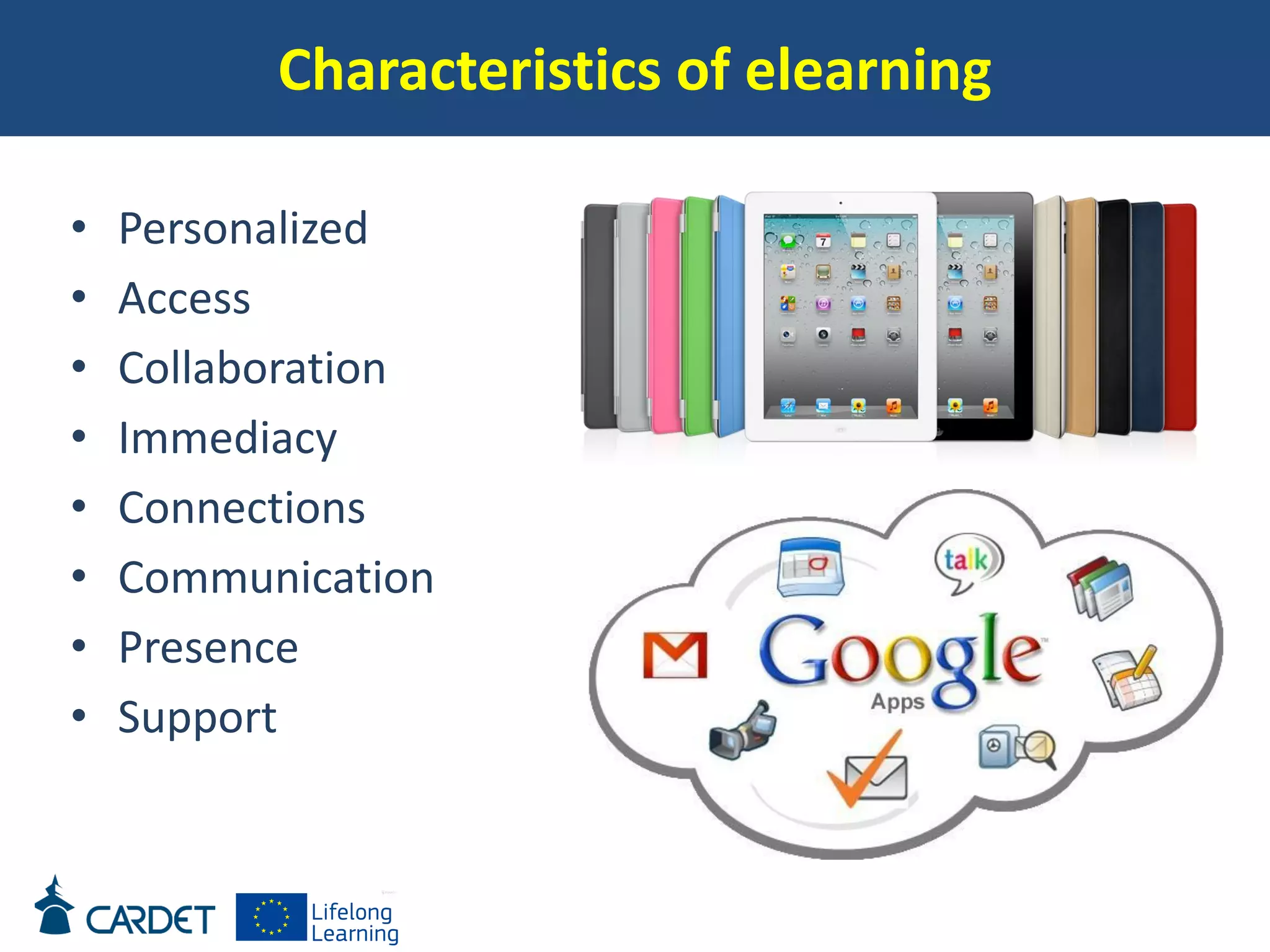
Characteristics of elearning
• Personalized
• Access
• Collaboration
• Immediacy
• Connections
• Communication
• Presence
• Support
What does it mean for the kinds
of skills we need to help our
students develop?
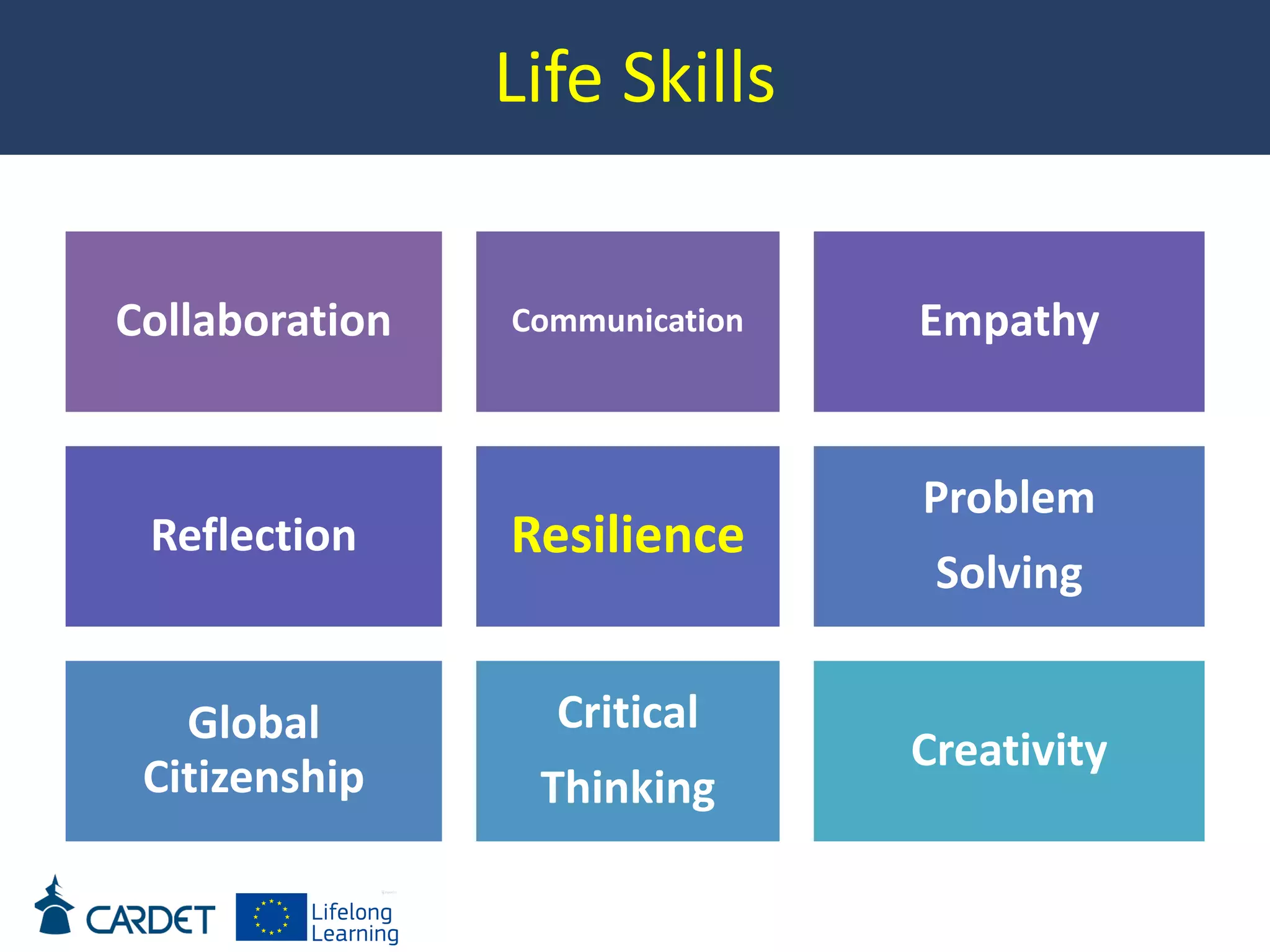
Life Skills
Collaboration Communication Empathy
Reflection Resilience
Problem
Solving
Global
Citizenship
Critical
Thinking
Creativity
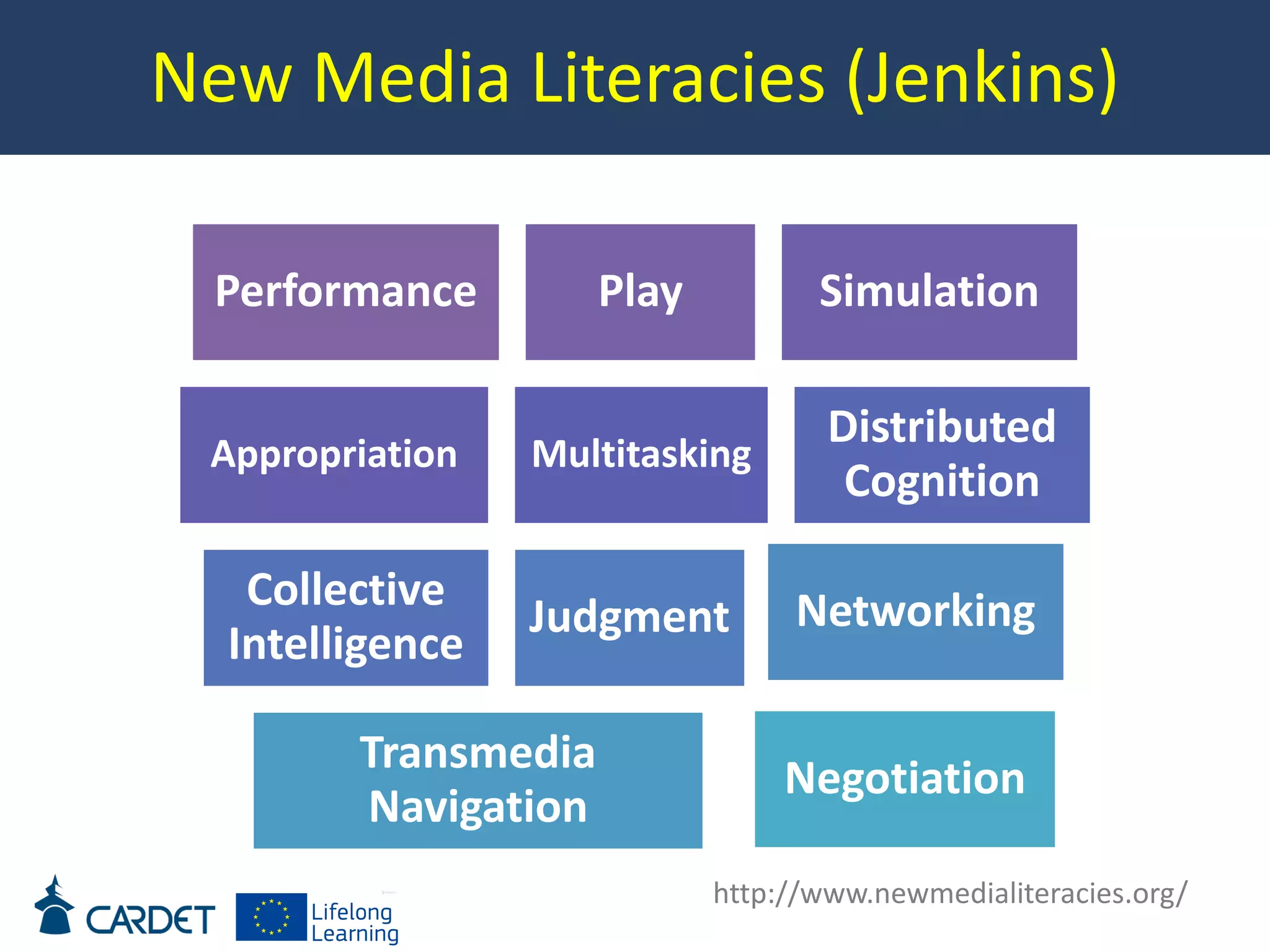
New Media Literacies (Jenkins)
Performance Play Simulation
Appropriation Multitasking
Distributed
Cognition
Collective
Intelligence
Judgment Networking
Transmedia
Navigation
Negotiation
http://www.newmedialiteracies.org/
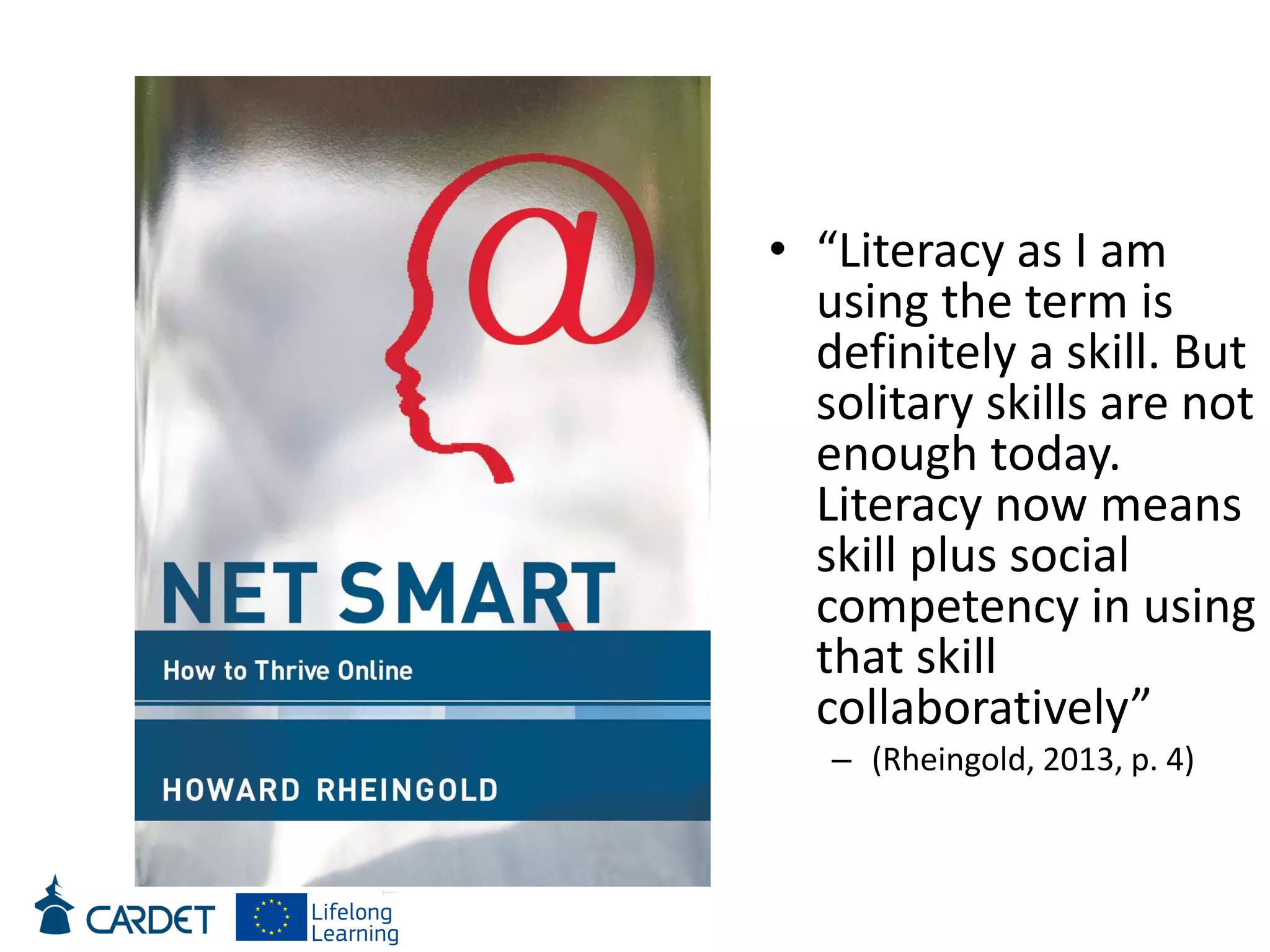
• “Literacy as I am
using the term is
definitely a skill. But
solitary skills are not
enough today.
Literacy now means
skill plus social
competency in using
that skill
collaboratively”
– (Rheingold, 2013, p. 4)
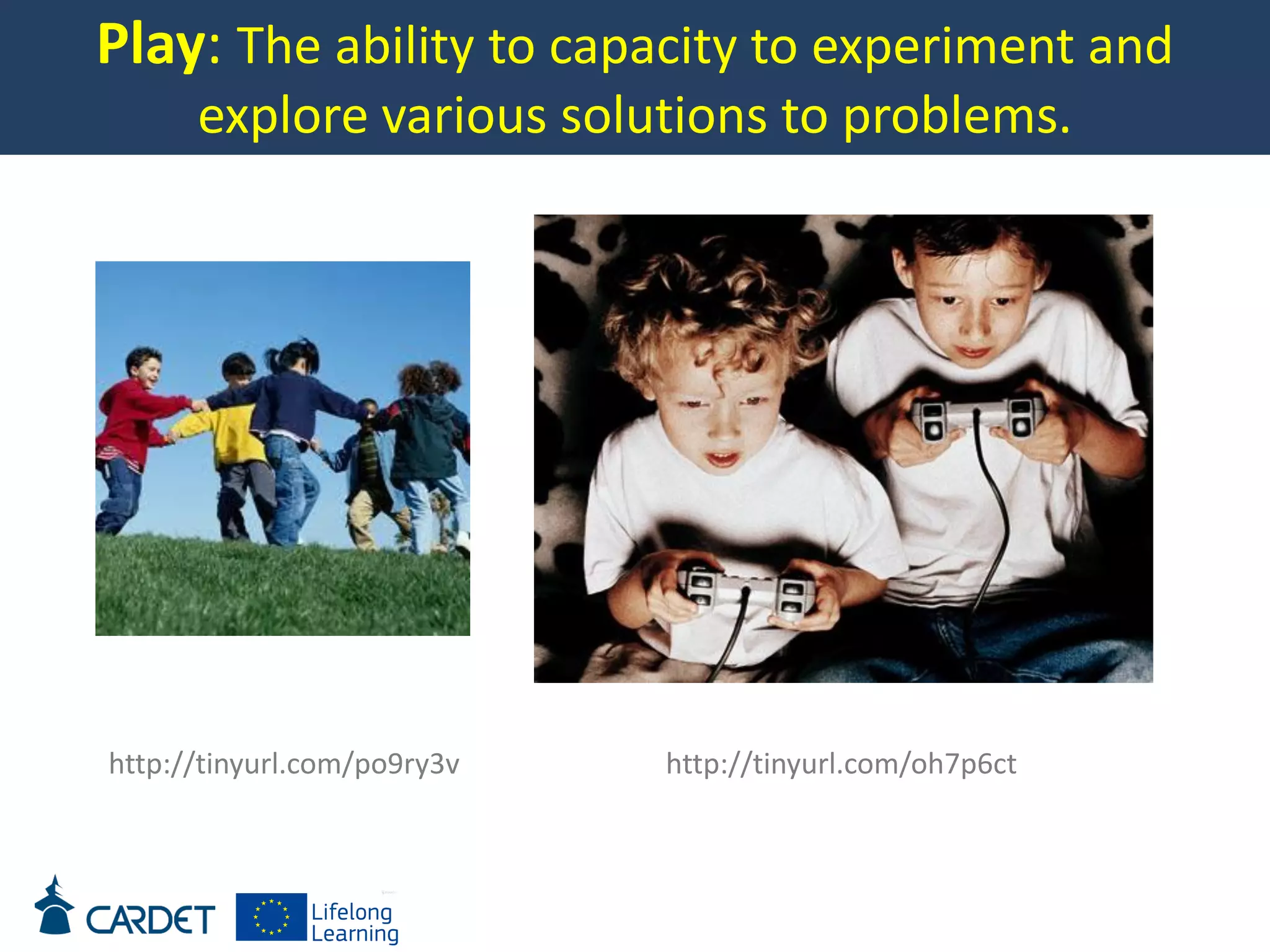
Play: The ability to capacity to experiment and
explore various solutions to problems.
http://tinyurl.com/po9ry3v http://tinyurl.com/oh7p6ct
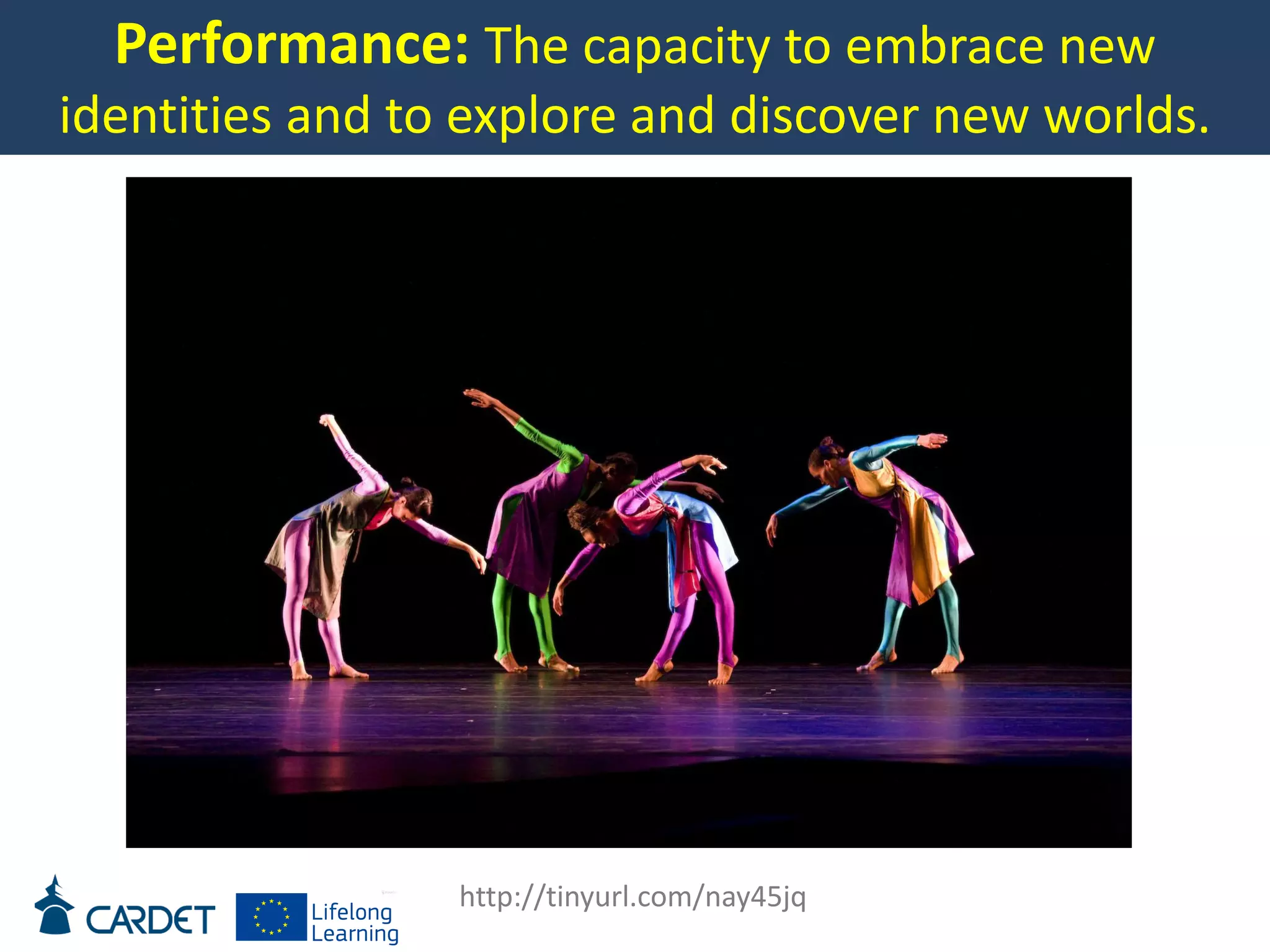
Performance: The capacity to embrace new
identities and to explore and discover new worlds.
http://tinyurl.com/nay45jq
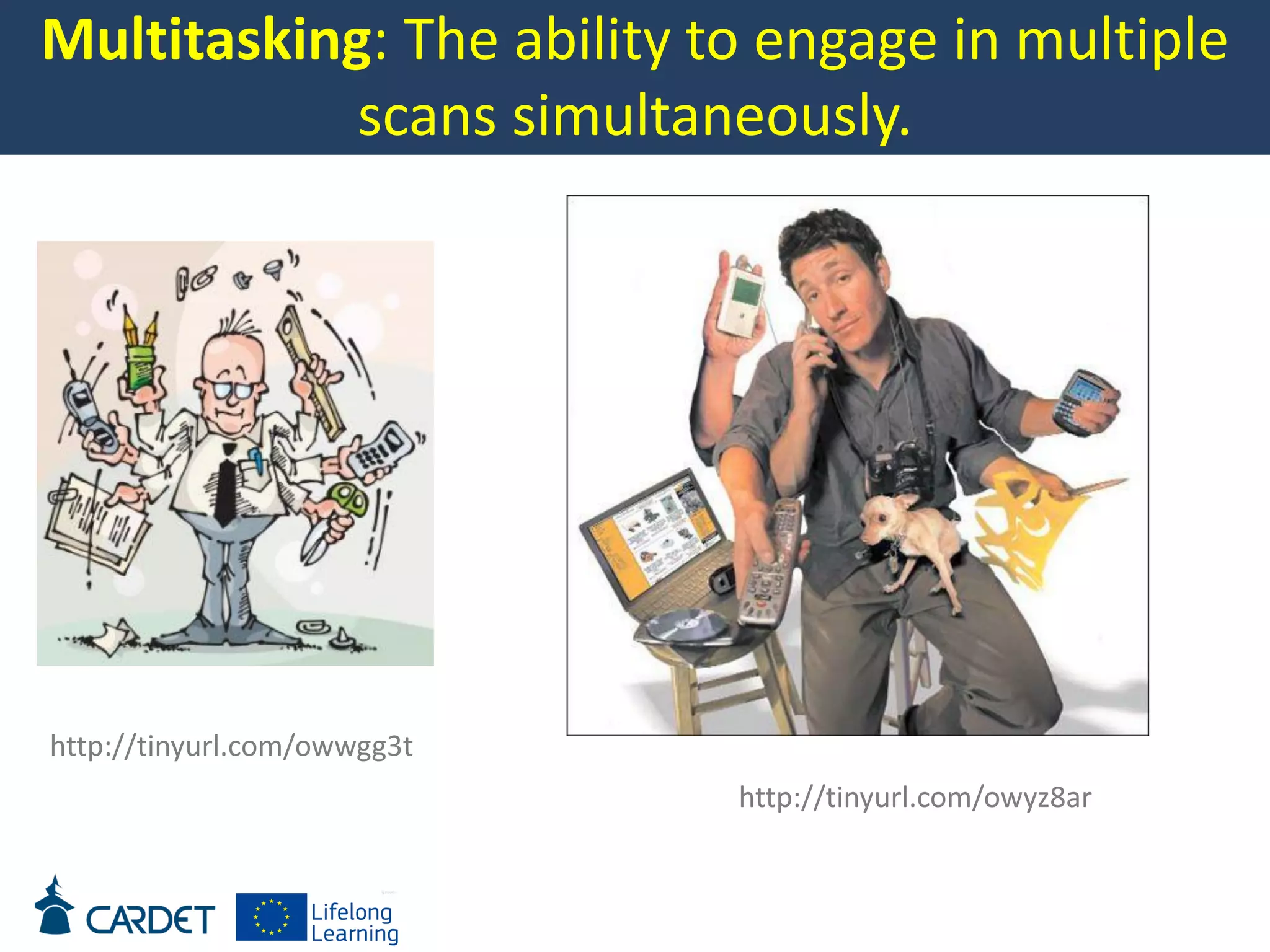
Multitasking: The ability to engage in multiple
scans simultaneously.
http://tinyurl.com/owwgg3t
http://tinyurl.com/owyz8ar
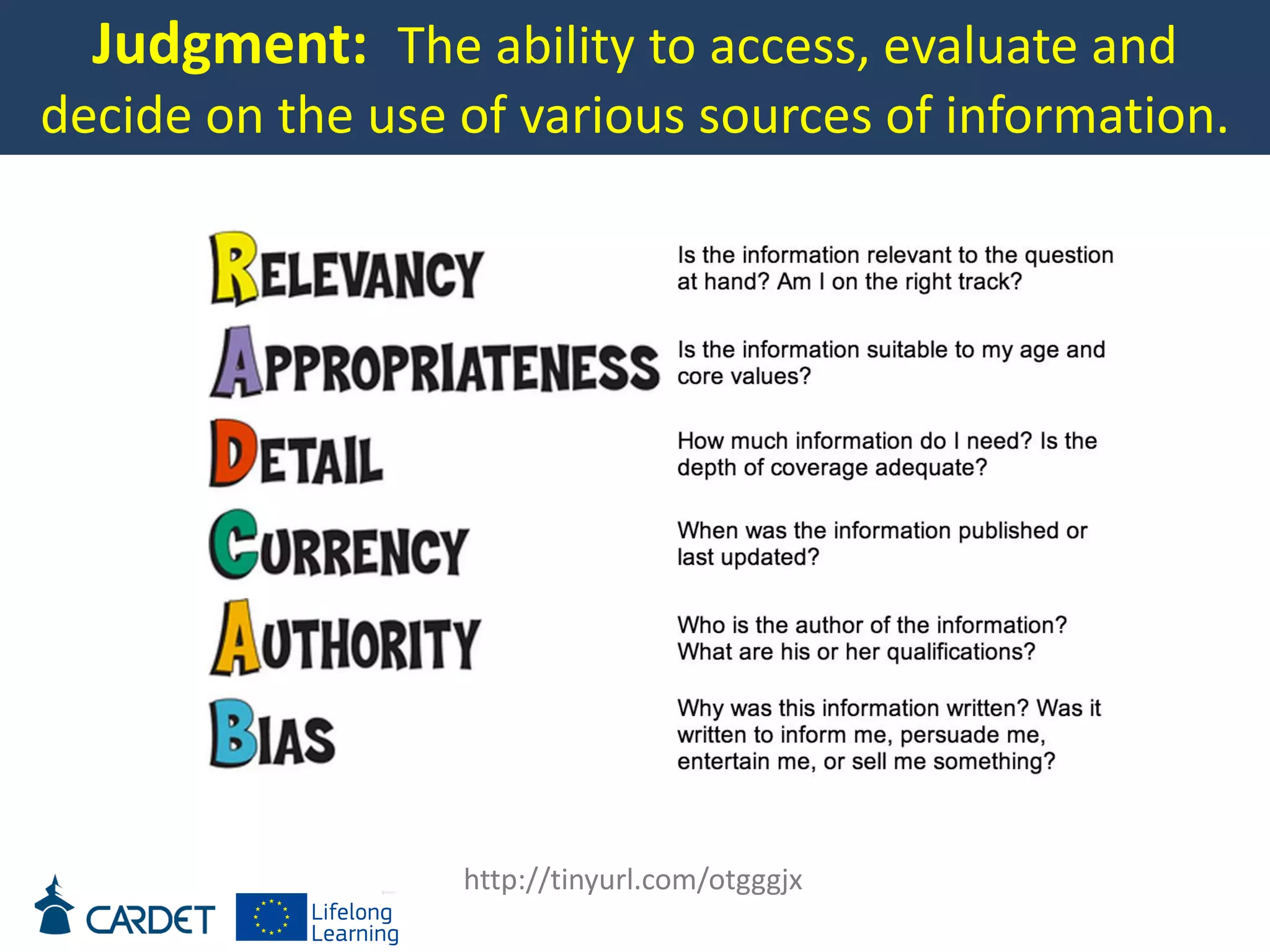
Judgment: The ability to access, evaluate and
decide on the use of various sources of information.
http://tinyurl.com/otgggjx
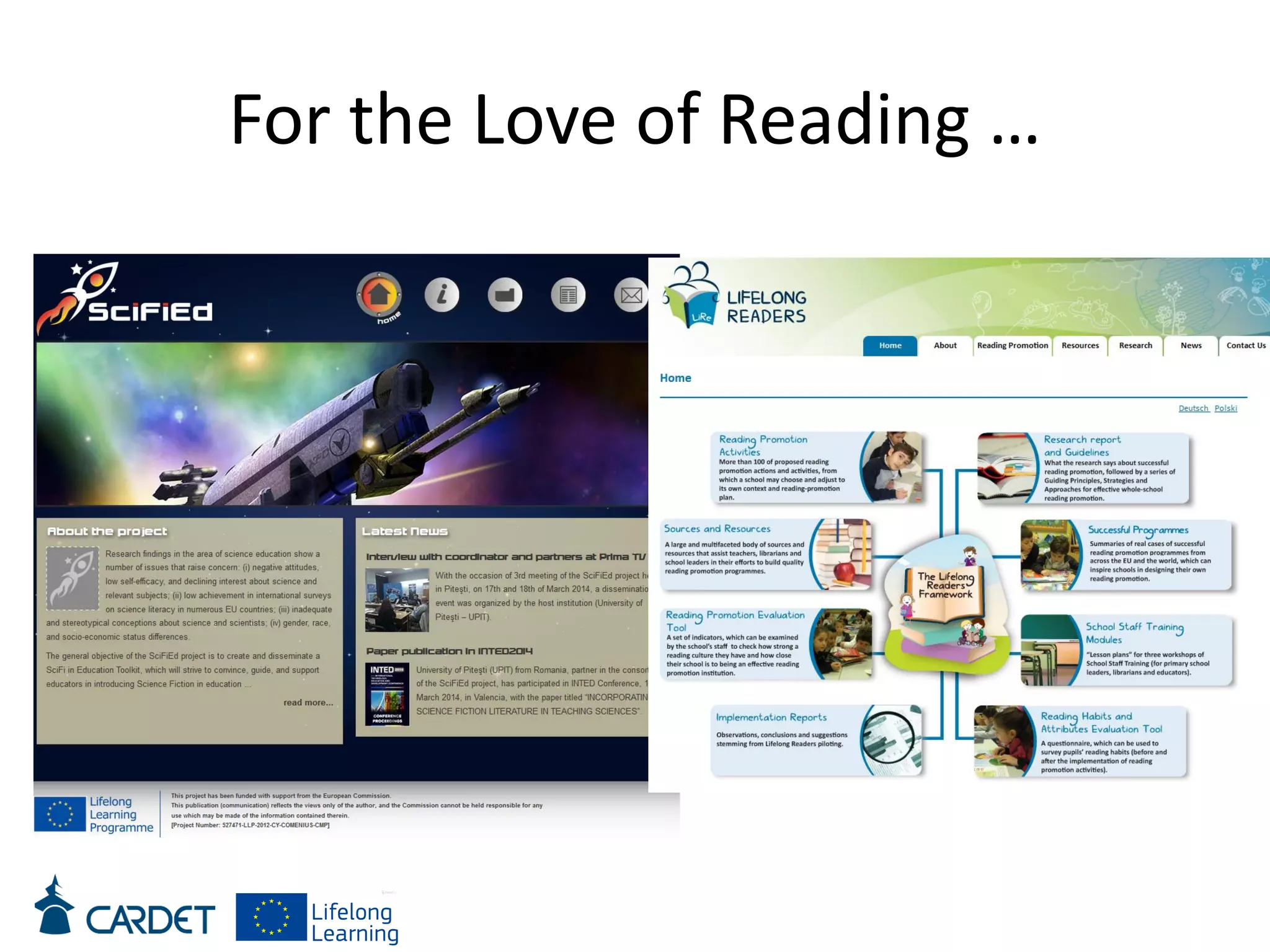
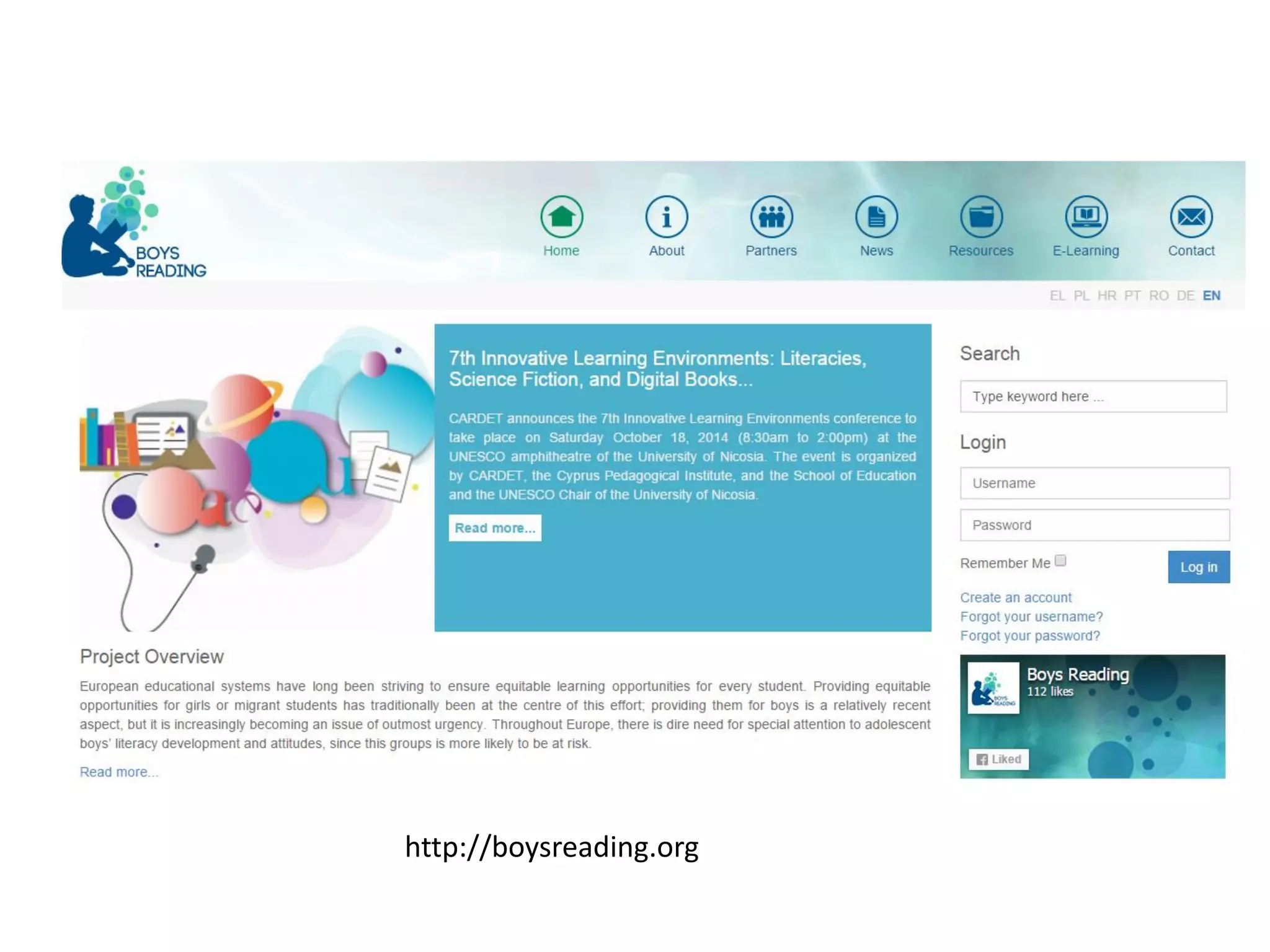
For the Love of Reading …
http://boysreading.org
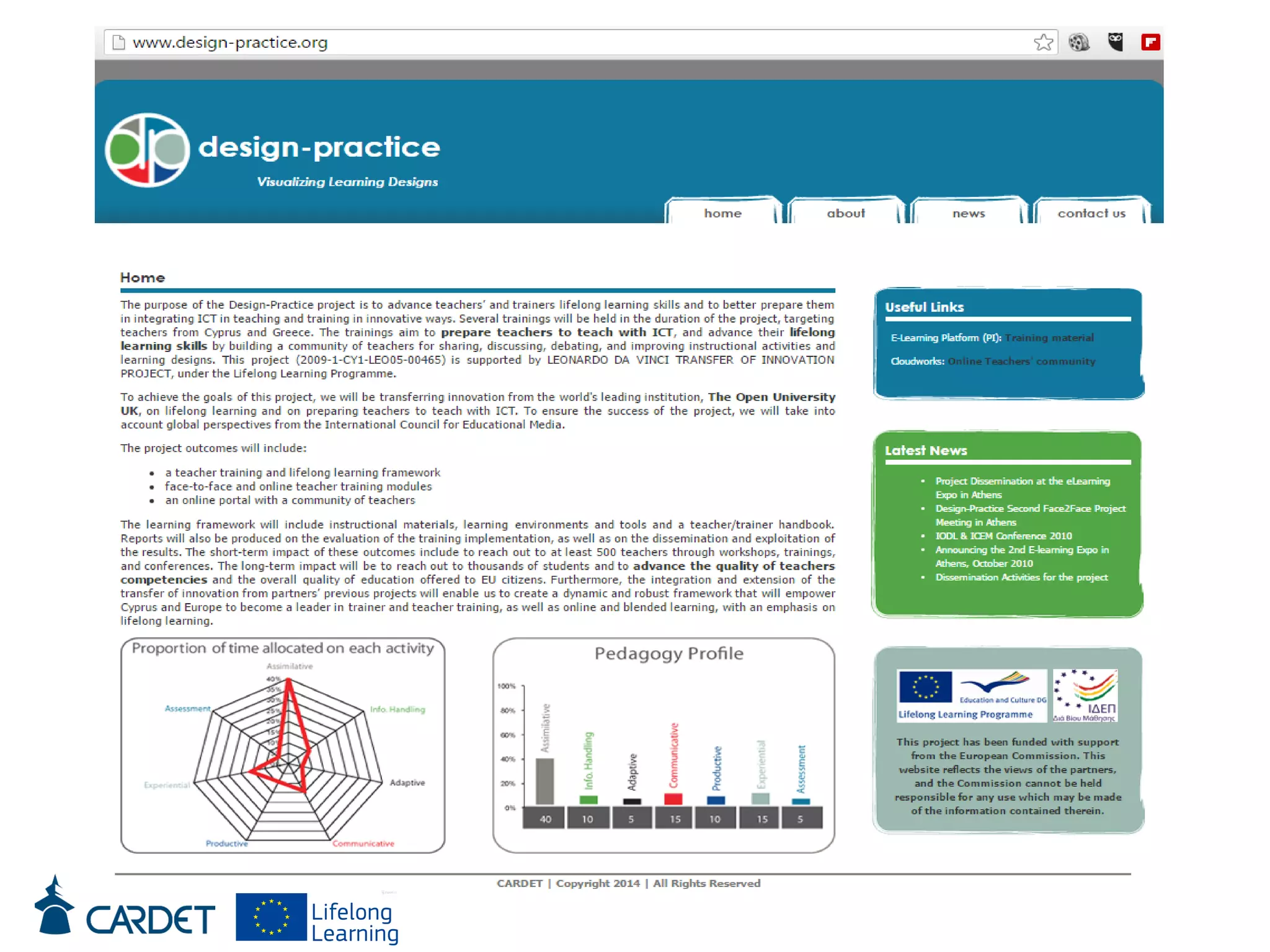
LEARNING DESIGN
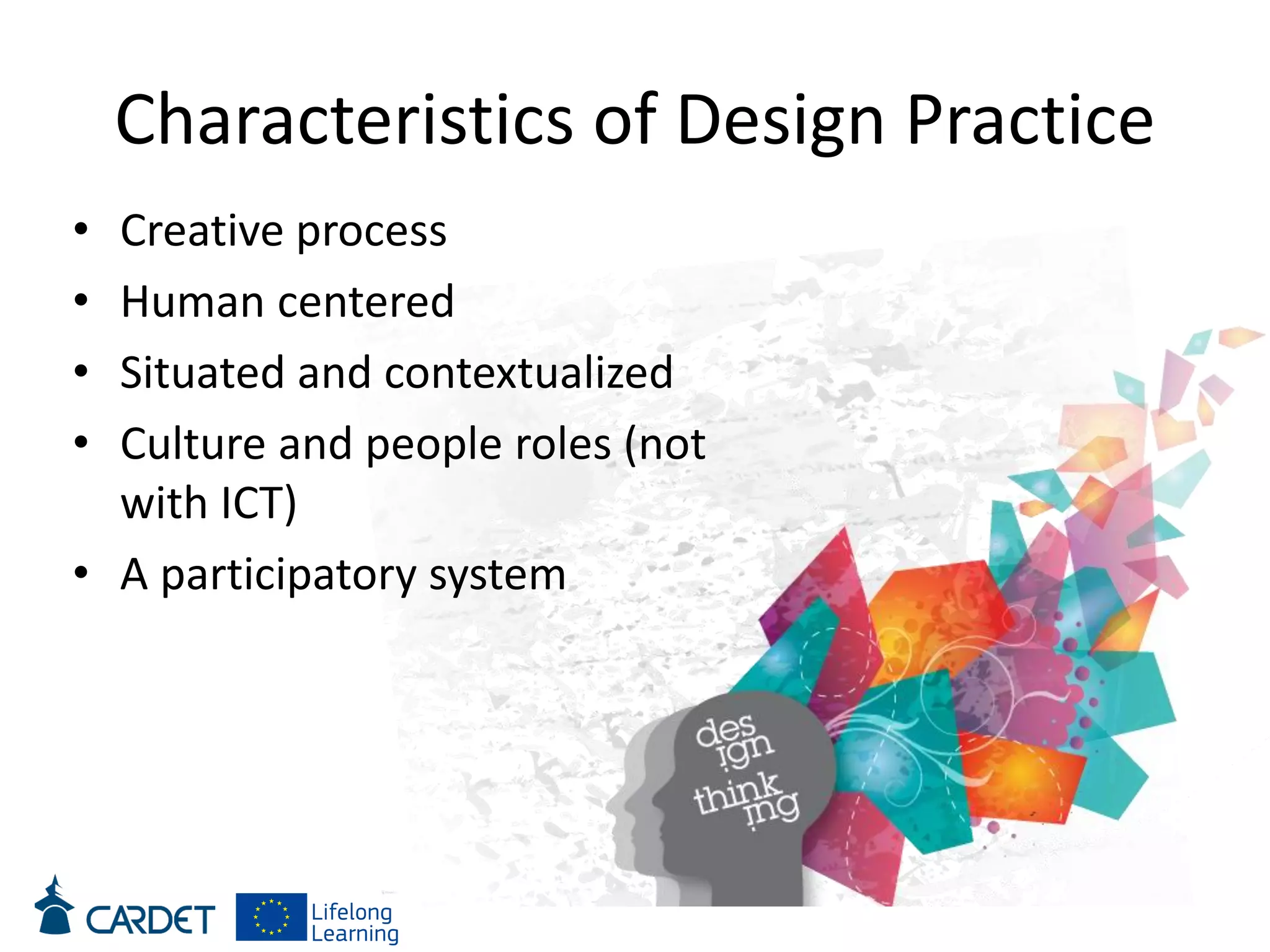
Characteristics of Design Practice
• Creative process
• Human centered
• Situated and contextualized
• Culture and people roles (not
with ICT)
• A participatory system
Design thinking as a framework
encourages us to act as
LEARNING ARCHITECTS
LEARNING DESIGN
Pedagogy and Assessment
Learners Learn Best When …
• They engage in active intentional learning
• Represent knowledge in multiple ways
• Participate in real-world authentic activities
• Receive frequent feedback
• Collaborate with others in solving problems.
• Have access to tools for meaningful learning
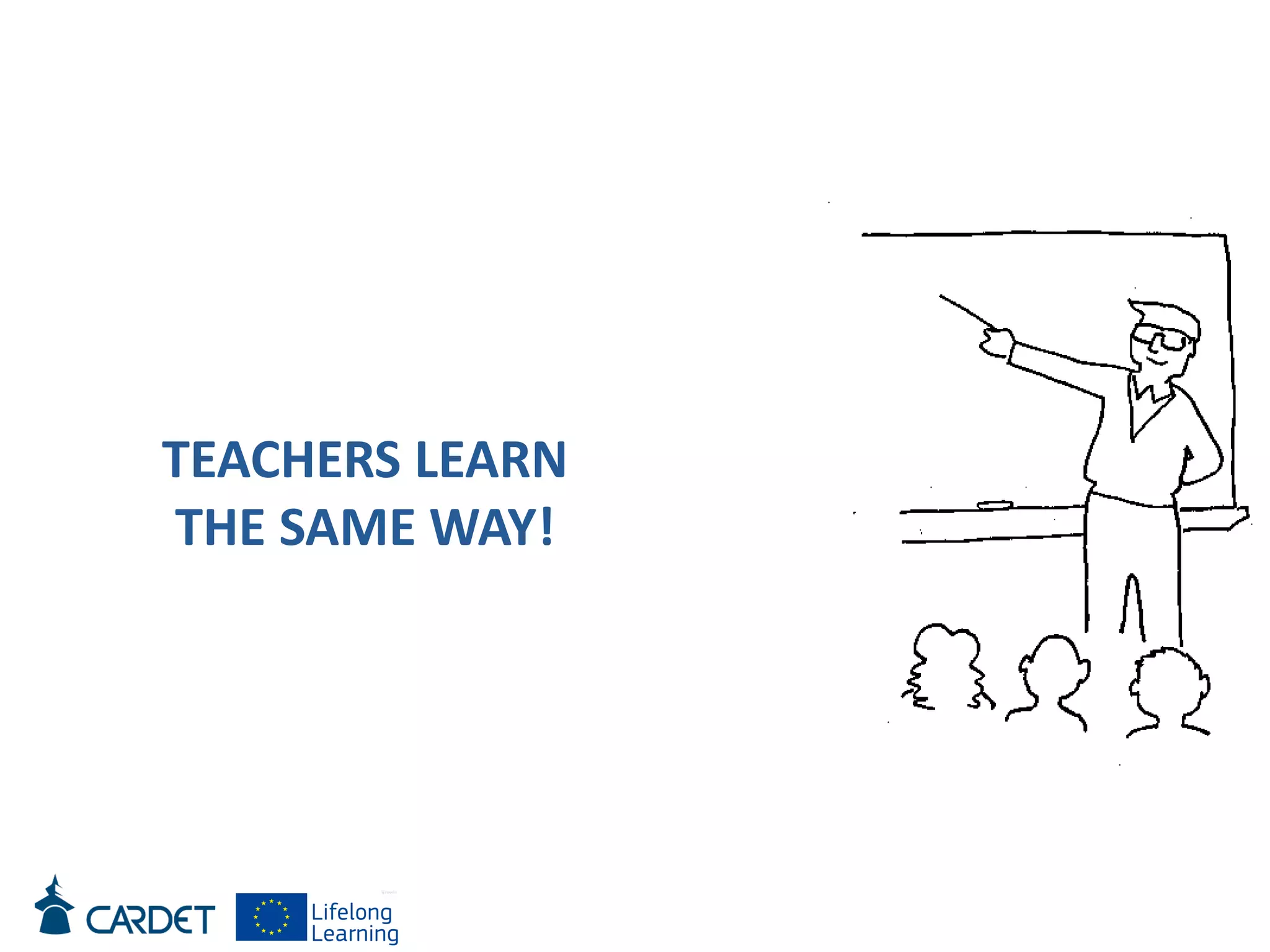
TEACHERS LEARN
THE SAME WAY!
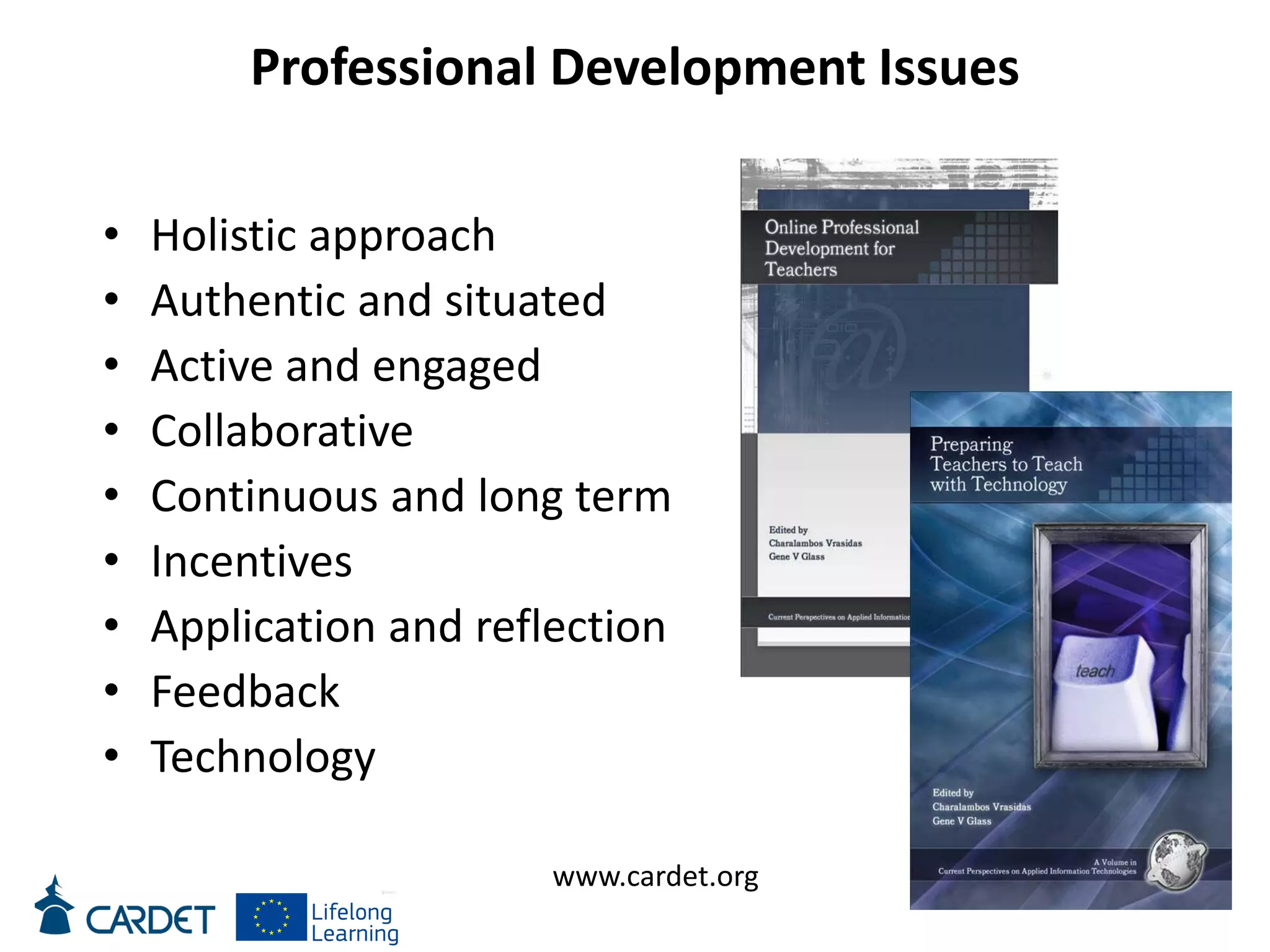
Professional Development Issues
• Holistic approach
• Authentic and situated
• Active and engaged
• Collaborative
• Continuous and long term
• Incentives
• Application and reflection
• Feedback
• Technology
www.cardet.org
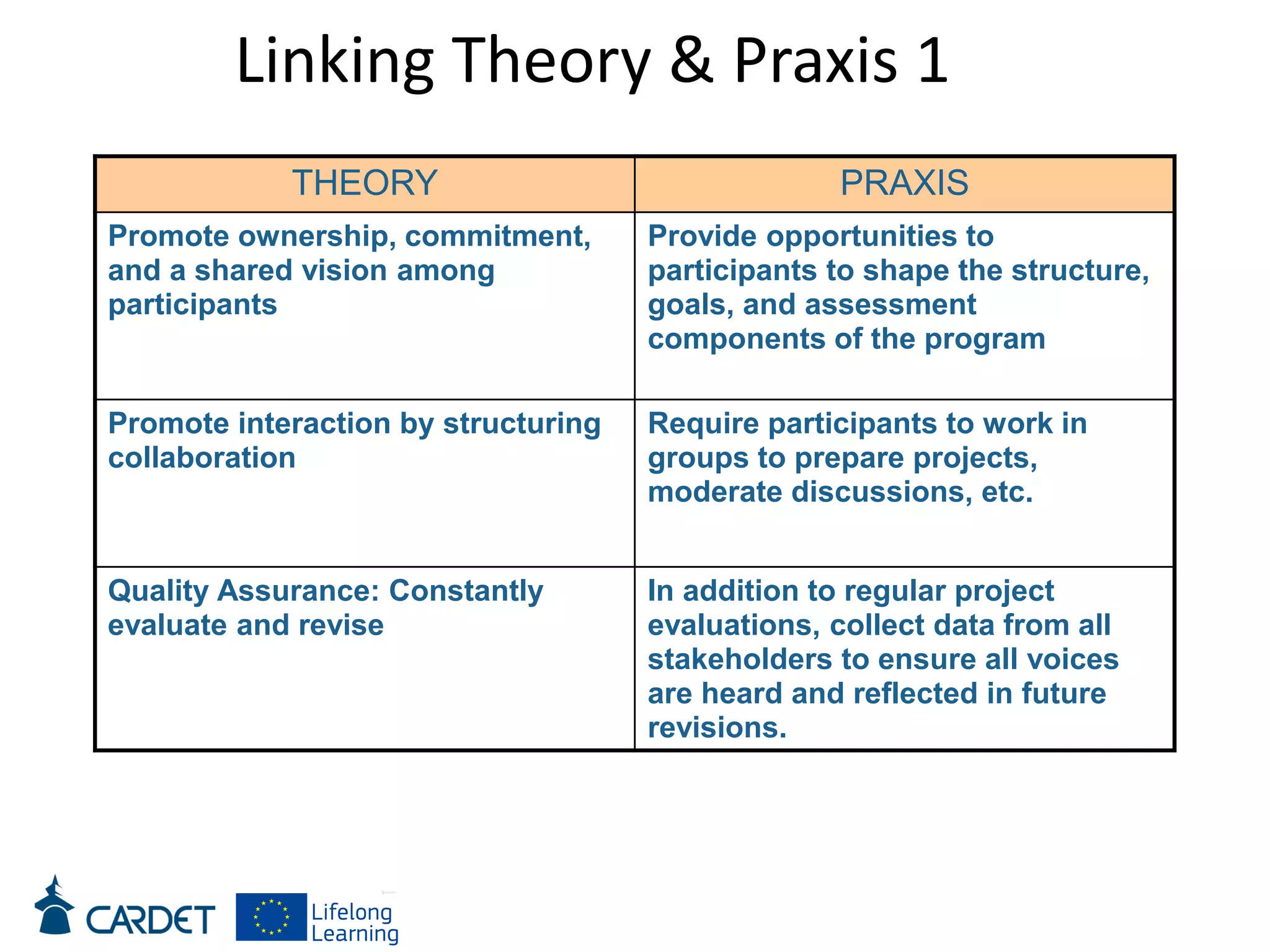
Linking Theory & Praxis 1
THEORY PRAXIS
Promote ownership, commitment,
and a shared vision among
participants
Provide opportunities to
participants to shape the structure,
goals, and assessment
components of the program
Promote interaction by structuring
collaboration
Require participants to work in
groups to prepare projects,
moderate discussions, etc.
Quality Assurance: Constantly
evaluate and revise
In addition to regular project
evaluations, collect data from all
stakeholders to ensure all voices
are heard and reflected in future
revisions.
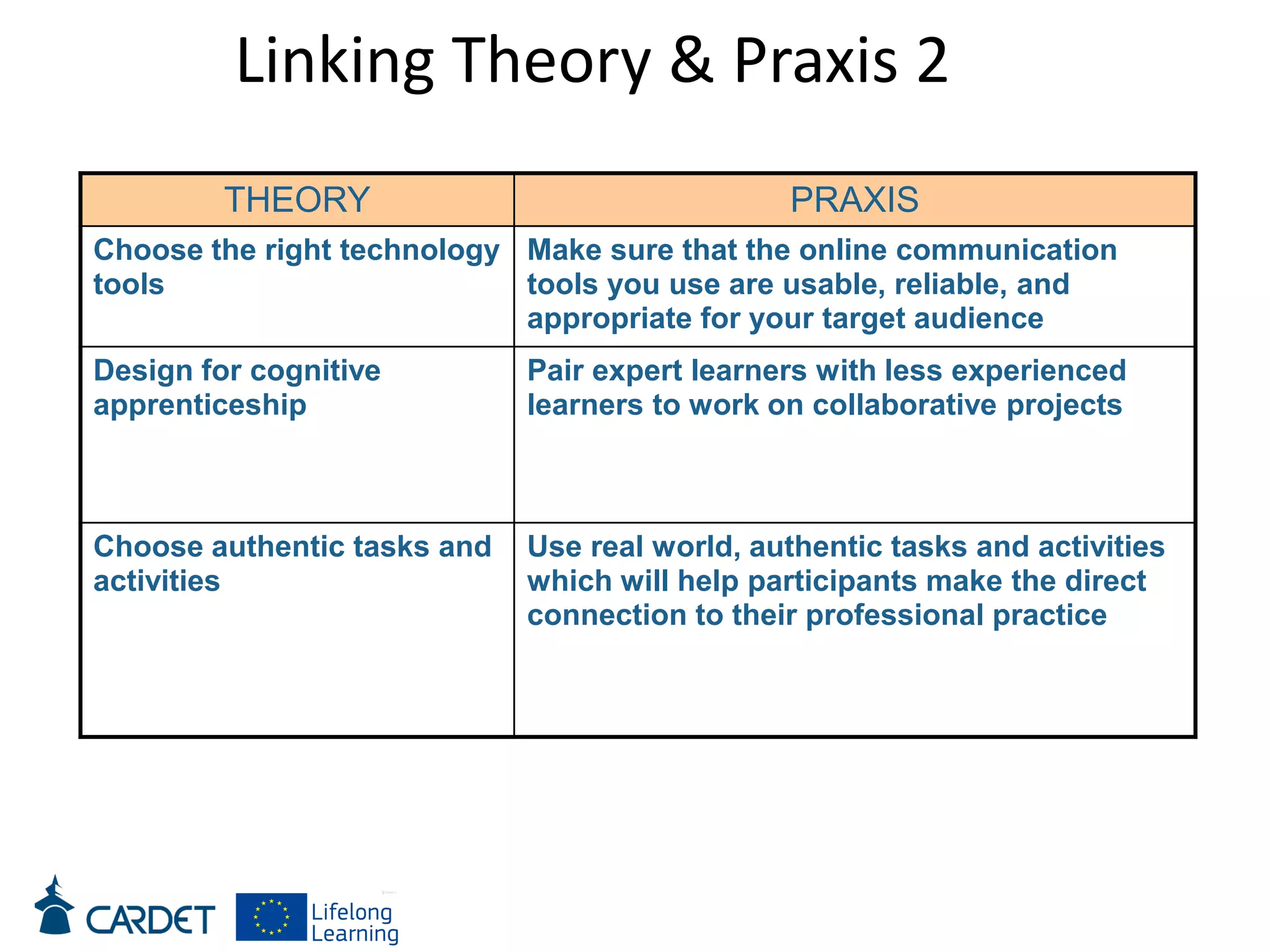
Linking Theory & Praxis 2
THEORY PRAXIS
Choose the right technology
tools
Make sure that the online communication
tools you use are usable, reliable, and
appropriate for your target audience
Design for cognitive
apprenticeship
Pair expert learners with less experienced
learners to work on collaborative projects
Choose authentic tasks and
activities
Use real world, authentic tasks and activities
which will help participants make the direct
connection to their professional practice
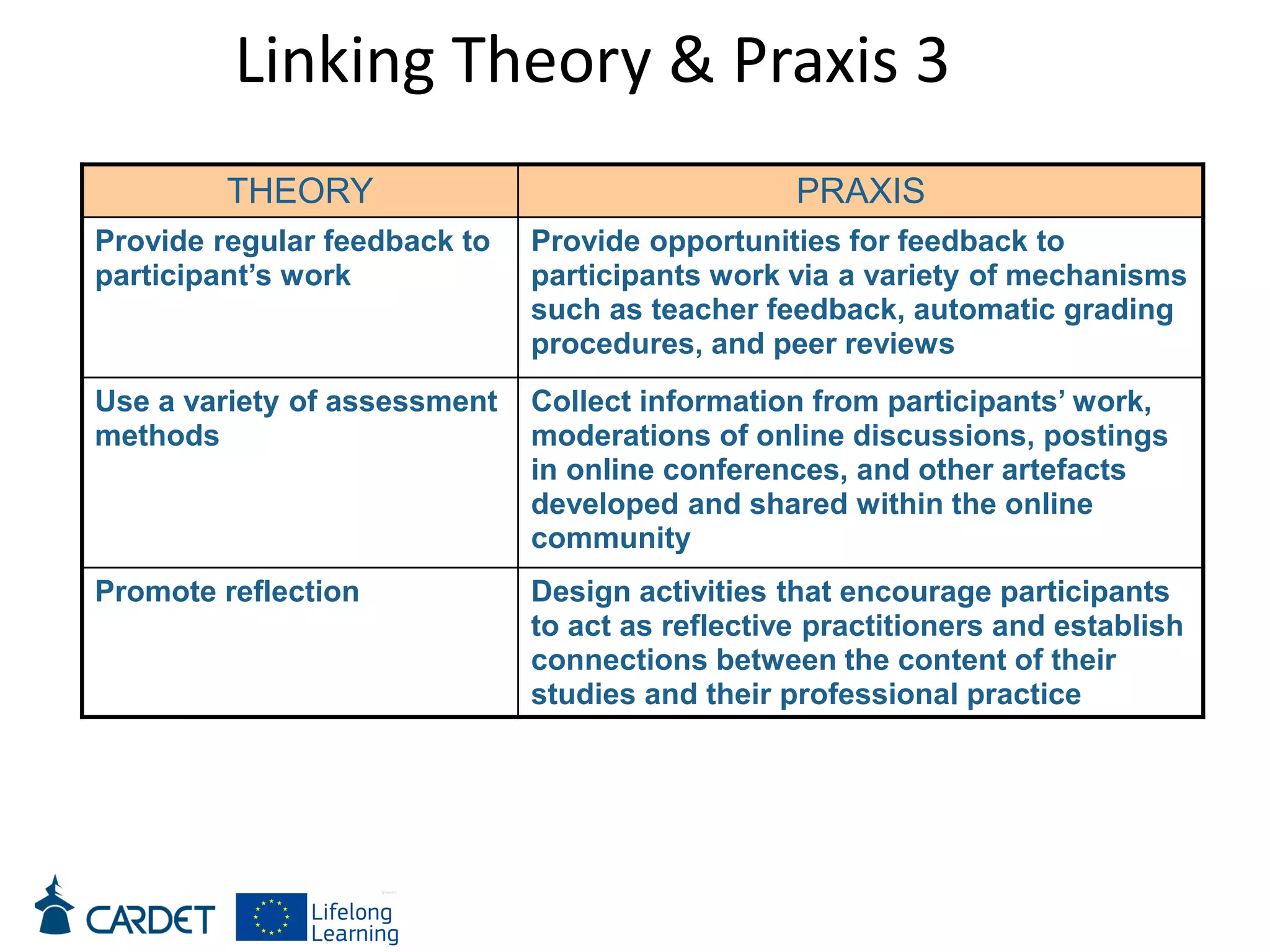
Linking Theory & Praxis 3
THEORY PRAXIS
Provide regular feedback to
participant’s work
Provide opportunities for feedback to
participants work via a variety of mechanisms
such as teacher feedback, automatic grading
procedures, and peer reviews
Use a variety of assessment
methods
Collect information from participants’ work,
moderations of online discussions, postings
in online conferences, and other artefacts
developed and shared within the online
community
Promote reflection Design activities that encourage participants
to act as reflective practitioners and establish
connections between the content of their
studies and their professional practice
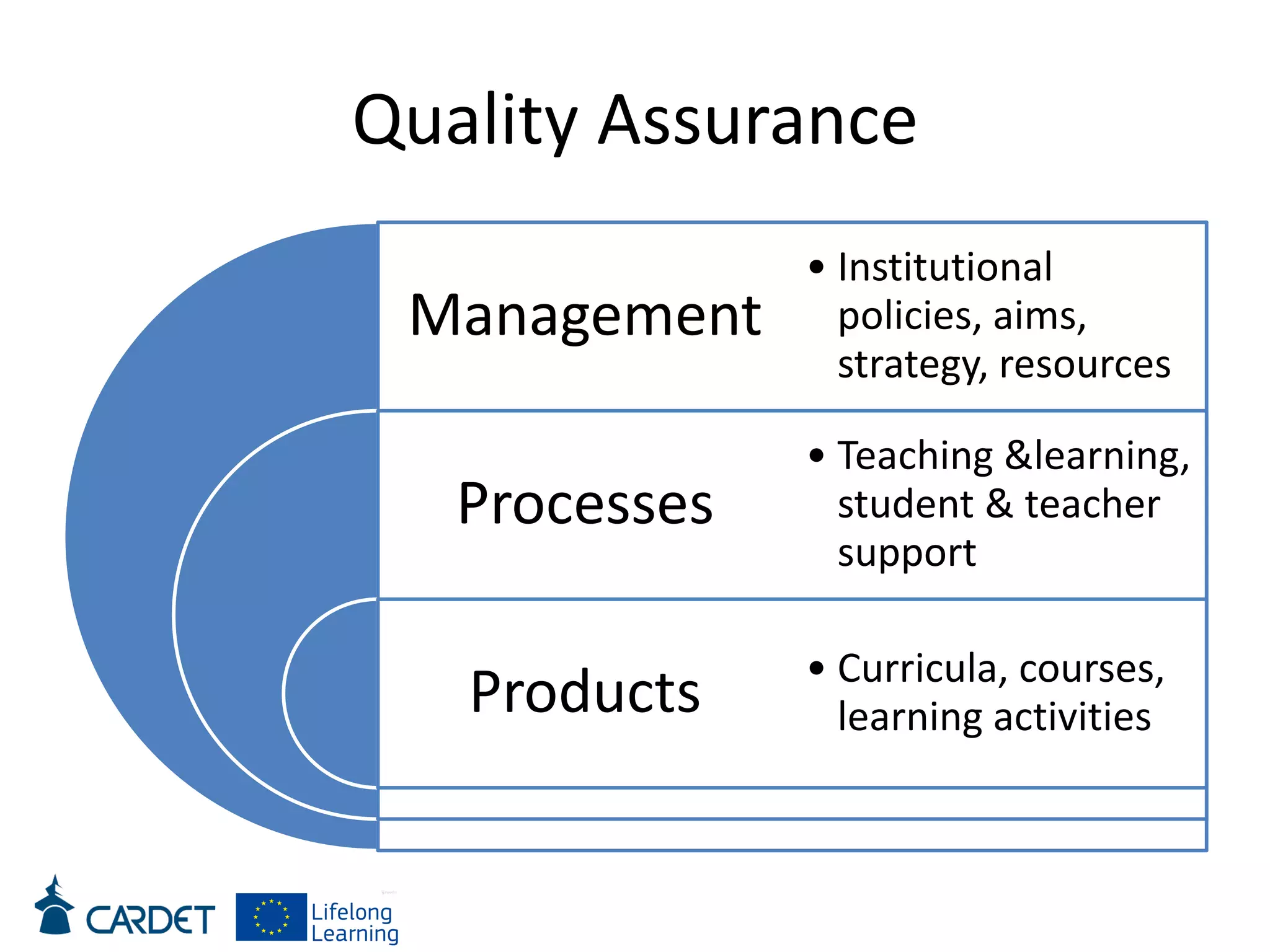
Quality Assurance
Management
Processes
Products
• Institutional
policies, aims,
strategy, resources
• Teaching &learning,
student & teacher
support
• Curricula, courses,
learning activities
CASE STUDIES
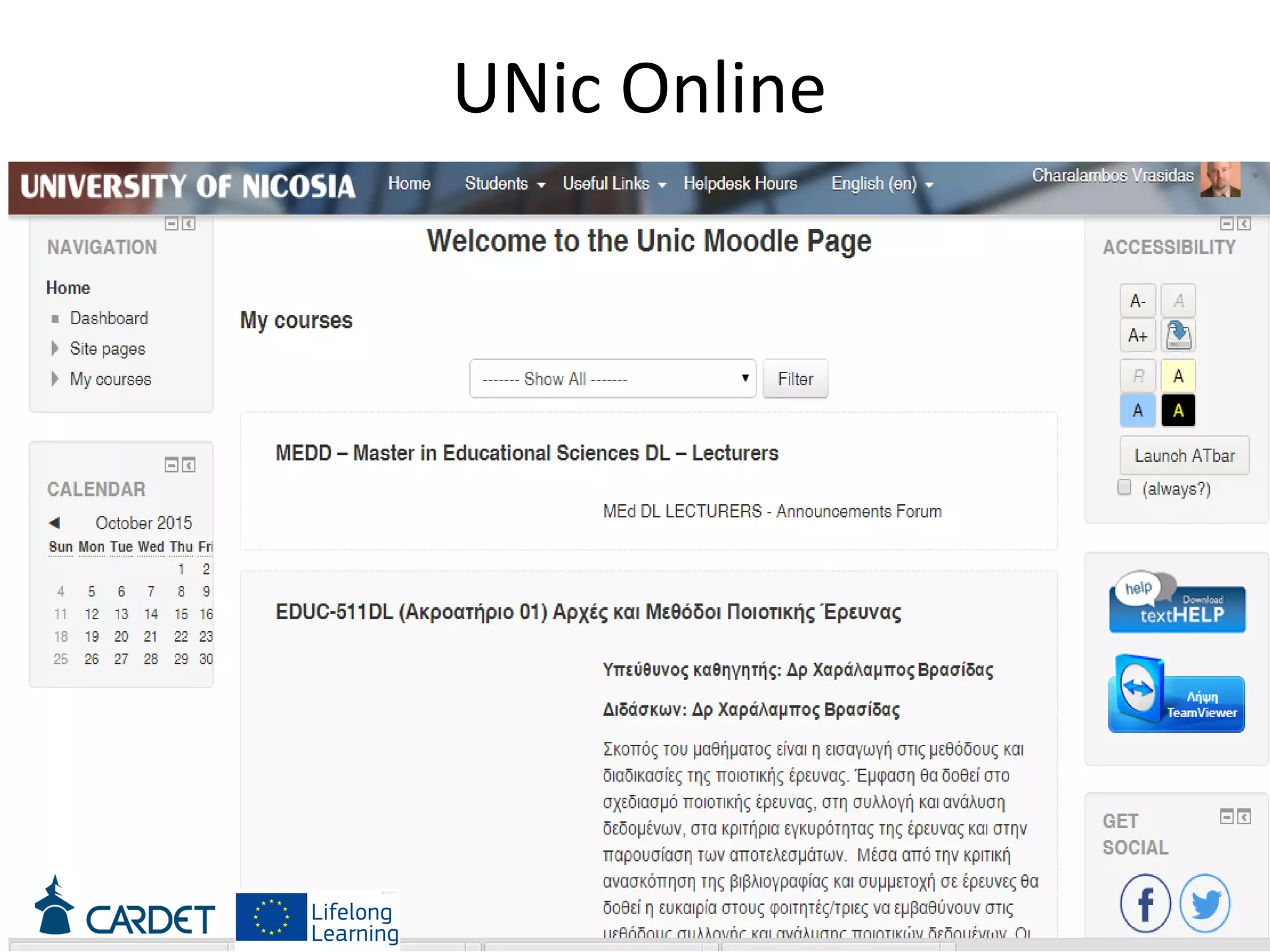
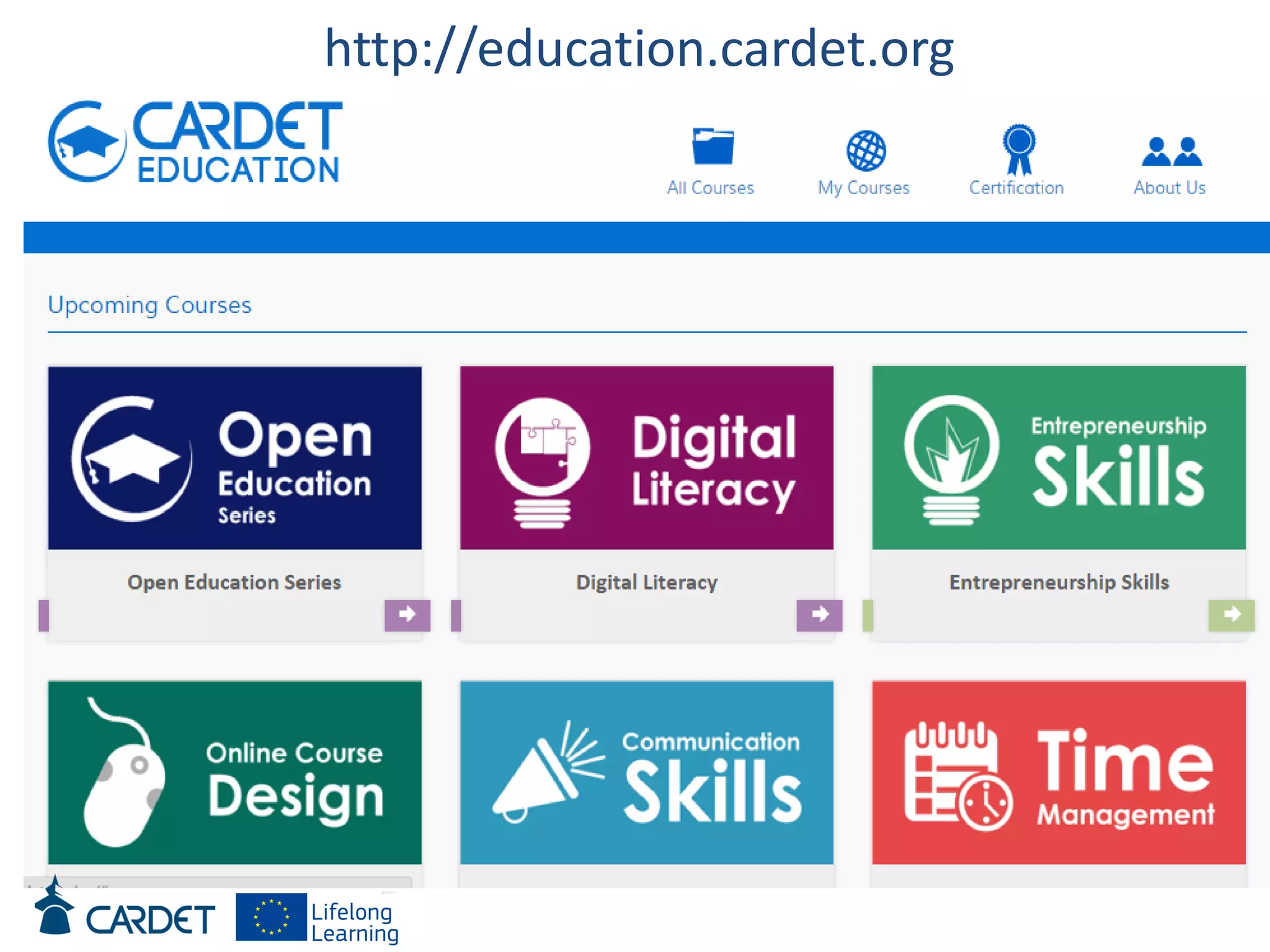
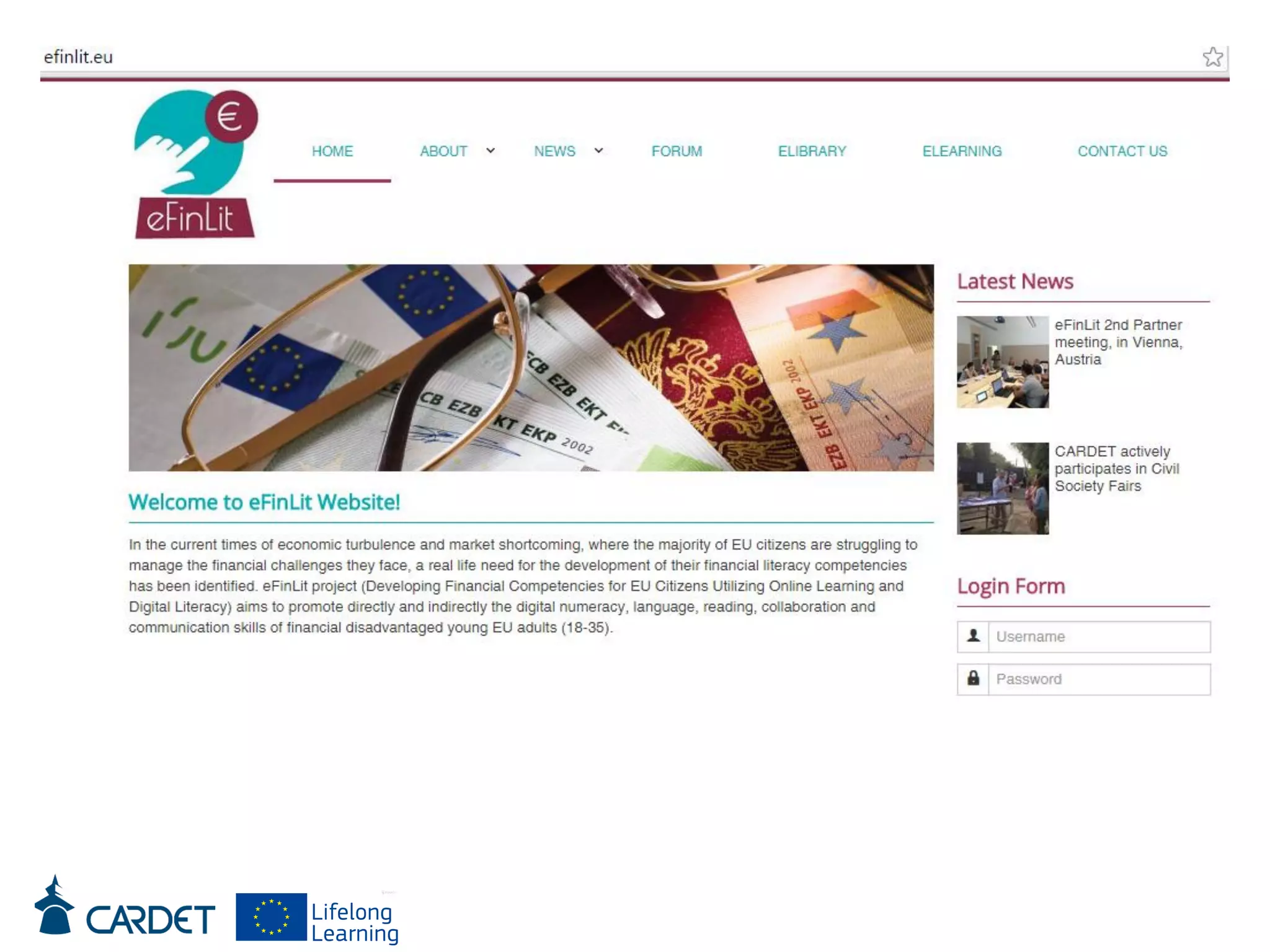
UNic Online
http://education.cardet.org
45
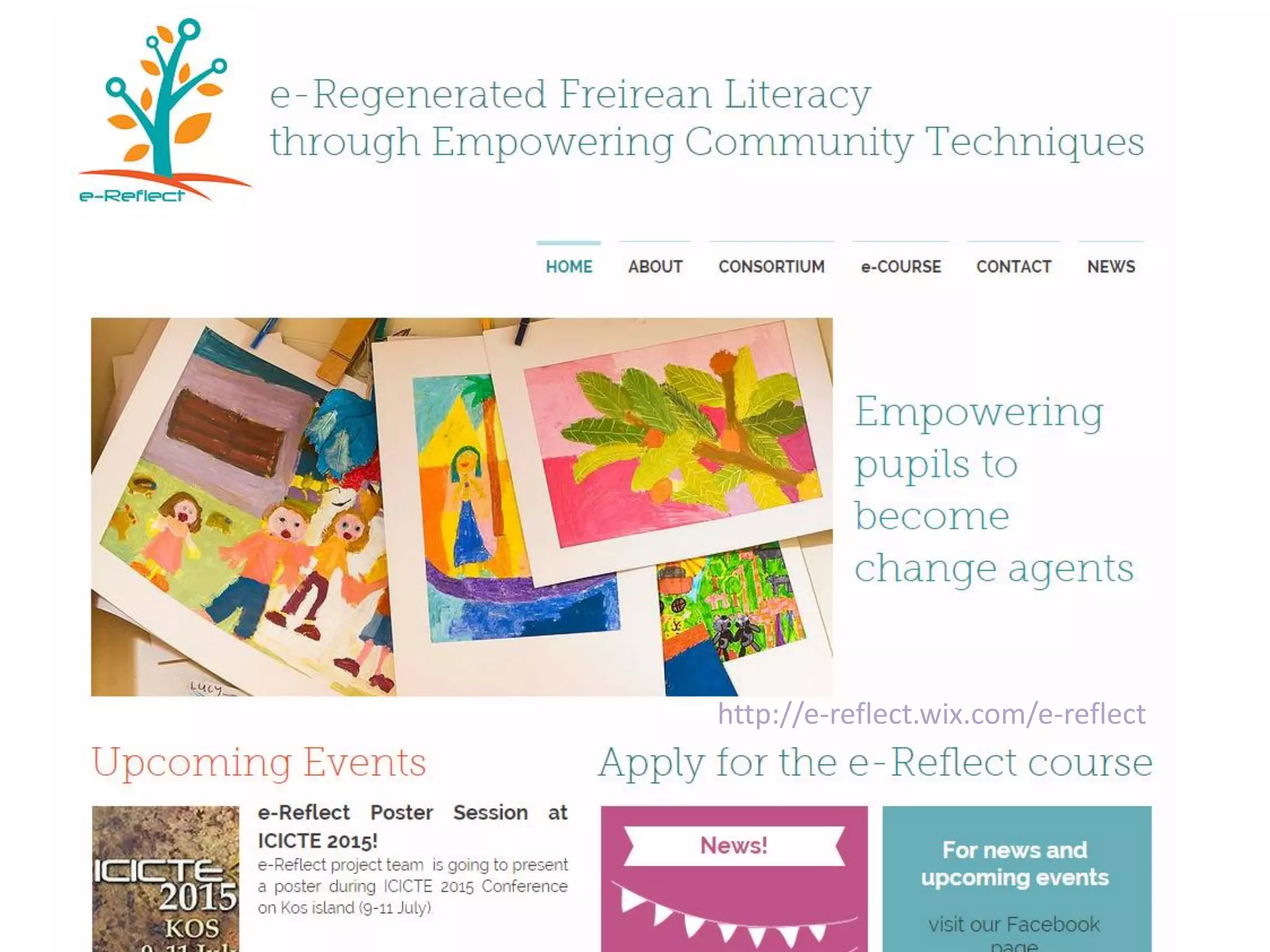
http://e-reflect.wix.com/e-reflect
48
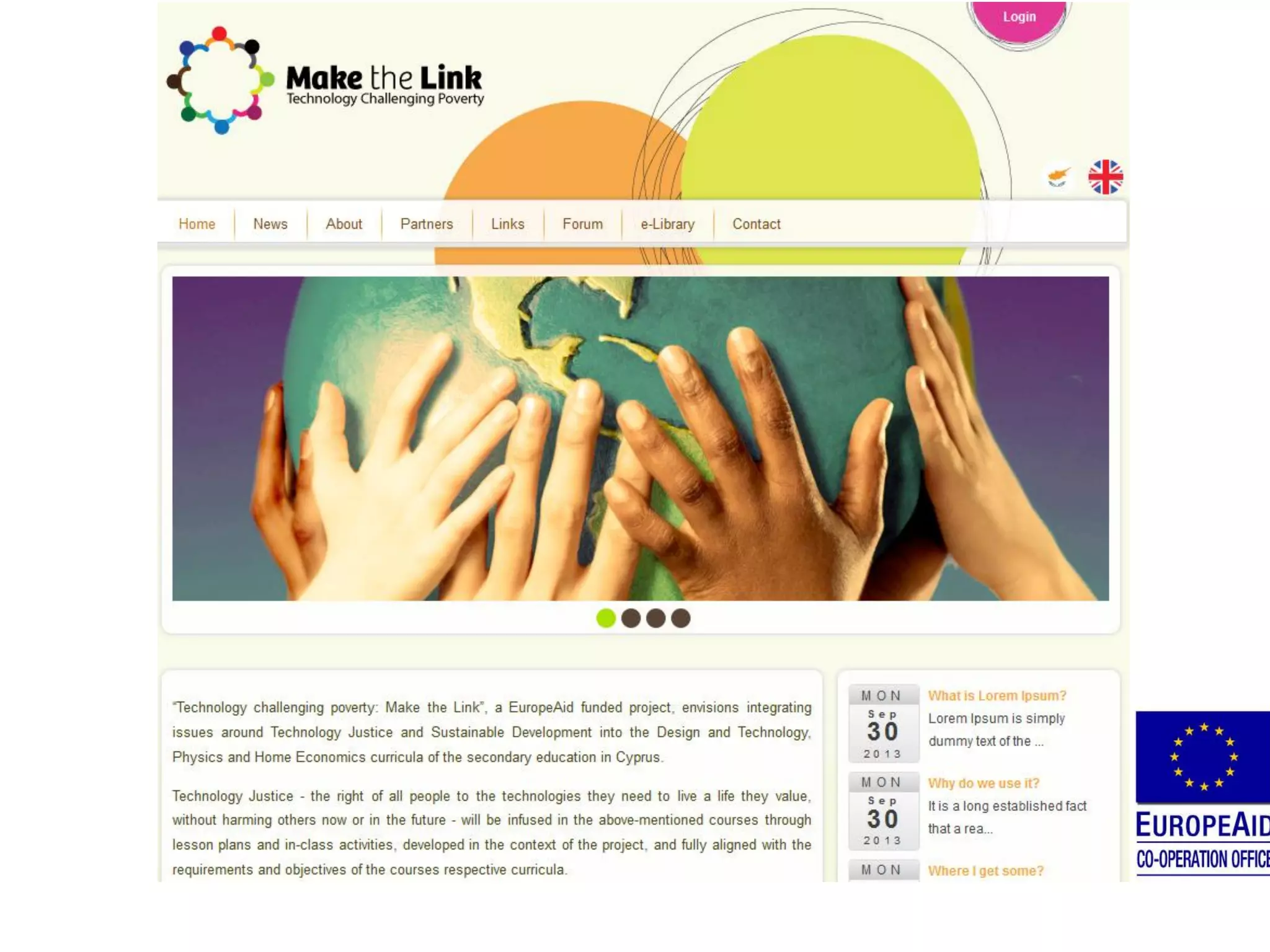
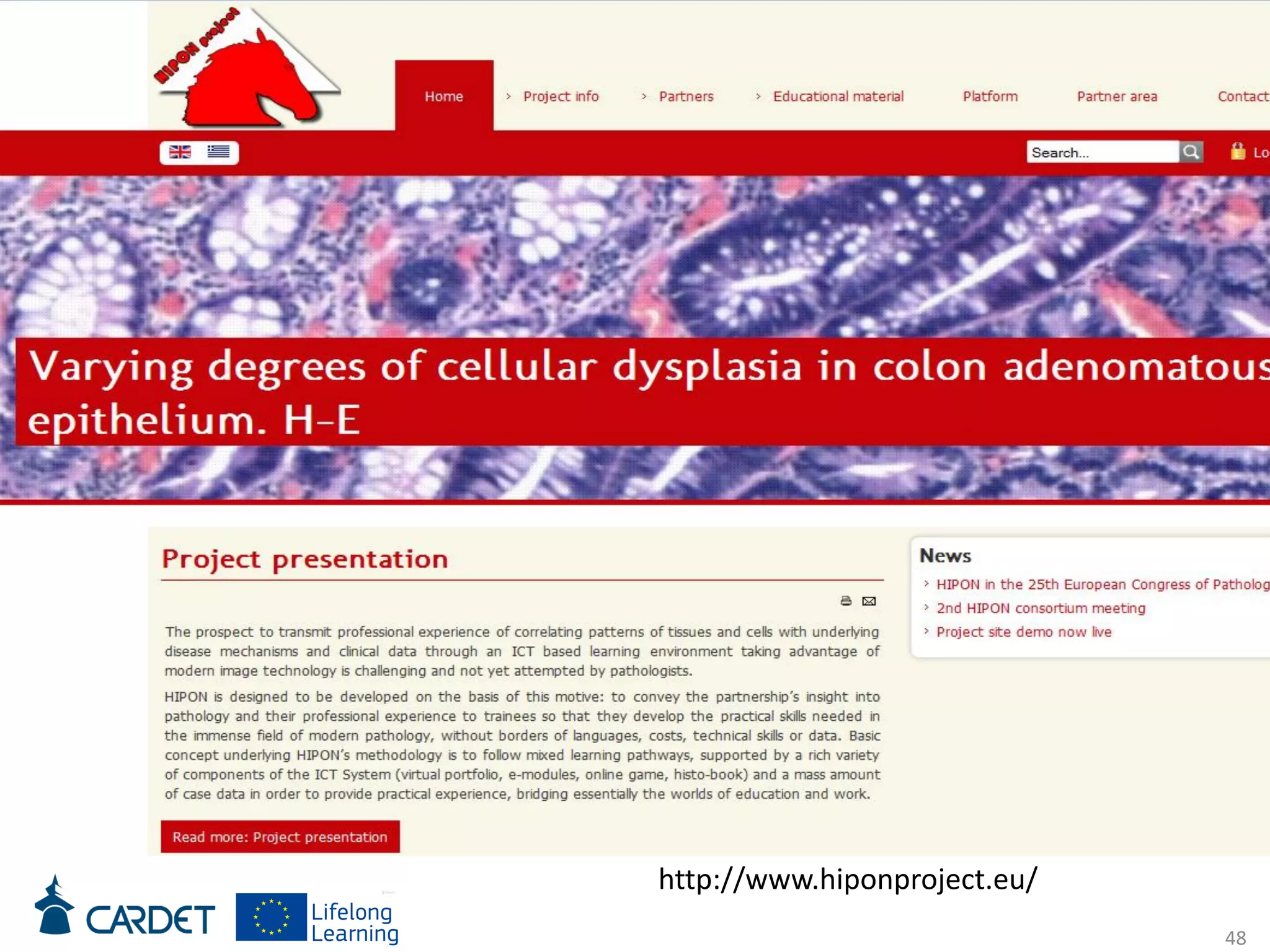
http://www.hiponproject.eu/
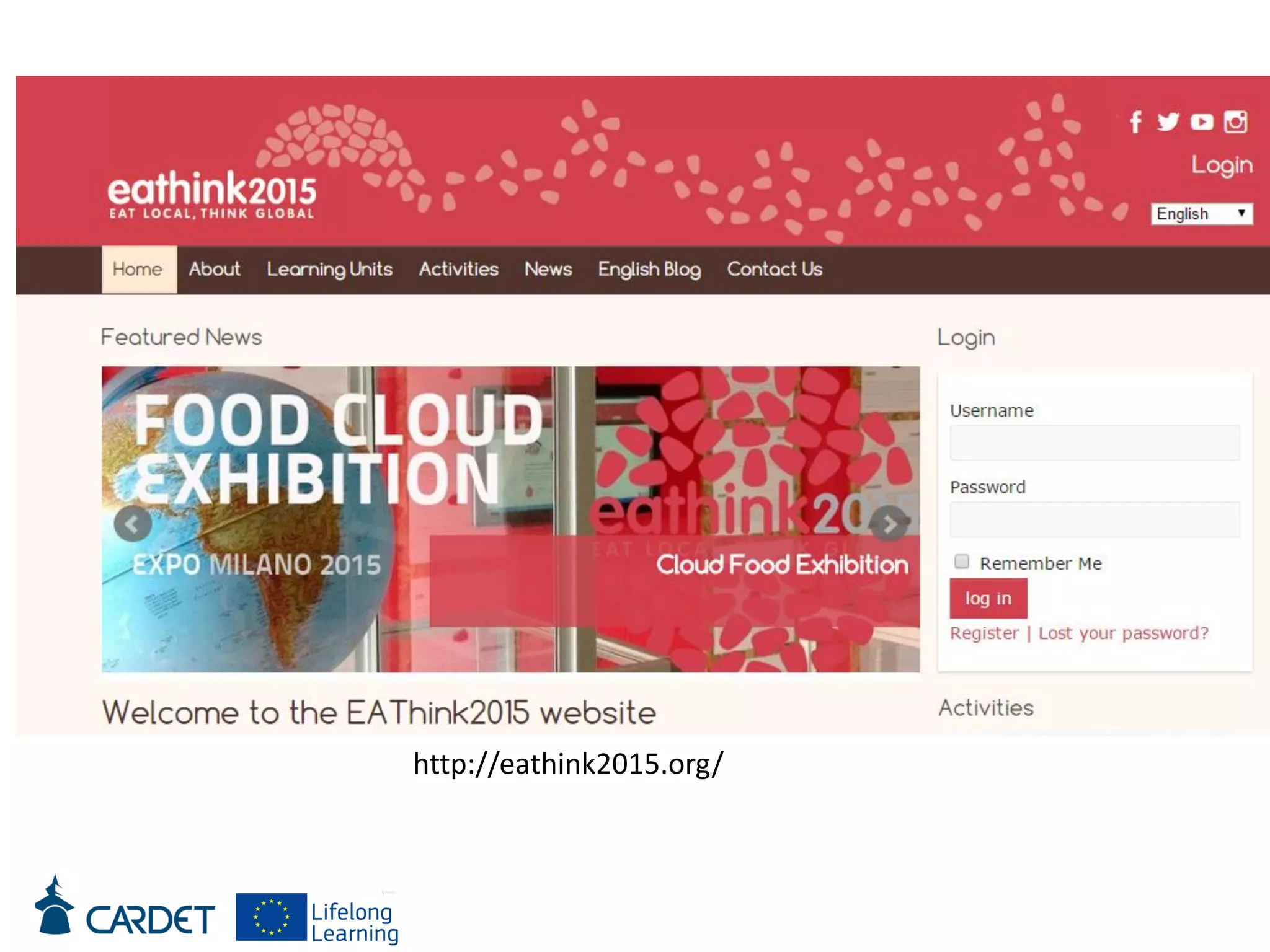
http://eathink2015.org/
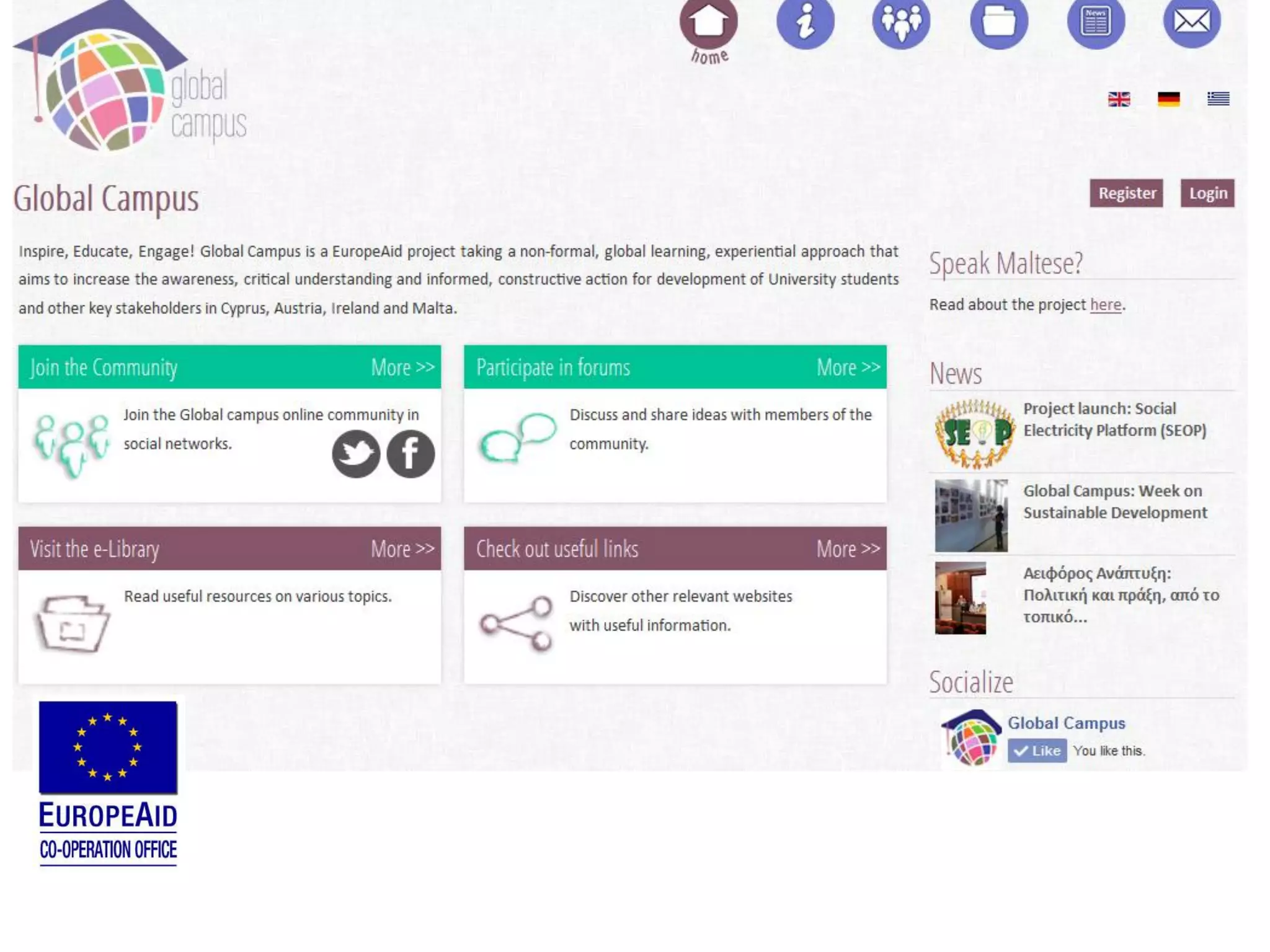
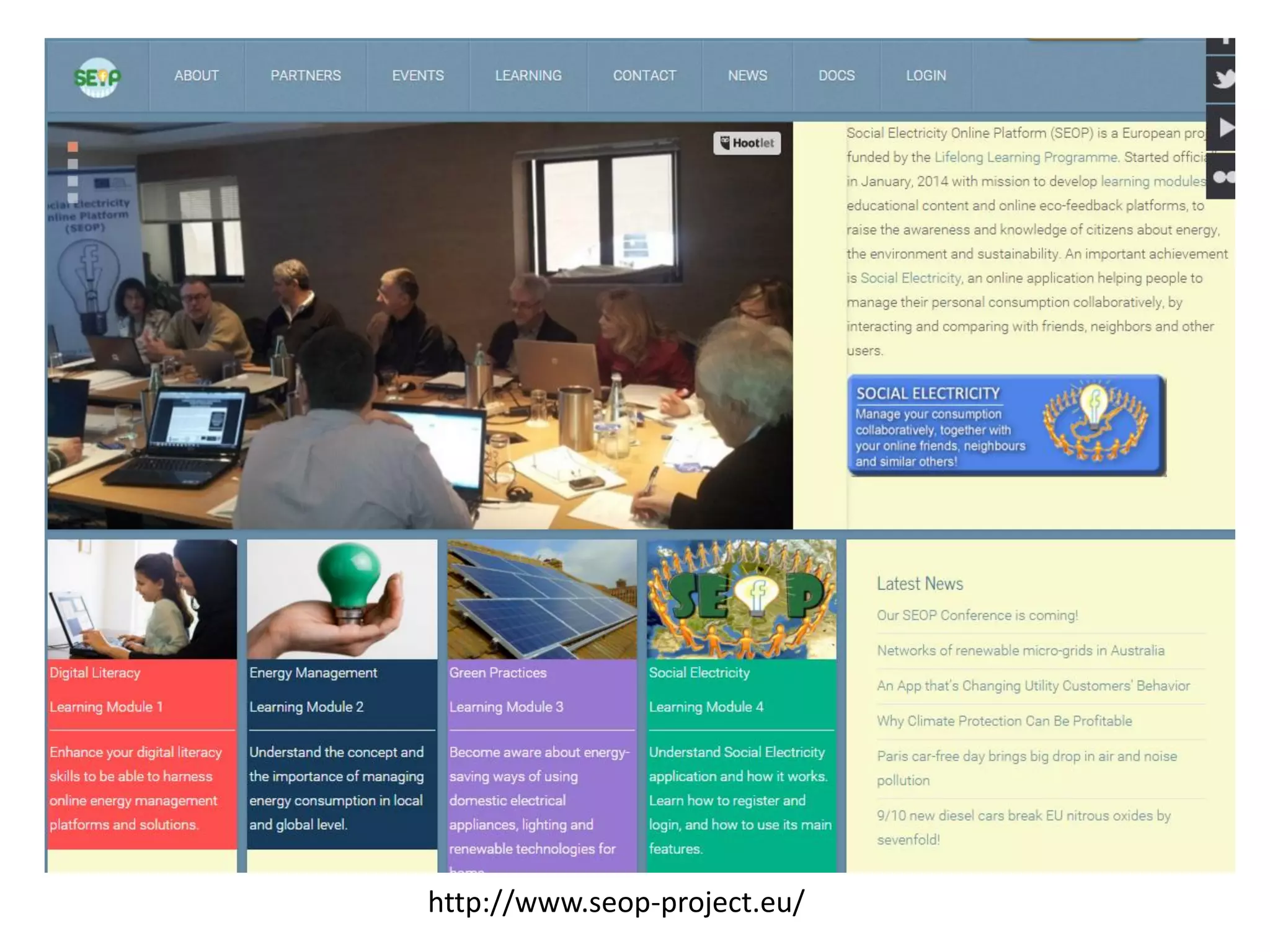
http://www.seop-project.eu/
WAY FORWARD
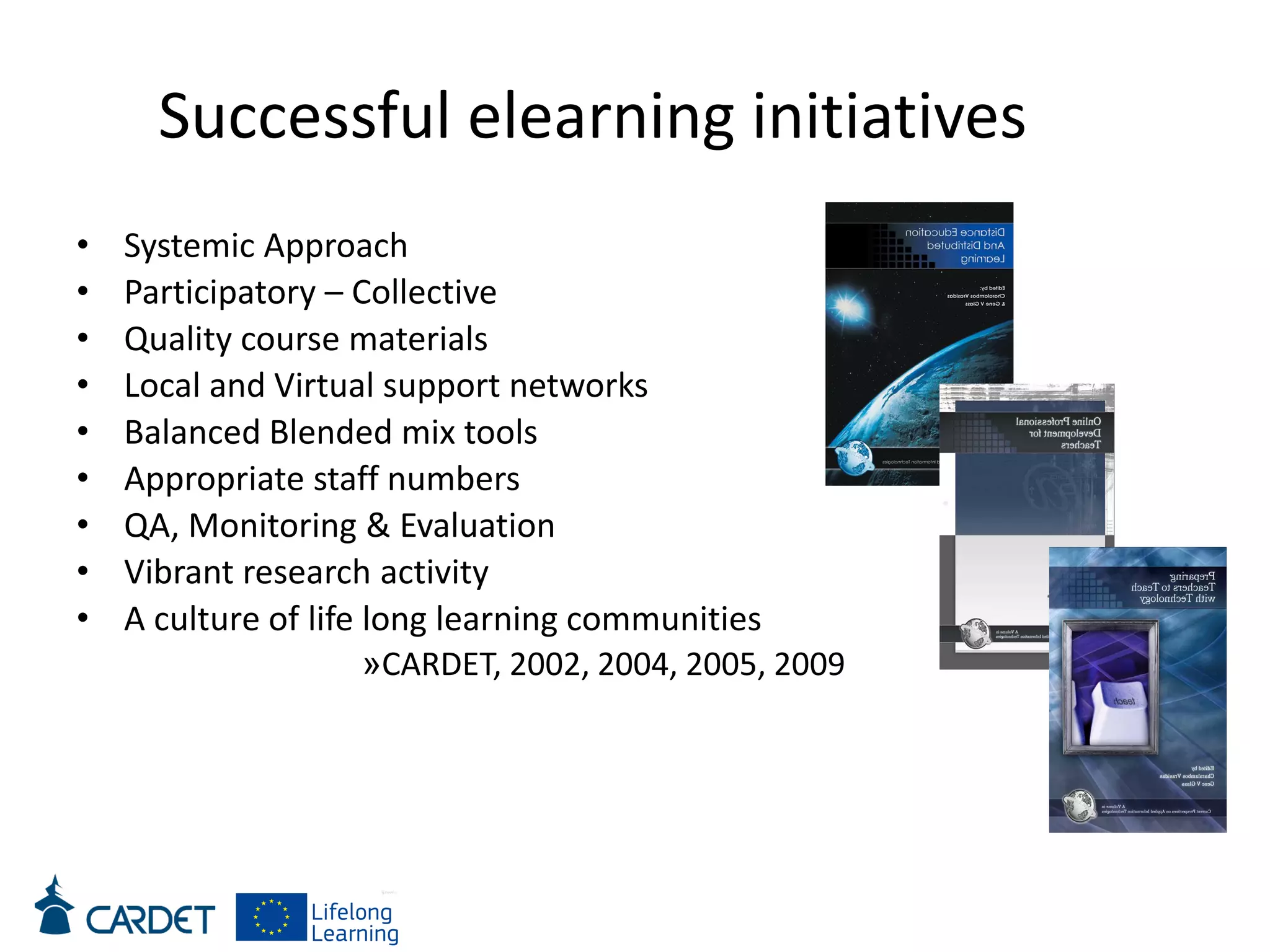
Successful elearning initiatives
• Systemic Approach
• Participatory – Collective
• Quality course materials
• Local and Virtual support networks
• Balanced Blended mix tools
• Appropriate staff numbers
• QA, Monitoring & Evaluation
• Vibrant research activity
• A culture of life long learning communities
»CARDET, 2002, 2004, 2005, 2009
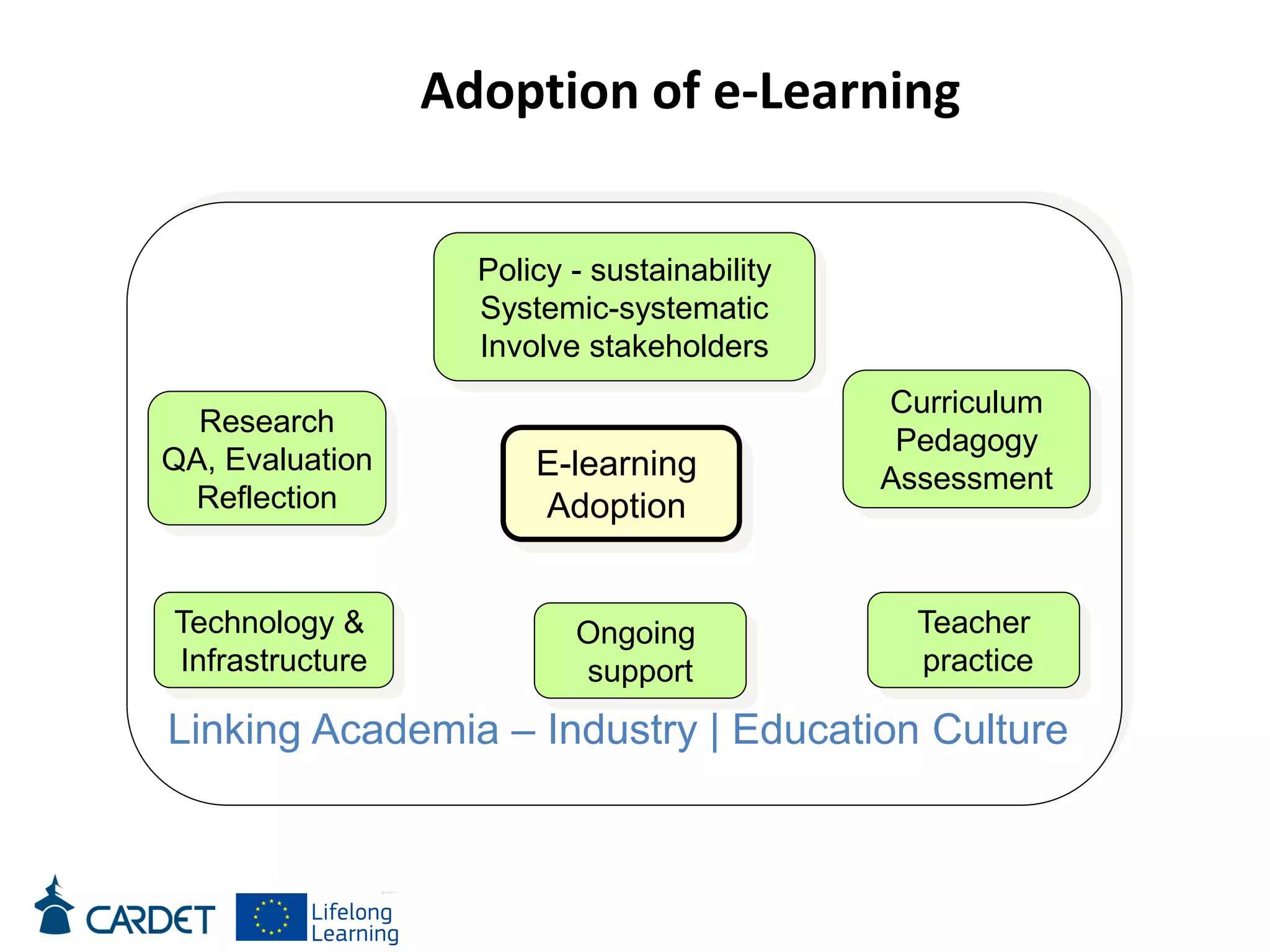
Research
QA, Evaluation
Reflection
E-learning
Adoption
Teacher
practice
Ongoing
support
Technology &
Infrastructure
Policy - sustainability
Systemic-systematic
Involve stakeholders
Curriculum
Pedagogy
Assessment
Linking Academia – Industry | Education Culture
Technology Integration Framework
Adoption of e-Learning

Changing learning methods and approaches, their assessment and quality assurance