
Learning and e-learning: The
Role of Theory
Terry Mayes and Sara de Freitas
Azran Azmee Kafia
Outline
 Background
The Associationist Perspective
 The Cognitive Perspective
 The Situative Perspective
 Implications
 E-learning and the learning cycle
 Current landscape of e-learning
Background
 What is learning?
&
 What is e-learning?
Background
Learning
Analysis of learning experience
 Associative perspective,
 Cognitive perspective, and
 Situative perspective
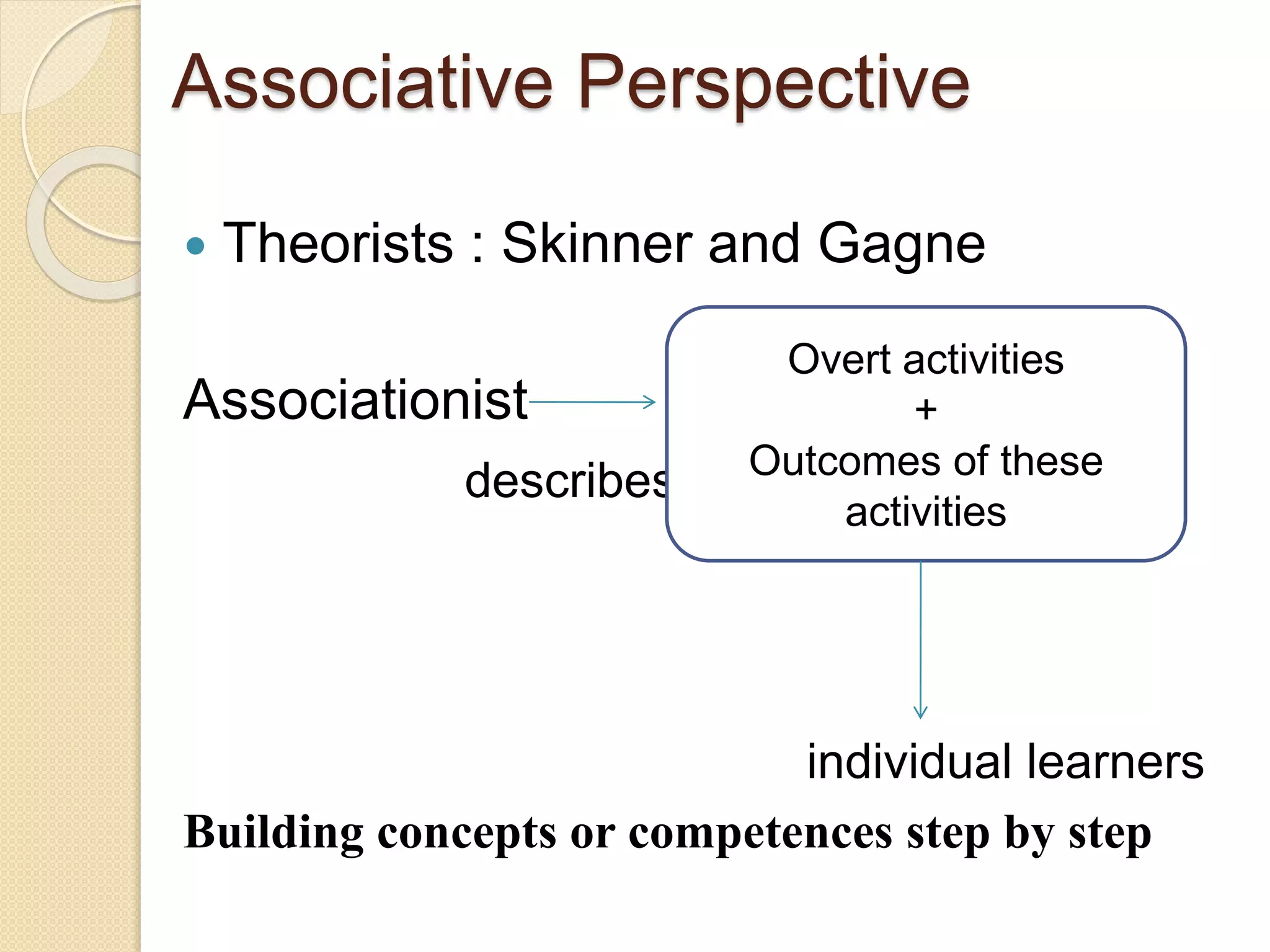
Associative Perspective
 Theorists : Skinner and Gagne
Associationist
describes
individual learners
Building concepts or competences step by step
Overt activities
+
Outcomes of these
activities
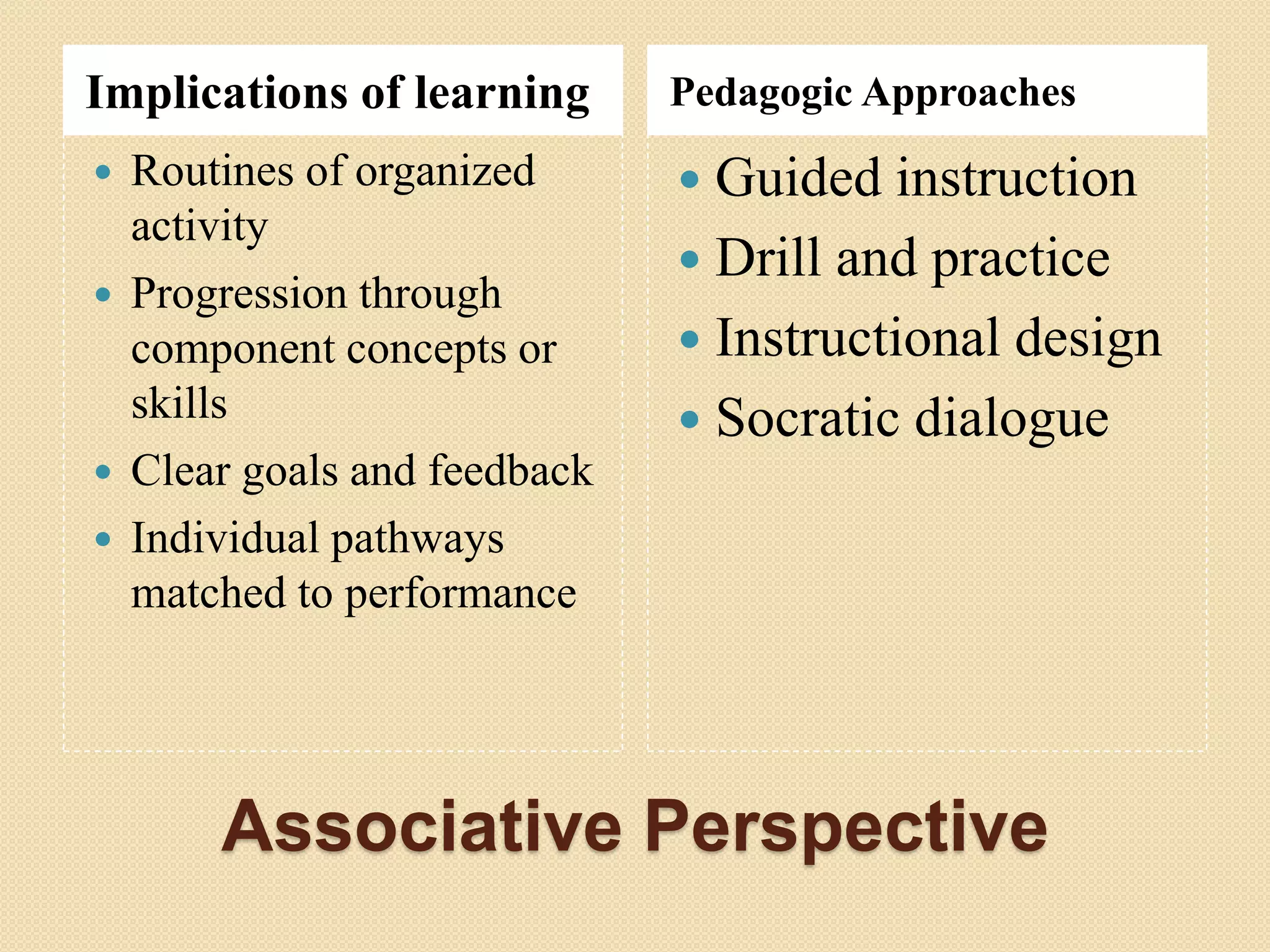
Associative Perspective
Implications of learning Pedagogic Approaches
 Routines of organized
activity
 Progression through
component concepts or
skills
 Clear goals and feedback
 Individual pathways
matched to performance
 Guided instruction
 Drill and practice
 Instructional design
 Socratic dialogue
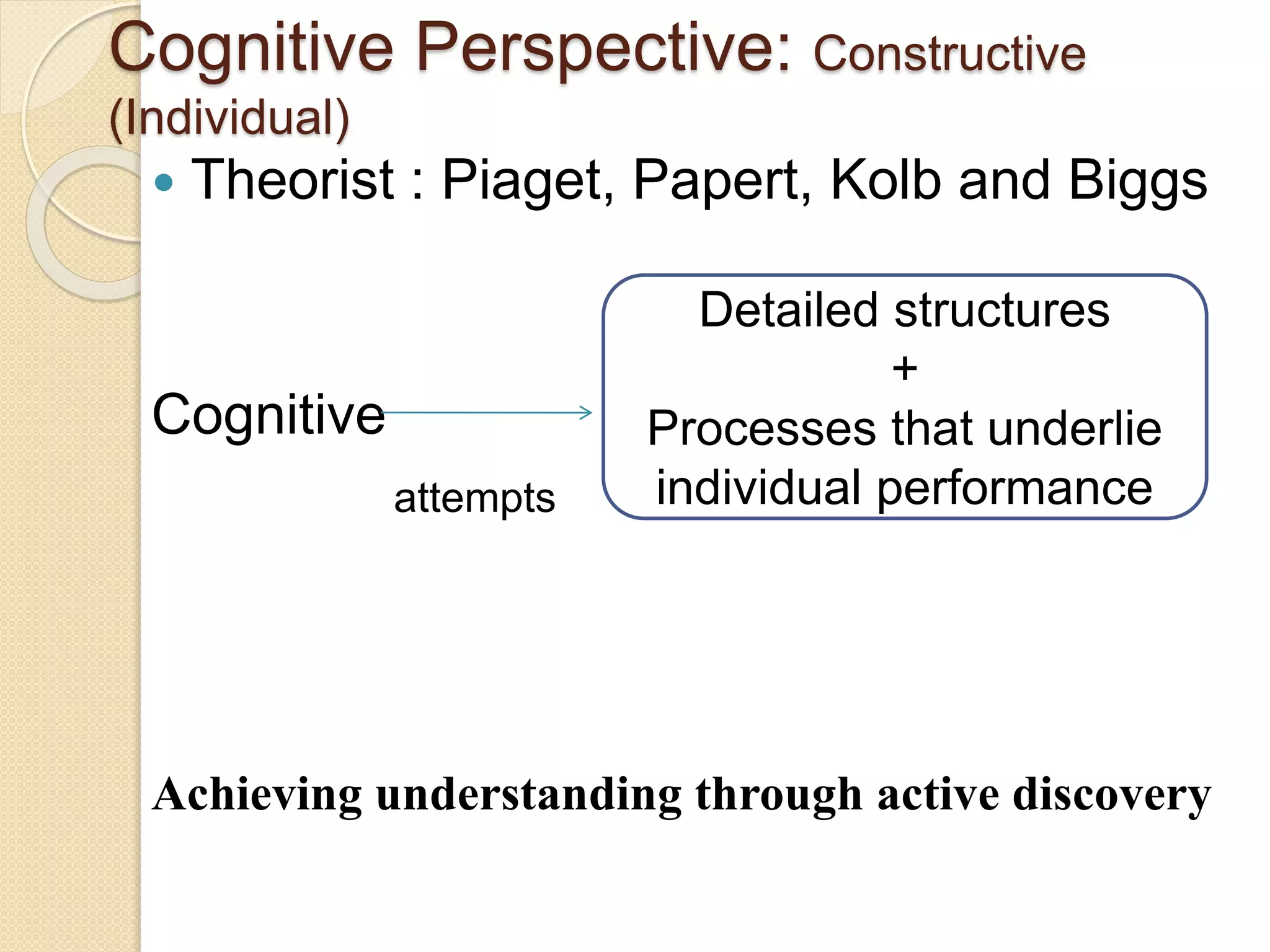
Cognitive Perspective: Constructive
(Individual)
 Theorist : Piaget, Papert, Kolb and Biggs
Cognitive
attempts
Achieving understanding through active discovery
Detailed structures
+
Processes that underlie
individual performance
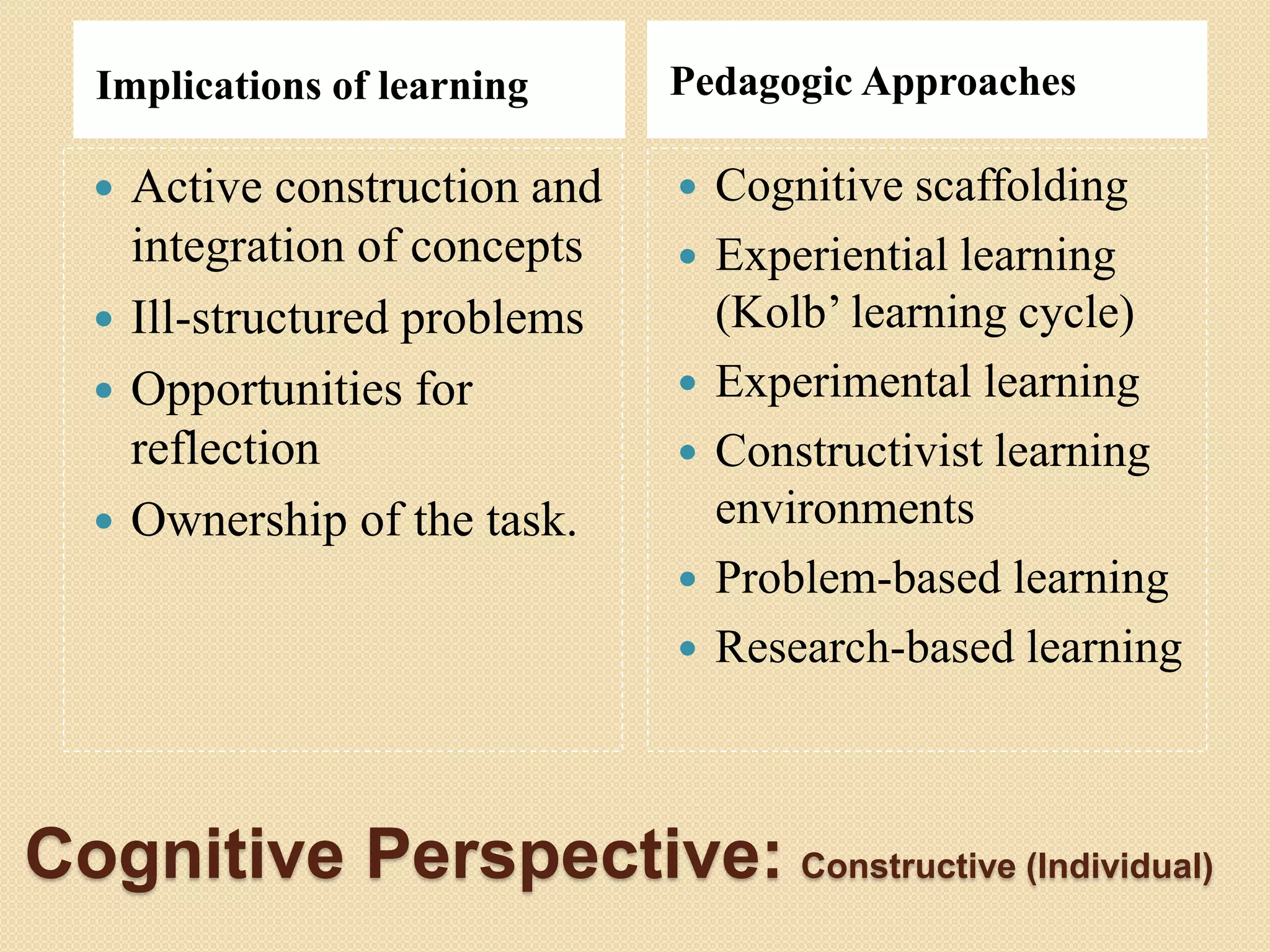
Cognitive Perspective: Constructive (Individual)
Implications of learning Pedagogic Approaches
 Active construction and
integration of concepts
 Ill-structured problems
 Opportunities for
reflection
 Ownership of the task.
 Cognitive scaffolding
 Experiential learning
(Kolb’ learning cycle)
 Experimental learning
 Constructivist learning
environments
 Problem-based learning
 Research-based learning
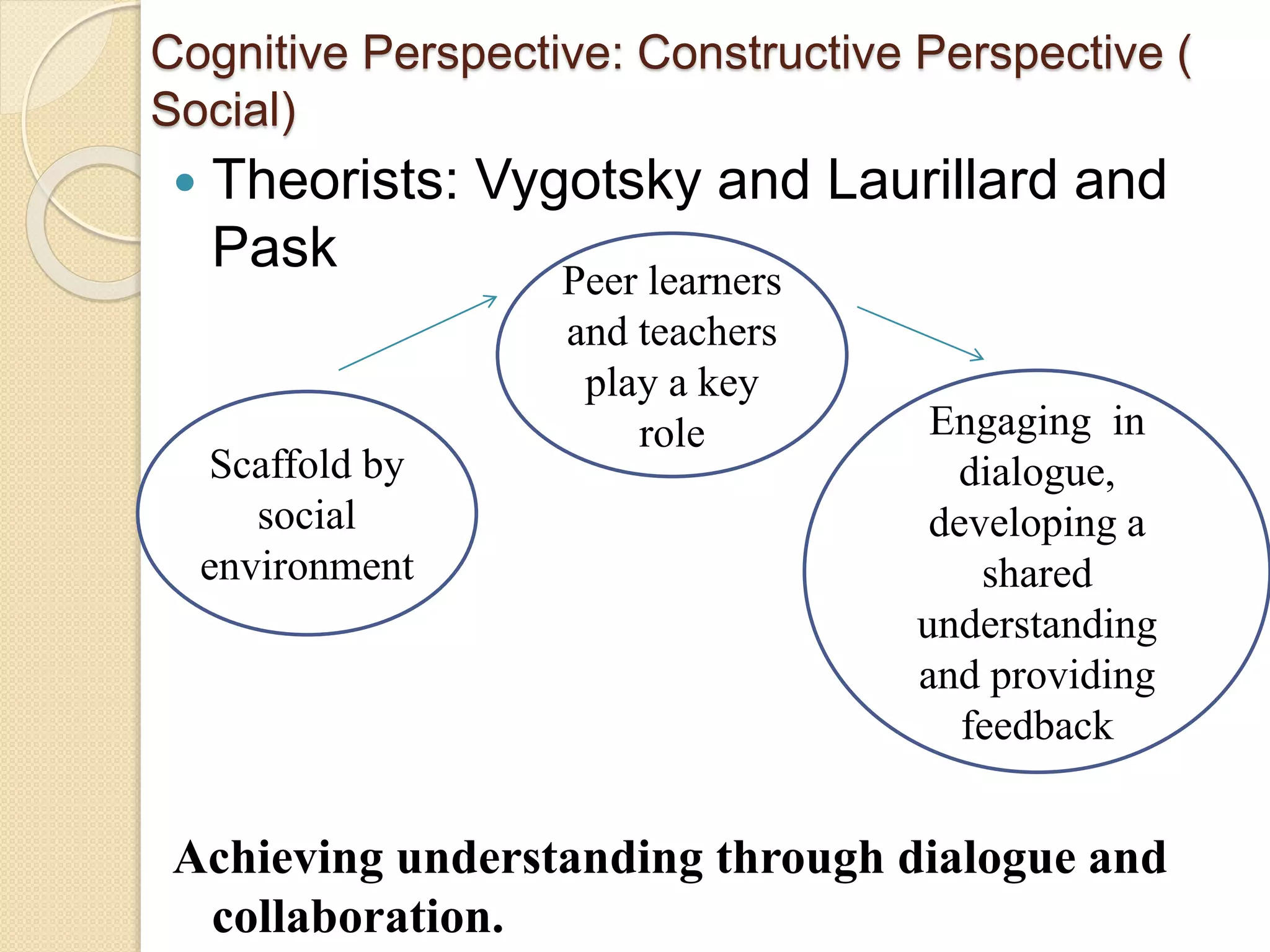
Cognitive Perspective: Constructive Perspective (
Social)
 Theorists: Vygotsky and Laurillard and
Pask
Achieving understanding through dialogue and
collaboration.
Scaffold by
social
environment
Peer learners
and teachers
play a key
role Engaging in
dialogue,
developing a
shared
understanding
and providing
feedback
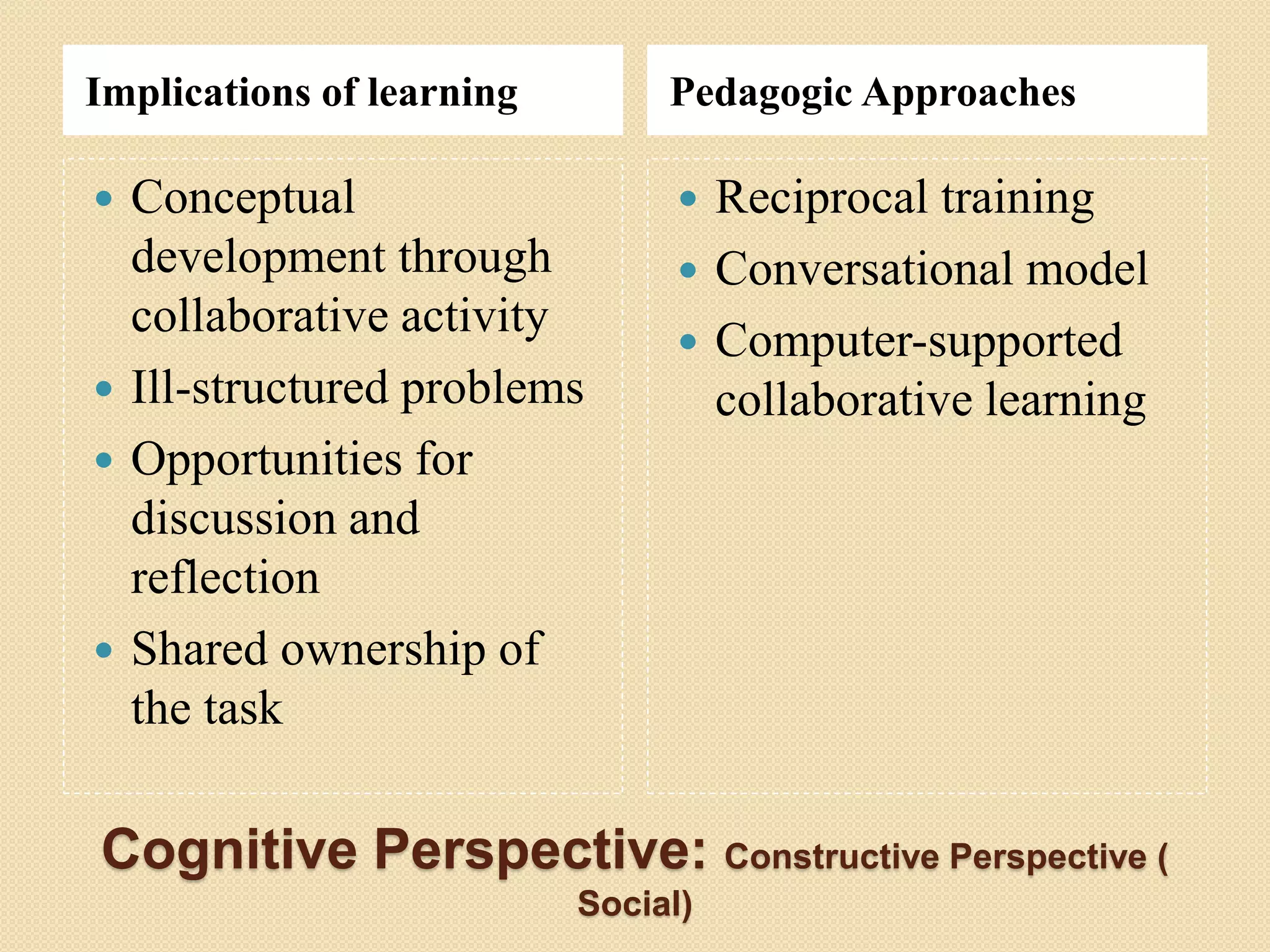
Cognitive Perspective: Constructive Perspective (
Social)
Implications of learning Pedagogic Approaches
 Conceptual
development through
collaborative activity
 Ill-structured problems
 Opportunities for
discussion and
reflection
 Shared ownership of
the task
 Reciprocal training
 Conversational model
 Computer-supported
collaborative learning
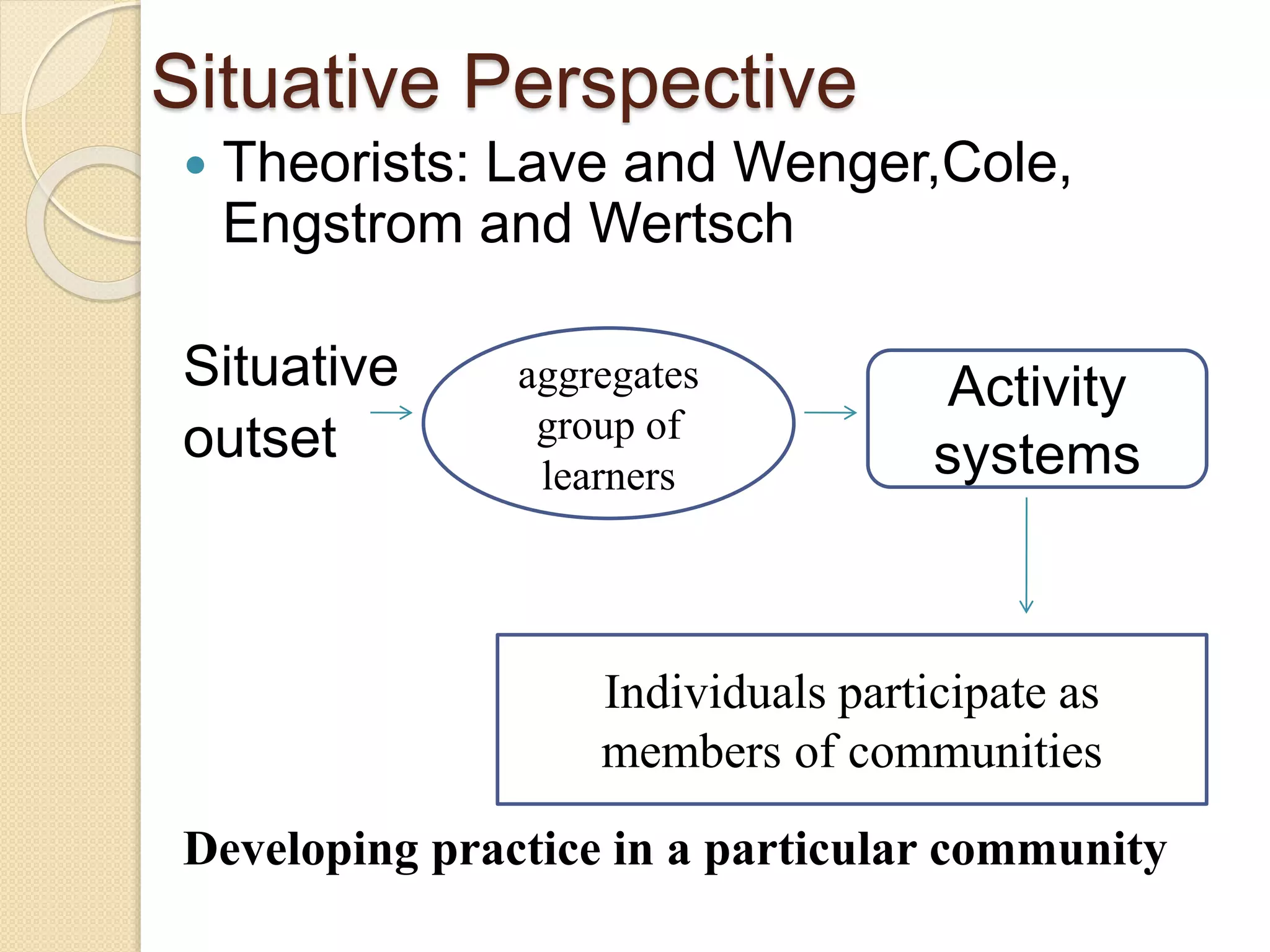
Situative Perspective
 Theorists: Lave and Wenger,Cole,
Engstrom and Wertsch
Situative
outset
Developing practice in a particular community
Activity
systems
aggregates
group of
learners
Individuals participate as
members of communities
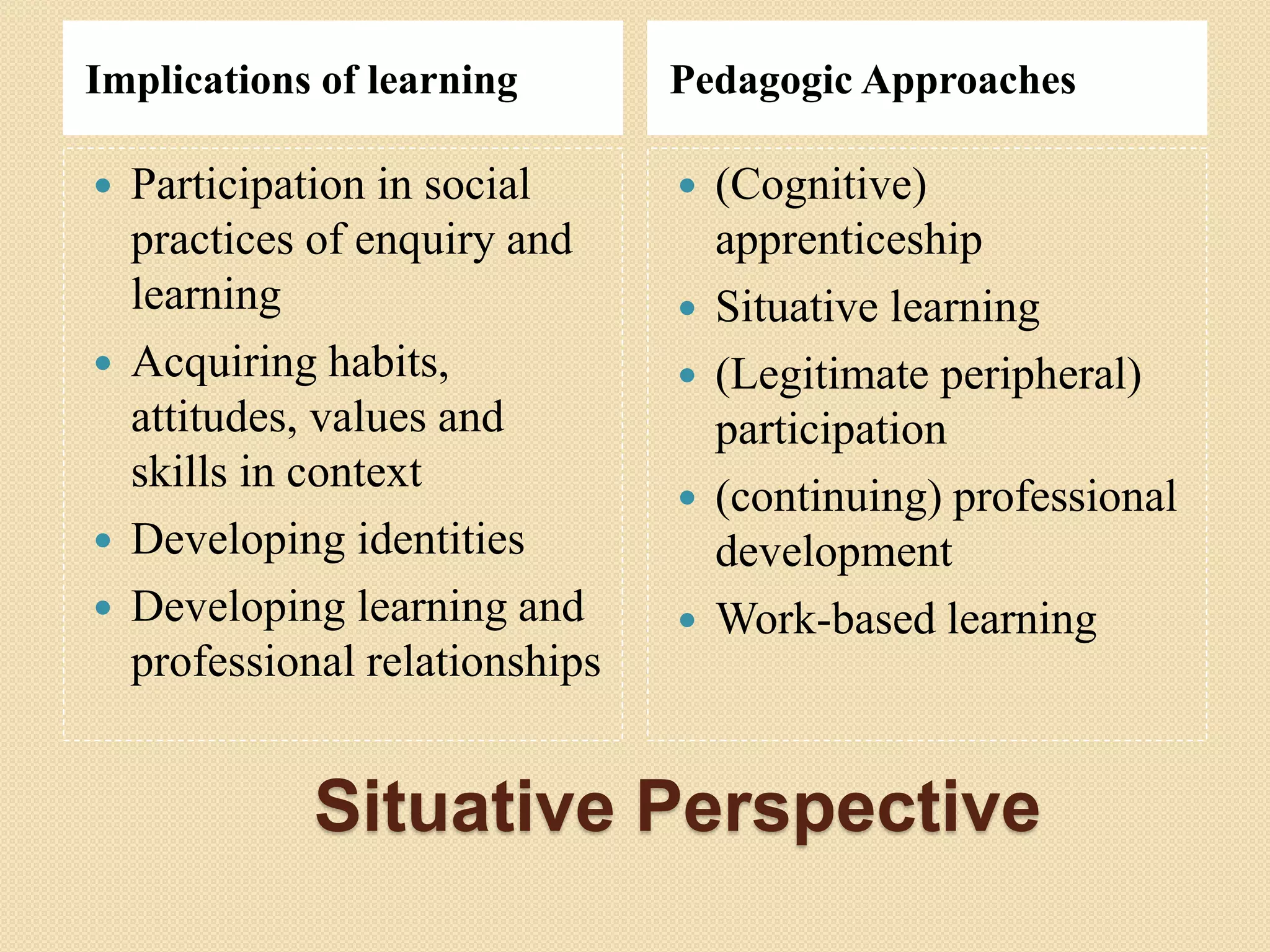
Situative Perspective
Implications of learning Pedagogic Approaches
 Participation in social
practices of enquiry and
learning
 Acquiring habits,
attitudes, values and
skills in context
 Developing identities
 Developing learning and
professional relationships
 (Cognitive)
apprenticeship
 Situative learning
 (Legitimate peripheral)
participation
 (continuing) professional
development
 Work-based learning
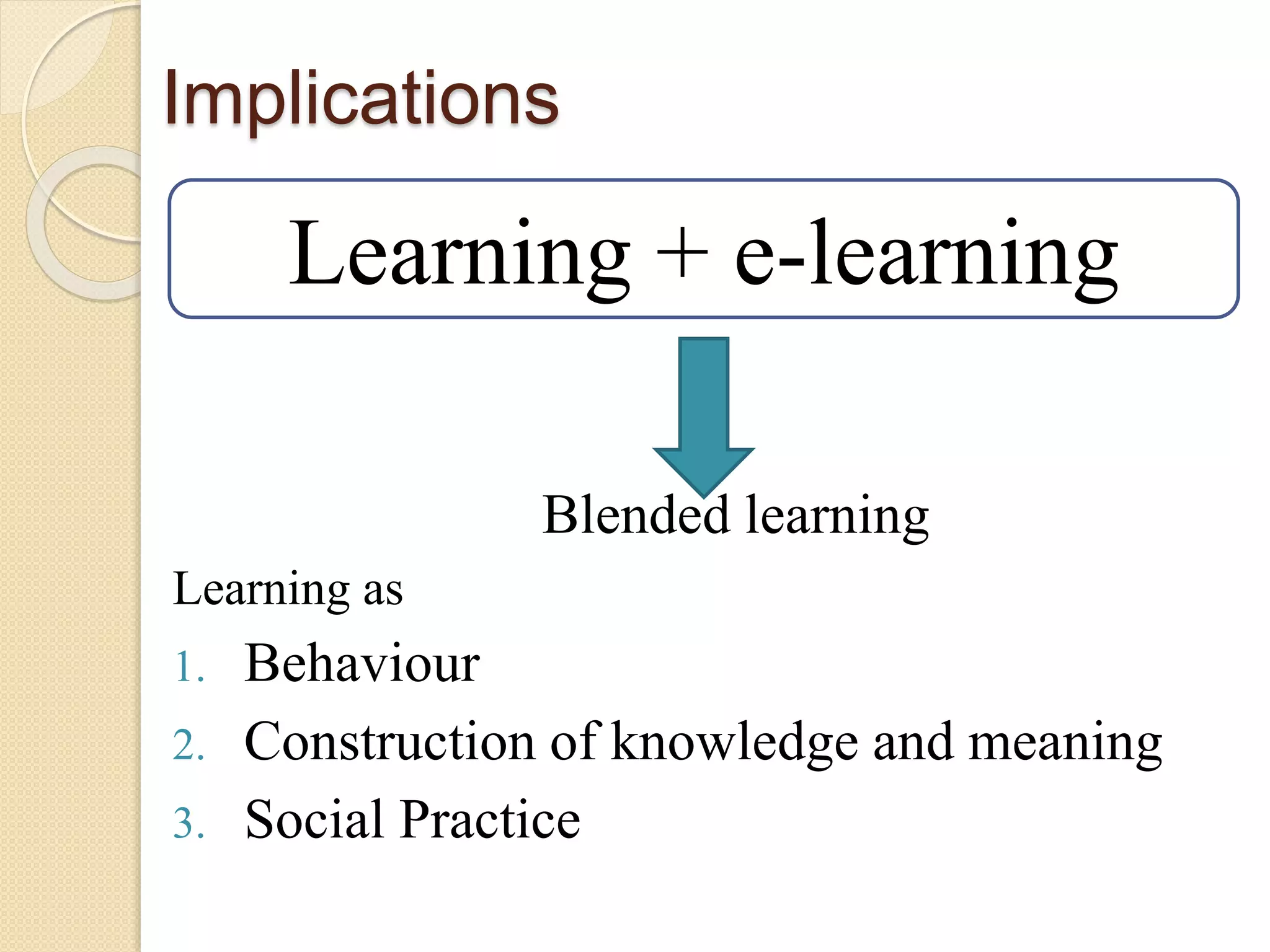
Implications
Blended learning
Learning as
1. Behaviour
2. Construction of knowledge and meaning
3. Social Practice
Learning + e-learning
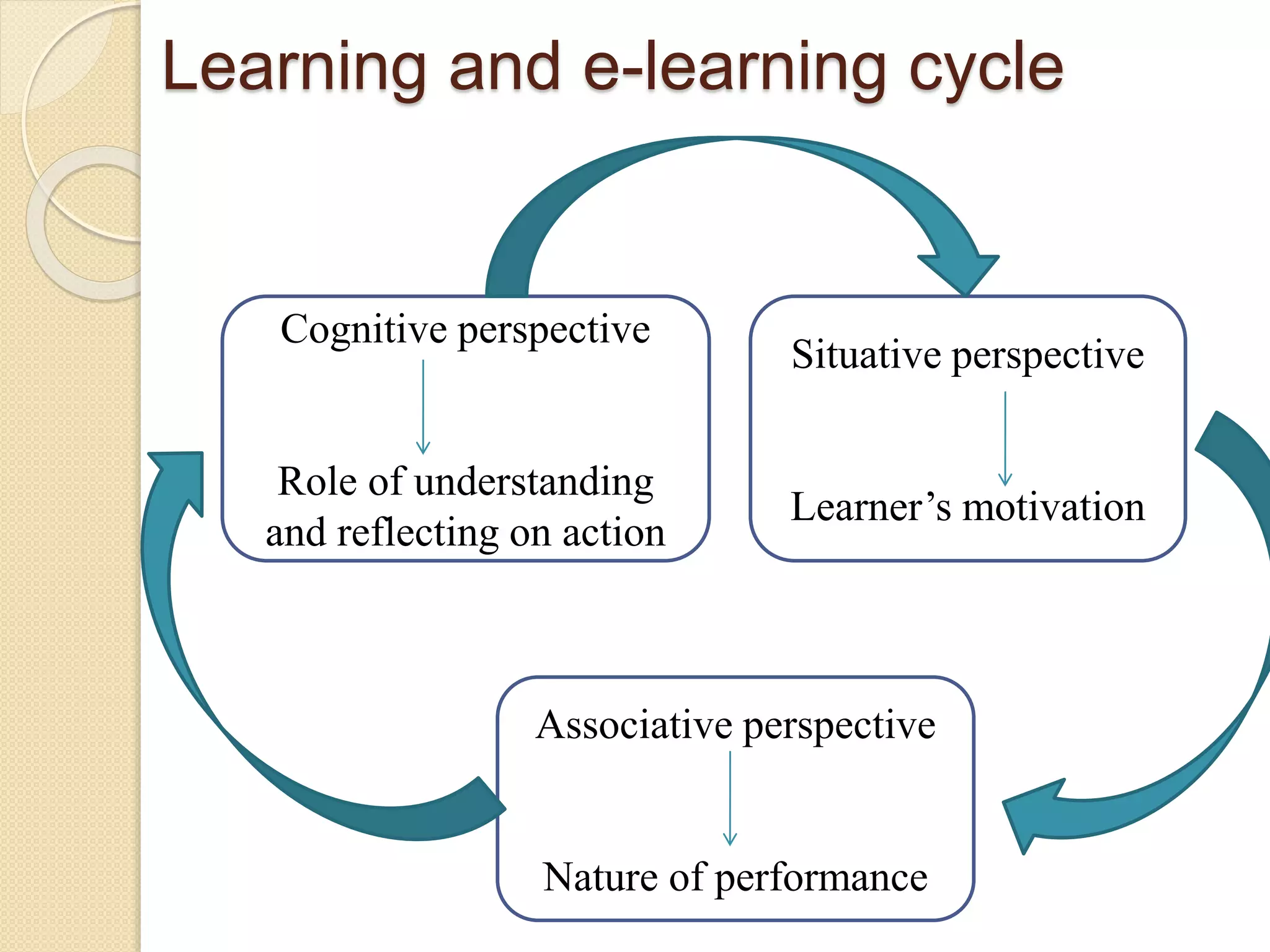
Learning and e-learning cycle
Situative perspective
Learner’s motivation
Associative perspective
Nature of performance
Cognitive perspective
Role of understanding
and reflecting on action
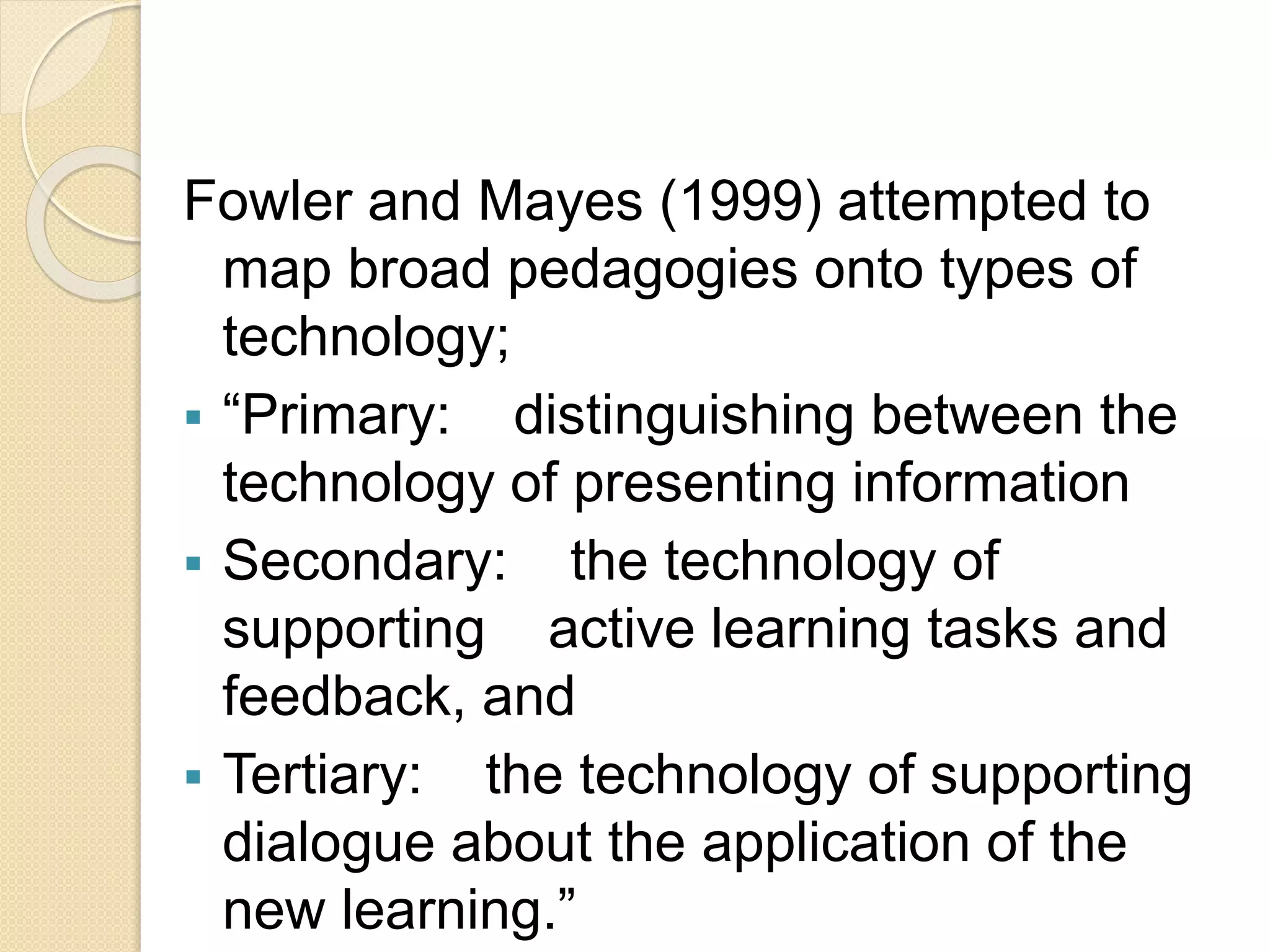
Fowler and Mayes (1999) attempted to
map broad pedagogies onto types of
technology;
 “Primary: distinguishing between the
technology of presenting information
 Secondary: the technology of
supporting active learning tasks and
feedback, and
 Tertiary: the technology of supporting
dialogue about the application of the
new learning.”
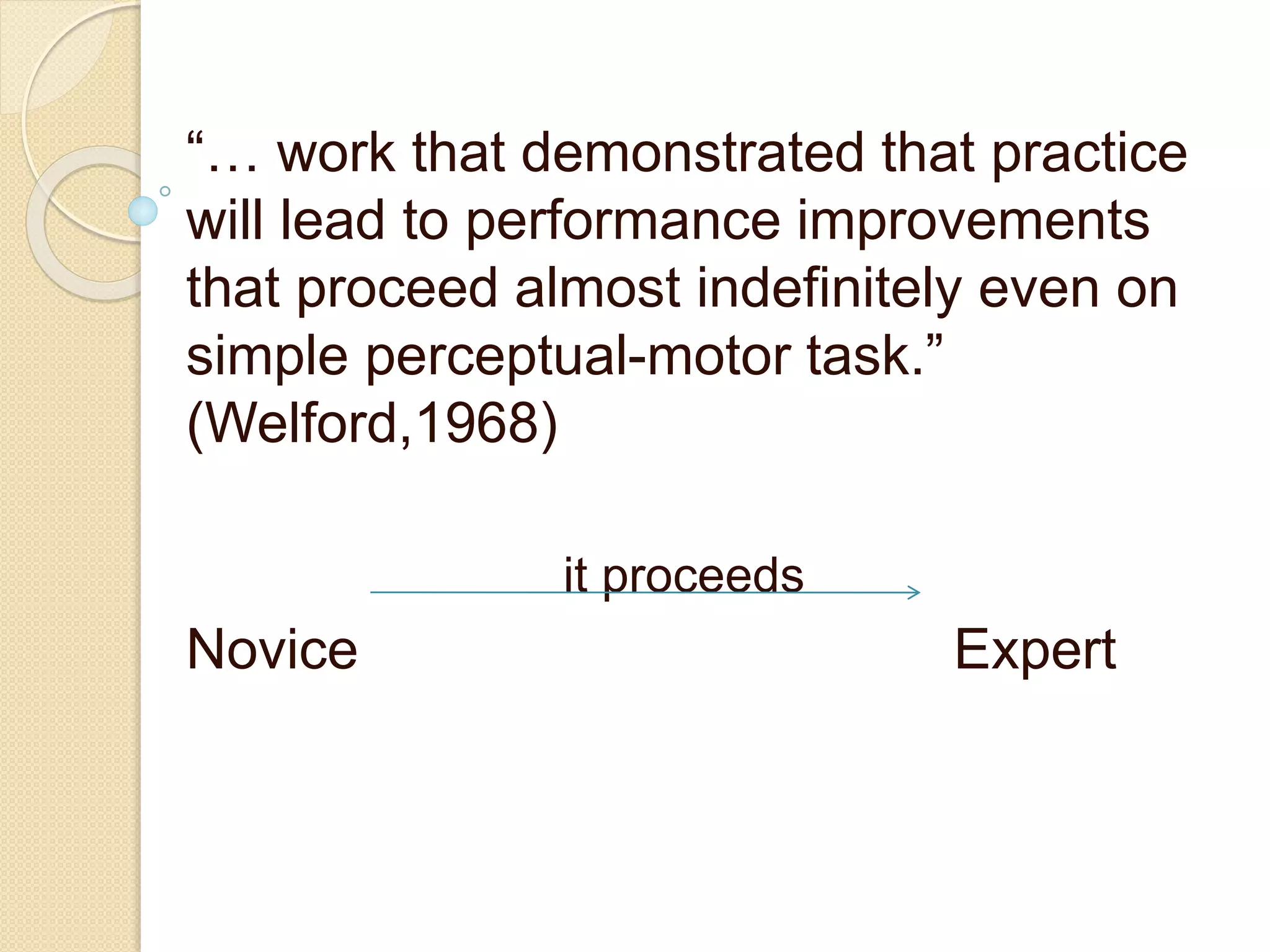
“… work that demonstrated that practice
will lead to performance improvements
that proceed almost indefinitely even on
simple perceptual-motor task.”
(Welford,1968)
it proceeds
Novice Expert
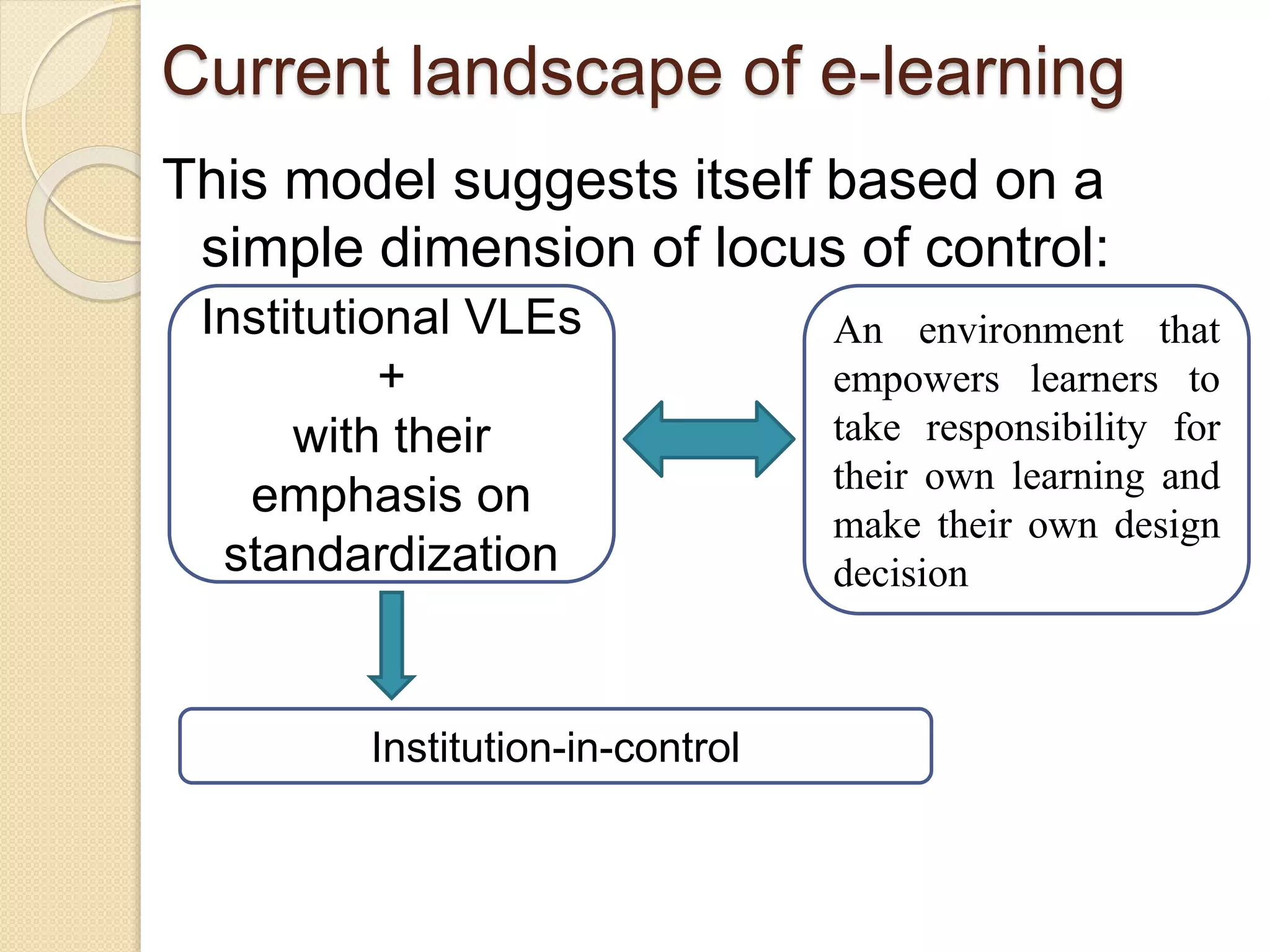
Current landscape of e-learning
This model suggests itself based on a
simple dimension of locus of control:
Institutional VLEs
+
with their
emphasis on
standardization
An environment that
empowers learners to
take responsibility for
their own learning and
make their own design
decision
Institution-in-control
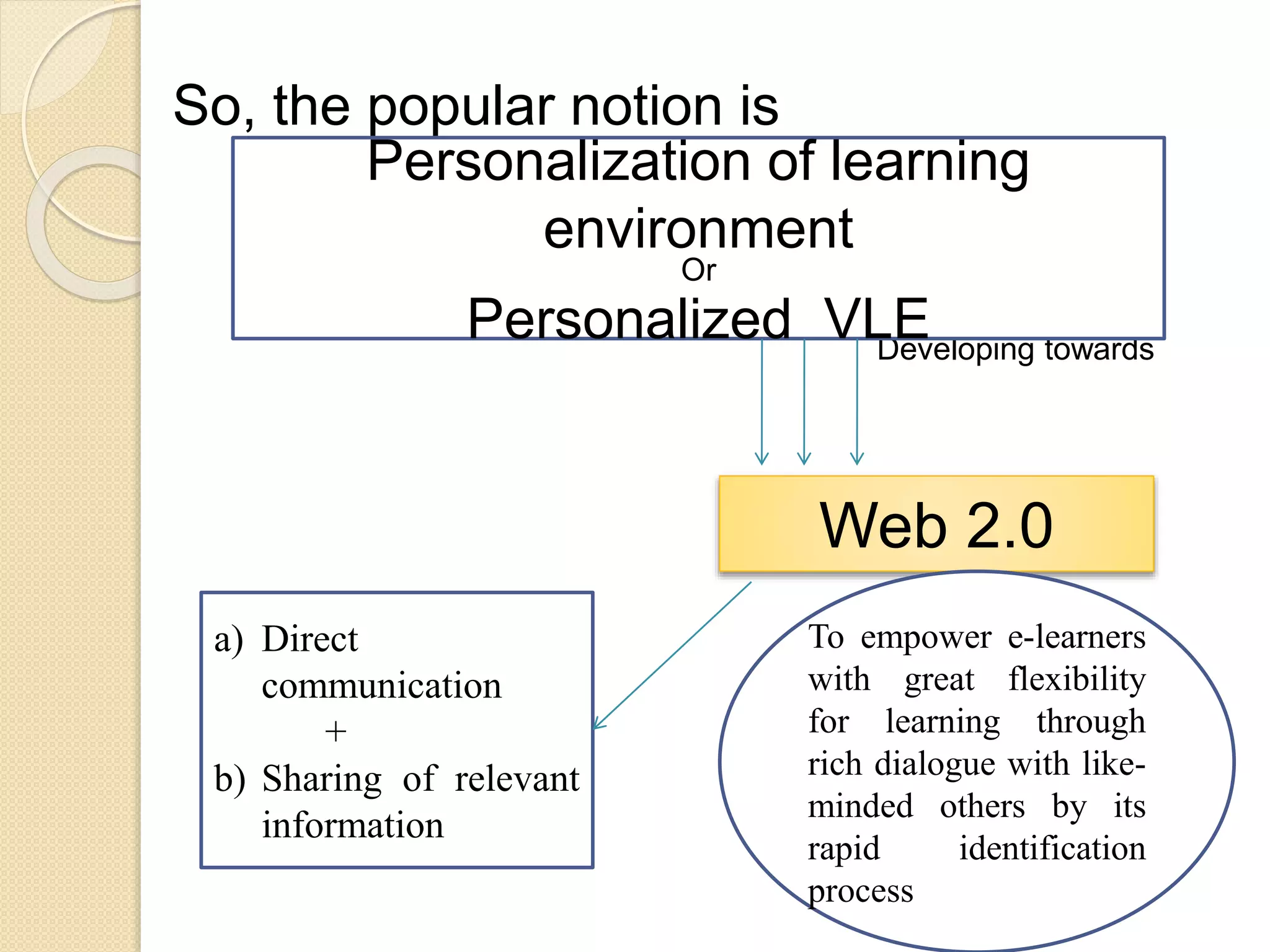
So, the popular notion is
Developing towards
Personalization of learning
environment
Or
Personalized VLE
Web 2.0
To empower e-learners
with great flexibility
for learning through
rich dialogue with like-
minded others by its
rapid identification
process
a) Direct
communication
+
b) Sharing of relevant
information
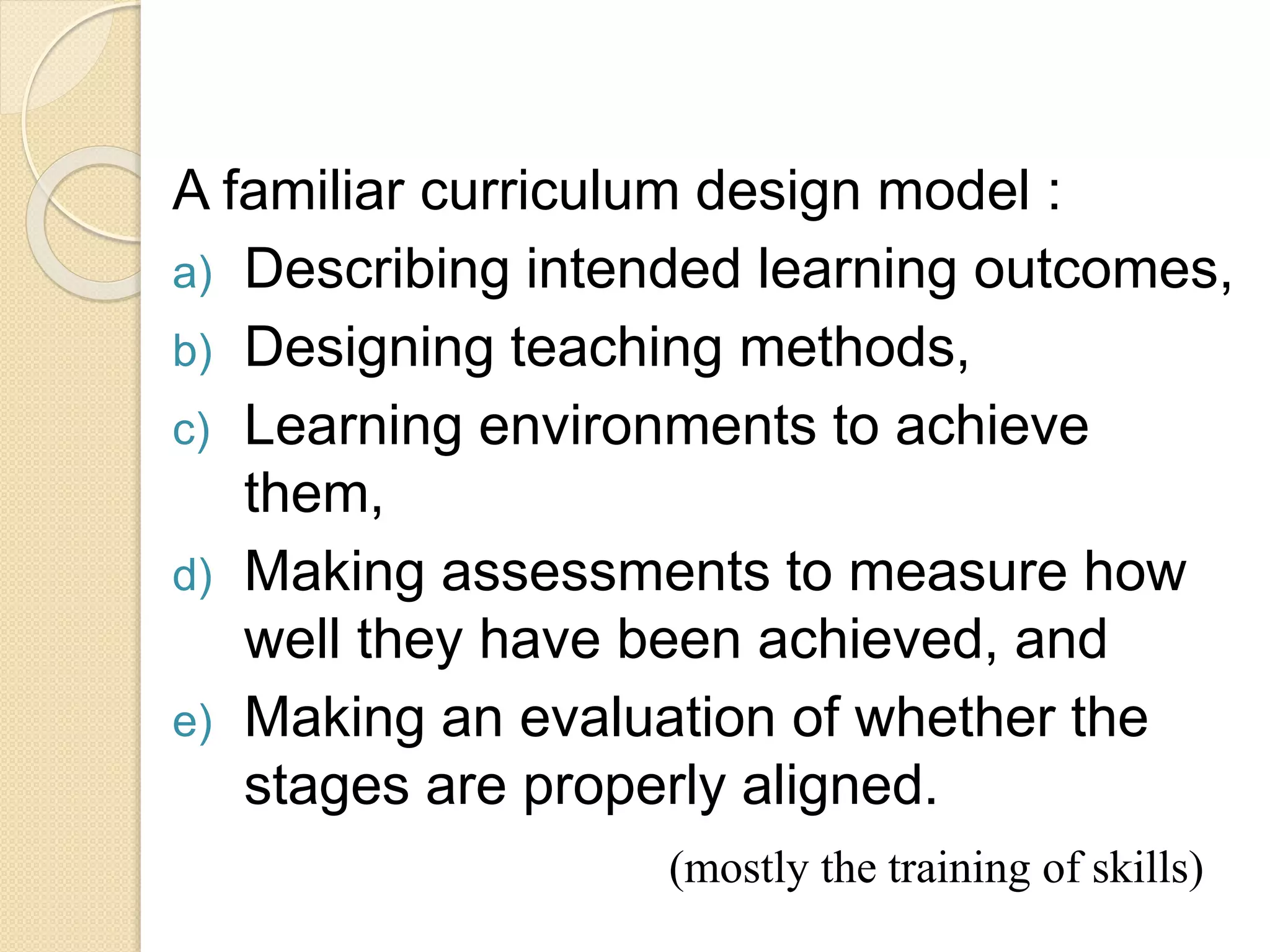
A familiar curriculum design model :
a) Describing intended learning outcomes,
b) Designing teaching methods,
c) Learning environments to achieve
them,
d) Making assessments to measure how
well they have been achieved, and
e) Making an evaluation of whether the
stages are properly aligned.
(mostly the training of skills)
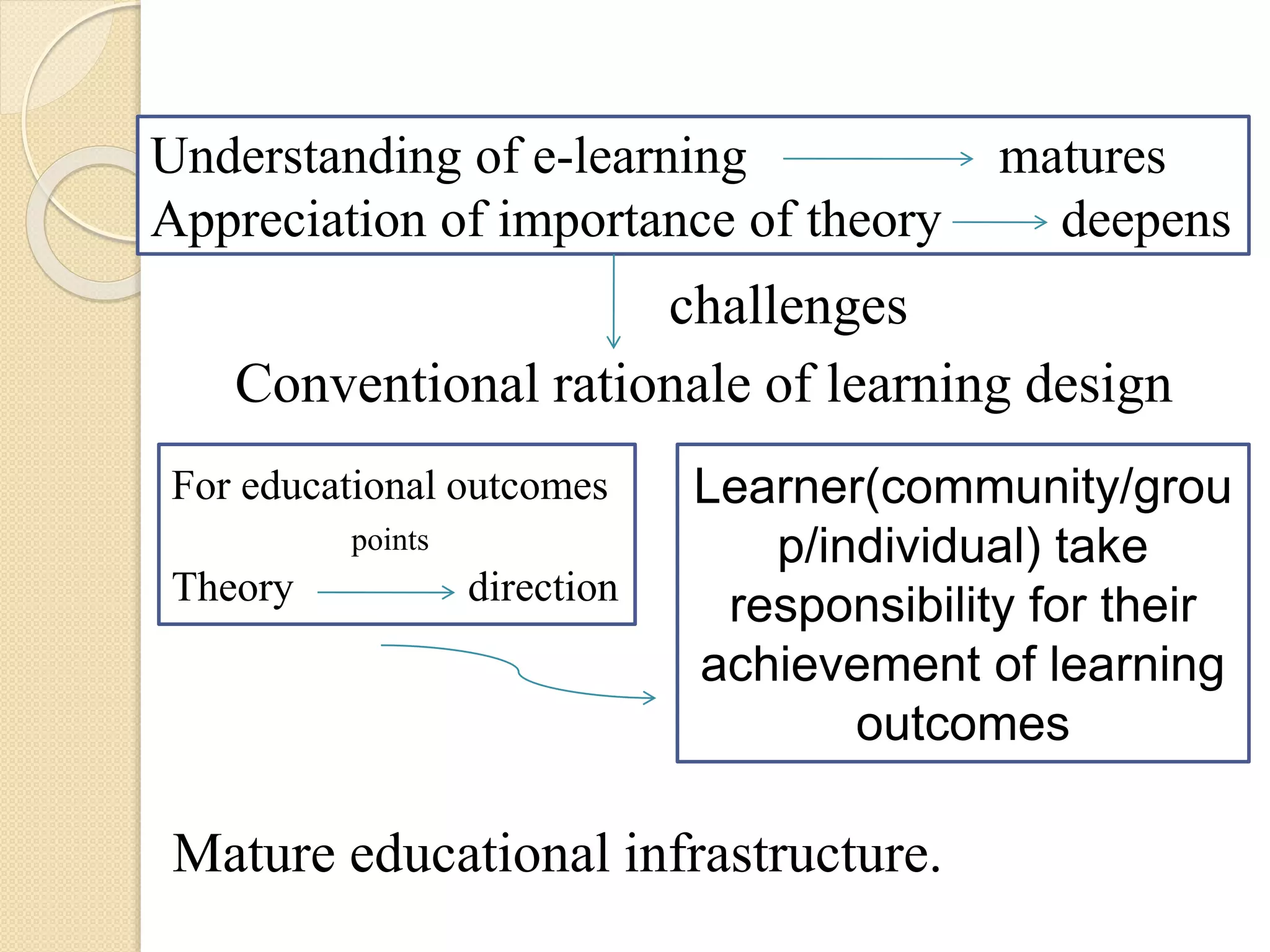
challenges
Conventional rationale of learning design
Mature educational infrastructure.
Understanding of e-learning matures
Appreciation of importance of theory deepens
For educational outcomes
points
Theory direction
Learner(community/grou
p/individual) take
responsibility for their
achievement of learning
outcomes
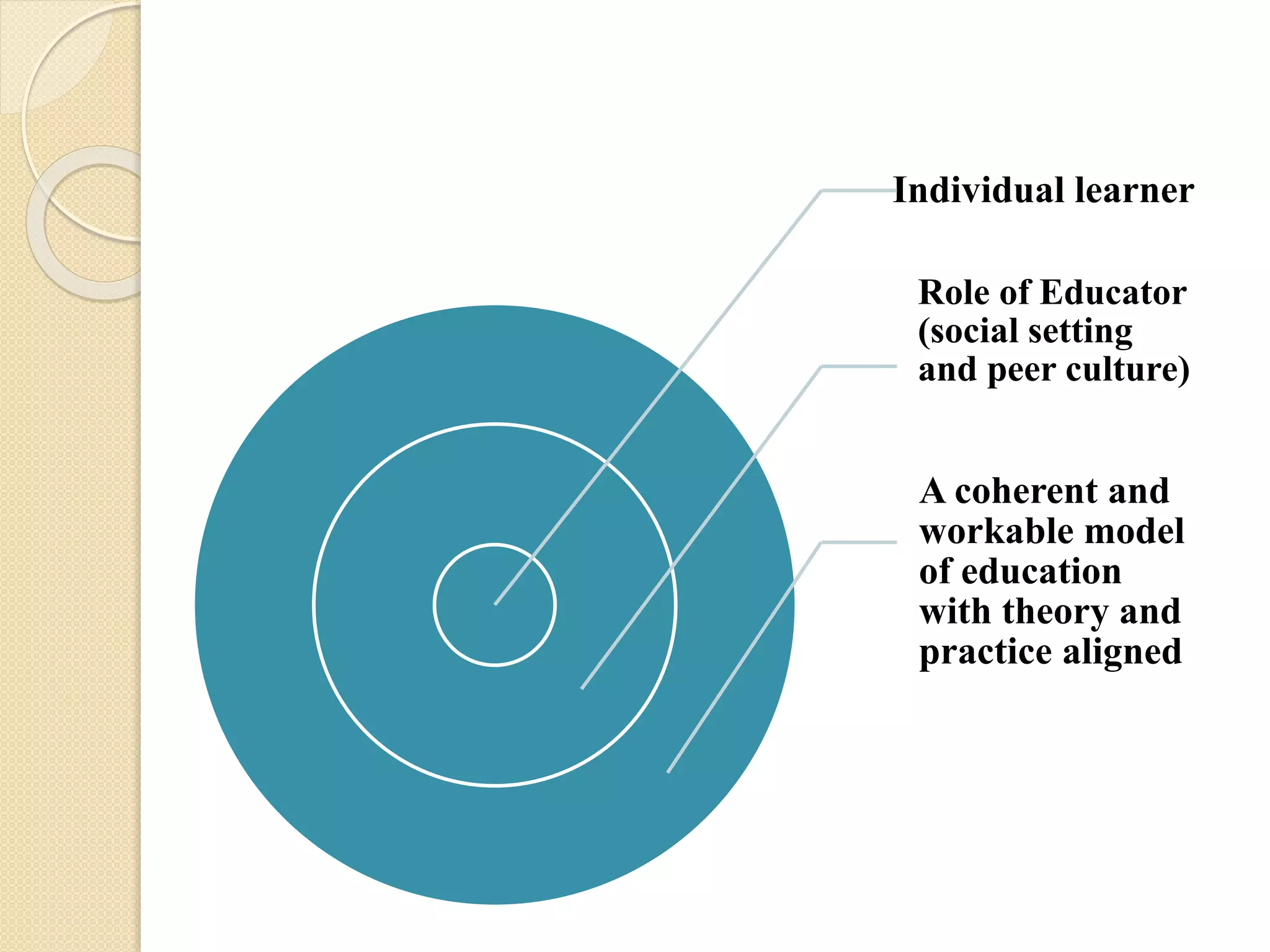
Individual learner
Role of Educator
(social setting
and peer culture)
A coherent and
workable model
of education
with theory and
practice aligned
Learning and e learning: The Role of Theory

Learning and e learning: The Role of Theory

  • 1.
    Learning and e-learning:The Role of Theory Terry Mayes and Sara de Freitas Azran Azmee Kafia
  • 2.
    Outline  Background The AssociationistPerspective  The Cognitive Perspective  The Situative Perspective  Implications  E-learning and the learning cycle  Current landscape of e-learning
  • 3.
    Background  What islearning? &  What is e-learning?
  • 4.
    Background Learning Analysis of learningexperience  Associative perspective,  Cognitive perspective, and  Situative perspective
  • 5.
    Associative Perspective  Theorists: Skinner and Gagne Associationist describes individual learners Building concepts or competences step by step Overt activities + Outcomes of these activities
  • 6.
    Associative Perspective Implications oflearning Pedagogic Approaches  Routines of organized activity  Progression through component concepts or skills  Clear goals and feedback  Individual pathways matched to performance  Guided instruction  Drill and practice  Instructional design  Socratic dialogue
  • 7.
    Cognitive Perspective: Constructive (Individual) Theorist : Piaget, Papert, Kolb and Biggs Cognitive attempts Achieving understanding through active discovery Detailed structures + Processes that underlie individual performance
  • 8.
    Cognitive Perspective: Constructive(Individual) Implications of learning Pedagogic Approaches  Active construction and integration of concepts  Ill-structured problems  Opportunities for reflection  Ownership of the task.  Cognitive scaffolding  Experiential learning (Kolb’ learning cycle)  Experimental learning  Constructivist learning environments  Problem-based learning  Research-based learning
  • 9.
    Cognitive Perspective: ConstructivePerspective ( Social)  Theorists: Vygotsky and Laurillard and Pask Achieving understanding through dialogue and collaboration. Scaffold by social environment Peer learners and teachers play a key role Engaging in dialogue, developing a shared understanding and providing feedback
  • 10.
    Cognitive Perspective: ConstructivePerspective ( Social) Implications of learning Pedagogic Approaches  Conceptual development through collaborative activity  Ill-structured problems  Opportunities for discussion and reflection  Shared ownership of the task  Reciprocal training  Conversational model  Computer-supported collaborative learning
  • 11.
    Situative Perspective  Theorists:Lave and Wenger,Cole, Engstrom and Wertsch Situative outset Developing practice in a particular community Activity systems aggregates group of learners Individuals participate as members of communities
  • 12.
    Situative Perspective Implications oflearning Pedagogic Approaches  Participation in social practices of enquiry and learning  Acquiring habits, attitudes, values and skills in context  Developing identities  Developing learning and professional relationships  (Cognitive) apprenticeship  Situative learning  (Legitimate peripheral) participation  (continuing) professional development  Work-based learning
  • 13.
    Implications Blended learning Learning as 1.Behaviour 2. Construction of knowledge and meaning 3. Social Practice Learning + e-learning
  • 14.
    Learning and e-learningcycle Situative perspective Learner’s motivation Associative perspective Nature of performance Cognitive perspective Role of understanding and reflecting on action
  • 15.
    Fowler and Mayes(1999) attempted to map broad pedagogies onto types of technology;  “Primary: distinguishing between the technology of presenting information  Secondary: the technology of supporting active learning tasks and feedback, and  Tertiary: the technology of supporting dialogue about the application of the new learning.”
  • 16.
    “… work thatdemonstrated that practice will lead to performance improvements that proceed almost indefinitely even on simple perceptual-motor task.” (Welford,1968) it proceeds Novice Expert
  • 17.
    Current landscape ofe-learning This model suggests itself based on a simple dimension of locus of control: Institutional VLEs + with their emphasis on standardization An environment that empowers learners to take responsibility for their own learning and make their own design decision Institution-in-control
  • 18.
    So, the popularnotion is Developing towards Personalization of learning environment Or Personalized VLE Web 2.0 To empower e-learners with great flexibility for learning through rich dialogue with like- minded others by its rapid identification process a) Direct communication + b) Sharing of relevant information
  • 19.
    A familiar curriculumdesign model : a) Describing intended learning outcomes, b) Designing teaching methods, c) Learning environments to achieve them, d) Making assessments to measure how well they have been achieved, and e) Making an evaluation of whether the stages are properly aligned. (mostly the training of skills)
  • 20.
    challenges Conventional rationale oflearning design Mature educational infrastructure. Understanding of e-learning matures Appreciation of importance of theory deepens For educational outcomes points Theory direction Learner(community/grou p/individual) take responsibility for their achievement of learning outcomes
  • 21.
    Individual learner Role ofEducator (social setting and peer culture) A coherent and workable model of education with theory and practice aligned