ACUTE
LEUKEMIAS
Tan Yuet Nger
Group 88
Definition
 Acute leukemia is a disease in which the
hematopoietic stem cells undergoes malignant
transformation into a primitive, undifferentiated cell
with abnormal longevity
Leukemias
Acute
ALL AML
Chronic
CLL CML
Epidemiology
ALL
 ALL is the most common type of childhood cancer
 It is most common in children younger than 5
AML
 AML is the second most common form of leukemia in
children, after acute lymphoblastic leukemia (ALL)
 AML occurs more often in children younger than two. The
number of people with AML increases again in late
childhood (during the teenage years) and continues to
increase throughout later adulthood.
Etiology
 Unknown
 It seems to develop from a combination of genetic
and environmental factors.
Risk factor
 Being exposed to xrays before birth.
 Being exposed to radiation
 Having certain genetic conditions, such as
Down syndrome
Neurofibromatosis type 1 (NF1).
Shwachman syndrome
Bloom syndrome
Ataxia-talangiectasia
Signs and symptoms
 easy bruising and bleeding
 pallor, fatigue, fever, malaise, weight loss, tachycardia, chest
pain
 infection
 Bone marrow and periosteal infiltration may cause bone and
joint pain
 Extramedullary infiltration by leukemic cells may cause
lymphadenopathy, splenomegaly, hepatomegaly, and leukemia
cutis (a raised, nonpruritic rash)
 Gum hyperplasia
 Symptoms of CNS involvement, such as headache, vomiting,
lethargy, and nuchal rigidity
Diagnosis
 CBC
Anemia
Thrombocytopenia
elevated leukocyte count of more than 10 × 109/L
Neutropenia
 peripheral blood smear
 Bone marrow examination
 Histochemical studies, cytogenetics,
immunophenotyping, and molecular biology studies
 Lumbar puncture
 Imaging
A chest x-ray can help detect an enlarged thymus
or lymph nodes in the chest. If the test result is
abnormal, a computed tomography (CT) scan of
the chest may be done to get a more detailed
view.
Chest x-rays can also help look for pneumonia if
your child might have a lung infection
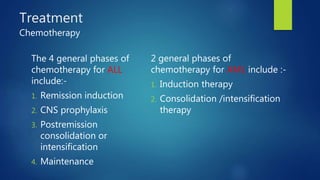
Treatment
The 4 general phases of
chemotherapy for ALL
include:-
1. Remission induction
2. CNS prophylaxis
3. Postremission
consolidation or
intensification
4. Maintenance
2 general phases of
chemotherapy for AML include :-
1. Induction therapy
2. Consolidation /intensification
therapy
Chemotherapy
1. Induction
 daily oral prednisone and weekly IV
vincristine with the addition of an
anthracycline or asparaginase
2. CNS prophylaxis
 prophylaxis and treatment may
include intrathecal methotrexate,
cytarabine, and corticosteroids in
combination or methotrexate and
cytarabine singly
3. Consolidation therapy
 Allogeneic stem cell transplantation is
recommended as consolidation
therapy for Ph chromosome–positive
ALL in adults or for 2nd or later
relapses or remissions.
4. Maintenance
 methotrexate and mercaptopurine
1. Induction
 cytarabine by continuous IV
infusion or high doses for 5 to 7
days
2. Consolidation
 High-dose cytarabine regimens
ALL AML
 Radiation therapy
 Stem cell transplant
 Targeted therapy
ALL
• Tyrosine kinase
inhibitor
• Imatinib (gleevec)
children with
Philadelphia
chromosome –
positive ALL
AML
• Monoclonal antibody therapy
• Gemtuzumab treatment of a
subtype of AML called acute
promyelocytic leukemia (APL)
• Proteasome inhibitor therapy
• Bortezomib is a proteasome
inhibitor used to treat
childhood APL.
 Supportive care
Transfusions
Antimicrobials
Hydration and urine alkalinization
urine alkalinization (pH 7 to 8) & electrolyte
monitoring can prevent the hyperuricemia,
hyperphosphatemia, hypocalcemia, and
hyperkalemia (tumor lysis syndrome)
Key Points for ALL
 ALL is the most common cancer in children but also
occurs in adults.
 CNS involvement is common; most patients receive
intrathecal chemotherapy and corticosteroids and
sometimes CNS radiation therapy.
 Response to treatment is good, with cure possible in
about 75% of children and 30 to 40% of adults.
 Stem cell transplantation may be helpful for relapse.
Key Points for AML
 There are a number of subtypes, typically involving
very immature myeloid cells.
 Chromosomal abnormalities are common and have
implications for prognosis and treatment.
 Chemotherapy often prolongs survival.
 Stem cell transplantation may help patients who do
not respond to treatment and younger patients.
THANK YOU

Acute Leukemia

  • 1.
  • 2.
    Definition  Acute leukemiais a disease in which the hematopoietic stem cells undergoes malignant transformation into a primitive, undifferentiated cell with abnormal longevity
  • 3.
  • 5.
    Epidemiology ALL  ALL isthe most common type of childhood cancer  It is most common in children younger than 5 AML  AML is the second most common form of leukemia in children, after acute lymphoblastic leukemia (ALL)  AML occurs more often in children younger than two. The number of people with AML increases again in late childhood (during the teenage years) and continues to increase throughout later adulthood.
  • 6.
    Etiology  Unknown  Itseems to develop from a combination of genetic and environmental factors.
  • 7.
    Risk factor  Beingexposed to xrays before birth.  Being exposed to radiation  Having certain genetic conditions, such as Down syndrome Neurofibromatosis type 1 (NF1). Shwachman syndrome Bloom syndrome Ataxia-talangiectasia
  • 8.
    Signs and symptoms easy bruising and bleeding  pallor, fatigue, fever, malaise, weight loss, tachycardia, chest pain  infection  Bone marrow and periosteal infiltration may cause bone and joint pain  Extramedullary infiltration by leukemic cells may cause lymphadenopathy, splenomegaly, hepatomegaly, and leukemia cutis (a raised, nonpruritic rash)  Gum hyperplasia  Symptoms of CNS involvement, such as headache, vomiting, lethargy, and nuchal rigidity
  • 9.
    Diagnosis  CBC Anemia Thrombocytopenia elevated leukocytecount of more than 10 × 109/L Neutropenia
  • 10.
  • 11.
     Bone marrowexamination  Histochemical studies, cytogenetics, immunophenotyping, and molecular biology studies  Lumbar puncture  Imaging A chest x-ray can help detect an enlarged thymus or lymph nodes in the chest. If the test result is abnormal, a computed tomography (CT) scan of the chest may be done to get a more detailed view. Chest x-rays can also help look for pneumonia if your child might have a lung infection
  • 14.
    Treatment The 4 generalphases of chemotherapy for ALL include:- 1. Remission induction 2. CNS prophylaxis 3. Postremission consolidation or intensification 4. Maintenance 2 general phases of chemotherapy for AML include :- 1. Induction therapy 2. Consolidation /intensification therapy Chemotherapy
  • 15.
    1. Induction  dailyoral prednisone and weekly IV vincristine with the addition of an anthracycline or asparaginase 2. CNS prophylaxis  prophylaxis and treatment may include intrathecal methotrexate, cytarabine, and corticosteroids in combination or methotrexate and cytarabine singly 3. Consolidation therapy  Allogeneic stem cell transplantation is recommended as consolidation therapy for Ph chromosome–positive ALL in adults or for 2nd or later relapses or remissions. 4. Maintenance  methotrexate and mercaptopurine 1. Induction  cytarabine by continuous IV infusion or high doses for 5 to 7 days 2. Consolidation  High-dose cytarabine regimens ALL AML
  • 16.
     Radiation therapy Stem cell transplant  Targeted therapy ALL • Tyrosine kinase inhibitor • Imatinib (gleevec) children with Philadelphia chromosome – positive ALL AML • Monoclonal antibody therapy • Gemtuzumab treatment of a subtype of AML called acute promyelocytic leukemia (APL) • Proteasome inhibitor therapy • Bortezomib is a proteasome inhibitor used to treat childhood APL.
  • 17.
     Supportive care Transfusions Antimicrobials Hydrationand urine alkalinization urine alkalinization (pH 7 to 8) & electrolyte monitoring can prevent the hyperuricemia, hyperphosphatemia, hypocalcemia, and hyperkalemia (tumor lysis syndrome)
  • 18.
    Key Points forALL  ALL is the most common cancer in children but also occurs in adults.  CNS involvement is common; most patients receive intrathecal chemotherapy and corticosteroids and sometimes CNS radiation therapy.  Response to treatment is good, with cure possible in about 75% of children and 30 to 40% of adults.  Stem cell transplantation may be helpful for relapse.
  • 19.
    Key Points forAML  There are a number of subtypes, typically involving very immature myeloid cells.  Chromosomal abnormalities are common and have implications for prognosis and treatment.  Chemotherapy often prolongs survival.  Stem cell transplantation may help patients who do not respond to treatment and younger patients.
  • 20.