Chagas:
A neglected disease
NTDs are:
Neglected Tropical
Chagas is a NTD
Di seases
These diseases, also known as forgotten,
affect the most vulnerable populations who have limited public voice
NTDs have an ENORMOUS
impact on individuals, families
and communities in low-income
countries
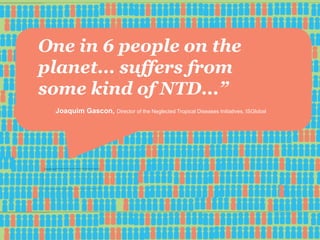
One in 6 people on the
planet... suffers from
some kind of NTD...”
Joaquim Gascon, Director of the Neglected Tropical Diseases Initiatives, ISGlobal
There are
17
NTD
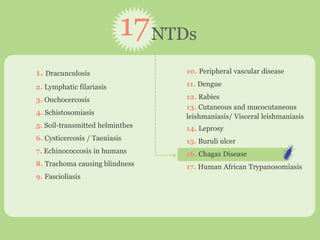
1. Dracunculosis
2. Lymphatic filariasis
3. Onchocercosis
4. Schistosomiasis
5. Soil-transmitted helminthes
6. Cysticercosis / Taeniasis
7. Echinococcosis in humans
8. Trachoma causing blindness
9. Fascioliasis
NTDs17
10. Peripheral vascular disease
11. Dengue
12. Rabies
13. Cutaneous and mucocutaneous
leishmaniasis/ Visceral leishmaniasis
14. Leprosy
15. Buruli ulcer
16. Chagas Disease
17. Human African Trypanosomiasis
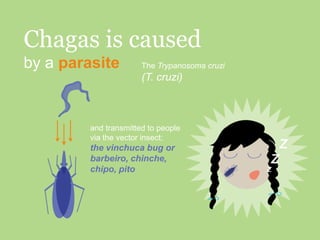
Chagas is caused
by a parasite The Trypanosoma cruzi
(T. cruzi)
and transmitted to people
via the vector insect:
the vinchuca bug or
barbeiro, chinche,
chipo, pito
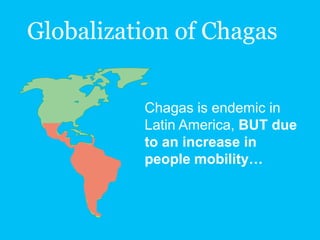
Globalization of Chagas
Chagas is endemic in
Latin America, BUT due
to an increase in
people mobility…
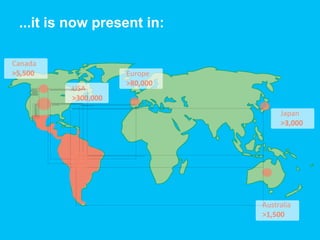
...it is now present in:
Canada
>5,500
USA
>300,000
Europe
>80,000
Japan
>3,000
Australia
>1,500
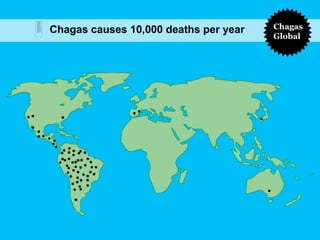
Chagas causes 10,000 deaths per year Chagas
Global
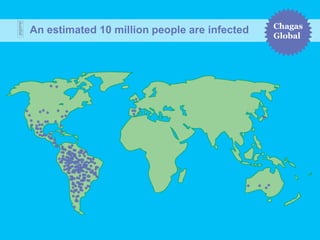
An estimated 10 million people are infected Chagas
Global
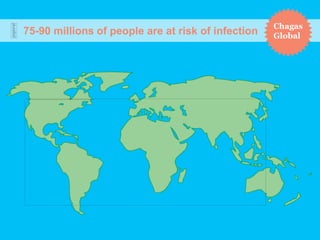
75-90 millions of people are at risk of infection
Chagas
Global
Chagas
is a
global
public health
problem
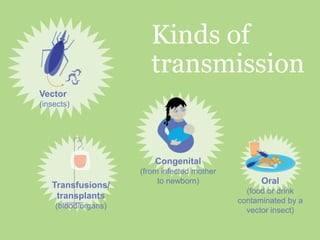
Kinds of
transmission
Vector
(insects)
Transfusions/
transplants
(blood/organs)
Congenital
(from infected mother
to newborn) Oral
(food or drink
contaminated by a
vector insect)
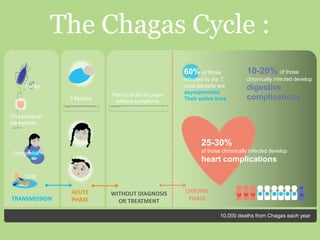
The Chagas Cycle :
TRANSMISSION
ACUTE
PHASE
CHRONIC
PHASE
WITHOUT DIAGNOSIS
OR TREATMENT
2 Months
Period of 20-30 years
without symptoms
25-30%
of those chronically infected develop
heart complications
10-20% of those
chronically infected develop
digestive
complications
60% of those
infected by the T.
cruzi parasite are
asymptomatic
Their entire lives
Vector
Transfusions/
transplants
Congenital
Oral
10,000 deaths from Chagas each
year
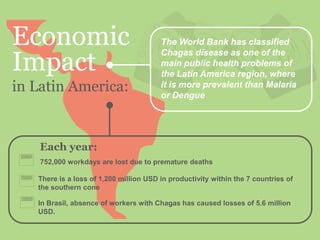
Economic
Impact
in Latin America:
The World Bank has classified
Chagas disease as one of the
main public health problems of
the Latin America region, where
it is more prevalent than Malaria
or Dengue
In Brasil, absence of workers with Chagas has caused losses of 5.6 million
USD.
752,000 workdays are lost due to premature deaths
There is a loss of 1,200 million USD in productivity within the 7 countries of the
southern cone
Each year:
How
do we fight
Chagas?
PREVENTION
CONTROL
TREATMENT
R+D
INFORMATION
Prevention
& Control
A vaccine to prevent Chagas doesn’t exist. That’s why it is so
important to know the methods of prevention:
Vector Control
Fumigation of houses where there are vinchuca bugs;
Modification and renovation of the house structure;
Conditioning and reordering of the house interior
Transfusion Control
Risk prevention measures for blood banks to eliminate
the transmission of infected blood
Mother-child transmission Control
Protocols for screening pregnant women, diagnosis and
treatment for children.
Treatment
ACUTE PHASE CHRONIC PHASE
In adults and children
over one year, the
disease may be cured
if treated within the first
two months of
infection
With specialized attention, patients may
maintain a better quality of life
Although less effective, the treatment helps
stop the development of the disease’s
complications
And in some cases
may be able to
eliminate the
parasite
In children under one
year, treatment results
in a complete cure
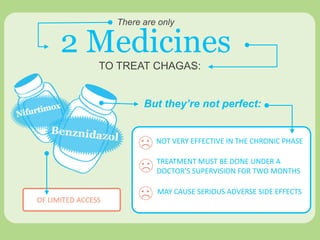
2 Medicines
There are only
TO TREAT CHAGAS:
But they’re not perfect:
TREATMENT MUST BE DONE UNDER A
DOCTOR’S SUPERVISION FOR TWO MONTHS
OF LIMITED ACCESS
NOT VERY EFFECTIVE IN THE CHRONIC PHASE
MAY CAUSE SERIOUS ADVERSE SIDE EFFECTS
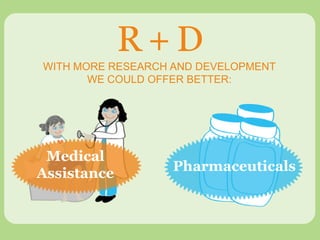
R + D
WITH MORE RESEARCH AND DEVELOPMENT
WE COULD OFFER BETTER:
Medical
Assistance Pharmaceuticals
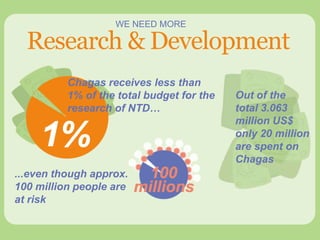
Research & Development
WE NEED MORE
...even though approx.
100 million people are
at risk
Out of the
total 3.063
million US$
only 20 million
are spent on
Chagas
Chagas receives less than
1% of the total budget for the
research of NTD…
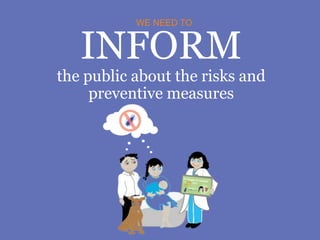
INFORM
the public about the risks and
preventive measures
WE NEED TO
DEVELOP
new pharmaceuticals that are more
secure and effective
WE NEED TO
SECURE
the production and
distribution of Benznidazol
WE NEED TO
For more
Information:
www.ISGlobal.or
g

Chagas: A Neglected Disease

  • 1.
  • 2.
  • 3.
    These diseases, alsoknown as forgotten, affect the most vulnerable populations who have limited public voice NTDs have an ENORMOUS impact on individuals, families and communities in low-income countries
  • 4.
    One in 6people on the planet... suffers from some kind of NTD...” Joaquim Gascon, Director of the Neglected Tropical Diseases Initiatives, ISGlobal
  • 5.
  • 6.
    1. Dracunculosis 2. Lymphaticfilariasis 3. Onchocercosis 4. Schistosomiasis 5. Soil-transmitted helminthes 6. Cysticercosis / Taeniasis 7. Echinococcosis in humans 8. Trachoma causing blindness 9. Fascioliasis NTDs17 10. Peripheral vascular disease 11. Dengue 12. Rabies 13. Cutaneous and mucocutaneous leishmaniasis/ Visceral leishmaniasis 14. Leprosy 15. Buruli ulcer 16. Chagas Disease 17. Human African Trypanosomiasis
  • 7.
    Chagas is caused bya parasite The Trypanosoma cruzi (T. cruzi) and transmitted to people via the vector insect: the vinchuca bug or barbeiro, chinche, chipo, pito
  • 8.
    Globalization of Chagas Chagasis endemic in Latin America, BUT due to an increase in people mobility…
  • 9.
    ...it is nowpresent in: Canada >5,500 USA >300,000 Europe >80,000 Japan >3,000 Australia >1,500
  • 10.
    Chagas causes 10,000deaths per year Chagas Global
  • 11.
    An estimated 10million people are infected Chagas Global
  • 12.
    75-90 millions ofpeople are at risk of infection Chagas Global
  • 13.
  • 14.
    Kinds of transmission Vector (insects) Transfusions/ transplants (blood/organs) Congenital (from infectedmother to newborn) Oral (food or drink contaminated by a vector insect)
  • 15.
    The Chagas Cycle: TRANSMISSION ACUTE PHASE CHRONIC PHASE WITHOUT DIAGNOSIS OR TREATMENT 2 Months Period of 20-30 years without symptoms 25-30% of those chronically infected develop heart complications 10-20% of those chronically infected develop digestive complications 60% of those infected by the T. cruzi parasite are asymptomatic Their entire lives Vector Transfusions/ transplants Congenital Oral 10,000 deaths from Chagas each year
  • 16.
    Economic Impact in Latin America: TheWorld Bank has classified Chagas disease as one of the main public health problems of the Latin America region, where it is more prevalent than Malaria or Dengue In Brasil, absence of workers with Chagas has caused losses of 5.6 million USD. 752,000 workdays are lost due to premature deaths There is a loss of 1,200 million USD in productivity within the 7 countries of the southern cone Each year:
  • 17.
  • 18.
  • 19.
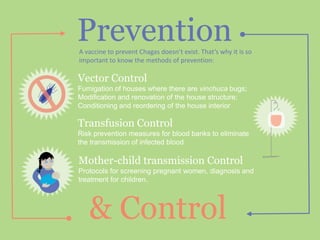
    Prevention & Control A vaccineto prevent Chagas doesn’t exist. That’s why it is so important to know the methods of prevention: Vector Control Fumigation of houses where there are vinchuca bugs; Modification and renovation of the house structure; Conditioning and reordering of the house interior Transfusion Control Risk prevention measures for blood banks to eliminate the transmission of infected blood Mother-child transmission Control Protocols for screening pregnant women, diagnosis and treatment for children.
  • 20.
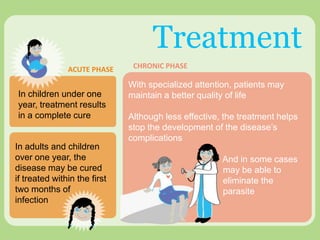
    Treatment ACUTE PHASE CHRONICPHASE In adults and children over one year, the disease may be cured if treated within the first two months of infection With specialized attention, patients may maintain a better quality of life Although less effective, the treatment helps stop the development of the disease’s complications And in some cases may be able to eliminate the parasite In children under one year, treatment results in a complete cure
  • 21.
    2 Medicines There areonly TO TREAT CHAGAS: But they’re not perfect: TREATMENT MUST BE DONE UNDER A DOCTOR’S SUPERVISION FOR TWO MONTHS OF LIMITED ACCESS NOT VERY EFFECTIVE IN THE CHRONIC PHASE MAY CAUSE SERIOUS ADVERSE SIDE EFFECTS
  • 22.
    R + D WITHMORE RESEARCH AND DEVELOPMENT WE COULD OFFER BETTER: Medical Assistance Pharmaceuticals
  • 23.
    Research & Development WENEED MORE ...even though approx. 100 million people are at risk Out of the total 3.063 million US$ only 20 million are spent on Chagas Chagas receives less than 1% of the total budget for the research of NTD…
  • 24.
    INFORM the public aboutthe risks and preventive measures WE NEED TO
  • 25.
    DEVELOP new pharmaceuticals thatare more secure and effective WE NEED TO
  • 26.
    SECURE the production and distributionof Benznidazol WE NEED TO
  • 27.