Classification and
variation
Chapter 7
Biology
(2nd week)
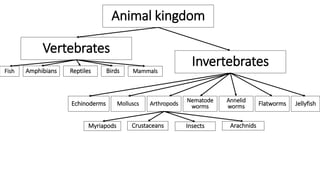
Animal kingdom
Vertebrates
Invertebrates
JellyfishFlatworms
Annelid
worms
Nematode
wormsArthropodsMolluscsEchinoderms
ArachnidsInsectsCrustaceansMyriapods
BirdsReptilesAmphibians MammalsFish
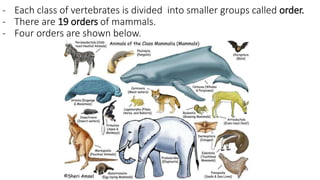
- Each class of vertebrates is divided into smaller groups called order.
- There are 19 orders of mammals.
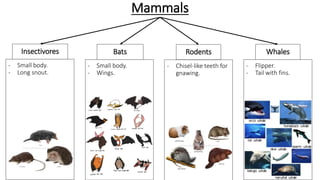
- Four orders are shown below.
Mammals
WhalesRodentsBatsInsectivores
- Flipper.
- Tail with fins.
- Chisel-like teeth for
gnawing.
- Small body.
- Wings.
- Small body.
- Long snout.
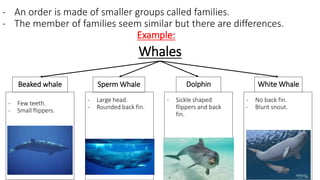
- An order is made of smaller groups called families.
- The member of families seem similar but there are differences.
Example:
Whales
White WhaleDolphinSperm WhaleBeaked whale
- No back fin.
- Blunt snout.
- Sickle shaped
flippers and back
fin.
- Large head.
- Rounded back fin.
- Few teeth.
- Small flippers.
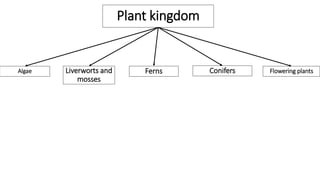
Plant kingdom
ConifersFernsLiverworts and
mosses
Flowering plantsAlgae
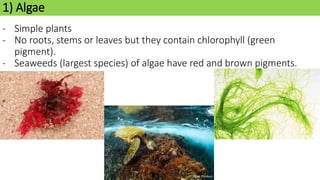
1) Algae
- Simple plants
- No roots, stems or leaves but they contain chlorophyll (green
pigment).
- Seaweeds (largest species) of algae have red and brown pigments.
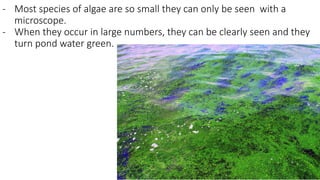
- Most species of algae are so small they can only be seen with a
microscope.
- When they occur in large numbers, they can be clearly seen and they
turn pond water green.
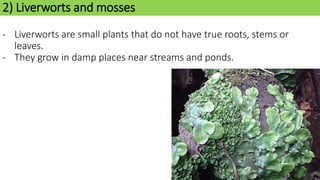
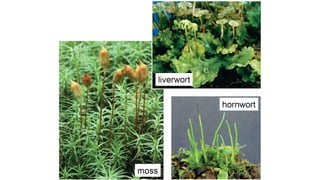
2) Liverworts and mosses
- Liverworts are small plants that do not have true roots, stems or
leaves.
- They grow in damp places near streams and ponds.
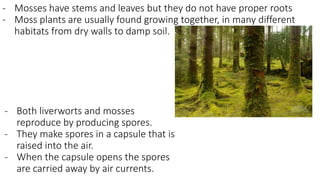
- Mosses have stems and leaves but they do not have proper roots
- Moss plants are usually found growing together, in many different
habitats from dry walls to damp soil.
- Both liverworts and mosses
reproduce by producing spores.
- They make spores in a capsule that is
raised into the air.
- When the capsule opens the spores
are carried away by air currents.
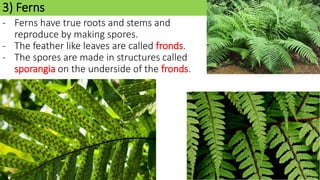
3) Ferns
- Ferns have true roots and stems and
reproduce by making spores.
- The feather like leaves are called fronds.
- The spores are made in structures called
sporangia on the underside of the fronds.
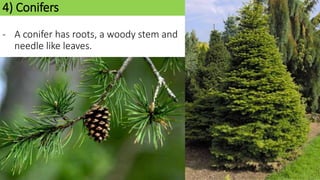
4) Conifers
- A conifer has roots, a woody stem and
needle like leaves.
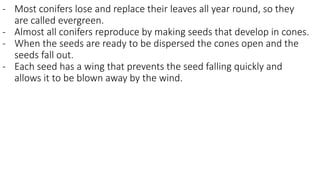
- Most conifers lose and replace their leaves all year round, so they
are called evergreen.
- Almost all conifers reproduce by making seeds that develop in cones.
- When the seeds are ready to be dispersed the cones open and the
seeds fall out.
- Each seed has a wing that prevents the seed falling quickly and
allows it to be blown away by the wind.
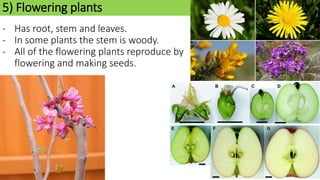
5) Flowering plants
- Has root, stem and leaves.
- In some plants the stem is woody.
- All of the flowering plants reproduce by
flowering and making seeds.
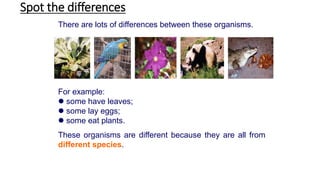
There are lots of differences between these organisms.
For example:
 some have leaves;
 some lay eggs;
 some eat plants.
These organisms are different because they are all from
different species.
Spot the differences
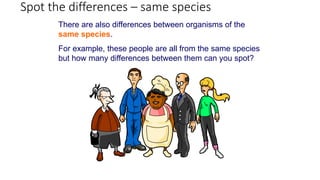
There are also differences between organisms of the
same species.
For example, these people are all from the same species
but how many differences between them can you spot?
Spot the differences – same species
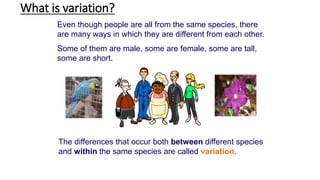
Even though people are all from the same species, there
are many ways in which they are different from each other.
Some of them are male, some are female, some are tall,
some are short.
The differences that occur both between different species
and within the same species are called variation.
What is variation?
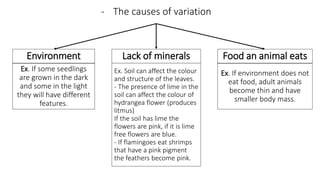
- The causes of variation
Environment Lack of minerals
Ex. Soil can affect the colour
and structure of the leaves.
- The presence of lime in the
soil can affect the colour of
hydrangea flower (produces
litmus)
If the soil has lime the
flowers are pink, if it is lime
free flowers are blue.
- If flamingoes eat shrimps
that have a pink pigment
the feathers become pink.
Ex. If some seedlings
are grown in the dark
and some in the light
they will have different
features.
Food an animal eats
Ex. If environment does not
eat food, adult animals
become thin and have
smaller body mass.

Ch.7.classification and variation (part 2)

  • 1.
  • 2.
  • 3.
    - Each classof vertebrates is divided into smaller groups called order. - There are 19 orders of mammals. - Four orders are shown below.
  • 4.
    Mammals WhalesRodentsBatsInsectivores - Flipper. - Tailwith fins. - Chisel-like teeth for gnawing. - Small body. - Wings. - Small body. - Long snout.
  • 5.
    - An orderis made of smaller groups called families. - The member of families seem similar but there are differences. Example: Whales White WhaleDolphinSperm WhaleBeaked whale - No back fin. - Blunt snout. - Sickle shaped flippers and back fin. - Large head. - Rounded back fin. - Few teeth. - Small flippers.
  • 6.
  • 7.
    1) Algae - Simpleplants - No roots, stems or leaves but they contain chlorophyll (green pigment). - Seaweeds (largest species) of algae have red and brown pigments.
  • 8.
    - Most speciesof algae are so small they can only be seen with a microscope. - When they occur in large numbers, they can be clearly seen and they turn pond water green.
  • 9.
    2) Liverworts andmosses - Liverworts are small plants that do not have true roots, stems or leaves. - They grow in damp places near streams and ponds.
  • 10.
    - Mosses havestems and leaves but they do not have proper roots - Moss plants are usually found growing together, in many different habitats from dry walls to damp soil. - Both liverworts and mosses reproduce by producing spores. - They make spores in a capsule that is raised into the air. - When the capsule opens the spores are carried away by air currents.
  • 12.
    3) Ferns - Fernshave true roots and stems and reproduce by making spores. - The feather like leaves are called fronds. - The spores are made in structures called sporangia on the underside of the fronds.
  • 13.
    4) Conifers - Aconifer has roots, a woody stem and needle like leaves.
  • 14.
    - Most coniferslose and replace their leaves all year round, so they are called evergreen. - Almost all conifers reproduce by making seeds that develop in cones. - When the seeds are ready to be dispersed the cones open and the seeds fall out. - Each seed has a wing that prevents the seed falling quickly and allows it to be blown away by the wind.
  • 15.
    5) Flowering plants -Has root, stem and leaves. - In some plants the stem is woody. - All of the flowering plants reproduce by flowering and making seeds.
  • 16.
    There are lotsof differences between these organisms. For example:  some have leaves;  some lay eggs;  some eat plants. These organisms are different because they are all from different species. Spot the differences
  • 17.
    There are alsodifferences between organisms of the same species. For example, these people are all from the same species but how many differences between them can you spot? Spot the differences – same species
  • 18.
    Even though peopleare all from the same species, there are many ways in which they are different from each other. Some of them are male, some are female, some are tall, some are short. The differences that occur both between different species and within the same species are called variation. What is variation?
  • 19.
    - The causesof variation Environment Lack of minerals Ex. Soil can affect the colour and structure of the leaves. - The presence of lime in the soil can affect the colour of hydrangea flower (produces litmus) If the soil has lime the flowers are pink, if it is lime free flowers are blue. - If flamingoes eat shrimps that have a pink pigment the feathers become pink. Ex. If some seedlings are grown in the dark and some in the light they will have different features. Food an animal eats Ex. If environment does not eat food, adult animals become thin and have smaller body mass.