CLASSIFICATION
AND VARIATION
A presentation by
SARANYA H C
Based on ICSE(VIII grade)
biology textbook
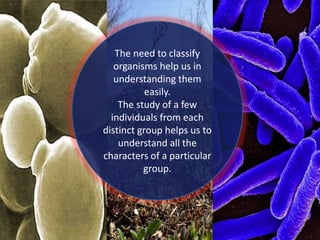
The need to classify
organisms help us in
understanding them
easily.
The study of a few
individuals from each
distinct group helps us to
understand all the
characters of a particular
group.
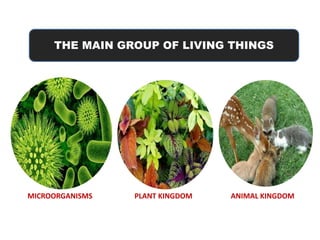
THE MAIN GROUP OF LIVING THINGS
MICROORGANISMS PLANT KINGDOM ANIMAL KINGDOM
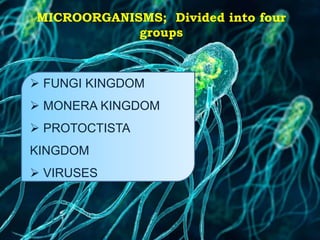
 FUNGI KINGDOM
 MONERA KINGDOM
 PROTOCTISTA
KINGDOM
 VIRUSES
MICROORGANISMS; Divided into four
groups
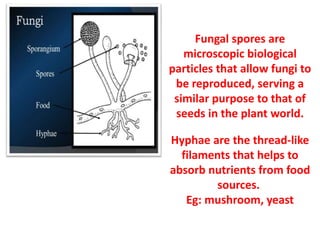
Fungal spores are
microscopic biological
particles that allow fungi to
be reproduced, serving a
similar purpose to that of
seeds in the plant world.
Hyphae are the thread-like
filaments that helps to
absorb nutrients from food
sources.
Eg: mushroom, yeast
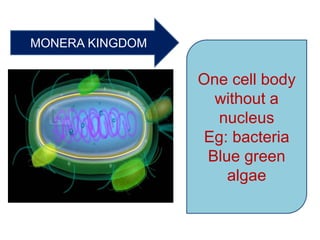
MONERA KINGDOM
One cell body
without a
nucleus
Eg: bacteria
Blue green
algae
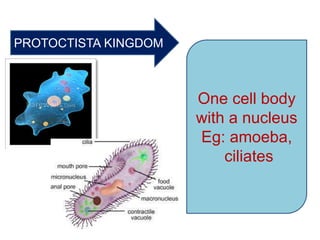
PROTOCTISTA KINGDOM
One cell body
with a nucleus
Eg: amoeba,
ciliates
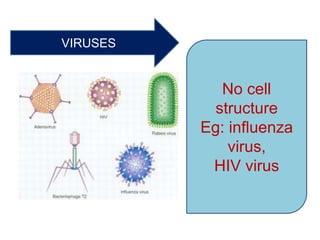
VIRUSES
No cell
structure
Eg: influenza
virus,
HIV virus
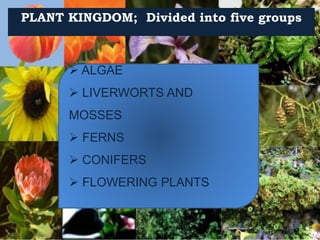
 ALGAE
 LIVERWORTS AND
MOSSES
 FERNS
 CONIFERS
 FLOWERING PLANTS
PLANT KINGDOM; Divided into five groups
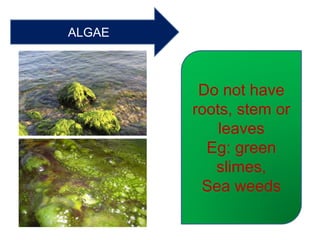
ALGAE
Do not have
roots, stem or
leaves
Eg: green
slimes,
Sea weeds
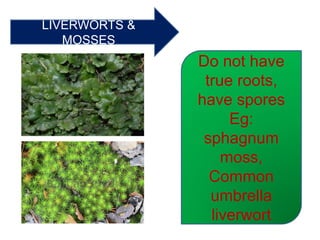
LIVERWORTS &
MOSSES
Do not have
true roots,
have spores
Eg:
sphagnum
moss,
Common
umbrella
liverwort
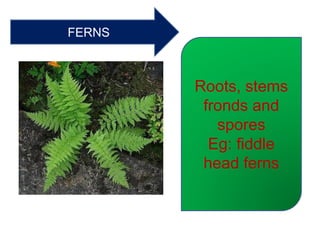
FERNS
Roots, stems
fronds and
spores
Eg: fiddle
head ferns
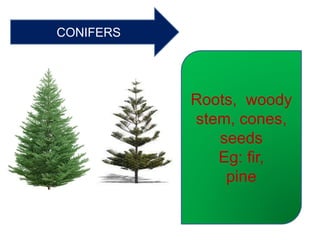
CONIFERS
Roots, woody
stem, cones,
seeds
Eg: fir,
pine
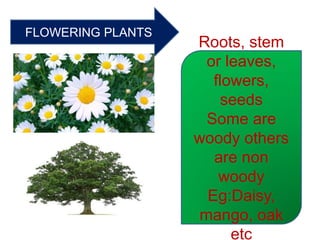
FLOWERING PLANTS
Roots, stem
or leaves,
flowers,
seeds
Some are
woody others
are non
woody
Eg:Daisy,
mango, oak
etc
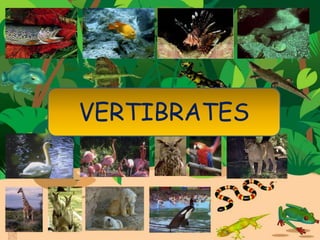
 VERTIBRATES
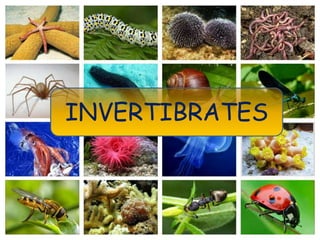
 INVERTIBRATES
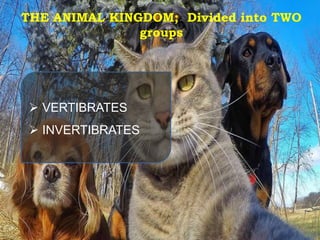
THE ANIMAL KINGDOM; Divided into TWO
groups
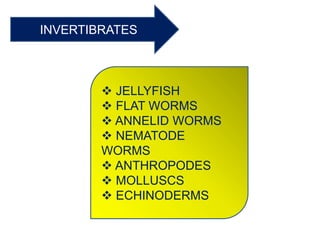
INVERTIBRATES
 JELLYFISH
 FLAT WORMS
 ANNELID WORMS
 NEMATODE
WORMS
 ANTHROPODES
 MOLLUSCS
 ECHINODERMS
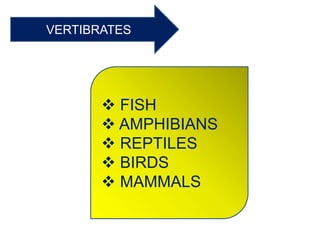
VERTIBRATES
 FISH
 AMPHIBIANS
 REPTILES
 BIRDS
 MAMMALS
INVERTIBRATES
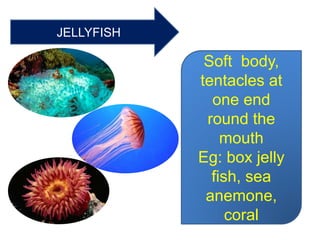
JELLYFISH
Soft body,
tentacles at
one end
round the
mouth
Eg: box jelly
fish, sea
anemone,
coral
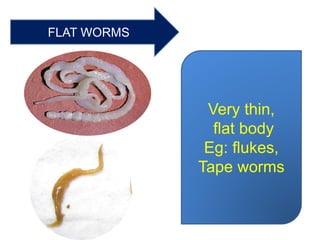
FLAT WORMS
Very thin,
flat body
Eg: flukes,
Tape worms
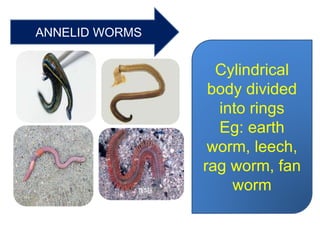
ANNELID WORMS
Cylindrical
body divided
into rings
Eg: earth
worm, leech,
rag worm, fan
worm
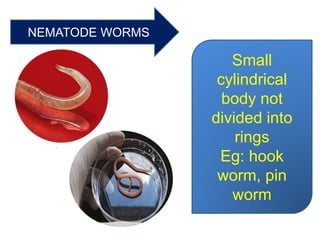
NEMATODE WORMS
Small
cylindrical
body not
divided into
rings
Eg: hook
worm, pin
worm
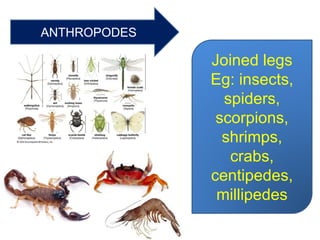
ANTHROPODES
Joined legs
Eg: insects,
spiders,
scorpions,
shrimps,
crabs,
centipedes,
millipedes
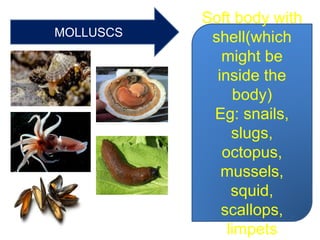
MOLLUSCS
Soft body with
shell(which
might be
inside the
body)
Eg: snails,
slugs,
octopus,
mussels,
squid,
scallops,
limpets
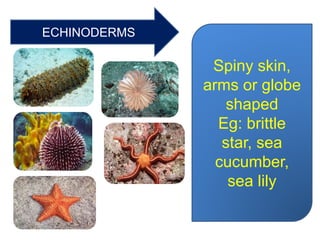
ECHINODERMS
Spiny skin,
arms or globe
shaped
Eg: brittle
star, sea
cucumber,
sea lily
VERTIBRATES
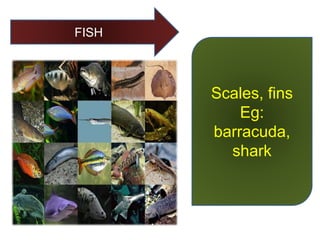
FISH
Scales, fins
Eg:
barracuda,
shark
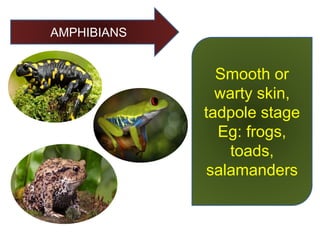
AMPHIBIANS
Smooth or
warty skin,
tadpole stage
Eg: frogs,
toads,
salamanders
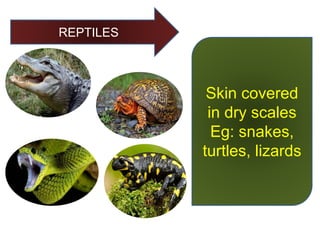
REPTILES
Skin covered
in dry scales
Eg: snakes,
turtles, lizards
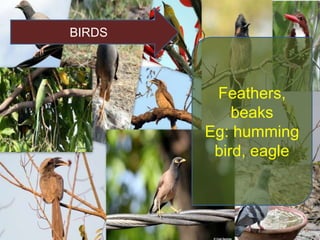
BIRDS
Feathers,
beaks
Eg: humming
bird, eagle
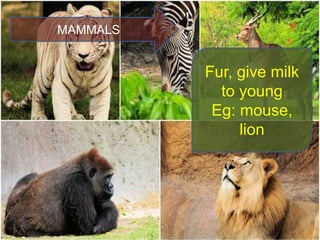
MAMMALS
Fur, give milk
to young
Eg: mouse,
lion
Classification and variation

Classification and variation