Oh, and Math
Thicker in the middle 
than the edges. 
Rays converge to 
focus an image. 
has + focal length
1. A ray parallel to the principal axis will 
refract through the focal point. 
2. A ray through the focal point will refract 
parallel to the principal axis. 
3. A ray through the center of the lens 
maintains its course.
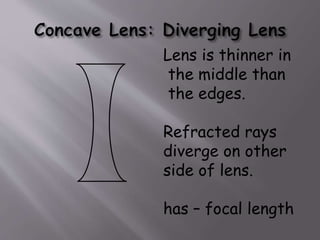
Lens is thinner in 
the middle than 
the edges. 
Refracted rays 
diverge on other 
side of lens. 
has – focal length
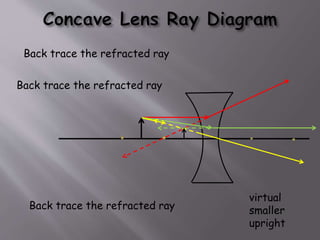
Back trace the refracted ray 
virtual 
smaller 
upright
Convex Lens: Real image unless object is 
in front of F, then virtual image is formed. 
Inverted unless in front of F, then upright 
image is formed. 
Farther away object is smaller image is. 
Bring in closer then image is enlarged. And 
when object is in front of F, huge and 
same side as F.
Concave Lens: Image is Virtual, smaller 
and Upright. Also, on same 
side of lens as object.
Same Formula: 1 + 1 = 1 
do di f 
m = hi = -di 
ho do
1. A 18-cm tall object is placed 33 cm from a converging 
lens that has a focal length of 10 cm. 
How far from the lens will the image be formed? 
How tall is the image formed? 
Describe the image formed. 
2. The same 18-cm tall object is now placed 33 cm from a 
diverging lens that has a focal length of -28 cm. 
How far from the lens will the image be formed? 
How Tall is the image? 
Describe the image.

Ch 5 -lensproperties

  • 1.
  • 2.
    Thicker in themiddle than the edges. Rays converge to focus an image. has + focal length
  • 3.
    1. A rayparallel to the principal axis will refract through the focal point. 2. A ray through the focal point will refract parallel to the principal axis. 3. A ray through the center of the lens maintains its course.
  • 5.
    Lens is thinnerin the middle than the edges. Refracted rays diverge on other side of lens. has – focal length
  • 6.
    Back trace therefracted ray Back trace the refracted ray Back trace the refracted ray virtual smaller upright
  • 8.
    Convex Lens: Realimage unless object is in front of F, then virtual image is formed. Inverted unless in front of F, then upright image is formed. Farther away object is smaller image is. Bring in closer then image is enlarged. And when object is in front of F, huge and same side as F.
  • 9.
    Concave Lens: Imageis Virtual, smaller and Upright. Also, on same side of lens as object.
  • 10.
    Same Formula: 1+ 1 = 1 do di f m = hi = -di ho do
  • 11.
    1. A 18-cmtall object is placed 33 cm from a converging lens that has a focal length of 10 cm. How far from the lens will the image be formed? How tall is the image formed? Describe the image formed. 2. The same 18-cm tall object is now placed 33 cm from a diverging lens that has a focal length of -28 cm. How far from the lens will the image be formed? How Tall is the image? Describe the image.