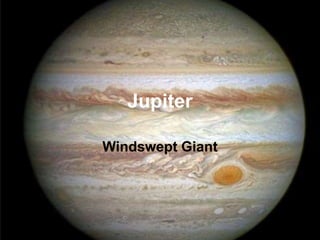
Jupiter 
Windswept Giant
Visual Scale of Size 
Visual Scale: If the sun were the 
door to this room, then the earth 
would be a nickel and Jupiter would 
be a basketball. 
If Jupiter got any more massive it 
would actually start to get 
smaller because it would 
pull in on itself.
Stats 
• 5th planet from our sun, 778 million km. 
• Mass: 1.898E27 kg, Radius: 69,911 km 
• Jupiter day: 10 hours, spins so fast it 
bulges at the equator. 
Fastest spinner in the solar system. 
Jupiter year: 4,333 earth days, 
= 12 earth years 
Gaseous ball, predicted to have a 
solid core.
Interior 
• Interior: rocky core, 
liquid metallic 
hydrogen, 
molecular hydrogen
Atmosphere 
• Clouds on Jupiter are only about 50 km 
thick. 
• Atmosphere is H2 and He 
• Storms are constant, the giant red 
• spot has been raging 
• for hundreds of years.
Features 
• Mass: 1.898E27 kg, Radius: 69,911 km 
• Strong magnetic field 
• and radiation belts
Auroras 
Auroras exist all 
the time. 
Strong solar 
winds flatten 
out the belts and 
make the auroras 
pancake shaped.
Features 
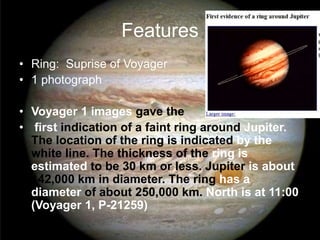
• Ring: Suprise of Voyager 
• 1 photograph 
• Voyager 1 images gave the 
• first indication of a faint ring around Jupiter. 
The location of the ring is indicated by the 
white line. The thickness of the ring is 
estimated to be 30 km or less. Jupiter is about 
142,000 km in diameter. The ring has a 
diameter of about 250,000 km. North is at 11:00 
(Voyager 1, P-21259)
Great Red Spot 
• Actually a storm that has been visible for 
at least 150 years, maybe more. 
• Jupiter has no 
continents 
or other structures 
to break it up.
Amazing Satellites 
(moons) 
• At least 
67 known 
satellites. 
Most famous 
four are called 
the Galilean 
satellites
Names
Famous 
four 
data
Io 
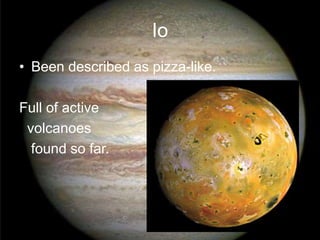
• Been described as pizza-like. 
Full of active 
volcanoes 
found so far.
Covered V 
in sulfur. 
Innermost 
moon 
sidereal year: 42 hours, 
1.769 earth days 
sidereal day: 
synchronous
Europa 
Surface smooth 
and made mostly 
of ice 
sidereal year: 85 hours 
sidereal day: 3.551 earth days 
synchronous 
Could have 
water. 
Could be life here? 
Smallest of the four but 6th largest in SS
Callisto 
Called Dead moon 
because no activity 
at all 
4th in order 
Sidereal year: 17 
days 
sidereal day: 16.6 earth days 
Second largest in 
Jovian System 
Full of Craters
Oldest landscape 
in SS. 
Half water ice, 
half rocky material 
Most likely to be explored 
Ocean likely there, could sustain life? 
Voyager 1 image of Jupiter's moon Callisto from a distance of 350,000 km. The 
large ‘bulls-eye’ at the top is believed to be an impact basin formed early in 
Callisto's history. The bright center of the basin is about 600 km across and the 
outer ring is about 2,600 km across.
Ganymede 
Largest in SS 
Sidereal year: 
172 hours 
Sidereal day: 
7.155 earth days 
1:2:4 resonance 
with Europa and 
Io
Ganymede 
• Has mountains, valleys 
craters and 
lava flows. 
Only moon in SS 
known to have 
a magnetic field
Order of orbit
Websites 
• http://www.space.com/27428-cubesat-mission- 
europa-jupiter.html 
• http://www.space.com/27272-mars-antares- 
star-skywatching.html 
• https://www.youtube.com/watch?v=g4- 
GK58gZYI
Top ten Moon Facts 
• https://www.youtube.com/watch?v=XMLK 
B4uHPi4

Ch 11 -jupiter

  • 1.
  • 2.
    Visual Scale ofSize Visual Scale: If the sun were the door to this room, then the earth would be a nickel and Jupiter would be a basketball. If Jupiter got any more massive it would actually start to get smaller because it would pull in on itself.
  • 3.
    Stats • 5thplanet from our sun, 778 million km. • Mass: 1.898E27 kg, Radius: 69,911 km • Jupiter day: 10 hours, spins so fast it bulges at the equator. Fastest spinner in the solar system. Jupiter year: 4,333 earth days, = 12 earth years Gaseous ball, predicted to have a solid core.
  • 4.
    Interior • Interior:rocky core, liquid metallic hydrogen, molecular hydrogen
  • 5.
    Atmosphere • Cloudson Jupiter are only about 50 km thick. • Atmosphere is H2 and He • Storms are constant, the giant red • spot has been raging • for hundreds of years.
  • 6.
    Features • Mass:1.898E27 kg, Radius: 69,911 km • Strong magnetic field • and radiation belts
  • 7.
    Auroras Auroras existall the time. Strong solar winds flatten out the belts and make the auroras pancake shaped.
  • 8.
    Features • Ring:Suprise of Voyager • 1 photograph • Voyager 1 images gave the • first indication of a faint ring around Jupiter. The location of the ring is indicated by the white line. The thickness of the ring is estimated to be 30 km or less. Jupiter is about 142,000 km in diameter. The ring has a diameter of about 250,000 km. North is at 11:00 (Voyager 1, P-21259)
  • 9.
    Great Red Spot • Actually a storm that has been visible for at least 150 years, maybe more. • Jupiter has no continents or other structures to break it up.
  • 10.
    Amazing Satellites (moons) • At least 67 known satellites. Most famous four are called the Galilean satellites
  • 11.
  • 12.
  • 13.
    Io • Beendescribed as pizza-like. Full of active volcanoes found so far.
  • 14.
    Covered V insulfur. Innermost moon sidereal year: 42 hours, 1.769 earth days sidereal day: synchronous
  • 15.
    Europa Surface smooth and made mostly of ice sidereal year: 85 hours sidereal day: 3.551 earth days synchronous Could have water. Could be life here? Smallest of the four but 6th largest in SS
  • 16.
    Callisto Called Deadmoon because no activity at all 4th in order Sidereal year: 17 days sidereal day: 16.6 earth days Second largest in Jovian System Full of Craters
  • 17.
    Oldest landscape inSS. Half water ice, half rocky material Most likely to be explored Ocean likely there, could sustain life? Voyager 1 image of Jupiter's moon Callisto from a distance of 350,000 km. The large ‘bulls-eye’ at the top is believed to be an impact basin formed early in Callisto's history. The bright center of the basin is about 600 km across and the outer ring is about 2,600 km across.
  • 18.
    Ganymede Largest inSS Sidereal year: 172 hours Sidereal day: 7.155 earth days 1:2:4 resonance with Europa and Io
  • 19.
    Ganymede • Hasmountains, valleys craters and lava flows. Only moon in SS known to have a magnetic field
  • 20.
  • 21.
    Websites • http://www.space.com/27428-cubesat-mission- europa-jupiter.html • http://www.space.com/27272-mars-antares- star-skywatching.html • https://www.youtube.com/watch?v=g4- GK58gZYI
  • 22.
    Top ten MoonFacts • https://www.youtube.com/watch?v=XMLK B4uHPi4