Downloaded 39 times

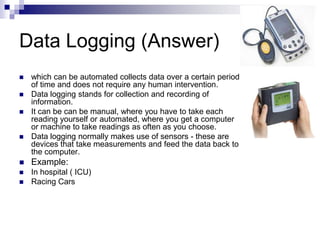
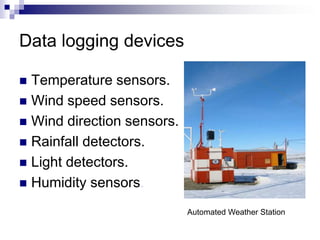
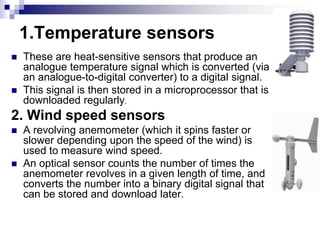
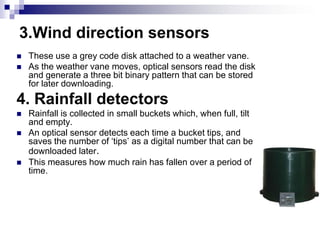

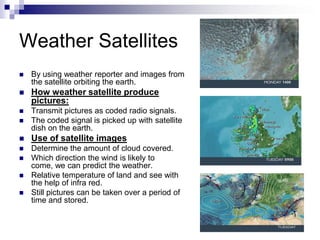

Traditional weather forecasting relied on collecting data from various locations and recording it manually, which risked human error. Now, automated data logging uses sensors to regularly collect weather measurements like temperature, wind, and humidity without human intervention. This data is converted into a digital format and stored to improve accuracy of forecasts. Data logging allows for frequent, round-the-clock collection of weather data from remote locations.


