UNIVERSITY OF TABUK
FACULTY OF APPLIED MEDICAL SCIENCE
NURSING DEPARTMENT
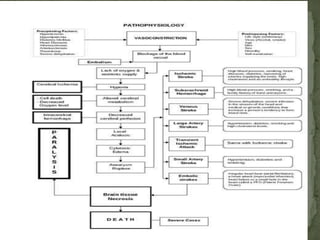
 Stroke occurs when the supply of blood to the brain is
either interrupted or reduced. When this happens, the
brain does not get enough oxygen or nutrients which
causes brain cells to die.
 There are three main kinds of stroke;
ischemic, hemorrhagic and TIA.
 Causes of stroke vary, however can be classified strokes to
infarcts result clots or emboli or hemorrhagic infarcts.
About 80-87% of strokes are caused by blockage of an artery
in the brain due to clots or emboli, and infestations include
most cases of hemorrhagic strokes remaining, and with a
small number of cases that occur as a result of subarachnoid
hemorrhage from expansions of vascular “aneurysmal
subarachnoid hemorrhage.”
About 20-40% of cases of ischemic infestations occur with
hemorrhagic transformation within a week from the
beginning of their occurrence.
Differentiate between different types of strokes is an
essential part of the evaluation of cases where strokes that
subsequent treatment is different in each case, to a large
extent.
 In the US, approximately 40% of stroke deaths are
in males, with 60% in females. According to the
American Heart Association (AHA), in 2006, the
stroke death rates per 100,00 population could be
split into specific social groups at 41.7% for white
males, 41.1% for white females, 67.7% for black
males and 57.0% for black females.3
 Stroke is also more likely to affect people if they are
overweight, aged 55 or older, have a personal or
family history of stroke, do not exercise much,
drink heavily or use illicit drugs.5
Prevalence of strokes in the world vary from one country to another.
For example, there is an increase incidence of hemorrhagic strokes
among Chinese and Japanese, and the prevalence of acute strokes
generally declined over recent decades in the world.
Every year happens about 795 000 new cases of stroke or recurrent
stroke in the United States, of whom about 610,000 state for the first
time, and about 185,000 frequent case.
About 87% of cases in the United States are ischemic and 10% of the
cases as a result of bleeding inside the brain, and 3% are due to
subarachnoid hemorrhage.
Prevalence of strokes associated with the age and sex of the patient,
race and socioeconomic status, for example, be injuries strokes
Aljobeh among black people in the United States three times the
injuries to these strokes among white people.
 The different forms of stroke have different
specific causes.
 Ischemic strokes
 Ischemic strokes are the most common form of stroke, with
around 85% of strokes being of this type. They are caused
by the arteries that connect to the brain becoming blocked
or narrowed, resulting in ischemia - severely reduced blood
flow.
 These blockages are often caused by blood clots, which can
form either in the arteries connecting to the brain, or
further away before being swept through the bloodstream
and into narrower arteries within the brain. Clots can be
caused by fatty deposits within the arteries called plaque.
 Hemorrhagic strokes
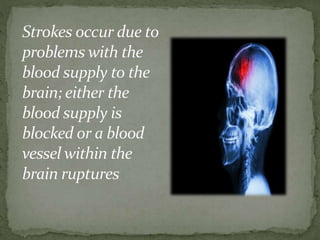
 Hemorrhagic strokes are caused by arteries in the
brain either leaking blood or bursting open. The
hemorrhaged blood puts pressure on brain cells and
damages them. Blood vessels can burst or spill blood
in the middle of the brain or near the surface of the
brain, sending blood into the space between the brain
and the skull.
 The ruptures can be caused by conditions such as
hypertension, trauma, blood-thinning medications
and aneurysms (weaknesses in blood vessel walls).
Transient ischemic attack (TIA)
 TIAs are different from the aforementioned kinds of
stroke because the flow of blood to the brain is only
disrupted temporarily for a short time. They are
similar to ischemic strokes in that they are often
caused by blood clots or other debris.
 TIAs should be regarded as medical emergencies just
like the other kinds of stroke, even if the blockage of
the artery is temporary. They serve as warning signs for
future strokes and indicate that there is a partially
blocked artery or clot source in the heart.
 According to the Centers for Disease Control
and Prevention (CDC), over a third of people
who experience a TIA go on to have a major
stroke within a year if they have not received
any treatment. Between 10-15% will have a
major stroke within 3 months.
 Strokes occur quickly, and as such their symptoms
often appear suddenly without warning. The main
symptoms are as follows:
 Confusion, including trouble with speaking and
understanding
 Headache, possibly with altered consciousness or
vomiting
 Numbness of the face, arm or leg, particularly on one
side of the body
 Trouble with seeing, in one or both eyes
 Trouble with walking, including dizziness and lack of
co-ordination.
 Strokes can lead to long-term problems. Depending on
how quickly it is diagnosed and treated, the patient
can experience temporary or permanent disabilities in
the aftermath of a stroke. In addition to the problems
listed above continuing, patients may also experience
the following:
 Bladder or bowel control problems
 Depression
 Pain in the hands and feet that gets worse with
movement and temperature changes
 Paralysis or weakness on one or both sides of the body
 Trouble controlling or expressing emotions.
 Strokes occur quickly, so that often a stroke diagnosis will
have to be made before an individual can be seen by a
doctor. The acronym FAST is a way to remember the signs
of stroke, and can help toward identifying the onset of
stroke in someone:
 Face drooping: if the person tries to smile does one side of
the face droop?
 Arm weakness: if the person tries to raise both their arms
does one arm drift downward?
 Speech difficulty: if the person tries to repeat a simple
phrase is their speech slurred or strange?
 Time to call 911: if any of these signs are observed, contact
the emergency services.
 It is important that strokes are diagnosed as
quickly as possible. The quicker that treatment
can be administered, the less damage that will be
done to the brain. In order for a stroke patient to
get the best diagnosis and treatment possible,
they will need to be treated at a hospital within 3
hours of their symptoms first appearing.
 Both ischemic strokes and hemorrhagic strokes
require different kinds of treatment. Unfortunately, it
is only possible to be sure of what type of stroke
someone has had by giving them a brain scan in a
hospital environment.
 Physical examination: a doctor will ask about the
patient's symptoms and medical history. They may
check blood pressure, listen to the carotid arteries in
the neck and examine the blood vessels at the back of
the eyes, all to check for indications of clotting
 Blood tests: a doctor may perform blood tests in order
to find out how quickly the patient's blood clots, what
the levels of chemicals within it are like and whether
or not the patient has an infection
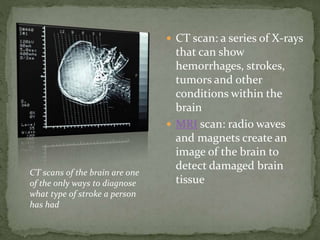
 CT scan: a series of X-rays
that can show
hemorrhages, strokes,
tumors and other
conditions within the
brain
 MRI scan: radio waves
and magnets create an
image of the brain to
detect damaged brain
tissue
CT scans of the brain are one
of the only ways to diagnose
what type of stroke a person
has had
 MRI scan: radio waves and magnets create an
image of the brain to detect damaged brain tissue
 Carotid ultrasound: an ultrasound scan to check
the blood flow of the carotid arteries and to see if
there is any plaque present
 Cerebral angiogram: dyes are injected into the
brain's blood vessels to make them visible under
X-ray, in order to give a detailed view of the brain
and neck arteries
 Echocardiogram: a detailed image of the heart is
created to check for any sources of clots that could
have traveled to the brain to cause a stroke.
 As the two main different kinds of stroke, ischemic
and hemorrhagic, are caused by different factors, both
require different forms of treatment. It is particularly
important that the type of stroke is diagnosed quickly,
not just to reduce the damage done to the brain but
because treatment for one kind of stroke may be
harmful to someone who has had a different kind.
 Ischemic stroke
 Ischemic strokes are caused by arteries being blocked
or narrowed and so treatment focuses on restoring an
adequate flow of blood to the brain.
 Treatment can begin with drugs to break down
clots and prevent further ones from forming.
Aspirin can be given, as can an injection of a
tissue plasminogen activator (TPA). TPA is very
effective at dissolving clots but needs to be
injected within 4.5 hours of stroke symptoms
manifesting themselves.
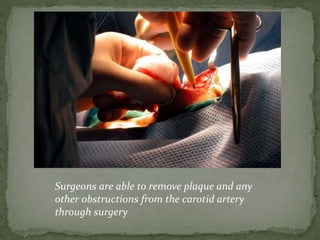
 Surgeons are able to remove plaque and
any other obstructions from the carotid
artery through surgery.
 Emergency procedures include
administering TPA via catheter directly
into an artery in the brain or using a
catheter to physically remove the clot
from its obstructive position. Recent
studies have cast doubt as to the
effectiveness of these methods, and so
research is still ongoing as to how
beneficial these procedures are.
Surgeons are able to remove plaque and any
other obstructions from the carotid artery
through surgery
 There are other procedures that can be carried out to
decrease the risk of future strokes or TIAs. A carotid
endarterectomy involves a surgeon opening the carotid
artery and removing any plaque that might be
blocking it.
 Alternatively, an angioplasty involves a surgeon
inflating a small balloon in a narrowed artery via
catheter and then inserting a stent (a mesh tube) into
the opening in order to prevent the artery from
narrowing again.
 The best way to prevent a stroke is to address the
underlying causes. This is best done by living healthily.
Here is a list of simple measures that can be followed:
 Avoid illicit drugs
 Eat a diet rich in fruit and vegetables and low in
cholesterol and saturated fat
 Exercise regularly
 Keep blood pressure under control
 Keep diabetes under control
 Maintain a healthy weight
 Moderate alcohol consumption (or quit drinking)
 Quit smoking
 Treat obstructive sleep apnea (if present).
 As well as these lifestyle changes, a health care provider can
help to reduce the risk of future strokes through prescribing
anti-coagulant and anti-platelet medication. In addition to
this, the arterial surgery previously mentioned can also be
used to lower the risk of repeat strokes.
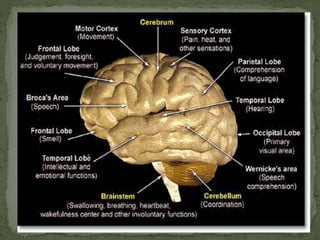
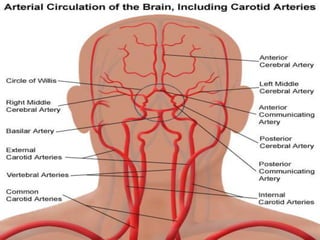
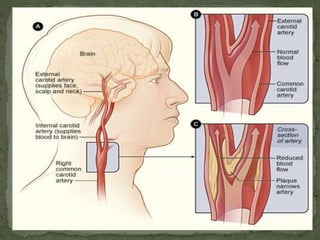
anatomy
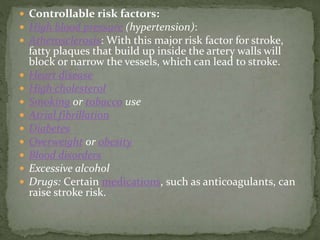
 Controllable risk factors:
 High blood pressure (hypertension):
 Atherosclerosis: With this major risk factor for stroke,
fatty plaques that build up inside the artery walls will
block or narrow the vessels, which can lead to stroke.
 Heart disease
 High cholesterol
 Smoking or tobacco use
 Atrial fibrillation
 Diabetes
 Overweight or obesity
 Blood disorders
 Excessive alcohol
 Drugs: Certain medications, such as anticoagulants, can
raise stroke risk.
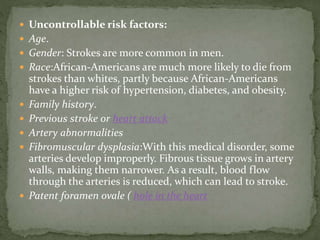
 Uncontrollable risk factors:
 Age.
 Gender: Strokes are more common in men.
 Race:African-Americans are much more likely to die from
strokes than whites, partly because African-Americans
have a higher risk of hypertension, diabetes, and obesity.
 Family history.
 Previous stroke or heart attack
 Artery abnormalities
 Fibromuscular dysplasia:With this medical disorder, some
arteries develop improperly. Fibrous tissue grows in artery
walls, making them narrower. As a result, blood flow
through the arteries is reduced, which can lead to stroke.
 Patent foramen ovale ( hole in the heart
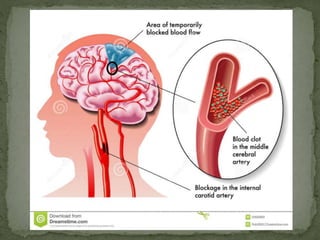
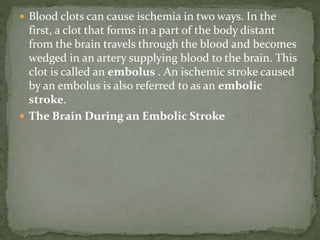
 Blood clots can cause ischemia in two ways. In the
first, a clot that forms in a part of the body distant
from the brain travels through the blood and becomes
wedged in an artery supplying blood to the brain. This
clot is called an embolus . An ischemic stroke caused
by an embolus is also referred to as an embolic
stroke.
 The Brain During an Embolic Stroke
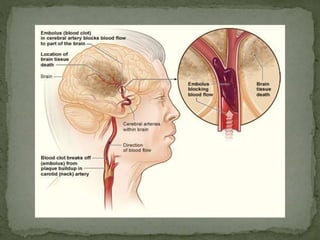
 The second kind of ischemic stroke, called a
thrombotic stroke, is caused by thrombosis, the
formation of a blood clot in one of the cerebral arteries
that stays attached to the artery wall until it grows
large enough to block blood flow .
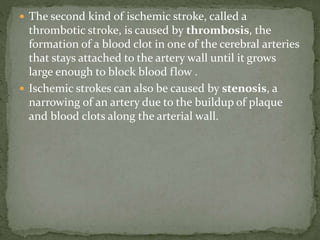
 Ischemic strokes can also be caused by stenosis, a
narrowing of an artery due to the buildup of plaque
and blood clots along the arterial wall.
Stenosis in a Section of an Artery
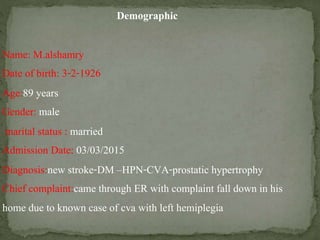
Demographic
Name: M.alshamry
Date of birth: 3-2-1926
Age:89 years
Gender: male
marital status : married
Admission Date: 03/03/2015
Diagnosis:new stroke-DM –HPN-CVA-prostatic hypertrophy
Chief complaint:came through ER with complaint fall down in his
home due to known case of cva with left hemiplegia
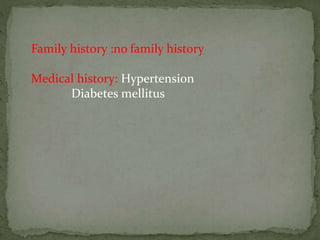
Family history :no family history
Medical history: Hypertension
Diabetes mellitus
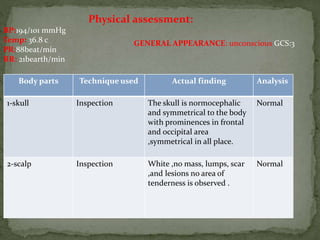
Physical assessment:
BP:194/101 mmHg
Temp: 36.8 c
PR:88beat/min
RR: 21bearth/min
AnalysisActual findingTechnique usedBody parts
NormalThe skull is normocephalic
and symmetrical to the body
with prominences in frontal
and occipital area
,symmetrical in all place.
Inspection1-skull
NormalWhite ,no mass, lumps, scar
,and lesions no area of
tenderness is observed .
Inspection2-scalp
GENERAL APPEARANCE: unconscious GCS:3
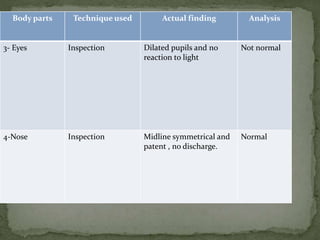
AnalysisActual findingTechnique usedBody parts
Not normalDilated pupils and no
reaction to light
Inspection3- Eyes
NormalMidline symmetrical and
patent , no discharge.
Inspection4-Nose
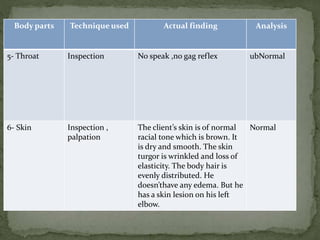
AnalysisActual findingTechnique usedBody parts
ubNormalNo speak ,no gag reflexInspection5- Throat
NormalThe client’s skin is of normal
racial tone which is brown. It
is dry and smooth. The skin
turgor is wrinkled and loss of
elasticity. The body hair is
evenly distributed. He
doesn’thave any edema. But he
has a skin lesion on his left
elbow.
Inspection ,
palpation
6- Skin
AnalysisActual findingTechnique usedBody parts
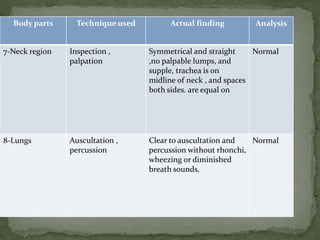
NormalSymmetrical and straight
,no palpable lumps, and
supple, trachea is on
midline of neck , and spaces
are equal onboth sides.
Inspection ,
palpation
7-Neck region
NormalClear to auscultation and
percussion without rhonchi,
wheezing or diminished
breath sounds.
Auscultation ,
percussion
8-Lungs
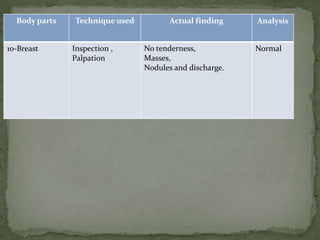
AnalysisActual findingTechnique usedBody parts
NormalNo tenderness,
Masses,
Nodules and discharge.
Inspection ,
Palpation
10-Breast
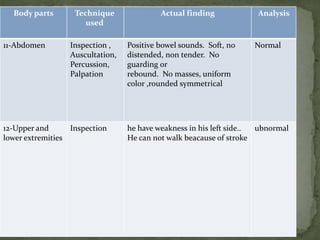
AnalysisActual findingTechnique
used
Body parts
NormalPositive bowel sounds. Soft, no
distended, non tender. No
guarding or
rebound. No masses, uniform
color ,rounded symmetrical
Inspection ,
Auscultation,
Percussion,
Palpation
11-Abdomen
ubnormalhe have weakness in his left side..
He can not walk beacause of stroke
Inspection12-Upper and
lower extremities
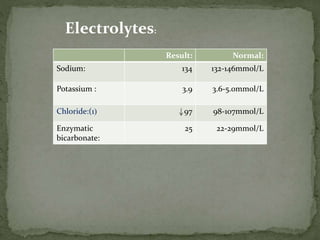
Electrolytes:
Normal:Result:
132-146mmol/L134Sodium:
3.6-5.0mmol/L3.9Potassium :
98-107mmol/L97(Chloride:(1
22-29mmol/L25Enzymatic
bicarbonate:
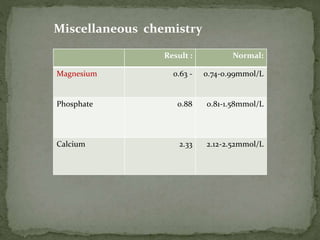
Miscellaneous chemistry
Normal:Result :
0.74-0.99mmol/L0.63 -Magnesium
0.81-1.58mmol/L0.88Phosphate
2.12-2.52mmol/L2.33Calcium
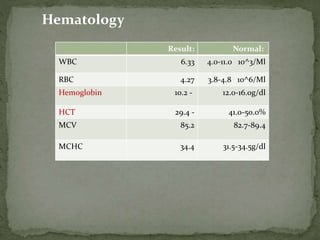
Hematology
Normal:Result:
4.0-11.0 10^3/Ml6.33WBC
3.8-4.8 10^6/Ml4.27RBC
12.0-16.0g/dl10.2 -Hemoglobin
41.0-50.0%29.4 -HCT
82.7-89.485.2MCV
31.5-34.5g/dl34.4MCHC
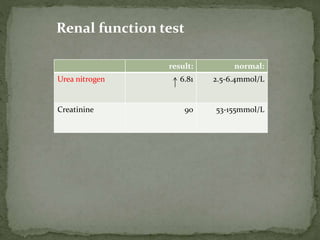
Renal function test
normal:result:
2.5-6.4mmol/L6.81Urea nitrogen
53-155mmol/L90Creatinine
Medical
management
Critical treatment decisions focus on the The following
need for airway management
Optimal blood pressure control
Identifying potential reperfusion therapies (eg,
intravenous fibrinolysis with rt-PA or intra-arterial
approach
Fibrinolytic therapy
Antiplatelet agents [4, 5]
Mechanical thrombectomy
Reduce fever
Correct hypotension/significant hypertension
Correct hypoxia
Correct hypoglycemia
Manage cardiac arrhythmias
Manage myocardial ischemia
Supplemental oxygen as required
Antiplatelet therapy
Glycemic control
Optimal blood pressure control
Prevention of hyperthermia
Oxygen therapy; give supplemental oxygen only if
oxygen saturation drops below 95%.
Blood sugar control; maintain blood glucose
concentration between 4 and 11 mmol/L. Provide
optimal insulin therapy with intravenous insulin and
glucose, for people with diabetes.
Hypertensive encephalopathy.
Hypertensive nephropathy.
Hypertensive cardiac failure/myocardial infarction.
Aortic dissection.
Pre-eclampsia/eclampsia.
Intracerebral haemorrhage with systolic blood pressure
>200 mm Hg.
People with acute stroke should have their swallowing screened before
being given any oral food, fluid or medication.[7] Also screen
for malnutrition.
Aspirin (300 mg) should be given as soon as possible after the onset of
stroke symptoms once a diagnosis of primary haemorrhage has been
excluded.[8]Antiplatelet therapy should then be continued indefinitely.
Therapy should be delayed for 24 hours following thrombolysis.
Clopidogrel 75mg daily is recommended.[7]
Thrombolytic treatment: see separate article Thrombolytic Treatment
of Acute Ischaemic Stroke. Unless there are contra-indications,
thrombolytic treatment appears to be effective in improving prognosis
after an acute stroke.[9] Treatment withalteplase should only be given
provided that:
It is administered within four and a half hours of onset of stroke
Anticoagulants should not be started until brain imaging has excluded
haemorrhage. In patients with acute ischaemic strokesymptoms
(unless as part of a clinical trial).
The type of surgery recommended by your physician depends on various
factors. Some surgical methodologies include
CaroEndarterectomy tid
This surgery involves removing plaque from the carotid artery that leads to the blood
flow within the brain.
This may reduce the risk of ischemic stroke
Microsurgical Techniques: Brain Bypass Surgery
This microsurgery creates a new path for blood to flow through the brain,
particularly in areas that have been depleted of blood.
Another vessel usually is grafted to the cerebral artery to create this new path.
Microsurgical techniques allow Emory's experienced neurosurgeons to perform
with optimal precision, resulting in less risk and better outcomes for the patient.
Critical treatment decisions focus on the The following
need for airway management
Optimal blood pressure control
Identifying potential reperfusion therapies (eg,
intravenous fibrinolysis with rt-PA or intra-arterial
approach
Endovascular Thrombolysis

In this procedure, a neuro-interventionist threads a
microcatheter from an artery in the groin to a blocked
artery in the brain.
Clot-busting medications are injected into the artery
to dissolve the clot and restore blood flow to the brain
faster than many other medications.
Cerebral Angioplasty and Stenting
This procedure helps widen a blocked artery.
A catheter with a balloon at the end is inserted into
the obstructed artery and the balloon is inflated,
pushing the plaque against the walls.
A stent, or a mesh steel brace, then is inserted to keep
fatty buildup from clogging the vessel.
Endovascular Procedures (Interventional Neuroradiology)

Interventional neuroradiological procedures are a less-invasive means of
treating neurovascular disorders.
They use very small catheters, called microcatheters, to treat problems inside
blood vessels.
The microcatheter is inserted into the vessels through a tiny puncture in the
groin, where an interventional neuroradiologist can reach almost any vessel in
the brain or spinal cord.
These endovascular approaches can be used to open narrowed or blocked
arteries, dissolve clots in brain arteries, repair certain aneurysms, and close
abnormal blood vessels that are at risk of bleeding.
These methods often avoid the need for more invasive surgery
ECG
X-Ray
Cardiac Enzyme
Procedures
CVPLINE
CHEST DRAIN
N/G TUBE
URINE CATH
CT BRAIN
CAROTIO DOPPLER CREQNESTE
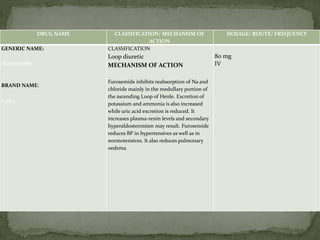
DOSAGE/ ROUTE/ FREQUENCYCLASSIFICATION/ MECHANISM OF
ACTION
DRUG NAME
80 mg
IV
CLASSIFICATION
Loop diuretic
MECHANISM OF ACTION
Furosemide inhibits reabsorption of Na and
chloride mainly in the medullary portion of
the ascending Loop of Henle. Excretion of
potassium and ammonia is also increased
while uric acid excretion is reduced. It
increases plasma-renin levels and secondary
hyperaldosteronism may result. Furosemide
reduces BP in hypertensives as well as in
normotensives. It also reduces pulmonary
oedema
GENERIC NAME:
furosemide
BRAND NAME:
Lasix
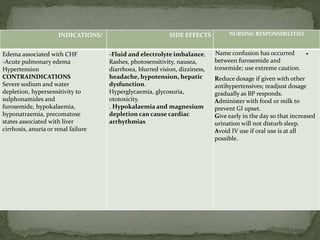
NURSING RESPONSIBILITIESSIDE EFFECTSINDICATIONS/
Name confusion has occurred
between furosemide and
torsemide; use extreme caution.
Reduce dosage if given with other
antihypertensives; readjust dosage
gradually as BP responds.
Administer with food or milk to
prevent GI upset.
Give early in the day so that increased
urination will not disturb sleep.
Avoid IV use if oral use is at all
possible.
-Fluid and electrolyte imbalance.
Rashes, photosensitivity, nausea,
diarrhoea, blurred vision, dizziness,
headache, hypotension, hepatic
dysfunction.
Hyperglycaemia, glycosuria,
ototoxicity.
. Hypokalaemia and magnesium
depletion can cause cardiac
arrhythmias
Edema associated with CHF
-Acute pulmonary edema
Hypertension
CONTRAINDICATIONS
Severe sodium and water
depletion, hypersensitivity to
sulphonamides and
furosemide, hypokalaemia,
hyponatraemia, precomatose
states associated with liver
cirrhosis, anuria or renal failure
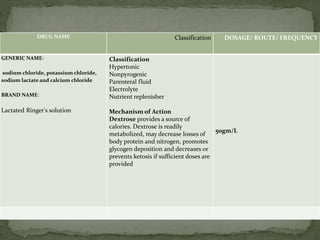
DOSAGE/ ROUTE/ FREQUENCYClassificationDRUG NAME
50gm/L
Classification
Hypertonic
Nonpyrogenic
Parenteral fluid
Electrolyte
Nutrient replenisher
Mechanism of Action
Dextrose provides a source of
calories. Dextrose is readily
metabolized, may decrease losses of
body protein and nitrogen, promotes
glycogen deposition and decreases or
prevents ketosis if sufficient doses are
provided
GENERIC NAME:
sodium chloride, potassium chloride,
sodium lactate and calcium chloride
BRAND NAME:
Lactated Ringer's solution
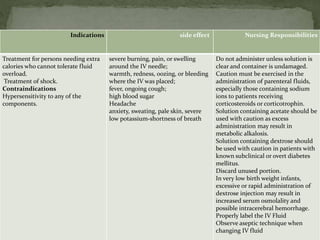
Nursing Responsibilitiesside effectIndications
Do not administer unless solution is
clear and container is undamaged.
Caution must be exercised in the
administration of parenteral fluids,
especially those containing sodium
ions to patients receiving
corticosteroids or corticotrophin.
Solution containing acetate should be
used with caution as excess
administration may result in
metabolic alkalosis.
Solution containing dextrose should
be used with caution in patients with
known subclinical or overt diabetes
mellitus.
Discard unused portion.
In very low birth weight infants,
excessive or rapid administration of
dextrose injection may result in
increased serum osmolality and
possible intracerebral hemorrhage.
Properly label the IV Fluid
Observe aseptic technique when
changing IV fluid
severe burning, pain, or swelling
around the IV needle;
warmth, redness, oozing, or bleeding
where the IV was placed;
fever, ongoing cough;
high blood sugar
Headache
anxiety, sweating, pale skin, severe
shortness of breath-low potassium
Treatment for persons needing extra
calories who cannot tolerate fluid
overload.
Treatment of shock.
Contraindications
Hypersensitivity to any of the
components.
Nursing
care plan
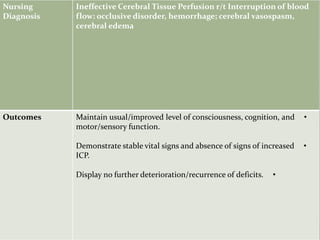
Ineffective Cerebral Tissue Perfusion r/t Interruption of blood
flow: occlusive disorder, hemorrhage; cerebral vasospasm,
cerebral edema
Nursing
Diagnosis
•Maintain usual/improved level of consciousness, cognition, and
motor/sensory function.
•Demonstrate stable vital signs and absence of signs of increased
ICP.
•Display no further deterioration/recurrence of deficits.
Outcomes
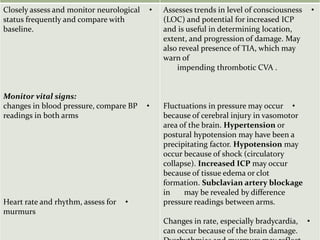
•Assesses trends in level of consciousness
(LOC) and potential for increased ICP
and is useful in determining location,
extent, and progression of damage. May
also reveal presence of TIA, which may
warn of
impending thrombotic CVA .
•Fluctuations in pressure may occur
because of cerebral injury in vasomotor
area of the brain. Hypertension or
postural hypotension may have been a
precipitating factor. Hypotension may
occur because of shock (circulatory
collapse). Increased ICP may occur
because of tissue edema or clot
formation. Subclavian artery blockage
may be revealed by differencein
pressure readings between arms.
•Changes in rate, especially bradycardia,
can occur because of the brain damage.
•Closely assess and monitor neurological
status frequently and compare with
baseline.
Monitor vital signs:
•changes in blood pressure, compare BP
readings in both arms
•Heart rate and rhythm, assess for
murmurs
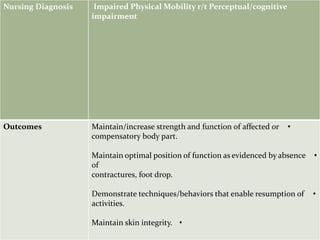
Impaired Physical Mobility r/t Perceptual/cognitive
impairment
Nursing Diagnosis
•Maintain/increase strength and function of affected or
compensatory body part.
•Maintain optimal position of function as evidenced by absence
of
contractures, foot drop.
•Demonstrate techniques/behaviors that enable resumption of
activities.
•Maintain skin integrity.
Outcomes
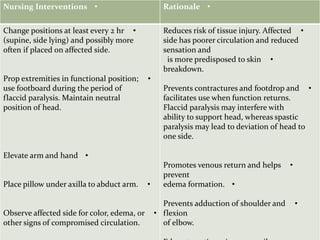
•Rationale•Nursing Interventions
•Reduces risk of tissue injury. Affected
side has poorer circulation and reduced
sensation and
•is more predisposed to skin
breakdown.
•Prevents contractures and footdrop and
facilitates use when function returns.
Flaccid paralysis may interfere with
ability to support head, whereas spastic
paralysis may lead to deviation of head to
one side.
•Promotes venous return and helps
prevent
•edema formation.
•Prevents adduction of shoulder and
flexion
of elbow.
•Change positions at least every 2 hr
(supine, side lying) and possibly more
often if placed on affected side.
•Prop extremities in functional position;
use footboard during the period of
flaccid paralysis. Maintain neutral
position of head.
•Elevate arm and hand
•Place pillow under axilla to abduct arm.
•Observe affected side for color, edema, or
other signs of compromised circulation.
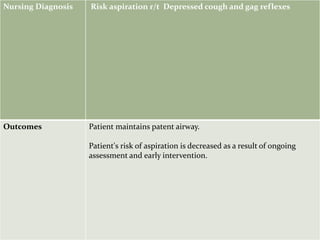
Depressed cough and gag reflexesRisk aspiration r/tNursing Diagnosis
Patient maintains patent airway.
Patient's risk of aspiration is decreased as a result of ongoing
assessment and early intervention.
Outcomes
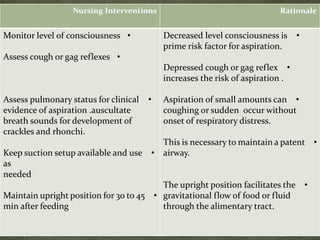
RationaleNursing Interventions
•Decreased level consciousness is
prime risk factor for aspiration.
•Depressed cough or gag reflex
increases the risk of aspiration .
•Aspiration of small amounts can
occur withoutcoughing or sudden
onset of respiratory distress.
•This is necessary to maintain a patent
airway.
•The upright position facilitates the
gravitational flow of food or fluid
through the alimentary tract.
•Monitor level of consciousness
•Assess cough or gag reflexes
•Assess pulmonary status for clinical
evidence of aspiration .auscultate
breath sounds for development of
crackles and rhonchi.
•Keep suction setup available and use
as
needed
•Maintain upright position for 30 to 45
min after feeding
Recommendation..
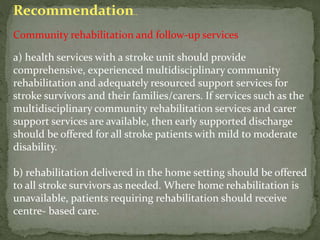
Community rehabilitation and follow-up services
a) health services with a stroke unit should provide
comprehensive, experienced multidisciplinary community
rehabilitation and adequately resourced support services for
stroke survivors and their families/carers. If services such as the
multidisciplinary community rehabilitation services and carer
support services are available, then early supported discharge
should be offered for all stroke patients with mild to moderate
disability.
b) rehabilitation delivered in the home setting should be offered
to all stroke survivors as needed. Where home rehabilitation is
unavailable, patients requiring rehabilitation should receive
centre- based care.
c) Contact with and education by trained staff should be
offered to all stroke survivors and
families/carers after discharge.
d) Stroke survivors can be managed using a case
management model after discharge. If used, case managers
should be able to recognise and manage depression and help
to coordinate appropriate interventions via a medical
practitioner.
e) Stroke survivors should have regular and ongoing review
by a member of a stroke team, including at least one
specialist medical review. the first review should occur
within 3 months, then again at 6 and 12 months post-
discharge.
f) Stroke survivors and their carers/families should be provided
with contact information for the specialist stroke service and a
contact person (in the hospital or community) for any post-
discharge queries for at least the first year following discharge.
g) every stroke patient should be assessed and informed of their
risk factors for a further stroke and possible strategies to modify
identified risk factors.
• stopping smoking and avoiding excessive alcohol .
• improving diet: a diet low in fat (especially saturated fat) and
sodium but high in fruit and
vegetables
• increasing regular exercise
• Control high Blood Pressure
• Manage stress
Conclusion...
• The results of a stroke vary depending on the
size and location, the presence of any
associated medical problems, the likelihood of
recurrent strokes.
• correspond to the area in Dysfunctions the
brain that had been damaged.
 http://www.medicalnewstoday.com/articles/7624.php
THANK YOU

ischemic stroke

  • 1.
    UNIVERSITY OF TABUK FACULTYOF APPLIED MEDICAL SCIENCE NURSING DEPARTMENT
  • 2.
     Stroke occurswhen the supply of blood to the brain is either interrupted or reduced. When this happens, the brain does not get enough oxygen or nutrients which causes brain cells to die.
  • 4.
     There arethree main kinds of stroke; ischemic, hemorrhagic and TIA.
  • 5.
     Causes ofstroke vary, however can be classified strokes to infarcts result clots or emboli or hemorrhagic infarcts. About 80-87% of strokes are caused by blockage of an artery in the brain due to clots or emboli, and infestations include most cases of hemorrhagic strokes remaining, and with a small number of cases that occur as a result of subarachnoid hemorrhage from expansions of vascular “aneurysmal subarachnoid hemorrhage.” About 20-40% of cases of ischemic infestations occur with hemorrhagic transformation within a week from the beginning of their occurrence. Differentiate between different types of strokes is an essential part of the evaluation of cases where strokes that subsequent treatment is different in each case, to a large extent.
  • 6.
     In theUS, approximately 40% of stroke deaths are in males, with 60% in females. According to the American Heart Association (AHA), in 2006, the stroke death rates per 100,00 population could be split into specific social groups at 41.7% for white males, 41.1% for white females, 67.7% for black males and 57.0% for black females.3  Stroke is also more likely to affect people if they are overweight, aged 55 or older, have a personal or family history of stroke, do not exercise much, drink heavily or use illicit drugs.5
  • 7.
    Prevalence of strokesin the world vary from one country to another. For example, there is an increase incidence of hemorrhagic strokes among Chinese and Japanese, and the prevalence of acute strokes generally declined over recent decades in the world. Every year happens about 795 000 new cases of stroke or recurrent stroke in the United States, of whom about 610,000 state for the first time, and about 185,000 frequent case. About 87% of cases in the United States are ischemic and 10% of the cases as a result of bleeding inside the brain, and 3% are due to subarachnoid hemorrhage. Prevalence of strokes associated with the age and sex of the patient, race and socioeconomic status, for example, be injuries strokes Aljobeh among black people in the United States three times the injuries to these strokes among white people.
  • 8.
     The differentforms of stroke have different specific causes.  Ischemic strokes  Ischemic strokes are the most common form of stroke, with around 85% of strokes being of this type. They are caused by the arteries that connect to the brain becoming blocked or narrowed, resulting in ischemia - severely reduced blood flow.  These blockages are often caused by blood clots, which can form either in the arteries connecting to the brain, or further away before being swept through the bloodstream and into narrower arteries within the brain. Clots can be caused by fatty deposits within the arteries called plaque.
  • 9.
     Hemorrhagic strokes Hemorrhagic strokes are caused by arteries in the brain either leaking blood or bursting open. The hemorrhaged blood puts pressure on brain cells and damages them. Blood vessels can burst or spill blood in the middle of the brain or near the surface of the brain, sending blood into the space between the brain and the skull.  The ruptures can be caused by conditions such as hypertension, trauma, blood-thinning medications and aneurysms (weaknesses in blood vessel walls).
  • 10.
    Transient ischemic attack(TIA)  TIAs are different from the aforementioned kinds of stroke because the flow of blood to the brain is only disrupted temporarily for a short time. They are similar to ischemic strokes in that they are often caused by blood clots or other debris.  TIAs should be regarded as medical emergencies just like the other kinds of stroke, even if the blockage of the artery is temporary. They serve as warning signs for future strokes and indicate that there is a partially blocked artery or clot source in the heart.
  • 11.
     According tothe Centers for Disease Control and Prevention (CDC), over a third of people who experience a TIA go on to have a major stroke within a year if they have not received any treatment. Between 10-15% will have a major stroke within 3 months.
  • 12.
     Strokes occurquickly, and as such their symptoms often appear suddenly without warning. The main symptoms are as follows:  Confusion, including trouble with speaking and understanding  Headache, possibly with altered consciousness or vomiting  Numbness of the face, arm or leg, particularly on one side of the body  Trouble with seeing, in one or both eyes  Trouble with walking, including dizziness and lack of co-ordination.
  • 13.
     Strokes canlead to long-term problems. Depending on how quickly it is diagnosed and treated, the patient can experience temporary or permanent disabilities in the aftermath of a stroke. In addition to the problems listed above continuing, patients may also experience the following:  Bladder or bowel control problems  Depression  Pain in the hands and feet that gets worse with movement and temperature changes  Paralysis or weakness on one or both sides of the body  Trouble controlling or expressing emotions.
  • 14.
     Strokes occurquickly, so that often a stroke diagnosis will have to be made before an individual can be seen by a doctor. The acronym FAST is a way to remember the signs of stroke, and can help toward identifying the onset of stroke in someone:  Face drooping: if the person tries to smile does one side of the face droop?  Arm weakness: if the person tries to raise both their arms does one arm drift downward?  Speech difficulty: if the person tries to repeat a simple phrase is their speech slurred or strange?  Time to call 911: if any of these signs are observed, contact the emergency services.
  • 15.
     It isimportant that strokes are diagnosed as quickly as possible. The quicker that treatment can be administered, the less damage that will be done to the brain. In order for a stroke patient to get the best diagnosis and treatment possible, they will need to be treated at a hospital within 3 hours of their symptoms first appearing.  Both ischemic strokes and hemorrhagic strokes require different kinds of treatment. Unfortunately, it is only possible to be sure of what type of stroke someone has had by giving them a brain scan in a hospital environment.
  • 16.
     Physical examination:a doctor will ask about the patient's symptoms and medical history. They may check blood pressure, listen to the carotid arteries in the neck and examine the blood vessels at the back of the eyes, all to check for indications of clotting  Blood tests: a doctor may perform blood tests in order to find out how quickly the patient's blood clots, what the levels of chemicals within it are like and whether or not the patient has an infection
  • 17.
     CT scan:a series of X-rays that can show hemorrhages, strokes, tumors and other conditions within the brain  MRI scan: radio waves and magnets create an image of the brain to detect damaged brain tissue CT scans of the brain are one of the only ways to diagnose what type of stroke a person has had
  • 18.
     MRI scan:radio waves and magnets create an image of the brain to detect damaged brain tissue  Carotid ultrasound: an ultrasound scan to check the blood flow of the carotid arteries and to see if there is any plaque present  Cerebral angiogram: dyes are injected into the brain's blood vessels to make them visible under X-ray, in order to give a detailed view of the brain and neck arteries  Echocardiogram: a detailed image of the heart is created to check for any sources of clots that could have traveled to the brain to cause a stroke.
  • 19.
     As thetwo main different kinds of stroke, ischemic and hemorrhagic, are caused by different factors, both require different forms of treatment. It is particularly important that the type of stroke is diagnosed quickly, not just to reduce the damage done to the brain but because treatment for one kind of stroke may be harmful to someone who has had a different kind.
  • 20.
     Ischemic stroke Ischemic strokes are caused by arteries being blocked or narrowed and so treatment focuses on restoring an adequate flow of blood to the brain.  Treatment can begin with drugs to break down clots and prevent further ones from forming. Aspirin can be given, as can an injection of a tissue plasminogen activator (TPA). TPA is very effective at dissolving clots but needs to be injected within 4.5 hours of stroke symptoms manifesting themselves.
  • 21.
     Surgeons areable to remove plaque and any other obstructions from the carotid artery through surgery.  Emergency procedures include administering TPA via catheter directly into an artery in the brain or using a catheter to physically remove the clot from its obstructive position. Recent studies have cast doubt as to the effectiveness of these methods, and so research is still ongoing as to how beneficial these procedures are.
  • 22.
    Surgeons are ableto remove plaque and any other obstructions from the carotid artery through surgery
  • 23.
     There areother procedures that can be carried out to decrease the risk of future strokes or TIAs. A carotid endarterectomy involves a surgeon opening the carotid artery and removing any plaque that might be blocking it.  Alternatively, an angioplasty involves a surgeon inflating a small balloon in a narrowed artery via catheter and then inserting a stent (a mesh tube) into the opening in order to prevent the artery from narrowing again.
  • 24.
     The bestway to prevent a stroke is to address the underlying causes. This is best done by living healthily. Here is a list of simple measures that can be followed:  Avoid illicit drugs  Eat a diet rich in fruit and vegetables and low in cholesterol and saturated fat  Exercise regularly  Keep blood pressure under control
  • 25.
     Keep diabetesunder control  Maintain a healthy weight  Moderate alcohol consumption (or quit drinking)  Quit smoking  Treat obstructive sleep apnea (if present).  As well as these lifestyle changes, a health care provider can help to reduce the risk of future strokes through prescribing anti-coagulant and anti-platelet medication. In addition to this, the arterial surgery previously mentioned can also be used to lower the risk of repeat strokes.
  • 26.
  • 30.
     Controllable riskfactors:  High blood pressure (hypertension):  Atherosclerosis: With this major risk factor for stroke, fatty plaques that build up inside the artery walls will block or narrow the vessels, which can lead to stroke.  Heart disease  High cholesterol  Smoking or tobacco use  Atrial fibrillation  Diabetes  Overweight or obesity  Blood disorders  Excessive alcohol  Drugs: Certain medications, such as anticoagulants, can raise stroke risk.
  • 31.
     Uncontrollable riskfactors:  Age.  Gender: Strokes are more common in men.  Race:African-Americans are much more likely to die from strokes than whites, partly because African-Americans have a higher risk of hypertension, diabetes, and obesity.  Family history.  Previous stroke or heart attack  Artery abnormalities  Fibromuscular dysplasia:With this medical disorder, some arteries develop improperly. Fibrous tissue grows in artery walls, making them narrower. As a result, blood flow through the arteries is reduced, which can lead to stroke.  Patent foramen ovale ( hole in the heart
  • 33.
     Blood clotscan cause ischemia in two ways. In the first, a clot that forms in a part of the body distant from the brain travels through the blood and becomes wedged in an artery supplying blood to the brain. This clot is called an embolus . An ischemic stroke caused by an embolus is also referred to as an embolic stroke.  The Brain During an Embolic Stroke
  • 35.
     The secondkind of ischemic stroke, called a thrombotic stroke, is caused by thrombosis, the formation of a blood clot in one of the cerebral arteries that stays attached to the artery wall until it grows large enough to block blood flow .  Ischemic strokes can also be caused by stenosis, a narrowing of an artery due to the buildup of plaque and blood clots along the arterial wall.
  • 36.
    Stenosis in aSection of an Artery
  • 39.
    Demographic Name: M.alshamry Date ofbirth: 3-2-1926 Age:89 years Gender: male marital status : married Admission Date: 03/03/2015 Diagnosis:new stroke-DM –HPN-CVA-prostatic hypertrophy Chief complaint:came through ER with complaint fall down in his home due to known case of cva with left hemiplegia
  • 40.
    Family history :nofamily history Medical history: Hypertension Diabetes mellitus
  • 41.
    Physical assessment: BP:194/101 mmHg Temp:36.8 c PR:88beat/min RR: 21bearth/min AnalysisActual findingTechnique usedBody parts NormalThe skull is normocephalic and symmetrical to the body with prominences in frontal and occipital area ,symmetrical in all place. Inspection1-skull NormalWhite ,no mass, lumps, scar ,and lesions no area of tenderness is observed . Inspection2-scalp GENERAL APPEARANCE: unconscious GCS:3
  • 42.
    AnalysisActual findingTechnique usedBodyparts Not normalDilated pupils and no reaction to light Inspection3- Eyes NormalMidline symmetrical and patent , no discharge. Inspection4-Nose
  • 43.
    AnalysisActual findingTechnique usedBodyparts ubNormalNo speak ,no gag reflexInspection5- Throat NormalThe client’s skin is of normal racial tone which is brown. It is dry and smooth. The skin turgor is wrinkled and loss of elasticity. The body hair is evenly distributed. He doesn’thave any edema. But he has a skin lesion on his left elbow. Inspection , palpation 6- Skin
  • 44.
    AnalysisActual findingTechnique usedBodyparts NormalSymmetrical and straight ,no palpable lumps, and supple, trachea is on midline of neck , and spaces are equal onboth sides. Inspection , palpation 7-Neck region NormalClear to auscultation and percussion without rhonchi, wheezing or diminished breath sounds. Auscultation , percussion 8-Lungs
  • 45.
    AnalysisActual findingTechnique usedBodyparts NormalNo tenderness, Masses, Nodules and discharge. Inspection , Palpation 10-Breast
  • 46.
    AnalysisActual findingTechnique used Body parts NormalPositivebowel sounds. Soft, no distended, non tender. No guarding or rebound. No masses, uniform color ,rounded symmetrical Inspection , Auscultation, Percussion, Palpation 11-Abdomen ubnormalhe have weakness in his left side.. He can not walk beacause of stroke Inspection12-Upper and lower extremities
  • 47.
  • 48.
    Miscellaneous chemistry Normal:Result : 0.74-0.99mmol/L0.63-Magnesium 0.81-1.58mmol/L0.88Phosphate 2.12-2.52mmol/L2.33Calcium
  • 49.
    Hematology Normal:Result: 4.0-11.0 10^3/Ml6.33WBC 3.8-4.8 10^6/Ml4.27RBC 12.0-16.0g/dl10.2-Hemoglobin 41.0-50.0%29.4 -HCT 82.7-89.485.2MCV 31.5-34.5g/dl34.4MCHC
  • 50.
  • 51.
  • 52.
    Critical treatment decisionsfocus on the The following need for airway management Optimal blood pressure control Identifying potential reperfusion therapies (eg, intravenous fibrinolysis with rt-PA or intra-arterial approach
  • 53.
    Fibrinolytic therapy Antiplatelet agents[4, 5] Mechanical thrombectomy
  • 54.
    Reduce fever Correct hypotension/significanthypertension Correct hypoxia Correct hypoglycemia Manage cardiac arrhythmias Manage myocardial ischemia
  • 55.
    Supplemental oxygen asrequired Antiplatelet therapy Glycemic control Optimal blood pressure control Prevention of hyperthermia
  • 56.
    Oxygen therapy; givesupplemental oxygen only if oxygen saturation drops below 95%. Blood sugar control; maintain blood glucose concentration between 4 and 11 mmol/L. Provide optimal insulin therapy with intravenous insulin and glucose, for people with diabetes.
  • 57.
    Hypertensive encephalopathy. Hypertensive nephropathy. Hypertensivecardiac failure/myocardial infarction. Aortic dissection. Pre-eclampsia/eclampsia. Intracerebral haemorrhage with systolic blood pressure >200 mm Hg.
  • 58.
    People with acutestroke should have their swallowing screened before being given any oral food, fluid or medication.[7] Also screen for malnutrition. Aspirin (300 mg) should be given as soon as possible after the onset of stroke symptoms once a diagnosis of primary haemorrhage has been excluded.[8]Antiplatelet therapy should then be continued indefinitely. Therapy should be delayed for 24 hours following thrombolysis. Clopidogrel 75mg daily is recommended.[7] Thrombolytic treatment: see separate article Thrombolytic Treatment of Acute Ischaemic Stroke. Unless there are contra-indications, thrombolytic treatment appears to be effective in improving prognosis after an acute stroke.[9] Treatment withalteplase should only be given provided that: It is administered within four and a half hours of onset of stroke Anticoagulants should not be started until brain imaging has excluded haemorrhage. In patients with acute ischaemic strokesymptoms (unless as part of a clinical trial).
  • 59.
    The type ofsurgery recommended by your physician depends on various factors. Some surgical methodologies include CaroEndarterectomy tid This surgery involves removing plaque from the carotid artery that leads to the blood flow within the brain. This may reduce the risk of ischemic stroke Microsurgical Techniques: Brain Bypass Surgery This microsurgery creates a new path for blood to flow through the brain, particularly in areas that have been depleted of blood. Another vessel usually is grafted to the cerebral artery to create this new path. Microsurgical techniques allow Emory's experienced neurosurgeons to perform with optimal precision, resulting in less risk and better outcomes for the patient.
  • 60.
    Critical treatment decisionsfocus on the The following need for airway management Optimal blood pressure control Identifying potential reperfusion therapies (eg, intravenous fibrinolysis with rt-PA or intra-arterial approach
  • 61.
    Endovascular Thrombolysis  In thisprocedure, a neuro-interventionist threads a microcatheter from an artery in the groin to a blocked artery in the brain. Clot-busting medications are injected into the artery to dissolve the clot and restore blood flow to the brain faster than many other medications.
  • 62.
    Cerebral Angioplasty andStenting This procedure helps widen a blocked artery. A catheter with a balloon at the end is inserted into the obstructed artery and the balloon is inflated, pushing the plaque against the walls. A stent, or a mesh steel brace, then is inserted to keep fatty buildup from clogging the vessel.
  • 63.
    Endovascular Procedures (InterventionalNeuroradiology)  Interventional neuroradiological procedures are a less-invasive means of treating neurovascular disorders. They use very small catheters, called microcatheters, to treat problems inside blood vessels. The microcatheter is inserted into the vessels through a tiny puncture in the groin, where an interventional neuroradiologist can reach almost any vessel in the brain or spinal cord. These endovascular approaches can be used to open narrowed or blocked arteries, dissolve clots in brain arteries, repair certain aneurysms, and close abnormal blood vessels that are at risk of bleeding. These methods often avoid the need for more invasive surgery
  • 64.
    ECG X-Ray Cardiac Enzyme Procedures CVPLINE CHEST DRAIN N/GTUBE URINE CATH CT BRAIN CAROTIO DOPPLER CREQNESTE
  • 66.
    DOSAGE/ ROUTE/ FREQUENCYCLASSIFICATION/MECHANISM OF ACTION DRUG NAME 80 mg IV CLASSIFICATION Loop diuretic MECHANISM OF ACTION Furosemide inhibits reabsorption of Na and chloride mainly in the medullary portion of the ascending Loop of Henle. Excretion of potassium and ammonia is also increased while uric acid excretion is reduced. It increases plasma-renin levels and secondary hyperaldosteronism may result. Furosemide reduces BP in hypertensives as well as in normotensives. It also reduces pulmonary oedema GENERIC NAME: furosemide BRAND NAME: Lasix
  • 67.
    NURSING RESPONSIBILITIESSIDE EFFECTSINDICATIONS/ Nameconfusion has occurred between furosemide and torsemide; use extreme caution. Reduce dosage if given with other antihypertensives; readjust dosage gradually as BP responds. Administer with food or milk to prevent GI upset. Give early in the day so that increased urination will not disturb sleep. Avoid IV use if oral use is at all possible. -Fluid and electrolyte imbalance. Rashes, photosensitivity, nausea, diarrhoea, blurred vision, dizziness, headache, hypotension, hepatic dysfunction. Hyperglycaemia, glycosuria, ototoxicity. . Hypokalaemia and magnesium depletion can cause cardiac arrhythmias Edema associated with CHF -Acute pulmonary edema Hypertension CONTRAINDICATIONS Severe sodium and water depletion, hypersensitivity to sulphonamides and furosemide, hypokalaemia, hyponatraemia, precomatose states associated with liver cirrhosis, anuria or renal failure
  • 68.
    DOSAGE/ ROUTE/ FREQUENCYClassificationDRUGNAME 50gm/L Classification Hypertonic Nonpyrogenic Parenteral fluid Electrolyte Nutrient replenisher Mechanism of Action Dextrose provides a source of calories. Dextrose is readily metabolized, may decrease losses of body protein and nitrogen, promotes glycogen deposition and decreases or prevents ketosis if sufficient doses are provided GENERIC NAME: sodium chloride, potassium chloride, sodium lactate and calcium chloride BRAND NAME: Lactated Ringer's solution
  • 69.
    Nursing Responsibilitiesside effectIndications Donot administer unless solution is clear and container is undamaged. Caution must be exercised in the administration of parenteral fluids, especially those containing sodium ions to patients receiving corticosteroids or corticotrophin. Solution containing acetate should be used with caution as excess administration may result in metabolic alkalosis. Solution containing dextrose should be used with caution in patients with known subclinical or overt diabetes mellitus. Discard unused portion. In very low birth weight infants, excessive or rapid administration of dextrose injection may result in increased serum osmolality and possible intracerebral hemorrhage. Properly label the IV Fluid Observe aseptic technique when changing IV fluid severe burning, pain, or swelling around the IV needle; warmth, redness, oozing, or bleeding where the IV was placed; fever, ongoing cough; high blood sugar Headache anxiety, sweating, pale skin, severe shortness of breath-low potassium Treatment for persons needing extra calories who cannot tolerate fluid overload. Treatment of shock. Contraindications Hypersensitivity to any of the components.
  • 70.
  • 71.
    Ineffective Cerebral TissuePerfusion r/t Interruption of blood flow: occlusive disorder, hemorrhage; cerebral vasospasm, cerebral edema Nursing Diagnosis •Maintain usual/improved level of consciousness, cognition, and motor/sensory function. •Demonstrate stable vital signs and absence of signs of increased ICP. •Display no further deterioration/recurrence of deficits. Outcomes
  • 72.
    •Assesses trends inlevel of consciousness (LOC) and potential for increased ICP and is useful in determining location, extent, and progression of damage. May also reveal presence of TIA, which may warn of impending thrombotic CVA . •Fluctuations in pressure may occur because of cerebral injury in vasomotor area of the brain. Hypertension or postural hypotension may have been a precipitating factor. Hypotension may occur because of shock (circulatory collapse). Increased ICP may occur because of tissue edema or clot formation. Subclavian artery blockage may be revealed by differencein pressure readings between arms. •Changes in rate, especially bradycardia, can occur because of the brain damage. •Closely assess and monitor neurological status frequently and compare with baseline. Monitor vital signs: •changes in blood pressure, compare BP readings in both arms •Heart rate and rhythm, assess for murmurs
  • 73.
    Impaired Physical Mobilityr/t Perceptual/cognitive impairment Nursing Diagnosis •Maintain/increase strength and function of affected or compensatory body part. •Maintain optimal position of function as evidenced by absence of contractures, foot drop. •Demonstrate techniques/behaviors that enable resumption of activities. •Maintain skin integrity. Outcomes
  • 74.
    •Rationale•Nursing Interventions •Reduces riskof tissue injury. Affected side has poorer circulation and reduced sensation and •is more predisposed to skin breakdown. •Prevents contractures and footdrop and facilitates use when function returns. Flaccid paralysis may interfere with ability to support head, whereas spastic paralysis may lead to deviation of head to one side. •Promotes venous return and helps prevent •edema formation. •Prevents adduction of shoulder and flexion of elbow. •Change positions at least every 2 hr (supine, side lying) and possibly more often if placed on affected side. •Prop extremities in functional position; use footboard during the period of flaccid paralysis. Maintain neutral position of head. •Elevate arm and hand •Place pillow under axilla to abduct arm. •Observe affected side for color, edema, or other signs of compromised circulation.
  • 75.
    Depressed cough andgag reflexesRisk aspiration r/tNursing Diagnosis Patient maintains patent airway. Patient's risk of aspiration is decreased as a result of ongoing assessment and early intervention. Outcomes
  • 76.
    RationaleNursing Interventions •Decreased levelconsciousness is prime risk factor for aspiration. •Depressed cough or gag reflex increases the risk of aspiration . •Aspiration of small amounts can occur withoutcoughing or sudden onset of respiratory distress. •This is necessary to maintain a patent airway. •The upright position facilitates the gravitational flow of food or fluid through the alimentary tract. •Monitor level of consciousness •Assess cough or gag reflexes •Assess pulmonary status for clinical evidence of aspiration .auscultate breath sounds for development of crackles and rhonchi. •Keep suction setup available and use as needed •Maintain upright position for 30 to 45 min after feeding
  • 77.
    Recommendation.. Community rehabilitation andfollow-up services a) health services with a stroke unit should provide comprehensive, experienced multidisciplinary community rehabilitation and adequately resourced support services for stroke survivors and their families/carers. If services such as the multidisciplinary community rehabilitation services and carer support services are available, then early supported discharge should be offered for all stroke patients with mild to moderate disability. b) rehabilitation delivered in the home setting should be offered to all stroke survivors as needed. Where home rehabilitation is unavailable, patients requiring rehabilitation should receive centre- based care.
  • 78.
    c) Contact withand education by trained staff should be offered to all stroke survivors and families/carers after discharge. d) Stroke survivors can be managed using a case management model after discharge. If used, case managers should be able to recognise and manage depression and help to coordinate appropriate interventions via a medical practitioner. e) Stroke survivors should have regular and ongoing review by a member of a stroke team, including at least one specialist medical review. the first review should occur within 3 months, then again at 6 and 12 months post- discharge.
  • 79.
    f) Stroke survivorsand their carers/families should be provided with contact information for the specialist stroke service and a contact person (in the hospital or community) for any post- discharge queries for at least the first year following discharge. g) every stroke patient should be assessed and informed of their risk factors for a further stroke and possible strategies to modify identified risk factors. • stopping smoking and avoiding excessive alcohol . • improving diet: a diet low in fat (especially saturated fat) and sodium but high in fruit and vegetables • increasing regular exercise • Control high Blood Pressure • Manage stress
  • 80.
    Conclusion... • The resultsof a stroke vary depending on the size and location, the presence of any associated medical problems, the likelihood of recurrent strokes. • correspond to the area in Dysfunctions the brain that had been damaged.
  • 81.
  • 82.

Editor's Notes

  • #49 Magnesium is absorbed principally in the small intestine Excessive urination (polyuria), such as in uncontrolled diabetes and during recovery from acute kidney failure  Medications including :diuretics :fursomid
  • #50 Poor nutrition NGT
  • #51 A BUN test is done to see how well your kidneys are working. If your kidneys are not able to remove urea from the blood normally, your BUN level rises. Heart failure, dehydration, or a diet high in protein can also make your BUN level higher