
NOSE
Prepared by
Mr. Abhay Rajpoot
HOD (Dep. of Medical Surgical)
abhayrajpoot5591@gmail.com
Nose
Introduction:
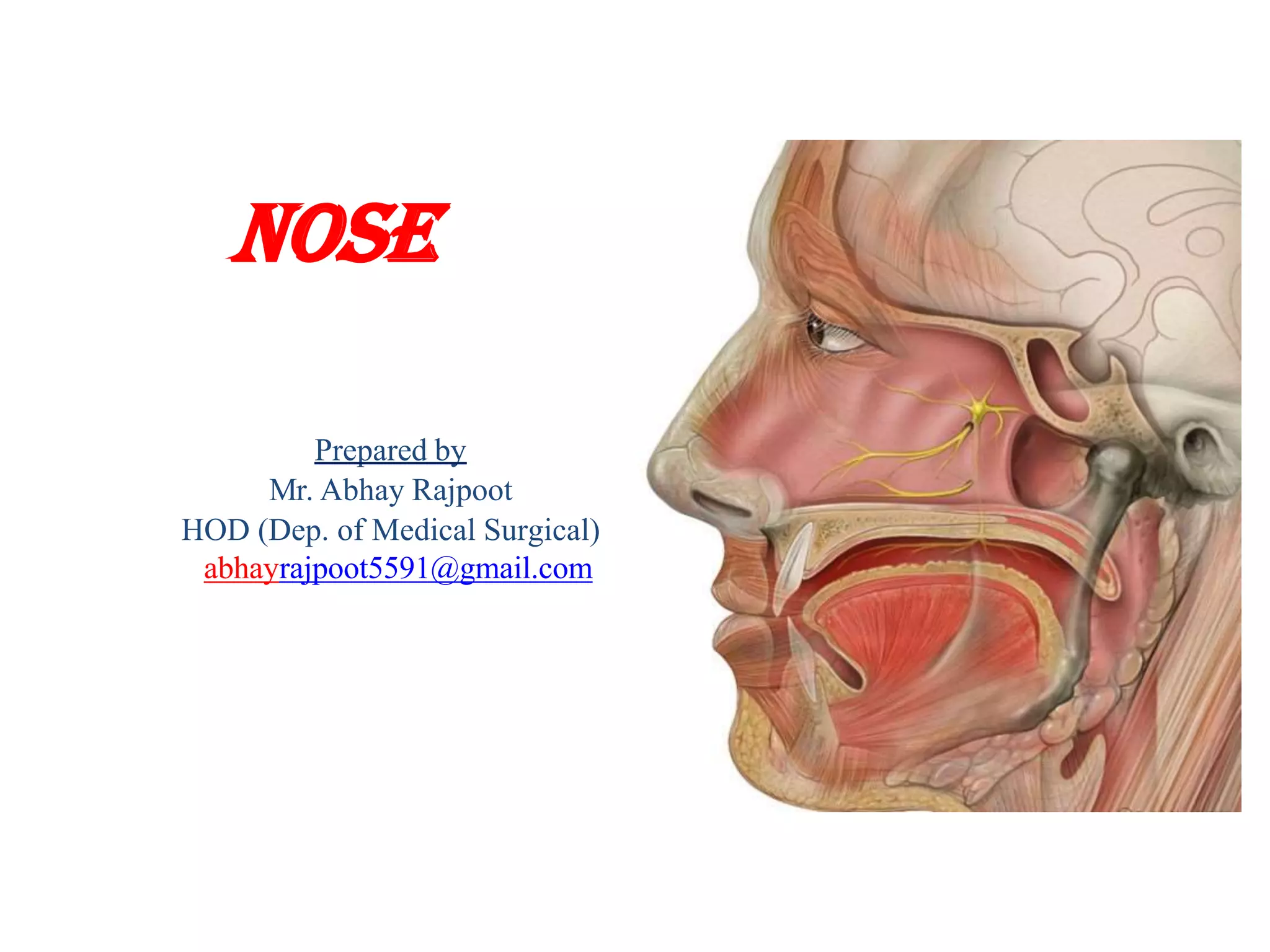
• The nose is the part of the respiratory tract superior to the hard
palate
• It contains the peripheral organ of smell
Composition:
• External nose
• Nasal cavity
 The nasal cavity is divided into right and left cavities by the
nasal septum
Functions:
• Olfaction (smelling)
• Respiration (breathing)
• Filtration of dust
• Humidification of inspired air
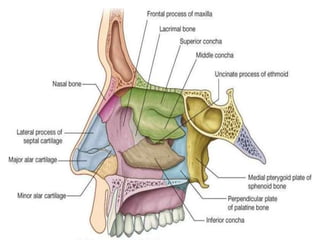
• Reception and elimination of secretions from the paranasal
sinuses and nasolacrimal ducts
External Nose
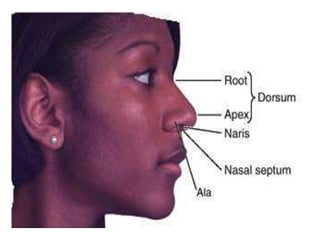
• Is the visible portion that projects from the face
• It's skeleton is mainly cartilaginous (small bony contributions
are present)
• The part of the external nose that extends from the root of the nose
to the apex (tip) of the nose is called the dorsum
• The inferior surface of the nose is pierced by two piriform
openings called nares (nostrils, anterior nasal apertures)
• The nares are bounded laterally by the alae (wings) of the nose
• The superior bony part of the nose, including its root, is covered by
thin skin
• The skin over the cartilaginous part of the nose is covered with
thicker skin, which contains many sebaceous glands
• The skin extends into the anterior part of the nasal cavity called the
vestibule of the nose
• The vestibule of the nose has a variable number of stiff hairs called
vibrissae
• These hairs are usually moist and these help to filter dust particles
from air entering the nasal cavity
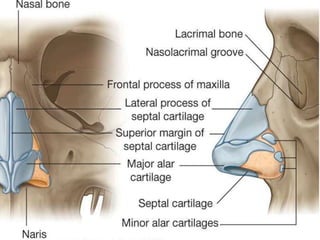
Skeleton of the External Nose
composed of:
I. bones
II. cartilages
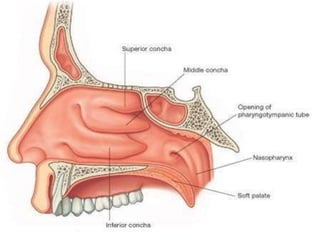
 The bony part consists of the:
 Nasal bones
 Frontal processes of the maxillae
 Nasal part of the frontal bone
 Nasal spine
 Bony parts of the nasal septum
CLINICAL ANATOMY
Nasal Fractures
• Because of the prominence of the nose, fractures of the nasal bones are
common facial fractures in automobile accidents and sports (unless face
guards are worn)
• Epistaxis (nosebleed) usually occurs
• In severe fractures, disruption of the bones and cartilages results in
displacement of the nose.
• When the injury results from a direct blow, the cribriform plate of the
ethmoid bone may also fracture
Deviation of the Nasal Septum
• The nasal septum is usually deviated to one side or the other
• This could be the result of a birth injury, but more often the deviation results
during adolescence and adulthood from trauma (e.g., during a fist fight)
• Sometimes the deviation is so severe that the nasal septum is in contact with
the lateral wall of the nasal cavity and often obstructs breathing or
exacerbates snoring
• The deviation can be corrected surgically
Nasal Cavity
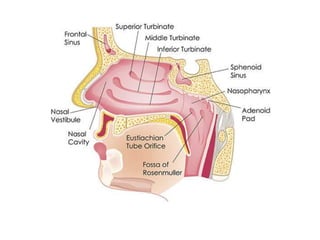
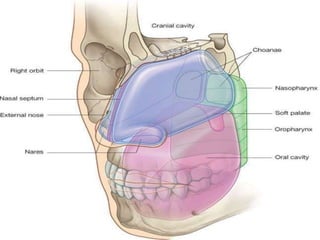
• Divided into right and left halves by the nasal septum
• The nasal cavity is entered anteriorly through the nares
• It opens posteriorly into the nasopharynx through the choanae
• Mucosa lines the nasal cavity, except for the nasal vestibule, which is
lined with skin
• The superior one third of the nasal mucosa forms the olfactory area
• The inferior two thirds of the nasal mucosa forms the respiratory area
• The olfactory area contains the peripheral organ of smell; sniffing
draws air to the area
• Air passing over the respiratory area is warmed and moistened before
it passes through the rest of the upper respiratory tract to the lungs
Boundaries of the Nasal Cavity
 The nasal cavity has a:
 roof
 floor
 medial wall
 lateral wall
The roof :
• is curved and narrow, except at its posterior end
• it is divided into 3 parts
 frontonasal
 ethmoidal
 sphenoidal
• They are named from the bones forming each part
The floor:
• is wider than the roof
• is formed by the;
 palatine processes of the maxilla
 horizontal plates of the palatine bone
The medial wall :
formed by the nasal septum
The lateral walls :
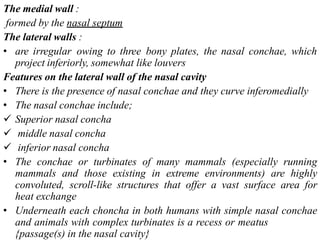
• are irregular owing to three bony plates, the nasal conchae, which
project inferiorly, somewhat like louvers
Features on the lateral wall of the nasal cavity
• There is the presence of nasal conchae and they curve inferomedially
• The nasal conchae include;
 Superior nasal concha
 middle nasal concha
 inferior nasal concha
• The conchae or turbinates of many mammals (especially running
mammals and those existing in extreme environments) are highly
convoluted, scroll-like structures that offer a vast surface area for
heat exchange
• Underneath each choncha in both humans with simple nasal conchae
and animals with complex turbinates is a recess or meatus
{passage(s) in the nasal cavity}
The arterial supply
The arterial supply of the medial and lateral walls of the nasal cavity is
from five sources:
• Anterior ethmoidal artery (from the ophthalmic artery)
• Posterior ethmoidal artery (from the ophthalmic artery)
• Sphenopalatine artery (from the maxillary artery)
• Greater palatine artery (from the maxillary artery)
• Septal branch of the superior labial artery (from the facial artery)
 The anterior part of the nasal septum is the site (Kiesselbach area) of
an anastomotic arterial plexus involving all five arteries supplying the
septum
 The external nose also receives blood from the 1st and 5th arteries
listed above plus
• nasal branches of the infraorbital artery
• lateral nasal branches of the facial artery
Venous drainage
• A rich submucosal venous plexus deep to the nasal mucosa drains into
the sphenopalatine, facial, and ophthalmic veins
CLINICALANATOMY
Epistaxis
• Epistaxis (nosebleed) is relatively common because of the rich blood
supply to the nasal mucosa
• In most cases, the cause is trauma and the bleeding is from an area in
the anterior third of the nose (Kiesselbach area)
• Epistaxis is also associated with infections and hypertension
• Spurting of blood from the nose results from rupture of arteries
• Mild epistaxis may also result from nose picking, which tears veins in
the vestibule of the nose
Rhinitis
• The nasal mucosa becomes swollen and inflamed (rhinitis) during
severe upper respiratory infections and allergic reactions
(e.g., hayfever)
• Swelling of the mucosa occurs readily because of its vascularity
Infections of the nasal cavities may spread to the:
• Anterior cranial fossa through the cribriform plate
• Nasopharynx and retropharyngeal soft tissues
• Middle ear through the pharyngotympanic tube (auditory tube), which
connects the tympanic cavity and nasopharynx
• Paranasal sinuses
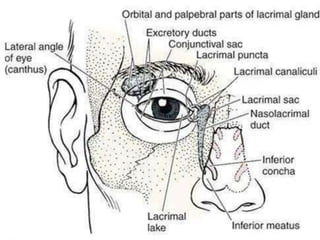
• Lacrimal apparatus and conjunctiva
Nose Anatomy & Physiology

Nose Anatomy & Physiology

  • 1.
    NOSE Prepared by Mr. AbhayRajpoot HOD (Dep. of Medical Surgical) abhayrajpoot5591@gmail.com
  • 2.
    Nose Introduction: • The noseis the part of the respiratory tract superior to the hard palate • It contains the peripheral organ of smell Composition: • External nose • Nasal cavity  The nasal cavity is divided into right and left cavities by the nasal septum Functions: • Olfaction (smelling) • Respiration (breathing) • Filtration of dust • Humidification of inspired air • Reception and elimination of secretions from the paranasal sinuses and nasolacrimal ducts
  • 3.
    External Nose • Isthe visible portion that projects from the face • It's skeleton is mainly cartilaginous (small bony contributions are present) • The part of the external nose that extends from the root of the nose to the apex (tip) of the nose is called the dorsum • The inferior surface of the nose is pierced by two piriform openings called nares (nostrils, anterior nasal apertures) • The nares are bounded laterally by the alae (wings) of the nose • The superior bony part of the nose, including its root, is covered by thin skin • The skin over the cartilaginous part of the nose is covered with thicker skin, which contains many sebaceous glands
  • 6.
    • The skinextends into the anterior part of the nasal cavity called the vestibule of the nose • The vestibule of the nose has a variable number of stiff hairs called vibrissae • These hairs are usually moist and these help to filter dust particles from air entering the nasal cavity Skeleton of the External Nose composed of: I. bones II. cartilages  The bony part consists of the:  Nasal bones  Frontal processes of the maxillae  Nasal part of the frontal bone  Nasal spine  Bony parts of the nasal septum
  • 8.
    CLINICAL ANATOMY Nasal Fractures •Because of the prominence of the nose, fractures of the nasal bones are common facial fractures in automobile accidents and sports (unless face guards are worn) • Epistaxis (nosebleed) usually occurs • In severe fractures, disruption of the bones and cartilages results in displacement of the nose. • When the injury results from a direct blow, the cribriform plate of the ethmoid bone may also fracture Deviation of the Nasal Septum • The nasal septum is usually deviated to one side or the other • This could be the result of a birth injury, but more often the deviation results during adolescence and adulthood from trauma (e.g., during a fist fight) • Sometimes the deviation is so severe that the nasal septum is in contact with the lateral wall of the nasal cavity and often obstructs breathing or exacerbates snoring • The deviation can be corrected surgically
  • 9.
    Nasal Cavity • Dividedinto right and left halves by the nasal septum • The nasal cavity is entered anteriorly through the nares • It opens posteriorly into the nasopharynx through the choanae • Mucosa lines the nasal cavity, except for the nasal vestibule, which is lined with skin • The superior one third of the nasal mucosa forms the olfactory area • The inferior two thirds of the nasal mucosa forms the respiratory area • The olfactory area contains the peripheral organ of smell; sniffing draws air to the area • Air passing over the respiratory area is warmed and moistened before it passes through the rest of the upper respiratory tract to the lungs
  • 11.
    Boundaries of theNasal Cavity  The nasal cavity has a:  roof  floor  medial wall  lateral wall The roof : • is curved and narrow, except at its posterior end • it is divided into 3 parts  frontonasal  ethmoidal  sphenoidal • They are named from the bones forming each part The floor: • is wider than the roof • is formed by the;  palatine processes of the maxilla  horizontal plates of the palatine bone
  • 12.
    The medial wall: formed by the nasal septum The lateral walls : • are irregular owing to three bony plates, the nasal conchae, which project inferiorly, somewhat like louvers Features on the lateral wall of the nasal cavity • There is the presence of nasal conchae and they curve inferomedially • The nasal conchae include;  Superior nasal concha  middle nasal concha  inferior nasal concha • The conchae or turbinates of many mammals (especially running mammals and those existing in extreme environments) are highly convoluted, scroll-like structures that offer a vast surface area for heat exchange • Underneath each choncha in both humans with simple nasal conchae and animals with complex turbinates is a recess or meatus {passage(s) in the nasal cavity}
  • 16.
    The arterial supply Thearterial supply of the medial and lateral walls of the nasal cavity is from five sources: • Anterior ethmoidal artery (from the ophthalmic artery) • Posterior ethmoidal artery (from the ophthalmic artery) • Sphenopalatine artery (from the maxillary artery) • Greater palatine artery (from the maxillary artery) • Septal branch of the superior labial artery (from the facial artery)  The anterior part of the nasal septum is the site (Kiesselbach area) of an anastomotic arterial plexus involving all five arteries supplying the septum  The external nose also receives blood from the 1st and 5th arteries listed above plus • nasal branches of the infraorbital artery • lateral nasal branches of the facial artery
  • 17.
    Venous drainage • Arich submucosal venous plexus deep to the nasal mucosa drains into the sphenopalatine, facial, and ophthalmic veins
  • 18.
    CLINICALANATOMY Epistaxis • Epistaxis (nosebleed)is relatively common because of the rich blood supply to the nasal mucosa • In most cases, the cause is trauma and the bleeding is from an area in the anterior third of the nose (Kiesselbach area) • Epistaxis is also associated with infections and hypertension • Spurting of blood from the nose results from rupture of arteries • Mild epistaxis may also result from nose picking, which tears veins in the vestibule of the nose Rhinitis • The nasal mucosa becomes swollen and inflamed (rhinitis) during severe upper respiratory infections and allergic reactions (e.g., hayfever) • Swelling of the mucosa occurs readily because of its vascularity
  • 19.
    Infections of thenasal cavities may spread to the: • Anterior cranial fossa through the cribriform plate • Nasopharynx and retropharyngeal soft tissues • Middle ear through the pharyngotympanic tube (auditory tube), which connects the tympanic cavity and nasopharynx • Paranasal sinuses • Lacrimal apparatus and conjunctiva